Artificial Intelligence: Africa, Asia, and the New Race for the Future
From Nairobi to Tashkent, from Silicon Valley to Beijing, artificial intelligence is rewriting the rules of our world. It promises faster growth, smarter healthcare, and better education, yet also brings fears of job losses, fake news, and even global insecurity. For developing regions like Africa and Central Asia, the stakes are higher than ever: will AI be a bridge to progress or a trap of dependence?
The twenty-first century is often called the century of information. But perhaps it would be more accurate to call it the century of intelligence—both natural and artificial. Only a decade ago, artificial intelligence was a topic reserved for scientists, engineers, and philosophers. Today, it is discussed in the streets of Nairobi, in the classrooms of Tashkent, in the boardrooms of multinational corporations, and even in the corridors of political power.
Artificial intelligence—commonly shortened to AI—has emerged as the single most transformative force of our time. It is not just a new tool; it is a new paradigm. Much like electricity in the 19th century or the internet at the turn of the millennium, AI is reshaping every aspect of life: how we learn, how we work, how we communicate, and even how we dream about the future.
Yet while the opportunities are dazzling, the challenges are equally daunting. For Africa and Asia—continents rich in culture, diversity, and ambition but also facing issues of inequality and underdevelopment—AI is not a distant luxury. It is an urgent necessity. It can either accelerate their development or deepen existing divides.
Artificial intelligence, at its core, is the ability of machines to perform tasks that normally require human intelligence. This includes understanding language, recognizing images, making decisions, and even creating new content. But while the definition is simple, the implications are complex.
Take education, for example. Across the world, classrooms are often overcrowded, teachers are overwhelmed, and students struggle to keep up. AI offers a way out. With adaptive learning platforms, students can now receive personalized lessons that adjust to their speed and style. A student in a rural Kenyan village who has never met a foreign language teacher can now practice English or French with an AI tutor. A child in Uzbekistan can learn mathematics not only from textbooks but from interactive programs that respond to their mistakes and guide them step by step.
The impact of AI in medicine is equally revolutionary. According to the World Health Organization, sub-Saharan Africa carries 24% of the global disease burden but has only 3% of the world’s health workers. This imbalance has cost millions of lives. AI can help bridge the gap. Algorithms trained on thousands of medical images can detect diseases like tuberculosis, cancer, and malaria faster and more accurately than the average doctor. Virtual health assistants can guide patients in their own languages, reminding them to take medication or advising when to seek hospital care.
In Uzbekistan, experiments with AI in healthcare are already underway. Startups are developing systems to digitize patient records and predict outbreaks of diseases in rural areas. In Africa, countries like Rwanda and Nigeria are testing AI-powered drones that deliver blood and medicines to remote villages. These are not just innovations—they are lifelines.
Business, too, has felt the AI wave. A recent McKinsey report estimated that AI could add up to $13 trillion to the global economy by 2030. That figure is not just abstract economics; it represents jobs, growth, and opportunity. In Kenya, fintech startups use AI to analyze mobile money transactions and offer microloans to people who lack access to traditional banks. In Uzbekistan, agricultural firms use AI to forecast crop yields, optimize irrigation, and reduce waste. The digital economy is no longer a dream of the future—it is the reality of today.
Even in our personal lives, AI is quietly omnipresent. The voice that greets you when you ask your phone for directions, the recommendations you receive on YouTube or Netflix, the automatic editing of your photographs—all are powered by AI. Sometimes we forget that what feels like magic is actually advanced mathematics working behind the scenes.
But for every promise, there is a peril. The first fear many express is unemployment. Machines that learn and adapt can replace humans in countless professions. Bank clerks are being replaced by apps, journalists by AI-generated articles, and factory workers by robots. Oxford University researchers once predicted that nearly half of all jobs in the United States are at risk of automation. If this is true for the world’s largest economy, what does it mean for developing countries?
Consider Africa, where over 60% of the population is under the age of 25. Each year, millions enter the job market hoping for opportunities that are already scarce. If AI eliminates traditional roles faster than new ones are created, frustration could grow into social unrest. The same risk applies to Central Asia, where governments are working to modernize economies but still face challenges in creating high-quality jobs.
Another danger is the spread of misinformation. AI can create what are known as “deepfakes”—videos or images so realistic that they are almost impossible to distinguish from reality. Imagine a fake video of a president declaring war, or a manipulated audio clip of a religious leader inciting violence. In societies where information spreads faster than fact-checking can catch up, such tools can destabilize entire nations. Already, misinformation campaigns fueled by AI-generated content have influenced elections in different parts of the world.
Ethical dilemmas add another layer of complexity. AI systems learn from data, and data often reflects human bias. If historical hiring data shows that women were less likely to be promoted, an AI system trained on that data might “learn” to favor men in job applications. If health records underrepresent rural communities, AI-driven medical tools might serve urban populations better. In short, without careful oversight, AI could reinforce inequalities rather than reduce them.
And then there is the question of security. Hackers can weaponize AI to launch cyberattacks more sophisticated than anything we have seen before. Imagine AI-powered malware that learns from every failed attempt until it finds a way into critical infrastructure—banks, hospitals, or even national power grids. Some scientists warn that uncontrolled AI development could be as dangerous as the invention of nuclear weapons. Elon Musk, one of the most prominent voices in technology, has repeatedly warned that AI poses an “existential risk” if left unchecked.
Artificial intelligence did not emerge overnight. Its roots can be traced back to the mid-twentieth century, when British mathematician Alan Turing posed a provocative question: “Can machines think?” His ideas laid the foundation for computer science. In the decades that followed, AI passed through cycles of hype and disappointment. Early programs could play chess or solve simple problems, but they lacked the power and flexibility of human reasoning.
The explosion of data and the rise of powerful computing in the 21st century changed everything. Machine learning—teaching computers to learn from examples rather than follow fixed instructions—unleashed unprecedented possibilities. The launch of systems like ChatGPT, capable of producing human-like conversations and creative texts, stunned the world. Suddenly, the dream of intelligent machines was no longer science fiction.
Yet history teaches us that every revolution carries two faces. The industrial revolution of the 19th century created wealth but also inequality. The internet brought connectivity but also cybercrime. AI is no different. “Technology is neither good nor bad; it is only a mirror of how humanity uses it,” says Dr. Amina Mwangi, a Nairobi-based technology ethicist. Her words remind us that responsibility lies not in the machines, but in ourselves.
For Africa, the stakes are enormous. With a population projected to reach 2.5 billion by 2050, the continent cannot rely on traditional models of growth. AI offers a shortcut—a way to leapfrog stages of industrialization and jump directly into the knowledge economy. Imagine AI predicting droughts months in advance, allowing farmers to prepare. Imagine automated translation tools connecting Africa’s 2,000 languages, fostering unity and communication.
Some of this is already happening. In Ghana, AI is being used to analyze satellite imagery and detect illegal mining. In Kenya, farmers receive SMS messages generated by AI systems that forecast rainfall and recommend when to plant seeds. In South Africa, AI-powered platforms are helping students prepare for exams by providing personalized practice questions.
Uzbekistan, too, is entering the AI race. The government has launched a National Artificial Intelligence Strategy aimed at integrating AI into sectors like education, agriculture, and public administration. In Tashkent, universities are opening AI departments, training a new generation of programmers. Startups are developing chatbots for e-government services, helping citizens access information without standing in long queues.
But there is a catch. Both Africa and Central Asia face the challenge of digital inequality. Internet penetration is uneven, electricity can be unreliable in rural areas, and the cost of devices remains high for many families. “If AI only serves those who are already privileged, then it will widen the gap between rich and poor,” warns Professor Rustam Karimov, a technology researcher in Uzbekistan. His concern echoes across both continents: how can AI be made inclusive?
The solution lies partly in education. To benefit from AI, societies must cultivate digital literacy. It is not enough to own a smartphone; citizens must know how to use technology critically, how to question what they see, and how to protect their privacy. Initiatives in Kenya and Uzbekistan are starting to introduce coding classes in schools, hoping to prepare children for a future where digital skills are as essential as reading and writing.
At the same time, governments must craft wise policies. Regulation is a double-edged sword: too much, and innovation suffocates; too little, and chaos reigns. The European Union has already begun drafting laws to regulate AI. But for Africa and Asia, the challenge is different. They must strike a balance between attracting investment and protecting citizens. Transparency, accountability, and public participation will be crucial.
Beyond politics and economics lies a deeper question: what does AI mean for our humanity? Machines can imitate human conversation, paint pictures, and even compose music. But can they truly create? Can they feel joy, sorrow, or love? Most experts agree they cannot. Creativity, at least in its deepest form, remains a uniquely human gift. AI can assist, but it cannot replace the spirit behind a song or the emotion in a poem.
This tension between human and machine is not new. When photography was invented, some feared it would kill painting. When cinema appeared, many predicted the death of theater. Yet both art forms survived, adapting and flourishing. Perhaps AI will follow the same pattern—not as a destroyer, but as a transformer.
There is also a spiritual dimension. In many African and Central Asian cultures, community, empathy, and respect for tradition are central values. These are things no machine can replicate. “AI may teach us efficiency, but it cannot teach us compassion,” says Reverend Samuel Njoroge, a pastor in Nairobi. His words highlight an important truth: technology must serve people, not replace their humanity.
For all its risks, AI also brings hope. In countries burdened by corruption, AI can increase transparency by tracking government spending. In regions suffering from climate change, AI can forecast natural disasters and save lives. In economies struggling to diversify, AI can create entirely new industries.
The challenge, then, is not whether to embrace AI, but how. Should it be left to the free market, where profit dominates? Or should governments step in to ensure fairness? Should international organizations like the United Nations play a role? These are questions without easy answers.
But one thing is certain: the race for AI dominance is already underway. The United States and China are investing billions, competing to control the future. Europe seeks to carve its own path with strict regulations. For Africa and Asia, the choice is clear: either join the race or be left behind. The outcome will shape not just economies, but cultures and identities.
Yet, embracing AI is not merely about technology—it is about choices. Humanity is faced with a decision that will define generations to come. Will we use AI to amplify inequality or to expand opportunity? Will we allow machines to dominate creativity, or will we use them to unlock our own potential?
In Africa, young entrepreneurs are already experimenting. In Lagos, a tech startup uses AI to predict urban traffic, reducing commute times and pollution. In Kenya, AI-driven platforms provide mental health support to youth who would otherwise never speak to a counselor. Across the continent, universities are partnering with tech companies to provide hands-on AI training, ensuring that the next generation of leaders can harness technology for social good.
Uzbekistan’s approach is similarly forward-looking. In Tashkent and Samarkand, AI programs help preserve cultural heritage by digitizing manuscripts and creating interactive museum experiences. Local startups are developing chatbots that respond in Uzbek, Russian, and English, breaking down language barriers. Even small farmers benefit: AI tools suggest optimal planting times and predict water needs, helping secure food supplies in an era of climate uncertainty.
Experts emphasize that collaboration is key. Dr. Amina Mwangi in Nairobi notes, “Africa does not need to copy Silicon Valley—it needs to learn from it, adapt it, and apply it locally.” Similarly, Professor Rustam Karimov in Tashkent stresses that Central Asia must balance innovation with cultural and ethical considerations. By sharing knowledge and experience, emerging regions can leapfrog older technologies and create unique solutions that address local challenges. But we must not overlook the human dimension. AI can assist, inform, and analyze, yet it cannot replace empathy, morality, or wisdom. The power of AI is amplified or diminished depending on the humans who control it. Teachers, doctors, leaders, and citizens are all stakeholders in shaping this new world. Their decisions will determine whether AI becomes a tool of liberation or a vector of control.
Consider the words of Reverend Samuel Njoroge in Nairobi: “AI may increase efficiency, but it cannot teach us compassion.” This reminds us that as much as we celebrate technology, the essence of progress lies in human values. Efficiency alone does not create meaningful lives; opportunity alone does not cultivate wisdom.
Global cooperation is essential. AI knows no borders. Its impacts ripple across continents instantly. Developing countries must be included in global discussions on ethics, regulation, and best practices. International institutions, civil society, and the private sector must work together to ensure that AI serves humanity universally, not selectively.
The final question is not whether AI will change the world—it already has. The pressing challenge is whether humanity can guide this change responsibly. For Africa, Central Asia, and the rest of the globe, this is not a distant philosophical problem—it is a practical, urgent task. The choices made today will shape economies, education systems, healthcare, and social cohesion for decades to come.
In conclusion, artificial intelligence is neither inherently good nor inherently evil. It is a mirror reflecting the intentions and values of those who wield it. In the hands of responsible, ethical, and visionary leaders, AI can accelerate progress, enhance human creativity, and save lives. In the hands of the reckless or short-sighted, it can deepen inequality, manipulate truth, and create new risks.The responsibility lies with all of us. Scientists, policymakers, educators, entrepreneurs, and citizens must work together. They must ensure that AI serves humanity, preserves our values, and empowers future generations. In the partnership between humans and machines, humans must remain the guides, the creators, and the moral compass. As Africa and Central Asia embrace AI, they are not simply adopting technology—they are shaping the future. Their choices, innovations, and ethical decisions will set a precedent for the rest of the world. The race is not about who creates the smartest machine; it is about who uses intelligence—artificial and human—to build a fairer, wiser, and more compassionate world.
Artificial intelligence, in its essence, is a test of humanity. It challenges us to rise to the occasion, to harness knowledge responsibly, and to act with wisdom and empathy. Those who pass the test will not only survive—they will thrive. Those who ignore it risk leaving future generations with a world that is technologically advanced but morally impoverished. The time to act is now. Africa and Central Asia stand at the crossroads of opportunity and responsibility. By embracing AI thoughtfully, they can leap into a future where technology amplifies human potential rather than diminishes it. This is the moment to ensure that intelligence—both artificial and human—serves the highest purpose: the well-being, growth, and dignity of all people.
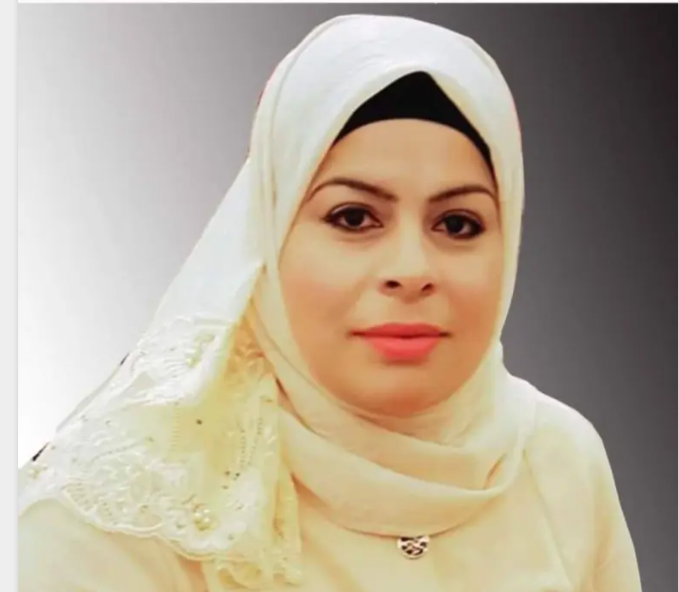
Nilufar Mo`ydinova was born in Qoshtepa district, Fergana region, Republic of Uzbekistan. She graduated from Uzbekistan State World Languages University. Currently, she works as a Manager at “Fair Print” Typography Service. Her articles have been published in the “Bekajon” and “Kenya Times” newspapers. She is also a holder of international certificates.