GRACIELA NOEMI VILLAVERDE is a writer and poet from Concepción del Uruguay (Entre Rios) Argentina, based in Buenos Aires She graduated in letters and is the author of seven books of poetry, awarded several times worldwide. She works as the World Manager of Educational and Social Projects of the Hispanic World Union of Writers and is the UHE World Honorary President of the same institution Activa de la Sade, Argentine Society of Writers. She is the Commissioner of Honor in the executive cabinet IN THE EDUCATIONAL AND SOCIAL RELATIONS DIVISION, of the UNACCC SOUTH AMERICA ARGENTINA CHAPTER.
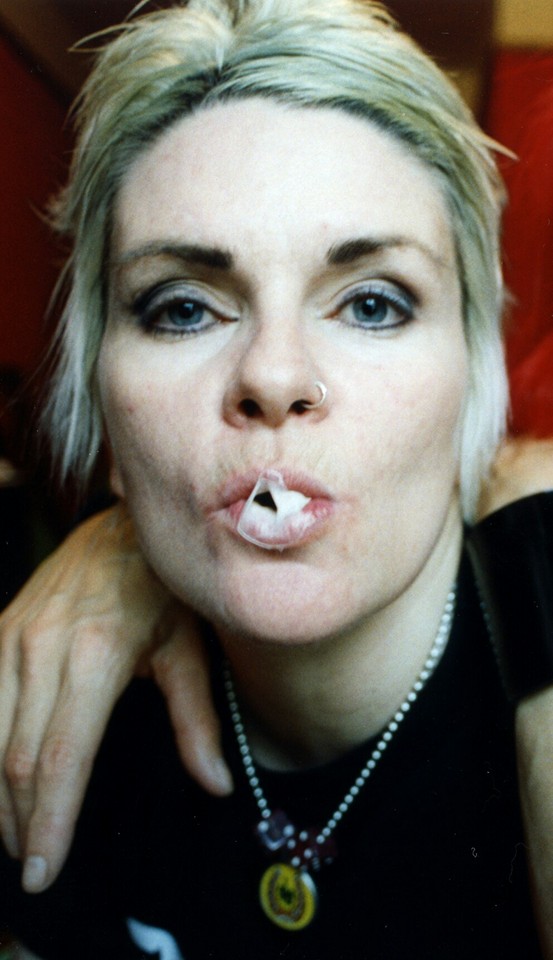
I was operating under a pseudonym at the time, blogging about Kaiser Permanente and the physicians whose decisions had left scars—some literal, some systemic. I was part of a loose network of Facebook groups pushing back against corporate medicine, calling out malpractice, and amplifying patient voices. One day, a notification popped up: Kari Lee Krome has sent you a friend request.
I blinked. The Kari Krome? The original visionary behind The Runaways? The teenage firebrand who helped shape the band’s early identity before being pushed out of the spotlight?
She messaged me almost immediately. “You’re my hero,” she said.
I told her who I really was. I told her I was the world’s biggest Runaways fan. And just like that, we were off—an unlikely pair bound by trauma, rebellion, and a shared disdain for sanitized narratives.
Kari had suffered a brain injury in a car accident, and later, she told me, was harmed by a medication prescribed by a Kaiser physician. She was raw, brilliant, and unfiltered. She’d pop into my DMs calling me “Mister,” and referred to herself as my “little sister on a skateboard.” It was a nickname that stuck, and one that still makes me smile.
She gave me an insider’s view of the world behind the Runaways mythology—the depravity of Rodney Bingenheimer, the sickness of Kim Fowley. “I’ll need therapy for life,” she told me once, and I believed her. She spoke of being “incredibly naive” at 14, living with Fowley, and of being “undiagnosed autistic.” Her stories weren’t just confessions—they were dispatches from the edge of a cultural moment that chewed up girls and spat out legends.
When I asked her about David Bowie, she said, “He was a vampire.” No context. No elaboration. I assumed she meant his proximity to the same predatory circles—Rodney on the ROQ, the Sunset Strip’s darker corners.
We collaborated. We co-wrote six songs together. She showed me her songwriting structure—tight, poetic, emotionally surgical. She sent me a story called Mootsie Tootsie, a scabrous, hilarious, and terrifying piece about shooting heroin in a Taco Bell restroom. I published it in my William S. Burroughs tribute anthology. Her poem North of No North appeared in White On White: A Literary Tribute to Bauhaus, alongside contributions from Poppy Z. Brite, Caitlín R. Kiernan, and David J. Haskins.
She was only mentioned once in the Bad Reputation documentary about Joan Jett. It didn’t surprise me. Kari had little regard for the rest of the Runaways. She was the spark behind the band’s original concept, but her role was minimized, her voice nearly erased.
And then, about six months ago, she disappeared. No message. No goodbye. Just silence.
I don’t know what happened. I don’t know if she’s okay. But I know this: I will never forget our friendship. I still have mad love and respect for the woman who called me “Mister,” who gave me a glimpse into the machinery behind the myth, and who reminded me that the most powerful voices are often the ones the industry tries hardest to silence.
Kari Lee Krome is a survivor. A poet. A punk. A sister. And wherever she is, I hope she’s writing, skating, and slowly conquering her demons.
Sayani Mukherjee speaks to the weight of the world’s grief, of millions of lost loves over historical time.
Ahmed Miqdad quests for love and peace in Gaza, all in vain. Yucheng Tao bears witness to genocide in Cambodia through his evocative poem where memory and grief echo off the rocks and pages of history. In his piece, self-declared pure idealism leads only to death.
Eva Petropoulou Lianou addresses the issue of domestic violence. Christopher Bernard reflects on humanity’s continual state of conflict among different groups as Patricia Doyne excoriates tolerance for school shootings and immigration enforcement violence in the United States.
Alex Johnson speaks to the need for radical creativity as resistance to the forces of death and authoritarianism. Mary Bone captures moments of human and animal growth and creation. Jacques Fleury discusses the need for humans to coexist equitably with each other and with the wide diversity of natural creatures who share our planet.
Luis Cuauhtemoc Berriozabal speaks to energy, creativity, and the need to support young people. Xudoyqulova Shahzoda highlights Uzbekistan’s efforts to empower the young, the disabled, and women. Rayhona Sobirjonova expresses her gratitude for a caring teacher. John Sheirer’s short story depicts a boy learning a mixture of love and toughness from both a father and stepfather. Bill Tope presents the story of a mother determined to overcome obstacles and keep her family together. Muhammadjonova Muzayyana praises the love and care of her devoted mother. Judge Santiago Burdon’s video presents an ironically humorous tale of a man’s adult son coming out of the closet.
Otaboyeva Zuhra shares how education can transform a young woman’s life. Madina Furkatova highlights efforts to educate and empower young women in Uzbekistan. Muhammed Suhail reflects on the indispensable contributions of women to shaping the early days and teachings of Islam. Bhekisisa Mncube reviews Nthikeng Molele’s novel Breasts, etc, a feminist story of a group of women and a man who photographs them nude. Anna Keiko shares her determination to live out her calling as a poetess, in honor of the many female trailblazers throughout history.
Rahimova Dilfuza Abdinabiyevna shares ways to heighten students’ communication competence. Boboqulova Durdona outlines ways to engage students in active learning. Sevinch Mukhammadiyeva talks up a student leadership conference she attended, “Office of the Future.” Panoyeva Jasmina O’tkirovna highlights advantages of blended classrooms and self-study combined with instruction. Nafosat Jovliyeva discusses roles for technology in language learning. Dilshoda Jurayeva urges students to learn and adopt self-discipline as a study tool. Janna Hossam discusses the problem of burnout in gifted children.
Abigail George speaks to finding and claiming beauty and selfhood in the face of mental illness. Tursunbayeva Shohida Baxtiyor traces the history of diagnostic methods in psychiatry. Ana Petrovic speaks to the confluence of forces and emotions rising up in the human psyche. Brian Barbeito journeys through real and surreal worlds to tend and befriend the different and the marginalized. Hua Ai speaks to the wildness still inherent in our feelings and encounters with urban nature. Joan McNerney draws on elegant nature metaphors to describe love and the transitory states of life. Mark Young speaks to growth and transformation in our bodies and the natural world. Anakha S.J. compares maintaining feelings of love to tending a flower. Mahbub Alam presents a joyful couple forgetting themselves among the beauty of nature and their blossoming romance. Jerome Berglund and Christina Chin’s tan-renga present an adorable take on modern relationships. Mesfakus Salahin’s extensive nature metaphors speak to the psychology of a lover.
Brian Barbeito reflects on a random capricious day with various encounters, positive and negative, with people and nature. Chimezie Ihekuna expresses cynicism about the hypocrisy inherent in many relationships, Raisa Anan Mustakin laments people’s growing isolation and separation from each other, and Alan Catlin processes work anxiety through dreams while out in pastoral greenery. Nageh Ahmed evokes feelings of both love and loneliness under the moonlight as Wazed Abdullah finds inner peace in lunar light. Mykyta Ryzhykh evokes efforts of love in the face of the loss of innocence. Duane Vorhees speaks to the vulnerability and unpredictability inherent in love.
Vohidova Ruxshona discusses the internal composition of Saturn and the wonder of the far-off universe. Don Bormon expresses his fascination with a constantly changing cloudy sky. Abdurrahim Is’haq’s artwork of a door shrouded in shadow and sunlight evokes mystery and wonder.
Abdulboqiyev Muhammadali turns to medicine as a subject, sharing some of the warning signs of a stroke. Eshmurodova Sevinch discusses how modern financial technology can improve the functioning of global economic systems.
Mathematics is also part of our physical universe, and Mamadaliyeva Durdona shares methods for solving systems of linear equations. Mardonova Marjona finds the beauty in each season, in change, as David Sapp revels in “relentless” natural elegance. Nikhita Nithin sways with the wind during a neighborhood festival. Nilufar Mo’ydinova offers suggestions on how to live sustainably with nature, suggesting improved environmental practices for the publishing industry.
Sushant Thapa writes of finding happiness wherever he can in life as Stephen Jarrell Williams enjoys a tender moment with his wife and Mahbub Alam loses himself in the joy of nature and love. Maja Milojkovic speaks to a transcendent love, present even when the couple is apart, echoed in endless mirrorings on water’s surface. Summer Kim takes joy in transitory childhood moments and memories. Su Yun’s Chinese bilingual elementary students write joyfully about nature and play. Sharifova Saidaxon reminisces about her happy childhood as Xo’jamiyorova Gulmira remembers her elementary school days and classmates.
Uzbekistan’s writers go beyond heritage to relate how the nation is currently a source of pride, as Jumaniyozova Nazokat discusses the potential for wellness tourism in Uzbekistan. Madinabonu Mamatxonova describes rapid Uzbek economic growth driven by entrepreneurship. Xurshida Abdisattorova highlights the accomplishments of an Uzbek mixed martial arts coach. Meanwhile, Shahnoza Ochildiyeva outlines what Central Asian countries, and the rest of the world, can learn from Finland.
J.J. Campbell explores different sides of memories: nostalgia, loss and mourning, and the quest to separate oneself from toxic or false aspects of the past. Brooks Lindberg laments the death of glaciers through a poem that grants nature a measure of agency even in melting. Jake Cosmos Aller reflects on historical revision at the Smithsonian Museum.
Grzegorz Wroblewski’s fresh installment of asemic poems evoke the aesthetic of language as a part of human culture. Ken Gosse’s ars poetica defends the power of rhyme and meter in a world of free verse. Graciela Noemi Villaverde celebrates the mysterious and poetic works of Jorge Luis Borges.Dr. Jernail S. Anand argues for the primacy of literature as a study and discipline to help us return to our humanity as Mirta Liliana Ramirez does something similar, depicting dance as an act of love to add beauty to life.
Michael Robinson shares, in his final piece after ten years of writing for Synchronized Chaos Magazine, the family and sanctuary he has found through his faith.
Susie Gharib draws on historical mythology to explore our place in the world and our vulnerabilities as humans. Patrick Sweeney’s tiny vignettes capture distinct moments in human life: wonder, confusion, humor, or just us pondering being alive. Taylor Dibbert relates the paradox of what happens when we care too much – or too little – about money. Santiago Burdon explores human nature in his tale of a chance encounter on an airplane.
Finally, Sarvinoz Orifova reflects on the nature of hope and the power of holding on to it during challenging times.
“My radiant homeland, Uzbekistan! The land of devotees like Mahmudkhoja Behbudiy, Fitrat and Cho’lpon. My bright land, where faith and Islam are my constant companions, my Uzbekistan. I am proud to be a lover of such a country, and I am also proud that our Hazrat Jadids, who endured all difficulties for the happiness and prosperity of this country and sacrificed their lives to lead the Motherland from darkness to light, are my ancestors!
O’g’iloy Bunyodbekovna Muhammadjonova. Born on September 11, 2010, in Qo’rg’ontepa district, Andijan region, into an intellectual family. Currently a 9th-grade student at School No. 5 (IDUM). Due to her interest in poetry, she regularly writes poems.
Her Achievements:
* President of the Self-Governance Body of School No. 5 (IDUM)
* Host of the school’s radio broadcasts
* Host of the “Yulduzli Tabrik” project
* Holder of over 15 international certificates
* Youth Ambassador of the Wakelet Community in Uzbekistan
* Member of the “Young Reformers” Council
* Qo’rg’ontepa District Volunteer
* Winner of district and regional essay competitions
FACTORS FOR DEVELOPING STUDENTS’ COMMUNICATION COMPETENCE
Shahrisabz State Pedagogical Institute
Lecturer: Rayimova Dilfuza Abdinabiyevna
Abstract This article discusses the theoretical foundations of developing students’ communication competence, the importance of mastering their native language and improving the level of speech communication skills, and highlights the system of professionally significant qualities. It also emphasizes the need to focus on methodological support for diagnosing professional mastery.
Keywords language education, ability to communicate, fostering the quality of enjoying communication, cultivating aesthetic education, developing independent thinking. The aim is to enhance student competence through such communication.
Main Part Taking into account that language develops as society progresses, the issue of enriching native language teaching with new developmental methods is becoming increasingly relevant. Students should be taught that learning and teaching the secrets of our native language through interactive and innovative methods, while ensuring deep and nationally rooted understanding, is necessary. In higher educational institutions, it is important to ensure the continuity of teaching the Uzbek language, strengthen students’ orthographic and stylistic literacy, and create mechanisms to raise language skills and communication competence to an advanced level.
The necessity of implementing reforms and modernizing the content of native language (Uzbek) education at all levels of schooling is essential. This enables students of higher education institutions to further develop their abilities of deep thinking, listening, and communicating in their mother tongue, while also applying innovative educational technologies in this process. Uzbek pedagogical scholars have underlined that developing students into well-rounded individuals requires systematic scientific-theoretical approaches.
In Uzbekistan, purposeful and systematic measures are being carried out to improve the content and thematic quality of Uzbek language education as the national and state language.
For example, Doctor of Pedagogical Sciences, Professor U.I. Inoyatov emphasizes the theoretical and organizational-methodological foundations of monitoring and managing the quality of education, stressing that one of the important factors in professional and human thinking is language and speech competence. Methodologist M. Sobirova’s fundamental research explores theoretical and practical aspects of improving professional specialization. Researcher O.A. Abduquddusov addresses integrative approaches in training young and future specialists, focusing on solutions to the problems of thinking, language, and speech. D. Yuldasheva highlights the problem of preparing specialists with professional mastery and eloquent speech. Scholars such as Ibragimova G., Azimova I., Ziyodullayeva G., and Murodova A. explore issues such as developing interactive creativity, the psycholinguistic basis for improving linguistic skills in native language teaching, the role of rule systems in shaping communicative competence, and the importance of listening and comprehension in native language learning.
Teaching our national language requires clearly explaining and instilling the unique lifestyle, ethnography, and traditions of the Uzbek people that are preserved in the language. For this, it is essential to effectively use comparison, contrast, and generalization methods and technologies in teaching. It is the duty of a native language teacher to ensure that students understand the essence of concepts and terms, which are linguistic units. Therefore, a university teacher must themselves fully master Uzbek language and speech competence.
Based on the theoretical foundations of developing communication skills among university students, it can be said that language and speech etiquette are the essence of Uzbek national life. In any time, place, or society where good behavior and proper speech prevail among members of the community, that society prospers, its living conditions improve, and peace reigns.
When addressing the issue of improving students’ knowledge of their native language and communication skills, attention should first be directed toward identifying the system of professionally important qualities. This serves as both the basis and the methodological provision for diagnosing the dynamic individuality of a professionally skilled person.
Naturally, communication has several functions. The most frequently used is the conversation between interlocutors, beginning with greetings and extending to the highest levels of communication. National characteristics also dominate communication. Among Uzbeks, from a simple and sincere greeting to parting, such features are clearly visible.
Another important aspect of communication is that it encourages activity. Particularly in the educational process, communication creates activity. To meet the need for communication, a person must master the art of speech and etiquette. Communication is carried out through verbal expression.
In our wise nation, there are many proverbs and teachings about the rules of speaking, caution in the use of language, and the importance of thinking before uttering every word and sentence. One such saying states that a person’s honor and dignity are reflected in their cultured way of speaking. If one does not follow the etiquette of speech, their humanity will not be visible. If speech is expressed appropriately and meaningfully, it is better to listen in silence. Mastery of literary language requires not only spelling but also correct pronunciation, as these are two sides of the same coin. Deviating from literary pronunciation norms is equivalent to semi-literacy in writing.
The structural elements of speech communication include:
a) transmitting communicative information;
b) acting in interactive cooperation;
c) jointly perceiving in a perceptive way.
For example, in the communicative process, when a teacher explains a topic, they first set a communicative goal and then demand interactive actions (cooperation) from students. In practical and seminar classes, as well as lectures, the teacher addresses students with various questions and evaluates them accordingly. Most students show activity in this regard, though some find it very difficult to raise their hands and answer. A student forced to respond may show uncertainty in speech at the very communicative stage. Or, even if both sides act interactively, if they do not perceive the expressed idea together, the perceptive aspect of communication is disrupted, leading to poor comprehension of the lesson. Neglecting these aspects during communication results in misunderstanding.
Therefore, developing students’ speech communication culture should be determined in advance as parameters in the form of knowledge, skills, and abilities aligned with small-scale objectives. For example, the content of dialogue replicas forms separate units. Verbal communication is not limited to questions and answers; it also includes listening to the interlocutor, asking counter-questions, rejecting questions, encouraging action, making proposals, and so on. This requires the use of various lexical and grammatical tools and formulaic sentences. Hence, mastering speech communication (dialogue) requires a broad approach.
Our observations show that most sentences constructed and presented by students have logical connections, but the normative level of words and grammatical forms used to construct syntactic structures does not fully meet the requirements. Cases were observed where auxiliary words, word-forming, form-building, and syntactic relation-forming affixes were not used appropriately. To improve students’ native language knowledge and communication skills, teachers should encourage them to read more literary books, do more writing exercises, and develop the habit of working with dictionaries.
In higher education institutions, developing the speech competence of future specialists is crucial for encouraging creativity, carrying out projects, and fostering literary reading and writing practices. Developing students’ communication culture should be set in advance as parameters in the form of knowledge, skills, and abilities aligned with small-scale objectives.
From modern requirements, we can identify the following main ways and requirements for developing language and speech competence of future specialists, based on the content of education:
1. A specialist with sectoral scientific-theoretical training and creativity must possess speech competence.
2. Engaging in scientific-research and experimental activities, they must be able to express the realities of their work in both written and oral forms appropriate to speech styles.
3. When introducing new technologies, they must be able to fully explain and demonstrate their specific features using professional terminology.
4. Through modern electronic media, they must be able to express virtual communication clearly, simply, concisely, and without vagueness, using national and professional styles. They must ensure the clarity and validity of information through the words they use.
Conclusion
The successful resolution of political, economic, and social tasks in society largely depends on how well each member of society knows their native language and can apply it in practice—that is, in speech situations, environments, and among people of different social groups—freely, clearly, simply, and fluently.
Cultivating in students the ability to communicate correctly, fluently, and meaningfully, while at the same time enhancing their aesthetic taste and developing their independent thinking capacity, is one of the key tasks in achieving communicative literacy and developing student competence.
References
1. www.namspi.uzuniversaljurnal.uz INNOVATIONS. Materials of the Republican Scientific-Practical Conference. Namangan, October 10–11, 2024. Presidential Decree No. 5850 on measures to fundamentally enhance the prestige and status of the state language.
2. Inoyatov U.I. Theoretical and Organizational-Methodological Bases of Monitoring the Quality of Education in Professional Colleges. Dissertation. Tashkent, 2003. p. 327.
3. Xalikova Sh. Problems of Improving Education and Science. Qarshi, 2022. pp. 558–560.
4. Sobirova M. Teaching Language Phenomena on the Basis of an Anthropocentric Approach. International Journal of Early Childhood Special Education (INT-JECSE), Vol. 14, Issue 07, 2022. DOI: 10.9756/INTJECSE/V14I7.91.