Prose poetry from Alan Catlin

I Remember

I remember the Winter of 2011 when a group of local poets visited Bernadette Mayer at her home in Nassau.

I remember how cold it was.

I remember the only heating source in the converted open school house living room was a pot belly stove.

I remember thinking no one had cooler anecdotes of New York City poets from the sixties and seventies than Bernadette did.

I remember she spoke of her friend Joe Brainerd’s book I Remember.

I remember the deserted St Croix, Virgin Island beach my mother and I used to visit when we lived on the island.

I remember how I felt when I heard The Rockefellers were going to build a resort hotel on the site.

I remember thinking that Ferlinghetti was going to live forever.

I remember thinking I wouldn’t wish that on anyone.

I remember watching the Brooklyn Dodgers play the New York Giants on the first TV we ever owned.

I remember having the mumps and my cousin coming over from next door to make sure I got chicken pox also.

I remember seeing every prewar western every made.

I remember seeing hundreds of noir classics.

I remember seeing King Kong eleven times in one week on The Million Dollar movie.

I remember my cousin saw it thirteen times.

I remember watching the Joe McCarthy House of Unamerican Activities hearing live on TV and, while I didn’t know what they were all about, not really, I thought McCarthy was a bully and a dick.

I remember my mother hiding a copy of Tropic of Cancer in her secret desk drawer and sneaking looks at it when she was at work.

I remember not getting what he was writing about but that it was dirty.

I remember she had a copy of This Is My Beloved also but she didn’t hide that book away.

I remember reading that all the way through when I was like ten and thinking the fireworks he described were pretty cool.

I remember how cool the black and white the fireworks display at the beginning of Manhattan

was the first time I saw it.

I remember that one of my cocktail waitress saying she saw the movie and it sucked.

I remember she said “…and it wasn’t even in color.”

I remember knowing how to read when I entered first grade at the Catholic school in Christiansted.

I remember I was the only one who could read in first grade and how much the nuns loved me.

I remember how it felt  to be the only non-Catholic in Catholic school.

I remember the first time I read, I Remember.

I remember the baseball game in 1965 I took my girlfriend to see.

I remember there was a centerfield to home to second base triple play in that gam and how she said, “That was a nice play.”

I remember that was the first time it had ever happened in a major league baseball game and it has only happened one more time since.

I remember I still loved her anyway no matter how unimpressed she was.

I remember the first major league game I took our kids too and missing three innings when Jose Cruz hit me on the cheekbone with a high foul ball while I was yelling, “I got it, I got it.”

I remember I would have been blind in my right eye if I had been wearing my glasses.

I remember they wanted me to go to Flushing General.

I remember a nurse telling me once if you have a choice between going to Flushing General or Bronx General and dying, die.

I remember burning my hand when I accidently hit my hand on the pot belly stove that Bernadette asking me to stoke.

I remember it hurt for weeks after.

I remember reading the memoir of Pasternak, I Remember.”

I remember seeing selections from Roman Vishniac’s, A Vanished World, at the State Museum of New York at Albany and crying.

I remember reading poetry at the reading Against the End of the World just down the block from the State Museum.

I remember seeing an exhibition on the Atomic Bomb age at the museum and seeing my first Laurie Anderson work for art, “The Singing Brick.”

I remember writing a poem against the end of the world called the Singing Brick.

I remember it was in a musically themed, against the end of the world book of poems called, Stop Making Sense.

I remember the first poem I ever published in sixth grade, in the mimeo class reader, The Fledgling.

I remember the poem was a pastiche of the song Old Dan Tucker.

I remember duck and cover drills in Centre Avenue Elementary School.

I remember how stupid they were given how close we were to New York City and how many huge glass windows there were in all the classrooms.

I remember the poem I published in the group photo/poem book commemorating our trip to Bernadette’s house.

I remember the title of my poem was, “Emergency Drills, Centre Avenue Elementary School, East Rockaway, N.Y, 1958.”

I remember the first time I saw Throne of Blood in grad school.

I remember the first time I saw Hiroshima Mon Amour in grad school.

I remember the first time I saw the Japanese movie, After Life.

I remember seeing four Brooklyn Dodgers home runs in a row.

I remember we didn’t get the foul ball that Jose Cruz hit me with.

I remember torrential rain on a tin roof on St Croix.

I remember playing spin the bottle and never being kissed.

I remember the high school psychologist telling me I should practice Rorschach inkblots so I could take her test.

I remember refusing to take the test because I thought it was stupid and I didn’t see anything suggestive in those blots.

I remember her telling me I second guessed myself all the time.

I remember her telling me I should trust my instincts because my first thoguht was almost always the right.

I remember how useful an observation that turned out to be.

I remember every two weeks for three years in the nightclub trying to guess which of the new band members was the drummer.

I remember I was only wrong once.

I remember thee guessing game as a process of elimination until you found the crazy one; he would be the drummer.

I remember seeing my first Bergman movie.

I remember seeing Last Year at Marienbad three time in four days in grad school.

I remember not paying attention in my first psychology class lesson in college on the Stanford Binet test.

I remember the teacher trying to make an example of me by giving me the block test graduating in difficulty as the numbers increased starting at six of ten.

I remember I did six, seven, eight and nine as fast as she could put them in front of me.

I remember how stunned she was.

I remember not mentioning having taken that test less the three years ago along with every other test they had on offer.

I remember the summer I first heard Leonard Cohen’s song, Suzanne.

I remember seeing the photo exhibit Requiem by the photographers killed in Vietnam at the Eastman House not long before 9-11.

I remember that exhibits was as quiet as a funeral and all the people who were crying at it.

I remember it was how I felt when I finally got to see The Wall in DC.
Poet and humanitarian Eva Petropoulou Lianou interviews Canadian author and professor Dr. John Portelli

INTERVIEW WITH JOHN P. PORTELLI, February 2025

John P. Portelli is a Maltese-Canadian poet and fiction author, and professor emeritus at the University of Toronto. Besides 11 academic books he has published 10 poetry collections, 2 collections of short stories, and a novel. His literary work has been translated into English, Italian, French, Arabic, Farsi, Turkish, Romanian, and Spanish. His collection Here Was was short-listed for the 2024 Canadian Book Club Award. He lives between Malta and Toronto.

1. Please share your thoughts about the future of literature.

For me literature is an essential part of being human. Its future? I am not a fortune teller! But I am afraid that the ultra capitalist and individualist mentality of our present way of living, to me, does not augur well for a healthy future for literature. For example, it is getting even harder to sell poetry books, and publishers are feeling in the pinch. But there will always continue to be literary authors. Whether they will be appreciated is another story.

2. When did you start writing?

I started writing poetry when I was 16 years old. My initial interest was in poetry and essays.

3 .  The Good and the Bad. Who is winning nowadays?

It depends in which area of life?  In general, however, I think we are on the verge of a new fascist period in the West. When I read authors like John Dewey and Bertrand Russell who wrote about the conditions in the West in the 1930s, unfortunately I see lots and lots of similarities to what is happening today. Unless you are part of the dominant conservative “culture” people are marginalised. Colonialism is still alive and strong! God help us.

4. How many books have you written and where can we find your books?

I have written 11 academic books, 10 collections of poetry (some published in translations), 2 collections of short-stories, and a novel. Some of my work is available from Amazon, others from Horizons Publishers in Malta and Word and Deed Publishers in Burlington, Ontario, Canada.

 4. The book. E books or hardcopies of books. What will be the future?

I think some people will still prefer hard copies of books. Given my weak eyesight, I prefer hard copies.  But more and more people are used to reading on line. For me, as long as people read, that is fine.

5. A wish for 2025?

True and lasting peace in the Middle East. The Palestinians do not deserve what they have been going through since 1948! And this wish does not mean I support Hamas.

6. A phrase from your book or a book you like?

“The opposite of a civilised society is a creative one”. Albert Camus from his essay “Summer in Algiers”.

7. Recent and future publications?

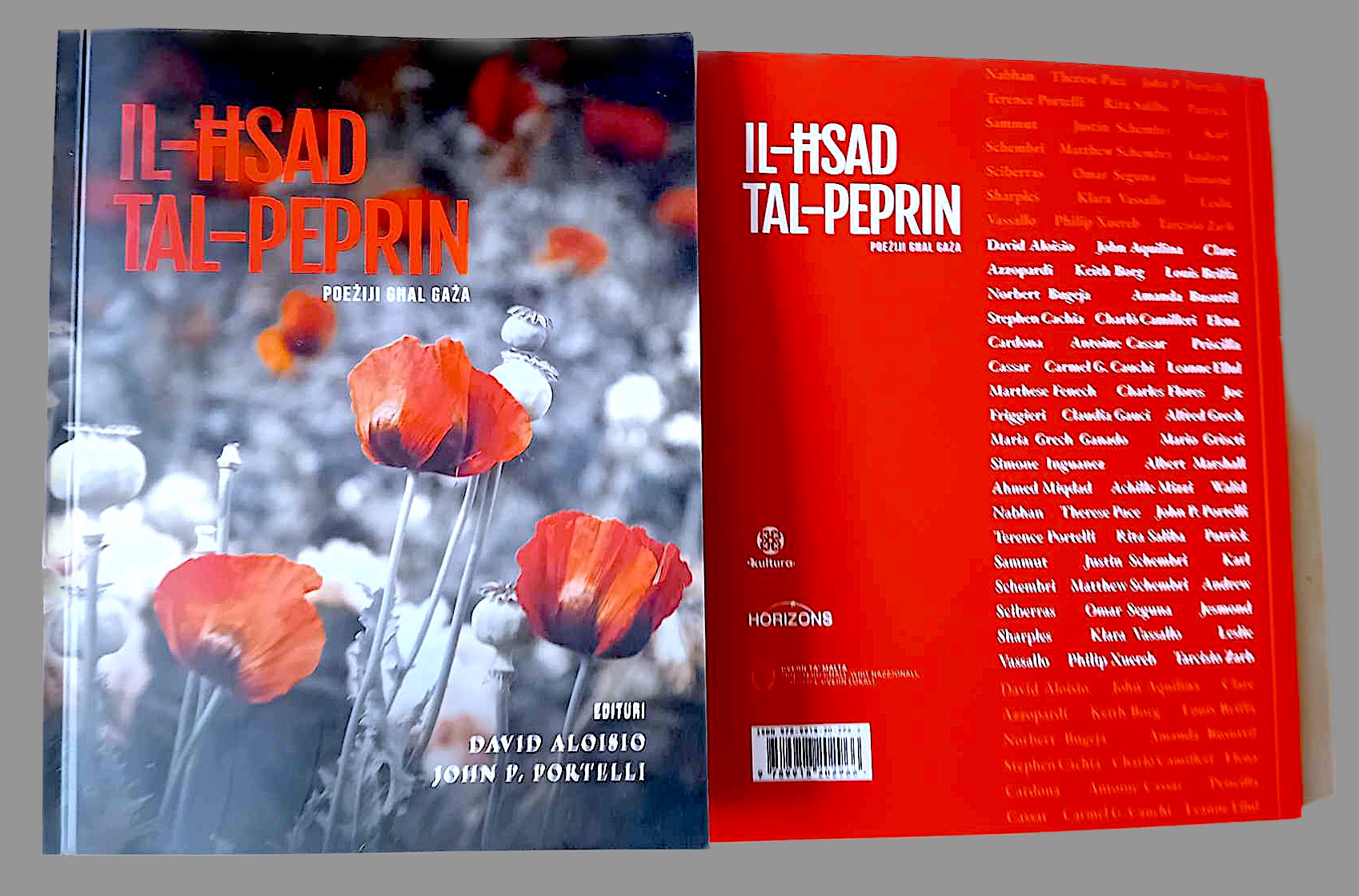
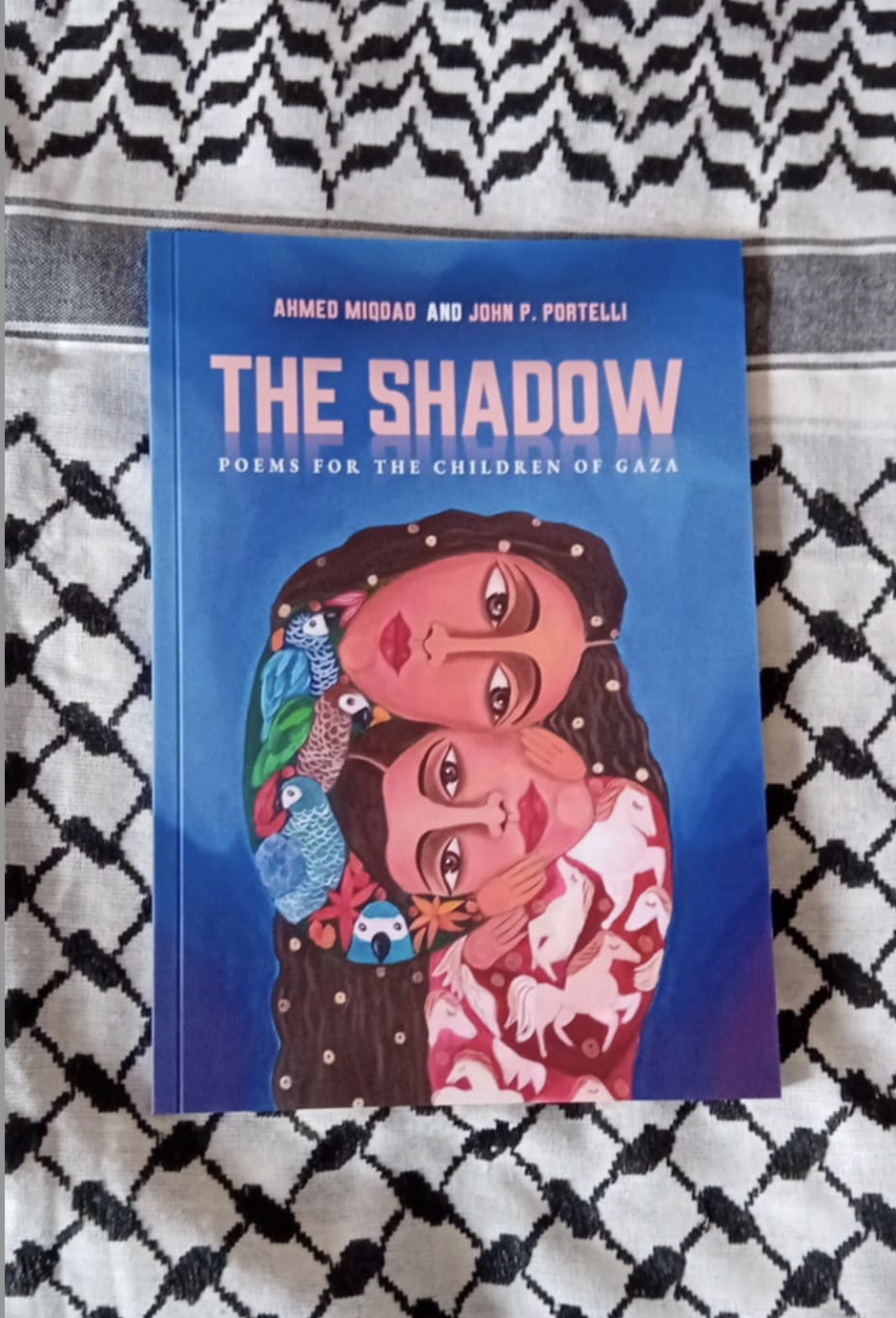
In 2024 I have edited a collection of poetry in Maltese on Gaza. And also I published a collection of poems with Ahmed Miqdad, a poet from Gaza. The profits from the sale of these two books have been donated to Gaza. I am now also editing a collection of poems in English by international poems on Gaza and Palestine. Again, the money from the sales of this collection will be donated to Gaza. The book will be published later this year by Horizons in Malta and Daraja Press in Quebec.

Thank you so much.. …. EVA Petropoulou Lianou Author Poet Greece

Dr. John Portelli's anthology The Shadow: Poems for the Children of Gaza. Blue book with a cover image of two brown-haired girls embracing each other.
Cover of an anthology published by Dr. John Portelli with red poppies in a field of black and white flowers.

Poetry from Umida Haydaraliyeva

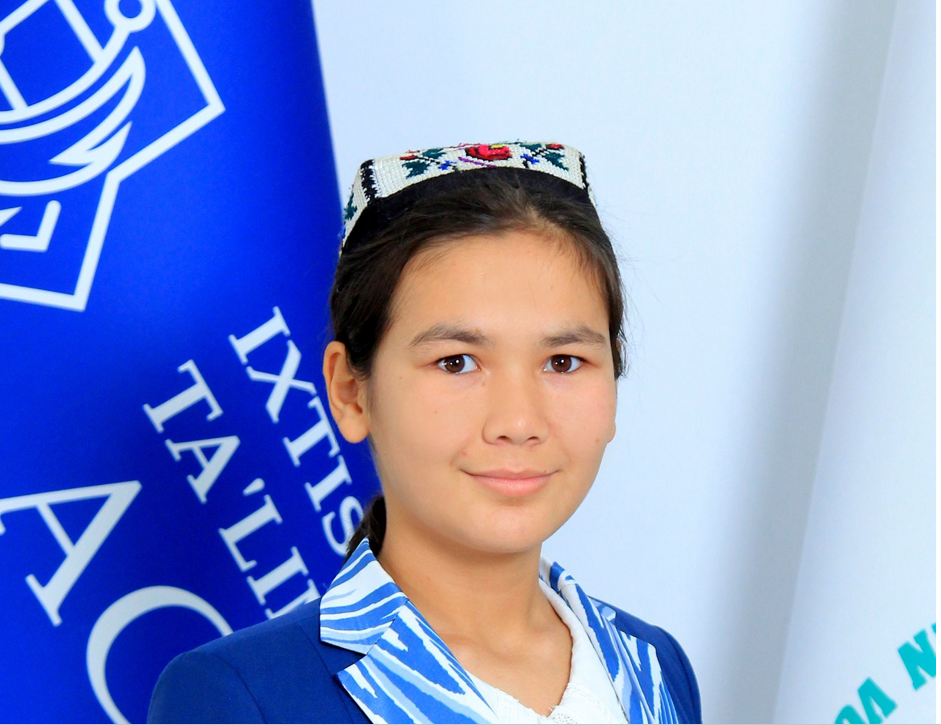
Central Asian teen girl with her dark hair in an embroidered headscarf and a blue coat and white blouse stands in front of the Uzbek flag.

Pen fee

There was a commotion in the village,

A message spread.

Our neighbor Mashrab brother

It’s a great piece of writing.

Taralibdi dovrugu,

Across seven neighborhoods.

Even this in the city

Everyone who walked said.

Then go to the publisher

Print your work.

To the money from it

Take a dry bag.

Umida Haydaraliyeva  Bahromjon qizi.

 Student of “B” grade of 8th creative school named after Erkin Vahidov, Margilan city in Uzbekistan.

Essay from Nafosat Nomozova

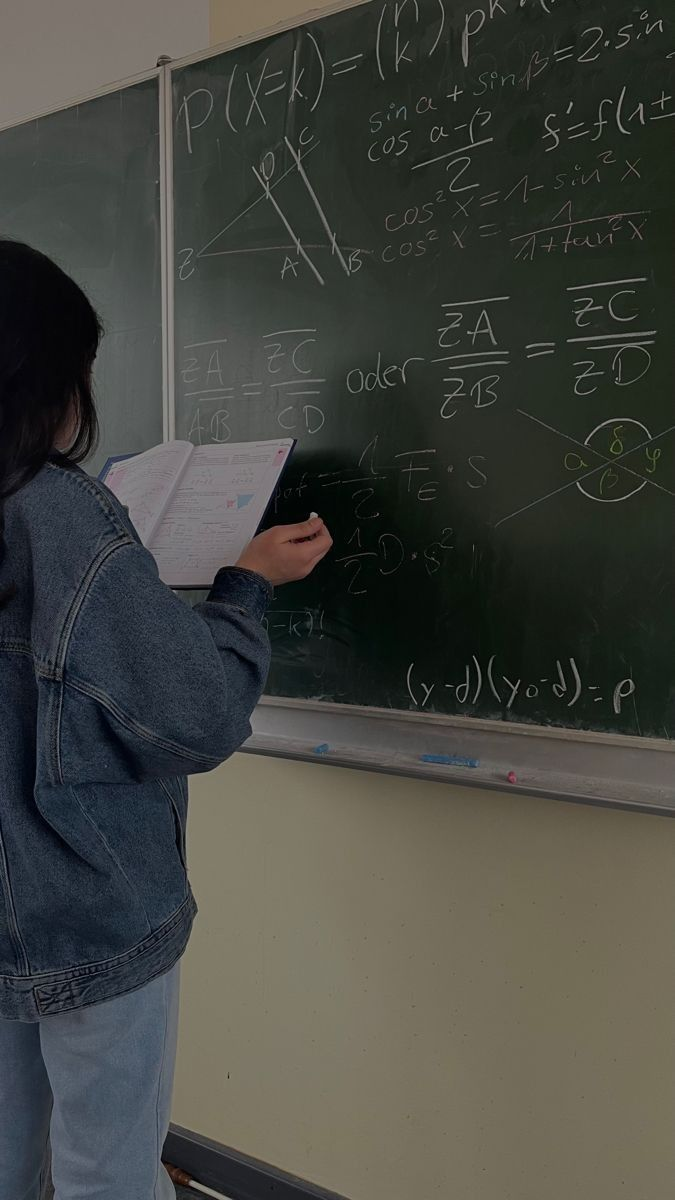
Teen Central Asian girl in a jean jacket with long dark hair writes mathematics on a green chalkboard.

The philosophy of life through mathematics

Some people say that mathematics is a difficult subject, while others find it boring. However, in reality, mathematics gives us hope that there are solutions to problems in life, just like the examples in mathematics. I also have to say that mathematics is the greatest motivator for people because the numbers in mathematics start from  0 and go to infinity.

To those who say mathematics is difficult, I would recommend that they try to engage with this subject a little more sincerely. Some young children may struggle to learn mathematics because of textbooks. For example, in elementary school, it is taught that a smaller number cannot be subtracted from a large one. However, in higher grades, it is taught that a smaller number can be subtracted from a large one, but the result will be negative.

Moreover, we can say that some current textbooks are also becoming complex. I  find that some mathematical topics and examples reflect human interpretations. Parallel lines never intersect, and in this, I see people who, no matter how many hours, months, or years pass, will never be together. Tangent curves, on the other hand, intersect only once and then part ways for life paths as if nothing had happened. In solving trigonometric equations and inequations, we are given an interval, within that range and discard the unnecessary ones. I compare this to making decisions in life.

However, our faces, fingers, hands, feet, and body structure -all of these are based on the “golden ratio”. The golden ratio is not typically covered in textbooks, but I will explain it briefly and simply. If you pay attention, you`ll notice that people tend to sit not in the exact center or the very edge of a bench, but somewhere between the center and the edge. This is the first example of the golden ratio. Another example is your face: if you observe closely, the distance between your nose and eyes your eyebrows and eyes, and the length between your two eyes, and the length between your two eyes are all proportional to the golden ratio. In general, I can say that life is mathematics, and even the simple things in our lives are mathematics.

Poetry from Mykyta Ryzhykh

***

man is a fire

every time I burn with shame when I see a bird pecking at bread crumbs at a bus stop

children’s bread and milk are poured from heaven onto the rain earth

minced meat at the meat market screams

***

in the morning I watched fish bones on the shore

autumn crying to the crunch of ears and bones

the heart turns inside out in the hope that aluminum birds

also fly home from warm countries after wintering

***

platinum night in the back of the head

who breathes rose petals into the crown of the cemetery?

perhaps this is another hanged or unborn brother

maybe it’s a local jesus

maybe it’s mom who smiles with raindrops

it would be nice if it was someone good

but black and white don’t exist

there is only a synthesis of colors

it would be nice if such an abstract love corresponded to a non-abstract world

and at night a cemetery emerges from under the pillow

and flowers dream of growing not for the sake of mourning ribbons

the night goes on a journey

morning will never come

***

I press a laptop key unknown to me and hope to summon the spirit of the deceased grandfather in this way

what you do not understand: the life of the elderly is death

I would like to live forever but I’m too poor for that

I would rather not love but I need to fill the void inside my chest

I would like to be an inanimate object but I move like a worm

I’d rather live like a worm with no limbs so I wouldn’t be forced to take death in my hands

my grandfather promised to play with me after work and didn’t come back

the cast-iron milk of the night covered his eyes

after lunch it is very dark outside

***

my feet are stones

I step on the leaves by force

I feel a crunch under my feet

whose bones turned out to be leaves?

why is the tree silent?

why does the bush not wave its branches with its hands?

whom I trample under my sole on the way to death?

Poetry from Philip Butera

Clawing and Crawling

Soft and kind

are

felt in another variation

when

waves confine ambition.

I can’t find what is under,

under

the many variables

hidden

under the fabric,

when the fabric

itself is hidden

under

a fabricated

lifestyle.

There are many reasons to cry.

When you lose a lover

who was a friend

but

the intimacy is missed

not the closeness.

Purpose and destruction

seek

comfort

from reasoning.

Problems

which serve deceit well

come to mind.

There are scars across the eyes,

across the miles

and though merit

is sacrificed for appearance

you can hear

the laughter from those

who know you.

I

am an actor,

and by no means

a dancer.

I

yield vicariously

to sermons

and

pretend to come alive.

I

have found

the womb of the soul

favors

deception

and

it is easier to demand

than to

take notice.

To gamble with God,

know that

the devil wins.

You must

fall to your knees

clawing and crawling,

until

a voice inside your head

screams,

“Just wake up.”

Philip received his M.A. in Psychology from Simon Fraser University, Vancouver, Canada. He has published five books of poetry, Mirror Images and Shards of Glass, Dark Images at Sea, I Never Finished Loving You, Falls from Grace, Favor and High Places, and Forever Was Never On My Mind. Three novels, Caught Between (Which is also a 24-episode Radio Drama Podcast https://wprnpublicradio.com/caught-between-teaser/), Art and Mystery: The Missing Poe Manuscript and Far From Here. Philip also has a column in the quarterly magazine Per Niente. He enjoys all things artistic.

Poet and magazine editor Maja Milojkovic interviews Serbian author Dr. Maja Herman Sekulic

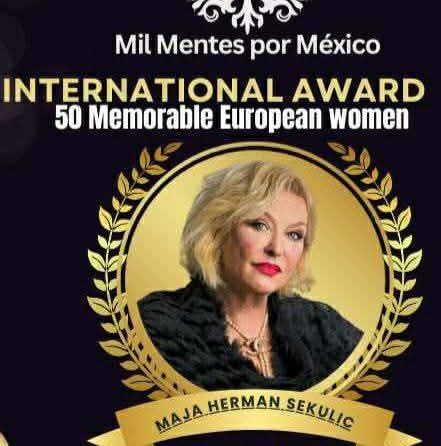
Maja Herman Sekulic's photo in a gold medallion wrapped in laurel branches on a black background. She's got bleached blonde hair, necklaces, and a black fur coat.

Exclusive interview with writer, Dr. Maja Herman Sekulić in the Serbian electronic magazine AREA FELIX!

In the latest issue of AREA FELIX, editor Maja Milojković presents a special conversation with the most awarded Serbian writer in the world and a candidate for the Nobel Prize in Literature, the esteemed author Maja Herman Sekulic.

Her thoughts and words illuminate the essence of literary creation and its role in today’s world.

1. Being nominated for the Nobel Prize is an exceptional honor. How did you experience this nomination, and what does it mean to you as a writer and intellectual?

MHS: The chances are slim, but the honor is immense—the greatest! I have no illusions that this could happen on the first attempt. I remember that Kipling, for example, was nominated 21 times, and as for our writers, we do not know how many times Andrić or Krleža were nominated! Or Kiš?

2. Your academic journey is impressive—you are the first Serbian woman to earn a PhD from Princeton. How has this experience shaped your literary and translation work?

MHS: I also have two master’s degrees, which is equivalent to another full doctorate, and I have now received an honorary doctorate from Mexico as well. I was engaged in translation before and during my studies, and I devoted a full decade to literary theory while writing my doctorate and teaching at the world’s top universities. I believe that translation is perhaps the best school of creative writing.

3. Your role as Vice President of the International Academy of Ethics in India and as a cultural ambassador under UNESCO speaks to your global influence. How do you see the responsibility of artists in promoting ethics and culture?

MHS: That is perhaps the greatest responsibility of artists, especially today, in the era of internet and now at the dawn of artificial intelligence, where ethical norms are not yet fully defined! Our Academy aims to introduce ethics as a subject in schools, and we have already made some progress. Recently, I chaired a two-day international conference in Pune, which is considered the Oxford of India. The response was enormous, and the conference was very successful.

4. Your books and studies are part of university curricula worldwide. Is it important to you that your works have academic relevance, or do you strive more for artistic freedom?

MHS: That depends on the genre. It’s like comparing apples and oranges.

I have artistic freedom when writing poetry and fiction, but I am academically responsible when writing essays on literary theory!

5. Your poetry is globally recognized, and you hold the title of a “Global Icon of Poetry.” What does poetry mean to you, and how do you see its role in today’s world?

MHS: Above all, I see myself as a poet. Even when writing artistic prose or fiction, my prose nurtures a poetic rhythm within the sentence. Poetry is the highest reflection of language and inner spirituality, and as such, it should illuminate our path—but without being overtly didactic, for then it becomes prose, and there are already too many such attempts, especially among so-called Facebook poets.

6. What have been the most inspiring moments in your career, whether through encounters with great literary figures or through the recognition you have received?

MHS: I have had and continue to have a very rich life—I was surrounded by great names from an early age. My father and grandfather are historical figures, and perhaps that is why I do not recognize authority, and perhaps that is also why I engage as an equal conversational partner with the world’s greatest figures, who also accept me as their equal.

7. Your novel about famous Serbo-Italian artist “Nine Lives of Milena Pavlović Barilli” is soon to be released in its second Italian edition and adapted into a film. How did you approach Milena’s character, and what fascinated you most about her story?

MHS: Not the second, but the third edition in Italy in a short time, and it was also declared the “Best Foreign Novel” there in 2022. I was particularly fascinated by a deep, intuitive connection I felt with Milena Pavlović Barilli, and later, during my research for my novel, I discovered numerous biographical parallels between us. For example, my grandfather, also a famous painter, studied at the same Academy in Munich and then fled to Paris, or I moved to the same corner of the same street where she lived in New York City before I was invited to write about her! There are no chances, no coincidences, just some parallels and synchronicities!

8. In your collection of essays and interviews “Sketches for Portraits”, you reflect on encounters with greats like Frye, Bloom, and Brodsky. Which conversation or meeting left the strongest impression on you, and why?

MHS: These were not mere encounters but years-long friendships, collaborations, and even loves. I wrote my master’s thesis on Frye and was the first to translate him into Serbian, and he included our conversation in his Collected Works. I corresponded with Bloom while translating him, and later, American Poet Laureate Mark Strand introduced us. We became so close that Bloom called me his spiritual daughter. With Brodsky, I shared an almost familial closeness and an intense recognition on his part. All of this is compiled in my book “Sketches for Portraits”, which has now reached its fourth edition.

9. How do you perceive today’s literary scene in Serbia and the world? Is there an author or movement you find particularly significant in contemporary literature?

MHS: I do not follow it closely, but there is always both good and bad literature. Facebook, for instance, has brought us an overproduction of so-called poetry that is not really poetry but has also connected us to the poets from every nook on the planet! 

10. Your work serves as a bridge between cultures, languages, and artistic disciplines. If you could leave one message for future generations of artists and writers, what would it be?

MHS: Yes, I have been building bridges for over 30 years and have been a multiple ambassador of poetry, culture, and goodwill worldwide. Building bridges and understanding through culture should be our higher goal! As for writing, read as much as possible, and before publishing anything, let it rest for a while to gain critical distance from your own work—that is the most important thing!

February 17, 2025

Belgrade, Serbia

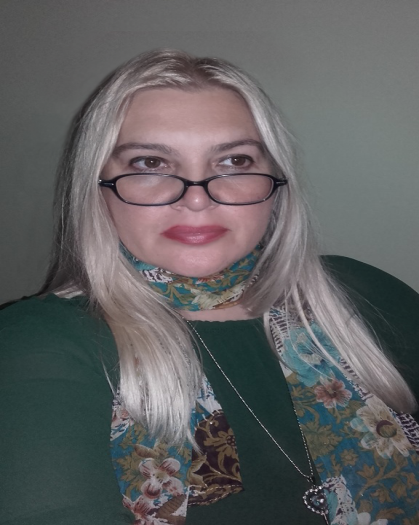
Younger middle aged white woman with long blonde hair, glasses, and a green top and floral scarf and necklace.
Maja Milojkovic

******

Srbija 

Ekskluzivni intervju sa prof. dr Majom Herman Sekulić u elektronskom magazinu AREA FELIX iz Srbije!

U novom broju AREA FELIX-a, urednica Maja Milojković donosi vam poseban razgovor sa cenjenom književnicom i profesorkom dr Majom Herman Sekulić, čije misli i reči osvetljavaju suštinu književnog stvaralaštva i njegovu ulogu u današnjem svetu.

1.

Biti nominovan za Nobelovu nagradu je izuzetno priznanje. Kako ste doživeli tu nominaciju i šta ona znači za vas kao književnicu i intelektualku?

MHS: Šanse su male ali čast je velika, najveća! Nemam nikakve ilizije da se to može desiti iz prvog pokušaja. Zapamtila sam da je Kipling, recimo, bio kandidovan 21 put, a od naših pisaca ne znamo koliko puta su Andrić ili Krleža bili kandidovani! Ili Kiš?

2. Vaš akademski put je impresivan – prva ste Srpkinja koja je doktorirala na Prinstonu. Kako je to iskustvo oblikovalo vaš književni i prevodilački rad?

MHS: Ja imam i dve magistrature što je jednako još jednom pravom doktoratu, a sada sam dobila, počasni doktorat iz Meksika. Bavila sam se prevođenjem i pre i za vreme studija, a teorijom književnosti punu deceniju i dok sam pisala doktorat i predavala na najboljim univerzitetima na svetu. Mislim da je prevođenje možda najbolja škola kreativnog pisanja.  

3. Vaša uloga potpredsednika Internacionalne Akademije etike iz Indije i ambasadora kulture pod Uneskom govori o vašem globalnom uticaju. Kako vidite odgovornost umetnika u promovisanju etike i kulture? 

MHS: To je možda najveća odgovornost umetnika posebno danas u vreme interneta i sada na početku ere veštačke inteligencije gde i kada etičke norme jos nisu sasvim definitivne! Naša Akademija želi da uvede etiku kao predmet i u škole i već je po malo i uspela. Nedavno sam predsedavala dvodnevnoj međunarodnoj konferenciji u Pune, koji se smatra Oksfordom Indije. Odziv je bio ogroman i konferencija veoma uspesna.

4. Vaše knjige i studije deo su univerzitetskih programa širom sveta. Da li vam je važno da vaša dela budu i akademski relevantna, ili više težite umetničkoj slobodi? 

MHS: To zavisi od žanra. I to su kruške i jabuke.

Ja sam umetnički slobodna kada pišem poeziju i fikciju, a akademski odgovorna kada pišem eseje iz teorije knjizevnosti!  

5. Vaša poezija je priznata na globalnom nivou, a nosite titulu “Globalne ikone poezije”. Šta poezija znači za vas, i kako je vidite u današnjem svetu? 

MHS: Pre svega vidim sebe kao pesnika i kada pišem umetničku prozu ili fikciju moja proza neguje pesnicki ritam u rečenici. Poezija je najviši odraz jezika ali i unutrašnje duhovnosti i kao takva treba da nam osvetljava put, ali da pri tome izbegava otvorenu didaktičnost jer to je onda proza a takvih pokušaja je previše naročito među tzv Facebook poets.

6. Koji su vam trenuci u karijeri bili najinspirativniji, bilo kroz susrete sa velikim imenima književnosti ili kroz priznanja koja ste dobili? 

MHS: Imala sam i imam veoma bogat život – od malih nogu sam bila okružena velikim imenima, moj otac i deda su istorijske licnosti, i možda zato ne priznajem autoritete, a i možda sam zato ravnopravni sagovornik sa najvećim imenima sveta pa me oni kao takvu i prihvataju.

7. Vaš roman Devet života Milene Pavlović Barili uskoro dobija drugo italijansko izdanje i filmsku adaptaciju. Kako ste pristupili Mileninom liku i šta vas je posebno fasciniralo u njenoj priči? 

MHS: Ne drugo, nego treće izdanje u Italiji za kratko vreme, a tu je i bio proglašen za “najbolji strani roman” 2022. Posebno me fascinirala neka duboka bliskost koju sam intuitivno osećala sa Milenom Pavlović Barilli, a potom i otkrivanje mnogobrojnih biografskih paralela koje sam otkrivala između nas. Naprimer moj deda, takođe poznati slikar studirao je na istoj akademiji u Minhenu, a zatim pobegao u Pariz, ili recimo da sam se preselila u isti ugao i istu ulicu u kojoj je ona živela u Nju Yorku pre nego što su me pozvali da pišem o njoj! Nema šanse, nema slučajnosti, samo neke paralele i sinhronosti.

8. U vašoj kolekciji eseja i intervjua “Skice za portrete”, osvrćete se na susrete sa velikanima poput Fraja, Bluma i Brodskog. Koji razgovor ili susret vam je ostao najupečatljiviji i zašto? 

MHS: To nisu bili susreti nego višegodisnja druženja, prijateljstva, saradnje pa i ljubavi. O Fraju sam pisala magistarski rad i prva ga prevodila na srpski, a on je naš razgovor uvrstio u svoja Sabrana dela. Sa Blumom sam se dopisivala dok sam ga prevodila a potom me s njim upoznao američki pesnik laureat Mark Strend. Postali smo toliko bliski da me je Blum zvao duhovnom kćeri.

Sa Brodskim delim isto skoro porodičnu bliskost i prepoznavanje s njegove strane. Sve je to sabrano u mojoj knjizi “Skice za portrete”, koja je evo dozivela i 4. izdanje.

9. Kako doživljavate današnju književnu scenu u Srbiji i svetu? Postoji li autor ili pokret koji smatrate posebno značajnim u savremenoj literaturi? 

MHS: NE pratim pomno, ali uvek ima dobre i loše literature, a to nam je doneo i Facebook – hiperprodukciju poezije koja to nije.

10. Vaš rad je most između kultura, jezika i umetničkih disciplina. Ako biste mogli ostaviti jednu poruku budućim generacijama umetnika i pisaca, šta bi to bilo? 

MHS: Da, gradim mostove već preko 30 godina i višestruki sam ambasador poezije, kulture, i dobre volje u svetu. Izgradnja mostova i razumevanje kroz kulturu treba da bude naš viši cilj.

Inače, za pisanje čitajte što više a pre nego što nešto objavite i ostavite ga da miruje neko vreme da biste dobili kritičku distancu prema sopstevom delu što je najvažnije!

17. feb 2025.god.

Beograd, Srbija

******