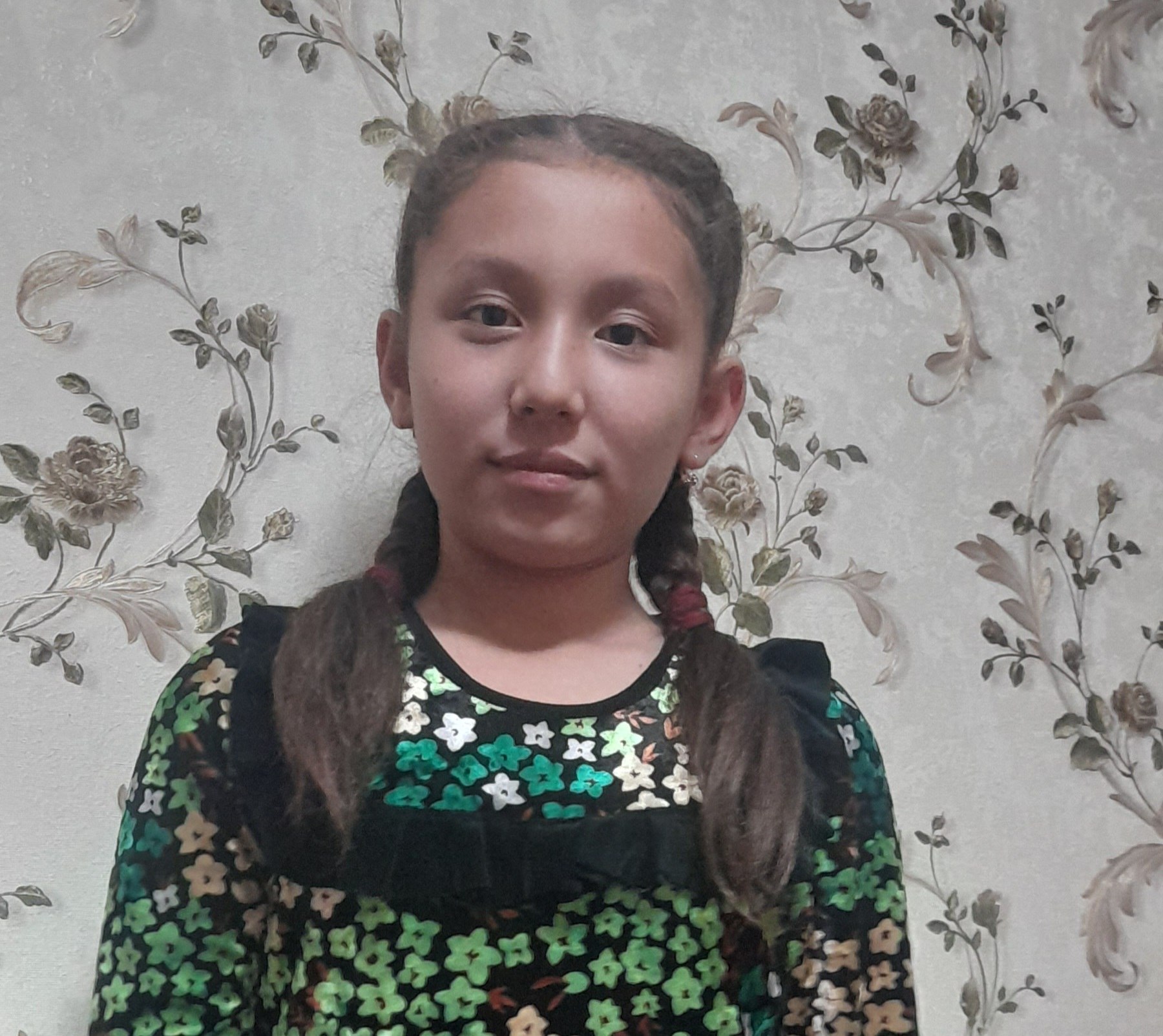
Capetonian Dillon Israel’s dream: on starting out, the unproduced playwright and his city
Dillon Israel is a South African actor, creative, storyteller and an unproduced playwright. He lives in Ravensmead, a quiet suburb in Cape Town, near Tygerberg Hospital. He enjoys cooking, baking cakes, making desserts and he loves the outdoors. He reached out to me. He was looking for a mentor. He has a lot of energy. I can hear it in the sound of his voice as I listen to the voice messages he sends me. I came into contact with Dillon Israel in September of this year.
He is twenty-nine years old and wants to “make it”, like so many people in this country in their twenties, hungry to work in the film and television industry. He loves watching South African television, Chinese films and Turkish shows. He asks me to explain the meaning of his dreams. I tell him that there’s symbolism and meaning behind everything in a dream. We have become friends. He shares with me his hopes and his dreams. I tell him that he was born with a gift, but whether he believes me or not is another matter.
We talk about our struggles and depression, loneliness and hardships, the church, mindfulness, having an “attitude of gratitude” and prayer. We talk about our problems, the major issues in our lives that we have in common, we laugh, discuss the antics of our dogs. We tell each other that our mothers find it difficult to say they are proud of us but that we know they are proud of us anyway. We have brought happiness into each other’s lives.
By day he attends a college situated in Bellville in Cape Town. He loves his mother, his dog, Snowy, watching films on Netflix, his niece, writing, listening to Adele and gospel music, making malva pudding on a Sunday, going to the shops with his mother and, like the North American writer John Irving, being alone. Dillon Israel is a young man who prefers his own company to that of others. He lives faith and has a spiritual outlook on life. He prays, has taught me to remain prayerful in my own life and encourages me in my own faith.
This Capetonian storyteller is soft spoken, thoughtful, highly sensitive, an empath, what you would describe as a dreamer and he thinks before he speaks. Nobody has encouraged him to pursue this dream, writing for the stage. Not his family, not his teachers in high school and not the “drama people” he reached out to in the industry. Most certainly, no one has ever told him to become a poet. When I tell him that he can achieve this, he is nervous. He says that he doesn’t believe me. I hope his thinking will change his belief system.
This is why I text him on a daily basis and motivate him. I want to inspire him as much as he has inspired me. I can’t understand the world we live in where teachers do not encourage their students to read and to write. Both are difficult to master but can increase the learner’s self-confidence and help develop personal growth, improve self and lead to an individual having a fulfilling life. I want his dream to come true like mine did. I don’t want him to struggle as I did in youth in making my dream to become a full-time writer a reality. I tell him he has his entire life ahead of him. That he has enough time for the inner vision that he has for his life to manifest and become a reality. I ask Dillon Israel if he reads. He doesn’t like reading, he says. He prefers watching television and series on Netflix. I can’t relate.
I grew up in a house filled with books, rarely watching television. Books were my university, my school of life. It was Hemingway’s A Moveable Feast that inspired me to go back to writing after a period of illness and hospitalisation for manic depression. I found a message of hope in Salinger’s Catcher In The Rye, in the novels of Fitzgerald, the masculine power of Jay Gatsby, John Updike, and in the poetry of Rilke. These authors, Rilke, brought me back to life. We come from two different generations, Dillon Israel and I. We are as different as chalk and cheese, two polar opposites. I tell him that in this industry you can’t take rejection personally.
I tell him to always be humble and kind, like the country musician Tim McGraw’s song. I give him life advice. I give him writing advice. I tell him to write what he knows, that he should write from his own life experience, that he should make characters out of the people he knows, passersby. I tell him to do a poetry course with award-winning South African writer and poet Finuala Dowling. I tell him that doing an online course in creative writing will help him. Already his English is improving. I talk to him as if he was a younger sibling just about to start out in the world. I talk to him about looking for opportunities, I talk to him about responsibility and the writing life, seeking daily inspiration. He tells me I’m changing his life. When I think of Dillon Israel painstakingly writing in a notebook on his desk I think of the poetic genius of Ocean Vuong.
Today he is listening to Jimmy Swaggart. We don’t have much time to talk. I’m working on a novel with both a modern and historical context and perspective and he has a project that he’s working on for college. I send him links to poetry by Russian Anna Akhmatova (“Memory of Sun”, Austrian-German Rainer Maria Rilke (“You Who Never Arrived”) and the North American Charles Bukowski (“Bluebird” and “So Now”). He is excited about writing. So far, he is making a lot of progress. He has disciplined himself and I am impressed by his confidence, his style of writing and I’m just happy that he is happy, that he’s starting to believe in himself.
It’s such an honour and a privilege to help another person, suffering for their art, to help them achieve their dreams, to tell them that absolutely nothing stands in their way. He might not know who Athol Fugard is, the late Taliep Peterson and Dawid Kramer’s productions that made it to New York and the United Kingdom, but I can inspire him to reach those heights. Maybe one day he gets to “pay it forward” and mentor someone of his own.
I confide in him my love of Barbra Streisand films, Yentl and The Way We Were. He tells me his parents used to enjoy watching films like that. I feel my age. We forget about the lonely journeys that forge our poetic and literary forays. The childhood that we create in our imagination, the childhood from memory. I feel that mentorship is a calling. I fear that people think there is no more reading of books to be done. Now there is the reign of social media that has taken over our access to information. I believe in dreamers. I too was a dreamer once upon a time. I say good night to Dillon and his Snowy and finish watching a documentary on Anna Akhmatova. Afterwards I write a poem on aspects of the personality affected by loneliness.
The music in the poetry speaks to me, speaks to my soul. Tomorrow, Dillon Israel will set off for college, nurture the dream of being a playwright, and writing for the stage full-time in his heart. I’ll be at my desk working on my latest novel.
Synchronized Chaos Magazine expresses our sorrow for the lives and property lost in the Los Angeles wildfires. We invite people to visit here to learn about how to send cards of encouragement to fire crews and to donate books to replace school library collections that have burned.
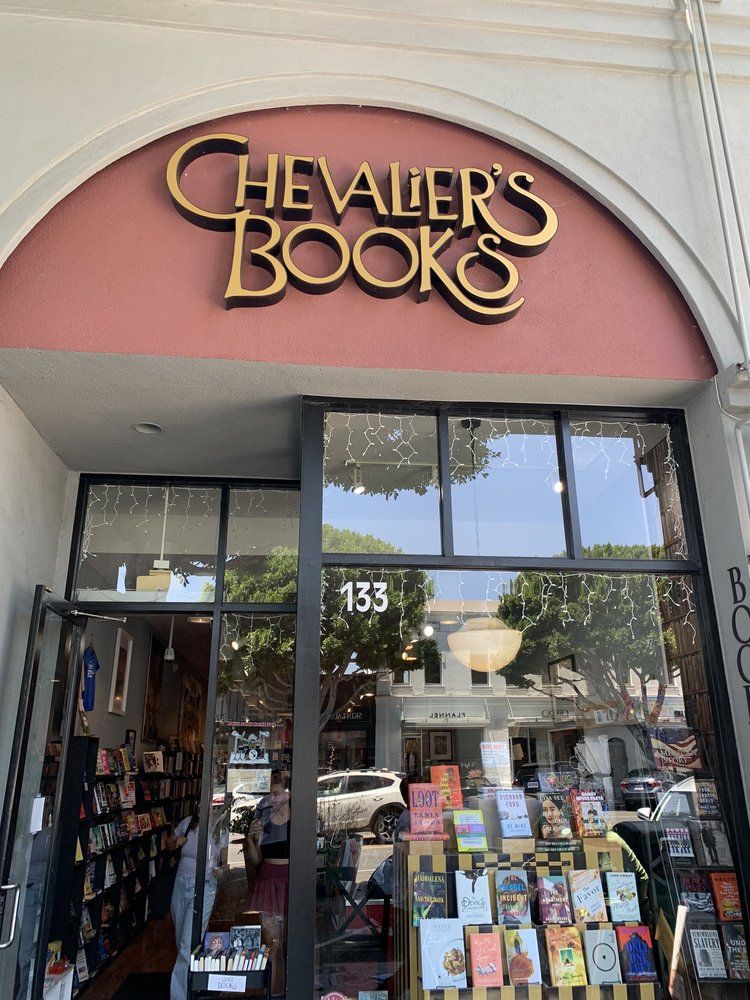
In March we will have a presence at the Association of Writing Programs conference in L.A. which will include an offsite reading at Chevalier’s Books on Friday, March 28th at 6pm. All are welcome to attend!
Contributor Eva Petropoulou Lianou shares the Caesurae Collective Society’s call for submissions of poetry about consciousness.
The anthology seeks to weave a fabric of poetic expressions that resonate with the theme of consciousness—exploring the mind, the self, and the infinite cosmos—weaving together poetic voices that reflect on what it means to be aware, alive, and interconnected. Submissions due February 10th, 2025,information here.
Also, World Wide Writer Web invites submissions of short stories for their annual contest. Information here.
Finally, contributor Chimezie Ihekuna seeks a publisherfor his children’s story collection Family Time. Family Time! Is a series that is aimed at educating, entertaining and inspiring children between the ages of two and seven years of age. It is intended to engage parents, teachers and children with stories that bring a healthy learning relationship among them.
This issue explores how we see and interpret our world through pieces that draw our attention to various focal points and take a closeup or wider angle view.
Some people zoom in on a particular place or image, using that as a meditation to begin deeper thoughts.
Sayani Mukherjee evokes an island’s lost grandeur through describing historical ruins while acknowledging the destination’s current reality. Student group 2123, from Uzbekistan, contributes a group reflection on their trip to Samarkand.
Dario creates a musical combination inspired by the complex culture of New Orleans. Kylian Cubilla Gomez’ photography focuses in on bits of play and whimsy in toys and in daily life.
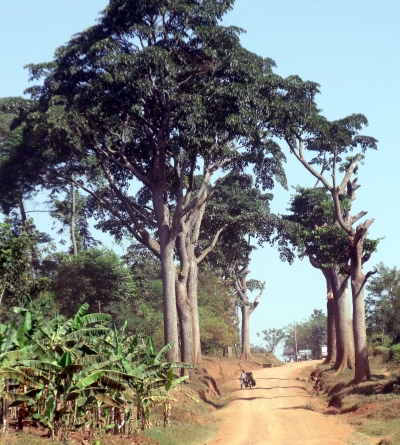
Precious Moses draws on the West African iroko tree as a symbol of maturity and strength in hard times. Rahmat A. Muhammad expresses hope through the birth of a young sister in a world touched by darkness and pain.
Mashhura Usmonova expresses gratitude for her teacher and for education, which has allowed her to write as a container for her emotions.
Dr. Jernail Singh offers thoughts on poetry: how he appreciates cohesion and meaning as well as pretty language. Noah Berlatsky gives a dramatic take on the excision needed for the creative process. Daniel De Culla offers up a satirical and humorous take on writing generated through artificial intelligence as Texas Fontanella blasts the firehose of words and letters in our general direction. Jerome Berglund and Shane Coppage’s collaborative haiku include humor and clever twists of phrase.
Jacques Fleury poetizes about how knowing vital history can protect you from being erased by others’ fear or hatred.
Maria Miraglia, as interviewed by Eva Petropoulou Lianou, speaks to the importance of literacy and education in world peacemaking efforts.
Loki Nounou calls out a culture of sexism in which violating women’s rights and their bodies becomes normalized. Narzulloyeva Munisa Bakhromovna highlights the critical need to stamp out global corruption.
Mahbub Alam laments the killing in Gaza and hopes that everyone who dies makes it into a better place. Graciela Noemi Villaverde also mourns the destruction in Gaza, personifying the land and culture into a living being to highlight its pain and beauty. Lidia Popa speaks directly to the heart and conscience of the world in her call for peace in Gaza. Maja Milojkovic revels in the beauty of peace, for Gaza and everywhere. Wazed Abdullah honors the quiet and dignified resilience of Gazans as Don Bormon affirms that the place will recover and heal.
Laurette Tanner charts and maps her journeys, hoping this wisdom will carry over into developing ways to lessen the suffering of the homeless.
Shoxijahon Urunov inspires us to protect the tenderness of our hearts. Nilufar Anvarova’s piece encourages us to follow our hearts and show kindness to each other. Eva Petropoulou Lianou expresses her human vulnerability and desire for understanding and healing. Mesfakus Salahin’s poem speaks to love but also to mystery: how complex we all are and whether we can truly know another.
Stephen Jarrell Williams crafts haiku vignettes on the search for bits of hope and connection in a large modern cityscape.
Mashhura Usmonova expresses gratitude for her teacher and for education, which has allowed her writing as a container for her emotions. Raxmonova Durdona offers up a tender tribute for a caring and deceased uncle.
Maria Teresa Liuzzo’s poetry illuminates deep feeling: passionate love and the inevitability of human suffering. Mykyta Ryzhykh digs deep for meaning in a world littered with death as Orzigul Sherova urges readers to make the best use of their limited time. Lilian Dipasupil Kunimasa also encourages making the most of life, holding onto faith and hope in a confusing world.
Scott C. Holstad explores themes of disillusionment, introspection, and the search for love and meaning in life. Tagrid Bou Merhi’s elegant words wander through a quest for identity and meaning in a seemingly empty world. In a semicomic short story, Bill Tope fears losing memory and mental capacity. J.J. Campbell writes of numbness, aging, and loss. He connects with others, but even these interactions are tinged with sadness, longing, and thoughts of mortality.
Audrija Paul tells the story of a heart broken when a person reads more into a relationship than is there. Taylor Dibbert describes a relationship that ended as impulsively as it began. Z.I. Mahmud explores generational family dysfunction in his essay on Henrik Ibsen’s Ghosts.
Chris Butler’s short poems probe themes of identity and love and our relationships to nature and technology.
Alex S. Johnson proffers a mythic tale where a hero foils the unholy plots of power-hungry gods and wild natural forces.
Rustamova Muqaddas relates twists of fate on a hiking trip, the uneasy balance of humans and wild nature.
Joseph Ogbonna writes of the majestic richness of the Himalayas as Gadoyboyeva Gulsanam describes the power and transience of a rainstorm. Ilhomova Mohichehra conveys the joy of children playing outside on a snowy day. John Brantingham’s short story shows a couple re-evaluating how much they have in common while watching muskrats go about their business.
Mark Young’s surreal poetry touches on climate change, politics, nature, and job hunting, as Su Yun’s work explores time, nature, identity, and memory.
Duane Vorhees’ work addresses life, death, and the physical and sensual aspects of our existence with wit and humor. Marjona Jo’rayeva Baxtiyorovna offers blessings for weddings as Nate Mancuso’s tough and ironic gangster tale takes place in the world of calm seniors and pickleball. Alan Catlin presents sets of poems in three parts, each looking at aspects of aging, nature, and art.
Tom McDade braids vignettes and images from life together with artworks from different eras. Peter Cherches’ vignettes present character sketches of people on journeys, literal or emotional.
Reading this issue is a journey of its own, and we invite you to savor these contributions.
Touch

A mahogany of lost leaden high
The namesake kept its promise
The turbulence of sea horse runner
The silver disk is a little low tonight
For Baroque's touch of medias res
The high strung of novelty
The joyous currents of sea beds
Leaves me open stranded
In an Island of Mediterranean blue
I sing and hum the national green
The olive touch of Texas to Britain
Ghettos land in the islands of poverty
I skimmed a solistic touch.