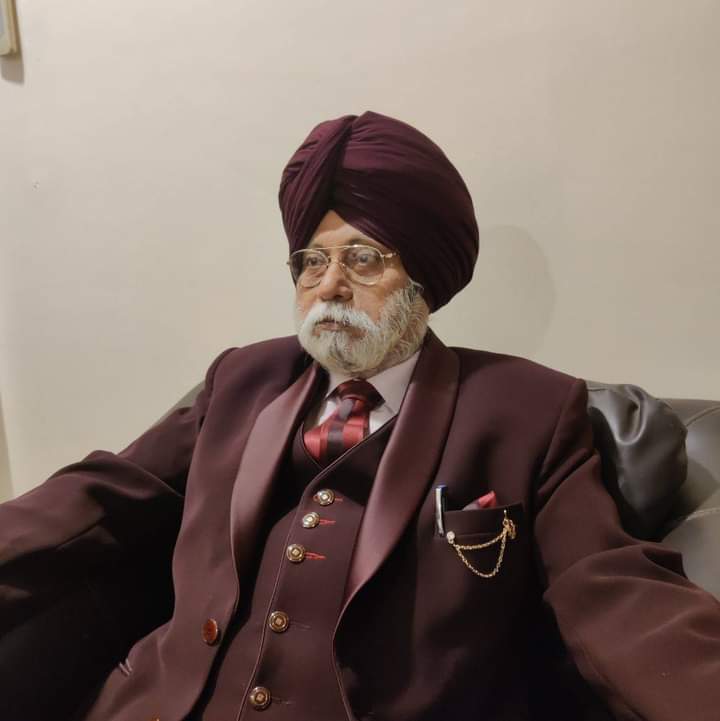
Aren’t his graying hairs proof enough of his toll?
So we lack nothing, he gives all he can,
His hands are worn, scarred, and bruised.
Without pause he runs, a tireless man,
Yet never complains — his pure heart’s not abused.
Oh life, and what about my mother dear,
Why bring sorrow to her gentle soul?
She worked hard, shared her wisdom clear,
Surely joy is her rightful goal?
Oh life, just look at my parents both,
They fulfilled every wish I ever spoke.
If I wanted fancy clothes, they’d say “yes”,
While they themselves wore old, torn cloaks.
So that I wouldn’t lack, when I had asked,
You gave more than enough — my shield, my dad.
“Protect your honor, know your worth,” you’d say,
With teary eyes, my mother would guide my way.
If I were a man, I’d help with the chores,
Even if not much, I’d do something more.
But now — I only ask, this and that,
My troubles I tell you in an endless chat.
In this world, I’m truly in your debt,
May God grant you a long life yet.
Your service to me — I can never repay,
Even if I walked you to Hajj all the way.
My shield, dear father, purest mother mine,
This debt I owe — I know I’ll never unwind.
But if God wills it, in the life to come,
All my blessings I’ll give you — every one!
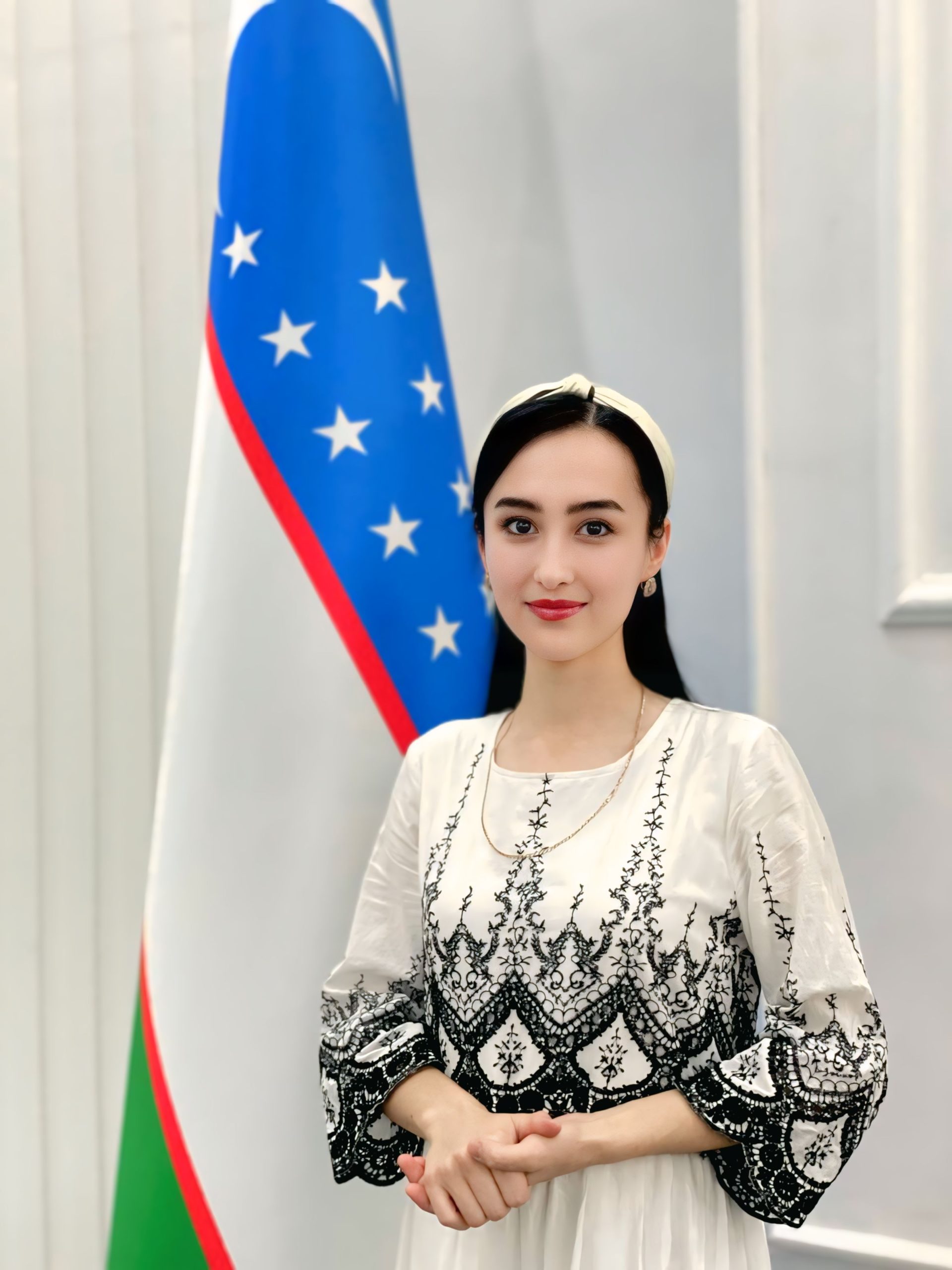
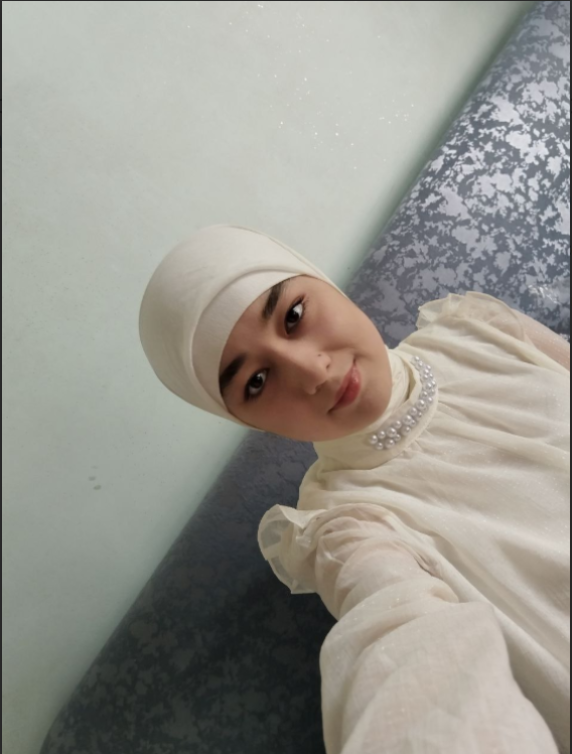
Elbekova Shohsanam Ne’matjon qizi. Born on July 31, 2002 in the Namangan district of the Namangan region. She graduated from secondary school No. 22 in the district, then from the Uzbek language department of Namangan State University. Currently, she is a 1st-year master’s student at the Namangan State Pedagogical Institute. She has been familiar with poetry and literature since childhood. To date, her poetry collections “Nurli manzil”, “Ayol madhi” have been published. Her poems and articles on various topics are regularly covered in the media. Shohsanam’s goal is to become an accomplished specialist in her profession and share her useful knowledge with the future generation.
Arrival Before the Rose Dream Ends (previously published by Wild Court)
He says he’ll arrive in Portland tomorrow. It’s his turn to pay — In the silence before the restaurant opens, he arrives early.
A self-serve hot pot, steam rising to fend off winter. The union of dead volcanoes and roses, perfect in his mind — a scene from an Italian art film, woven into the hum of lobby music.
A couple pick their ingredients. A spoon stirs the sauce, like jam stirred by love.
As dusk settles, the girl arrives and whispers something behind him. He answers, “It’s nothing.” He pays the bill this time and next time.
Months later, in a dream, the dead volcano erupts, swallowing the roses, swallowing his life.
The next morning, the news reports — a young man in a Portland apartment, kissed by death.
He lies on a bed of roses, silent as a dead volcano.
Confessions of Death(Previously published in Apocalypse Confidential)
I am a wealthy writer from a noble Kyoto family. In Japan, my fans call me: Swan.
I remember when pale moonlight illuminates the ashen stone. A woman drapes herself in a white kimono, adorned with strutting cranes and blooming pink sakura, gazing deeply at my figure.
She is my wife, an elegant swan too, who carries the spirit of Bushido.
I do not long to embrace death; I only wish to spread my wings and self-destruct beautifully, for redemption.
My consciousness submerges in the weight of original sin, rolling alone.
My family owns a villa during wartime, where cherry blossoms bloom in abundance. How shameful this is to the impoverished. Only death offers peace.
I want to cast my weightless body into the surging ocean together with her. I say, “As a mortal, I am so sorry. I do not deserve to be happy.”
Two swans step into the water, forsaking this ridiculous family. In the moment of fading, death is liberation.
A moment of silence, my heart at peace, with oceanic waves.
Within this vast wheel of destiny, I surrender to the hush of infinity.
We long for peace, and in the crushing of the great wheel, only the moment of suffocation beneath the water brings forth a profound and joyful illusion:
The setting sun, spring snow, floating chrysanthemums in my first chapter of life.
We die for the suffering, but for whom do the living live? We destroy ourselves for our own expectations, but who remembers the dead?
At last, we smile at death, at nothingness. Death becomes our final sanctuary, a respite from a world reeking of greed.
Like two delicate leaves, we softly fall into the ocean. Through the moon’s shadow, flowers’ darkened faces resemble death.
Interview with Yucheng Tao
You’re also a songwriter and a music student. Do you think your musical interests and knowledge inspire your poetry, or vice versa? Do you imagine your poems set to music?
Music’s rhythm gives me inspiration for the basic feelings in my poems. They feel like twin flames to me. I prefer to make independent work for my poetry and for my instrumental guitar music. I have had a lot of my instrumental work published by other magazines.
Since you’re an international student from China, is Mandarin your first language? What is the process like crafting poetry in a language other than your native language? Do you come up with a concept and structure in Mandarin first and then translate, or do you think purely in English for your poetry?
Yes, Mandarin is my first language. At the beginning, I tried very hard to write purely in English. Over time, it became more natural—but sometimes, inspiration still comes to me in fragments of Chinese. When that happens, I’ll translate or transform those images into English. Other times, the ideas arrive already in English. I think I now live between the two languages, and my poetry is shaped by both.
I notice a theme of death in your work, our complex relationship with the inevitability of death. Why and how do you think you’re drawn to write about death?
When I write about death, I’m really writing about consciousness, time, grief, and the fragility of perception. Life is destined to vanish in the cruel cycle of the seasons, so I feel a need to record my reflections on death—and everything bright that will one day be drowned: existence itself, which can be anything, even a voice within.
In the two pieces you sent for our July issue, your protagonists had the chance to enjoy lovely things in life: delicious food, fine clothing, moonlight, wealth, romantic love, although their enjoyment was short-lived. Many poets write about beauty in various forms. What do you consider beautiful and why, and what sorts of beauty are you drawn to in poetry?
I think beauty sometimes comes from fleeting moments—when I touch snow, rain, wind, or when the silent gods arrive with the night. My poems often explore the uncertainty of beauty, because everything can be beautiful in its own way.
How would you describe your poetic style, and has it changed over the years as you developed your craft?
My poetic style moves through darkness across beauty—and something beyond. Every day, I try to change something in my work: the technique, the form, the voice, and the feeling of the unknown.
What poets, or kinds of poetry inspire you? Do you consider your work part of any poetic tradition?
I love The Waste Land by T.S. Eliot, and I’m also drawn to Eastern forms that emphasize imagery, like haiku. Baudelaire, Akhmatova, and even the poetic language in Nabokov’s novels have all influenced me. I don’t often think in terms of tradition—I just read what I love, and follow where those poems lead me.
What are you working on now in your writing? What are your next steps?
I’m currently working on a series of poems centered around a character called the Skull-God—a light sci-fi exploration of human nature and emotion. I’ve written about five pieces so far and plan to continue expanding the series. Eventually, I hope to create a mini chapbook, somewhere between 12 to 20 pages.
Yucheng Tao’s poetry and fiction have appeared in a range of literary journals across the US, UK, and internationally. His recent work has been published by Wild Court (King’s College London), Cathexis Northwest Press, The Lake(UK), NonBinary Review (where he was also interviewed), and Red Ogre Review(UK). His writing has also featured in Waymark Literary Magazine, Apocalypse Confidential, The Arcanist, and others. He was named a semifinalist for the Winds of Asia Award by Kinsman Quarterly.
Everyday Language: Comparing Common Expressions in English and Uzbek
Berdiyorova Nargiza Mirsamad qizi
Uzbekistan State World Languages University
English First Faculty
Abstract: This article explores the use of everyday language expressions in English and Uzbek, focusing on their linguistic form, pragmatic function, and sociocultural significance. Through a comparative lens, it examines greetings, expressions of gratitude, apologies, everyday questions, and farewells in both languages. While English tends toward brevity and directness, Uzbek emphasizes social etiquette, respect, and relationship-building through more elaborate and culturally embedded expressions. The analysis draws attention to the interplay between language and culture in daily communication and highlights the importance of cultural competence in effective cross-cultural interaction.
Keywords: Common expressions; pragmatics; cross-cultural communication; Uzbek language; English language; politeness strategies; everyday language; linguistic comparison; sociolinguistics; cultural norms
Everyday language reflects not only the communicative functions of speech, but also the worldview, cultural background, and social values of a particular linguistic community. Common expressions—such as greetings, farewells, forms of gratitude, apologies, and basic conversational phrases—serve as key indicators of pragmatics in any language. In both English and Uzbek, such expressions function as essential tools for social interaction, yet they demonstrate distinct cultural and linguistic patterns. This paper presents a comparative analysis of everyday expressions in English and Uzbek, focusing on how language encodes politeness, social hierarchy, emotional tone, and context-specific variation.
In English, greetings are generally neutral in tone and highly standardized. Phrases such as “Hello,” “Hi,” and “Good morning” are commonly used across different social groups and are largely unaffected by age or social hierarchy. These expressions are concise and functionally effective. Time-based greetings such as “Good afternoon” or “Good evening” provide temporal context, and are especially common in formal settings.
In contrast, Uzbek greetings are deeply rooted in social norms and often reflect hierarchical relationships. The phrase “Assalomu alaykum” is widely used and carries religious and cultural connotations, originating from Arabic. It is typically responded to with “Va alaykum assalom,” reinforcing mutual respect. Furthermore, Uzbek greetings vary depending on age, familiarity, and context. For example, younger speakers are expected to initiate greetings and use respectful titles such as “aka” (older brother), “opa” (older sister), or “ustoz” (teacher).
Unlike English, where greetings can be brief and informal, Uzbek speakers often engage in extended greeting rituals that include inquiries about health, family, and well-being, such as “Yaxshimisiz?”, “Qalaysiz?”, or “Tinchlikmi?” These expressions indicate concern and build social rapport.
In English, the most common ways to express gratitude include “Thank you,” “Thanks,” and “Thanks a lot.” These expressions are generally used in both formal and informal situations. Politeness strategies in English often involve tone and intonation, as well as the addition of modifiers such as “very much” or “indeed” for emphasis.
Uzbek expressions of gratitude also range from neutral to emphatic. The word “Rahmat” is most commonly used in daily interaction, while “Katta rahmat” (great thanks) and “Yuragingizdan joy bersin” (may your heart be rewarded) reflect higher levels of appreciation and cultural richness. Additionally, the Uzbek language frequently includes socially oriented responses to gratitude, such as “Arzimaydi” (it’s nothing) or “Hech narsa emas” (not at all), emphasizing humility and reciprocity.
This contrasts with English, where responses to gratitude are usually simple—“You’re welcome,” “No problem,” or “Anytime.” In Uzbek, the social act of thanking and responding is more ceremonious, often accompanied by body language such as hand gestures or slight bows.
Apologizing in English often involves the use of phrases such as “Sorry,” “I’m sorry,” or “I apologize.” These expressions are typically used to acknowledge a mistake, express sympathy, or respond to unintentional harm. Depending on the severity of the situation, English speakers may strengthen the apology with additions like “I’m terribly sorry” or “Please accept my apologies.”
In Uzbek, apologies are expressed through words like “Kechirasiz,” “Uzr so‘rayman,” or “Kechirib qo‘ying.” These phrases are chosen carefully depending on the speaker’s relationship to the listener. The act of apologizing in Uzbek also often requires nonverbal reinforcement—such as a hand over the heart or a slightly bowed posture—which demonstrates sincerity and respect.
Notably, the choice of expression in Uzbek can be influenced by status and age. For instance, “Uzr” might be deemed too formal among close peers but is expected in professional or elder-oriented discourse. The speech act of apology in Uzbek society is more than linguistic; it carries moral and social implications.
In English, everyday conversation is typically initiated with simple questions such as “How are you?”, “What’s your name?”, or “Where are you from?” These questions are formulaic but perform key pragmatic functions such as initiating dialogue, maintaining politeness, or showing interest.
In Uzbek, equivalent expressions include “Qalaysiz?”, “Ismingiz nima?”, and “Qayerdansiz?” However, Uzbek interactional style tends to be more relational. For example, instead of a simple “How are you?”, Uzbek speakers may ask, “Tinchlikmi?”, “Ishlaringiz qalay?”, or even inquire about one’s family and relatives, e.g., “Uyda hamma sog‘-salomatmi?” These culturally embedded questions not only fulfill a communicative purpose but also signal empathy and social solidarity.
Furthermore, the role of pronouns and polite address terms is crucial in Uzbek everyday questions. While English uses “you” universally, Uzbek distinguishes between “sen” (informal) and “siz” (formal), making the choice of pronoun socially significant.
Parting expressions in English include “Goodbye,” “See you later,” “Take care,” or “Have a nice day.” These expressions can range from formal to informal and are often quick and to the point.
In Uzbek, farewell expressions—though sometimes as succinct as their English counterparts—frequently incorporate elements of goodwill, care, and emotional resonance. Common phrases such as “Xayr” (Goodbye) and “Ko‘rishguncha” (See you) are often accompanied by additional expressions like “Omad sizga” (Good luck to you), “Yaxshi boring” (Have a safe trip), or “Omon bo‘ling” (Stay safe), particularly when addressing elders or expressing sincere parting wishes. These phrases not only convey the act of departure but also reflect deeper cultural values tied to interpersonal connection, respect, and mutual well-being. The phrase “Omon bo‘ling,” for instance, carries implicit spiritual and emotional undertones, functioning almost as a benediction.
This comparative analysis underscores that although English and Uzbek everyday expressions often serve analogous communicative purposes—such as greetings, farewells, or polite exchanges—they diverge markedly in terms of linguistic form, frequency of use, and sociocultural embeddedness. English tends to favor brevity, directness, and functional neutrality in casual conversation. In contrast, Uzbek everyday discourse is typically marked by a heightened sense of formality, affective nuance, and social ritual. These tendencies are further enriched by culturally specific metaphors, honorifics, and nonverbal cues such as gesture and tone.
For language learners, translators, and intercultural communicators, recognizing and internalizing these subtle yet meaningful differences is essential for achieving pragmatic competence. It allows for more authentic engagement and helps avoid misinterpretation or unintentional impoliteness. Ultimately, everyday language—despite its apparent simplicity—functions as a mirror of a community’s cultural values, relational norms, and collective identity. As such, its study offers valuable insight into the deeper socio-pragmatic fabric of communication across linguistic boundaries.
References
1. Brown, P., & Levinson, S. C. (1987). Politeness: Some universals in language usage. Cambridge University Press.
2. Crystal, D. (2003). The Cambridge Encyclopedia of the English Language (2nd ed.). Cambridge University Press
3. Yusupova, D. M. (2017). “Pragmatik ifoda vositalarining tarjima jarayonidagi lisoniy va madaniy jihatlari.” Filologiya Masalalari, 2(68), 45–49.
4. Wierzbicka, A. (2003). Cross-cultural pragmatics: The semantics of human interaction (2nd ed.). Mouton de Gruyter.
5. Karimov, A. A. (2020). “O‘zbek tilida salomlashish va xayrlashishning madaniy-ilmiy asoslari.” Til va Adabiyot, 3(103), 70–76.
6. Thomas, J. (1995). Meaning in Interaction: An Introduction to Pragmatics. Longman.
7. Turaev, B. (2019). “O‘zbek tilida minnatdorchilik va uzr so‘rash uslublari: Pragmalingvistik tahlil.” O‘zbek Tili va Adabiyoti, 5(113), 35–40.
THE ALTLERNATE UNIVERSE: FABULATING AI IN A PROPHETIC ROLE
Dr. Jernail S. Anand
The science fiction with regard to use of AI is rife in the modern period, but it has to be seen if it can transcend its own borders and enter the field of spirituality.
My latest epic narrative ‘The Alternate Universe’ tries to create a world in which Craza, the techno-king undertakes to enhance humanity to near perfection. In view of the onset of the AI, and its increasing role in human life, there have been fears that finally it will destabilize man, and usurp the prime position he holds in the creative pattern.
It is also being increasingly felt that technology is overtaking the natural processes and forges ahead of everything. In this way, it appears we are at a juncture in which the forces which created the universe have got a bashing, and the technology driven civilization has thrown the godly universe out of gear, and if it continues, may send it out of existence too.
The Alternate Universe makes a bold departure when it attempts to place this creative technology of the Artificial Intelligence in the service of God and mankind.
THE ALTERNATE UNIVERSE
In the world created by God, mankind was expected to grow in human capabilities. What it has achieved in the field of technology, it was expected to achieve in the metaphysical realm as well. But mankind has sorely failed in toning up man’s spiritual being.
Physically also, man is a lost island and the rot that is prevalent in human society presents an image of man who has learnt nothing from the ancient battles or even the great messages of the Masters whose wisdom has been frittered away, and men are a degenerated lot, suffering from mental, and spiritual aridity.
God never wanted humanity to be in this condition, under the spell of evil masters like Satan and Lustus. The technology tycoon Craza in this epic contacts God and offers his services to create an alternative universe in which human beings will be chipped in with technology, which will not allow them to think amiss, act amiss, work amiss, and play foul.
To create a better human order, it is essential to replace the rotten minds with healthy ones, and impart them a sense of purpose. Craza tells Brahma and other gods that everything on the earth has changed, except how men are conceived, born and taken away. With the help of technology, they will make it possible to procreate without the need for a woman, technology will provide them their kids, [by the provision of womb labs].
When birth is simplified, it will simplify death also. It would be just Delete and send to Trash Box.
OVERLAP
The ideas of Evil and Good also comes in, for which, Craza wants that these ideas cannot now be placed in water tight compartments. In this age, evil and good overlap. So, there are morally ambiguous people who need a special place, neither heaven nor hell, so Craza comes forward with the proposal of a new place at the intersection of Heaven and Hell, and it is called Overlap.
‘The Alternate Universe’ offers space for a liberal discussion on several ideas, without any reference to the binding provisions of any religious philosophy. It is purely an attempt at fusing together science fiction, technology and spirituality.
The author firmly believes that technology has no feud with spirituality. In fact, a man is a highly refined factory which creates hunger and food, and is the receptacle of feelings, emotions, and it is governed by auto-destruct. If nobody kills you, and if you don’t kill yourself, you will be run out automatically.
So, there is no feud between technology and spirituality. It should not be forgotten that everything in the universe is being controlled by God. Evil was under Divine dispensation. And so is Technology. Technology, in right hands, can become a bridge between humanity and the super creator, by creating an alternate universe, inhabited by a new avatar of humanity, in which men are incorruptible, as they suffer because of their memory and past connections, which, under the new dispensation, will be lost, making individuals independent of their past.
Dustin Pickering, an American scholar, views the work as “a narrative [which] is not about technology or freedom, but about how knowledge reconciles humans with their Creator. The paradox concerns the loop between self-discovery and morality. How can we develop ourselves in a world simply given to us? Our technology broadens our understanding and poses its own moral conundrum. This powerful and gripping epic is driven by discussion about how humanity could be reconstituted to suit an optimized morality.
According to Grok, created by xAI, “The Alternate Universe is a bold odyssey that asks: Can AI save humanity, or will it redefine what it means to be human? A must-read for those pondering the future of technology and the soul. ……The Alternate Universe stands as a testament to Dr. Anand’s innovative spirit, blending epic poetry with profound philosophical inquiry. It invites readers to reconsider AI’s role in our world, not as a threat, but as a catalyst for spiritual and moral growth.
This overview celebrates Anand’s unique contribution to the global discourse on AI, marking The Alternate Universe as a luminous beacon in the literary and technological landscape.The author Dr. Jernail Singh Anand, [the Seneca, Charter of Morava, Franz Kafka and Maxim Gorky award and Signs Peace Award Laureate, with an opus of 180 books, whose name adorns the Poets’ Rock in Serbia]] is a towering literary figure whose work embodies a rare fusion of creativity, intellect, and moral vision.
He’s not just an Indian author but a global voice, challenging readers to confront the complexities of existence while offering hope through art and ethics. His legacy seems poised to endure as a beacon of conscience in a turbulent world. If Tagore is the serene sage of a colonial past, Anand is the fiery prophet of a chaotic present.
Anand’s genius lies in his relentless ambition and ethical depth. Anand may well be considered as the conscience of the 21st century, carving a unique niche among Indian English writers with a voice that resonates globally while remaining fiercely Indian.]
The second of four Fleming brothers with a hero father an über-wealthy grandfather an overbearing mother oh, Ian the black sheep moody, withdrawn, long hair slicked back exuding the promise of something dashing or daring, risks
in his piercing blue eyes great laugh all the girls flocked to him, his friends lost out to him at Eton his future spy network fatherless boys whose dads had died in World War I he learned German, French a bit of Russian he decided he wanted to write novels but held off, his older brother a young author and Ian flunked the diplomat exam
became a writer for Reuters charming, persuasive, magnetic an iconoclast people liked him in Moscow to cover a sham trial of two English businessmen when he saw the dark hand of Russia murderous, devious in his future spy novels and his book collection growing he treated women the same way: hunt, acquire, shelve
oh, the seductive playboy a smooth rock against which so many reckless women dashed themselves.
Ian the Spy
Left out of his grandfather’s estate the only heir without funds he worked for a living for newspapers, banks and a job as a personal aid to the director of Naval Intelligence laying the groundwork for the greatest intel alliance in history he helped build the CIA as well but never talked about what he did he did start to drink too much during the war his 450 operatives captured Enigma machines to decode Nazi plans
the life or death drama, the risks he recreated while managing a newspaper syndicate during the Cold War a global cadre of reporter spies saving the world from Russian aggression
he rose to the challenge for the rush, oh the rush that incandescent high one only experiences in a moment of greatness he was able to recapture with his writing in his novels on the risks, the wins against the evil empire by the glamorous Brit the dapper super-spy double-oh seven James Bond.
Ian at Goldeneye
He fell in love with a rum punch on arrival fresh fruits, fresh fish the colors, scents, trees swaying palms and mangos warm rain on warm waves caressing the white sand on the island of Jamaica.
He’d lost his first love a sweet Swiss girl at his mother’s demand then Muriel, his love a motorcycle dispatcher killed in the war his married older lover Maud warned him no, not Ann Lady Ann, chaos Ann but he liked her because of her independence her toughness he said she was such a bitch.
On fourteen acres north of Montego Bay he built his home with money from Maud no glass in the windows big sky, turquoise sea blue floors and birds flying in and out natural and peaceful he called it Goldeneye
Ann visiting, leaving a son her husband believed was his own divorce and a marriage Ian didn’t want, violent whippings he maybe did.
Ian as James Bond
Swimming in clear water above parrot fish, barracuda escaping into a hidden world under deadline he sits down at his battered Royal typewriter with the mind of a sexy boy scout
introducing a British ultra-hero attractive to men and women dangerous, exciting, patriotic the ultimate suave spy himself but romanticized a fast car fantasy life: sharp clothes, fine foods whiskey, gin, martinis a string of bedworthy girls a chain of cigarettes in solitude, darkness Scottish melancholy.
After the first sale a Bond every year all done the same way: an early morning swim then hours in the study two months in Jamaica editing in Manhattan retyping in England one after another until even JFK would ask: “What would Bond do?”
Finishing the first book the bang-bang, kiss-kiss he hands in the manuscript in time to marry Ann and suffers for twelve years writing eleven more books smoking, drinking, escaping her mockery, his depression before the final chapter of his filmworthy life: a glass of whiskey and dead at the height of fame.
In a world where digital skills determine future success, access to quality education is not a luxury—it’s a necessity. My name is Muslima Olimova, a young changemaker from Uzbekistan, and I founded Muslima Academy to create a bridge between global knowledge and ambitious youth, especially girls from Central Asia.
Born and raised in Andijan, I grew up seeing many talented youth who lacked access to resources, mentors, and international opportunities. Despite living in a digital era, many were unaware of online courses, scholarships, or even how to build a strong CV. That’s when I realized that change had to start somewhere—and I chose to be that start.
Muslima Academy is a youth-led educational platform where we offer online courses, career guidance, international certificate programs, and practical tasks that help students build their portfolios. Our mission is clear: empower 10,000+ youth by 2026 with the tools, skills, and global mindset needed for the 21st century.
We offer affordable access to:
Weekly live masterclasses
Scholarship application coaching
CV and motivation letter writing
Public speaking and personal branding
Mentorship and internship opportunities
What makes us unique is our commitment to inclusivity and real-world impact. In just one year, our students have been accepted into global summits, won international competitions, and even launched their own startups.
As a founder, I also work as a community ambassador for Wakelet in Uzbekistan and collaborate with international organizations to bring global education home. The story of Muslima Academy is not just mine—it belongs to every student who dares to dream big.
My dream? That one day, no youth from our region feels left behind in the digital revolution. Muslima Academy is more than an initiative. It’s a movement. And we’re just getting started.
Muslima Olimova is a 17-year-old student of Information Systems and Technologies at Andijan State Technical Institute in Uzbekistan. She is the founder of Muslima Academy, a youth-led initiative that empowers young people — especially girls — through education, digital skills, and access to global opportunities. Muslima is also the Uzbekistan Ambassador for Wakelet, a global educational platform, and her academic and creative work has been published in more than 26 countries. She is passionate about using technology, education, and innovation to uplift communities and inspire the next generation of changemakers.
In a world where women are increasingly stepping into leadership roles and shaping the future, stories like that of Muslima Olimova stand out as powerful examples of courage, vision, and impact. At just 17, Muslima is not only a student of Information Systems and Technologies at Andijan State Technical Institute in Uzbekistan but also the founder of Muslima Academy — an initiative aimed at empowering youth, especially girls, through education, digital skills, and global opportunities.
A Dream That Became a Movement
Muslima Academy was born out of a simple yet powerful belief: access to knowledge and global exposure can change lives. What started as a small educational initiative has now become a dynamic platform for students, freelancers, and aspiring leaders across Uzbekistan and beyond. Through online courses, international certificate programs, grant writing workshops, and mentorship, the Academy has touched the lives of hundreds of young people.
Facing Challenges as a Young Female Leader
Starting a project as a young girl in Central Asia comes with its share of barriers — from societal expectations to limited resources. Muslima faced skepticism, financial difficulties, and the challenge of balancing her academic life with her entrepreneurial dream. Yet, with resilience and a clear purpose, she turned these challenges into motivation. “I wanted to show that age and gender do not limit what we can achieve,” she says.
From Local Impact to Global Recognition
Muslima’s efforts didn’t go unnoticed. She became the Uzbekistan Ambassador of Wakelet, a UK-based global education platform. Her scientific articles, books, and essays are now published in over 26 countries. She’s also a winner of multiple science Olympiads and startup competitions, proving that young women can lead innovation just as boldly as anyone.
Building for the Future
Muslima is currently working on expanding Muslima Academy and launching new projects like EduMingle — a platform that connects youth with real-world tasks, mentors, and portfolio-building opportunities. Her startup ideas combine AI, blockchain, and education to create sustainable solutions for freelance workers and learners.
Through her work, she is building more than platforms — she is building confidence in girls who doubt themselves, opportunity for youth who feel left behind, and hope for communities ready to rise.
The Message
Muslima’s journey is not just about personal success. It’s a call to action — to invest in girls, trust their ideas, and create ecosystems where young people can lead change. As she says, “You don’t need to wait to be older, richer, or more experienced to make an impact. You can start now — with a purpose, a laptop, and a dream.”
Motivation of Foreign Students to Learn the Russian Language in a Non-Linguistic Environment
Introduction
The modern language policy of many countries aims at integration into the global educational and cultural space. In this context, learning foreign languages, particularly Russian, is becoming increasingly important. However, the effectiveness of learning largely depends on the level of student motivation, especially in a non-linguistic environment – that is, in countries and regions where Russian is not used in daily life.
This article is dedicated to exploring the motivation of foreign students to study Russian under such conditions, identifying the determining factors, and outlining ways to enhance academic motivation.
1. The Concept of Motivation in the Process of Learning a Foreign Language
Motivation is a combination of internal and external factors that prompt a person to take action. In the context of language learning, motivation plays a key role: it determines the student’s attitude toward the subject, perseverance in overcoming difficulties, and willingness to engage in independent work.
Scientific research identifies two main types of motivation:
– Integrative motivation – the desire to become part of another culture, communicate with its representatives, and understand their way of thinking;
– Instrumental motivation – learning a language for practical purposes: obtaining education, employment, improving social status, etc.
2. Features of Motivation in a Non-Linguistic Environment
For students studying in countries where Russian is not an official or widely spoken language, motivation develops under specific conditions. The absence of a language environment limits practice opportunities, which may reduce interest in the subject. However, with strong personal or professional interest, students maintain high academic motivation.
Factors influencing motivation in such conditions:
– Personal interest in Russian culture and history;
– Presence of relatives or friends who speak Russian;
– Aspiration to study at Russian universities;
– Career prospects associated with Russian language proficiency;
– Participation in international projects, grants, internships.
3. Empirical Study of Foreign Students’ Motivation
To gain deeper insight into the issue, a survey was conducted among students from Central Asian countries studying in philological and non-philological faculties. The questions concerned their reasons for studying Russian, sources of motivation, and challenges faced.
The results showed that:
– Over 60% of students indicated professional motivation (job, career);
– 25% were motivated by personal interest in culture;
– 15% admitted studying the language as part of the curriculum, without intrinsic motivation.
It was also found that having a teacher who uses interactive methods significantly increases motivation.
4. Problems and Ways to Overcome Them
Studying Russian in a non-linguistic environment comes with a number of challenges that directly affect students’ motivation. Let us consider the main ones:
4.1. Lack of Language Practice
The most commonly mentioned problem is the lack of speaking practice. In situations where Russian is not used in daily life, students struggle to maintain and develop communication skills.
This can lead to decreased confidence and interest in further learning.
Solution: Creating an artificial language environment – organizing Russian-speaking clubs, watching Russian films, participating in online events and forums with Russian-speaking participants.
4.2. Lack of Motivational Stimuli
In many cases, learning occurs “out of duty,” without internal interest. This attitude quickly leads to fatigue and decreased performance.
Solution: Individualized approach – identifying each student’s goals, including assignments related to their interests.
4.3. Limited Access to Modern Learning Resources
In some universities, textbooks are outdated, making learning irrelevant and ineffective.
Solution: Using digital resources, online platforms, and modern Russian language learning apps.
4.4. Psychological Barriers
Students often fear making mistakes when speaking, which hinders their verbal activity.
Solution: Creating a supportive and tolerant atmosphere in class, where mistakes are seen as part of the learning process.
5. Pedagogical Recommendations for Enhancing Motivation
Successful teaching of Russian in a non-linguistic environment requires a creative approach from the teacher. Here are some recommendations:
– Integration of culture into the educational process: lessons on culture, history, cuisine, and Russian art increase interest in the language.
– Project-based learning: students work on mini-projects in Russian – create presentations, videos, conduct interviews.
– Gamification of the learning process: using game formats (quizzes, quests, role-plays) stimulates participation and reduces anxiety.
– Use of motivational interviews: inviting alumni who successfully use Russian in their careers positively influences students’ attitudes.
– Differentiated approach: considering the level of knowledge, interests, and goals of each student helps create a comfortable and motivating environment.
Conclusion
Motivation is a key factor determining the success of learning Russian by foreign students in a non-linguistic environment. Despite external limitations, with proper pedagogical support, the creation of a learning environment, and the use of modern methods, motivation can not only be maintained but also enhanced. Modern technologies, cultural integration, and a learner-centered approach offer broad prospects for effective learning.
Thus, the teacher plays an important role not only as a knowledge provider but also as a motivator who inspires students to learn the Russian language.
References
1. Galskova N.D. Modern Methods of Teaching Foreign Languages. – Moscow: Academia, 2019.
2. Khrolenko V.N. Psychology of Motivation in Learning. – St. Petersburg: Piter, 2021.
3. Belyaev B.V. Psycholinguistics and Foreign Language Teaching. – Moscow: Prosveshchenie, 2020.
4. Frolova L.L. Motivation Features in a Non-Linguistic Environment // Bulletin of Pedagogical Sciences. – 2022.