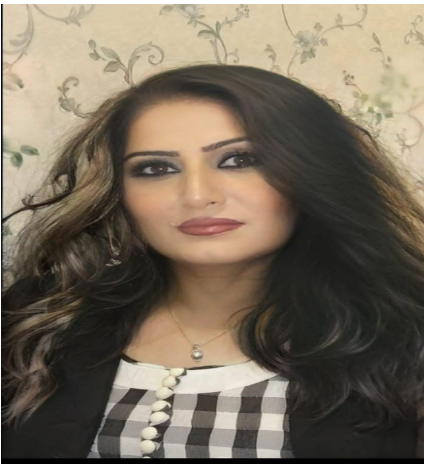
Essay from Abdukarimova Qadriya Istat qizi

The Timurid Renaissance
Abdukarimova Qadriya Istat qizi


Annotation
The Timurid Renaissance refers to a period of great cultural upsurge that occurred in Transoxiana and Khorasan in the late 14th – early 16th centuries. This period is characterized by unprecedented development in the fields of science, art, literature and architecture. Great thinkers and creators such as Mirzo Ulugbek, Alisher Navoi, Abdurakhman Jomi laid the main cornerstones of this Renaissance. Their legacy had a great impact not only on the region, but also on world civilization. This article provides a comprehensive analysis of the main features, achievements and significance of the Timurid Renaissance today.


Key words: Renaissance of Timurids, Movarounnahr, Khorasan, Mirzo Ulugbek, Alisher Navoi, Science, Culture, Architecture


Abstract
The Timurid Renaissance refers to a period of immense cultural flourishing that emerged in Transoxiana and Khorasan from the late 14th to the early 16th centuries. This era was characterized by unprecedented advances in science, art, literature, and architecture. Great thinkers and creators such as Mirzo Ulugbek, Alisher Navoi, and Abdurahman Jami laid the foundational stones of this renaissance. Their legacy significantly influenced not only the region but also global civilization. This article comprehensively analyzes the main characteristics, achievements, and contemporary significance of the Timurid Renaissance.
Keywords: Timurid Renaissance, Transoxiana, Khorasan, Mirzo Ulugbek, Alisher Navoi, Science, Culture, Architecture


Abstract
The Timurid Renaissance is a period of great cultural development, which took place in Maverannakhre and Khorasan from the end of the 14th to the end of the 16th century. Eta epoch was characterized by unprecedented progress in science, art, literature and architecture. Great thinkers and creators, such as Mirzo Ulugbek, Alisher Navoi and Abdurakhman Djami, are the founders of this revival. Ix nasledie okazalo znachitelnoe influence neither tolko nor region, nor i nor mirovuyu vilizatsiyu. This article comprehensively analyzes the basic characteristics, achievements and contemporary significance of Renaissance Timuridov.


Keywords: Renaissance Timuridov, Maverannakhr, Khorasan, Mirzo Ulugbek, Alisher Navoi, Science, Culture, Architecture

The concept of the “Temurid Renaissance” refers to the period of cultural, scientific and artistic upsurge observed in Central Asia in the 14th-16th centuries. This period occupies an important place not only in the history of the region, but also in the history of world civilization, characterized by unprecedented progress in the fields of science, literature and art, supported by Amir Temur and his successors. This Renaissance period was a complex phenomenon that covered all aspects of philosophy, architecture and social life. Language policy in the society of the Timurid era was one of the main factors of cultural development [1]. Multilingualism was widespread, with Turkic serving as a common, administrative and military language, Persian occupying a prominent place in court literature and scientific works, and Arabic playing a decisive role in the acquisition of religious and philosophical knowledge [1]. The interaction of these languages ​​​​stimulated intellectual growth.


One of the most prominent figures of this period, Alisher Navoi, played a major role in elevating the Turkic language to scientific and literary status. His work “Muhokamat al-Lughatayn” demonstrated the richness of the Turkic language and proved its equality with Persian as a literary medium [1]. The balanced language policy of the Timurid Empire, which treated different languages ​​with respect and encouraged their use in diplomacy and administration, played an important role in society and contributed to the enduring legacy of this period [1]. The establishment of scientific centers such as the Ulugbek Observatory is a vivid example of achievements in astronomy and mathematics [2]. This Renaissance period was not only the intellectual peak of its time, but also served as a source of inspiration for subsequent generations and had an incomparable impact on world civilization.


Analysis of relevant literature
The topic of the Timurid Renaissance is being analyzed in modern scientific literature, especially in publications after 2020, as one of the most brilliant periods in the history of Central Asia. These studies explore the multifaceted nature of the Renaissance, its cultural, scientific and socio-political aspects in their interrelation. Recent scientific works emphasize the crucial role of language policy in the cultural rise of the Timurid era. Sources after 2020 [1] highlight the prevalence of multilingualism, the specific functions of the Turkic, Persian and Arabic languages ​​in society, as well as the fact that their interaction stimulated intellectual growth and cultural exchange. The enormous role of Alisher Navoi in elevating the Turkic language to scientific and literary status through his work “Muhokamat al-Lughatayn” [1] is being studied in depth in modern literary criticism.

The Timurid Empire’s balanced language policy, which respected different languages ​​and encouraged their use in diplomacy and administration, played an important role in society and contributed to the enduring legacy of the period [1], has been noted in recent scholarly work as one of the distinctive features of the Timurid Renaissance. This approach demonstrates the importance of language policy in ensuring not only cultural but also socio-political stability. The achievements of the Timurid Renaissance in science, especially in astronomy and mathematics, have been increasingly covered in scholarly literature published in recent years.

Mirzo Ulugbek’s observatory in Samarkand deserves special attention as one of the most prominent scientific centers of the period. Research since 2020 [2] provides an in-depth analysis of the construction details, activities, and scientific significance of this observatory. The observatory was built between 1420 and 1428 under the patronage of Mirzo Ulugbek, and Ulugbek himself, Qazizoda Rumi, and Ghiyosiddin Koshi participated in its design [2]. Its main instrument was a huge quadrant with a diameter of 40.2 meters, which was capable of measuring celestial bodies and other astronomical phenomena with high accuracy [2]. The fact that more than 60 mathematicians and astronomers worked at the observatory, first under the leadership of Jamshid al-Koshi, then Qazizoda Rumi, and later Ali Kushchi [2] is a vivid testimony to the attention paid to science during the Timurid era.

Despite Ulugbek’s death, the observatory operated for another twenty years under the leadership of Ali Kushchi. The astronomical tables created there gained wide popularity in the East, reached Europe by 1650 and remained unrivaled for a long time [2]. This shows the incomparable contribution of the Timurid Renaissance to the development of global science.


In the field of literary criticism, new studies devoted to the work and personality of Alisher Navoi, one of the brightest figures of the Timurid Renaissance, also occupy an important place. Sources after 2020 [3] provide a deep analysis of Navoi’s place not only as a great poet and thinker, but also as a key figure of the Eastern Renaissance.

In conclusion, the recent literature on the subject analyzes the Timurid Renaissance as a unique cultural and scientific phenomenon not only on a regional but also on a global scale. The role of language policy in cultural development, the contribution of scientific centers such as the Ulugbek Observatory to world science, and the literary legacy of Alisher Navoi are being deeply and comprehensively covered in modern research. These works reveal the complex and rich intellectual landscape of the Timurid era and make it possible to assess its impact on world civilization from a new perspective. The analysis of the literature shows that the Timurid Renaissance is not only a bright page of the past, but also embodies cultural, scientific, and social lessons that are relevant for the present.


Research methodology
This article is aimed at an in-depth analysis of the multifaceted nature of the Timurid Renaissance, using a comprehensive and interdisciplinary approach to study its cultural, scientific, and socio-political aspects in their interrelation. The main goal of the study is to scientifically substantiate the specific features of the intellectual and artistic upsurge observed in Central Asia during the Timurid era, its causes, development mechanisms, and its impact on world civilization.


As a methodological basis, historical-comparative analysis, textual studies, source studies, and systematic approaches are used in harmony. Historical-comparative analysis allows us to identify its unique features and general patterns by comparing the Timurid Renaissance with other periods of cultural upsurge, in particular, the European Renaissance and the previous “Golden Age” periods in the Islamic world. This approach is of great importance in determining the uniqueness of the Timurid Renaissance and its place in the regional and global context.


The source-based approach involves a critical analysis of primary and secondary sources relating to the Timurid period. Primary sources include historical chronicles of the period (e.g. Sharafiddin Ali Yazdi’s “Zafarnoma”), biographical works, diplomatic documents, as well as literary and artistic works (Alisher Navoi’s “Khamsa”, “Muhokamat al-Lug’atayn” [1], [3]), scientific treatises (Mirzo Ulugbek’s “Ziji jadidi Ko’ragoni” [2]), and philosophical treatises. These sources provide direct information on various aspects of Timurid society, including language policy [1], scientific achievements [2], and literary heritage [3]. Secondary sources consist of modern scientific literature, monographs, dissertations and scientific articles on the topic, which allow us to summarize existing scientific views on the Timurid Renaissance and integrate new research results. Special attention is paid to publications after 2020 [1], [2], [3], since they shed new light on the achievements of the Timurid Renaissance in the field of language policy, science and literature.


Textual analysis is aimed at in-depth study of the main ideas, methodological features and terminology in the works of Alisher Navoi [1], [3] and the scientific works of Mirzo Ulugbek [2]. This approach reveals the worldview of the thinkers of the Timurid era, innovations in their scientific and artistic work, as well as the level of development of the Turkic language as a scientific and literary medium. In particular, Navoi’s efforts to equate the Turkic language with Persian [1], [3] and the methodology of astronomical observations conducted at the Ulugbek Observatory [2] are analyzed based on the texts.

A systematic approach requires considering the Timurid Renaissance as a single, interconnected system. Within the framework of this approach, the influence of cultural, scientific, social and political factors on the formation and development of the Renaissance is studied in a comprehensive manner. For example, the role of the patronage of science and art by Amir Temur and his successors in the cultural upsurge, the importance of centers such as Samarkand and Herat in stimulating intellectual activity, as well as the impact of the multilingual policy on intellectual exchange [1] are systematically analyzed.


The study also uses inductive and deductive approaches. Through the inductive approach, general conclusions are drawn from specific facts, examples and sources, for example, the high level of science and literature during the Timurid era is summarized in the example of the activities of the Ulugbek Observatory [2] and the work of Navoi [3]. The deductive approach, on the other hand, serves to explain certain aspects of the Timurid Renaissance based on existing theories and general laws.


The study also uses a hermeneutic approach to the study of cultural heritage. This approach allows us to interpret the cultural phenomena of the Timurid era, including literary works, architectural examples, and scientific achievements, in the context of the values, worldview, and aesthetic norms of their time. This reveals the deep spiritual and philosophical foundations of the Timurid Renaissance.


In conclusion, this study relies on a comprehensive methodological framework for a comprehensive and in-depth study of the Timurid Renaissance. Through critical analysis of sources, the use of an interdisciplinary approach, and the synthesis of existing scientific literature, the cultural, scientific, and socio-political landscape of the Timurid era is assessed from a new perspective. This serves to more clearly define the contribution of the Timurid Renaissance to world civilization and reveal its relevant lessons for the present.


Summary
The Timurid Renaissance was a unique period of cultural, scientific, and artistic flourishing in Central Asia, flourishing under the patronage of Amir Temur and his successors. Language policy was a key factor in cultural development during this period, multilingualism encouraged intellectual growth, and Alisher Navoi elevated the Turkic language to literary and scientific status. Scientific centers such as the Mirzo Ulugbek Observatory achieved world-class achievements in astronomy and mathematics. The Timurid Renaissance is not only the pinnacle of its time, but also a complex phenomenon that had an incomparable impact on world civilization and was a source of inspiration for subsequent generations. Its legacy is still relevant today.


References
[1] Balabanlilar, Lisa. The Timurids: A History of the World. Cambridge: Cambridge University Press, 2020.
[2] Manz, Beatrice Forbes. The Timurid Empire: A Short History. Edinburgh: Edinburgh University Press, 2021.
[3] Knobloch, Edgar. The Timurid Empire: Art, Architecture and Urbanism in Central Asia. London: I.B. Tauris, 2020.
[4] Subtelny, Maria E. “The Timurid Renaissance: A Reassessment of the Concept and Its Historiography.” Journal of Islamic Studies, vol. 31, no. 2, 2020, pp. 157-182.


[5] Sultanov, T. I. “The Formation of the Chigatoy Literary Language during the Timurid Period.” Journal of Turkic Studies, vol. 45, 2021, pp. 1-18.
[6] Panchenko, Sergey. “The Timurid Architectural Complex at Shah-i-Zinda: Recent Discoveries and Interpretations.” Journal of Islamic Archaeology, vol. 8, no. 1, 2021, pp. 27-48.
[7] Melville, Charles. “The Timurid Era: A Golden Age of Manuscript Production.” Journal of Persian Studies, vol. 14, no. 1, 2021, pp. 1-28.
[8] Dale, Stephen F. “The Timurid Empire and the Formation of Early Modern Central Asia.” Journal of World History, vol. 32, no. 3, 2021, pp. 481-505.

Poetry from Ananya S. Guha

Untitled

How much of these

hills have they besmirched

by the savage onslaught of 

time?

I go to them only

when colour fades

and they erase all time’s

beginnings from my mind

these hills are not only history

but riverine enters them

and they are soaked by rains

a tapestry which when sundered

will eclipse time’s denudations

I watch everyday, a fantasy

a myth spelling out of dreams

and a quiescence which is

unbearable, I go there

sit, watch and narrate stories

It will rain soon and the muddied

earth will enter the hills

flailing arms, composing 

night songs and bringing 

unease to this quietude

of rainbow coloured dreams

Do you still feel that we should live here?

hands clasped praying for every day to end?

a subversive act of loving

but not knowing what to do 

among dark shadow lines

intersecting these hills into 

cut wounds of sorrow

as night comes to escape from

realities.

Essay from Tursunqulova Sabina Muzrob qizi

The Light on the Mountain Peak

Long ago, nestled among towering mountains, there stood a remote village. The people who lived there were hardworking, resilient, and determined. Yet, like everyone else, they sometimes lost heart under the weight of life’s hardships.

At the highest point of the village, among the rugged cliffs, lived an old man. Everyone in the valley and the surrounding villages respectfully called him the Elder. He was a wise man who had traveled far and wide, gaining knowledge and experience throughout many years of his life.

Every evening after sunset, the Elder would light a lantern in front of his humble cottage. Its warm glow guided travelers who had lost their way during the night. To the villagers, that flickering light was more than a lantern—it was a symbol of hope.

Among the villagers lived a young man named Sanjar. He was energetic, talented, and hardworking. However, he was easily discouraged whenever life dealt him disappointment. Whenever he felt hopeless, he would look toward the small light shining from the mountaintop.

One year, misfortune struck him one after another. The crops he had worked tirelessly to grow throughout the year were destroyed by an unexpected frost. During his darkest days, even the friend he trusted most turned his back on him. Surrounded by people yet feeling completely alone, Sanjar believed he had lost everything.

Unable to bear the burden in his heart any longer, he decided to seek advice from the wise Elder. Before sunrise the next morning, he began the difficult journey toward the mountain peak.

The climb was exhausting. The narrow paths were steep and covered with sharp rocks. Bitter winds pushed against him with every step. Several times he stumbled and fell, scraping his hands and knees until they bled. Yet the thought of the lantern shining on the mountaintop filled him with strength. Gathering every bit of courage he had left, he finally reached the Elder’s cottage.

The old man welcomed him warmly and kindly at his doorstep. He served Sanjar a cup of fragrant herbal tea brewed from mountain herbs. As he slowly sipped the warm drink, Sanjar poured out every sorrow hidden in his heart. He spoke of life’s cruel disappointments, broken dreams, and the injustice that had left him exhausted and hopeless.

The Elder listened patiently without interrupting him. When Sanjar had finished speaking, the old man quietly stood up and pointed toward an old lantern standing in the corner of the cottage.

“My son,” he said gently, looking into Sanjar’s eyes, “do you see this old lantern and its tiny flame? It has burned here on these high cliffs for many years. Countless fierce storms have tried to extinguish it. Harsh winter blizzards have done everything they could to freeze its flame. Yet despite every hardship, this little light continues to shine.”

“Do you know why it has never surrendered to the wind?” the Elder continued. “Because as long as the pure oil inside it remains, no storm outside can put it out. The human heart is just like this lantern. As long as your heart is filled with hope, faith, and perseverance, nothing in this world can truly break you. Temporary hardships may surround you, but they are powerless to extinguish the light within your soul.”

The Elder’s words touched Sanjar deeply. He sat in silence, reflecting on their meaning. Slowly, the despair that had filled his heart gave way to renewed strength, courage, and hope.

When Sanjar returned to his village, he was no longer the same man. His spirit had grown stronger, and he no longer feared the obstacles life placed before him. He worked tirelessly day and night to overcome every challenge and achieve his dreams.

Years passed one after another. Sanjar married, raised children, and later welcomed grandchildren into his family. Through his honesty, hard work, and integrity, he became one of the most respected men in the village.Yet life never remains peaceful forever. One winter, an unprecedented and merciless cold descended upon the village. Snow several meters deep buried the land beneath a thick blanket of ice.All the roads connecting the village to the outside world were completely blocked. The villagers’ supplies of food and firewood, carefully stored for the winter, gradually began to run out. Before long, fear, despair, and hopelessness spread throughout the village. The people had no idea how they would survive the freezing cold and the growing hunger.

Worst of all, on one bitter winter night, the famous lantern on the mountaintop did not shine.

As darkness covered the valley, an even deeper fear settled in the hearts of the villagers.

“Has our wise Elder passed away?” the elderly whispered anxiously.

“If so, who will guide us through these dark and difficult days?”

While everyone remained inside their homes, surrendering to despair, Sanjar was no longer the inexperienced young man he once had been. Years of hardship had shaped him into a strong and wise man. He could not bear to watch his fellow villagers lose hope.

Without hesitation, he took out his old but sturdy iron lantern. He carefully filled it with the purest oil so that it would burn for a long time. Then he walked to the center of the village and spoke loudly to everyone gathered there.

“My dear friends, beloved brothers and sisters, and kind neighbors,” Sanjar declared with determination, “for many years our wise Elder has kept a light burning for all of us. We have become so accustomed to following his light that we forgot how to create our own. Today, that noble man may be exhausted or seriously ill. Perhaps, at this very moment, he is the one who needs our help.

Come, let us carry the light to him! Let us climb that great mountain together. Let us show that our village has not surrendered and that the flame of hope still burns within our hearts.”

Sanjar’s passionate words melted the frozen hearts of the people.

At first, no one dared to climb the mountain through the deep snow and freezing wind. But when Sanjar took the first step, several young men followed him. Soon afterward, the village elders also picked up their torches and joined the journey.

Every person carried a lantern, a torch, or a lamp from their own home. Together they pushed through the heavy snowdrifts and slowly climbed the rocky mountain paths. They bravely faced the icy wind and bitter cold as they continued their difficult ascent.

From afar, the procession looked like a magnificent river of fire flowing across the mountainside. That glowing chain of lights pierced the darkness and steadily moved toward the summit.

After a long and exhausting climb, the entire village finally reached the mountaintop.

They discovered that the Elder was indeed gravely ill. He lay weak in his bed, without enough strength even to stand up and light his lantern.

Hearing unusual sounds and seeing an unexpected glow outside, the old man gathered what little strength he had left and slowly opened the wooden door of his cottage.

Standing before him were hundreds of villagers, each holding a shining lantern.

The fear and hopelessness that once filled their eyes had completely disappeared. Instead, every face reflected gratitude, unity, and hope.

Sanjar stepped forward, approached the Elder, and carefully placed his bright lantern beside the entrance of the cottage.

Tears of overwhelming joy slowly filled the old man’s eyes.

Placing his trembling hands upon Sanjar’s strong shoulders, he spoke softly,

“My brave son, I have fulfilled my duty in this world completely. For many years, I believed I was lighting only a single small lantern on this mountain. But today, through your unity and courage, you have illuminated the entire mountain.Now I can leave this world peacefully and with a grateful heart, for the light I kept burning all these years has found its everlasting home within your hearts.””If you always remain united and continue to support one another as you do today,” the Elder said, “no hardship of this world and no darkness will ever be able to defeat you.”

That unforgettable night, the villagers lit a great bonfire on the mountain peak. Its brilliant flames illuminated not only the towering mountain but also the entire valley below.

On that night, the people of the village came to understand a profound truth about life: in times of hardship, true hope and salvation should not be sought only in the outside world. When people stand together in unity and help one another, they discover light and strength within each other’s hearts.

As time passed, a beautiful spring arrived. The snow melted, and the rivers flowed swiftly once again. The wise Elder, having grown old, peacefully passed away after leaving behind his final words and blessings.

Yet the sacred light on the mountaintop where he had lived never ceased to shine.

The villagers took turns climbing the mountain every day, making it an honored tradition to keep the flame burning. They believed it was both a privilege and a responsibility to preserve the light that had guided generations before them.

Sanjar became the village’s new leader, devoting his life to guiding his people with wisdom, honesty, and compassion. He taught every new generation to protect the light within their hearts—the flame of hope, faith, and perseverance—no matter how difficult life became.

Year after year, the village flourished and became the most prosperous and peaceful place in the valley.

Whenever the villagers looked toward the fire glowing on the mountain peak, they remembered that harsh winter and the extraordinary power of unity. They knew that as long as the light in their hearts continued to burn, no darkness could ever overcome them.

Tursunqulova Sabina Muzrob qizi

Every person’s life journey is shaped by their dreams, diligence, and noble aspirations. Creativity is a priceless gift that expresses the deepest emotions of the human soul and distinguishes an individual from others. One of the young writers who embodies such talent, dedication, and creativity is Tursunqulova Sabina Muzrob qizi.

She was born on October 15, 2006, in Kitob District, Kashkadarya Region, Uzbekistan, into an educated family. From an early age, she was raised in an environment filled with kindness, compassion, and a love for books. Since childhood, she has shown a deep interest in literature, poetry, and creative writing, spending her free time reading and expressing her thoughts and emotions through writing.

She received her primary education at Secondary School No. 3 in Kitob District. During her school years, she developed a passion for writing poems and short stories and actively participated in various educational, cultural, and literary events and competitions. The encouragement and support of her teachers and family played a significant role in nurturing and developing her literary talent.

Later, she continued her education at Technical College No. 3, where she further expanded her knowledge and broadened her intellectual outlook. Her passion for learning and her commitment to continuous self-improvement eventually led her to the Uzbekistan State University of World Languages. She is currently a fourth-year student at the Faculty of Russian Philology.

Sabina Tursunqulova has been actively involved not only in her academic studies but also in literary and public activities. She has participated in numerous national and international forums, conferences, competitions, and literary projects, demonstrating her knowledge, creativity, and intellectual potential.

Her poems and short stories have been published in international literary journals and anthologies in the United States, the United Kingdom, and Türkiye. Her literary works are distinguished by their exploration of humanity, patriotism, kindness, the philosophy of life, and the dreams and aspirations of young people.

Looking toward the future, Sabina aims to achieve outstanding success in the fields of science and literature, promote Uzbek literature on the international stage, and become a source of inspiration for young people through her knowledge, creativity, and dedication.

Poetry from Fhen M.

Alan Ogan Tren is a Ship that Cannot be Repaired 

At the edge of the Venetian Arsenal 

lay a once-proud ship

its weathered hull scarred 

by years of storms and decay

Thick tar coated its sides in an attempt 

to seal the cracks and preserve the timber

but the damage ran too deep

Beneath the dark surface

the wood had rotted through

and the vessel’s frame 

had become warped and brittle

No amount of tar could restore its strength 

or make it seaworthy again.

Note: Dante compares the pitch in which the corrupt sinners are submerged to the tar used in the Venetian Arsenal. Also, the fictional character Alan Ogan Tren works at an emissions testing center in Fogtown.

Fhen M. has received multiple recognitions, including second place in the 1st Chito Roño Literary Awards in the Waray poetry (siday) category and several daily wins in the DYVL Siday Contest, a radio-based poetry competition. His published works include “Bamboo House” and “Homing” in Horseshoe Spring 2024 and Fall 2025, respectively. His poem “Shadow Puppet” has been accepted by Straylight Literary Magazine, and “Bookcase in the House of My Ancestors” and “Spending the Night on Planet Mars” appear in Well Read Magazine: Best of 2024, Vol. 1.

Poetry from Kahlil Crawford

Armageddon

The rugged ambience

of cultural dislocation,

the subtle behemoth

of Organized Noize

hence a re-constructed structure

of re-conceptualized cultural design.


Drawing parallels with

wands of remembrance,

concrete quakes

as lovers dance

between pillars of

admiration & despotism.

___________________


Hyde Park ghosts volley

between continents -

reminders of individual

amber solitudes amidst wars

and earthly revelations (War) -

a Cancer of Ego in science.


Chaotic planes

speed above

brick & concrete

ghettos inhabited by

black & brown aliens.


The design poetics

of the hereafter

encapsulated in

countercultural forests,

endangered pipelines,

wooden detritus and

clear oxygen.


Eva Petropoulou interviews Richard C. Bower

Richard C. Bower

Dear Richard, I am very happy to have this interview with you. Let’s talk about you. How was your childhood? Your dream?

I was fortunate to have a good upbringing, with supportive parents and a stable home, growing up in a working-class town – Mansfield – in Nottinghamshire. It was a grounded childhood – simple in many ways, but rich in the things that mattered: love, encouragement, books, and space to think.

Books were always part of my life. I have been reading from a very young age, and I still remember getting books every Christmas. My Mum once told me a story that stayed with me: she had gone to order some books I’d asked for, including the works of William Blake, and the shop assistant remarked on what good taste I had for someone so young. That says a lot about where my mind was even then.

Writing was there from the beginning too. I wrote constantly as a child, and one of my English teachers recognised something in it early on, telling me that one day I would write a book. He was right – I’ve now had five published. But at the time, writing never felt unusual to me. I didn’t “dream” of being a writer because I simply assumed it was something everyone did – writing in journals and note pads, etc. It felt natural, like breathing.

Poetry always fascinated me. I would often find myself drawn to the poetry sections of libraries, trying to understand what it was. There was a wonder to it – something elusive, almost sacred. Alongside poetry came philosophy and psychology: questions of existence, meaning, and the workings of the mind. Looking back now, I can see that all of these threads became woven into my work.

I never consciously set out to become a writer. Life seemed to shape that path for me. But I do remember when I first went to university thinking how powerful it must be to write words that could genuinely affect, and inspire, another person’s life!

Now, through my books, essays, and my freelance writing – including my own column in local lifestyle magazines – I find myself in that very position. Looking back, it all makes sense. What once felt ordinary has become my life’s work, and I feel deeply grateful for that.

2. When did you meet poetry? Who inspired you?

Poetry found me early, though I only truly recognised it later. It became a language for the things ordinary speech could not hold. I have been inspired by many voices across time – from  William Blake to Jim Morrison. But life itself has been my greatest teacher.

3. What is poetry giving to the world?

Poetry gives the world pause. In an age of speed, distraction, and noise, poetry asks us to stop and feel. It reminds us of what is essential – love, grief, beauty, impermanence, truth. It keeps alive the inner life of humanity.

4. What about young people? Are they interested in literature and books?

I believe many young people are hungry for meaning, but they are growing up in a world that often fragments their attention. Literature asks for patience, and patience is becoming rare. But the hunger remains. The challenge is not that literature has lost its value, but that the world has changed its rhythm.

5. Tell us about your book. Why would you suggest your book to the reader?

My latest book, Introspective Soliloquies, is perhaps the clearest expression of who I am as a writer at this stage of my journey. It is a collection rooted in reflection, contradiction, rebellion, and inner searching – exploring themes of nature, identity, suffering, resilience, and the eternal tension between shadow and light. The title itself speaks to the essence of the work: a dialogue with the self, an honest confrontation with the inner landscape.

What makes this book especially meaningful to me is the journey it has taken beyond the page. It became my first work to enter the UK curriculum, now being studied in schools across the Midlands – something that felt both surreal and deeply humbling. That achievement also made headlines in India, because the book was published by the esteemed Indian publishing house Birutjatio, a publisher long associated with literary prestige and academic significance. Their catalogue has included giants such as Rabindranath Tagore, Nobel laureates, Bollinger Prize winners, and Pulitzer finalists. To become their first contemporary British author is an honour I hold close.

In many ways, Introspective Soliloquies represents a bridge – between the romantic inwardness of Lord Byron and the spiritual universality of Tagore. Some have described my work as occupying that middle ground, and I think there is truth in that. It carries both rebellion and reverence; both grit and grace.

The book also forms part of my wider literary journey – one that has seen my work recognised by UNESCO and Nottingham City of Literature, where I have been placed in conversation with the legacy of Nottinghamshire writers such as Lord Byron, D.H. Lawrence, and Alan Sillitoe. That lineage means a great deal to me, not because of status, but because all of them, in their own way, wrote against the grain.

I would recommend Introspective Soliloquies to readers who value honesty over polish, depth over distraction, and poetry that does not merely decorate life, but interrogates it.

Available here:

6. What is your favourite quote?

At the moment, my favourite quote is: 

“The energy of the mind is the essence of life.” 

                                                   – Aristotle. 

It’s a quote that resonates deeply with me and one that will appear at the front of the book I am currently working on. I won’t say too much about that yet, because I don’t want to give too much away, but I think the quote itself offers an insight into the spirit of the work.

It also reflects something central to me as a writer – my long-standing fascination with philosophy, consciousness, and the workings of the mind, which I mentioned earlier. Those themes have always run alongside my poetry.

I’ve always chosen quotes carefully for each of my books. They act almost like doorways into the work – particular fragments of thought that help frame the journey ahead. Over the years, those guiding voices have included figures such as Jack Kerouac, Hunter S. Thompson, and Carl Jung – writers and thinkers whose words have stayed with me, each for different reasons, at different times in my life.

7. What are your future plans?

At the moment, my future plans are rooted very much in the place I come from. As Poet Laureate of Mansfield, I am working closely and passionately with my hometown to inspire and encourage local writers, helping to nurture creative voices that may otherwise go unheard.

Over the past months, I have been giving workshops, talks, and recitals of my own work at colleges and various venues around the town, sharing not just poetry itself, but the deeper idea that writing can be a means of understanding ourselves and our communities.

A major part of that work has been my role as judge for Mansfield’s Writing on the Wall poetry competition – a heritage project tied to the restoration of the historic Old Town Hall. The competition invited writers to respond to themes such as hope, courage, reflection, and community, and the winning pieces will not only be published in an anthology – for many, perhaps the first time they will ever see their words in print – but fragments of those poems will also be woven permanently into the fabric of the town itself, inscribed onto the historic stonework of Mansfield’s Old Town Hall. I think there is something incredibly powerful about that: words becoming part of the landscape, part of the town’s memory.

Beyond that, my ambition is to build on the talent we are uncovering and create something lasting – an annual literature festival in Mansfield that is recognised not just locally, but nationally. Mansfield has a rich creative spirit, and I want to help give it the platform it deserves.

For me, the future is not only about my own writing. It is about creating opportunities for others, strengthening the literary identity of my hometown, and ensuring that the next generation of writers knows that their voice matters.

8. A wish?

My wish is that people return to themselves – to silence, to reflection, to authenticity. In a world that constantly asks us to perform, I hope more of us remember how to simply be.

Thank you.

Richard C. Bower

Author | Poet Laureate of Mansfield

UNESCO-Recognised Literary Contributor

Cultural Ambassador, Mansfield UK

Interviewer Eva Lianou Petropoulou

Poetry from Safarova Sabrina Fazliddin qizi

THE WORLD AND US

Tired of the world’s deceptive games,
At times exhausted, at times worn away.
Through countless knots that life became,
I set my heart aside one day.

Some spread carpets beneath our feet,
Some dig deep pits along our way.
Sometimes the friend we trust deceives,
While foes may bear their own dismay.

And who are we within this boundless earth?
Just travelers in a borrowed place.
In this short life, this fleeting path,
Why do we bring each other disgrace?

Like our elder Abdullah, we should proclaim:
“My homeland, your pain is my pain!”
When noble dreams arise within the heart,
My homeland is my joy, my honor, my name.

I need no false devotion lasting years;
One moment of truth is enough for me.
If you stand with pride and live content,
Even the coldest heavens will know your dignity.

My name is Safarova Sabrina Fazliddin qizi. I was born on September 7, 2005, in Khatirchi District, Navoi Region, Uzbekistan. Since childhood, I have been passionate about learning, creativity, and the world of literature. The art of words, poetry, and literary works that reflect the human soul have always inspired me.

Currently, I am studying Russian Language and Literature at the Uzbekistan State University of World Languages. Studying the Russian language and literature, analyzing the works of writers from different historical periods, and expressing my thoughts through creative writing are among my main interests.

In my free time, I enjoy reading books, writing poetry, working on creative ideas, and exploring the world of art. For me, literature is the most beautiful way to express the human soul, emotions, and reflections on life. My future goal is to expand my knowledge and experience, become a highly qualified specialist in my field, develop my creative abilities, and make a meaningful contribution to society.