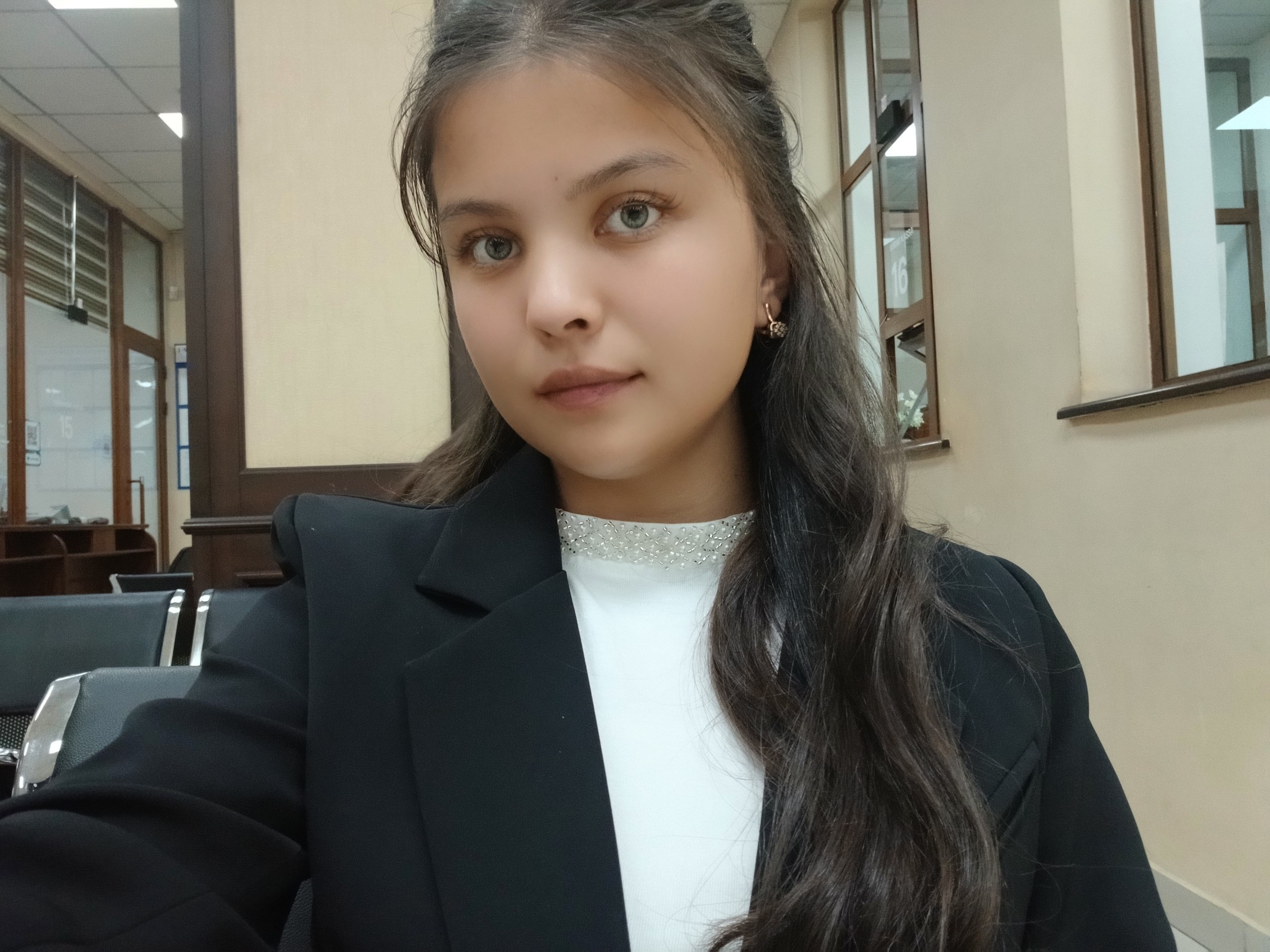
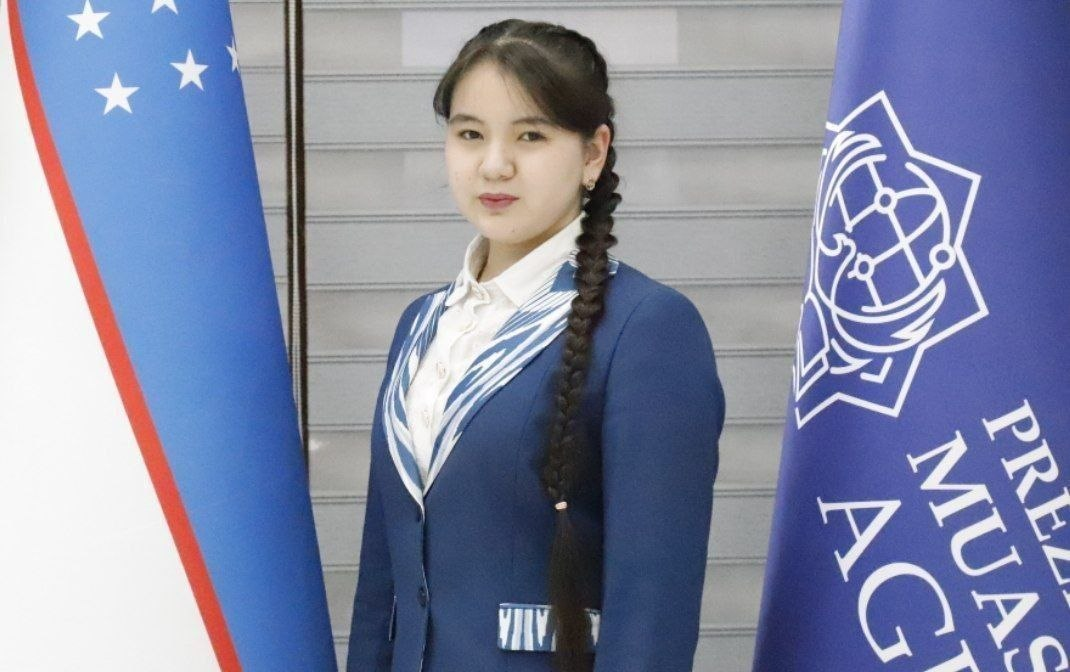
Essay from O‘roqova Nargiza

THE IMPORTANCE AND PRACTICAL APPLICATION OF ARTIFICIAL INTELLIGENCE TECHNOLOGIES IN MEDICINE

O‘roqova Nargiza Sherali qizi

First-year student, Group 102-A

Faculty of General Medicine

Tashkent Medical Academy

ABSTRACT

This article analyzes the role of artificial intelligence technologies in the medical field and their application in diagnosis, treatment, and prevention from a scientific and theoretical perspective. The importance of artificial intelligence–based systems in early disease detection, the development of personalized treatment plans, and the improvement of healthcare system efficiency is highlighted. In addition, the challenges of implementing artificial intelligence in medicine and its future development directions are discussed.

Keywords: artificial intelligence, medicine, diagnostics, personalized treatment, telemedicine, digital healthcare.

INTRODUCTION

Modern medicine cannot develop without information technologies. In recent years, the rapid development of artificial intelligence technologies has led to the emergence of new approaches in the healthcare system. The need to process and analyze large volumes of medical data requires the use of artificial intelligence. Therefore, artificial intelligence is becoming an important factor in improving diagnostic accuracy and treatment effectiveness in medicine.

MAIN PART

1. The Concept of Artificial Intelligence and the Foundations of Its Application in Medicine

Artificial intelligence is the ability of computer systems to model analytical thinking, learning, and decision-making processes characteristic of human intelligence. In medicine, it is used to support clinical decision-making, create analytical forecasts, and develop automated monitoring systems.

2. Artificial Intelligence in Diagnostic Processes

The analysis of medical images is one of the most effective areas of artificial intelligence application. Based on radiological and tomographic data, AI can:

detect pathological changes;

assess the stage of disease progression;

reduce diagnostic errors.

This is especially important in fields such as oncology and cardiology.

3. AI Capabilities in Personalized Treatment

Artificial intelligence makes it possible to develop treatment strategies by considering the individual characteristics of each patient. Based on laboratory indicators, genetic information, and clinical signs, it becomes possible to:

select appropriate medications;

determine the optimal dosage;

predict possible side effects in advance.

4. Artificial Intelligence in the Pharmaceutical Industry

During the process of drug development, artificial intelligence performs molecular-level analyses and shortens the time required to identify new medications. As a result, the efficiency of clinical trials increases and drug development costs decrease.

5. Telemedicine and Remote Medical Monitoring

Remote monitoring systems powered by artificial intelligence track patients’ vital indicators in real time. This helps provide early warnings and prevent complications in chronic diseases.

The Use of Artificial Intelligence in Diagnostics

Radiology is currently one of the most widely used areas of artificial intelligence in medicine. For example, the Google DeepMind Health system has demonstrated higher accuracy than physicians in detecting lung cancer and retinal diseases at early stages by analyzing MRI and X-ray images.

Artificial intelligence analyzes imaging data such as X-ray, CT, MRI, and ultrasound to help detect tumors (cancer), cardiovascular diseases, and lung diseases (such as pneumonia and tuberculosis) at early stages. In some cases, AI can identify minor changes more accurately than doctors.

Moreover, AI also contributes to the evaluation of laboratory analyses. By comparing blood, urine, and other biological test results, it helps detect diseases such as infections, diabetes, and hormonal disorders.

Advantages of Artificial Intelligence in Medicine

Artificial intelligence increases the speed and accuracy of diagnosis and enables early detection of diseases by minimizing the influence of human error. It proposes individualized treatment by considering the patient’s age, gender, genetic condition, and medical history. It also improves access to healthcare services in remote regions.

In addition, AI can predict diseases in advance, identify patients in high-risk groups, enable timely preventive measures, and even forecast epidemics.

Risks of Artificial Intelligence in Medicine

Although artificial intelligence has many advantages, it also has certain risks. In particular, it may reduce direct communication between doctors and patients. Furthermore, incorrect algorithms may lead to incorrect diagnoses. In such cases, the question arises: who is responsible for the misdiagnosis?

Artificial intelligence provides answers based on the information available in its database. Currently, data resources in languages such as English, Chinese, and Spanish are extremely rich, which allows AI systems to analyze patient symptoms more accurately in those languages. In other languages, however, there may still be certain limitations.

CONCLUSION

The introduction of artificial intelligence technologies into medicine is taking the healthcare system to a new stage of development. It serves as a supportive tool that complements physicians’ work and makes diagnostic and treatment processes more efficient.

Artificial intelligence has also brought major changes to the field of medical diagnostics. It accelerates the diagnostic process, increases accuracy, and significantly improves the efficiency of the healthcare system. However, artificial intelligence should remain a supportive tool, and the final decision must always be made by a qualified physician.

REFERENCES

Topol E.J. Deep Medicine: How Artificial Intelligence Can Make Healthcare Human Again. Basic Books, 2019.

World Health Organization (WHO). Ethics and Governance of Artificial Intelligence for Health. Geneva, 2021.

Rajkomar A., Dean J., Kohane I.S. Machine learning in medicine. New England Journal of Medicine, 2019; 380: 1347–1358.

Esteva A., Kuprel B., Novoa R.A., et al. Dermatologist-level classification of skin cancer with deep neural networks. Nature, 2017; 542: 115–118.

Yu K.H., Beam A.L., Kohane I.S. Artificial intelligence in healthcare. Nature Biomedical Engineering, 2018; 2: 719–731.

Zenodo.org – The Role and Importance of Artificial Intelligence in Medicine.

Kun.uz – The Benefits and Risks of Artificial Intelligence in Medicine.

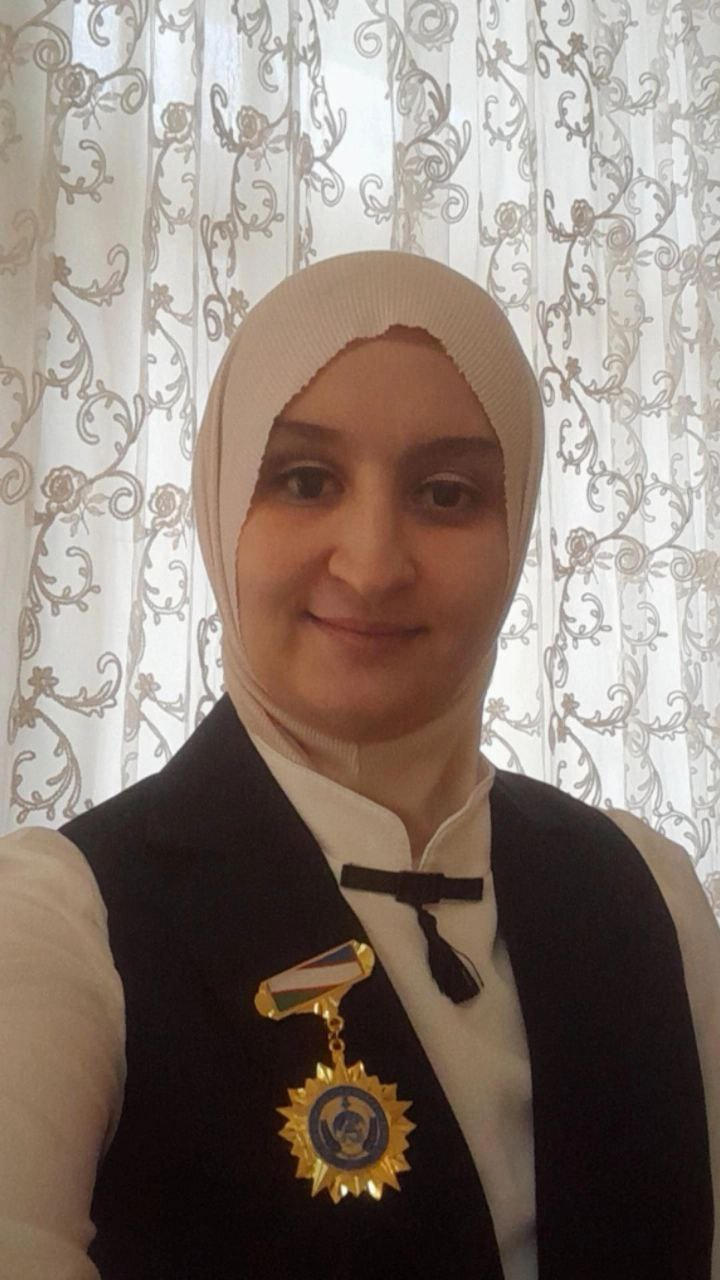
O‘roqova Nargiza was born on March 26, 2001, in Ishtikhon district of the Samarkand region. She is currently a first-year grant student at Tashkent Medical University.

In the 2024–2025 academic year, she works as a biology teacher at School No. 33 in Ishtikhon district of the Samarkand region.

She graduated from the Faculty of Biology at Jizzakh State Pedagogical University in the 2020–2024 academic years.

She has an excellent command of English, Russian, Arabic, and Turkish languages.

Poetry from Christopher Bernard

Señor Despaïr 
Against a Hopeless Time
A Poem by Christopher Bernard

3. The Angel

I waited for the old man
to answer, but all I heard was waves,
suddenly distant, as though withdrawing with 
    the tide.
Then I saw a dim glow above the horizon
and watched as it grew stronger, felt my shadow
deepen with the appearance of the light.
The sky grew dull and stretched with cloud ribbons
and flattened out. The sea looked like pewter. 
Then an edge of startling brightness 
appeared beneath the scrambled glow,
and the sun edged upward, red and gold.

I turned to look at the old man,
but there was no one there. I was alone on the beach.
Had he walked away in disgust at my last speech?
Had he given up on someone so incorrigibly naive?
Had he even been there at all? No, he’d been there,
of that I was sure. Perhaps he had thrown himself
back into the sea from which he had come.
I watched as the sun rose like a head or like an eye
staring across a world that was all sky.

And a form broke from the sun and the far 
calling of the waves. Nebulous as fog or cloud, 
it seemed to step toward me over sand
brilliant and slippery as glass,
and I saw behind it a throng
of brilliant, smiling – were they angels? –
misty and fragrant as the breeze
that lifted from the sea.
The glowing form seemed to speak,
and it was the voice inside me,
bright and soft as an angel’s,
or as I would imagine an angel’s.

“Know this,” it spoke, as if close to my ear,
almost a whisper, and I strained to hear.

“Know this: we are perpetual creation.
Know this: we are the infinite world.
Time wee enter to work out the possible,
which knows no end and no beginning.
Know this: your task on earth
is to build possibility.
Know this: we are nature, 
nature is ourselves.
Just as you are nature, 
nature is you. 
You are our hands and eyes
as we are yours in all that is.
The power of evil and good
is in your eyes and hands.
The ultimately beautiful is the ultimately real. 
Know this: You are free. So: choose.”

And the smile of the diaphonous glowing figure
burned my face.

Suddenly the throng of angels, 
and the sea and the shore and the sky 
rang, like all the bells in all the cities
of the earth.

Though how could that be? How could any of this 
    be?

And I was surrounded by the flocking and singing of
    many birds.
And the waves glittered before me,
and I heard enchanting laughter.
And the air smelled of shells and brine and roses
and smoke, perfume, wine, and brandy and
     apples.
And a crab made mock with a clam, and a blade of
    grass
traced in the dunes the outline of the loveliest of girls
to the dip of a breeze and a turn of a sun ray. And a
    falcon 
traded mysteries with a dove. And wind 
swept up the sand in a glory of wind devils
swirling in shapes of Carmen, Venus, Tamara, 
formed in a moment, in the next cast back 
to sand and wind. And whiteness throned in clouds
    above,

and wind and galleons moved across the blueness
    like a sea,
a moment hoped for, lost, here, once, forever.

And the sun as it rose opened and filled the sky
for a moment that passed like a breath
with a beauty that was infinite 
and a love that was for all time.

_____
Christopher Bernard’s most recent collection of poems is titled The Beauty of Matter, “A Pagan’s Verses for a Mystic Idler.” Señor Despaïr will appear in book form from Real Magazine Productions, a publisher based in India, later this year.

Poetry from Ri Hossain

We Haven’t Met Yet

We haven’t met yet,
We were supposed to go to war together;
Yet, you went to battle alone, becoming my very adversary.
Still, we haven’t met yet,
Because I never went to war.

A black cat blocked my path,
Facing the movement of the parrots,
I have withdrawn my weapons.
The sissoo trees have welcomed me into their fold—
Whose shadows fall even in the sun, like a drizzling rain.
There is no wailing in the sound of the wind,
Only the eternal friendship of sunlight, breeze, and leaves.
I am now with the fish, we do not have to go to war…

Even then, we are marked for slaughter…
Since we haven’t met yet,
You haven’t been able to kill me.
To destroy me, you are building heavy missiles,
Warplanes, even nuclear bombs;
While I am weaving a net of sky-blue dreams.

If we ever meet, I will give you the messages of the birds,
I will take flight with you like wild geese,
I will build nests on new islands;
If we ever meet, I will give you love.

We haven’t met yet;
You are searching for me to kill,
And I am searching for you to love.

Christopher Bernard reviews Opera Parallèle’s production of La Belle et la Bête

La Belle et la Bête – Opera Parallèle (Photo: Stefan Cohen)

La Belle et la Bête

Opera Parallèle

Zellerbach Hall

Berkeley, California

Beast Against Beauty

A review by Christopher Bernard

Over a recent weekend in March, Cal Performances hosted an original production by the local company Opera Parallèle, combining movie and stage, of Philip Glass’s uniquely beautiful conversion of Jean Cocteau’s classic film La Belle et la Bête into a cinematic opera.

The original “Beauty and the Beast” was written by the eighteenth-century French novelist Gabrielle-Suzanne Barbot de Villeneuve and appeared in her book La Jeune Américaine, et les Contes marins. The story, set in a romanticized High Renaissance France of François Premier and Diane de Poitiers, was later revised and abridged by Jeanne-Marie Leprince de Beaumont in the version best known down the generations. The story’s magnetic appeal has never weakened; in the age of toxic masculinity, it has never been, in some ways, more timely.

To say nothing of the aggression inherent in all masculine sexuality: Has there ever been a sensitive young man in love with a beautiful woman who did not, at some time, darkly suspect that, in reality, he was ugly, disgusting, unworthy of either loving or being loved—a beast indeed? Has there ever been a woman who wasn’t afraid at some point of bringing out the beast in the man who claimed he loved her? And, the claims in the fairy tale notwithstanding, how often has it occurred, not that the beast turned into Prince Charming, but that Prince Charming turned into the Beast?

Cocteau’s film, a masterpiece of French surrealism from the middle of the last century, contains some of cinema’s most famous sequences: the line of chandeliers held by disembodied arms protruding from a corridor’s halls, the moving eyes in the faces carved into a mantel above a blazing chimney fire, a pearl necklace turning into a writhing snake in the hands of a wicked sister, the dissolves from beast to human and from human to beast, and Belle’s gliding down a night-time hallway with windblown curtains without apparently stirring a foot, to name only a few.

The original script, itself rich with poetry yet containing enough realism to empower the magic, and Georges Auric’s film score work with these magical images to create a world of consummate fantasy speaking the curious truths poetry is uniquely capable of expressing. Philip Glass’s decision, half a century after the film’s release, to strip out and replace not only the soundtrack and sound design but all the dialogue as well into an immense musical fabric proved to be, not only as provocative as any surrealist gesture, but brilliantly successful and entirely aligned with the soul of the work. Unlike the notorious mustache on the Mona Lisa, Glass’s gambit enhances and even completes the work in a way one can only feel the original artists (with, of course, the possible exception of the silenced M. Auric) would have completely approved. It doesn’t displace the original but provides a perfectly viable alternative.

When I heard about Opera Parallèle’s production, I imagined one of three possibilities: a straight screening of a silent version of the film, with sound provided by live singers and instrumentalists, much like what I was lucky to experience on my first exposure to Glass’s setting. Or it might be an entirely live staging, with a few discreet bows to the film. Or it might be the most interesting but most perilous of the three: a fusion of the film with live action. But if they tried the latter, how would they solve the problem at the heart of any such attempt: how integrate the two without their blundering regularly and clumsily into each other? Because if staging and film weren’t merged into a seamless whole, it could be, indeed would be fatal: the genius of the film would require equal genius, above all in judgment, taste, and tact, in the staging, otherwise it would be in danger of overbalancing, then irretrievably sinking, the performance.

If this third choice were attempted, surely (I thought) the director would realize that film and staging would need to alternate; presenting them both at the same time would have to be generally avoided, for obvious reasons: the audience would not know which one to watch, the staging or the screen (or if two screens were used, which screen?). Staging theater is not like staging a dance or a concert, where multiple strands of movement or sound can be processed by the human mind without what is aptly called brain freeze.

One of the main problems was that some in the audience might resent any attempt to deflect their attention from the brilliance of Cocteau’s film. Concentrating the audience’s focus is, of course, one of any stage director’s primary responsibilities; diffusing attention must be avoided except for brief periods and for reasons that are perfectly clear to the audience as well as emotionally telling, whether dramatic or comic. And deliberately dividing their attention can court disaster.

Alas, this production did not solve the problem described, mostly because it did not seem to realize there was a problem to solve in the first place. The film and the staging stubbornly refused to combine; at times, they even stood in hostile and irreconcilable opposition: the concept for the piece was often at war with the piece’s aesthetic, with frustrating consequences.

Almost all of Cocteau’s film was screened on a darkened wall placed mid-stage as part of the handsomely designed and lit set (kudos to the unnamed set designer). At apparently random moments, live singers, in full costume, walked onstage and, distractingly, more or less imitated what appeared on film. In a few instances the film was paused and the action of the story was given entirely by live singers on stage. These few scenes were the most effective in the performance; effective enough for one to wish there had been more.

To add to the problem of divided attention, there were also a (gratefully) few attempts to screen a second film, which again imitated the action in the Cocteau. The concluding scene of the production abandons Cocteau’s film entirely, replacing it with a shot-by-shot imitation of the film’s famous concluding sequence, this time of the singers we had seen live onstage. If this was meant to bring all of the elements of the performance together in a transcendent conclusion, it was only partly successful.

It is always dangerous to fiddle with a masterpiece once; to fiddle with it twice can be fatal.

Fortunately, the musical elements of the evening came off, for the most part, very well: Hadleigh Adams was in excellent form in multiple roles, including the Beast, as was Chen Kang as Belle. Sophie Delphis did fine double duty as both of the evil sisters, and Aurelien Mangwa was strong-voiced in three well-differentiated roles. Nicole Paiement conducted the small but powerful ensemble, perhaps pressing too hard at times on the volume. The wonderful costumes were designed by Natalie Barshow, and not to be forgotten, given the opulence of the era in which the story takes place, were the hair and makeup designs by Y. Sharon Peng.

_____

Christopher Bernard is an award-winning novelist and poet. His most recent book is the poetry collection The Beauty of Matter.

Synchronized Chaos First March Issue: Fingering the Spines

Tunnel of Books in a Prague bookstore, c/o Petr Kratochvil

Regular contributor Bill Tope has launched a new literary magazine, Topiary, which is now accepting submissions! Please send short stories to billtopiary1950@gmail.com.

In March we will have a presence at the Association of Writing Programs conference in Baltimore which will include a free public offsite reading at Urban Reads on Friday, March 6th at 6 pm. All are welcome to attend!

So far the lineup for our reading, the Audible Browsing Experience, includes Elwin Cotman, Katrina Byrd, Terry Tierney, Terena Bell, Shakespeare Okuni, and our editor, Cristina Deptula. If there’s time, an open mic will follow.

Our Urban Reads bookstore in Baltimore

Our next issue, Mid-March 2026, will come out Sunday March 22nd.

Yucheng Tao announces the winners of his poetry competition, Steve Schwei and Mark DuCharme. We’ve invited both winners to submit their poetry to Synchronized Chaos for everyone to read!

Now, for March’s first issue! This issue, Fingering the Spines, pays homage to our annual in-person reading, the Audible Browsing Experience. It’s a visual metaphor for looking through various titles in a global bookstore or library.

Genevieve Guevara rings in the dynamic energy of the Fire Horse for Chinese New Year.

Odiljonova Mohlaroyim Iqboljon qizi celebrates the many styles of Uzbek spoken word art. Umarova Gulsevar Ubaydullo qizi highlights the rich semantic and lexical expressiveness of the Uzbek language. Shuhratova Mohinur Abbosjon qizi explores the layered meaning of “k’o’ngil” (heart) in the Uzbek language.

Image c/o Lode Van de Velde

Jesus Rafael Marcano celebrates the beauty of France, likening the nation to butterflies. Timothee Bordenave honors the beauty and majesty of Christian faith, as shown through Notre Dame. Su Yun’s abstract work reflects a meditative, spiritual sensibility. Soumen Roy describes a physical and mental journey towards spiritual inspiration.

Abdumajidova Zuhroxon Ibrohimjon qizi explores themes of hardship and endurance, destiny, faith, patriotism, and loyalty in Shuhrat’s classic Uzbek novel Oltin Zanglamas. Iroda Ibragimova explores themes of resilience and human dignity through oppression in Shukrullo’s novel Buried Without a Shroud. Bakhtiyorova Zakro Farkhod qizi speaks to the role of the short story in Uzbek literature. Ro’zimatova Madinaxon Sherzod qizi analyzes themes of strength, weakness and humanity in Abdulla Qahhor’s story “Ming bir jon.” Anvarova Mohira Sanjarbek qizi contributes a heartfelt poem from the perspective of Gulchehra, a character in O’lmas Umarbekov’s “Being Human is Hard.”

Azimov Mirsaid draws on Ray Bradbury and traditional Uzbek crafts and hospitality to illustrate the value of human warmth and imperfection. Dr. Jernail Singh Anand urges humanity to look into the words of our past and present writers and philosophers for wisdom in this age of great technological advancement. Dr. Jernail Singh Anand also expresses hope for the continuance of human creativity in the age of artificial intelligence. Daniela Chourio-Soto renders all-too-human morning sleepiness with lively humor. Eva Petropoulou Lianou explores the feelings and inspirations of emerging Greek painter Vivian Daouti.

Author Victoria Chukwuemeka discusses her creative journey towards exploring psychology and the subconscious, becoming deeper and more straightforward in her words. Kassandra Aguilera’s work mourns her speaker’s incompleteness, probing whether we need observers to fully realize ourselves. Ananya S. Guha reflects on distance, separation, and reunion, how roads can both bring us apart and together.

Image c/o Petr Kratochvil

Emeniano Somoza poetically compares creative writing and glassblowing: arts where creators shape, rather than force, their materials. Poet Su Yun collects a set of poems from children at the East-West Public School in Bangalore on the theme of “the power of the pen vs the sword.” Taylor Dibbert’s short piece is almost anti-poetry, suggesting without communicating a metaphor.

Stephen Jarrell Williams’ poetry speaks to the risks and joys of openness to emotion and experience. Komilova Parizod reminds us to make the most of our lives and appreciate the joy around us. Priyanka Neogi urges us to act with wisdom and restraint. Boymirzayeva Dilrabo highlights the importance of motivation and discipline in reaching one’s goals.

Sobirova Oydinoy Nozimjon qizi discusses symptoms and types of neurosis. Mashhura Ochilova speaks with poignance and grace of a young woman’s inner battle with depression. Graciela Noemi Villaverde speaks to gaining wisdom through life’s losses. J.J. Campbell’s voice is older, raw, bruised, with hard-won exhaustion and experience.

Axmedova Gulchiroyxon expresses her tender love and concern for her mother. Nurmurodova Masrura Xurshedovna honors the patient, dedicated, behind-the-scenes love of her father. Gulsanam Sherzod qizi Suyarova explicates the value of friendship and how to be a good friend. Aminova Feruza Oktamjon kizi celebrates the beauty and innocence of young love. Qozoqboyeva Husnida yearns with devotion for her soulmate’s arrival. Mesfakus Salahin falls into a reverie about a fanciful love that exists between his imagination and his memory. Prasanna Kumar Dalai smiles through a delicate and tender love. Joeb expresses his hopes for personal and global love and peace. Lan Xin celebrates transcendent union with all others and the universe, with the world as her homeland, in her fanciful dinner piece. Husanxon Odilov laments a love which he acknowledges will never return. Nicholas Gunther reflects on a high school lost love or friendship through a casual ghazal. Bill Tope and Doug Hawley present an unusual relationship arrangement that seems to make several older people happy. Masharipova Yorqinoy Ravshanbek qizi celebrates the tenderness of a mother’s love. Brian Barbeito’s gentle childlike piece creates a surreal atmosphere rich in memory and care. Orzigul Sharobiddinova Ibragimova versifies her love and longing for her Uzbek homeland.

Image c/o Kai Stachowiak

Zarifaxon Nozimjon Odilova qizi highlights the historical contributions of Uzbek statesman and humanist leader Zahriddin Muhammad Babur. Toshkentboyeva Xumora outlines the contributions of Amir Temur to modern Central Asian statecraft. Poet Lan Xin highlights the wisdom and compassion of Chinese Dongba cultural leader Wan Yilong. Abdusaidova Jasmina explicates themes of spirituality, heritage, and love in Alisher Navoiy’s writing. Abduxalilova Shoxsanamxon Azizbek qizi celebrates the benefits of reading culture for society.

Murodova Zarin Sherali qizi explicates the importance of language learning in world communication and international and intercultural relations. Khusanjonova Mukhtasarhkon Khamdamjon qizi discusses how podcasts can help those learning English as a foreign language. Turdimuradova Zulfera Sattor qizi analyzes the use of blended learning in teaching English as a foreign language. Suyunova Zuhra Oybekovna speaks to the importance of writing skills to language learning.

Olimova Marjona Ubaydullayevna celebrates the literary heritage of Zulfiya and her themes of patriotism, women’s dignity, and compassion. Munisa Yo’ldosheva highlights how Zulfiya’s life influenced her works and her contributions to supporting emerging authors. Nozigul Baxshilloyeva discusses emotional and spiritual themes within Zulfiya’s work and how they affect Uzbek readers. Sultonova Shahlo Baxtiyor qizi highlights the literary and cultural influence of Zulfiya’s poetry. Jurayeva Barchinoy does the same, while also highlighting her commitments to education and women’s rights. Nematullayeva Mukhlisa Sherali kizi relates the value of Zulfiya’s work through a narrative story. Gayratova Dilnavo highlights the enduring legacy of Zulfiya’s work, especially what it means for many Uzbek women.

Loki Nounou’s piece dramatizes a woman stripped of her individuality in a toxic marriage, becoming only a vessel to hold others’ dreams. Abigail George probes the maternal and domestic as both sacred and violent, an origin and a wound, along with critiques of colonialism and the power of self-kindness. Manik Chakraborty calls for a natural, spiritual feminine awakening. Asadullo Habibullayev warns of the dangers and social injustices young women can face in Uzbekistan, even when educated, and calls for the younger generation to respect the wisdom of their elders. Eva Petropoulou Lianou urges respect for women and for the roles women play in society, including motherhood. Maxmarajabova Durdona Ismat qizi celebrates the love and care of human mothers and the value of Mother Earth.

Image c/o Sulvia

Zamira Moldiyeva Bahodirovna analyzes what the nature motifs in Alexander Feinberg’s work reveal about his thoughts on memory and identity. Noah Berlatsky draws on trees to illustrate our shared human heritage, how we connect to each other and hold each other up. Dilafruz Muhammadjonova presents a natural and cultural tour of Uzbekistan’s Andijan province. Suyunova Fotima Oybekovna reminds us of how crucial it is to preserve the environment. O’gabek Mardiyev outlines ways to improve the efficiency of solar power generation. Shavkatova Mohinabonu Oybek qizi urges improvements in Uzbek public transit to encourage tourism as well as benefit ecosystems. Sultonaliyeva Go’zaloy Ilhomjon qizi analyzes the social, cultural, ecological and economic aspects of tourism in Central Asia. Turgunov Jonpolat discusses the ways in which media framing of climate issues affects how people address the problem. Surayyo Nosirova highlights the need for more consistent communication from journalists to the public about climate change in Uzbekistan.

The works of primary school children in China, collected by Su Yun, reflect moments of happiness and ordinary summer fun in nature. Alan Patrick Traynor’s Irish-inspired piece becomes incantatory, mystical, inhabiting littoral and transitional zones at the ocean’s edge. Tea Russo’s spiderweb poem seeks both expansive transcendence and the peace of oblivion, melding into various aspects of nature. Turkan Ergor dreams of the permanence of the ocean’s waves. Eleanor Hill reflects on the calm strength and dignity of a whale, unbothered while creating waves and blowing bubbles. Ri Winters turns to the ocean and its kelp forests as metaphor for the deep, isolating, yet restful morass of depression.

Brian Barbeito sends up a preview of his book Of Love and Mourning, highlighting the original content and the memorials to beloved pets who have passed. Filmmaker Federico Wardal celebrates a film award for a very humane documentary about veterinary care that saved the life of a racehorse. Jerrice J. Baptiste’s piece, accompanied by gentle, colorful artwork, expresses a graceful and natural surrender to death. Sayani Mukherjee’s piece sits between devotion and restlessness, calling the sky a neighbor yet screaming at stars. Mykyta Ryzhykh crafts a fevered love elegy at the edge of war, eros, and annihilation.

Patrick Sweeney sends up a set of index cards from a memory archive. Mark Young’s altered geographies trace the outlines of innocence, memory, and rupture. John Grey’s urban character and landscape pieces show dry, unsentimental grace.

Image c/o Jacques Fleury

Duane Vorhees’ poetry meditates on time’s circularity, embracing contradictions and the past, present, and future. Ibrahim Honjo reflects that one day his home and everything he knows will fade into memory. Christopher Bernard continues exploring hope, ruin, and creative resilience in the second installment of his prose poem “Senor Despair.”

Maja Milojkovic speaks to the implacable ticking of conscience. Mahbub Alam laments the selfishness and wickedness of humanity. James Tian dramatizes the pain of being underestimated, dismissed, and misunderstood. Mark Lipman calls for greater taxes on the wealthy and for economic egalitarianism. Jacques Fleury hoists his commentary on the fragility of modern democracy on the scaffolding of an extended construction metaphor.

Rahmatullayeva Elmira Rahimjon qizi discusses how we form the value systems that guide our lives. Abduraufova Nilufar Khurshidjon qizi outlines the national values and traditions of the Uzbek people. Islomova Maxsudaxon Axrojon qizi explores ways to inculcate values into Uzbekistan’s young people in school through exposing them to the great thinkers of their heritage. Botirova Mubina looks into ways Uzbekistan’s civil society can uplift teens and prevent delinquency through communicating their national values. Abdullayeva Ezozaxon Qobuljon qizi highlights the importance of social and financial investment in education. Ismoilova Jasmina Shavkatjon qizi highlights the importance of quality education for social progress.

Axtamova Orastaxon Salimjon qizi outlines strategies to assist autistic children’s psychological development. Rajabova Nozima highlights methods of improving young students’ reading comprehension. Dildoraxon Turg’unboyeva outlines the effectiveness of play-based learning methods in education. Sevara Tolanboy Mahmudova qizi discusses educational games for preschoolers. Turgunboyeva Dilafruzxon highlights the importance of preschool education to a child’s development. Muxlisa Olimjon qizi Tursunaliyeva and Adhamova Irodaxon Akmal qizi discuss ways to help educate children with learning disabilities. Dilnora Habibullo qizi discusses interactive methods for teaching children with and without special needs. Burhonova Lobar outlines suggestions for working with children on the autism spectrum. Hikmatova Nigorakhon Hasanboy qizi discusses how to upgrade physical education and make the activities more interactive. Turg’unova O’g’iloy Ravshanbek qizi discusses ways to incorporate physical activity into children’s academic education. Shahobiddinova Sevinch explores the use of educational games in primary education. Arziqulova Adiba details various interactive strategies for engaging young children in educational activities at school. Mashhura Kamolova analyzes the limitations of examinations in terms of measuring student capabilities.

Image c/o Victoria Borodinova

Orinboyeva Zarina discusses how to help children psychologically and emotionally navigate their parents’ divorce. Botiriva Odinaxon elevates the teaching profession and calls for professional development and competence in those who educate young children. Nishonboyeva Shahnoza speaks to her wisdom and dedication towards her goal of becoming a preschool teacher.

Kadirova Feruzakhan Abdiyaminova discusses interactive games that could be useful in science education. Oroqova Nargiza outlines the rise of allergies in children and speculates on the causes. Umidjon Hasamov highlights the potential for artificial intelligence in medical diagnostics. Yunusova Sarvigul Siroj qizi highlights the importance of early screening for gastrointestinal cancer. Rajapova Muqaddas Umidbek qizi highlights the structure and function of the circulatory system.

Shohnazarov Shohjaxon highlights the impact of inflation on a nation’s economy and strategies for managing it. Mamadaliyev Kamronbek highlights the need for cybersecurity technology and cautions about cyberattacks as a weapon of war.

Dr. Jernail S. Anand calls out poets and academics whose lofty ideas don’t connect to present-day reality. While we are all capable of flights of fancy, we hope that this issue is grounded in our world and our humanity.

Poetry from Duane Vorhees

A GUITARIST SWEETENS THE NIGHT

Our dark oceans are shivering

ancientest tempesttost navies.

My starving fingers bite your strings.

My hammer taps into your bark

to find immortalized molasses,

like a corkscrew into waiting cork.

These gardens glow like ivory

amidst the shades of black Hades

and I curl, curl into your curves.

The sky is a vase of daisies.

THIS POEM BY DUANE

Fifty,000,000 likes!

For your photos of snacks,

for your pictures of cats.

When Virgil

and Dante

met Homer in Hell,

Dante elevated

Himself

to their level.

GASANDICEMAN

One way went to the mountain

and one way to the coast.

One way the way of Pan

and one the way of Thoth.

This wayfarer, uncertain,

decided to take them both.

I inhabit

Opposites.

I am a rotund materialist

and within, profoundly, his ghost.

I am the ground.

I am the mist.

ALL HISTORY IS PROPHECY

Blind men at dusk predict

the next day will bring light,

No past dies completely.

Its bone cements my wall,

and its ash congregates

in these porcelain dolls.

All prophecy

is history —

bounty or blight.

All of our tomorrows

are mysteries today.

Yes, “the future looks bright” —

there’s too much glare to see

the soonest cloud bringing

the silver and the rain.

I’m in Hiroshima, just waiting for the  plane.

PASSION FOR LIFE

(after Wang Guozhen)

I care not if my destination is reached

since I have courage to walk ahead

regardless of the winds and rains.

I care not if my love is reaped.

Since roses are my one passion

my address is brave and sincere.

I care not if hostile winds and rains freeze me

since my horizon ahead is set.

The world’s shadow is behind me.

I care not if the road’s flat or straight.

Since I possess a passion for life

I can never be caught offguard.

Poetry from Tea Russo

Self portrait from my spiderwebs

drenched in milky moonlight, i climb
up to my home in the tangled branches, among my webs.
rain plummets onto soft blades of grass,
from the spiderwebs i see myself in puddles of water;
the ever-changing reflection i know i must confront.
i am stuck between the comforting earth and the freeing sky,
a malfunction where the body meets the mind.
i have a hunger that eats at me;
the eternal hunger to have a body made of moonlight;
constellations as my bones,
planets for eyes,
to be everything
and nothing
all at once.