There was a series of balloons, three, that the wind blew in. They were black balloons w/the number seven on each. I wasn’t sure what they meant, but felt they were auspicious and on the side of positivity. Then I saw three number nines and felt the same way. But, I couldn’t tell for certain what the repeating numbers meant as I wasn’t a numerologist or highly into numbers to begin with.
I saw a lady that reminded me of another lady I had once made fun of unfairly. I was immature and words had hurt the lady’s feelings but the lady either forgot or forgave me or buried it as she didn’t act as if it happened when I heard from her much later. That and one other thing were the only two things I worried about karmically. The other was that I had injured a hockey player and he was taken away in an ambulance. But it wasn’t done intentionally though several people thought it was. I hit him, which was allowed, but it the other injury was not done on purpose as he just fell on a bad angle. He turned out to be alright. I was glad for this. Those two things had happened practically another life ago as they say, yet they had bothered me. Other than those two events I felt clean, but like the numbers, it wasn’t possible from where I was standing to know for sure.
You can’t always see the spiritual ledger. It is interesting that ledger also means a demarcation stone upon a grave because perhaps it not until we have a stone ledger that we can in the life review according to the canon of such experiences, see more accurately how our actions and words really affected others and the universe.
I was low monetarily. The group in front of me was affluent and just exuded it. You can tell through intuition and life experience those who try to come off that way versus the actual. When they left they forgot a purse leather green, the same colour as the jade some of them wore. Nobody noticed and they weren’t doubling back the way some people do when they realize they forgot something. There is about a five to ten second window you have to remember something is amiss before you have officially forgotten something. They were definitely leaving. I picked up the purse and went out the same door and called them back as they were getting into what looked like a new and definitely a tricked-up-decked-out high end SUV vehicle.
‘Someone forgot their purse,’ I said, ‘holding it up.’
They came over and thanked me and took the purse. I returned it because it was the right thing to do. I went back to my seat in a booth, for booths are perhaps one of the greatest things ever created, and looked up through the adjacent window watching them leave.
At a field there were streams cutting through like a water swath. I paused and stared at them, admiring the movement of water. I thought of Herman Hesse and his book. I had two copies of the famous work, but had given away the better, newer one. My old one was tattered and torn, plus coffee got spilled on it at some point. I didn’t know what that meant either. A large woodpecker that had been alighted in a nearby tree took off and I was frustrated that I had not had my camera out. Yet, I still admired its flight and the silhouette it made against the afternoon winter sunlight.
I kept going around there. In the distance were train tracks but a train rarely as far as I could tell went by. There were large holes in the wall, the hillside, for the water to go under. It was a fine juxtaposition of water that appeared black against the snowy white sides. And then distant parts of the stream tumbled down a few feet in two places, bragging up its bits like cold clear and white flames and also many spark look a likes as if from a some giant sparkler.
I went by a bookstore, an old used bookstore that I used to patronize. Proper gems could be found there and for inexpensive prices. Books were like treasures. But the store was gone, replaced by a work-wear store. The vests and coveralls mostly beige and black, stood looking back at me from the windows. It was as if the bookstore had never existed. Though on the outskirts of town, the perimeter purlieu, it had been a wealthy town, but didn’t have a new or used bookstore. I guess the world had changed.
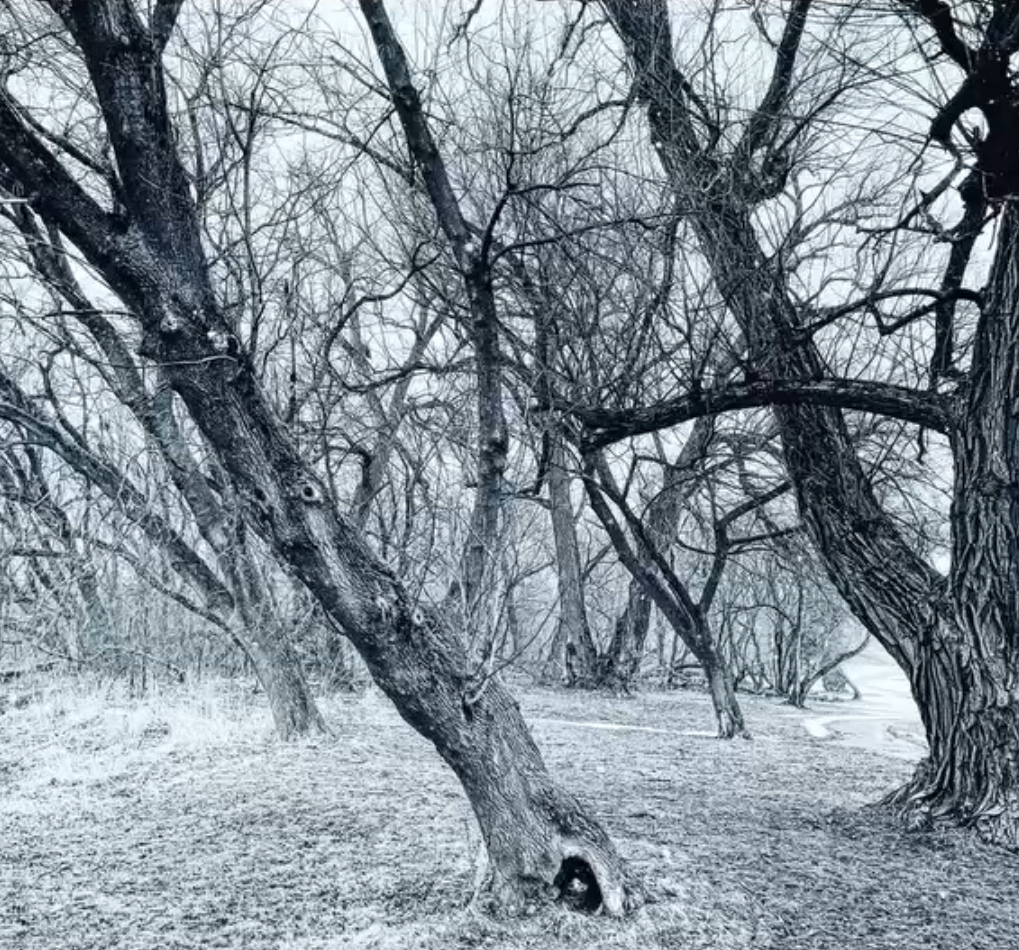
So I headed back home and did chores, prosaic, mundane things, sometimes glancing out the windows as I moved about. There was nothing besides a puzzle on a dining room table, an old piano, and a painting on the wall. Also a bookshelf and coffee table by the couches beyond. The hardwood floor was weathered by time but had character and was still passable. I had never been a huge fan of the neighborhood or its dwellings, but it was clean and quiet and that counts for a lot. It was better than many other places. That view to outdoors didn’t hold a lot. A fence handsome that I had stained with a brush and roller, a good privacy fence as they called it, with lattice work up top that was not too plain and not too gaudy either. Snow was on the ground. It had been a long and cold snowy winter. I hoped the earth and sky really were pregnant with spring. A shed storing summer chairs and a table. On its door, there were two Ontario license plates and two Virginia ones. The first couple were from 1973, the year and place I was born, and the second set 1972, the year and place my beloved was born. Other than that, mostly just old barren branches waited out there, stoic and alone.
One day with some luck, spring would finally start for myself and for them.
It was a meeting of the executive board of the church elders and, having conducted all the business at hand, the remaining five men sat around winding down, talking about their wives, their children and grandchildren. Adam, a widower who had never had children, felt a little left out. Mark looked his way and asked, “Adam, what’s new in your life?” Adam felt the others staring at him.
Finally, he replied, “I have a friend in New York, Annie, whom I met through a writers’ circle. I’ve known her for almost a year, and we’ve become pretty close.”
“A long-distance romance, ‘eh?” asked Quinn, with a little wink.
Adam flushed. “No. Not a romance. It’s not like that. We’re both writers and…”
“Is she,” asked John primly, “of our faith?”
“No. Annie is Jewish. Reform.”
This information seemed to fall like a leaden shroud over the group and, taking up the gavel which served as a token of his authority, John smacked it down smartly and the group dispersed.
That evening, Adam reread Annie’s latest email a third time. The woman has a definite way with words, he thought. Always concerned with him and asking after his health. He always tried to reciprocate. The land line jangled, almost preternaturally loud, and Adam jumped. He snatched up the receiver, thinking it was perhaps Annie. All he got was dead air.
After church that Sunday, Adam was confronted in the cloakroom by Laurel, a 60ish widow who’d made no secret that she rather fancied him.
“I understand that congratulations are in order,” she remarked without preamble.
“I beg your pardon?” asked Adam.
“I learned from Joyce”–John’s wife–“that you have a girlfriend in New York,” she said. “What’s her name…Annette?”
“Annie,” he corrected her at once. “And she’s not my girlfriend. We’re just friends. Another writer,” he explained.
“Oh yes,” said Laurel dryly, “your writing. Have you ever earned any money at your…hobby.”
Adam uttered a sigh. “No. Not so far.”
“Well, if you ask me, anything that takes up that much of your day, and you don’t get a paycheck, is a waste of time and effort.”
“You raise a legitimate point, Laurel,” said Adam. She looked at him. “The point being that I never asked you.”
“Humph!” she snapped, and turned on her heel and stalked off.
A day later, standing by his mailbox, Adam added the final flourishes to a playful cartoon he’d sketched in the card he was sending to his friend in New York. The snail mail they exchanged was but another expression of the mutual affection they felt for the other. Adam felt very lucky to have found someone with whom he could be fully honest. He added a complimentary remark about Annie’s latest poem, which she’d given him a peek at prior to submitting it to a journal. It felt good to be trusted, thought Adam.
The following Wednesday, after their business meeting, John gave Adam, who at 80 had stopped driving, a ride home. On the ride, John turned to Adam and said, “I’m not certain you’re exercising good judgement lately, Adam.”
Here it comes, thought Adam. Laurel was John’s sister-in-law, and fallout from their minor dust up was almost inevitable. “Go ahead,” invited Adam. “Say it.”
“Alright, I will,” said John, pulling into Adam’s drive. “You hurt Laurel, Adam. You know she has always had her eye on you ever since Merci died. Joyce and I felt it would be good for you two to come together, be a couple, and worship God and do good works together. Laurel is an attractive woman, Adam.”
“You don’t need to sell me on Laurel, John,” replied Adam. “She is a pretty woman and a good servant of God and will make some man a fine mate. But, not me.” There, he’d said it. Now for the blowback.
“So you have your eye on this New Yorker. May I ask how old she is?” John inquired nosily.
Adam took a deep breath and released it. “She’s 50,” he said.
“Well,” said John stiffly. “Laurel is nearly 70, so I suppose she can’t compete with your little tootsie.” Adam rolled his eyes a little.
“Annie is not in competition with Laurel,” said Adam. “Annie lives 2,400 miles away. She doesn’t even drive; she has narcolepsy,” Adam found himself confiding. “And I don’t drive anymore. So, our getting together, which neither of us has ever even talked about, is problematic. May I confide in you, John?” asked Adam.
John nodded curtly.
“I don’t even want a girlfriend, a lover, a wife. When Merci died three years ago, I was devastated. So much so, that I swore I would never get so attached to another human being. It simply hurt too much.”
“Adam,” said John. “You lost your wife, But, life doesn’t have to stop.”
“And it hasn’t. I began to write after Merci died. I found it cathartic at first, and then I found I had a knack for it. I enjoy it. Annie enjoys it as well, and that was the basis for our friendship at first.”
“And now?” asked John.
“I love Annie, John. I’m not in love with her; I mean I don’t want to live with her or marry her or make love to her. But, I do love her. And I’m not giving her up. She is good-hearted, sharp as a tack and really seems to get me. The church is not always there for me. People have lives, I understand, and I hold it against nobody. But, there it is. Annie and I are there for the other. I consider her my best friend.”
“And is that how this woman feels, too?” asked John next.
“We have discussed our relationship and she knows what I want and I understand her expectations as well. She loves me, too, John.”
“But, a 30-year age difference,” said the other man, knifing his hand through the air. “What can you two possibly have in common? And what’s the next step?”
“We have our writing in common: a love for language and creativity and sharing. She is an amazing woman. And the next step? Does there really have to be one? As I wanted to explain to Laurel, not every endeavor has to result in a paycheck in order to be measured a success; by the same token, not every relationship has to wind up between the sheets to be judged worthwhile.” Adam judged by John’s expression that he’d gone too far. “Have a good evening, John,” Adam said, opening the car door.
“One more thing,” said John coldly. Adam paused. “You were voted out of your eldership by the elder committee.” When Adam said nothing, John went on, “as an elder you have a responsibility to be a guiding spirit for the church, and to show by example what it means to be with Christ. Your eldership was at issue even before, due to your age. But now, Adam, I’m afraid your poor judgement has earned you this rebuke. I’m sorry,” he said insincerely.
The following Sunday, John, Adam’s regular ride to the service, did not show up, so Adam stayed at home. The same thing happened the next week, and so Adam put the whole affair out of his mind. And there it stayed until the ensuing winter, when two members of the senior outreach program showed up at Adam’s doorstep, collecting a love offering for Christmas gifts for the needy. Adam allowed them into his home.
“We’ve missed you at the services, Adam,” said a tall, rail-thin male with a high-pitched voice.
Adam struggled, but could not recall his name. “Really?” he asked.
“Yes indeed,” said a middleaged, medium-sized woman with brown hair. “We were startled when you resigned your eldership, but I guess everyone wants to finally retire.” She giggled nervously. “We weren’t sure you were at home,” she went on. “Your car wasn’t in your driveway.”
“I no longer drive,” he admitted.
“Oh!” she said. “Would you like to be placed on the list to get a ride to church?”
“Well,” he said, “John Badman was giving me a ride, at one time.”
“Oh!” she said again. “You didn’t know. John was in a driving accident and broke his pelvis. He hasn’t driven in months. So that’s why you haven’t been to church?”
“What about Joyce?” asked Adam, remembering that John’s wife didn’t drive either.
“I think she catches a ride with her sister. Do you know Laurel? Maybe she could drop by to pick you up. You just live a mile or so from them.”
“How long will John be laid up?” asked Adam, suddenly concerned for his old friend. Perhaps there had been no great conspiracy after all.
“It’s difficult to say, Adam,” replied the man, whose name Adam could yet not recall. “He’s in a nursing home for the foreseeable future. He’ll have to learn to walk again. Man’s 75 years old, you know.”
After Adam gave them a generous donation to the Christmas toy fund, he thought about returning to church. He’d felt rather lost without his faith. Although he had not forfeited his personal relationship with God, not attending church had left a hole.
That evening, Adam received a lengthy email from Annie, the first contact she’d initiated in nearly a week. Normally, they communicated by phone or email almost daily, but he’d been forced to write or call her, and had detected a vague, unsettling distance in her most recent communications. As he sat near the PC to read her email, he told himself he would call her again and ask her, straight out, what the problem was. He printed out her email so he could sit back in his recliner and enjoy himself. Settling in, he read:
Dear Adam,
I hope this evening finds you well. As for me, there have been some rather drastic changes, with respect to my situation and my future.
I’d like to preface my remarks by telling you that over the past 15 months I have relished our deepening friendship. I feel a closeness to you that I’ve not felt since I lost Bruce nearly two years ago. It was your comments on my published work which prompted me to reengage with writing. It also showed that perhaps there was a new tomorrow, with new interests and new people.
You were very patient with my awkwardness at first and I want to tell you what that meant to me, to my recovery and my reemergence into the world. Adam, you are my dearest friend. I love you as a very close friend, as we discussed.
That being said, we come to the reason for this email. Adam, I am getting married. Brian works in the same office I do and I’ve known him for almost ten years. We were always friendly, but never close. Not like you and me. A year ago, he was divorced and our mutual attraction and curiosity for one another just blossomed. What I’m trying to say, Adam, is that I’m in love with Brian. And he loves me back.
This does not affect the way I feel about you. I will always love you with all my heart. I would love to continue our relationship, our phone calls and emails, the silly cards in the mail. However, Brian can be a little possessive, a little jealous. He’s unwilling to share. Also, there’s the matter of our respective faiths. Like me, Brian is Jewish. That’s why I’m writing, to tell you that there can be no more contact between us. I wish you all the best and maybe you’ll find someone some day too. Please don’t write or phone me, or I’ll be forced to use my spam filter or change my telephone number. All the best. And happy writing.
Annie.
Adam sat in the back of the church that Sunday, paging idly through the hymnal. He didn’t join his voice with the others. In the week since Annie said goodbye, he’d thought of little else than his erstwhile best friend. After the service, Laurel and Joyce came up to Adam and asked if he was ready to leave.
“I’m ready when you are, ladies,” he said with a gentle smile.
In the car, Laurel looked back over her shoulder at Adam, seated in the rear. “Are you still in touch with your New York friend, Adam?” There was no apparent rancor on her part. She had obviously moved on.
Adam shook his head. “No,” he said. “Not for some little time.” Before Laurel could pose the inevitable question, Adam stemmed the tide by telling them that, “Annie died some months ago, Laurel. Covid,” he explained.
“Adam, I’m so sorry,” said Laurel, whose sentiments were echoed by her sister. “I wish we’d known; we would’ve been there for you.”
“Well, you had a lot on your plates, what with John and all,” said Adam magnanimously. He saw Laurel smile smugly.
“God moves in mysterious ways. She was Jewish, yes?” she asked, staring at Adam in the rearview mirror. He nodded. “That’s too bad,” she said, before turning back to the road.
Ram Krishna Singh, also known as R.K.Singh, has published poems, articles and book reviews in various magazines and journals over the years and taught English for Science and Technology, Indian Writing in English, and Criticism at IIT-ISM, Dhanbad for nearly four decades. His published poetry collections include Against the Waves: Selected Poems (2021), 白濁:
A vivid light splits through darkness, depth and despair
Opening my heart to new beginning, diving deep inside to go aware
Nothing, and no one can block your way in finding the truth
Get comfortable with yourself, leave the messy things, be in sooth
Somewhere beyond the deep horizons, is a place you belong
Where an orchestra plays your favorite sweet melancholic song
Save from vultures that feasted on my loving and peaceful heart
The hungry predators preyed upon to tear me apart
Rising from the past failures winning the battle of ebbs
Still finding courage, gaining strength to stand upon my legs
The scars will heal, and you will feel lighter and better
You will change and blossom, to get more positive and wiser
Love is not the only endeavor to hang and hold on forever
Open your soul to new awakening, feel the nature’s hidden treasure
Essence of Peace
The world is going through unprecedented chaos
Wars, hatred, confusion is looming widely across
Death and destruction is bringing enormous loss
Conflicts are raging high, the affected people are living in pathos
Love and hate are closely related with one another
It is only in the human nature to feel certain cloud cover
Hating someone leaves scars that are too ugly to ponder
Avoid toxic people, fear the path of darkness, feel better
Elegance is when the inside is as beautiful as your face
The further you drift from hate, the more beauty you embrace
Forgive your enemies, let your anger pass and tenderness surface
It is only the light that can drive out darkness and bring grace
Good things are hard to achieve, and bad things trouble free to grab
It is very difficult to save a fellow human, but easy to stab
Freedom from prejudice, discrimination, snobbishness is better to nab
The worst sin towards humanity is violence, that needs a dab
The Night of Solitude
The night is murky and lonely, lights have gone out
After showing their beautiful effects, stars enshroud
The moon has hidden her face behind the clouds
Stormy winds have silenced their sounds
Colour of spring is fading away in oblivion
Stop a while, the atmosphere is full of passion
Sing a song for me, full of joy and exhilaration
The confusion buried in my heart has no easy solution
When there is resolve, why to stay untraced?
How many dreams from the beginning, I have braced
Alas! When my eyes opened, dreams have fled.
Leaving me to lament, the mind body and heart to bled
It is not so easy to suppress the bounties of emotions
Wounds may be healed but scars can’t be cured by lotions
One can forget the pain by pretending to be fine
But it returns when the loneliness and solitude combine
Inayatullah is a well-known poet, essayist, and academic from India. He is a regular contributor to renowned international poetry groups and journals. His weekly posts “Sunday Slice,” has a wide readership and has earned him recognition in scholarly forums for providing value based education to the student community. His poetry covers a variety of themes and has earned him many accolades.
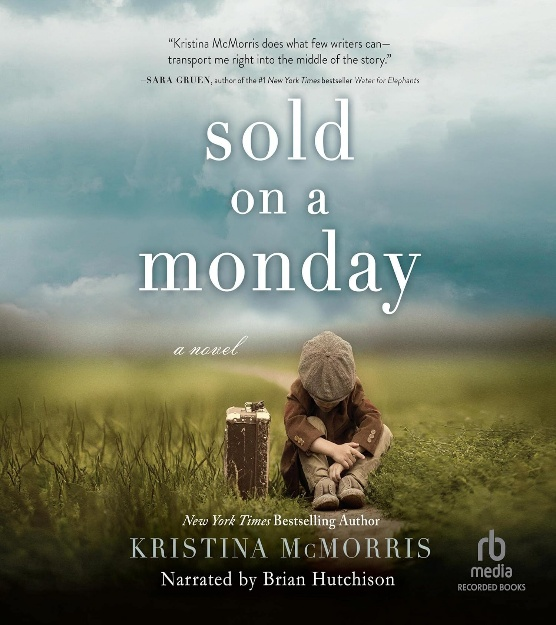
The frenzied whirl of the newsroom is the centerpiece for SOLD ON A MONDAY, an historical fiction novel to be easily savored and digested within a couple of days. You won’t be able to put this one down.
Cigar smoke, paper airplanes flying, loud chatter, phones ringing, reporters scurrying about spilling coffee, crumpled paper being tossed in rubbish bins, and rushed stand-up meetings happening in small spaces. All of this activity and the flurry of competition between reporters hungry for the next story are well portrayed by author Kristina McMorris.
The ability to create a definitive mood from chapter 1’s opening paragraph through to the last page of this book, is a stunning feat. As McMorris masterfully paints this literary masterpiece, she blends together an array of colors and textures, using tiny vivid details and subtle emotional nuance, all of which make this story sing.
As we travel through the chapters, the two lead characters, Ellis Reed and Lily Palmer, gradually reveal their human flaws. Yet, each possess a heart of gold.
The trigger to this compelling tale takes place when Ellis makes a snap decision under pressure at the very start of the book. As an aspiring junior news reporter seeking his first sizzling headline, he hopes to capture the hearts and minds of readers, as well as reel in attention from his newspaper chief.
The setting for the story is the East Coast, including the farmlands of Pennsylvania, the city of Pittsburgh, and the heart of New York City. The year is 1931, in the midst of the Great Depression and prohibition. Ellis has staged a photograph to ‘cover his ass’ with his tough demanding boss. The photo is a fake, set up to look like something real but that factually, ‘is not.’ The photograph and its evocative heart-tugging caption become ultra-popular with the masses, and Ellis’ career is launched into the big-time news world.
Ellis achieves his dream but the featured photograph and caption also serve to set off a ‘domino effect’ with grave repercussions; all caused by his unethical ‘spur of the moment’ decision. The result is a family torn apart, with two children placed in great danger, leaving Ellis emotionally broken because of the heavy guilt he carries. His dilemma is an ethical one, faced with how to ‘right a wrong’ that’s remained secret for months.
When Lily, also an aspiring reporter with a hidden past, enters the picture, readers will delight in the twists and turns that follow, and how their paths will intertwine.
This novel will undoubtedly have readers on the edge of their seats. There’s action, family tension, unrequited love, passion, and characters who must deal with challenging societal pressures, including ‘seedy’ crime bosses out to eliminate anyone that gets in their way.
But the real impact of this read for me personally was the tug on my emotions which caused me to think about at least one snap decision I made in my life that, unfortunately, set a fireball rolling downhill; and my world, as I knew it, tilted.
Everyone reading this work likely has at least one on-the-spot decision that they deeply regret. And that is why the lead characters in this novel are compelling and relatable.
SOLD ON A MONDAY, by Kristina McMorris, is one helluva read! I highly recommend picking this one up.
I hear the silence of the water in every morning walk.
A tree communicate with another tree through their roots and i feel their heart beat as i embrace that tree.
I belong to the nature as the nature live under my skin.
I fly with the eagles.
I run with the lions.
I play with the elephants in the mud.
I am a bridge between the perfect and the imperfection.
I am the image of the beauty and the dark.
As i was the guilty that burns the tree without a warning.
I cut the trees and i make a home.
I took the fishes in my plate.
I am the dangerous animal of all and nature keep supporting me in so Many different and extraordinary ways.
That the difference between human and nature.
I am not the creator but i am that little bee that trying for days to put the nectar in the nest of the Queen. I was only a small ant that was looking for food.
I am the perfect and imperfect nature that will become the Dreamland of every living being
I start to forgive this imperfect world and spread a new message of kindness and generosity.
Nature teach me to be free but not greed .
To be open but not manipulated.
To be the real me in any circumstances and accept my responsibilities.
Nature, only teach us how we can understand ourselves and become the real one.
The pureness is not easy but it is not impossible.