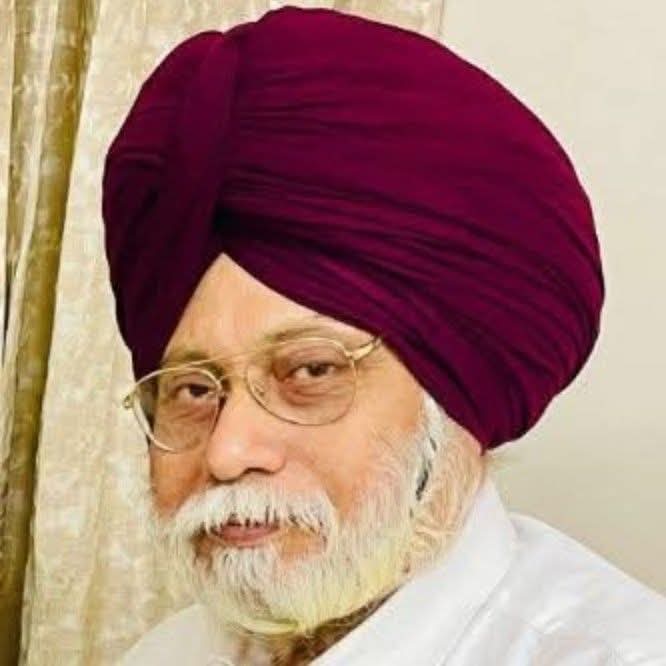
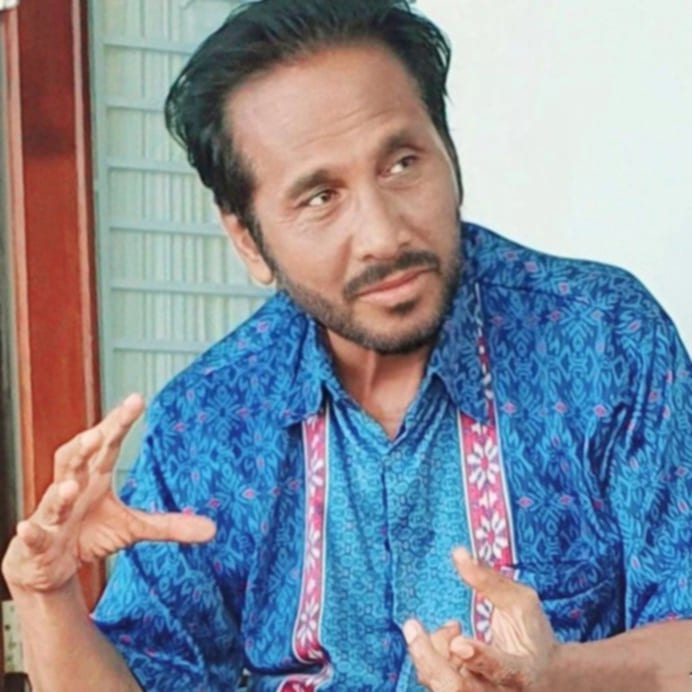
Dr. Jernail Singh Anand, [the Seneca, Charter of Morava, Franz Kafka and Maxim Gorky awards Laureate, with an opus of 180 books, whose name adorns the Poets’ Rock in Serbia]] is a towering literary figure whose work embodies a rare fusion of creativity, intellect, and moral vision.
THE CITY OF LIGHT AND LOVE: A Poet’s Heart Between Vietnam and Perth (Poems by Vo Thi Nhu Mai)
.
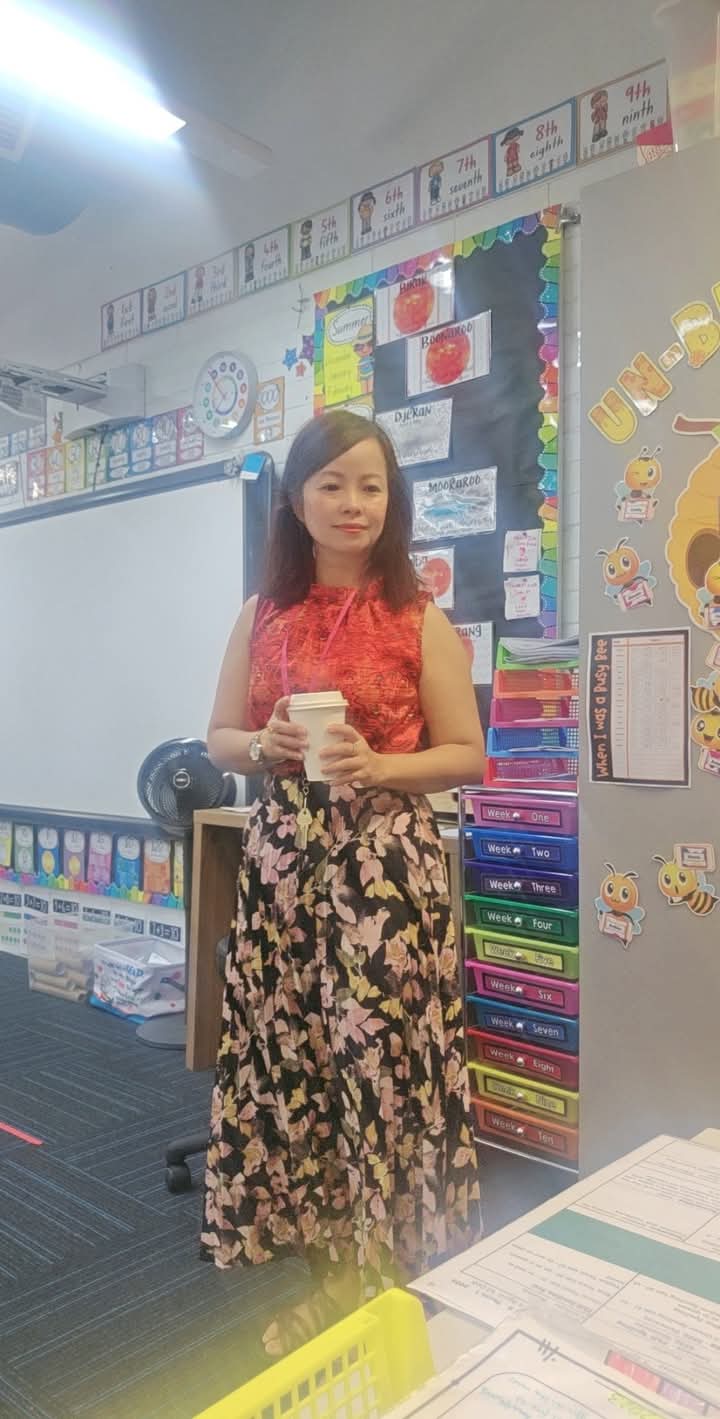
Vo Thi Nhu Mai is a Vietnamese poet currently living and working in Perth, Western Australia. As an editor and translator, she has played a pivotal role in preserving and promoting Vietnamese voices across the globe. Apart from her many poetry books published in Vietnam and overseas, her work includes two major anthologies, The Rhythm of Vietnam and The Graceful Fold of Time, both of which compile the writings of over 250 Vietnamese authors living abroad. Each anthology sold out its 500-copy run and was launched in multiple Vietnamese provinces as well as in Perth, demonstrating the global resonance of Vietnamese diasporic literature. In her own poetry, Vo Thi Nhu Mai offers a gentle, genuine tribute to her two homes, Vietnam and Perth, through verses rich with cultural imagery, inclusive spirit, and lyrical simplicity. Her poems are as much about identity as they are about belonging; they celebrate diversity, friendship, and the harmony of everyday life. Below are four poems that beautifully reflect her voice, tender, observant, and deeply connected to place and people.
.
1/The City of Light and Love
In this poem, Perth is painted as a vibrant mosaic of cultures. From fresh Italian bread to spicy Indian curries, from Mid-Autumn lanterns to Vietnamese bánh chưng on Tết, Mai acquires the richness of multicultural life with warmth and clarity. The city becomes a shared space where traditions meet, families celebrate, and everyone belongs. The closing stanza, “This is a city of light, friendship, and love”, is both a declaration and a quiet prayer for unity.
.
THE CITY OF LIGHT AND LOVE (Vo Thi Nhu Mai)
.
Perth shines under the warm sun The ocean waves dance, and the breeze feels fresh Birds sing in the bright blue sky Fields and hills stretch far and wide
.
People from many places call Perth home They bring their cultures, traditions, and flavours Italians bake fresh bread with a wonderful smell Indian families cook curries rich with spices
.
The Mid-Autumn Festival fills the streets with colour Lanterns glow, and the Chinese lion dance excites the crowd Vietnamese families gather to eat mooncakes Children laugh as they carry lanterns shaped like stars
.
On Tết, Vietnamese homes fill with the scent of bánh chưng Red envelopes bring joy, and peach blossoms bloom Australian families enjoy meat pies at picnics Or camp under the shade of tall gum trees
.
Families and friends gather in parks and vineyards Sharing food, laughter, and stories Children cheer at footy games While seagulls circle above the bustling fish market
.
In Perth, everyone belongs No matter where we come from we are part of one big family This is a city of light, friendship, and love
.
++++
2/A Special Place
Here, the poet walks us through a school day in Perth through a child’s eyes. We see cultural differences not as barriers but as opportunities, for tasting new foods, making new friends, and learning kindness across languages. The simplicity of the language mirrors the purity of a child’s world, one where acceptance comes naturally, and joy is found in everyday moments.
. A SPECIAL PLACE (Vo Thi Nhu Mai)
.
Perth is big, with a bright blue sky The ocean is clear, and the sun feels warm Each day is familiar, but there is always something new New people, new things, new ways to explore
.
Our classroom is full of laughter Friends from many different places Some have dark hair and brown eyes Some have light hair and blue eyes like the sky
.
Lunchtime is a chance to try something new Pizza from Italy, sushi from Japan, bread from Turkey Pho from Vietnam, tacos from Mexico We share our food and learn from each other
.
Sometimes, I don’t understand everything Some friends speak quickly, and I need time But they wait for me Smiling, holding my hand, and making me feel welcome
.
In Perth, I learn how to share To help my friends and show kindness Even though we speak different languages We all live under the same Perth sky
.
+++++++
3/The Adventure of Friends in Perth Garden
Nature takes centre stage in this joyful, imaginative piece. The animals of Perth, kangaroos, koalas, bunnies, even a playful squirrel, coexist in harmony, symbolizing the balance between humans and nature. Through this gentle narrative, Vo Thi Nhu Mai invites children and readers of all ages to fall in love with their surroundings and embrace the wonder in simple things.
.
THE ADVENTURE OF FRIENDS IN PERTH GARDEN (Vo Thi Nhu Mai)
.
The kangaroo hops around Walking through the green meadow It passes by the koala Sleeping peacefully under the shade of a tree
.
Little birds flutter in the sky Their songs echo everywhere Nearby, the soft bunny hops Running quickly through the sweet grass
.
A playful little squirrel Sneaks around the garden looking for seeds Suddenly, a butterfly flies by Its bright colours, like a beautiful painting.
Grasshoppers hop happily Their legs bouncing all over the ground A spider weaves its web Waiting for the morning, as beautiful as a poem
.
The camel stands proudly Alongside the kangaroo, climbing the hill All the cheerful animals Live together in a vast land
.
Let’s play with nature To love the wonders it brings Open your eyes wide Because Perth Garden is always beautiful Always full of joy
.
++++++
4/ Together From Every Flower
This final poem reads like a love letter to inclusivity. Through the metaphor of a garden where every flower blooms differently, the poet speaks to the strength found in diversity. Children from different backgrounds come together to build a better future, a poignant reminder of the importance of compassion, unity, and shared dreams.
.
TOGETHER FROM EVERY FLOWER (Vo Thi Nhu Mai)
.
In the green garden, we all play Every child is safe and happy Each hand, each smile From many different countries, we are all friends
.
The Australian sky is warm and bright We learn and love every day Every language, every skin But friendship is what makes us special
.
Together, we build a world where Everyone can grow with pride We care for one another and share our dreams Like flowers growing under the sun
.
From English, Vietnamese, to Chinese Every language is a new colour We learn from each culture Because we are all one big family
.
Together, we walk on a shared path Reaching for our dreams Protecting every child, keeping them safe For a bright and happy future
.
++++
Vo Thi Nhu Mai’s poetry opens a window into a world where cultures meet without clashing, where nature and humanity thrive together, and where the heart carries both the scent of hoa mai and the breeze of the Indian Ocean. These poems are more than verses; they are bridges between homes, generations, and hearts.
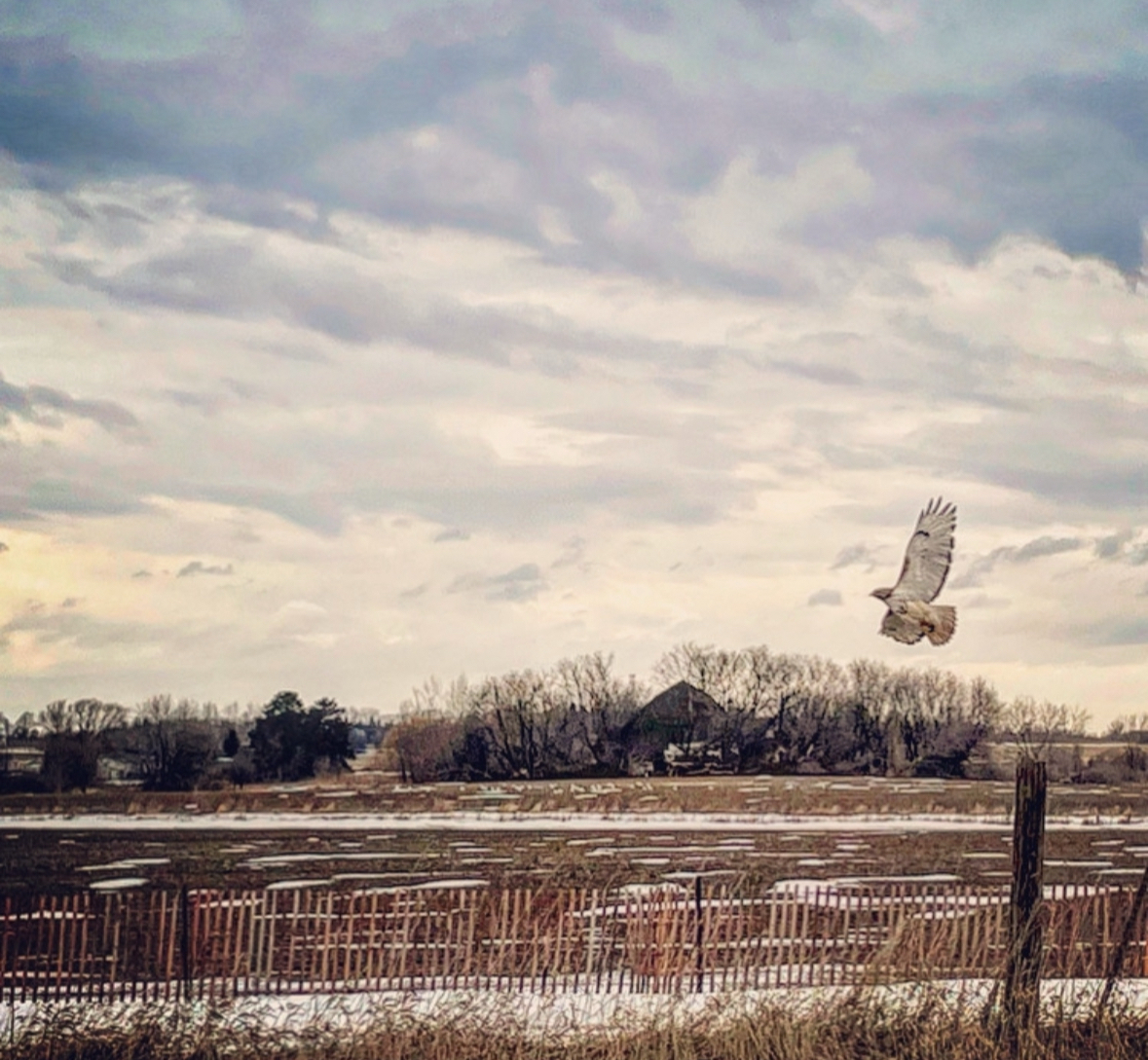
The bird in the blue sky pauses wing motion and hovers, glides, surveying something. Those fields are open and not. They are interesting to imagine from a Carlos Castaneda type view, a would-be mystical lens. Sky and ground and sky and ground what’s all around? There are impossibly tall hydro lines, looking like stationary monsters, and their wires go down just a little bit, right?- if you watched them from car windows long ago you know this and you probably know this anyhow. They are comprising something from another world in the midst of those lands. A copse of trees near, winter branches barren and lonesome, jutting upwards in airs, also still and bereft of life. Grey. They are grey and I wonder if anything besides the black and grey squirrels traverse ‘round them.
Hawk. The bird is a hawk. Another one arrives and they seem to sway as if on invisible strings in a cosmic play. Then they move along and soon disappear. There is then nothing. Water flows along a stream, as a stream, and on the inside ridges are formed icicles half melted and looking for some reason like champagne glasses, dozens of them in each group as one goes along.
There must be deer and coyote that go past at some point. Nocturnal? Coy? Like some spirit totem animals. Rabbit. The summer snake, dragonfly, butterfly maybe also. Other things. There is always more than one thought. Other worlds. Could be spirits if metaphysics is true. What then watches?- deva, sprite, fairy, limbo soul earthbound spectre happy angry or sad phantoms?- I don’t know. Pebbles. Stones. Some bricks at certain passages. Places where water traces lines on hills and follows them down into the larger water. Sojourns for precipitation. Beingness. The natural world of wildflowers and animals, of flora and fauna plus the ground in any season and the skies, are better than social constructs and the infrastructure of metropolis and even the quaintest of towns.
Hue. Realm. Language gives the possibility of poems and poets, so that’s good, the benevolence of idiom, diction, slang and formality both, doesn’t go too much farther than that, or so I would think anyhow.
Existence raw. Those hawks. Flowing water. Those things were before and will be after. We just enter for a little while. If there is the transmigration of souls, a continued journey after, fine, good and well. If not, it’s a win-win situation as there would be no ‘us,’ ‘soul,’ or consciousness to be disappointed anyhow. If we are dust and ash, far less than the beautiful winter hawks, far less than even a field mouse, far less than a part of a dying flying falling petal, then so be it, and that world, which is the real world, universally and scientifically, physically, is okay, has to be okay. It has its own eternal flare, glare, and stare.
Soon the wind arrives and goes along the branches and distant lakes, around tall golden growths like wheat proud and together in the middle of somewhere. But it’s cold. It doesn’t carry the true and desired warmth that spring air can sometimes, the type of warmth that assuages the trouble of many souls for a minute, and inclines them to shift perspective towards minor but important comments such as, ‘Spring is coming,’ or, ‘I heard it’s going to get really warm next week,’ and, ‘I’d like to clean the outside places of some leaves soon…’ no, the wind is not from an auspicious poem them, but still cold and it is also like this: winter, a guest that one thought left but hadn’t. Thought: ‘Oh, they are still here. They had left the room momentarily and I took it that they left the greater house and grounds. But they are here. What’s more, they don’t even look like they getting ready to leaving.’
Oh how it goes like that. But it’s nice, the company of the competent bird there. Hover again just like then, no?- over the hydro lines monstrous, above the stream, perhaps as spirits watch on, by the great glen that leads to wide and wild side boulders. Hover and glide for a few seconds more.
In the orchard of knives, the trees whisper your name.
Mouths full of rotten fruit cackle at the blistered moon.
And you walk through, barefoot, picking the sharpest blade
to slice out the loneliness rooted in your throat.
Funeral Shoes
I bought a pair of funeral shoes today. Black leather, stiff as a scream. The assistant
smiled like a woman flogging coffins. Thought about returning them. Didn’t. I’ll wear them everywhere. To the bar. To the fights. To the last slow dance on earth. You never know when the ground will open up. And it’s best to be ready.
From Achilles’ Heel to the Path of Herakles: Greece Then, Now, and the Living Myth
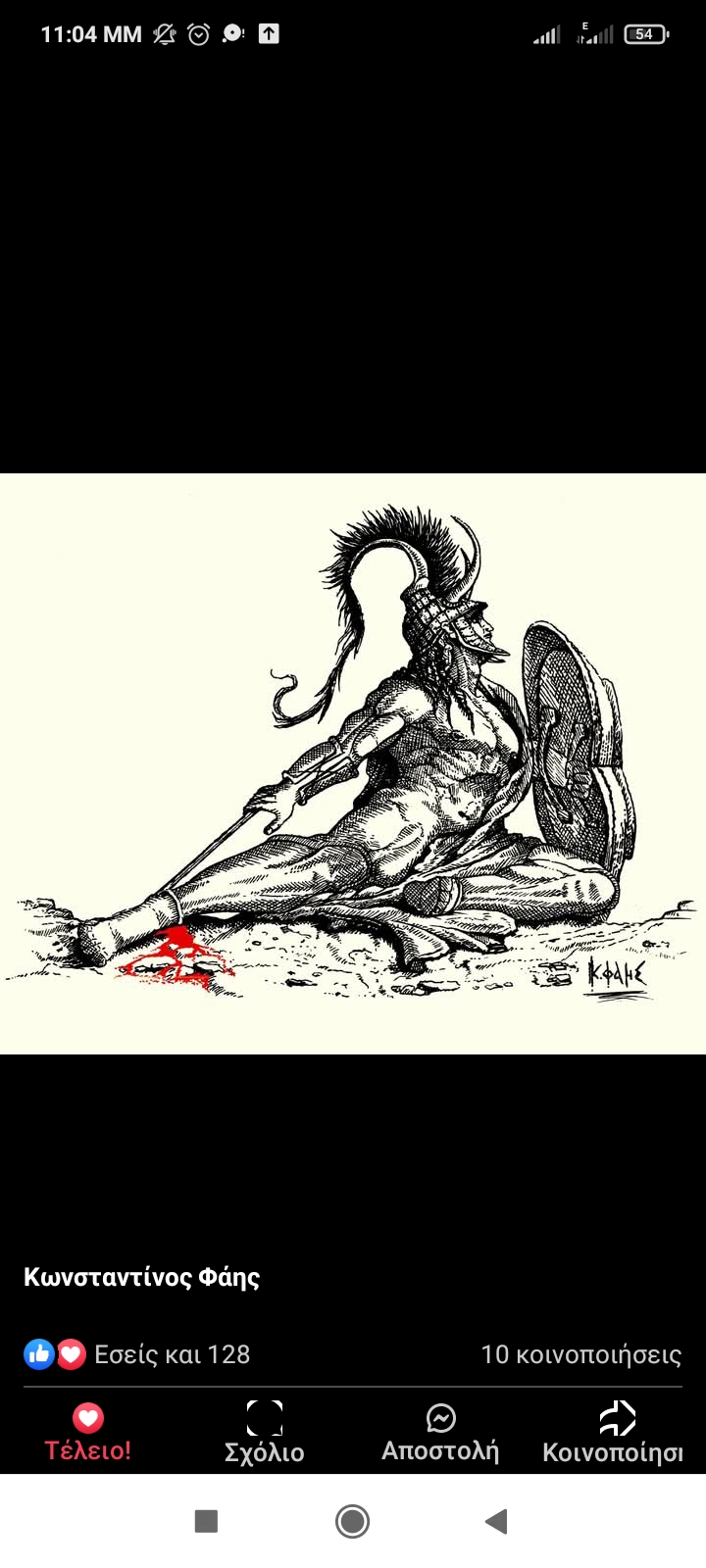
Greece was not born merely from marble stones and temple ruins. It grew from the verses sung by rhapsodes, from the rage of Achilles, and from the heavy footsteps of Herakles conquering both myth and history. If Homer once portrayed humankind as the shadows of gods, modern Greece now walks the reality as the living shadow of its past. The journey from myth to the present is a long process of preservation and reinvention of identity.
Achilles: The Body, the Rage, and Modernity
Achilles in the Iliad is not merely a character; he is a metaphor: a flawless body with a hidden vulnerability, a blazing fury that shapes history. In modern art—such as Ernst Gustav Herter’s statue now standing proudly in Corfu—Achilles is portrayed as a symbol of athletic beauty and tragic downfall. His naked body is not mere aesthetics; it is a cultural legacy of humanity pushing its own limits. Modern Greece is no stranger to this inheritance. Amid economic crises, mass migration, and European Union politics, the nation reveals that the “heel of Achilles” is not always a weakness, but a compass of history that demands to be acknowledged. They understand that beauty is never sterile, and that anger, like in the Iliad, can be a source of strength. In Greece’s contemporary politics and culture, the traces of Achilles remain: fragile yet ablaze.—
Herakles: Mythic Road and a New Nationalism
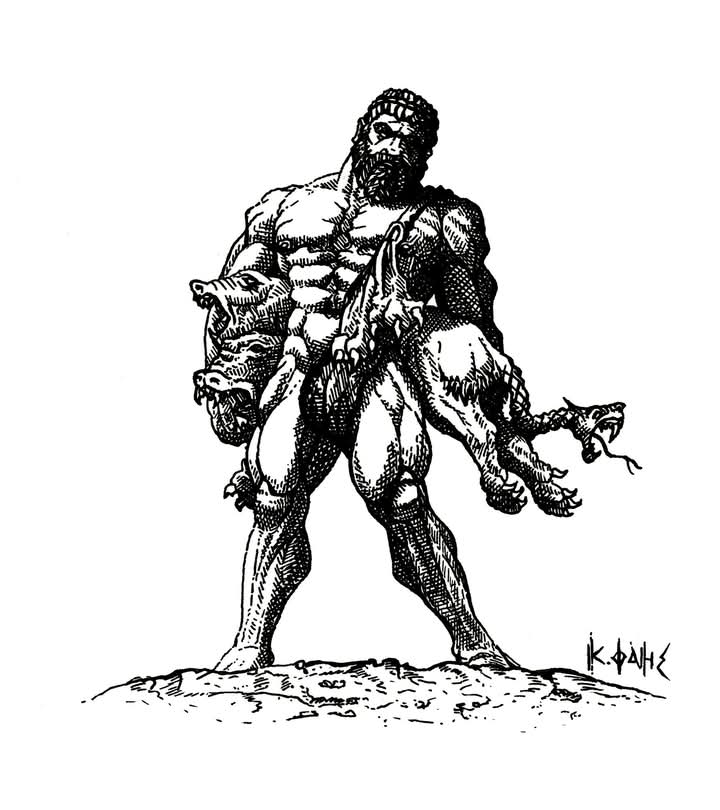
Herakles, the hero who conquered Troy before Troy itself became a legend, is a symbol of perseverance, intellectual strength, and divine will grounded in humanity. In myth, he is the human son of Zeus; in modern Greek history, Herakles becomes a symbol of national revival—one that faces forward while carrying the weight of the past.Today, the “Path of Herakles” is Greece’s road to European modernity without abandoning its roots. When Greece plants solar panels in former olive fields, when Athens builds ultra-modern museums beneath the shadow of the Acropolis, when the Greek diaspora in Australia and Canada stages Homeric theater with postmodern settings—then Herakles walks again. Not to conquer monsters, but to conquer the amnesia of history.
Comparison: From Epic to Economy
Aspect Ancient Myth Modern Greece
Central Figures Achilles & Herakles
The People and the State
Challenges War, Gods, Monsters
Economic crises, migration, identity
Symbolic Body Athletic ideal & ruin Nationalism, defiance of EU stereotypes
Core Discourse The will of the gods The will of the people, modern democracy
Struggle Against fate (moira) Against rootless globalization—Architecture, Identity, and Memory
Just as the statue of Achilles sheds the heavy Mycenaean armor for a more dramatic aesthetic, Greece today sheds the burden of history to present itself as a center of new cultural dialogue. It does not dwell in the past, but uses the past as a tool—diplomatic, economic, and artistic. As Pliny the Elder once recorded the beauty of the nude in Greek art, so too does modern Greece expose itself—naked in debt, in crisis, in struggle. Yet from that vulnerability emerges European solidarity, a rethinking of democracy, and a reinvention of Mediterranean identity.
The Path of Herakles Is Not Yet Finished
Myths never die. They merely change form. Achilles today is the youth of Greece protesting in the streets of Athens. Herakles is now the cultural architect rebuilding Greece with knowledge and innovation. From gods to parliamentary democracy, one thing remains: Greece continues to rewrite itself—with pen, with sculpture, and with the courage to defy fate. In the land of the gods now ruled by bureaucracy, the path of Herakles goes ever onward.
West Sumatra, 2025…………“Dari Tumit Achilles ke Jalan Herakles: Yunani Dulu, Kini, dan Mitos yang Hidup”Oleh: Rizal Tanjung Yunani tidak hanya lahir dari bebatuan marmer dan reruntuhan kuil. Ia tumbuh dari syair yang dinyanyikan para rhapsode, dari amarah seorang Achilles, dan dari langkah berat Herakles yang berjalan menaklukkan mitos dan sejarah. Bila dulu kisah Homeros menggambarkan manusia sebagai bayangan para dewa, kini Yunani modern menapak realitas sebagai bayangan masa lalu yang terus dihidupkan. Perjalanan dari mitos ke masa kini adalah proses panjang antara pelestarian dan penciptaan ulang identitas.
Achilles: Tubuh, Amarah, dan Modernitas
Achilles dalam Iliad bukan hanya tokoh, ia adalah metafora: tubuh sempurna dengan kelemahan tersembunyi, kemarahan yang membakar namun membentuk sejarah. Dalam seni modern, seperti patung karya Ernst Gustav Herter yang kini berdiri megah di Corfu, Achilles dihadirkan sebagai simbol keindahan atletik dan kehancuran tragis. Tubuh telanjangnya bukan sekadar estetika; itu adalah warisan budaya tentang manusia yang melampaui batas.Yunani kini tidak asing dengan warisan ini. Di tengah krisis ekonomi, migrasi besar-besaran, dan debat politik Uni Eropa, bangsa ini menunjukkan bahwa “tumit Achilles” tidak selalu kelemahan, tetapi juga penanda arah sejarah yang tak bisa diabaikan. Mereka sadar bahwa keindahan tidak pernah steril, dan bahwa kemarahan, seperti dalam Iliad, bisa menjadi sumber kekuatan. Dalam politik dan budaya Yunani kontemporer, tampak jejak Achilles: rapuh namun membara.
Herakles: Jalan Mitis dan Nasionalisme Baru
Herakles, sang pahlawan yang menaklukkan Troya sebelum Troya sendiri menjadi legenda, adalah simbol dari ketekunan, kekuatan intelektual, dan kehendak ilahi yang “membumi”. Dalam mitos, ia adalah anak Zeus yang manusiawi; dalam sejarah Yunani modern, Herakles menjadi simbol dari kebangkitan bangsa — yang menatap masa depan sambil memikul masa lalu.“Jalan Herakles” hari ini adalah jalan Yunani menuju modernitas Eropa tanpa meninggalkan akar.
Ketika Yunani menanam panel surya di bekas ladang zaitun, ketika Athena membangun museum ultra-modern di bawah bayang-bayang Akropolis, ketika diaspora Yunani di Australia dan Kanada memanggungkan teater Homeros dengan latar pasca-modern — maka Herakles berjalan lagi. Bukan menaklukkan monster, tapi menaklukkan amnesia sejarah.
Perbandingan: Dari Epos ke EkonomiAspek Mitos Kuno Yunani KiniFigur Sentral Achilles & Herakles Rakyat dan NegaraTantangan Perang, Dewa, Monster Krisis ekonomi, migrasi, identitas budaya
Simbol Tubuh Ideal atletis & kehancuran Nasionalisme, perlawanan terhadap stereotipe EropaWacana Utama Kehendak para dewa Kehendak rakyat, demokrasi modernPerjuangan Melawan takdir (moira) Melawan globalisasi tanpa akarArsitektur, Identitas, dan IngatanSebagaimana patung Achilles menolak zirah berat Mykenai demi estetika yang lebih dramatis, Yunani hari ini menanggalkan beban sejarah untuk menampilkan diri sebagai pusat dialog budaya baru. Mereka tidak hidup di masa lalu, tetapi menggunakan masa lalu sebagai senjata diplomatik, ekonomi, dan seni.
Sebagaimana Plinius Tua mencatat keindahan telanjang dalam seni Yunani, begitu pula Yunani modern membuka dirinya—telanjang dalam utang, dalam krisis, dalam perjuangan. Tapi dari sana pula muncul solidaritas Eropa, pemikiran ulang tentang demokrasi, dan penciptaan ulang identitas Mediterrania.Jalan Herakles Belum SelesaiMitos tidak pernah mati. Ia hanya berubah bentuk. Achilles kini adalah generasi muda Yunani yang memprotes di jalanan Athena. Herakles kini adalah arsitek budaya yang membangun kembali Yunani dengan pengetahuan dan inovasi. Dari dewa-dewa ke demokrasi parlementer, satu hal yang tetap: Yunani terus menulis ulang dirinya — dengan pena, patung, dan keberanian melawan takdir.Di negeri para dewa yang kini dikuasai birokrasi, Jalan Herakles terus berlanjut.Sumatera Barat, 2025…….
Flower

The beautiful white of musked roses
Smelled heavenly as I longed to see
A bright torpedo colour of blue skim
The butterfly vision over me
As I stranded over the cliffs of greenery
I swam a great high
Poetry is like flower
Bright beautiful pansies in a summer day
The long twisted hauled letters smiled at me
The mailed by the night circus of grappling intensity
As I turned around and saw the zeal of monsoon rain
Little sprinkled water of bucketed truth
As the flowers fell over my tip toed joy.