Surrounding the beauty of shining development all around.
There is the famous river walkway,
The shops are beautifully decorated.
You will see colorful houses in this city.
The house is colored in the colorful colors of this city.
The history of industrial trade still stands today,
As a historical area.
As the main port of the country,
At the urging of trade,
As an international trade center.
If you want to see lots of iguanas,
But that city is a trip once.
West across the Guayas River,
of the gulf of Guayaquil in the pacific ocean,
As you approach,
you will find the city of Guayaquil.
To visit the Malecon, Laspices,
Let’s go to that city.
Date: 22.07.2026
Amb. Dr. Priyanka Neogi is from Coochbehar. She is an administrative controller of United Nations’ PAF, a librarian, a CEO of Lio Messi International Property & Land Consultancy, international literacy worker, sports & peace promoter, dancer, singer, reciter, live telecaster, writer, editor, researcher, literary journalist, host, beauty queen, international co-ordinator of the Vijay Mission of Community Welfare Foundation of India.
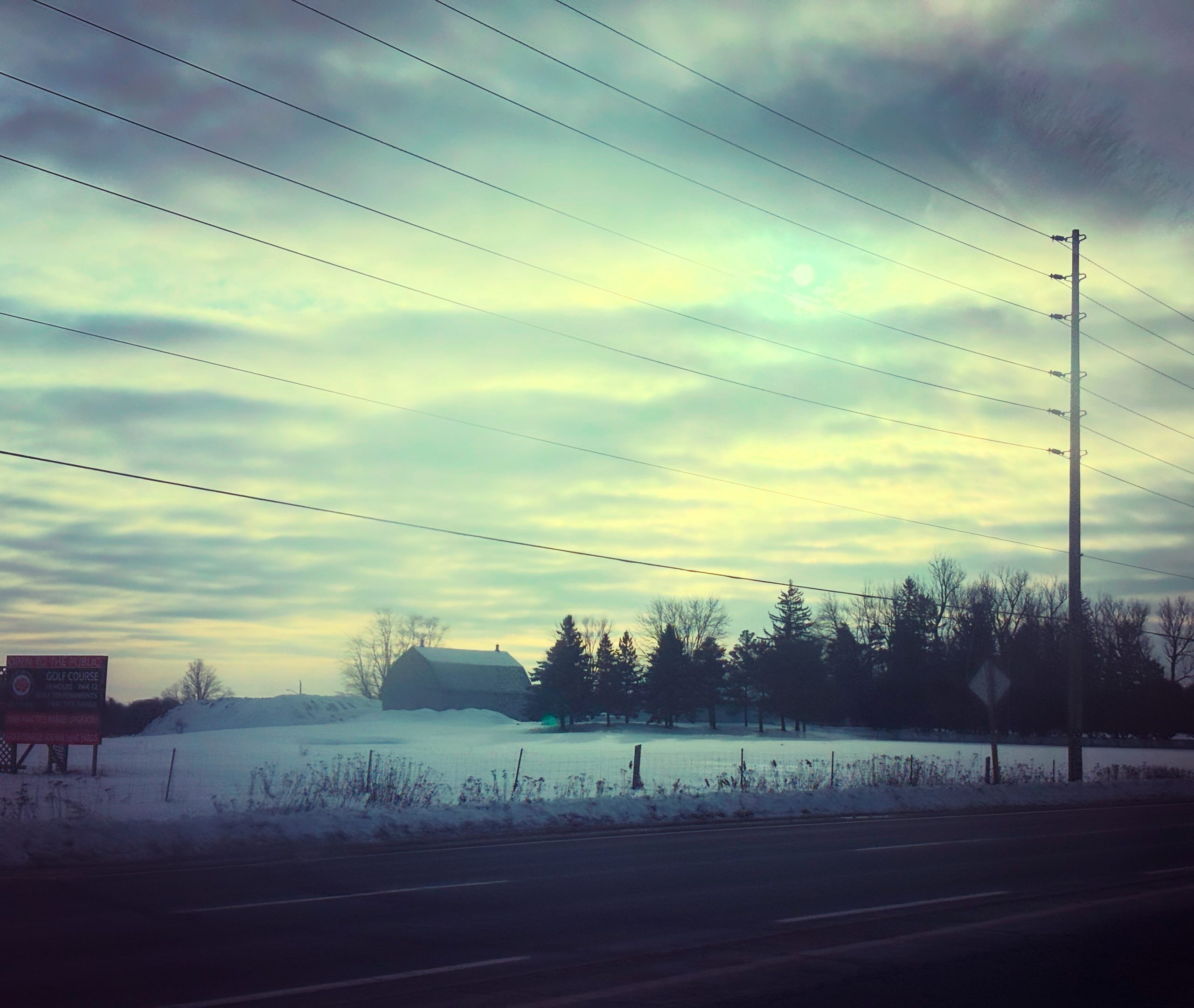
There was a series of roads and they had horse and carriages plus it was winter. I thought they were rugged and had bravery because it was cold and windy. The people and the horses must be of a different and stronger disposition, I thought. And the farm contained so many horses running freely around oh they seemed and were happy, joyous. The dogs didn’t bark at the visitors and I thought, Maybe the dogs are knowing that we are welcome and kind, so they decided to be welcoming and kind.
The man that took us around was of few words but fair and open, straightforward. He said that things were good and I went from the outside road to the inside property but outdoor. Large wrap around porch. Many windows. No frills though. Old time. Regular building. No decadence and showing off. Just life. Farm life. Inside the buildings some cats watched on from the barn rafters and mostly I saw a black cat that seemed to be sagacious and serene even in movement. Back and forth it went after having appeared suddenly like a spirit.
I glanced back outside. It was an overcast winter day in a town. I wondered what it would be like to live there or around there. Osho says centuries live contemporaneously and this must be true. I liked the concrete forms and the vastness and the clean cold air. There was an honesty about it all. I wanted to explore more but we were only meant to be there for a short time, a quick visit.
Going out and saying thanks, following the roads again, there were more horses and fields and of course skies. The world was another world, not a city or town, but just lands and lands and lands. I imagined deer and coyote dens, foxes and cows, or the butterflies of summer and wild beige reeds.
Out there must be natural magic, in the spring rains, around the summer meadow and its atmospheres, at the autumnal sounds and sights, and maybe even amidst the cold and almost bleak winters with its short days and aloof ways, but days where the horses still run around and have a joyous demeanour about them.
If you are willing to call on me Meet me in such a way That we won’t part again In anticipation of your arrival I have been staying awake As though I won’t have to sleep back again
I am impatient to touch the gait of those feet You are turning this way Only for my sake
Will you plant some flowers for me Before you take your way again? Or at least, will you leave behind some flowers? I will devote myself to them So that they won’t wither ever again
Will you say something for me From your pious lips? I shall consider your words my prayer; Will you kindly shed for me A drop of tear?
I shall consider it my elixir In the parching desert heat; Will you light me a lamp before you part again? I shall consider it the moon To light my dark nights
In the past too I always waited for you As long as I had hopes And had life
I still wait for you When I have no life left And no hope left, either
Will you really come For my sake?
ABOUT MYSELF: Rehaan Khan is a US-based Nepali poet. He started writing since his school days and made formal entry into the writing fraternity with the launch of his Nepali poetry collection Anautho Sapana (2013). His fame as a poet rose with the publication of Ujyaloka Maliharu (2020), a joint collection of poems by ten Nepali poets. The Festivity of Dilemmas (2026) is his third collection of poetry and the first one in the English Language.
Great! I was off to Europe again. But this time it was different. I had a job waiting. It wasn’t a formal job offer that would require a work permit. It was basically some back and forth correspondence with Monsieur Dubois at the United Nations Development Program satellite office in Geneva.
In my correspondence I indicated that I had recently earned a bachelor’s degree in urban studies from University of California, San Diego which entailed taking several statistical courses. This must have sounded good to Monsieur Dubois.
My statistical strengths were not at an advanced level, but I could certainly handle determining mean, median, and mode. If any algebra were needed, I would just have to wing it. In high school I couldn’t get past pre-algebra, too many x’s and y’s.
I would do what I had done before to get to Europe, catch a charter flight leaving from LAX Imperial Terminal. During the summer months in the 1970s at least one or two flights left each day, and it was easy enough to buy a low-priced ticket. Just show up at the Terminal, buy a ticket, and usually on the same day you were off to Europe.
A friend from San Diego drove me to LAX Imperial Terminal and I got lucky, a flight was leaving that afternoon for Brussels. From there I would catch a train to Geneva to start my work at the United Nations.
The flight was full of young people heading to Amsterdam for, well, fun. But not me, I was now a professional with my new degree. However, I did have a dream during the flight that I was having a lot of fun hanging out with a bunch of people in Dam Square in Amsterdam.
I didn’t stay in Brussels but quickly caught the train south, and with just a couple of changes, was in Geneva the next day. I quickly found a youth hostel and slept for an entire day.
After my day of rest, I headed over to where several of the United Nation’s buildings were and found the United Nations Development Program offices and Monsieur Dubois.
He was happy to see me and said that I could get right to work. It was about then I started to realize that French was mostly spoken. Even Monsieur Dubois spoke to me primarily in French. I never said I don’t speak or understand French, but instead always asked questions in English. Usually, he would respond back in English, so I mostly understood what he wanted me to do.
My job would be to use census population data from various cities and regions in Africa and with that data determine growth rates over time. I would process this data and give the results directly to Monsieur Dubois.
This was going to be a snap because it was simply population data listed by country, region, and city which included the dates the data was gathered. It would be easy percentile calculations, and I had use of a hand calculator and a typewriter to type up my results. No algebra here, and my high school typing classes were going to come in handy.
As for the pay, Monsieur Dubois told me he would pay me 85 Swiss Francs each day in cash at the end of the day for my days’ work which was equivalent to about $32. It was clear that I wasn’t a formal employee of the United Nations, but more of an informal subcontractor working for Monsieur Dubois directly. However, he did give me a security badge that I pinned on my shirt which gave me access to the building where I would work as well as to an employee cafeteria.
The work went super. I typed up several reports of major African cities growth as well as some regional population growth rates. I even included some comparisons between cities, regions, and countries. I was on fire with this work and had saved most of what I earned.
In addition to my statistical work, I met a lot of interesting people from all over the world. Mostly they spoke English, so no problem with communications. However, the big benefit was the cafeteria. The food was fabulous. It was like eating at a gourmet restaurant every day, and it was cheap, too. For purely cultural reasons, I would try everything and usually had two of the French desserts.
The hostel stay was going great, but I knew I would have to find something else because staying more than a week or two wasn’t possible. I met lots of people passing through the hostel from everywhere, but not many Americans.
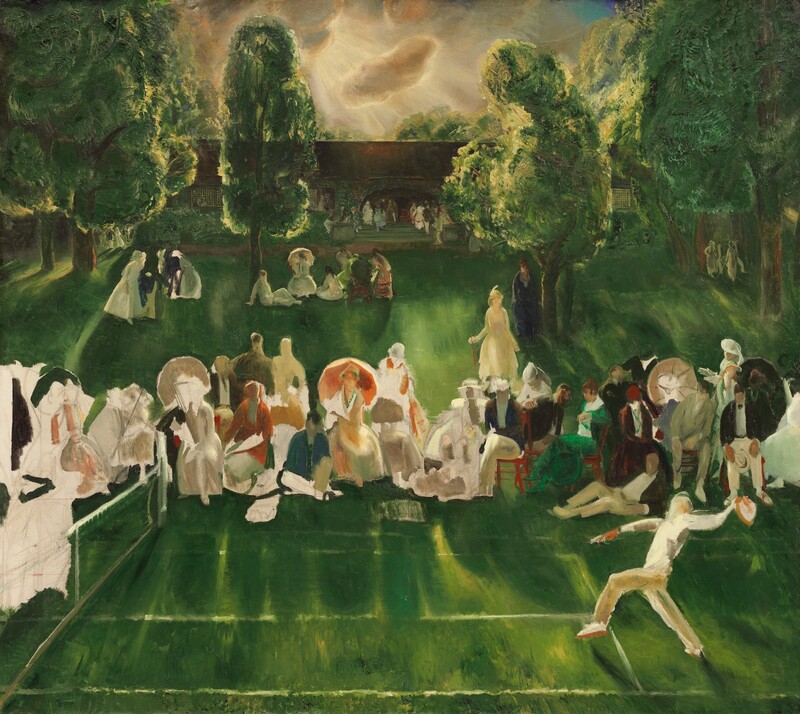
However, I did meet these two very nice guys that were from America, Tim and Corey, who were a couple of years younger than me. They were involved in some sort of tennis tournaments. They told me they were college students in the US and would come to Europe every year to play tennis.
Tim and Cory followed a tournament circuit that started in Geneva then entailed playing in various other places in Switzerland and Austria. After a few days of play in one tournament, they would move on to the next. They got paid a fee for each tournament, plus they said they would also bet on games to make a little additional money.
I could tell Tim and Cory were having a good time and earning a little income too. But I was now a professional working at the United Nations so that sort of funny business work play wasn’t for me, or was it?
They invited me to one of their matches in Geneva, which was in the evening. It was serious tennis with some heated games. I had played a little tennis in high school but was never good enough to make the varsity squad so I quit about halfway through the season. Plus, the coach never liked me because I would constantly swear.
Things were going great at the United Nations Development Program, but at the start of my second week Monsieur Dubois told me that he didn’t need my help anymore. But he said he knew of another United Nations department, the World Health Organization, that might have some work for me.
There was still plenty of statistical work at the United Nations Development Program to be done, so I was a little shocked about being told I wasn’t needed any more. Anyway, I rushed right over to the World Health Organization offices and met with my new contact Monsieur Boucher. This job was not a statistical job but more an organizing and filing of documents that had been collected in Africa. Monsieur Boucher told me he would pay me the same as Monsieur Dubois had.
The problem here was that most of these documents were in other than English including French, Spanish, Portuguese, and Arabic. This meant a lot of guess work on my part, but that didn’t slow me down. I figured I would be okay with the Latin-based Romance languages, but for the Arabic, well, I would definitely have to wing it with that.
In three days, I had several filing cabinets looking good. For the Arabic I just matched up the beginning symbols. I never quite figured out if there was any sort of A-to-Z type order with Arabic or if there was some other structure or hierarchy. Also, it was hard to tell the difference between formal and informal Arabic script as well as numerals and letters. I must admit the Arabic filing was rather perplexing, to say the least.
When I got to work on my fourth day Monsieur Boucher told me that I had accomplished all he wanted me to do and thanked me for all the help. He said I could check back in a few weeks and maybe he would have more work for me. I quickly went back over to see Monsieur Dubois, and he told me the same thing. Now what? I was a professional, out of work.
That day I just hung around on the shore by Lake Geneva watching this funny waterspout. Eventually I went back to the hostel where I ran into my tennis friends. I told them it looked like my work with the United Nations was finished. Immediately they both ask, “how much do you know about tennis?”
I told them that I had played some in high school but wasn’t really very good and that I quit because I couldn’t make the varsity squad. This got me thinking I was a failure then, and again now, because the United Nations let me go. But I thought I was doing a good job with the exception of the Arabic filing. Also, I started to think how I quit the wrestling team in high school because I couldn’t beat the guy in my weight class, so he always got to wrestle varsity. Nobody could beat that guy, not even the coach.
About that time Tim responded with, “do you think you could referee tennis matches?” Without even thinking I said, “yes.” Tim and Cory explained to me that their next matches were in Lausanne, followed by Interlaken, Lucerne, and other cities across Switzerland. Then the same would occur across Austria finishing up in about six weeks in Vienna.
They said I could travel and stay with them and that they could always get me a job refereeing because there was always a need. We all left the next day on the train for Lausanne.
During the short train ride, they reviewed all the Tennis rules and possible calls that I would need to make, which I kind of knew. One point they strongly made was that I had to make calls with resolve, no “I think,” or “I’m not sure.” They also told me that after a few games they would tell me how the betting would go and although I would get a small payment, paid in cash, for refereeing, most of what I would make would be from betting. At the time I just said, “okay.”
The very next day I was sitting in my elevated referee chair in line with the court net making calls and keeping score on a clipboard. It was going great. Hardly anyone questioned my loud and firm calls. I even called several serving faults on Tim and Cory.
This was fun, much better than my United Nations statistical and filing work. I was my own boss, making a little cash each day, and every night Tim, Cory, myself as well as some of the other players would party.
During the Lausanne tournament I did notice something odd during Tim and Cory’s matches. Sometimes it seemed like they would miss what appeared to be easy shots, called an unforced error in tennis lingo, while other times they would make really difficult shots.
After a few days playing in Lausanne, we were off to Interlaken. During the train ride I asked them how the betting goes that they had mentioned to me. They both looked at each other and Tim said, “there is something we want to tell you.” “We don’t go to college; we just travel all over the place playing tennis.” They went on to tell me they had played tennis at Florida State but dropped out several years ago, and now played, what they called amateur tennis, on their own.
They further told me, in a matter-of-fact manner, “we are tennis hustlers.” They went on to add that they didn’t make much for simply playing matches. The good money was made betting, not on other matches, but on their matches. I was surprised that they just came out with all of this. I figured they must have seen an unscrupulous streak in me and that I might be into their exploits.
Here was the kicker. They told me that with me as a referee, they could do even better. All I needed to do was occasionally call points in their favor and they would give me a fair cut of their winnings. They added that it would be a lot more than I made at the United Nations. Basically then, Tim and Cory were criminals and I would be too, if I agreed to their cheating scheme.
I said something like “that’s all very interesting, are you kidding me?” They both look straight at me a simultaneously said, “no.” They then explained to me that they made a mint in Australia just a few months earlier and so did the guy they recruited to referee. I asked them about the possibility of being caught and they responded telling me it would be highly unlikely and if that happened, they would just throw us out of the country.
I had been around enough to know that trusting someone who was a criminal was unwise. But I have to admit that I had done a small number of dishonest activities myself that probably fit into the illegitimate category. Also, I was not that big or strong, but I thought these two guys could protect me if the going got rough, which they assured me would never happen.
Without too much thought I said, “Let’s give it a try in Interlaken and see how it goes.” They responded, “great, you are going to thank us later.”
I guess, in a way, I would continue being a professional, a professional criminal that is.
That night in Interlaken they told me how it would go during the matches. I was to just continue with my normal refereeing until they gave me the sign to start calling points in their favor. They told me the best way to do that was to call their opponents serves that were actually in but very close to a service line, or on a service line, as a fault. Conversely, if one of Cory or Tim’s serves was close to a service line, but actually out, not to call it as a fault.
From my tennis playing days in high school, I recalled how often serves were faults because the serve was usually traveling fast and often landed on or close to a service line. Double faults, which meant no point would be earned, were frequently the main reason why a player would lose a point. The sign to start calling faults was when Tim or Cory would make a scene, holler and swear and act really angry about a bad shot they made.
I figured Tim and Cory were making side bets with their opponents. I believed it was all cash deals and varied as to the amount of the bet. It also must have been win or lose betting with the winner takes all and the payout must have been on the honor system, but I wouldn’t be involved in the actual betting process. My job was to firmly call faults on Tim and Cory’s opponents.
In Interlaken we found a hostel to stay in and the very next day we were on the courts. The first day of play went normally with Tim and Cory winning some matches and losing others.
On the first day of play that evening we ate out and drank with several of the other players. It was a lot of fun and that is when I could see what was happening with many players boasting about how good they were, including Tim and Cory. I didn’t see any wagers being made but I was pretty sure that was occurring.
The next day started off normally with me refereeing several matches. When Tim and Cory got on the court for a doubles match, they lost two matches in a row, then won two. During their next match it went into a tie-break. After a couple of points Cory got really mad about a call I made and started cursing which sounded a little like me in high school. I then firmly called on their opponents a few serving faults, and for good measure a couple of close to line outs, which put Tim and Cory in the lead and gave them the win. This refereeing work have me feeling rather powerful.
It was the same drill the next day, but in one of the doubles matches Tim and Cory’s opponents got very upset and challenged a fault call, but I did not overrule it. Tim and Cory previously told me that if any call challenges were made, I should never allow a replay of the point. Doing that would open the door to more challenges and replays which may not go well for them. So, when I made a fault call it was loud and with resolve.
The next stop was Lucerne and on the train ride there I received my first winnings payment, which was more than I had made in two days’ work at the United Nations, plus I was getting a small cash payment from the tournament organizers for my refereeing. I was feeling great with no guilt feelings at all.
In Lucerne it was just like everywhere else except there were a couple of more referees. The first two days of play I just hung out enjoying Lucerne, which was a beautiful place on a lake surrounded by huge mountains.
On one of my days off I took myself out for an expensive lunch at a nice hotel in town, the Schweizerhof. I ordered a bottle of wine and had all the courses. I was a little under dressed but the waiters didn’t seem to care and I tipped generously. As I was sitting there in the lavish dining room I thought, “so this is how wealthy people live; I think I could get used to this.”
During the third, and final day of play in Lucerne, I was back in my referee’s seat on the court. I refereed two single set matches with Tim and the same for Cory. They both won without any help from me. My only pay was for refereeing a couple of matches, but my Interlaken winnings were substantial, so I wasn’t too concerned.
I could see that Tim and Cory were very good players and really didn’t need my help. But their larger game was to lure other players into betting by intentionally missing shots and losing games and matches, then step up their play and occasionally get a little help from me.
The next stop was Zurich. Tim, Cory, and I were getting along just fine. They seemed to enjoy my stories about partying in Tijuana, surfing, and some of my many crazy exploits.
In Zurich, things got serious. There were several people refereeing, so I most likely wouldn’t be refereeing too many of Tim and Cory’s matches. Also, there were many more players and this tournament was five days. I was busy refereeing each day in Zurich and like in Lucerne, mostly German was spoken but I just kept calling the matches in English which seemed to be okay.
On the last day of the tournament, I refereed two matches with Tim and Cory. During both matches I got the agreed upon signal to start calling errors on their opponents which worked fine with both matches won by Tim and Cory. To firm up on my fault calls I would occasionally jump out of my chair and run over to the line to further confirm that my call was accurate and once I made a call it would stand with no replays of the point.
Right after the second match Cory told me we were leaving for the next tournament right then so I should go get my stuff from the hostel and meet them at the main train station.
Something was off but I wasn’t sure what. They won the matches I refereed so they must have made some money. But then I thought, maybe they lost some other matches and didn’t want to pay up.
Within a few minutes of standing around in the central area of the Zurich train station I saw them and they said come on we are on the next train to Innsbruck, Austria. Soon we were on our way. They were happy and laughing as if they got away with some big rip-off, and they did.
They told me that they thought their opponents were trying to cheat them using the same tactics that they were. But they didn’t succeed because although the other players won the doubles match, Tim and Cory did not pay them. They told them they had to go to their hostel to get the money and would come back right away. I guess you could say we were on the run.
It was then that I clearly realized, these guys are worse than I thought. Not only were they hustlers and cheaters, but they even cheated on other cheaters. But I did get my cut, which was considerable, twice as much as I got for my Interlaken work.
It was overnight to Innsbruck and I didn’t sleep well. I kept thinking these guys, as nice as they were to me, would rip me off too.
I needed a clever exit strategy during the Innsbruck tournament. I decided that when an opportunity arose to get away from Tim and Cory, I would just casually disappear. Maybe head up to Amsterdam for a few days and try to forget about my criminal behavior.
Innsbruck was just like the other tournament places, and we were back in a hostel again. I had an idea about a good escape that involved ripping them off. It was nasty, I must admit, but these guys were no saints, and I was thinking they would probably cheat me soon enough.
I knew they had plenty of money so I would ask them for an advance because I needed to send some of my earnings home to make a payment on a school loan. Actually, I was reaching the nine-month grace period before I would be required to start payments.
They went for my story and gave me an advance. It wasn’t much, but I took it.
My plan was that as soon as I got a break from my refereeing, and at the same time with Tim and Corry playing, or at least one of them playing, because the other would always be watching the other, I would split.
But there was one trick I needed to do. I had to get my Passport from the hostel, because they kept guest Passports while they were staying there. I would just leave everything else behind because it was easy enough to buy what I needed anywhere in Europe.
On the very first day another person was refereeing to start the day and Tim was playing. This was my chance.
I sat in the stands with Cory watching Tim. After a while I got up telling Cory I was going to get a snack. I ask him if he wanted me to get anything for him and he said, “no.” Good thing, because I wasn’t coming back.
I went directly for the exit gate walking at a good clip. I first went to the hostel and asked for my Passport telling them I needed to go to the bank to exchange some Swiss Francs to Austrian Schillings.
Next, I hurried to the train station. On the departure board there were trains going to many different locations. The first train to anywhere was good, except not back to Zurich. There was one train leaving in about five minutes to Bolzano and another in about 10 minutes to Munich.
I was starting to have some second thoughts on my escape plan when I noticed two young women in line to get tickets. I quickly got in line right behind them and told myself, “Where they are going that’s where I am going too.” They were speaking English, so I said, “hi, where you headed?” They replied, “Munich.” I responded saying, “that’s where I’m going too.”
Within a few minutes we were on the train sharing one of those doored compartments with facing seats.
These young women were slightly younger than me, maybe in their late teens. They told me they had been traveling in Europe on Eurail passes for several weeks. They were from Canada and said that it was a ‘rite of passage’ for young Canadians to travel around Europe after secondary school. I knew this because I always saw young Canadians in Europe. They were easy to spot because they often had a red maple leaf Canadian flag sown on their backpacks.
One of the first questions that my new friends asked me was, “Where is your luggage?” At first, I thought I would tell them the whole story. But I quickly changed my mind thinking this would not be a good idea because it would most likely make me look like a bad person.
I could already see that these young women were really nice. In just the short time I had been around them they seemed like a lot of fun, always smiling and laughing. I thought maybe I could hang out with them for a while, so I didn’t want to possibly mess that up by telling them about my recent unscrupulous activities. I said, “my backpack was stolen at the hostel where I was staying in Innsbruck.” I further told them, “Luckily the hostel had my Passport, and I had some of my travelers checks on me.”
As they both looked at me, I could tell they felt sorry for me. This seemed to empower me, so I started to really lay it on, which seemed to pour out of me so easily. I told them I was traveling with a friend, but he had to quickly return to the US because someone in his family died. I further added that I was lonely traveling by myself with no one to share all the great things to see and do in Europe. And, as if that wasn’t enough, I added, “I think I am going to just try to get a flight home from Munich or Frankfort.” Had Tim and Cory caused me to completely fall down the rabbit hole of deceit and crime or was this some of my deep-down real nature coming out?
Before we got into Munich they both went to the restroom together and when they came back they asked me, “do you want to hang out with us in Munich? We can help you buy some toiletries and clothes, and all take in the sights together.” I recall one of the young women saying, “what happened to you wasn’t your fault.”
I responded to their invitation to hang out together saying, “Wow, that’s great, but I don’t have much money.” They answered with, “don’t worry about that, we will help you.” This couldn’t get any better.
We quickly found a hostel in Munich and were soon out drinking beer and eating pretzels and sausages.
We spent five fun days in Munich, and I couldn’t have asked for two better travel companions. It seemed like they were getting tired of each other, so I was the perfect antidote. These young women were so nice and laughed at just about everything I said.
I was definitely scoring a lot of points with my two new friends so towards the end of the fourth day, I suggested we all go to Amsterdam and they agreed. The next day off we went for a long train ride north.
I could see that they were running low on money. I had held back on using my recent earnings thinking that soon my new friends would be gone and I would continue my adventures in Europe.
In Amsterdam we were constantly eating and drinking as well as smoking a fair amount of relaxing herbs. Also, we started staying in hotels so resources, mostly theirs, were, I figured, dwindling fast.
After about a week in Amsterdam they told me they needed to get back to Canada and were going to get a flight from Amsterdam to Toronto, then on to Vancouver where they both lived.
I proposed to them that we spend a week or two playing in Scotland. Then, once again, my unscrupulous character surfaced. I ask them, “Would it be possible to contact your parents, or grandparents, and have them send you some money?” They did think about it for a minute but told me that most of their trip had been paid for by their parents already.
The day they departed I went with them to the Airport in Amsterdam and walked to the boarding gate to bid them farewell. They got a little teary eyed as we hugged each other and said we would catch up on the west coast. “I’ll show you around California,” I said.
As I left the Airport, I started to feel a little sad myself. I ripped off Tim and Cory, but they deserved it. I wasn’t honest with my two Canadian friends and ripped them off too. Actually, I guess it was their parents I had ripped off.
Within a week I was on a charter flight from Brussels back to LAX Imperial Terminal. As the Boeing DC-8 roared down the wet and rainy runway, my first thought was what a fun and exciting adventure I had in the last month.
I was slightly bothered by the accuracy of my filing of Arabic health information at the World Health Organization. This was not my fault, although I could have asked for help. But lying to my Canadian friends was clearly my fault. However, there would be no challenging of either of these, but it would have been nice to have a replay in Scotland with my Canadian friends.
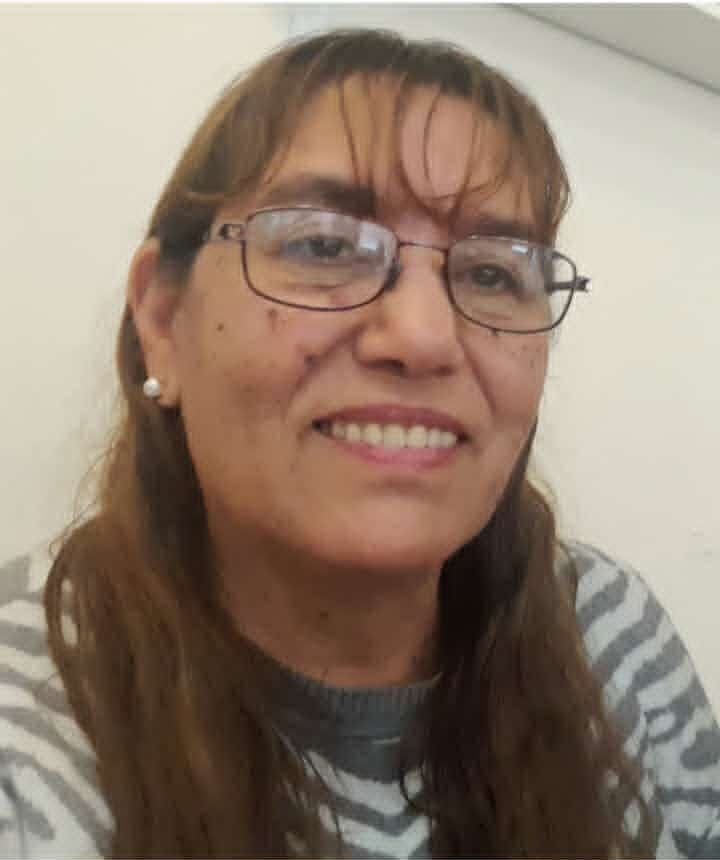
Nidia Amelia García, from Buenos Aires, Argentina, is a writer and an active member of Juntos por las Letras (Together for Letters). She has participated in numerous virtual events in Uruguay, Paraguay, Bolivia, Spain, Colombia, Portugal, Nigeria, Uzbekistan, Kyrgyzstan, and elsewhere. She has also contributed to literary anthologies such as “Books of the Immortals” and “Anthology of the 50 Poets of the World 2022.”