Eternal Samarqand

In the heart where history whispers soft and grand,
Lies a city of dreams, the ancient Samarqand.
Beneath the azure skies, where legends were born,
Her streets weave tales of silk and golden morn.

Domes of turquoise, kissing heavens high,
Minarets that pierce the endless sky.
Gardens lush with roses, fragrant and bright,
Whisper secrets of ages, from dawn to night.

The Registan stands, in majestic embrace,
A tapestry of art, time cannot erase.
Mosaics gleam with stories, vibrant and old,
Of scholars and traders, of courage and gold.

Rivers of Zarafshan, like veins through her soul,
Bring life to the heart of this ancient scroll.
Where Timur's empire once held sway,
In shadows of grandeur, echoes still play.

Marketplaces bustling, with colors so rare,
Spices and silks, in the fragrant air.
Craftsmen's hands, with deft and grace,
Carving beauty in every space.

Oh, Samarqand, jewel of the Silk Road,
In your essence, mysteries unfold.
Each brick, each stone, a silent hymn,
To the glory of the past, never dim.

Under the moon's tender, silvered light,
Your beauty shines, serene and bright.
A testament to time's gentle hand,
Eternal and cherished, beloved Samarqand.


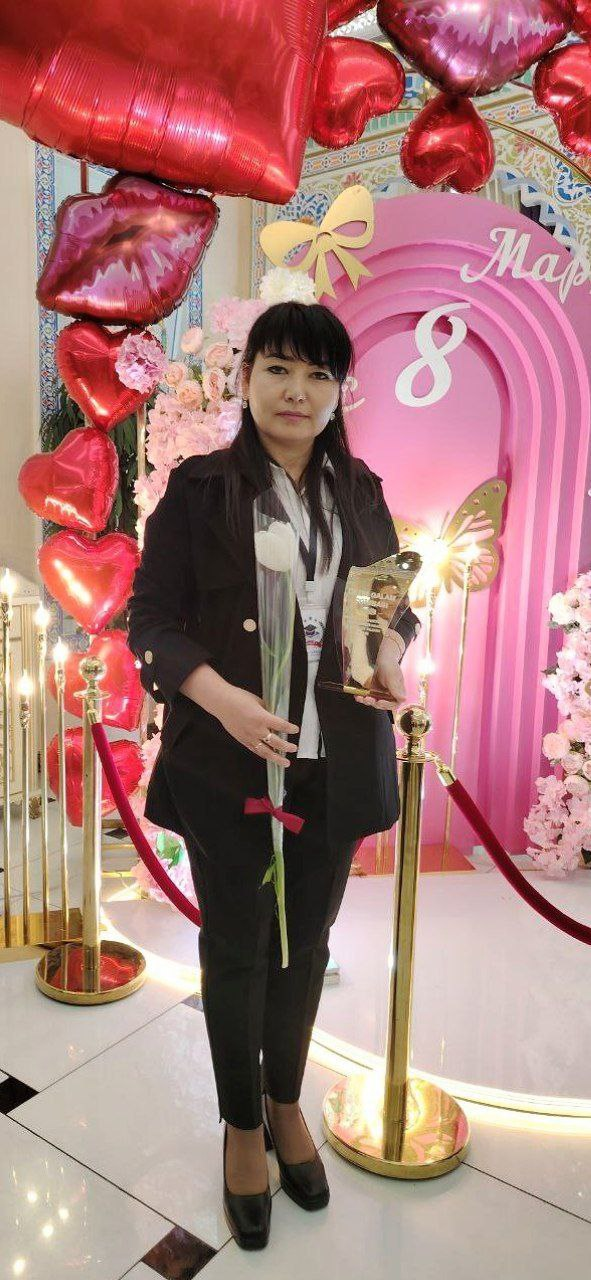
Eshbekova Xurshida Anorboyevna was born on June 25, 1989, in Pakhtakor district of Jizzakh region. She is currently a third-year student of the Faculty of Applied Mathematics and Physics at the Uzbekistan-Finland Pedagogical Institute. At the institute, she is the coordinator of the "Talaba Qizlar" (Student Girls) branch of the Youth Union. She is also a scientific consultant at the Quality Publication organization.

She has participated in the "Scientific and Practical Conference on the Introduction and Improvement of Innovative Technologies in Education" held in Germany, organized by Quality Publication, and the conference dedicated to the "ILM- FAN YETAKCHISI" (Leader of Science and Knowledge) forum for young scientists and talented students. At this conference, she was awarded a certificate, a medal, and a book with published articles.
Sadness


Why is it not so easy to deceive one's heart
Outwardly smiling, disguising the hurt
Seeking out comfort by substitution
Forcing outfield one's concentration
Yet, again and again, comes painful tease
Refusing emotions to acceptance peace
Rusting spears thrust in center chest
Heart wound not healed, silently infest
Pain increases when there's no one to blame
Missing my beloveds, suffer the hell's flame.
Tears cross down my face like torrent rain
Knife in throat, waiting for sadness to drain.

The Gods Never Dare

How does one stop a wind on its way
How does one tell a bee just to play
How does one stop a digging root from its way
Tell me how, to you I pray
How can one touch a flaming fire
And hands not suffer any burn
How can one stop a goddess's desire
When the tides flow decide to turn
The flower blooms towards the sun
Wishing to be covered by its love
Yet the river continues to run
And the feathers refuses to be hidden in the wings of a dove
The moon shall shine with gloom
But doubt in its light has no room
Though joy has pulled its strand from the loom
The alternative weaves a tragic doom
So the flute vibrates with soulful song
The wind blown shall never pass again
The heart sways yet mind will not dance along
Pain is inevitable when eyes turns to rain
Listen as the notes float in the air
The flute for its sounds really care
Yet the gods the treasure will not share
What powers does a mere mortal have to dare


Lilian Dipasupil Kunimasa was born January 14, 1965, in Manila Philippines. She has worked as a retired Language Instructor, interpreter, caregiver, secretary, product promotion employee, and private therapeutic masseur. Her works have been published as poems and short story anthologies in several language translations for e-magazines, monthly magazines, and books; poems for cause anthologies in a Zimbabwean newspaper; a feature article in a Philippine newspaper; and had her works posted on different poetry web and blog sites. She has been writing poems since childhood but started on Facebook only in 2014. For her, Poetry is life and life is poetry.

Lilian Kunimasa considers herself a student/teacher with the duty to learn, inspire, guide, and motivate others to contribute to changing what is seen as normal into a better world than when she steps into it. She has always considered life as an endless journey, searching for new goals, and challenges and how she can in small ways make a difference in every path she takes. She sees humanity as one family where each one must support the other and considers poets as a voice for Truth in pursuit of Equality and proper Stewardship of nature despite the hindrances of distorted information and traditions.
Spring did not wait for me?

I remember your many flowers
Your slaves are beautiful like tulips.
Your lands where smallpox grows,
I miss your ways.

Didn't you look at me?
Didn't you comb my hair?
Didn't you play with me?
Don't you miss me spring?

Can't find any job?
Aren't you heartbroken like me?
Have you not spared the likes of me?
Did you not look at me spring?

Didn't you wait for me all the time?
Didn't you swallow poison like me?
Didn't you hold my hands?
Didn't you wait for me?


Daughter of Ilhomova Mohichehra Azimjon, 7th grade student of Zarafshan city, Navoi region, school No. 9.
RAIN

The grey grasses can no longer console the tears of the clouds.
Their joy of welcoming the pacific rain,
Has faded in the darkness.
The petrichor seems no longer serene.
Where is your soothing beauty, O' rain?
O' rain!
You stole their food and then their heart.
Don't extinguish their burning pyres now.
The soil, not being able to bear their agonizing pain,
Held their bodies on her lap.
Oh you!
How cruel you are!
You took their lives, who craved your presence, who appreciated your healing power.
Oh rain!
You made the dazzling fire roar and burnt everything down to ashes.
How can you, O' heavenly rain, be so cruel?
Critically examine Amruta Patil’s Kari as a post-modern feminist graphic novel.


Comment on sexuality and gender identity as the two prominent themes in Amruta Patil’s graphic novel Kari. Does the text appropriate the act of looking or resisting the masculinist modes of seeing?

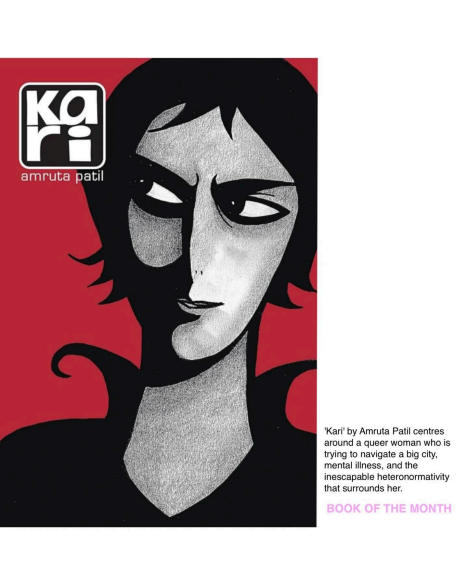
Amruta Patil’s Kari[2008] is the post millennial and new liberalization era hallmark of women studies and feminism testimony; graphic narrative that explores gender identity, feminine personhood and queer sexuality. This graphic novel is a bold and ambitious project
substantiating the retellings and recollections of the titular protagonist's memoiristic life as a queer lady of the allegorically Smog City or Bombay. Kari is exposed to the living hell and damnable existence both by her co-workers and her flatmates’ disparagement and derogation.

Kari is forlorn by Ruth after smog city’s insalubrious sewers transmogrify the site of “returning favours”; Kari adrift to ferry the raft to unclog and clean the darkest waters at night. Amruta Patil represents the black and white visual schema symbolizing the protagonist’s interior world; with colourful illustrations brought in sparsely to imply a sense of belonging and home.

This graphic novel is a fusion of magic realism and mythological subtexts. “There is no such thing as a straight woman” the controversial identity crisis of the graphic novel’s idiolect substantiates the reechoings of Olivia Laing in The Lonely City: The Art of Being Alone: Almost as soon as I arrived, I was aware of the gathering anxiety around the question of visibility. I wanted to be seen, taken in and accepted, the way one is by a lover’s approving gaze. At the same time I felt dangerously exposed particularly in situations where being alone felt awkward or wrong, where I was surrounded by a couple of groups.” “Don’t be scared [...] Death will always come to you as a friend” —----the birthday greetings to Angel reestablishes the framework of sapphic relationship through the reincarnated selfhood in the life-in-death as Kari’s acquaintanceship develops amidst looming deceasement.

Despair of a ruthless urban cosmopolitan dwelling is a decayed disfiguration except the boundless fluidity of the sea; a refuge of queer docks and beeches.

Amruta Patil’s queer gendered feminist graphic novel pictorial exposition illustrates self-exploratory adventure and fluidity of psychic spaces as the demeanour of ad-agency creative writer through heteroglossia and stream of consciousness. This experimental post-modern graphic novel resists and reprehends hypermasculinity and hegemonical heterogeneity through ink, marker, charcoal and oilbar, crayon and found images within-the-cross-over literary forms [...] the storylines/ diegesis/ mise-en-scene flows from voice over narrative style to visuals, then back to visuals again.

In this graphic novel the queer misfit heroine “trawls the drains dream after dream [and] can smell the sewers everywhere” recurrent image motif furthermore emphasizes and/or illustrates the “fluidity of her thoughts keep returning to the city’s lower intestines”. A dark cityscape having the back of Kari’s shadowy figure facing towards the readers and standing into the edge looking into the darkness of the overflooded canals with over-brimmed downpours. The serpentine space of herself ferrying the waterways as close-up shots of traveling, trawling and traversing magnifies the exploration of the self-hood and waxing and waning of her personal moons and/or the real and the imaginary.

The boatman mythical allusive subtexts interweaving in-betweenness of this earthy life and futuristic utopian reciprocates the assertion to Lazarus that “she had neither been an armchair straight, nor an armchair gay, except being an active loner.” She metaphorically espouses nothing but Ruth by her non-committal tagline to lesbianism and lushness of the peach epitomizes the fleshiness of feminine corporeality —the vagina. Grey-scale image of the panel
represents morbidity and mundanity while the colourfulness contrasts panel wit-in Smog City that offshoots epiphanic moment, reflecting subjectivity and interiority heralding the mainstream satirical gazes and alternative interpretative voices. After all, “there is no thing as a straight woman” herein, interiority as a narrative tool enables visualization of the subversive gaze of the female protagonist offering resistance to the symbolic gaze of the male order and masculinist modes of seeing.

Magic realism in the metaphorical depiction in the parting farewell of cutting romantic cords recaptures imagination and visualizes transcendental nostalgia, memory and longing through non-containment.”My time is up, boatman. I need you to ferry me over” the rhetoric of Angel is counterfeited by Kari’s unfathomable infinity that “Don’t be scared, death will always come to you as a friend”.

Amruta Patil's Kari is available here.
Haven of Hearts

In the tapestry of life, one thread stands apart,
Woven with love, stitched deep in the heart.
A circle unbroken, a bond ever true,
Family, the essence of me and of you.

Through laughter and tears, in moments of grace,
We find our sanctuary, our sacred place.
In the warmth of an embrace, the touch of a hand,
We discover the strength to bravely stand.

In the whispers of wisdom from those who have known,
The stories and secrets, the seeds we have sown.
From the cradle of birth to the twilight of days,
Family guides us in myriad ways.

A mother’s gentle smile, a father’s steady gaze,
The comfort of siblings in childhood’s haze.
Grandparents’ tales of times long gone,
Echoes of heritage, forever drawn.

Through trials and triumphs, through joy and despair,
In the arms of family, we are always aware.
That no matter the distance, no matter the strife,
Family is the compass, the anchor of life.

So here’s to the moments, both big and small,
The gatherings, the partings, the echoes that call.
To the love that is endless, the ties that bind,
Family, the haven of heart and mind.


Aminova Zebiniso Habibullo qizi was born on April 29, 2005, in the Gʻijduvon district of Buxoro region.
THE GARDEN OF LOVE

In the garden of love, an orchid blooms
Amid the scent of jasmine, a rose smiles,
While the sea quietly sings with its waves,
Swans dance, and the heart finds solace.
Seagulls soar high above the sea,
In white attire, you stand quietly alone,
Your smile brings me hope and longing,
Through the desert we go,
I wish to give you my love.
Heavenly horses gallop at night,
In our dreams, love lives,
I feel your touch from afar, whenever I wish.
With you, I would go anytime, anywhere,
Our world is a garden of love, stretching endlessly,
Where the desert rose blooms,
I've come to you with my soul.


Maja Milojković was born in 1975 in Zaječar, Serbia.
She is a person to whom from an early age, Leonardo da Vinci's statement "Painting is poetry that can be seen, and poetry is painting that can be heard" is circulating through the blood.
That's why she started to use feathers and a brush and began to reveal the world and herself to them.
As a poet, she is represented in numerous domestic and foreign literary newspapers, anthologies and electronic media, and some of her poems can be found on YouTube.
Many of her poems have been translated into English, Hungarian, Bengali and Bulgarian due to the need of foreign readers.
She is the recipient of many international awards.
"Trees of Desire" is her second collection of poems in preparation, which is preceded by the book of poems "Moon Circle".
She is a member of the International Society of Writers and Artists "Mountain Views" in Montenegro, and she also is a member of the Poetry club "Area Felix" in Serbia.