
Three Haiku


first day of July—
lightning above the mountains
to the west of here


—


electrical storm!
radio static crackles
during the ballgame


—


small bird in the air
attacks magpie on its perch
guilty on all counts


—


bio/graf

J. D. Nelson is the author of eleven print chapbooks and e-books of poetry, including *purgatorio* (wlovolw, 2024). His first full-length collection is *in ghostly onehead* (Post-Asemic Press, 2022). Visit his website, MadVerse.com, for more information and links to his published work. Nelson lives in Boulder, Colorado, USA.
Category Archives: CHAOS
Poetry from Wazed Abdullah
The Sky

The sky is blue, so wide and high,
With clouds that float and birds that fly.
At dawn it glows, at night it's deep,
Stars come out as we fall asleep.
The sun climbs up, then slides away,
The moon and stars begin their play.
The sky above is always there,
A part of life, beyond compare.

Wazed Abdullah is a student of grade nine in Harimohan Government High School, Chapainawabganj, Bangladesh.
Essay from Adiba Pardabayeva
National values of Uzbekistan, style of dress and “Atlas”
The Republic of Uzbekistan is known to many countries for its hospitality. The national values of Uzbekistan do not escape the attention of any tourist or member of another country. Every nation on earth is distinguished only by its own traditions and values. values and traditions did not appear in a day or two.
It is very important to protect our ancient traditions and values and live according to them in order to avoid various harmful effects of today, to remain the owner of the national image and unique qualities characteristic of our people from time immemorial under any circumstances.
Every nation on earth is distinguished only by its unique traditions and values, naturally, such values and traditions, which are the priceless wealth of every nation, did not appear in a day or two. The historical experience of mankind for thousands of years shows that it takes a long time for something to become a tradition, especially a value. Over the years, centuries, certain views, habits, concepts, and experiences pass the test of times and generations and become polished. If they are accepted, continued and become a tradition by the next generations, then they can now be called a national tradition and value.
Values related to ethnic aspects and characteristics that are important for the nation are called national values. National values are manifested in close connection with the history, way of life, spirituality and culture of the nation.
The national values of the Uzbek people, which have been passed down from century to century, have been formed in a long historical process. For example, respect for the motherland where one was born and raised, not being able to imagine one’s destiny without this country, loyalty to the memory of past ancestors, constant respect for elders, maintaining modesty and dignity in any situation, in marriage Many virtues, such as special attention to cleanliness, form the basis of our national values.
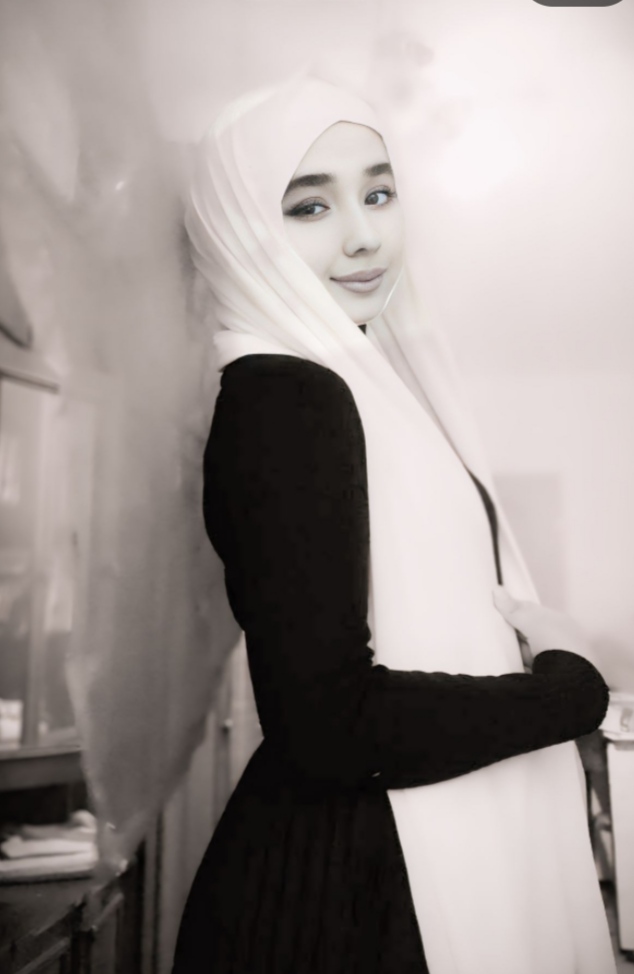
Another topic is “Uzbek girls”. When we think of Uzbek girls, we think of girls wearing satin dresses with caps on their heads. Atlas fabrics attract every tourist. We can see satin bags, hats, clothes and shoes in our historical monuments and places.
Adiba Pardabayeva
2nd year student of Nukus State Pedagogical University
Essay from Marjona Jorayeva
UZBEKISTAN – MY HOMELAND

The homeland is a place our ancestors deemed sacred, where our descendants guard like the apple of their eye, where our umbilical cord blood was shed. The homeland is the place everyone sees when they first open their eyes, sincerely loves, cherishes, and where they were born and raised.

Everyone loves their homeland; when they think of it, their home, family, relatives, and friends come to mind. That’s why we all strive to do everything good for our country, for its flourishing and peaceful life. The homeland is, first and foremost, our people. They are kind, generous, humane, good-hearted, and hardworking. Our people have always been close, friendly with each other. Their respect for one another is boundless, making them one of the most hospitable nations. It hosts historical sites like Samarkand, Bukhara, Khorezm, and Termez, welcoming numerous travelers every year.

I read what the writers wrote,
The poems my poets composed.
But I couldn't find a place as beautiful
As the descriptions of my Uzbekistan.

Our sky is clear, our water and air are pure, our nature is beautiful. There are all conditions for young children to attend kindergartens and schools, for youth to study for bachelor's and master's degrees, and for everyone to work independently and conduct research. The education and employment of women, and the provision of pensions to the elderly are monitored. There are many places for education, medical treatment, rest, and cultural relaxation.

Early in the morning, we see our hardworking people baking fresh bread in the tandoor, sprinkling and sweeping the streets and yards, and the work in the fields has already begun. We also witness birds singing their "song of happiness." Some are preparing for school, some for work, others for the market or guests. During this time, we meet and greet our close relatives, ask about their well-being. We help schoolchildren and our elderly grandparents cross the road. If we are in a car, we try to give way to people and other vehicles. Whether at work, in educational institutions, or wherever we are, we find the desire within ourselves to spread good cheer and treat others well.

In the family, everyone feels very happy. With the closest people around – parents, siblings, spouses, and children – life becomes even more joyful. The father is the pillar of the family, strong and robust, providing sufficient funds and conditions for the family. The mother mainly deals with child-rearing, household chores, and her professional activities. Children, surrounded by loving people in a peaceful homeland, study and strive, becoming individuals who will benefit our country in the future.


  In conclusion, when we speak of the homeland, everyone envisions their motherland. We are proud to be born in such a paradise-like, beautiful, peaceful, and kind homeland. Just as everyone loves their mother more than any other woman, people love their homeland more than any other country. Wherever one is born, that place is dear and sacred. There is no place as blessed as the threshold of the homeland. There is only one motherland, and the love for it is unique.


Marjona Jo'rayeva was born on October 18, 2003, in the Termiz district of Surxondaryo region. She is currently a second-year student at the Faculty of Philology of the Termiz State Pedagogical Institute, specializing in Uzbek language and literature education.
Poetry from Chris Butler
Non-Playable Character
I am the NPC
in someone else’s reality,
a side character
in someone else’s story.
There is no dragon
to slay
and no maiden
to lay
in the castle dungeon,
just a prison.
There are no quests,
no mythical and magical lands,
no courage in my chest
and no powers from my hand.
There is no consequence
for my absence or presence,
as just another glitch
in the matrix.
Exploding Head Syndrome
In my tired mind,
Chris crossed wires
create copper currents,
infusing blown fuses
with stuttering static
synapses shocking
the senses into
hallucinations
of white noise
black outs.
Proud
Supremacists
are so proud
of their race
and western
skin that they
never hide
their hate,
yet are so
afraid of being
replaced they
mask the
shame of their
anonymous
face.
The Little Tribe
The sons of the Sun,
mourning each morning
whilst patiently awaiting
for the Father to awake
and rise above
the horizon,
bringing rays of life
to all the world,
taking its daily stroll
across the pompous,
cumulonimbus clouds
of heaven,
finally settling
for its daily rest
in the west.
The daughters of the Moon,
helping the Mother
shine through the darkness,
cycling through its various
forms of crescents,
halves and wholes,
enlarging for the harvests,
birthing new life
between periods of blood red
celestial bodies,
only eclipsed for moments
by earth’s birthing dirt.
This is how it has always been,
and always will be until the end.
Deathbed
When you die,
life doesn’t flash
before your eyes.
There is only
the void at the end
of delirium’s tunnel.
The surge of
vital organs
powering down,
oxygen deprivation
strangling the brain
and intravenous
morphine drips…
…illusions,
delusions,
and auditory
and visual
veridical
hallucinations,
feels like spiritual
transformation,
providing false hope
when one experiences
and witnesses
ghostly gods
who blame your ills
on your sinful life,
accompanied by
apparitions of
angels soaring around
the room like doves
trapped indoors
in a world of invisibly
clean windows,
and loved ones lost,
promising a second
for reunification
and reconciliation,
coaxing you to follow
the burning light,
at the top of the
never ending staircase
that is revamped into
an everlasting slide
of terminal lucidity
for eternity.
Chris Butler is an illiterate poet and an anorexic starving artist. His 10 book “Poems of Pain” series, including Artsy Fartsy (Alternating Current Press), BUMMER (Scars Publications), Neurotica (Down in the Dirt) and DOOMER (Ethel Press) was completed in 2023 with the publication of the final collection in the series, Beatitudes (Dakota Publishing Company). He also co-wrote a book of poems, Dead Beats, with Dr. Randall K. Rogers. He has been the co-editor of The Beatnik Cowboy literary journal since 2015.
Poetry from John Martino
Empires Fall

One morning you leave the house feeling good.
Great, in fact. The wind just right, a constant
certain breath in the air, refreshing in a soft,
invisible way, a reassurance that every step
you take is a correct step forward. Or, if not
forward, then correct in its improvised
arrangement, its volition to arrive somewhere
else. Somewhere new. So you keep leaving
without having meant to. And you think,
Nowhere to go but there. Where I’m going.
You notice the sunlight filtering evenly
through the leaves and decide, Perfect,
just as it should be. Blue patch of sky
showing between rooftops and trees,
carrying the faint ghost of last night’s
moon like an afterthought. Yes, all is
well, the voice inside continues. Exactly
the way you believed it could one day be.
Without turning to look, you see the house
now behind you, the shut windows, the closed
door, everyone still asleep, the white porch
paint beginning to peel, flag on a stick
barely stirring. You watch it all recede,
growing smaller with each quickened step.
Your eyes fixed on what’s in front of you
growing larger as you near. Eighteen years.
A lifetime ago. But you feel no sorrow, only
joy. Or, if not joy, determination. You’ll visit
again, now and then. Each visit more distant
than the last. But for the most part you
know this is it. This is change. Farewell.
Hello. Time to move on. While there’s time.
And that voice inside reassures, This is good.
This is right. This is always how it had to be.


Goa, India

To the woman crossing the intersection
of Bogmalo and Zuari Roads
at 2:21 in the afternoon,
February 28,
 2019,
a Thursday,
with a big blue
office cooler-size bottle
of sun-bright plastic
water perfectly
balanced,
hands-free, atop your
purple covered head,
and which stayed there,
balanced,
glowing aquamarine,
even as your head turned
abruptly to catch me
attempting to take your image
with what I thought to be
a surreptitious camera eye,
and the look on your face:
can I ever forget
the sad quiet anger
that said, unmistakably,
“Don’t!”?
And I didn’t.
Lowering the lens,
then my gaze,
shamefully toward my knees.
Though you, no doubt,
believed otherwise as the light
turned green
and the taxi where I sat
safely ensconced
sped off
in a different direction.
Greater that a rich man
will crawl through the eye
of a needle
than you will ever read this.
And yet, as Lord
Shiva is my witness,
I want you to know,
unequivocally
and with absolute contrition,
I didn’t!


To a Small House

The tests are back.
You’d die laughing
through leaves
if you knew.
(Myself silly too.)

Which is how,
no doubt, it all
began. And I
wonder now
if, perhaps, we

could have found
it in History
with a capital
“H” and stopped
it in its tracks?

Or at least on
an old calendar
with a small
“c” and mostly
X’ed-out dates,

though a few
circled (some
even starred)
in red, as well.
Remember?

In any case,
one of us
judged (or was
it misjudged?)
the way light

appeared, entered
obliquely, gave
a party
(think: shine
on shine)

and we were (or
so we believed)
radiant lines
of pure poetry.
Something like

an eternal silver
wedding cake,
one tier
for each year
of transparency,

i.e., blissful
indifference. But
now the roses
on the bedroom
wall are peeling,

the sofa just
sits and sags,
and hands and
feet look, if
not ugly, then

certainly funny.
In the end
(according to
the tests (oh,
you’d laugh!))

it will all swell
unhappily off
course and,
of course,
much too late.


Chasing Potholes

Two roads diverged in a sallow wood.
With a load of blacktop, I traveled both.
For one was just as hole-y as the other.
Lucky me. Each led to Starbucks and a KFC.

Oh, morning pee, where is thy stream?
In a week, I’ll be 53. Age is but a number
of debilitating ailments increasing rapidly.
Maybe I should have been a plumber?

What if I have a question but can’t raise
my hand? Will the little girls understand?
I flush with a blush. Verily, verily swirls
the dream. Nothing to do and no one to

do it with. The spoon is missing the dish.
Pave it all to Hell and back. Paradise is locked.
I watch my night-sky screen saver pocked
with stars. I pick one and make a wish.


How to Disappear Completely and Never Be Found

Whittle with the wind. Blubber and bleed
at each end. Drag your self with both fists
down an alley of cut sharp rib. Let your rap
hole reek of hemlock. Turn one white sock

into an ill-fitting glove. For one buck, or less,
do a killer moonwalk. Scream: “Not hungry!
ANGRY!” See that highway stretching sea
to oily sea? It goes nowhere you need to be.

Pass people on the street curled up fetal,
or laid out straight as a needle, and never
know if they’re breathing or not. Play “Fifty
Ways to Leave Your Liver.” Fifty little puffs of

cloud descend upon the Giver. It’s just a world,
rigged and wired, rather silly. A crumpled atlas,
really. One shrug, one cartoon K-9 ditching its fleas
and—poof!: no more ground beneath your knees.


The Kernel*

I was all kneecaps and embedded lace.
You were liquor on a paper terrace,
eyes rimmed with salt air. The Paris
moon was a pistol in a mad cop’s face.

Between poems, I swung legs true
and bare above my head until
my hands split like sacks to spill
human sugar and Voltaire. You threw

a bottle of broken English at the plate
glass window’s ear, ordered the maid
to slice more mango. I tongue tied
a T.V. cord round the neck of 2008,

hung it like a good year. The green
parrot squawked Merde! on the one clean
scrap of floor. You cut the table in two.
The House was divided with peach halves,

lamb’s blood. The daily bread was blue.
Between poems, commercials offered salves
on a gold and cushioned tray. Our raison
d’etre was easy. Governing was our forte.


(*This piece borrows and repurposes a number of words from Carolyn Forche’s poem “The Colonel”.)


American Sonnet

Sitting here helping my fingernails grow.
Skating around my own mental rink.

Hello’s but a stone’s throw
from the immanent brink.

The tape’s running slow.
My lips aren’t in sync.

All night I crow.
All day I blink.

Can’t know!
Don’t think!

Watch Aristotle
spin down the sink.

I pass Love the bottle
and Love takes a drink.


John Martino is a writer, educator, and avid traveler currently residing in Hong Kong. Some of his wayward poems have found a home at North Dakota Quarterly, Another Chicago Magazine, Packingtown Review, and BOMBFIRE, among others. He is the Executive Editor at Home Planet News (homeplanetnews.com).
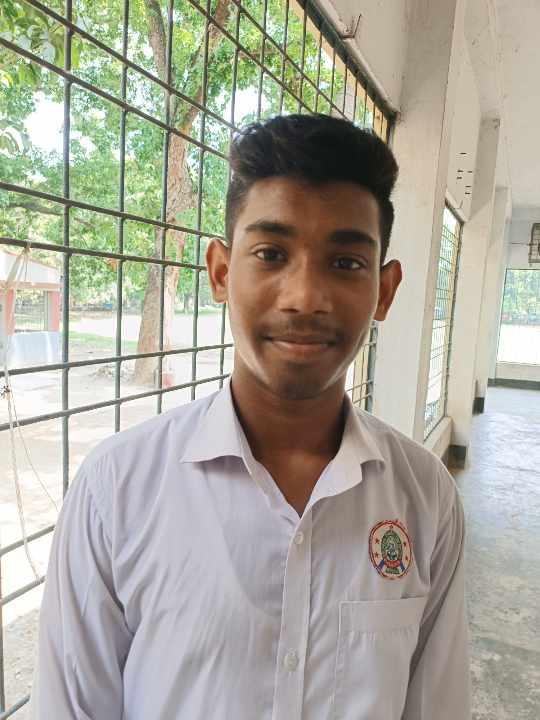
Poetry from Md Easa Hossain (Subas)
Memories
Where are the days lost?
Going, memories of golden days.
The happy times are disappearing,
I remember the old memories.
The times of sitting together,
And chatting are changing.
How time has passed today,
I have grown up
One of the eternal truths of the world is that,
Life is beautiful if you adapt yourself to each moment.
Md. Easa Hossain (subas) is a student of grade nine in Harimohan Government High School, Chapainawabganj, Bangladesh.