TO AZERBAIJAN THE ONE WHICH IS MY LONGING...
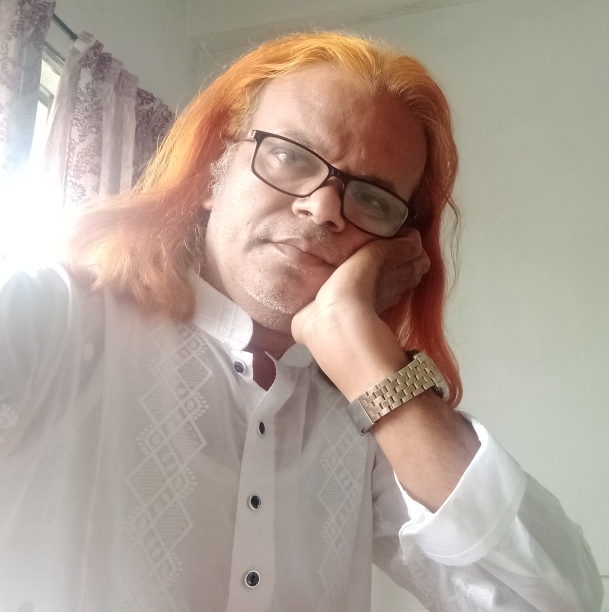
Once upon a time, that was when I was going to primary school, I used to listen to my grandmother with all my heart while she was talking about Azerbaijan, and while I was listening, there were movements and excitements that I couldn't understand, I was experiencing emotional moments. Years later, I realized that this was called longing for Azerbaijan, and I still feel the pain of suffering this longing for years in my heart. It is an unforgettable and indescribable feeling for me. I was daydreaming and wondering if one day my longing for the homeland called Azerbaijan would end.
As I reached Kemal's age and read books on the subject, this incredible longing, this circle of passionate longing was getting bigger and bigger. I kept thinking about Azerbaijan. I was reading whatever I could and adding to my knowledge, I think it was the early eighties, I came across a Turkish literature magazine, the poems of the great Azerbaijani poet Nebi Hezri were published in the magazine. I read his poems with pleasure and wrote a detailed letter to Mr. Nebi Hezri. While writing the letter, I wondered if this great poet would reply to me. ? I was asking questions to myself. Finally, after two months of hopeless waiting, the answer to my letter came from Nebi Hezri. I was very, very excited. The following was written at the beginning of the letter, which I opened with my hands shaking.
Calling out and rejoicing in the earth,
How many times have I seen a flood in my life?
Even if you don't see me once,
I have always seen you in my heart.
This beautiful poem, written especially for me by that great poet, touched me very much and literally made me cry. From that moment on, my longing for Azerbaijan continued to increase unlimitedly. When the date came to 20-01-1992, imperialist Russian tanks brutally attacked the elderly, women and children in Azerbaijan. It was committing the bloodiest massacre in history without any attention, the Western world was turning a deaf ear to what was happening and was shamelessly watching the events. On this occasion, Azerbaijan became my wounded heart, my heart was about to stop. We were trying to keep the events on the agenda by protesting the terrible massacre committed by the imperialists by holding meetings condemning the terrible massacre committed by the imperialists every day, but the longing was still continuing at full speed.
Time passed quickly and Azerbaijan became independent by paying a bloody price. I went to Azerbaijan and hugged and longed for them. They welcomed my humble person with great magnificence. In the eighties, I was trying to satisfy my longing for years by corresponding with friends I knew in absentia, but my longing did not end, it still continued to increase. I couldn't control my tears of happiness. My friends who saw my tears also started to cry. Tears of longing and joy were flowing like a flood. They were competing with each other to take my humble person as a guest. My dear friend Edalet Guliyev immediately arranged a television program. We made a one and a half hour chat program. In the program, questions about Turkey were asked and I answered. When we finished the program and went to the market, people who knew me from the television screen approached me to meet my humble person and asked me if I was a Turk, I replied that we were all Turks, so the sincerity between us continued to increase. They visited a few newspaper offices and interviewed me, asking questions about Turkey. They immortalized our pictures and gifted them to life.
The next day, I see my pictures and interviews with me in the newspapers, I get emotional, and I almost cry, I think to myself that this is what it is like to quench my longing, and we go to the martyrs' paradise, we recite fatihas to the souls of the martyrs, thus the road to Azerbaijan has been opened, and these visits continue from time to time. I was very happy to have my poems published in the Anthology titled "VOLUMES OPENING TO TURANA" published by Aybeniz Gafarlı and Gabil Adalet, and considering the point we have reached, I cannot help but say, FROM WHERE TO WHERE?...
Medina
Today Medina is summoning me,
My heart is filled with joy and pleasure
There is real treasure in it,
Good luck going to Kaba.
Today Medina is summoning me,
My heart is filled with the light of faith.
I set out today,
I want to be like an angel.
Today Medina is summoning me,
I thanked God.
My dream is to be a singer of Koran
I begged Arshi in a whisper.
Today Medina is summoning me,
Delivered, blessed Kaba,
I bowed again in silence,
I thanked God.
Nosirova Gavhar was born on August 16, 2000 in the city of Shahrisabz, Kashkadarya region of Uzbekistan. Today, she is a third-year student of the Faculty of Philology of the Samarkand State University of Uzbekistan. Being a lover of literature, she is engaged in writing stories and poems. Her creative works have been published in Uzbek and English. In addition, she is a member of «All India Council for Development of Technical Skills», «Juntos por las letras» of Argentina, «2DSA Global Community». Winner of the «Korabl znaniy» and «Talenty Rossii» contests, holder of the international C1 level in the Russian language, Global Education ambassador of Wisdom University and global coordinator of the Iqra Foundation in Uzbekistan. «Magic pen holders» talented young group of Uzbekistan, «Kayva Kishor», «Friendship of people», «Raven Cage», «The Daily Global Nation», Argentina's «Multi Art-6», Kenya&;s «Serenity: A compilation of art and literature by women» contains creative works in the magazine and anthology of poets and writers.
Associate Professor, Doctor of Philosophy in Biology (Phd),
Department of Zoology, Termez Staty University, Termez, Uzbekistan
Mamarajabova Matluba Tilakovna
Lecturer, Department of Zoology, Termez Staty University, Termez, Uzbekistan
Saidova Elmira Anvarovna
Lecturer, Department of Zoology, Termez Staty University, Termez, Uzbekistan
ABSTRACT:
The article provides data on the distribution of phytonematodes by representatives of the order Tylenchida (Filipjev, 1934) Thorne, 1949 in the apple orchards of the Surkhandarya region of Uzbekistan. As a result of the study, 28 species of phytonematodes were identified in the root system and root soil of apple plants. During the research, species dominated Filenchus filiformis, Psilenchus hilarulus, Ditylenchus intermedius, D.myceliophagus, D.triformis,Tylenchorhynchus cylindricus, Bitylenchus dubius, Quinisulcius capitatus, Merlnius brevidens, Rotylenchus robustus, Helicotylenchus dihystera, H.erythrinae, Pratylenchus pratensis, Paratylenchus hamatus and Ditylenchus dipsaci.
KEYWORDS: Phytonematodes, apple orchards, order Tylenchida, root system, rhizosphere, phytohelminths of nonspecific pathogenic effect, phytohelminths of specific pathogenic effect.
INTRODUCTION: Phytoparasitic nematodes among parasites and pests of wild and cultivated plants are not the last in nature. The Tylenchida order occupies a special place in the phytohelminthology system, since it contains the central and most important group of phytonematodes, represented by typical phytohelminths: pathogenic forms that cause plant diseases -phytohelminthiasis.
When studying some crops and their nematological fauna, it turns out that yield losses are determined not only by the harmful activity of the “stylet nematodes” of the tylenchid order. The forms of this group of nematodes are also involved in the processes of saprobiotic decay and expand, the volume of the affected areas of plant tissue as a result of vigorous inoculating function [9, 446 p.]. On the territory of Uzbekistan, in particular the Surkhandarya region phytonematodes of apple orchards were studied by E.T.Turaev, T.S. Skarbilovich [1, pp. 58-61.], Sh.Kh. Khurramov, E.T. Turaev [2, p. 115-124.].
MATERIALS: To study the distribution in apple orchards of the Surkhandarya region of Uzbekistan in the period from 2020 to 2021. We collected phytonematodes from the root soil and root system of plants in shirkat farms from the territory of the Surkhandarya region of the Republic of Uzbekistan. The studies were carried out by the generally accepted route method [9, 446 p.]. During the phytohelminthological study, 700 samples of soil and root system of apple plants were collected and analyzed.
METHODS: Phytonematodes were removed by the Berman funnel method and fixed with a 4% formalin solution. Enlightenment of nematodes was carried out in a mixture of glycerin with alcohol (1: 3), and permanent preparations on glycerin were prepared for in-office processing of the material according to the Seinhorst method [10, P. 67-69.]. Soil samples for the presence of cysts forming nematodes were usually analyzed according to the standard Decker method [3, 445 p.].
The species composition of nematodes was studied under an MBR-3 microscope. To determine the species, we used morphometric indicators obtained according to the generally accepted De Man formula [4,104 p.] In its modification according to Micoletzky [6, 650p.]. The degree of dominance of phytonematodes in plant and soil samples was determined from the percentage state of individuals of certain species to the number of all detected by Witkowsky [5, – 53 p].
RESULTS: For the entire period of phytohelminthological studies of apple orchards on the territory of the Surkhandarya region of Uzbekistan, representatives of the order Tylenchida, we identified 28 species of phytonematodes.Discovered species belonging to 3 suborders (Tylenchina, Criconematina, Hexatylina), 5 superfamilies (Tylenchoidea, Dolichodoroidea, Hoplolaimoidea, Criconematoidea, Anguinoidea), 7 families (Tylenchidae, Dolicilenidae, Dolichodoridae, Tylenchorhynchinae, Psilenchinae, Rotylenchinae, Rotylenchoidinae, Pratylenchinae, Paratylenchinae, Anguininae, Nothotylenchinae) and 14 genera (Tylenchus, Filenchus, Aglenchus, Tylenchorhynchus, Bitylenchus, Quinisulcius, Merlnius,Psilenchus, Rotylenchus, Helicotylenchus, Pratylenchus, Paratylenchus, Ditylenchus, Nothotylenchus).
PHYTOHELMINTHS OF NONSPECIFIC PATHOGENIC EFFECT: In our material, they are represented by 11 species: Tylenchus davainei Bastian, 1865 was identified in the roots and rhizosphere of apple plants in the Saryassi, Muzrabad, Jarkurgan and Angora regions of the Surkhandarya region. Filenchus filiformis (Butschli, 1873) Meyl, 1961 was registered in the roots and rhizosphere of apple plants in Baysun, Denau, Sumkurgan, Saryassi, Termez, Muzrabad and Angora districts of Surkhandarya region. F.infirmus (Andrassy, 1952) Andrassy, 1976 was found in the rhizosphere of apple plants in the Angora and Termez districts of the Surkhandarya region. F.leptosoma (De Man, 1880) Andrassy, 1972 was found in the roots and rhizosphere of apple plants in the Dzharkurgan, Bandykhan and Angora districts of the Surkhandarya region.Aglenchus agricola (De Man, 1884) Meyl, 1961 was found in the rhizosphere of apple plants in the Jarkurgan, Termez and Muzrabad districts of the Surkhandarya region.
Psilenchus hilarulus De Man, 1921 found in the roots and rhizosphere of apple plants in Denau, Baysun, Kumkurgan, Muzrabad and Angora districts of Surkhandarya region.D.intermedius (De Man, 1880) Filipjev, 1936 was found in the roots and rhizosphere of apple plants in the Uzun, Altynsai and Angora districts of the Surkhandarya region.D.myceliophagus Goodey, 1958 was found in the roots and rhizosphere of apple plants in the Altynsai, Saryassi, Dzharkurgan, Muzrabad,
Terme and Angora districts of the Surkhandarya region.D.triformis Hirshmann et Sasser, 1955 was registered in the roots and rhizosphere of apple plants in the Jarkurgan, Bandykhan and Muzrabad districts of the Surkhandarya region.Nothotylenchus acris Thorne, 1941 was found in the roots and rhizosphere of apple plants in the Jarkurgan, Termez, Saryassi and Muzrabad districts of the Surkhandarya region.N. exiguus Andrassy, 1958 was found in the rhizosphere of apple plants in the Angora, Dzharkurgan and Termez districts of the Surkhandarya region.
PHYTOHELMINTHS WITH A SPECIFIC PATHOGENIC EFFECT: In our research, they are represented by 17 species: Tylenchorhynchus cylindricus Cobb, 1913 was recorded in the roots and rhizosphere of apple plants in the Angora, Denau, Dzharkurgan and Termez districts of the Surkhandarya region.T.brassicae Siddiqi, 1961 was found in the roots and rhizosphere of apple plants in Baysun, Denau, Kumkurgan, Saryassi, Dzharkurgan, Muzrabad and Angora districts of Surkhandarya region Bitylenchus dubius (Butschli, 1873) Siddiqi, 1986 was registered in the roots and rhizosphere of apple plants in the Baysun, Denau, Kumkurgan, Saryassi, Dzharkurgan, Muzrabad and Angora regions of the Surkhandarya region.
Quinisulcius capitatus (Allen, 1955) Siddiqi, 1971 was found in the roots and rhizosphere of apple plants in the Termez, Jarkurgan, Muzrabad and Angora districts of the Surkhandarya region.Merlnius brevidens (Allen, 1955) Siddiqi, 1975 was recorded in the roots and rhizosphere of apple plants in Baysun, Denau, Kumkurgan, Saryassi, Dzharkurgan, Muzrabad and Angora districts of Surkhandarya region. Rotylenchus robustus (De Man, 1876) Filipjev, 1934 was found in the roots and rhizosphere of apple plants in the Termez, Denau, Kumkurgan, Saryassi, Dzharkurgan and Angora regions of the Surkhandarya region.
Helicotylenchus dihystera (Cobb, 1893) Sher, 1961 was found in the roots and rhizosphere of apple plants in the Termez, Saryassi, Dzharkurgan and Angora districts of the Surkhandarya region.H.digonicus Perry, 1959 was recorded in the roots and rhizosphere of apple plants in the Termez, Saryassi, Dzharkurgan and Angora regions of the Surkhandarya region.H.erythrinae (Zimmermann, 1904) Golden, 1956 found in the roots and rhizosphere of apple plants in the Shurchinsky, Baysunsky, Altynsai, Kumkurgan, Saryassi, Uzun, Bandykhan, Sherabad, Termez, Muzrabad and Angora regions of the Surkhandarya region. H.multicinctus (Cobb, 1893) Golden, 1956 was found in the roots and rhizosphere of apple plants in Sherabad, Termez and Angora districts of Surkhandarya region.
H.pseudorobustus (Steiner, 1914) Golden, 1956 was found in the roots and rhizosphere of apple plants in the Dzharkurgan, Termez and Angora districts of the Surkhandarya region.Pratylenchus pratensis (De Man, 1880) Filipjev, 1936 found in the roots and rhizosphere of apple plants in the Baysun, Denau, Altynsai, Kumkurgan, Saryassi, Bandykhan, Dzharkurgan, Termez, Muzrabad and Angora regions of the Surkhandarya region.P.crenatus Loof, 1960 was found in the roots and rhizosphere of apple plants in the Altynsai, Kumkurgan, Saryassi, Dzharkurgan, Termez, Muzrabad and Angora regions of the Surkhandarya region. P.penetrans (Cobb, 1917) Filipjev et Sch.
Stekchoven, 1941 was found in the roots and rhizosphere of apple plants in the Kumkurgan, Dzharkurgan, Termez, Muzrabad and Angora districts of the Surkhandarya region. Paratylenchus bukowinensis Micoletzky, 1922 was identified in the roots and rhizosphere of apple plants in the Kumkurgan, Saryassi, Dzharkurgan, Termez and Angora regions of the Surkhandarya region. P.hamatus Thorne et Allen, 1950 was found in the roots and rhizosphere of apple plants in Denau, Jarkurgan, Termez, Muzrabad and Angora districts of Surkhandarya region. Ditylenchus dipsaci (Kuhn, 1857) Filipjev, 1936 was recorded in the roots and rhizosphere of apple plants in Denau, Altynsai, Saryassi, Uzun, Termez and Angora districts of Surkhandarya region.
DISCUSSIONS: During the studies carried out from phytohelminths of a nonspecific pathogenic effect, the species Filenchus filiformis, Psilenchus hilarulus, Ditylenchus intermedius, D.myceliophagus, D.triformis were identified in numerous specimens in the roots and rhizosphere of apple plants. Among phytohelminths with a specific pathogenic effect, the dominant species were Tylenchorhynchus cylindricus, Bitlenchus dubius, Quinisulcius capitatus, Merlnius brevidens, Rotylenchus robustus, Helicotylenchus dihystera, H.erythrinae, Pratylenchus pratensis, Paratylenchus hamatus and Ditylenchus dipsaci.
CONCLUSION: For the entire period of phytohelminthological studies of apple orchards on the territory of the Surkhandarya region of Uzbekistan, representatives of the order Tylenchida, we identified 28 species of phytonematodes (phytohelminths of nonspecific pathogenic effect-11 species, phytohelminths of specific pathogenic effect-17 species).
The results of the phytohelminthological study showed that phytonematodes of the order Tylenchida cause serious diseases in apple orchards in the Surkhandarya region of Uzbekistan and cause great economic damage to the productivity of these crops. Therefore, the study of the distribution and species composition, bioecological features and substantiation of measures to combat these pests is of great scientific and practical importance in the fruit growing of the Republic of Uzbekistan.
REFERENSES: 1) Тураев Э.Т., Скарбилович Т.О. Динамика фауны нематод яблони в Сурхандарьинской области Узбекистана. Бюл. ВИГИС, 1981.1/31. С. 58-61. 2) Хуррамов Ш.Х., Тураев Э.Т. К вопросу изучения нематод плодово-ягодных культур юга Узбекистана. Узбекский биологический журнал. 1978. С.115-124. 3) Dekker H. Nematodes of plants and the fight against them. – M. Kolos, 1972. 445 p. 4) De Man J.G. Die einheimischen, frei in der reinen erde und im siissen wasser Lebenden Nematoden. – Tijdschr // Nedrl. Dierk. Vereen, 1880. – V.5. – 104 p. 5) Witkowski T. Struktura zgrupowania nicieni zyjacych w glebie upraw rolniczych // Stud. Soc. Sci. Torum. 1966. T.8. – No.3. – 53 p. 6) Micoletzky G. Die freilebenden ErdNematoden, mit besonderer Berucksichtigung der Steiermark under Bukowina, zugleich mit einer Revision samtlicher nicht mariner, freilebender Nematoden in Farm von esenus– Beschreibungen und Bestimmungsschlusselh // Arch. Naturgesch. -1922. Ant. A. – Vol. 87. – 650 p. 7) Kiryanova E. S., Krall E. L. Parasitic nematodes of plants and measures to control them. – Moscow: Nauka, 1969. – Vol. 1. 447
Today, the Internet has opened the door of great opportunities to people. It depends on who uses it and how. We have such young people who use it effectively in the pursuit of their dreams and aspirations.one of our young people, Behruz Toshtemirov from Surkhandarya, has been constantly searching for creative young people like him, and has done exemplary work in order to introduce them on the “Jakhan” scale.
So far, more than 200 of Uzbekistan’s best creative examples have been placed on the Internet and print media, contributing to their promotion and growth at the world level. Behruz Toshtemirov is the winner of the “Active Researcher” badge as a result of his research. He works tirelessly to live up to that title. Uses available capabilities. and the results are happy. He is the author of books entitled “The Value of the Motherland”, published in 2022 by the publishing house of Uzbekistan, and “The Place of Theater in Life” published by the publishing house of the Russian Federation in 2023.In 2023, the American publishing house “Autumn Rain”, and in early 2024, the publishing house of the Russian Federation created the anthologies “Silver Winter Refreshment” and “The Artists I’m Looking For”.
Behruz Toshtemirov
It is noteworthy that all these works were collected online, edited and published using the Internet. A young artist is constantly on the move, constantly looking for new ideas. poems, scientific and artistic articles are constantly published in regional, regional, republican and international newspapers and magazines. By the way, Behruz Toshtemirov, the anthology “Creators I’m Looking For” recently selected, edited and printed with the help of Russian publishers includes samples of the creative works of 25 artists. Among them, there is a place for my biography with my picture and my story “Khazon”. Fortunately, the book is being posted on the Internet and sold. It is also planned to pay pen fees to the participating authors from the collected funds.
Right now, preparations are being made for the Jahanshumul pageant, which will be held in cooperation with Turkey, with such anthologies. I wish him great success in his endeavors…
Those Long Odds
As soon as someone
Moves out of
The marital home,
Those long odds
Get a lot longer.
Taylor Dibbert is a writer, journalist, and poet in Washington, DC. “In the Arena,” his third full-length poetry collection, is due out in April.
Once upon a time, in the very heart of the Village of Greenwich, there lived a performance artist, known for her vision, manifested in striking stage pictures and bold feminist statements. She would tell you that her art was not just her work; it was a calling, emerging out of her journey from small-town midwestern girl to tour de force, with periods of victim and survivor somewhere in between.
Having lucked into a rent-controlled apartment in the ‘90s, she kept her needs modest so that she might enjoy every bit of serendipity that came her way. And, oh, did it ever. Learning early on that she could give herself a fuller life than “a good man” might, she relished in her freedom to travel the globe, staging performances, be they sanctioned or rogue, speaking her truth in a manner so memorable as to land her on the cover of many a magazine.
Then, there came a time that she found herself sidelined with mysterious symptoms that no doctor could diagnose. Thus, the hours that were once spent beneath the Washington Square Park arch, advocating for the visibility of women, the neurodivergent and the gender non-binary were whiled away in her double bed, reading and dreaming up pieces that she began to wonder if she’d ever have the opportunity to perform.
Ever the resilient one, she buoyed herself with fresh flowers, dinners of Instacarted supermarket sushi and Netflix Originals; yet, as time passed, the phone seldom rang, for her friends and colleagues quickly tired of asking after her health. Once a handful of invitations had been declined, they stopped coming. The magazines and theatres, of course, simply had no interest in her beyond the impact of her work.
On a visit to one of the doctors who found himself at a loss as to how to help her, she merely shrugged when he asked how she was doing.
“I feel like I’m disappearing,” she said.
“Perhaps an antidepressant would help,” he suggested. “I’m happy to write you a prescription.”
“I appreciate that, Doctor. I really do. Of course, I was happier when I was living a full life. But, the facts are what they are. I have an undiagnosed illness, and, well, I’m not as young as I once was.”
“That’s nonsense. You’re the same woman who’s always taken the world by storm,” he assured her.
“Maybe so, but that doesn’t equate to feeling seen.”
Over the next few months, she put on a few pounds and her complexion grew quite pale as it became more difficult to make her way from her third-floor walkup down to the concrete stairs that overlooked the street. And, not but a breath after her fiftieth birthday, which she celebrated with her old-lady cat, Marina Abramović, by lighting a candle atop their tuna salad, her periods stopped.
Done. Fini. Once and for all.
The next morning, when she rose to brew herself a cup of gingered black tea, Marina Abramović began to weave her way through the woman’s legs, only to find that they were less than solid. Taken aback, the woman’s treasured feline brought her paw to her heart, then dashed off, mewling as she took shelter in the cubby of her carpeted tree.
“Well, okay, then,” the woman scoffed with a roll of her eyes. “Be that way.”
Once the tea had steeped, the woman tossed the spent leaves into the sink, and after an invigorating first sip, made her way to the shower.
Setting the teacup next to the tap, she fingered the yellow stains in the porcelain, where more than a few cigarettes had burned down while applying her makeup for any one of those old nights on the town.
Then, she turned the shower on to warm, whipped off her nightie and tossed it into the hamper. An expert shot.
Taking another sip of her tea, she glanced toward the mirror, hesitantly, of course, for she refused to accept the lack of fullness within her breasts, only to find that she was . . . well, ever so slightly transparent.
And made a mental note to talk to the doctor about the Ambien.
The heat of the shower worked wonders on her muscles; and, as she stepped out onto the bath mat, she found Marina Abramović waiting on the toilet seat, eager to nuzzle her knees as if in apology.
“No worries, Girlfriend,” she said, mussing the loose skin on her scruff.
It all happened, in the grand scheme of things, gradually. Relativity being relative, after all. And, not a week later, the woman found herself to be as invisible as a princess’s pantyline.
Yet, Marina Abramović, fortunately, seemed to have worked through her issues. Though she wasn’t quite sure where to rub, she managed to hold vigil over the woman’s form, regardless.
“I’m not dying, for Goddess’s sake,” the woman protested as the cat remained glued to her undelineated side. “We just need to play the circumstances to our advantage.”
And that’s when performance art became more than performance. It became magic.
Over the next couple of months, the woman and Marina Abramović crafted a piece that made all of her earlier works look like child’s play.
And, when it was ready, the woman placed a call to Désirée la Bombacere at the Fiefdom of MoMA, advising her of what they had to offer.
“I thought you’d retired,” Ms. la Bombacere said upon her return call.
“Who told you that?”
“Well, we just assumed–.”
“Yeah, that’s never a good idea.”
Thus, on April 7th of 2024, the woman and Marina Abramović presented “The Pussy Whip,” a work that would go down as the most influential one-cat show in history. Those courageous enough to take a seat within the audience departed with their greatest fears and desires exposed, as well as their judgments and dismissals, for in a very short span of time, they witnessed the grains of their own depravity, which they worked so hard to deny; and, as they exited the space with their panties either wet or soiled, one couldn’t help but to notice distinct feline bite marks gracing each ankle.
And, from that moment forward, no one dared to disregard a pussy, no matter what her age, her physical limitations or her lived experience, ever again ‘til the very end of time.
Part 1: The Heist
In the dark alleys of the city, two figures walked quickly, their steps quiet on the sidewalk. One was Max, a notorious criminal known for his slick moves and silver tongue. The other was Detective John Reynolds, a seasoned cop who was well-liked for his intellect and toughness.
Max grimaced as he opened the jewelry store door and disabled the alarm. “This is going to be easy,” he said to himself.
Reynolds watched Max from a distance, narrowing his eyes as he waited for the moment to strike. He had been keeping an eye on Max for weeks. As Max slipped inside, Reynolds radioed for backup and followed suit, slipping quietly into the store.
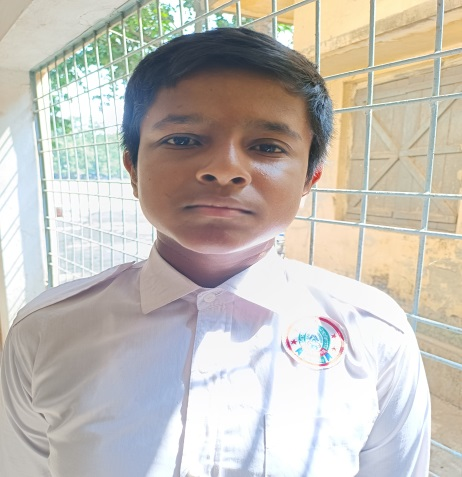
Nahyean Bin Khalid is a student of grade eight in Harimohan Government High School, Chapainawabganj, Bangladesh.