Ripping Off the Band-Aid

Remember the roller coaster of emotions you felt as a kid when you fell off your bike or did something else to earn yourself a scrape wor- thy of a Band-Aid? I remember falling off my bike and skinning my knee more than once as a child.

At first, I felt the rush of pain as my knee hit the gravel, followed by the burn of peroxide once my mom began to patch me up with her first aid kit. Then, after we both blew on it, I felt the cool relief of the Neosporin and a Band-Aid to protect the wound so it could begin to heal.

In some ways, grief was like skinning my knee. After the initial pain and shock, I covered up the wound after the funeral with pleas- antries and a return to daily life in an attempt to heal. But just like wearing a Band-Aid, at some point, you need to rip that thing off and expose your wound to the air so it can finally scab over and fully heal. I had been dealing with my grief on a surface level up to that point, only allowing myself to know the depths of my heartache. It was finally time to excavate my sorrow and bring my pain to the light. I decided to join the Young Widows Grief Writing Workshop and braced myself for the necessary healing that only spilling my emotional guts could bring.

Our group’s first virtual meeting was on November 8, 2021. Five of us shell-shocked widows assembled on Zoom, and Joan quickly introduced herself and explained how each session would work. We would start with a short poem or writing excerpt and then be given
about twenty minutes to write how we felt about the writing, followed by each person sharing what they had written with the group.

Before Joan gave us the writing prompt, she asked each of us to introduce ourselves. It was awkward enough to meet for the first time online. Add the fact that each of us had lost our spouse within the last year, and you could cut the anxiety with a knife. Thankfully Joan had run these groups for a while and did a wonderful job holding space, including silence, for us to begin to open up.

The introductions were as painful an ordeal as you would expect. All five of us widows were in our forties, and each of us had kids. In comparison, I felt lucky only having one child who was now a teen- ager versus the other women struggling to piece together their lives while also caring for one or more children under the age of twelve.

Even though my situation was slightly different, for the first time since Al died, I felt truly seen and understood. Some of the women had a spouse die from illness, having to experience the added pain of watching their husband suffer for months before passing away. A couple of the women were like me, having their significant other stolen in an instant.

After our round of introductions, it was time to complete the writing prompt. The assignment was deceivingly simple. Joan asked us to free write for twenty minutes, using the phrase “This grief is ”
followed by a description of our feelings. I grabbed my purple-and- gold embossed journal and proceeded to bare my soul. Oh boy, here goes nothing . . .

This grief is debilitating.
This grief is insidious. It seeps into every thought, every move, and every breath in my lungs.
This grief is selfish. It won’t allow me to take my mind off it and comes back with a vengeance at the slightest hint of joy.
This grief is sad. More sad than I’ve ever felt in my life, and

I’m scared to feel this way for the rest of my life, but I’m terrified to let it go.

This grief is lonely. I don’t know how to connect with others sometimes because they don’t understand the magnitude of my loss. This grief is haunting. It fills my nights with thoughts of him.
With longing and regrets and desires to wind back time to have our love all over again.
This grief is awful. It sucks the life out of you and makes you wish you were dead.

This grief is a part of me. Like a scar I’ll never get rid of or a wound that won’t fully heal.
This grief is surprising in its depth and complexity, and magnitude. It swallows anyone and anything in its path.
This grief is special because it’s shaped by the love I had for him.
That’s why I cling to the grief some days in remembrance of him.
This grief is necessary to honor my pain and my experience. I need this grief if I ever hope to deal with the terrible thing that happened to me and my son.

This grief is confusing. Some days I can talk about Al and laugh, and other times if I catch a glimpse of his picture out of the corner of my eye, I’m enveloped in tears.
This grief is strange that way. No rhyme or reason. No predict- able pattern or warning. It’s just raw, primal emotion of a love lost and a heart broken in two.
What comes of this grief? I hear it wanes over time, but at this stage, I’m skeptical if it’ll ever go away.

I looked up from my journal after reading my piece to the group and was instantly comforted by the all-knowing eyes of other women who also had been thrust into the rotten club of widowhood.
For the next twelve weeks, I showed up to our grief writing group faithfully. Some days I dreaded attending because I knew during the
session the pain of my own loss and the loss of the other women in the group was inescapable. The fact that my grief was inescapable in these meetings was the unexpected gateway to my healing.
Our regular contributor, prose writer Jim Meirose, invites Synchronized Chaos readers to review his two upcoming books. He will send PDFs to people who will provide at least 50-75 word blurbs in their blogs or on Amazon/Goodreads.
About his books:
Audio Bookies (Being published by LJMcD Communications) – Audio book creators take on recording a book which begins absorbing them into its bizarre fictional world.
Game 5 (Being published by Soyos Books) – Very experimental piece involving the efforts of residents to rejuvenate a community in decline.
************************************
Now, for this month’s issue, Like a Flowing River.
This month’s contributions reflect how life may have ups and downs, smooth and rough patches, but mostly just keeps going.
Mahkamov Mahmudjan’s piece gives us our title. Mahkamov reminds us that life is like a flowing river, where we have influence but don’t control everything.
Jessica Barnabas Joseph reminds us that becoming who we are can be a journey. Mashhura Ziyovaddinova illustrates that the journey of life matters as much as our destinations. Wazed Abdullah presents a rhythmical ode to the constant ticking of time.
Hillol Ray describes the stability and comfort he finds in his personal and intimate spirituality and how it’s developed and informed by his mixed-race heritage. Michael Robinson speaks to the solace he has found in his faith over many years. Stephen Jarrell Williams’ work addresses being lost and found again through faith and the love of family.
Muslima Rakhmonova reflects on the support and encouragement she receives from her family and on how families can both keep children secure and empower them to build their futures. Abdamutova Shahinabonu’s short story reflects the deep love and respect between fathers and their children, even as the children become young adults and leave to pursue their dreams.
Brian Barbeito finds mythic beauty in Mother Nature, in industrial areas and even a truck collision, as well as in spring flowers and colorful fungi. Naeem Aziz outlines the life cycle, diet, and ecology of the praying mantis. Turdaliyeva Muxarram conveys the simple and colorful joy of flowers. Azimjon Toshpulatov laments the passing of the warm and flower-strewn spring. Aliyeva Matluba fashions images out of natural seeds and materials while Abdulazizov Dovudbek’s home economics paper reminds us when we should let go of stored food. Daniel De Culla crafts a myth about the creation of fish and the constellation Pisces.
Tuyet Van Do’s haiku points to the uncanny mysteries of nature and the paranormal. Nahyean Taronno continues his ghostly tale of trapped spirits and children in a haunted manor. Audrija Paul illuminates the destructive power of rain during a flood and crop-destroying storm. Praise Danjuma evokes the wildness and majesty of nature with a piece on a large and scary night-flying bird. Avery Brown presents a moment of narrative tension as futuristic cowboy characters in his novel Blood and Loyalty skirt one potential conflict to race towards another.
Lidia Popa’s piece reminds us of the mystery and wonder of poetry. Dilnura Rakhmanova poetizes about love, writing, and tulips. Kylian Cubilla Gomez’ photography captures moments of color, surprise, and interactions with the natural world. Isabel Gomez de Diego’s photography draws on themes of nature, history, and the wonder of childhood. Kande Danjuma reclaims the joy and wonder of her childhood. J.D. Nelson peers at life like a child glancing up at labels they can’t quite make out on a top shelf in his monostich poetry. Emeniano Somoza likens the moon to a lonely child drifting through the treacherous school hallways of space.
Luis Berriozabal speaks to loneliness, aging, and the power of words in his poetry. Duane Vorhees’ poetry probes themes of sensuality, romance, writers’ block and the timeless Mideast conflict.
Dilnoza Xusanova outlines the literary contributions of Erkin Vahidov to Central Asian and world literature. Abdunazarova Khushroy poetizes on the beauty of the Uzbek language. Ibrohim Saidakbar highlights the humane spirit and literary legacy of Central Asian writer Gafur Gulam. Otaboyeva Ominakhon examines Mark Twain’s use of satire in his literary works. Noah Berlatsky spoofs errors in proofreading in a humorous piece.
Ziyoyeva Irodakhon reviews the contributions of great Uzbek teacher and writer Abdulla Avloni to Central Asian and world scholarship and pedagogy. Salomova Dilfuza makes suggestions to help people optimize their learning. Guli Bekturdiyeva offers best practices for how educators can design syllabi. Abdusamatova Odinaxon offers recommendations on the best use of interviews as a tool for sociological research. Burikulova Shakhnoza remembers an inspirational teacher who motivated her to set high goals and work towards them. Sobirjonova Rayhona praises the dedication of her favorite teacher.
Axmatova Shakzoda outlines the unique opportunities and hardships of student life. Aziza Karimjonova Sherzodovna highlights the accomplishments of Uzbek students and scholars and the greatness of the nation.
Adiba Shuxratovna reviews Hossein Javid’s drama “Amir Temur” and outlines how the play highlights the nation-building work of Amir Temur through depicting both political and domestic moments of his life. Aziza Saparbaeva depicts a dramatic moment in the life of medieval Central Asian leader Tamerlane. Marjona Kholikova outlines the accomplishments of various historical Central Asian military and political leaders.
Adiba Shuxratovna’s poetry extols the virtues of the new Uzbek constitution and its respect for human rights. Mamadaliyeva Aziza celebrates Uzbekistan’s rich history and its present and future promise. Eshbekova Xurshida Anorboyevna evokes the mythical beauty and grandeur of Samarkand while Dr. Reda Abdel Rahim reminds the world of the archaeological treasure of Egypt’s Royal Tombs of Tanis and encourages us to preserve and study them. Graciela Noemi Villaverde expresses her pride in Argentina’s history and flag.
Ruxzara Adilqizi’s poetry celebrates her love for nature, her partner, her country, and her heritage. Mahbub Alam flies into the sky at sunrise on the wings of love. Elmaya Jabbarova draws on classical references to convey the intense experience of having a lover stare into one’s eyes. Maja Milojkovic finds gentle and poetic love in a garden. Mesfakus Salahin speaks to the emotional and spiritual union of a couple in love.
Lilian Dipasupil Kunimasa speaks to the futility of hiding one’s emotions. Usmonova O’giloy whispers poetry about the gentle grace of her dreams. Paul Tristram crafts vignettes of human experience from a large-hearted and compassionate place. Taylor Dibbert’s poetic speaker points out a detail that speaks to the depth of his mourning for his departed dog and thus the depth of the love they shared.
Alan Catlin’s poetry reflects the fragmented thoughts of memory and grief. Vernon Frazer adorns paper with shapes and shades of color and words in various fonts at precarious angles. Mark Young’s images play with shape and color and seem to almost represent various objects.
Nosirova Gavhar relates how music can serve as medicine for the human spirit. Sayani Mukherjee describes the sensations and images she experiences listening to classical music.
Sterling Warner evokes atmosphere, time, place, and memory with his poems on the Midwest, fungi, flora, and fauna, and the overzealous self-diagnosis made possible through pharmaceutical commercials.
Christopher Bernard critiques neoliberal philosophy for breaking down social order with its emphasis on one’s rights to the exclusion of one’s responsibilities to respect others.
Dr. Jernail S. Anand urges us to set aside extravagant philosophizing and simply live our lives. Santiago Burdon satirizes those who carry their principles beyond the point of reason with his piece on a vegan vulture.
Heather Sager takes joy in gentle, quiet moments of middle age, even as she feels off kilter and knows her body and life are slowing. Roberta Beach Jacobson’s haiku expresses observations on human nature taken from ordinary and surprising moments of everyday life.
Hillol Ray wonders about the future of humanity, if our compassion and solidarity can grow and develop alongside our technology. Mashhura Usmonova decries people who obsess over their phones to the detriment of flesh and blood relationships.
Faleeha Hassan urges others to recognize her common humanity although she’s in a traditional Muslim head covering. Bill Tope’s essay traces the changing attitudes towards the LGBTQ community in America over the past 60 years. Z.I. Mahmud outlines how Amrita Pari illustrates the isolation and longing of a queer woman in a modern city in her novel Kari. Jacques Fleury reviews a production of “Witch” at Boston’s Huntington Theater and reflects on how witches can represent those treated as “others” by modern society for various reasons.
Mykyta Ryzhykh speaks to the horrors of war and the destruction of innocence and the environment. Gozalkhan Samandarova highlights the indiscriminate destruction often caused by war and urges humans to work for peace. Bill Tope’s story highlights the senseless terror of a school shooting by portraying an incident from a child’s perspective.
Ana Bogosavljevic reminds us that even great pain and evil will not last forever and can be outlasted with patient goodness. Shaxzoda Abdullayeva takes joy in her current life and her hopes for the future, as David A. Douglas celebrates the power of community and kindness to overcome despair.
Annotation: As you know food hygiene is a set of food manufacturing practices that aim to minimise biological food hazards through safe and clean operations to protect public health from foodbome diseases. Bilganingizdek oziq-ovqat gigiyenasi – oziq-ovqat mahsulotlarini ishlab chiqarishning to’plami bo’lib, u jamoatni biologik taomlarni iste’mol qilishdan himoya qilishga qaratilgan.
First and foremost, The occurrence of two or more cases of a similar illness resulting from the ingestion of a common food is known as a food-borne disease outbreak. This includes a number of routines that should be followed to avoid potential health hazards. In this way, food safety often overlaps with food defense to prevent harm to consumers. In considering industry-to-market practices, food safety considerations include the origins of food including the practices relating to food labeling, food hygiene, food additives and pesticide residues, as well as policies on biotechnology and food and guidelines for the management of governmental import and export inspection and certification systems for foods. In considering market-to-consumer practices, the usual thought is that food ought to be safe in the market and the concem is safe delivery and preparation of the food for the consumer. Food safety, nutrition and food security are closely related. Unhealthy food creates a cycle of disease and malnutrition that affects infants and adults as well. Food can transmit pathogens, which can result in the illness or death of the person or other animals. The main types of pathogens are bacteria, viruses, parasites, and fungus. The WHO Foodborne Disease Epidemiology Reference Group conducted the only study that solely and comprehensively focused on the global health burden of foodborne diseases. This study, which involved the work of over 60 experts for a decade, is the most comprehensive guide to the health burden of foodborne diseases.
Food can also serve as a growth and reproductive medium for pathogens. In developed countries there are intricate standards for food preparation, whereas in Tesser developed countries there are fewer standards and less enforcement of those standards. Even so, in the US, in 1999, 5,000 deaths per year were related to foodborne pathogens. Another main issue is simply the availability of adequate safe water, which is usually a critical item in the spreading of diseases. In theory, food poisoning is 100% preventable. However this cannot be achieved due to the number of persons involved in the supply chainas well as the fact that pathogens can be introduced into foods no matter how many precautions are taken.
Issues
Food safety issues and regulations concern:
Agriculture and animal husbandry practices.
Food manufacturing practices.
Food additives
Novel foods.
Genetically modified foods
Food label
Food contamination.
Food contamination.
Food contamination happens when foods are corrupted with another substance. It can happen in the process of production, transportation, packaging, storage, sales, and cooking process. Contamination can be physical, chemical, or biological Physical contamination
Physical contaminants (or ‘foreign bodies’) are objects such as hair, plant stalks or pieces of plastic and metal. When a foreign object enters food, it is a physical contaminant. If the foreign objects are bacteria, both a physical and biological contamination will occur.
Physical food contamination is a hazardous yet natural accident of contaminating food with dangerous objects around the kitchen or production base when being prepared. If kitchens or other places where food may be prepared are unsanitary, it is very likely that physical contamination will occur and cause negative consequences. Children and the elderly are at the highest risk of being harmed by food contamination due to their weaker immune systems and fragile structures. The most common reasoning for physical contamination to occur is when the food is left uncovered without lids. To prevent such contamination and harm to those consuming food from restaurants, cooks are recommended to wear hair nets, remove jewelry, and wear gloves when necessary, especially over wounds with bandages.Chemical contamination happens when food is contaminated with a natural or artificial chemical substance.
Safe food handling procedures (from market to consumer)
The five key principles of food hygiene, according to WHO, are:
Prevent contaminating food with pathogens spreading from people, pets, and pests.
Separate raw and cooked foods to prevent contaminating the cooked foods.
Cook foods for the appropriate length of time and at the appropriate temperature to kill pathogens.
Store food at the proper temperature.
Use safe water and safe raw materials
Proper storage, sanitary tools and work spaces, heating and cooling properly and to adequate temperatures, and avoiding contact with other uncooked foods can greatly reduce the chances of contamination. Tightly sealed water and air proof containers are good measures to limit the chances of both physical and biological contamination during storage. Using clean, sanitary surfaces and tools, free of debris, chemicals, standing liquids, and other food types (different from the kind currently being prepared, i.e. mixing vegetables/meats or beef/poultry) can help reduce the chance of all forms of contamination. However, even if all precautions have been taken and the food has been safely prepared and stored, bacteria can still form over time during storage. Food should be consumed within one to seven (1-7) days while it has been stored in a cold environment, or one to twelve (1-12) months if it was in a frozen environment (if it was frozen immediately after preparation). The length of time before a food becomes unsafe to eat depends on the type of food it is, the surrounding environment, and the method with which it is kept out of the danger zone.
In my point of view, Everyone should know about food hygiene. If he or she doesn’t know what’s food hygiene. They are able to face with some misunderstandings. Perhaps, if they follow to food hygiene on their lifestyle. They can afford themselves safe their safety not only that but also their well-being.
References:
1.Texas Food Establishment Rules. Texas DSHS website: Texas Department of State Health Services. 2015. p. 6.
2. “Food Safety Definition & Why is Food Safety Important”. fooddocs.com. Retrieved 16 November 2022.
3.”Food safety”. who.int. Retrieved 1 November 2022.
4.Havelaar, Arie H.; Kirk, Martyn D.; Torgerson, Paul R.; Gibb, Herman J., Hald, Tine; Lake, Robin J.; Praet, Nicolas; Bellinger, David C.; de Silva, Nilanthi R.; Gargouri, Neyla; Speybroeck, Niko; Cawthorne, Amy, Mathers, Colin, Stein, Claudia; Angulo, Frederick
J.; Devleesschauwer, Brecht (2015). “World Health Organization Global Estimates and
Regional Comparisons of the Burden of Foodborne Disease in 2010. PLOS Med. 12
Centers for Disease Control and Prevention. 17 (1): 126-128.
doi: 10.3201/eid1701.101821. PMC 3375763. PMID 21192873. Retrieved 12 November 2021.
6.Shikiomanov, I. A. (2000). “Appraisal and Assessment of World Water Resources” (PDF). Water International. International Water Resources Association. pp. 11-32
7.”Food poisoning Symptoms and causes”. Mayo Clinic. Retrieved 16 November 2022.
8. “Supply Chain”. Corporate Finance Institute. Retrieved 16 November 2022.
9.”USDA, National Agricultural Library. Bacterial pathogens and foodborne illnesses”.
11. “What is Food Contamination?”. Retrieved 10 June 2018.
12. “Physical contaminants in food, identification and prevention at Campden BRI”. campdenbri.co.uk. Retrieved 10 June 2018.
13. Miller, Vicky (30 September 2021). “Physical Food Contamination’. CPD Online College. Retrieved 28 November 2022
14. “Investigation and Identification of Physical Contaminants in Food | Food Safety”. food-safety.com. Retrieved 28 November 2022.
15.360training (10 June 2021). “What Are The Four Types of Food Contamination?”.
360training. Retrieved 28 November 2022.
23. “Prevention of foodbome disease: Five keys to safer food”. World Health.
Organization. Archived from the original on 25 March 2006. Retrieved 10 December
2010.
24. Zeratsky, Katherine. “How long can you safely keep leftovers in the refrigerator?”.
Mayo Clinic. Katherine Zeratsky, R.D., L.D. Retrieved 21 November 2018.
25. “Storage Times for the Refrigerator and Freezer. FoodSafety.gov. Retrieved 21 November 2018.
Evoking the spirit of Charles Baudelaire’s Les Fleurs de Mal, Alex Johnson’s The Flowers of Doom whips together imagery from various sources to craft its near-apocalyptic nightmare and warning visions.

References from modern cosmology, Greek mythology, Biblical mythology, modern music, and news headlines and social issues blur together in these vivid lines. Johnson pays tribute to artists he respects, including Baudelaire, Ellyn Maybe, Kafka, and Jordan Gallader, by incorporating their imagery or through direct poem dedications. A common thread among those he admires is the ability to look at times of change with a mixture of awe and repulsion.

Poems at the beginning and end of the collection directly address current social ills such as environmental destruction, authoritarianism, racism, war, genocide, and religious hypocrisy. “Cat on a Hot Tin Horror Cast,” a relatively optimistic piece for this collection, urges the world’s people to sidestep their leaders and directly work to oppose mass murder and fight together for peace. “The Fire Anyway” champions unjustly maligned and marginalized people through the resilient character of Lilith while lambasting colonialism and the devastation of people and the planet.

Other poems in the middle fill out the collection with techno-futuristic, fairy tale, gothic, or rock-and-roll aesthetics. Some motifs recur, such as powerful and sensual femininity (the goddess Aurora in “Aurora’s Roar Against Death,” Aurelia in “Darker Matters,” and a nameless and original figure in “I Myself am Strange and Unusual”) and off-kilter musical references (“slay bells” in “Living Fast and Surveilled,” "St. Johnny Ramone” in “Radio Free Calaveras”).

The Flowers of Doom by Alex Johnson is a worthy read for its layered sensibilities as well as its messages.

The collection is forthcoming from Plasma Press in an omnibus edition with Thunderstruck by Alex Johnson and Sandy DeLuca.
Forever

How many years
does it take

for each one of us
to figure out

where we stand
in the spin of the world

our face in the wind
our back to where we came from

our father's words echoing
how to be a man

our mother's love
never ending

and who made them
that way

the essence of them
inside us

forever?


Lost Dog

Lost dog
on the streets of the city

too many humans
with strange eyes

hungry and lonely
he is the same as them

laying down for the night
alone under the dots of stars

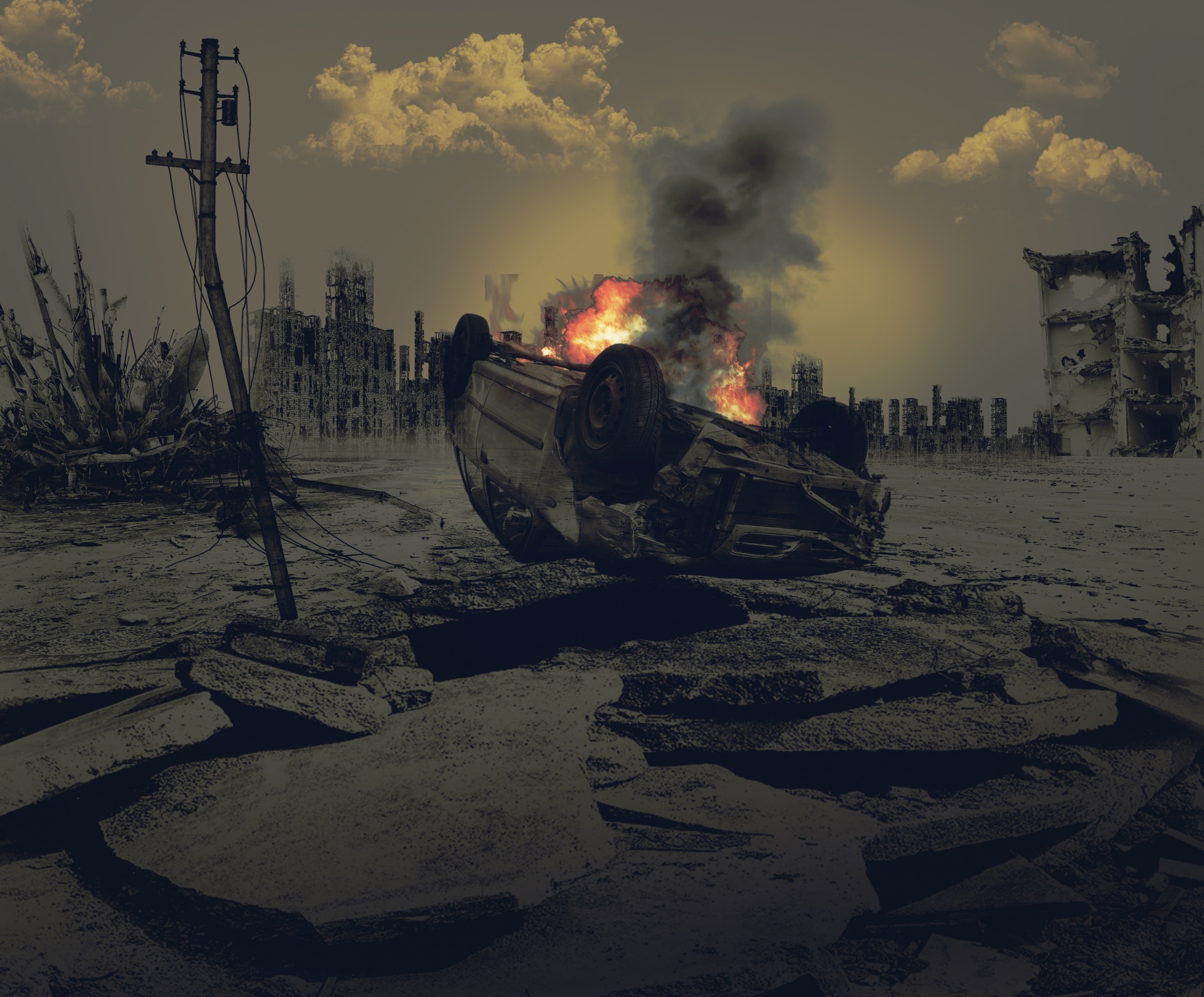
city ruins
as far as the dark horizon

licking at his sore paws
then sniffing and listening

a singing in the distance
an aroma of soup bones

and the thrill
of one last lick.


Mountaintops

Way back
beyond the last path
the city a thing of the past

trees grow
tall as the mountaintops
with millions of us

able to talk
with Father God
answering.


Stephen Jarrell Williams can be found on (X) Twitter @papapoet where he sometimes writes and draws and paints and takes photos of the spin of the world.