
Techno-Feudalism like Yanis Varoufakis Said

under whom we cheerlead the destruction of our kind –
our heads bowed down with the weight of the media
-Marc di Saverio (2020). Crito Di Volta, 31.

Former Treasury Secretary Steven Mnuchin is building an investor group to acquire ByteDance’s TikTok, as a bipartisan piece of legislation winding its way through Congress threatens its continued existence in the U.S.
-Rohan Goswami and Jesse Pound (2024).

You are under surveillance!
And the USA is seizing the surveillance for MAGA.

The scramble for cyberspace: 1884 all over again.
Invade. Colonize. Partition.
There are only terra nullius and eminent domain
in platform empires.

Trump’s Treasury Secretary will have your kid’s data.
Trump’s Treasury Secretary will know your recipes and décor hacks.
Twerking tweens will twerk for Trump now.

Now we can all be Miss Teen USA.
Help! We don’t even live in the USA!
Steve Mnuchin wants a platform, and to wear a crown.

MAGA will buy TikTok with offshore accounts,
Then offshoring whales will onboard TikTok in Uncle Sam’s name.
Android-Apple-Alphabet – California Caliphate,
Christian Nationalist internet.
while microserfs make BitCoin bets.
What did you monetize today?
What do the 5 Eyes not see already?
Can one Eye subpoena what another Eye surveils?

What is the difference between “Treasury Secretary” and “Chairman?”
Mao we get to find out.


Terry Trowbridge has appeared in Synchronized Chaos before. He is grateful to the Ontario Arts Council for funding poetry during the polycrisis.
Category Archives: CHAOS
Poetic collaboration between Dr. Prasana Kumar Dalai (India) and Kristy Raines (USA)
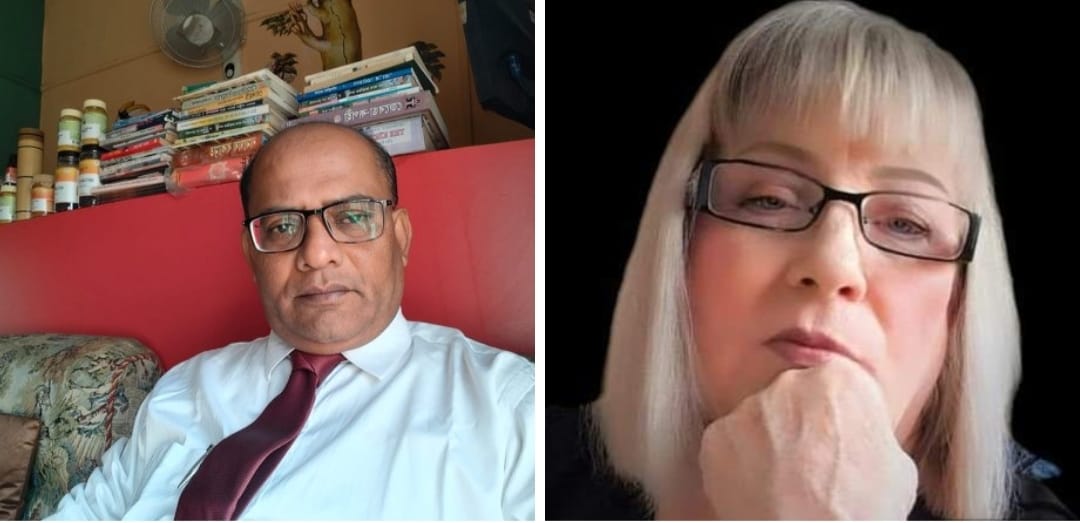
Epistolary Poem #155 by Dr. Prasana Kumar Dalai of India and Kristy Raines of the United States of America

MAKE ME REALIZE! (Dr. Dalai)

My heart belongs to you
I must go where you may lead
If love is red I am colour blind
I may not see the things
That you might see
And I may do just what I should do
I am looking through the eyes of love
And can see so much
The other eyes don't find
Still the sparkle in your eyes
Makes me realize one and all..


She sees the changes and speaks...

THROUGH EYES OF LOVE! (Kristy Raines)

My heart will always belong to you
Wherever you walk, let me walk beside you
You could never see through my eyes .. But
I now see changes in you that weren't there before
I will always let you do things your way
But now I see more compassion and more empathy
You are seeing so much more through eyes of love
They now sparkle when I catch you smiling
And if I have helped you see some of these things
know that I was sent to you for that very purpose

You have shown me many things too.... <3


***
Epistolary poem #196 by Dr. Prasana Kumar Dalai of India and
Kristy Raines of The United States of America


I BELONG TO YOU! (Kristy Raines)

The pain and anguish won't be lost
But I 'll be yours all the days ahead
I 've scattered myself around you
Love has bloomed in your fragrance
I accept it whatever be consequences
I belong to you and I do live in yours
I care not if the world stands against
Call me faithless and I won't mind ever
I see my heaven burnt ere even built
Now where 'll this affliction of love reside
I crave for you no matter what you're .


She will always take her chances with him...


YOU BELONG TO ME! (Dr. Dalai)

Though painful moments still remain
I will always be yours until time stops
You have made a nest in every part of my life
and unshakable love for you grew stronger
I'll stand strong beside you regardless
of whatever comes against us in this world
You belong to me, and I to you no matter the cost
Faithless is something we will never be
for our heaven abides in the love that we share
I may not be the one you would have chosen in the past
but I am the one who denies you nothing
and the one who loves you in every circumstance.
Never will I ever crave anyone else's touch but yours
as your heart fits perfectly, like a glove, in mine


***
Kristy Raines is a poet, writer, and author, born in Oakland California, in the USA. Kristy is retired, married, and has two children and three granddaughters.

Kristy has five books waiting to be published. One anthology with  prominent poet from India, Dr. Prasana Kumar Dalai, will launch sometime in 2024 called, "I Cross my Heart from East to West", along with two fantasy books of her own called, "Rings, Things and Butterfly Wings" and "Princess and The Lion", an anthology of her poems in called, "The Passion Within Me, and her autobiography called,  "My Very Anomalous Life".  Kristy has received many literary awards for her unique style of writing.

She is also an administrator for Chaucer's Square and Motivational Strips Literary Groups on Facebook.

Kristy enjoys music, making pottery, painting and raising awareness for the Rohingya people and friends who live in the refugee camps of Cox's Bazar and also raises awareness on human trafficking internationally.
****

Dr. Prasana Kumar Dalai (DOB 07/06/1973) is a passionate Indian Author-cum-poet while a tremendous lecturer of English by profession in the Ganjam district of Odisha. He is an accomplished source of inspiration for young generation of India. His free verse on Romantic and melancholic  poems is appreciated by everyone. He belongs to a small typical village, Nandiagada of Ganjam District, in the state of Odisha.

After schooling he studied intermediate and graduated In Kabisurjya Baladev vigyan Mahavidyalaya then earned a MA in English from Berhampur University PhD in language and literature and a D.litt from Colombian Poetic House in South America.

He promotes his specific writings around the world literature and trades with multiple stems that are related to current issues based on his observation and experiences that need urgent attention. He is an award winning writer who has achieved various laurels from the circle of writers worldwide. His free verse poems not only inspire young readers but also the ready of current time. His poetic goal right now is inspiring others, some of which are appreciated by laurels of India and across the world. Many of his poems have been translated in different Indian languages and earned global appreciation and lots of well wishes for his upcoming writings and success in the future.

He is an award winning poet and author of many best seller books. Recently he was awarded Rabindra nath Tagore and Gujarat Sahitya Academy for the year 2022 from Motivational Strips and a gold medal from the World Union of Poets, France & the Winner Of Rahim Karim's world literary prize in 2023.The government of Odisha's Higher Education Department appointed him as a president to the governing body of Padmashree Dr Ghanashyam Mishra Sanskrit Degree College and he is the Kabisurjyanagar.Winner of HYPERPOEM GUINNESS WORLD RECORD 2023. Recently he was awarded at the SABDA literary Festival at Assam.
Poetry from Don Bormon
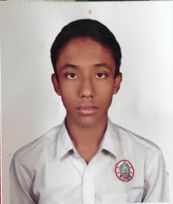
Friendship's Melody

Friendship is the sun's warm glow,
A priceless gem in life's treasure trove.
Together we find joy's reflection,
In the gentle hearts of true connection.

Friendship is a raindrop's kiss,
Tiny birds singing melodies of bliss.
Side by side, we paint the sky,
A garland of sweet memories, oh so high.

Friendship is the forest's song,
Love's tune that plays all day long.
With each heartbeat, we dance and sway,
Through sorrows and laughter, come what may.

Don Bormon is a student of grade nine in Harimohan Government High School, Chapainawabganj, Bangladesh.
Essay from Gulsanam Qurbonova
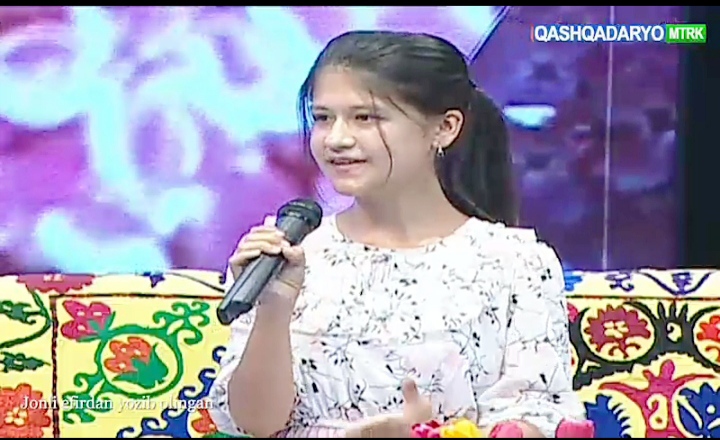
MY MOTHER


My mother, a remarkable embodiment of human kindness, is someone I envision as the architect of my being. She was a person filled with a delightful spirit, resilience, and love. With profound grace, she nurtured her family, shaping not just my existence but also the world around her.

Her life was fascinating from many perspectives. A highly skilled individual, she faced family challenges and strived to be a beacon of goodness. She bestowed upon me a profound sense of appreciation for family bonds, enriching her role as a loving wife and nurturing mother.

Her life was a mosaic of diverse experiences. She was an exceptionally compassionate person, always extending a helping hand and fostering a strong connection with those close to her. Her ability to empathize and approach life with love and understanding played a pivotal role in fortifying family ties.

My mother, a source of wisdom and morality, instilled in us the values of literature, knowledge, and social justice. Her courage and determination to prepare for the future were matched only by her gratitude for her capabilities. Her ambitions and dedication to pursue goals inspired me to be a conscientious and hardworking individual.

Her creation, both in the intellectual and societal sense, was evident in her fundamental role in developing harmony within our family and community. Her experiences and knowledge showcased the importance of swift resolution of issues, efficient time management, and extending help to others.

Her birth, her intellectual and social guidance, and her unwavering support for family and friends revealed her paramount influence. Her wisdom and accomplishments contributed significantly to the growth of her family, reflecting her essential role in bridging relationships.

My mother's commitment to justice and fairness in managing family resources showcased her compassionate and just approach. Her ability to maintain a balanced and respectful relationship with her family demonstrated the crucial role she played in fostering unity.

Her upbringing in family values and justice became even more apparent in times of adversity, where her resilience and ability to handle challenges were commendable. Her family's respect for her, coupled with the understanding of family dynamics and how to navigate difficult situations, was inspiring.

Her family, bonded by love and respect, created an atmosphere of warmth and compassion. The trials she faced became a testament to her strength and determination, and her ability to balance family discipline with love and understanding left an indelible mark.

My mother, with her wealth of experience and knowledge, continually engaged in meaningful conversations, and her relationships with family members and close friends showcased the importance of open communication and mutual respect.

In her, I witnessed a harmonious coexistence of sensitivity and justice, providing a strong foundation for interpersonal relationships. Her family members, connected by respect and love, demonstrated the significance of trust and support.

In conclusion, my mother's influence on my life is immeasurable. Her unique words, numerous acts of patience, and expressions of love have created a reservoir of gratitude within me. I am thankful for her guidance, love, and the myriad lessons she taught me, shaping my character and influencing the person I am today.
A. Iwasa interviews essayist Rikki Branson from Microcosm Publishing’s zine Neurodivergent Pride #5
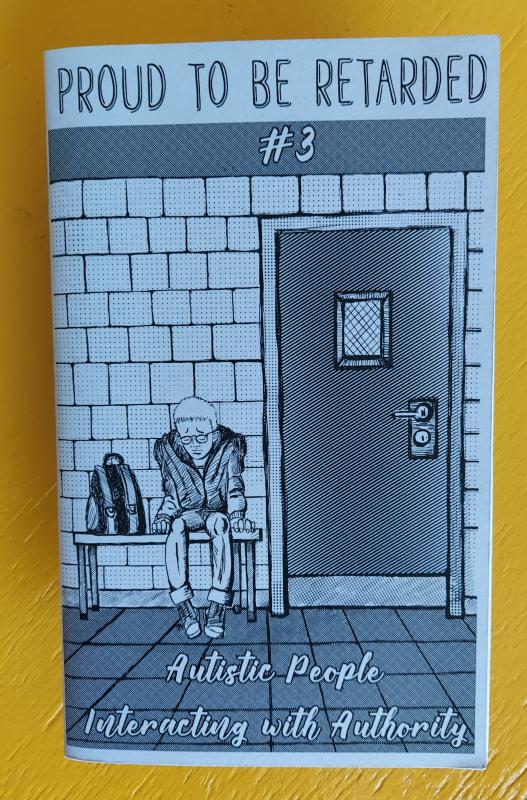
While reading Neurodivergent Pride #5 I became interested in interviewing Rikki Branson because of her essay “Faith and Authority: A Generation X Spiritual Journey”. We are acquainted from both being involved in publishing in the San Francisco Bay Area in the mid 2010s, and I had been raised Roman Catholic but have both had a complicated relationship to organized religion since the 1990s.
AI: You were already in Jr. High when your parents took you to an evangelical Protestant church. Did you have any exposure to organized religion before that? Do you mind sharing more specifically what kind of church it was?
RB: Sure, it was a Christian and Missionary Alliance church, which at the time was pretty much a mainstream Protestant megachurch in the suburbs. I think my experience is similar to many people’s experiences, though, regardless of what denomination of church they attended.
And I had heard of Christian religion before, I was actually the one who got my parents to take my brother and I to church when I was little! I had read in books about people going to church and thought it was a way to meet other kids and be part of some grand and meaningful cause, so I kept asking them to take us to church, which they finally did.
AI: You mentioned Traveling Mercies by Anne Lamott for her description of her spiritual journey as like being lily pads, meandering like a frog. Do you still feel that way? Is there more you’d like to say about Lamott’s writing?
RB: Yes, and what I meant by that was that my spiritual journey wasn’t a straight line from one point to another. In some seasons I thought more about faith and spirituality than in other seasons, and I’ve found myself re-learning similar lessons and re-thinking the same issues. And I’d end up re-examining the same thing sometimes but from a different angle based on a person or event that had entered my life.
Even the times in my life when I was cynical towards religion were still part of my journey, because I was still engaging with the concept of faith, even to dismiss it. And while I haven’t read anything by Anne Lamott in awhile so can’t speak to her current writing, I do still identify with the “lily pads” metaphor.
AI: You mentioned that your parents told you as a teenager that you seemed autistic, but you didn’t actually get diagnosed until you were an adult. How important do you think a potential adult diagnosis is for others?
RB: I do think an adult diagnosis can help people of any age who want to better understand themselves. When I was diagnosed, a lot of the focus (understandably) was on helping me with job searching and money management as those were issues I was facing at that time, but we did briefly bring up other topics such as relationships and friendships and faith and spirituality. There are things therapists said to me that I’d like to go back and explore and would bring up in a session if I were still in therapy at UCSF, and I do think the therapy experience gave me things to consider that were useful and interesting.
I think some people don’t pursue diagnoses because they feel that putting a “label” on themselves will limit them or they want to make it in life without making excuses or getting special treatment. But I think that now with autism and other conditions, we have a deeper understanding that autism can affect people in very different ways and that there are many ways to be autistic (just as there are many ways to practice faith/spirituality!) A diagnosis isn’t a statement of your destiny or an excuse, it’s more of a guide to how your unique brain works, where you have strengths and where you might need more support.
I think a diagnosis can help if you are able to access support systems (job coaching, accommodations at work, etc) because of the diagnosis. Or, if you choose to just use the information for yourself and Google “help for autistic people to organize their closet” or something like that, if regular advice for non-autistic people isn’t working for you. There is less stigma attached to mental health and neurological diagnoses now due to more knowledge about them and more people getting diagnosed, and if you choose to get diagnosed and tell people, you can help to lessen that stigma even further.
That said, I would never want to be someone who reduces stigma by claiming “not to be like those other autistic people” who don’t blend in as easily to neurotypical society or have more support needs. We are all valid and all deserve respect.
AI: I like/identify with your “uneasy mental truce with” your faith after college. I consider myself to be culturally catholic (small c no mistake), do you feel like your faith or lack there of is similar? Jesuscentric is a concept I read about on livejournal if I’m not mistaken that I liked back in the ’00s. Unitarian Universalism can also be pretty cool.
RB: I’ve not heard the term “Jesuscentric” but I do hear “Christ follower” to express that someone is inspired by and hopes to emulate Jesus, but without all of the cultural and political connotations that can come with the word “Christian.” I think it’s a way to say things a bit differently, to get a chance to explain what you mean before you activate people’s cultural stereotypes and have them put you in a box before you get to define yourself.
Yes, I would say that I’m probably similar to what you’re getting at with culturally catholic, although I do think there’s more to being a Christ follower than the cultural Christianity that involves, say, putting up a Christmas tree around the holidays or taking Sunday off. It’s about choosing to live in a more mindful and intentional way that’s inspired by how Jesus acted in the Gospels: love your neighbor, forgive your enemy, treat everyone and the natural world with respect. Getting back to the basics without all the modern cultural and political associations that can come to people’s minds when they think of Christian religion.
AI: For clarification, for me, being small c and/or culturally catholic isn’t about the church as an institution, high holidays or mass on Sunday. To me, that is what mainstream religion is. For me it’s more like the Catholic Worker Movement or Ecclesiastical Base Communities. Feeding the hungry, offering clothing and shelter to those in need. Opposing imperialism and the death penalty. Penpalling with, and sending books to prisoners.
It’s like the story of the father who asked his son to do some work, and the son said he wouldn’t, but he did it anyways. His other son said he’d do the work but didn’t. Faith without works is dead as they say, I’m far more interested in the work than the faith. I was raised Roman Catholic but became an atheist in my youth, then an Evangelical and Pentecostal Christian as a young adult, but left that milieu largely over the wars in Afghanistan and Iraq, but also the total indifference to things like sweat shops, the environment, and practically everything wrong with the world except a very narrow definition of what’s “wrong.”
RB: I can relate to that!
AI: Do you feel like the publishing executive you mentioned is a good example of non-religious mentorship?
RB: Yes, I would say so. I think that mentorship and just adult friendship in general is something that people are really lacking in Western/American society. So much of what I heard about adult friendship when I was growing up as a teen was focused on how adults should grow up, settle down, stop hanging out with buddies and spend their non-working hours with their families. I’m all for people being good spouses and good parents, parenting is a very important form of mentoring. But I think we just spend so many hours working, job searching, networking, commuting etc that we don’t have enough hours left to invest in our communities and relationships so we’re forced to ration out the little time we do have and direct it to smaller and smaller circles of people. That’s the problem we should really address, why we’re kept so busy that we can’t maintain normal relationships the way we did when we had a village to support us and we interacted with that village. And friendships don’t have to take you away from your family. I have friends who have children and I’m always down for spending time with them with kids included!
You don’t need to be religious to be a mentor or be mentored, but I think that one good thing that religion provides is a structure where people can meet each other and become friends or mentors/mentees, where platonic friendship is encouraged and supported. I think we need more of this in the world.
AI: do you consider yourself to be on a third path outside of the worldliness vs spirituality world view?
RB: Yes, I’m still somewhere on that third path. I don’t know how to describe the stage of spiritual life that I’m in now, but I do feel that I’m still on the journey somewhere. I still consider myself a Christ-follower.
What I’m focusing energy on now is working to rebuild communities and social structures that went away during the height of the pandemic. Covid hasn’t totally gone away and I’m all for accommodating people with disabilities or people who are immunocompromised, and am looking forward to rebuilding our social connections in more mindful and inclusive ways. Where I live in Northern California there’s a lot of media talk about how our cities are in a “doom loop” because of violence and economic problems, and I’m writing and speaking about remembering and honoring the role cities have played in America in terms of safety and community for some POC, LGBT and immigrant people and about supporting the communities that exist in our cities. Not sure how that all fits into my Christ-follower faith journey, but I suppose it’s about community and respect which I think is a big part of the good that faith and spirituality can bring to society.
AI: I agree with your critique of submission being linked to “traditional” gender roles, but would add it’s also part of the inherent violence in the white supremacist aspect of the hyper segregated, white dominated churches in the US. The flip of this to me is Liberation Theology, minority churches and actively anti-racist/peace churches can be liberatory. How do you feel about this five years further along in life?
RB: I related submission to gender roles in my essay because that was what I’d heard growing up, and that’s what I thought I was qualified to speak about, as a white woman.
But all of our unjust social power dynamics, including racism and white supremacy, manifest in our mainstream churches, and I do think it’s important to be actively anti-racist and actively oppose and work against in society and call yourself out for racism and other issues. A few racist things I now recognize from when I was younger from my mostly white church were that we put on a play and listened to music about the sacrifices of some white missionaries who were murdered by native people but didn’t look at the whole story in context. The natives were presented much like the Orcs in Lord of the Rings and it was only as an adult that I read a book that mentioned that the indigenous tribe in question was not “unreached by civilization” but engaged in legal and sometimes physical combat with oil company representatives who wanted to take their land and that the murders happened because one Indigenous man lied to their chief to cover up a love affair, not because they had a cultural habit of murdering all trespassers. But the story was told in an extremely white-centric way.
I also remember missionaries saying that people in other countries who practiced other faiths were under demonic influence and that their religious music was obnoxious, and someone who adopted a boy from East Asia changing the boy’s name to Noel and saying that he was now God’s gift to him and his wife. White supremacy, which I believe was unintentional there, just stemming from a culture saturated in that, would manifest as looking at problems in other countries as horrific but problems here in the U.S. as just sort of unfortunate, and as a hyperfocus on relating every Bible story to something to do with our individual lives or families without considering social justice or social implications. The story of Rahab hiding the Jericho spies, for example, was about how you should follow God before it’s too late, and the illustration was of a man who couldn’t accept his wife’s forgiveness for his affair and didn’t try to get her back until she was already remarried. Not about genocide or war or the role of women or marginalized racial groups, but about American suburban marital drama.
But when I was in my “cynical phase” in my twenties, I didn’t have the tools or language yet as a white person to critique racism and classism in the church. That’s something that came later as I matured. I’m embarrassed and ashamed that I didn’t immediately notice the toxic aspects that weren’t directly aimed at me, and I am committed to learning more and doing better. And I think consciously anti-racist and anti-oppression churches can help with that.
Poetry from John Lloyd Casoy
LOW TIDE IN LAGUNA DE BAY
They embrace each other again,
skin to skin, the islets of water spinach
and the surface of sticky mud
after a week of dancing with the waves.
The elusive seagull is close by,
roaming in the transient seashore
created by the low tide.
The islands of water lilies aboard
in the breakwater, lonely
for not receiving a warm welcome.
The sun is weaving, the twilight
says “Hello”, and in the distance
here comes the blinking of artificial stars
created by the city which deteriorated
that once deep Laguna de Bay.
I am there, standing on the pathway
that once part of the lake’s body,
jealous of the lake’s destruction.
I don’t know; perhaps it’s just me,
drowning in my deep thoughts
wanting to be visited
by low tide one day.
About the Author
John Lloyd C. Casoy is a public-school teacher in the Philippines. He has a bachelor’s degree in Bachelor of Secondary Education with a major in Filipino. Currently, he is writing his thesis for his master’s degree in Master of Arts in Filipino – Literature at the Polytechnic University of the Philippines.
Story from Jim Meirose
How About it? Who are you?


Oh. Who are you? I don’t remember seeing you living here before. How ‘bout it? Who are you? All those houses up that way are for sale. I don’t remember seeing you living here before. How ‘bout it? Who are you? Why are all those houses up that way for sale? What the hell was that? I don’t remember seeing you living here before. How ‘bout it? Who are you? What the hell was that? I can’t get the car started. Let’s harvest some of that pronto hey mom look there’s two weasels hey mom look there’s two weasels and get it under a microscope.

But I don’t see how that can be ‘cause of the big bang. I don’t remember seeing you living here before. How ‘bout it? Wow we all thought this house was empty, I don’t remember seeing you living here before. I think I got a battery-powered transistor radio. Let me go get it. How ‘bout it? Look down there. What the hell was that? Everything just stopped, just like that. They’re bringing stuff out to the curb down there. Look. Who are you? Something wrong in the ground up there?

Look. Really? That’s why they’re all selling? I don’t remember seeing you living here before. How ‘bout it? Oh! They’re beautiful! How old are they now? Really? Why are they bringing that stuff out to the curb down there? Wow how time flies. But anyway. Who are you?

They always say every household should have a battery powered transistor radio. But we don’t got one. [flop] So what’s wrong in the ground that they all need to move? Do you got one? I don’t remember seeing you living here before. How ‘bout it? Who are you? I don’t remember seeing you living here before. How ‘bout it? Who are you? The sky up there look at it. I thought you said you had a battery powered transistor radio. I never knew it looked quite that blue. Okay—and no we didn’t hear nothing. That’s something. We didn’t hear nothing.

Why’d you say you had a battery powered transistor radio when you knew you didn’t have a battery powered transistor radio? No. You didn’t hear nothing? I mean dear God, it was something. We’re calling on neighbors who didn’t come out to make sure everything’s okay with them.

Why’d you say that eh you a liar? We—nobody knows but there was a big bang up in the sky and all the power cut off. Why’d you say that eh you a liar? A big bang in the sky someplace. Why’d you say that eh you a liar? They reached on the inside of the wall for the entryway light switch and managed to get the lights back on. They looked out.
What happened?

Why’d you say that eh you a liar?
Can’t tell.
Just a big bang in the sky someplace.
What?
Why’d you say that eh you a liar?
A big bang in the sky someplace.

Why’d you say that eh you a liar?
A big bang in the sky someplace.
You a liar? A liar? A liar?
You a liar?
No!

So = they left the house, through their never had been knocked on ever, door, leaving their  brand new but already dead TV televisions “McVisionary and Pole” deeply branded dead set behind, and so even though they had got it for deep-free anyway, dear God Gimi Rando McRando never min all that damn anyway, get yourselves out there where you were then Gimi, for reasons having nothing to do with that one thought they had a battery-powered transistor radio but not never went back to get the damn thing here hey were deep seated o’re their elementalized correct element again as-as h-hey, strapped on their cestas, re-entered the court, and began to play. {pillo}

They still found the game to be su-uperprisingly easy{.} ? Easy sass’ Fly! Pop! so Back! Catch! play Fling! Fly! Pop! so Back! so Back! so Back! so Back!
“Isn’t this game great, great fun?”
“Yes it’s fun!”