Poets Power

In the realm of chaos, we seek peace,
Where poets' words make conflicts cease.
With ink as our sword and love as our guide,
We stand united, side by side.
Through verses woven with care and grace,
We paint a world where hatred has no place.
In the tapestry of dreams, we stitch our hopes,
Binding nations together with poetic ropes.
Let the rhythm of our lines echo loud,
As we sing of love beneath the shroud.
Brotherhood and sisterhood, hand in hand,
Together we'll build a peaceful land.
So let us raise our voices high,
And let our words touch the sky.
For in poetry's embrace, we find,
The power to heal humankind.

Maja Milojković was born in 1975 in Zaječar, Serbia.
She is a person to whomfrom an early age, Leonardo da Vinci's statement "Painting is poetry that can be seen, and poetry is painting that can be heard" is circulating through the blood.
That's why she started to use feathers and a brush and began to reveal the world and herself to them.
As a poet, she is represented in numerous domestic and foreign literary newspapers, anthologies and electronic media, and some of her poems can be found on YouTube.
Many of her poems have been translated into English, Hungarian, Bengali and Bulgarian due to the need of foreign readers.
She is the recipient of many international awards.
"Trees of Desire" is her second collection of poems in preparation, which is preceded by the book of poems "Moon Circle".
She is a member of the International Society of Writers and Artists "Mountain Views" in Montenegro,and shealso is a member of the Poetry club "Area Felix" in Serbia.
We encourage everyone in the California area to attend the third annual Hayward Lit Hop on Saturday, April 27th.This is a public festival with different readings from different groups throughout downtown Hayward coinciding with Hayward’s choosing a new adult poet laureate, culminating in an afterparty at Hayward’s Odd Fellows Lounge. Several Synchronized Chaos contributors will read from their work at the 2024 Lit Hop.
This month’s issue deals with natural and cultural cycles, things coming and going, changing with time’s rhythm.
Sayani Mukherjee recollects the rise and fall of a sculpted fountain of water. Maja Milojkovic exudes the simple joy and beauty of living in a small house by the ocean.
In Brian Barbeito’s prose poetry, his speaker’s grief for his departed loved one is like memories of summer sun during a cold winter. Philip Butera’s take on grief resembles Barbeito’s, with poetry about “cottony clouds” stretched across the sky in winter. In contrast, Don Bormon presents a tortuous summer heat wave, where even the song of the birds is stilled by the weather. Mesfakus Salahin laments the twin tragedies of polluted nature and selfish, troubled humanity and pleads for mercy.
Mahbub Alam connects harm done to the planet’s ecology with illness in human bodies and souls. Sardor Yaxshilikov considers threats to the natural world, the environmental challenges posed by Uzbekistan’s industrialization and possible solutions for them. Daniyor Gulomjanov offers an analysis of the cost and efficiency of renewable energy in Eurasia, while Rahmatullayev Ahror discusses a new microcloning technique for seedling growth in laboratories.
Aqib Khurshid highlights how nature renews itself and grows again in verdant spring, as Mehvish Chouhan reflects on our personal renewal with each sunrise. Elmaya Jabbarova beckons her lover to join her in renewing their love with the new season. Kutlug Nigor’s poem concerns spring, regrowth, and the coming of the new year, as Shaxlo Safarova’s poem focuses on the promise of children.
Young Uzbek poet Kasimova Parizoda relates her determination to go forth and live her career dreams as a journalist. Graciela Noemi Villaverde relates her strident journey to retain her personal dignity and integrity.
Spanish photographer Kylian Cubilla Gomez sends up images of creative work: spiderwebs, paintings, and the buildings of a natural area. Isabel Gomez de Diego’s collection is a vibrant celebration of life: holidays, parks, children, sewing and haberdashery.
Dr. Lawrence Winkler, in his colorful and detailed Peruvian travelogue, explores a land where the present exists alongside the past. Jerry Durick’s poetry explores what we take and leave behind when we travel, as Stephen Jarrell Williams takes a less literal approach to life’s journeys, narrating a tale of lovers who withdraw from a broken world to find comfort in each other, then in their faith.
Patrick Sweeney’s fragmented one-liners show characters observing and chronicling the world, finding comfort where they can. Mykyta Ryzhykh speaks to navigating an indifferent universe, seemingly powerless against personal and geopolitical loss. Faleeha Hassan laments the pride and selfishness and privilege that leaders come from when they lead ordinary people into wars. Wazed Abdullah mourns the cost of the war in Gaza to children and civilians of all sorts.
Bill Tope addresses men’s vulnerability to society’s toxic and reductive ideas of masculinity and how those pressures victimize and demean both men and women. Rasheed Olayemi reminds us of the social and psychological toll of unemployment, as people need jobs for dignity as well as income. Sinanbinumer laments ethnic and religious intolerance’s role in worsening conflicts between Hindu and Muslim people in the Indian subcontinent and the role of sensationalized media in stoking tensions.
Pascal Lockwood-Villa’s poem narrator is a personified and dissatisfied mermaid statue, with strong opinions but little agency in her world.
Linda Springhorn Gunther’s memoir excerpt from A Bronx Girl illustrates her life as a vulnerable small child with an imaginative, loving, but delusional mother. She writes as an adult to make sense of her past, layering adult understanding onto her youthful narrative.
Dennis Vannatta’s story shows a man visiting his old haunts and discovering that the places have all changed without him. Taylor Dibbert’s poetic speaker reflects on a past relationship, at a safe enough distance now to wax philosophical.
J.J. Campbell evokes fleeting pipe dreams dashed by reality, while Daniel De Culla gives us an earthy and human look at the imperfect Gandhi.
Lola Hotamova writes of love and heartbreak, of the paradox of wanting an ex-lover to return but not wanting one’s heart broken again. Duane Vorhees’ speaker references past romantic crushes in his works on the slipperiness of memory and alienation from the world.
Zofia Mosur depicts a tender, desperate, almost incestuous, intimate relationship between a young girl and the female figures she draws.
In a more humorous vein, Stephen House looks at the human experience of procrastination, not acting on the many “shoulds” of life.
Alma Ryan challenges us to find moments of joy even if life is sad or off-kilter, while Shahnoza Ochildiyeva reflects on where and how to find personal happiness. Mirta Liliana Ramirez tastes each life experience in full like a seasonal fruit, gaining experience that helps her as she ages. Saodat Kurbanova explores how and why Uzbekistan is rated one of the world’s happiest nations.
Z.I. Mahmud probes the dawn of subjective individual consciousness in Kate Chopin’s The Awakening.
Some other works delve so far into subjectivity that they remove the narrator altogether.
Janna Aza Karpinska constructs concrete visual poetry by pasting prepositions onto canvas and finishing the phrases in various ways. Texas Fontanella’s music involves rhyming couplets from fellow Synch Chaos concrete poet Mark Young. Marieta Maglas’ poems involve multiple senses, seeming at once tactile, auditory, and visual. Mark Young takes a similar approach to his ‘geography’ paintings, creating visual landscapes of imaginary places that highlight form, color, and text. J.D. Nelson peers at everyday foods through an off-kilter lens in short pieces that inspire second and third looks.
Quademay Usanova looks at language in an academic manner, comparing word formation in the Uzbek, Russian and Karakalpak languages. Halimova Nilufar Hakimovna explores various approaches to teaching linguistics, while Norbekova Rano probes the language of mathematics, discussing the history of the concept of the integral in calculus. Muntasir Mamun Kiron extols the elegance of science and electricity and power generation technology.
Madina Fayzullaeva outlines ways to improve and enhance digital education tools while Aziza Amonova explicates the results of a new Uzbek assessment of reading levels. Feruza Axmadjonova suggests methods for teaching English to very young children while Shoshura Khusenova offers up practical suggestions on how to teach language learning to a class of mixed abilities and experience.
Saodat Kurbanova evokes the experience of writing a poem, getting outside of herself and stepping into a sense of broader consciousness.
Zilola Khamrokulova reviews Ahmed Lufti Kazanchi’s book Stepmother, which extols the values of compassion and kindness for those in need, even those beyond your own family. Nosirova Gavhar’s short story advocates compassion for orphans and the poor. Nigar Nurulla Khalilova invites the forge of life to fashion her as an instrument for goodness and humanity.
Michael Robinson relates the powerful tale of how faith and family saved his life from drug abuse and loneliness. Kristy Raines highlights the beauty of a deep and caring marriage. Annie Johnson reflects on the steady joys of a long and committed relationship and family in her elegant poetry.
Ari Nystrom-Rice speaks to the moment where a couple’s individual life journeys merge into one, while Lilian Dipasupil Kunimasa envisions a world without race, class, or gender prejudice where all people are free to live their dreams. Jacques Fleury suggests how to navigate complex dialogue on sensitive issues without losing sight of others’ humanity.
We hope that this issue provides a jumping-off point and ideas for you to engage in conversation with people around you.
Do costs of renewable energy increase generation? An empirical test across Eurasian countries
Today energy is an important resource in every nation. The countries conduct various energy policies to distribute daily consumption to avoid shortages. According the goal SDG 7 of United Nation access to affordable energy by 2030, (UNSD, 2021) and models of World Energy Model (WEM), Energy Technology Perspectives (ETP), Global Energy and Climate (GEC) which adopted by International Energy Agency (IEA) to refer transition for renewable energy by 2050.(IEA, 2022) Hence, renewables are developing sector-by-sector and region-by-region to transform from traditional into alternative energy and replace to diversify the energy sector.
Implementation of renewable energy by government and investor impose in differently from both side. Financing from government require subsidizing to equalize for internal or external price of energy. The main cost of renewable energy by government is subsidizing for public power system.(Zhao et al., 2014) Government can subsidy such as interest rate, financing entirely of the project, providing in-tariff policy etc,. In previous years for constructing traditional energy power generation plants have been commissioned 61% state-owned enterprise and 35% from private companies.(Steffen, 2018).
Additionally it depends on government budget to allocate expenditure for realization of electricity or energy plants. In terms of government expenditure, investment incentives are the main important indicator to finance Renewable Energy Sources projects respectively. Moreover, projects of RE should be considered with stakeholders and government in different stages (Lam & Law, 2018) and accept Energy Service and Power Purchase Agreements. (Ottinger & Bowie, 2016) But, Power Purchase Agreement in some countries is not implemented and this risk to financing RE projects, the costs which include capital flow can be decreasing concerning investment of private sector that give the result decreasing of development RE plants.(Taghizadeh-hesary & Yoshino, 2020) According financing by government, RE supports by international organizations on the frame of SDG 7(International Renewable Energy Agency, 2022).
So, initial capital or investment define the government expenditure and finance flows by international organization (some emerging countries receive).Considering the cost of renewable energy we can explore the improvement and implementation the projects of RE. Compare with creation RE technology with today’s update equipment, it is differ from with price decreasing and installation is cheaper than previous technology and it has increased confidence for using (Ellabban et al., 2014). Especially wind energy supposed one of the low cost technology (Østergaard et al., 2020)(Blaabjerg et al., 2014)
Operation and maintenance cost for RE installation is more sensitive because of different type soft energy, such as, solar PV, wind, hydro, geothermal, biomass etc,. Thus, estimation and analysis reveal some uncertainty.(Wilson, 1984) We used a cross-country dataset of 72 Eurasian countries for the period 2019 and our proxy variable is capital cost the other variables are independent vector variables which reveal the significance to the model.
In our study we take one proxy variable: initial cost for installation RE or capital cost that understanding with government and investor costs, investments from international organization that we use jointly as capital investment. Operation and maintenance (thereafter O&M) cost we omit because of opacity distribution in this case and it derives from capacity of generation installation in total.(Wilson, 1984) According the positive relationship between RE generation and costs, we find that costs are the main indicator and without any investment have not development in this field.
Our results show that capital cost has a positive relationship with RE generation. Moreover, this study impact to invest on RE generation to achieve for sustainable and affordable energy resources. This finding not only substantially contribute to the extent literature, but also pay attention for policy and decision makers to increase the share of generation RE among Eurasian countries especially nations that dependent to traditional energy. Finally, we use OLS econometrics method and check for robustness standard error tests to avoid heteroscedasticity.
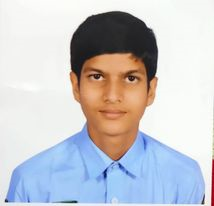
Daniyor Gulomjanov was born on August 5, 2007 in Namangan district, Namangan region.
16 years old, 10th grader of Namangan District Presidential Specialized School
Winner of the “Pride of Education” badge
Awardee of the “For Achievements in Education” badge
I liked tracing

Currently thinking
about how
if I had to split my life in two

the before
and the after

it would start with watching
Avengers Endgame
in Daly City theater
on the week after opening weekend

For you,
it was just like any day
you gave me everything.
But for me,
it was the day I noticed the cracks in my basin
the thin, hidden lines that have continued to widen
and from my point of view
I started to see
how they aligned up with yours
in a completely different way.
I wondered if they would grow into tendrils
and now I know
they would.

I am now afraid
of when, I hope
our lines might intertwine
and I won't know
where I want to end
as you pull
and push
and I don't know if its you or me

So I wonder,
if the creator teaches the created
or the creator can never end.
-----------------------------------------------------------
gently on the shoulder


i found you naked

in my bed sleeping

so quiet and i snuggled

up next to you


kissed you gently

on the shoulder

and told you

i love you


i woke up alone


a note on the pillow

saying thanks, you

need to buy some

toilet paper


i laughed and then

realized what you

used that towel for
--------------------------------------------------------
thirty some years ago


you ever remember

the time we kissed

under a bridge on

a rainy night thirty

some years ago


how all loneliness

left us


two souls determined

to take on the world


sharing cigarettes

at three in the

morning


two weeks later


you would be gone

to some other place


i never saw the

world the same

again
---------------------------------------------------------------------
in science class


earth shaking like never

before and some idiot

thinks it is the wrath

of god


and soon the sun will

give in to the moon

and some genius will

take it as a sign from

god to shoot up a school

or rob a few banks


it is pretty easy to see

who was actually paying

attention in science class

and who was busy

daydreaming about

a life they could

never ever achieve
---------------------------------------------------------
slowly come to terms


tears race down

my face as i slowly

come to terms with

my inevitable demise


i've squeezed more

talent out of apathy

than is probably

allowed


be thankful they

allowed you to

go this far


most of your types

end up in institutions

or cemeteries


i have a modest

urn in mind


ashes to be spread

in the pacific ocean


lord knows i'll

never make it

there while alive
---------------------------------------------------------------------------
a proverbial box


shooting stars have

no wishes attached

to them


fear is a disease

that can trap any

soul in a proverbial

box


sometimes i think

it would be better

to burn the fucker

down than figure

a way out


J.J. Campbell (1976 - ?) is stuck in the suburbs, plotting his escape. He's been widely published over the years, most recently at The Beatnik Cowboy, Lothlorien Poetry Journal, Black Coffee Review, The Asylum Floor and Horror Sleaze Trash. You can find him most days on his mildly entertaining blog, evil delights. (https://evildelights.blogspot.com)
The Tragedy of Gaza

In Gaza's tragedy, a tale unfolds,
Of broken dreams and stories untold.
Where children's laughter mingles with fear,
And sorrow's shadow stays near.
In destroyed streets, hearts ache and mourn,
Yet from the ashes, resilience is born.
In Gaza's situation, a request for peace,
May hope's gentle whispers never cease.

Wazed Abdullah is a student of grade nine in Harimohan Government High School, Chapainawabganj, Bangladesh.
Title: Microcloning Technique for Seedling Growth in Laboratories
Introduction: The cultivation of plants through microcloning has gained significant importance due to its numerous advantages over traditional propagation methods. This technique involves the aseptic transfer of somatic cells from a mature plant onto agar plates under controlled conditions to obtain genetically identical clones. In this study, we aimed to evaluate the feasibility of using microcloning techniques to grow seedlings in laboratories.
Materials and Methods: Five different species of seeds were chosen for the experiment, including lettuce, tomato, cucumber, bean, and pea. Each seed type was grown in soil pots in the greenhouse for two months before harvesting the mature seeds. After drying, the seeds were ground into fine powder using a grinder. A total of ten Petri dishes were prepared with sterile agar medium containing vitamins and nutrients required for cell proliferation. Agar plates were autoclaved to eliminate any contamination before use.
To initiate microcloning, somatic cells were isolated from the crushed seeds by centrifuging them at 8000 rpm for five minutes. Cell pellets were washed with sterile water and resuspended in a suitable buffer solution. Droplets of the suspension were placed onto the surface of the agar medium, followed by incubation at 27°C for 3-4 days. During this period, the cells multiplied rapidly, forming small colonies of cells called explants.
After three days, the explants were transferred to fresh Petri dishes containing appropriate media for further growth and development. The plates were maintained under controlled temperature and humidity conditions to ensure optimal growth. After seven days, the size and color of the explants were observed regularly. At fourteen days, the explants were transferred again to fresh Petri dishes, followed by incubation for another week. Finally, after twenty-one days, the explants were evaluated for morphological characteristics, such as leaf shape and size, stem thickness, and root length.
Results: The results showed successful growth of seedlings from the microcloned explants. All five species grew successfully in the lab, but there were some differences in the rate of growth and overall health between the seedlings grown from microcloned explants compared to those grown in soil pots in the greenhouse. The explant-grown seedlings had smaller leaves and stems, while their roots were longer than those of soil-grown seedlings. However, the overall health of the plants was comparable, indicating that the microcloning technique was effective in producing healthy seedlings in the lab.
Conclusion: In conclusion, our study demonstrated the feasibility of using microcloning techniques to produce seedlings in laboratories. While there may be some variations in the morphology and health of the plants, the microcloning technique offers several benefits over traditional propagation methods, including faster and more efficient production of genetically identical clones. Therefore, this technique can have significant implications in agricultural research, plant breeding, and conservation efforts. Further studies should be conducted to optimize the microcloning procedure and investigate its potential applications beyond plant propagation.