where last shall be first and first shall be last.
Storm
A storm is brewing, in the heart chaos reigns,
Noise dances wild everywhere,
The vessel, delight for timeless wanderer,
Is gliding to my soul carrying an embrace.
A depth of grief in the vast expanse,
without its shield, tears veil the path,
Sorrow emboldens the army of darkness,
captive of tears has no more tears left.
The past, a blade to the stumbling heart,
lifts the veil upon the soul’s capture,
tears are ticking away fast,
none can endure, a silent rapture.
I’m an exile of the infernal mill,
redeemed by majestic grandeur,
before the emperor’s crown… I stand still
it shines marvelous in its splendor
Unnamed song
At the limen of time,
I stand as a stranger
Here, might doesn’t intertwine
soul is a tireless passenger.
We need light, glow of glances,
human heart forgiveness,
we’re yearning a sip of repose,
seeking solace in the stillness.
Weary of darkness, we seek dawn,
I seek those eyes, precious of mine,
woken from the dead, seeking the forgotten
shadow beside me, companion of time.
Though sawn wood whispers time’s embrace,
each grain a tale, a memory traced.
Moments linger like echoes,
In the music of a rhyme as eternity grows.
Ana Petrovic was born on 05.02.1985 in Serbia, where she currently lives. She wrote a book of poems, but it is not yet published She finished medical school, VI degree. Many songs of hers are published in magazines and portals. Some of them are translated into English. She has been working on special programs with kids who have paralysis cerebralis. She likes working with kids as much as she likes poetry.
We continue to express sorrow over what’s happening in so many different parts of the world and encourage our readers to support people and the planet.
Also, we are hosting our Metamorphosis gathering again! This is a chance for people to share music, art, and writing and to dialogue across different generations (hence the name, the concept of ideas morphing and changing over the years). This event is also a benefit for the grassroots Afghan women-led group RAWA, which is organized by women in Afghanistan who are currently supporting educational and income generation and literacy projects in their home county as well as assisting earthquake survivors. (We don’t charge or process the cash, you are free to donate online on your own and then attend!)
This will be Saturday April 6th, 2-4 pm in the fellowship hall of Davis Lutheran Church at 317 East 8th Street in Davis, California. It’s a nonreligious event open to all, the church has graciously allowed us to use the meeting room. You may sign up here on Eventbrite.
Also, we encourage everyone in the California area to attend the third annual Hayward Lit Hop on Saturday, April 27th.This is a public festival with different readings from different groups throughout downtown Hayward coinciding with Hayward’s choosing a new adult poet laureate, culminating in an afterparty at Hayward’s Odd Fellows Lounge. Several Synchronized Chaos contributors will read from their work at the 2024 Lit Hop.
Now for the March 2024 issue, Literary Devices. This issue explores what we can accomplish with language. The written and spoken and signed word can be a force for education, communication, dignity, connection among people, and pride and artistry. Language is also a way to render the indescribable through metaphor or fragmented text and leave something behind on the historical record.
Maurizio Brancaleoni reflects on human history as if it were akin to fossils, engraved within stone. S. Rupsha Mitra’s poetry collection Smoked Frames, reviewed here by Cristina Deptula, dramatizes the search for one’s truest self within psychology, cultural and family history, and radical self-understanding.
On a more personal level, John Edward Culp celebrates the anticipatory joy of the first tentative flight of new love. Kristy Raines writes of the emotional union and connection of romance.
Graciela Noemi Villaverde evokes dreamy flights of fancy, memory and imagination. Borna Kekic reminisces about his old haunts and watching movies with his teenage friends.
Duane Vorhees presents a poetic and historical record that chronicles the slow dissolution of a relationship while Taylor Dibbert’s poem reflects on the stages of the inevitable dissolution of a marriage and Elmaya Jabbarova speaks to a keenly felt grief, an absence that’s like a presence.
Saidakbar Ibrohim’s essay focuses on Uzbek poet G’afur G’ulom, Yahya Azeroglu’s work chronicles Azerbaijani literary and cultural history and pride while Z.I. Mahmud analyzes the literary and poetic qualities of Rabinadranath Tagore and Anita Desai’s poetry and prose.
Munisa Azimova offers up praise for the legacy of Uzbek poet Alisher Navoi and Bakhara Shodmonqulova shows respect for her heritage and language while Janglish Khasanova describes efforts to collect and publish the works of young Uzbek writers today. Mohichehra Rustamova’s essay highlights the love of her parents and the beauty and wisdom of her country’s literary heritage. Jacques Fleury celebrates part of Black global literary history through his review of Zora Neale Hurston’s Their Eyes Were Watching God, which tells the story of a Black woman’s journey towards self-realization independent of society’s emphasis on upward mobility and respectability.
Gulyora Hashimjonova offers up a memory of connection between herself and her father out in nature in their Uzbek homeland. Don Bormon celebrates humans and nature in his elegant piece on life in a city park while Mahbub Alam illustrates the cycles of nature, the trees changing colors, Annie Johnson contributes gentle poems about love and the slow sunrise and J.K. Durick offers up various takes on human and natural history and questions our level of control over shaping our world. Noel Pratt reflects on nature and on our smallness and relative lack of influence over such a large and eternal world. J.D. Nelson draws on haiku, the traditional Japanese form often used to depict glimpses of the beauty of nature, to craft vignettes about embracing ordinary life, even when plans are interrupted. Doug Hawley’s humorous short pieces illuminate human life and human nature and highlight the importance and ingrained nature of our instinct to narrate life through story.
Christopher Bernard reviews Cal Performances’ recent production of Pina Bausch’s take on Stravinsky’s The Rite of Spring, a show grounded in connection to the cycles of the earth.
Durdona Roxmatullayeva writes of the isolation and harshness but also the natural quality of heartbreak, metaphorically represented by the season of winter, while Zarnigor Ubaydullayeva extols the beauty of spring, kindness, and maturity. Mesfakus Salahin laments large scale damage to the earth and the world’s ecosystems.
Isabel Gomez de Diego photographs large tractors on parade in front of historic buildings, showing off the interdependence of agriculture and industry.
Marjona Asadova hopes for national Uzbek pride and world peace through universal recognition of human dignity. Maja Milojkovic’s poetry concerns our ethical aspirations, encouraging us to summit the heights of becoming more decent and caring human beings.
Dusan Stojkovic speaks to the role of poetry in teaching people to navigate life and relationships while Mykyta Ryzhykh highlights the psychological effects of dehumanization and cheapening of life, human and nonhuman.
Set within middle America, Bill Tope’s story looks at how we find closeness to each other, while Stephen Jarrell Williams’s poetry explores where and how we find solace, together or alone.
Anna Petrovic’s poems navigate the landscape of intense human feeling. Sa’ad Ali’s ekphrastic poems evoking the sensibility of lesser known works by famous artists. Iduoze Abdulhafiz probes the psychology of people’s dreamlike subconscious while Joshua Martin scatters letters and punctuation on the page in concrete poetry and Clive Gresswell’s pieces offer up ruminations in rhythmical streams of consciousness while Mark Young connects fragments of thought using technology and Jim Meirose explores the experience of falling through experimental words and text. Patrick Sweeney’s one-line poems are at once familiar and exotic, esoteric and mundane.
Makfiratkhon Abdurakhmonova extols the virtues and possibility of the land of sleep. Sayani Mukherjee‘s poetry concerns a dreamtime encounter with the divine world beyond herself while Madinabonu Bobobekova offers up a dreamy meditation on getting into the headspace to write.
Emeniano Acain Somoza compares the human heart navigating life to the performance of a juggling clown.
Ayanda Dlanga’s horror piece on fear and pursuit from a monster at night could be a metaphor for growing up too quickly. Safarmurod Yuldoshev speaks to the distribution of phytonematodes in Uzbekistan’s crops in his scientific essay, illustrating how nature can be menacing as well as welcoming. Jerry Langdon speaks to the physical and psychological horrors waiting for and threatening our souls, while Daniel De Culla addresses external political oppression through his poetic dramatization of a corrupt and self important Argentine leader.
J.J. Campbell contributes fatalistic poetry about a suffocating small town while Shahrizoda Bekturdieva raises awareness of domestic violence in a variety of locales. Mirta Liliana Ramirez writes of finding her own voice and speaking up for herself and others who were wronged, while Shamisya Khudoynazarova Turumnova addresses the pain associated with shattering a person’s reputation and Ilhomova Mokhichera reflects on the inexplicability of heartbreak.
Roberta Beach Jacobson’s poems are of awkwardness, not fitting in life, while Kelly Moyer’s work represents the self-described fantasy of finally being noticed and heard. Faleeha Hassan links war and violence to the human survival instinct, stemming from a desperate and human need to be heard and validated.
Lilian Dipasupil Kunimasa addresses our freedom of choice, between good and evil or simply between different life paths. Nahyean Bin Khalid gives us the beginning of a good versus evil action tale while Gulsanam Qurbonova praises the value of continual knowledge and self-education and Azamqulova Shahina Jonibekovna talks about upbringing, education, and development as a person while Madina Fayzullaeva outlines the intellectual and personal core competencies needed to teach foreign language and Mavludaxon Moydinova’s essay describes language and word formation in the Uzbek language. Sarvinoz Mamadaliyeva outlines and celebrates educational opportunities available to young Uzbeks at Namangan State Pedagogical University.
Adhamova Laylo Akmaljon gives us an essay on achieving goals and making the most of life. Zinnira Maxammadiyeva talks about making the most of life by investing in yourself and studying as Gulsevar Xojamova urges her fellow Uzbeks to pursue education and personal responsibility.
Shahnoza Ochildiyeva presents her pathway to success as a strong and creative Uzbek girl, while Orzigul Sherova offers up her praise of science and research and learning and knowledge. Guli Jonuzoqova describes the value of education, especially for women, while Nurmanatova Aigul’s metaphorical conversational piece concerns moving forward into the future.
Ravshanbek Nasulloyev describes techniques for enhancing one’s learning and everyday skills with a foreign language while Gulyora highlights the importance of cross cultural understanding in useful business communication.
Unlike many who bemoan people’s isolation due to too much screen time, Wazed Abdullah celebrates the connective power of mobile phone technology. Marguba Lapasova describes advances in modern payment technology while Maftuna Umaraliyeva explores how the modern tourism industry has incorporated or expanded upon traditional codes of hospitality.
Shakhnoza Ulashova argues for enhancing justice in Uzbekistan by providing Uzbeks with representation in all sorts of legal proceedings.
Umid Qodir’s poem asserts the value and dignity of poetry in advancing human understanding while Jullayeva Sitora Ismailnova highlights how the true heart of a poet should tend towards empathy and compassion.
Nosirova Gavhar speaks to her devotion in her faith while Brian Barbeito offers up sketches of people who are humble yet wise.
We at Synchronized Chaos Magazine, aspire to be humble, yet wise.
The song “Wherever I Fall,” from the 2021 movie Cyrano, directed by Joe Wright, shares the experiences of soldiers who believe they will likely die soon, yet express to their families and loved ones that they are happy with how they are living their lives, given the power and the choices available to them. We hope that Synchronized Chaos embodies that ethic, that we and our contributors and our readers are making the most of all of our lives within what is available to us.
Associate Professor, Doctor of Philosophy in Biology (Phd),
Department of Zoology, Termez Staty University, Termez, Uzbekistan
Mamarajabova Matluba Tilakovna
Lecturer, Department of Zoology, Termez Staty University, Termez, Uzbekistan
Saidova Elmira Anvarovna
Lecturer, Department of Zoology, Termez Staty University, Termez, Uzbekistan
ABSTRACT:
The article provides data on the distribution of phytonematodes by representatives of the order Tylenchida (Filipjev, 1934) Thorne, 1949 in the apple orchards of the Surkhandarya region of Uzbekistan. As a result of the study, 28 species of phytonematodes were identified in the root system and root soil of apple plants. During the research, species dominated Filenchus filiformis, Psilenchus hilarulus, Ditylenchus intermedius, D.myceliophagus, D.triformis,Tylenchorhynchus cylindricus, Bitylenchus dubius, Quinisulcius capitatus, Merlnius brevidens, Rotylenchus robustus, Helicotylenchus dihystera, H.erythrinae, Pratylenchus pratensis, Paratylenchus hamatus and Ditylenchus dipsaci.
KEYWORDS: Phytonematodes, apple orchards, order Tylenchida, root system, rhizosphere, phytohelminths of nonspecific pathogenic effect, phytohelminths of specific pathogenic effect.
INTRODUCTION: Phytoparasitic nematodes among parasites and pests of wild and cultivated plants are not the last in nature. The Tylenchida order occupies a special place in the phytohelminthology system, since it contains the central and most important group of phytonematodes, represented by typical phytohelminths: pathogenic forms that cause plant diseases -phytohelminthiasis.
When studying some crops and their nematological fauna, it turns out that yield losses are determined not only by the harmful activity of the “stylet nematodes” of the tylenchid order. The forms of this group of nematodes are also involved in the processes of saprobiotic decay and expand, the volume of the affected areas of plant tissue as a result of vigorous inoculating function [9, 446 p.]. On the territory of Uzbekistan, in particular the Surkhandarya region phytonematodes of apple orchards were studied by E.T.Turaev, T.S. Skarbilovich [1, pp. 58-61.], Sh.Kh. Khurramov, E.T. Turaev [2, p. 115-124.].
MATERIALS: To study the distribution in apple orchards of the Surkhandarya region of Uzbekistan in the period from 2020 to 2021. We collected phytonematodes from the root soil and root system of plants in shirkat farms from the territory of the Surkhandarya region of the Republic of Uzbekistan. The studies were carried out by the generally accepted route method [9, 446 p.]. During the phytohelminthological study, 700 samples of soil and root system of apple plants were collected and analyzed.
METHODS: Phytonematodes were removed by the Berman funnel method and fixed with a 4% formalin solution. Enlightenment of nematodes was carried out in a mixture of glycerin with alcohol (1: 3), and permanent preparations on glycerin were prepared for in-office processing of the material according to the Seinhorst method [10, P. 67-69.]. Soil samples for the presence of cysts forming nematodes were usually analyzed according to the standard Decker method [3, 445 p.].
The species composition of nematodes was studied under an MBR-3 microscope. To determine the species, we used morphometric indicators obtained according to the generally accepted De Man formula [4,104 p.] In its modification according to Micoletzky [6, 650p.]. The degree of dominance of phytonematodes in plant and soil samples was determined from the percentage state of individuals of certain species to the number of all detected by Witkowsky [5, – 53 p].
RESULTS: For the entire period of phytohelminthological studies of apple orchards on the territory of the Surkhandarya region of Uzbekistan, representatives of the order Tylenchida, we identified 28 species of phytonematodes.Discovered species belonging to 3 suborders (Tylenchina, Criconematina, Hexatylina), 5 superfamilies (Tylenchoidea, Dolichodoroidea, Hoplolaimoidea, Criconematoidea, Anguinoidea), 7 families (Tylenchidae, Dolicilenidae, Dolichodoridae, Tylenchorhynchinae, Psilenchinae, Rotylenchinae, Rotylenchoidinae, Pratylenchinae, Paratylenchinae, Anguininae, Nothotylenchinae) and 14 genera (Tylenchus, Filenchus, Aglenchus, Tylenchorhynchus, Bitylenchus, Quinisulcius, Merlnius,Psilenchus, Rotylenchus, Helicotylenchus, Pratylenchus, Paratylenchus, Ditylenchus, Nothotylenchus).
PHYTOHELMINTHS OF NONSPECIFIC PATHOGENIC EFFECT: In our material, they are represented by 11 species: Tylenchus davainei Bastian, 1865 was identified in the roots and rhizosphere of apple plants in the Saryassi, Muzrabad, Jarkurgan and Angora regions of the Surkhandarya region. Filenchus filiformis (Butschli, 1873) Meyl, 1961 was registered in the roots and rhizosphere of apple plants in Baysun, Denau, Sumkurgan, Saryassi, Termez, Muzrabad and Angora districts of Surkhandarya region. F.infirmus (Andrassy, 1952) Andrassy, 1976 was found in the rhizosphere of apple plants in the Angora and Termez districts of the Surkhandarya region. F.leptosoma (De Man, 1880) Andrassy, 1972 was found in the roots and rhizosphere of apple plants in the Dzharkurgan, Bandykhan and Angora districts of the Surkhandarya region.Aglenchus agricola (De Man, 1884) Meyl, 1961 was found in the rhizosphere of apple plants in the Jarkurgan, Termez and Muzrabad districts of the Surkhandarya region.
Psilenchus hilarulus De Man, 1921 found in the roots and rhizosphere of apple plants in Denau, Baysun, Kumkurgan, Muzrabad and Angora districts of Surkhandarya region.D.intermedius (De Man, 1880) Filipjev, 1936 was found in the roots and rhizosphere of apple plants in the Uzun, Altynsai and Angora districts of the Surkhandarya region.D.myceliophagus Goodey, 1958 was found in the roots and rhizosphere of apple plants in the Altynsai, Saryassi, Dzharkurgan, Muzrabad,
Terme and Angora districts of the Surkhandarya region.D.triformis Hirshmann et Sasser, 1955 was registered in the roots and rhizosphere of apple plants in the Jarkurgan, Bandykhan and Muzrabad districts of the Surkhandarya region.Nothotylenchus acris Thorne, 1941 was found in the roots and rhizosphere of apple plants in the Jarkurgan, Termez, Saryassi and Muzrabad districts of the Surkhandarya region.N. exiguus Andrassy, 1958 was found in the rhizosphere of apple plants in the Angora, Dzharkurgan and Termez districts of the Surkhandarya region.
PHYTOHELMINTHS WITH A SPECIFIC PATHOGENIC EFFECT: In our research, they are represented by 17 species: Tylenchorhynchus cylindricus Cobb, 1913 was recorded in the roots and rhizosphere of apple plants in the Angora, Denau, Dzharkurgan and Termez districts of the Surkhandarya region.T.brassicae Siddiqi, 1961 was found in the roots and rhizosphere of apple plants in Baysun, Denau, Kumkurgan, Saryassi, Dzharkurgan, Muzrabad and Angora districts of Surkhandarya region Bitylenchus dubius (Butschli, 1873) Siddiqi, 1986 was registered in the roots and rhizosphere of apple plants in the Baysun, Denau, Kumkurgan, Saryassi, Dzharkurgan, Muzrabad and Angora regions of the Surkhandarya region.
Quinisulcius capitatus (Allen, 1955) Siddiqi, 1971 was found in the roots and rhizosphere of apple plants in the Termez, Jarkurgan, Muzrabad and Angora districts of the Surkhandarya region.Merlnius brevidens (Allen, 1955) Siddiqi, 1975 was recorded in the roots and rhizosphere of apple plants in Baysun, Denau, Kumkurgan, Saryassi, Dzharkurgan, Muzrabad and Angora districts of Surkhandarya region. Rotylenchus robustus (De Man, 1876) Filipjev, 1934 was found in the roots and rhizosphere of apple plants in the Termez, Denau, Kumkurgan, Saryassi, Dzharkurgan and Angora regions of the Surkhandarya region.
Helicotylenchus dihystera (Cobb, 1893) Sher, 1961 was found in the roots and rhizosphere of apple plants in the Termez, Saryassi, Dzharkurgan and Angora districts of the Surkhandarya region.H.digonicus Perry, 1959 was recorded in the roots and rhizosphere of apple plants in the Termez, Saryassi, Dzharkurgan and Angora regions of the Surkhandarya region.H.erythrinae (Zimmermann, 1904) Golden, 1956 found in the roots and rhizosphere of apple plants in the Shurchinsky, Baysunsky, Altynsai, Kumkurgan, Saryassi, Uzun, Bandykhan, Sherabad, Termez, Muzrabad and Angora regions of the Surkhandarya region. H.multicinctus (Cobb, 1893) Golden, 1956 was found in the roots and rhizosphere of apple plants in Sherabad, Termez and Angora districts of Surkhandarya region.
H.pseudorobustus (Steiner, 1914) Golden, 1956 was found in the roots and rhizosphere of apple plants in the Dzharkurgan, Termez and Angora districts of the Surkhandarya region.Pratylenchus pratensis (De Man, 1880) Filipjev, 1936 found in the roots and rhizosphere of apple plants in the Baysun, Denau, Altynsai, Kumkurgan, Saryassi, Bandykhan, Dzharkurgan, Termez, Muzrabad and Angora regions of the Surkhandarya region.P.crenatus Loof, 1960 was found in the roots and rhizosphere of apple plants in the Altynsai, Kumkurgan, Saryassi, Dzharkurgan, Termez, Muzrabad and Angora regions of the Surkhandarya region. P.penetrans (Cobb, 1917) Filipjev et Sch.
Stekchoven, 1941 was found in the roots and rhizosphere of apple plants in the Kumkurgan, Dzharkurgan, Termez, Muzrabad and Angora districts of the Surkhandarya region. Paratylenchus bukowinensis Micoletzky, 1922 was identified in the roots and rhizosphere of apple plants in the Kumkurgan, Saryassi, Dzharkurgan, Termez and Angora regions of the Surkhandarya region. P.hamatus Thorne et Allen, 1950 was found in the roots and rhizosphere of apple plants in Denau, Jarkurgan, Termez, Muzrabad and Angora districts of Surkhandarya region. Ditylenchus dipsaci (Kuhn, 1857) Filipjev, 1936 was recorded in the roots and rhizosphere of apple plants in Denau, Altynsai, Saryassi, Uzun, Termez and Angora districts of Surkhandarya region.
DISCUSSIONS: During the studies carried out from phytohelminths of a nonspecific pathogenic effect, the species Filenchus filiformis, Psilenchus hilarulus, Ditylenchus intermedius, D.myceliophagus, D.triformis were identified in numerous specimens in the roots and rhizosphere of apple plants. Among phytohelminths with a specific pathogenic effect, the dominant species were Tylenchorhynchus cylindricus, Bitlenchus dubius, Quinisulcius capitatus, Merlnius brevidens, Rotylenchus robustus, Helicotylenchus dihystera, H.erythrinae, Pratylenchus pratensis, Paratylenchus hamatus and Ditylenchus dipsaci.
CONCLUSION: For the entire period of phytohelminthological studies of apple orchards on the territory of the Surkhandarya region of Uzbekistan, representatives of the order Tylenchida, we identified 28 species of phytonematodes (phytohelminths of nonspecific pathogenic effect-11 species, phytohelminths of specific pathogenic effect-17 species).
The results of the phytohelminthological study showed that phytonematodes of the order Tylenchida cause serious diseases in apple orchards in the Surkhandarya region of Uzbekistan and cause great economic damage to the productivity of these crops. Therefore, the study of the distribution and species composition, bioecological features and substantiation of measures to combat these pests is of great scientific and practical importance in the fruit growing of the Republic of Uzbekistan.
REFERENSES: 1) Тураев Э.Т., Скарбилович Т.О. Динамика фауны нематод яблони в Сурхандарьинской области Узбекистана. Бюл. ВИГИС, 1981.1/31. С. 58-61. 2) Хуррамов Ш.Х., Тураев Э.Т. К вопросу изучения нематод плодово-ягодных культур юга Узбекистана. Узбекский биологический журнал. 1978. С.115-124. 3) Dekker H. Nematodes of plants and the fight against them. – M. Kolos, 1972. 445 p. 4) De Man J.G. Die einheimischen, frei in der reinen erde und im siissen wasser Lebenden Nematoden. – Tijdschr // Nedrl. Dierk. Vereen, 1880. – V.5. – 104 p. 5) Witkowski T. Struktura zgrupowania nicieni zyjacych w glebie upraw rolniczych // Stud. Soc. Sci. Torum. 1966. T.8. – No.3. – 53 p. 6) Micoletzky G. Die freilebenden ErdNematoden, mit besonderer Berucksichtigung der Steiermark under Bukowina, zugleich mit einer Revision samtlicher nicht mariner, freilebender Nematoden in Farm von esenus– Beschreibungen und Bestimmungsschlusselh // Arch. Naturgesch. -1922. Ant. A. – Vol. 87. – 650 p. 7) Kiryanova E. S., Krall E. L. Parasitic nematodes of plants and measures to control them. – Moscow: Nauka, 1969. – Vol. 1. 447
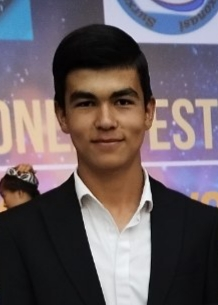
Today, the Internet has opened the door of great opportunities to people. It depends on who uses it and how. We have such young people who use it effectively in the pursuit of their dreams and aspirations.one of our young people, Behruz Toshtemirov from Surkhandarya, has been constantly searching for creative young people like him, and has done exemplary work in order to introduce them on the “Jakhan” scale.
So far, more than 200 of Uzbekistan’s best creative examples have been placed on the Internet and print media, contributing to their promotion and growth at the world level. Behruz Toshtemirov is the winner of the “Active Researcher” badge as a result of his research. He works tirelessly to live up to that title. Uses available capabilities. and the results are happy. He is the author of books entitled “The Value of the Motherland”, published in 2022 by the publishing house of Uzbekistan, and “The Place of Theater in Life” published by the publishing house of the Russian Federation in 2023.In 2023, the American publishing house “Autumn Rain”, and in early 2024, the publishing house of the Russian Federation created the anthologies “Silver Winter Refreshment” and “The Artists I’m Looking For”.
Behruz Toshtemirov
It is noteworthy that all these works were collected online, edited and published using the Internet. A young artist is constantly on the move, constantly looking for new ideas. poems, scientific and artistic articles are constantly published in regional, regional, republican and international newspapers and magazines. By the way, Behruz Toshtemirov, the anthology “Creators I’m Looking For” recently selected, edited and printed with the help of Russian publishers includes samples of the creative works of 25 artists. Among them, there is a place for my biography with my picture and my story “Khazon”. Fortunately, the book is being posted on the Internet and sold. It is also planned to pay pen fees to the participating authors from the collected funds.
Right now, preparations are being made for the Jahanshumul pageant, which will be held in cooperation with Turkey, with such anthologies. I wish him great success in his endeavors…
Those Long Odds


As soon as someone

Moves out of

The marital home,

Those long odds

Get a lot longer.


Taylor Dibbert is a writer, journalist, and poet in Washington, DC. “In the Arena,” his third full-length poetry collection, is due out in April.
Once upon a time, in the very heart of the Village of Greenwich, there lived a performance artist, known for her vision, manifested in striking stage pictures and bold feminist statements. She would tell you that her art was not just her work; it was a calling, emerging out of her journey from small-town midwestern girl to tour de force, with periods of victim and survivor somewhere in between.
Having lucked into a rent-controlled apartment in the ‘90s, she kept her needs modest so that she might enjoy every bit of serendipity that came her way. And, oh, did it ever. Learning early on that she could give herself a fuller life than “a good man” might, she relished in her freedom to travel the globe, staging performances, be they sanctioned or rogue, speaking her truth in a manner so memorable as to land her on the cover of many a magazine.
Then, there came a time that she found herself sidelined with mysterious symptoms that no doctor could diagnose. Thus, the hours that were once spent beneath the Washington Square Park arch, advocating for the visibility of women, the neurodivergent and the gender non-binary were whiled away in her double bed, reading and dreaming up pieces that she began to wonder if she’d ever have the opportunity to perform.
Ever the resilient one, she buoyed herself with fresh flowers, dinners of Instacarted supermarket sushi and Netflix Originals; yet, as time passed, the phone seldom rang, for her friends and colleagues quickly tired of asking after her health. Once a handful of invitations had been declined, they stopped coming. The magazines and theatres, of course, simply had no interest in her beyond the impact of her work.
On a visit to one of the doctors who found himself at a loss as to how to help her, she merely shrugged when he asked how she was doing.
“I feel like I’m disappearing,” she said.
“Perhaps an antidepressant would help,” he suggested. “I’m happy to write you a prescription.”
“I appreciate that, Doctor. I really do. Of course, I was happier when I was living a full life. But, the facts are what they are. I have an undiagnosed illness, and, well, I’m not as young as I once was.”
“That’s nonsense. You’re the same woman who’s always taken the world by storm,” he assured her.
“Maybe so, but that doesn’t equate to feeling seen.”
Over the next few months, she put on a few pounds and her complexion grew quite pale as it became more difficult to make her way from her third-floor walkup down to the concrete stairs that overlooked the street. And, not but a breath after her fiftieth birthday, which she celebrated with her old-lady cat, Marina Abramović, by lighting a candle atop their tuna salad, her periods stopped.
Done. Fini. Once and for all.
The next morning, when she rose to brew herself a cup of gingered black tea, Marina Abramović began to weave her way through the woman’s legs, only to find that they were less than solid. Taken aback, the woman’s treasured feline brought her paw to her heart, then dashed off, mewling as she took shelter in the cubby of her carpeted tree.
“Well, okay, then,” the woman scoffed with a roll of her eyes. “Be that way.”
Once the tea had steeped, the woman tossed the spent leaves into the sink, and after an invigorating first sip, made her way to the shower.
Setting the teacup next to the tap, she fingered the yellow stains in the porcelain, where more than a few cigarettes had burned down while applying her makeup for any one of those old nights on the town.
Then, she turned the shower on to warm, whipped off her nightie and tossed it into the hamper. An expert shot.
Taking another sip of her tea, she glanced toward the mirror, hesitantly, of course, for she refused to accept the lack of fullness within her breasts, only to find that she was . . . well, ever so slightly transparent.
And made a mental note to talk to the doctor about the Ambien.
The heat of the shower worked wonders on her muscles; and, as she stepped out onto the bath mat, she found Marina Abramović waiting on the toilet seat, eager to nuzzle her knees as if in apology.
“No worries, Girlfriend,” she said, mussing the loose skin on her scruff.
It all happened, in the grand scheme of things, gradually. Relativity being relative, after all. And, not a week later, the woman found herself to be as invisible as a princess’s pantyline.
Yet, Marina Abramović, fortunately, seemed to have worked through her issues. Though she wasn’t quite sure where to rub, she managed to hold vigil over the woman’s form, regardless.
“I’m not dying, for Goddess’s sake,” the woman protested as the cat remained glued to her undelineated side. “We just need to play the circumstances to our advantage.”
And that’s when performance art became more than performance. It became magic.
Over the next couple of months, the woman and Marina Abramović crafted a piece that made all of her earlier works look like child’s play.
And, when it was ready, the woman placed a call to Désirée la Bombacere at the Fiefdom of MoMA, advising her of what they had to offer.
“I thought you’d retired,” Ms. la Bombacere said upon her return call.
“Who told you that?”
“Well, we just assumed–.”
“Yeah, that’s never a good idea.”
Thus, on April 7th of 2024, the woman and Marina Abramović presented “The Pussy Whip,” a work that would go down as the most influential one-cat show in history. Those courageous enough to take a seat within the audience departed with their greatest fears and desires exposed, as well as their judgments and dismissals, for in a very short span of time, they witnessed the grains of their own depravity, which they worked so hard to deny; and, as they exited the space with their panties either wet or soiled, one couldn’t help but to notice distinct feline bite marks gracing each ankle.
And, from that moment forward, no one dared to disregard a pussy, no matter what her age, her physical limitations or her lived experience, ever again ‘til the very end of time.
                                     Part 1: The Heist

In the dark alleys of the city, two figures walked quickly, their steps quiet on the sidewalk. One was Max, a notorious criminal known for his slick moves and silver tongue. The other was Detective John Reynolds, a seasoned cop who was well-liked for his intellect and toughness.

Max grimaced as he opened the jewelry store door and disabled the alarm. “This is going to be easy,” he said to himself.

Reynolds watched Max from a distance, narrowing his eyes as he waited for the moment to strike. He had been keeping an eye on Max for weeks. As Max slipped inside, Reynolds radioed for backup and followed suit, slipping quietly into the store.

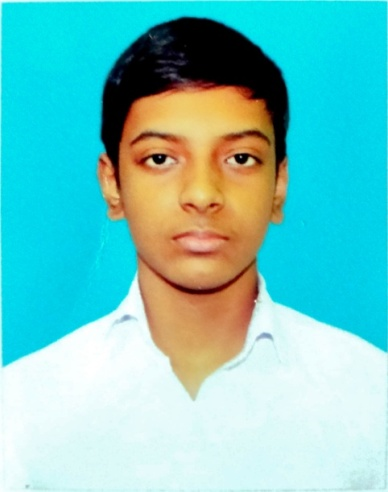
Nahyean Bin Khalid is a student of grade eight in Harimohan Government High School, Chapainawabganj, Bangladesh.