Part 1: The Heist

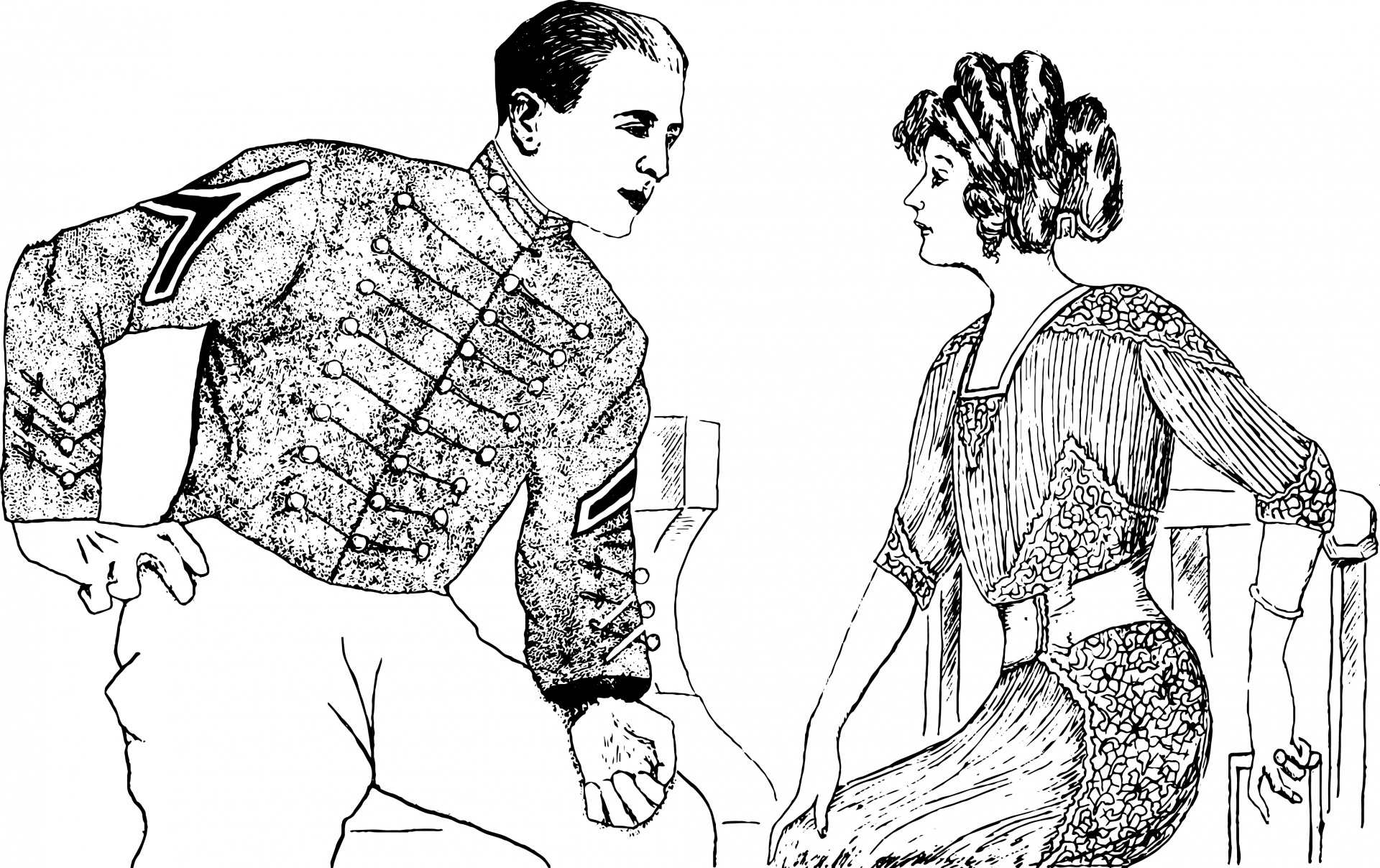
In the dark alleys of the city, two figures walked quickly, their steps quiet on the sidewalk. One was Max, a notorious criminal known for his slick moves and silver tongue. The other was Detective John Reynolds, a seasoned cop who was well-liked for his intellect and toughness.

Max grimaced as he opened the jewelry store door and disabled the alarm. “This is going to be easy,” he said to himself.

Reynolds watched Max from a distance, narrowing his eyes as he waited for the moment to strike. He had been keeping an eye on Max for weeks. As Max slipped inside, Reynolds radioed for backup and followed suit, slipping quietly into the store.

Nahyean Bin Khalid is a student of grade eight in Harimohan Government High School, Chapainawabganj, Bangladesh.
First of all, letting everyone know that we’ve picked a date for the Hayward Lit Hop, a community festival with different readings and events up and down B Street in Hayward, CA.
The third annual Lit Hop will take place the afternoon of Saturday, April 27th and we encourage everyone reading this who is in the area to attend! More information and a video clip showing off the Hop and how it works here on our website.
Secondly, Clare Songbirds Publishing House (CSPH) is launching its inaugural Elizabeth Royal Patton Memorial Poetry Competition. More about poet and English teacher Elizabeth Royal Patton here.
The Elizabeth Royal Patton Memorial Poetry Competition will be blind judged by a panel of five judges and cash prizes will be awarded to the top three poems. An anthology will be published with all the poems that make it through the first round of judging and each poet with an entry in the anthology will receive a free copy. All submissions must be sent via Submittable and the full rules and the link are here. The submission period will be from February 1 through April 18, 2024.
Now, for this month’s second issue, Grief and Joy. These feelings coexist here in abundance.
Nosirova Gavhar offers up a playful and happy glimpse of winter while windswept canyons drive E.T.’s speaker to silence.
Nigora Togaeva revels in the natural and cultural beauty and richness of the Uzbek region of Kashkadarya. Sayani Mukherjee’s work radiates the beauty of a cluster of golden poppies. Mahbub Alam remembers the wondrous scenes he’s seen in person and in his mind’s eye.
Peter Magliocco also speaks of memory, and aging and fading romantic and sexual desire while J.D. Nelson expresses his quiet weariness facing everyday life and its mishaps.
Taylor Dibbert reflects on the life of his beloved dog. Isabel Gomes de Diego surrounds us with our mortality with her images of the Chapel of Bones in Evora, Portugal while Bill Tope’s taut horror story presents retribution for thefts from beyond the grave.
Stephen Jarrell Williams speaks of different types of loss: the lack of physical and relational and spiritual homes, a departure on a train, and the fading of sunshine. George Gad Economou shares his booze-fueled dreams of leaving the past behind to move into the future.
Faleeha Hassan’s speaker plods along on a heavy wagon ride weighed down by sorrow. Safarova Zarnigor expresses the angst of being an old soul looking for love in a new world while J.J. Campbell searches for connection in a lonely town and stage of life.
Eva Lianou Petropolou laments how the children of Gaza will come of age in a time punctuated by war. Mykyta Ryzhykh speculates on unheard perspectives and untold stories buried under rubble. John Mellender relates a night in jail after an intense political protest in mock-epic verse while Daniel De Culla makes a mockery of the obscenity of war and power-hungry leaders. Walter Shulits also lambastes American political and economic power brokers in his epic series of poems while Ian Copestick blasts racism in law enforcement.
Sabrid Jahan Mahin urges us to be strong in a harsh and selfish world. Gulsanam Qurbonova encourages readers to think positively and avoid useless gossip while Lobar Davronova encourages moderation in the use of social media.
Yoldosheva Farangiz illustrates the transformation of a boy guided away from a life of mindless distraction to one of study. Guzal Sunnatova thanks her sister and her teacher for their encouragement to write and study poetry.
Tolquinboyeva Odinaxon writes of awakenings, moving from a hot summer to a fresh new autumn school year.
Continuing with the school theme, Sevinch Tulquinova describes technical tools that can help college students learn language. Meylieva Zebiniso discusses psychological and pedagogical teaching techniques. Madina Fayzullayeva points out resources to help students organize and cite research papers. Baratov Quvonchbek encourages students to learn fundamentals of media literacy to be able to evaluate information. Maftuna Umaraliyeva discusses methods of helping English language learners grasp idioms while Asilabonu Sobirova outlines ways to help English language learners improve their reading skills.
Alan Catlin constructs numbered short verses that link ideas and fragments in unusual, but resonant, ways. Vernon Frazer joins and juxtaposes fragments to suggest nebulous processes: the slow destruction of a reputation, the passage of human history. Patrick Sweeney crafts thoughtful one-liners that request multiple readings.
Shahnoza Ochildiyeva exults in the many wonderful summer activities available to Uzbek school children. Gulasal Nematjanavna highlights the optimism of and the opportunities open to Uzbekistan’s fresh generation of youth leaders.
Bangladeshi poet Muntasir Mamun Kiron extols the glorious historical tradition conveyed in the Bangla language. Barnokhan Ruziyeva describes academic programs in linguistics and translation that propel Uzbekistan into thought leadership in those fields.
Zuhra Ruzmetova finds nurturance in the bosom of her motherland of Uzbekistan. Others find care and companionship in more personal relationships.
Lilian Dipasupil Kunimasa celebrates life and friendship in pieces that peal with gentle musicality. Annie Johnson evokes the sweet comfort of sleep and memories of love and care.
Elmaya Jabbarova evokes the mysteries of how love begins, and how it fades. Graciela Noemi Villaverde suggests that passionate love can bring us to a form of divine eternity in our own minds while Maja Milojkovic compares deep, spiritual love to religious practice. Kristy Raines’ speaker describes a close intimate relationship that has brought her comfort and peace.
Ahmad Al-Khatat urges men who have found true love to appreciate the women dear to them. John Edward Culp invites listeners to hear love’s eternal story. Duane Vorhees describes sensuality and human thought and feeling through clever metaphor.
Jerry Langdon crafts a love poem that resembles a pop song, along with describing serious depression.
Diyora Kholmatjonova poetically grieves her departed mother while Sevinch Omonova encourages hers to find happiness in life. Nilufar Tokhtaboydva urges respect for parents due to the countless ways parents care and sacrifice for their children.
Gulsevar Xojamova provides a poignant reminder that not everyone has parental support while Akramova Shiringul Furqatjon illustrates the miracles that can happen through compassion and noticing the suffering people around us.
Nilufar Ergasheva illustrates her family and village navigating the change of seasons and a long winter, while Christopher Bernard’s poem points out small ways people hold onto warmth and the hope of spring in a bleak midwinter.
Mark Young’s “geographies” suggest maps and construction and our built and natural environments while Brian Barbeito finds the extraordinary in seemingly daily natural scenes, drawing on alien and spiritual metaphors.
We hope that this issue will help you find the beauty and grace in daily life, where pain, ecstasy, comfort and wonder all make up the panoply of our experiences.
The usage of state-of-the-art E-learning tools in teaching foreign languages
To’lqinova Sevinch O’tkir qizi
sevinchtulqinova1621@gmail.com Student of Uzbekistan State World Languages University
ABSTRACT
We are living in a world where technology is omnipresent. Due to the ubiquitous presence of technology the pedagogy of teaching methodology has also undergone a rapid-change. The phrase “e-Learning” or “Technology in Education” has become prevalent in every educational environment. Infusing technology into education is really important as it needs to contemporary learners. The classroom environment, today, is completely distinct from the traditional classroom. The traditional methods which are mainly based on lecturing and note learning reduce English language learning to mechanical memorization and miserably fail in developing English language as a skill among the learners. New technologies like Internet, YouTube, Skype, tweeter, blogs, mobile phones, interactive boards and many more have added not only stimulus but also learners’ engagement and true interactivity within the classroom. The teachers can engage the learners to become skilled at English Language by using the innovative ELT techniques like English songs, movie clippings, dramatics, advertisements, sports commentaries and many more. This paper emphasizes on the need to make English language lessons easy and enjoyable through innovative ELT methods.Thus, this study discusses the availability of various tools of ICT and their practical uses. We live in an era of information explosion and e-learning tools are changing the world we live in and the way we learn to live.
Keywords: Language, Methods, Information Technology, Internet, ICT and ELT techniques
The issue of learning languages is very indispensable for today. Foreign languages are socially demanded, especially in these times, when the progress in science and technology has led to an explosion of knowledge and has contributed to an overflow of information around the world. . Foreign languages are needed as the main and most efficient means of information exchange of the people of our planet. Individuals have been integrating into the world community and the problem of learning English for the purpose of communication is especially urgent today. To know English is absolutely necessary for every educated person, for every good specialist. Learning an English language is not an easy thing. It is a long and slow process that takes a lot of time and patience to prosper. Reading books and articles in the original language, listening to the English channels, BBC, TED talks and also communicating with the English speaking people, natives will facilitate more to people comprehensively. . When learning a foreign language you not only learn the culture and history of the native speakers but also you could have a profound grasp of economic, social relations, law and legislation of this country.Nowadays using of information technology at the English lessons is also very important. Our article is about how English language can be learned at classrooms on the bases of information technologies. Information technology provides teachers an endless choice of multimedia, software, applications and devices with which to create more exciting, interactive lessons. The traditional English lecture-based lesson, while effective to a point, does not stimulate every type of learner. By adding a dimension to their lessons, English teachers have the opportunity to engage more students and lead a more involved, energetic class. Digital advancement is a major advance in information technology making it easier for faculty and students to complete tasks. Teachers can enter grades and assignment updates online, rather than in a paper grade-book. Libraries with a digital database in place of a traditional card catalog make their resources available for students to search anywhere with an Internet connection. Staff members can find and send transcript information and other records quickly by accessing a digital filing system, saving time and paper. As modern devices like tablet computers, laptops and projectors develop more of a presence at the English lessons. It becomes more important for educators, students and parents to understand the role of information technology in studying English today. New technology is not only a subject in and of itself, but can also be applied to any subject, enhancing the learning experience and equipping students to join an increasingly global workforce. Information and communication technology opens the doors for better distance learning programs, allowing those in disadvantaged areas to have access to the same education as the privileged. Because this technology makes information accessible from nearly any location with a mobile device or laptop, courses can be more flexible, meaning those with full schedules who may not have the time or opportunity to further their education can choose to enroll in courses on-line and complete assignments on their own time. Interactive audio and video allow real time communication using phones and computer at the English lessons. Voice over Internet Protocol enables a person’s voice to be transmitted through an Internet connection. Voice and multimedia presentations can also be delivered to a dispersed class with questions and answers taking place in realtime.
Conclusion
At the contemporary time, information technology is integral part of education in the twenty-first century. When teachers used them correctly in the classroom, technology can allow students to experience situations and circumstances that the students of 20 years ago could only dream about. Through technology, books and figures can suddenly become alive and applicable to the real world. In addition, information technology provides an even greater avenue for interaction between teacher and students. At the English lessons different videos, exercises, games, listening drills may be done. Information technology makes learning English available to a wider range of learners as well.
References [1]Byrne, Donn, (1997).Teaching Oral English, New Edition. – Longman.
[2]Harmer, Jeremy, (1991). How to Teach English. – Longman. Heaton, J. B., (1991)Writing English Language Tests, New Edition. – Longma.
[3]Lowes, Ricky, and Target, Francesca, (1998). Helping Students to Learn. – London: Richmond Publishing.
[4]Lewis M. (1997). Implementing the Lexical Approach. – N.Y.: Language Teaching Publications.
[5]Schmitt N. (2008).Vocabulary in Language Teaching. – Cambridge: Cambridge University Press.
[6]Rost, Michael,(1994) Introducing Listening. – Penguin English. [7]Rost, Michael,(1991) Listening in action. – Prentice Hall International.
It was the witching hour and I opened the window and watched and listened to the leaves tumble through the streets like restless spirits. I was listening intently to a transcript by the Pleiadians and they had much to say about the universe. They mentioned that a person should be constantly praying, praying all the time, as a matter of habit, if even in the background. I inhaled the cool fall air and prayed but also prayed that my headache would go away. Soon enough the sky would begin to brighten, but it would happen slowly. Not an alien mothership, but the natural cycle of night becoming dawn…
The Bright Sun
…later inside the day, I ate with my beloved in a Mexican restaurant. There was nobody there and it was dark and calm, for the sun was too bright and even blinding outside. I liked the coffee but did look briefly at the drawings of margaritas on the wall. There were some skeleton statues on a ledge and I thought of Malcolm Lowry and his books and his life and also his death. He had a book I did not read, a book called As Dark as the Grave Wherein my Friend is Laid. Outside, after, I am of two minds about the sun. It is dangerous for the drivers can’t see, yet it is nature, the way of nature. Some birds gather on a long telephone wire. I want to stay and watch them but the world moves fast, and I also have things to do.
The Nerd Unseen
I can see the nerd’s soul. It is better than others, and quiet and actually has a lot of happiness. Well adjusted. The cool adults are not cool at all. They are ‘of the world,’ as the Christians say. There is music playing somewhere and I can hear the wind. The day is winding down. Red brick houses wait in rows. I, too, will find and wear spectacles. It’s getting windy. I long for the night. Inside the night will be a time to read and write, to think and meditate. And to pray like the Pleiadians said and which I do anyhow. The nerd will be okay, was always okay. Sweater weather. Autumnal colours. Book reading. Diary writing. Quiet spiritual and intellectual ascension. The nerd by their character transcends the world, and the world is full of war, deceit, lies, disappointments. The world is rife with trouble.
Jesus Made a Prayer
It is the witching hour again. I re-open the window. Something dawns on me before the dawn. Jesus made that prayer. I say the words slowly. The tarot card reader is reading and sometimes uses profanities yet she is highly and sometimes completely accurate. She is of the light. But the prayer. -Our Father, who art in heaven, hallowed be thy name. Thy kingdom come, they will be done, on earth as it is in heaven…- and I go slowly through the rest. For some reason it makes more sense then than it ever had. An internal heartfelt sense. I fall asleep. When I wake up something heavy or melancholic has lifted. The day is new. Though a bit far off, in distance and in time, the lake birds will silhouette themselves in the evening firmament over the lakes.
valley
the valley is still there, mostly unknown for I can see the tracks. some souls, sometimes, I guess go there. the autumnal leaves cover most of the ground whilst old fallen trees expose root systems and one thinks of some quietly strange and mysterious world of elves or faerie folk, devas or other nature spirits. how silent that valley world can be. I know the routes into it, and the ones out. you can climb a steep way, and be out shortly, or go long meandering routes and take your time, ascending like a gradual but confident spiritual journey. in the winter it shall be covered in a million or more flakes of snow that glisten in the sun or else don’t, for the saturnine lack of light in the overcast afternoon, the bully clouds conspiring to keep out the brightness. spring rains,- little wildflowers pop up, declaring their existence and life and song and love. summer,- heat and the sudden breeze briefly relieves the journeying. yes the valley is still there, and as the world outside continues its drama and mistakes, it’s pride and error, it’s deceit and unchecked ambition, valley remains stoic, sagacious, maybe even sacrosanct like an undisturbed guru -spiritual master. ah valley, it was nice to see you again.
              Мy country

The sun shines in the blue sky
Casting light shines magic
Wakes up early in the morning
Giving love to mother earth.

My independent land is my motherland
Blooming, living forever
Let us play and sing in your bosom
Remember every breath you take.

Ruzmetova Zuhra Vyacheslavovna November 30, 2006 I was born in the city Urgench, Khorezm region. There are 6 of us in the family my father my mother my brother my twin and me. I am currently a student of the 11th grade of school no 14 in Urgench city. I appeared on the international website "synchronized chaos" and I am the coordinator of the this international site. My poems have been recognized in more 10 countries. Every week I am guest on Khorezm TV channel. I am the holder of badge "For the international Services"🏅by the bi wing poets writers Association. I am the winner of competitions of more than 100 national and international organizations. I have a B2 certificate of knowledge of the Turkish🇹🇷 language. I have many future dream goals.
Winter

The fury of winter stirs,
It's snowing, white snow
The wind increases to blow,
Frost is coming in a hurry.

Filling the earth and sky
This soft snow is scattered.
The tree bowed its head,
Strange snow spread.

On the face of the long corridor
Bent trees,
On the stooping branch,
Birds twitter.

It shakes in a row,
Quiet wind branches,
Snowflake hits,
Stroke the faces.

Caressed by the soft wind,
Laughing in a circle
In the winter air,
It's fun to spend time.

Nosirova Gavhar was born on August 16, 2000 in the city of Shahrisabz, Kashkadarya region of Uzbekistan. Today, she is a third-year student of the Faculty of Philology of the Samarkand State University of Uzbekistan. Being a lover of literature, she is engaged in writing stories and poems. Her creative works have been published in Uzbek and English.

In addition, she is a member of «All India Council for Development of Technical Skills», «Juntos por las letras» of Argentina, «2DSA Global Community». Winner of the «Korabl znaniy» and «Talenty Rossii» contests, holder of the international C1 level in the Russian language, Global Education ambassador of Wisdom University and global coordinator of the Iqra Foundation in Uzbekistan. «Magic pen holders» talented young group of Uzbekistan, «Kayva Kishor», «Friendship of people», «Raven Cage», «The Daily Global Nation», Argentina;s «Multi Art-6», Kenya's «Serenity: A compilation of art and literature by women» contains creative works in the magazine and anthology of poets and writers.
I remember when I was a 10-year-old girl. I used to blame myself for something. In our school, I used to participate in the “Yosuman” club organized by my sister Jasmina. It was thanks to this sister that I took the first steps to “Qaqnus”. There I met a teacher named Beknazar. He did not want to be addressed as “teacher”. That’s why we used to call him “brother”. In the last months of 2018, I became an official member of the “Qaqnus” club. According to Beknazar brother, this name was named after the historical Qaqnus bird. That is, when this bird knows that its death is near, it burns and turns into ashes, and from these ashes, a new Qaqnus polapon appears. I heard that this is how Qaqnus got the name “bird of eternity”. In addition, this bird has 100 holes in its beak. Different tunes come out of all these holes when the Qaqnus sings. The 100 different sounds coming out of the beak of this bird can be seen that more than 100 students coming to our circle have different talents. The club had become an integral part of my life. The uniqueness of the environment here, the fact that I got close to my friends was a great light on light.
When I first stepped into the club, when I was just holding a pen in my hand, brother Beknazar gave my first poem to be published in the district newspaper “Gallaorol Ovozi”. As luck would have it, my poem was published a week later, and it was my first achievement. As I continued to create, brother Beknazar said: “Today you are enthusiastic, tomorrow you will be a leader! Don’t get tired of trying!” His words gave me strength. My efforts were not in vain. My first author’s book called “Journey to the Mysterious World” is proof of this. In addition, my creative works were published in many Bayoz books. I participated in various competitions. I do not complain about my achievements. My “Qaqnus” has a big contribution in this, of course! I have been a member of this family for almost 6 years. I am very happy about it. Brother Beknazar always shouted: “This place is a pigeon house! You come once, and when you find your way, you fly away again. Another one will come tomorrow.” It’s true. When I came here, I found my closest friends here, I became brothers and sisters. Our family is very large. I can tell you that this year, God willing, it will be 11 years since the creation of this circle, which includes artists from 7 to 70 years old.
So, there is a lot to say about our family. Therefore, come to our circle, we will definitely be waiting for you.