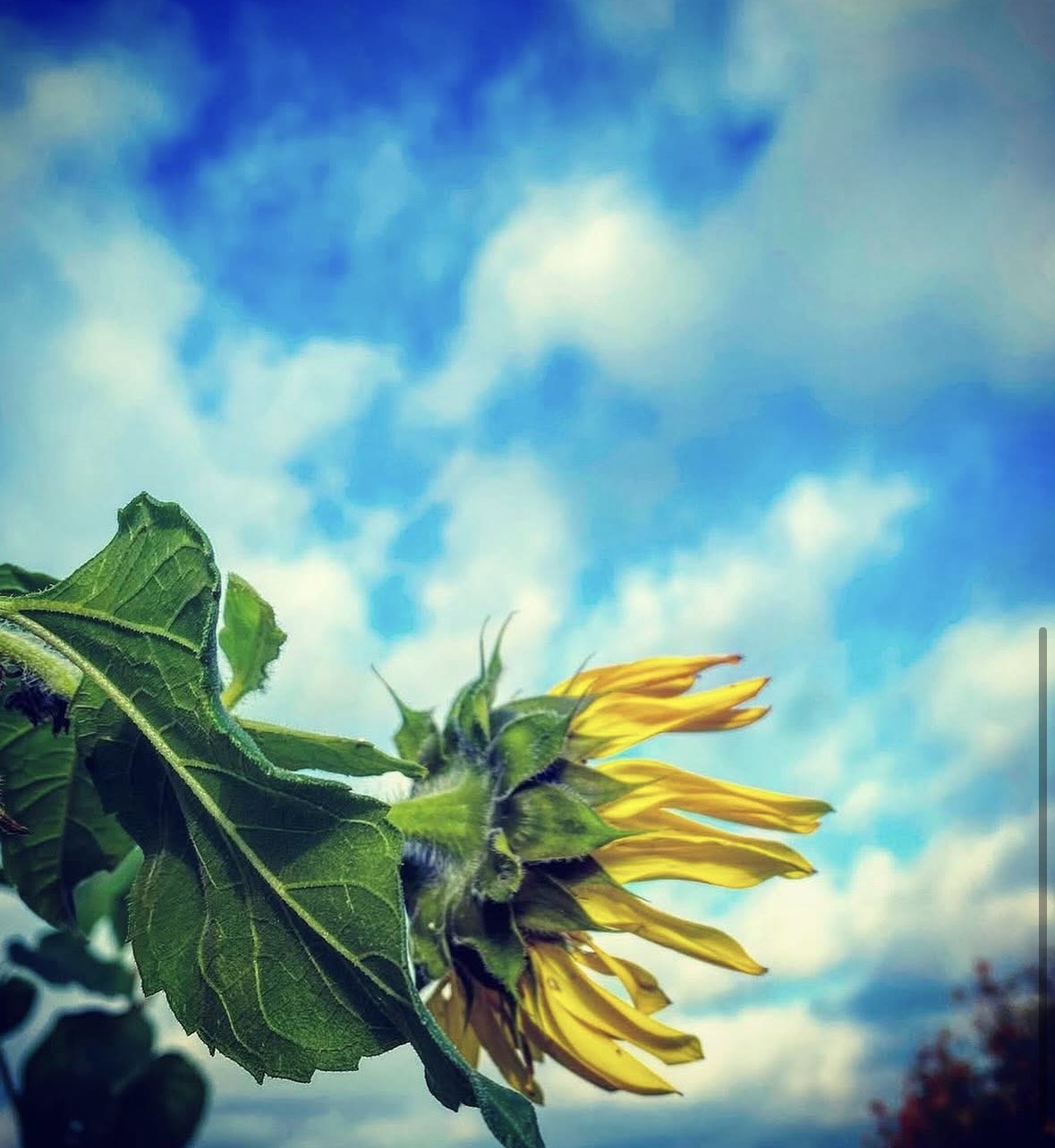
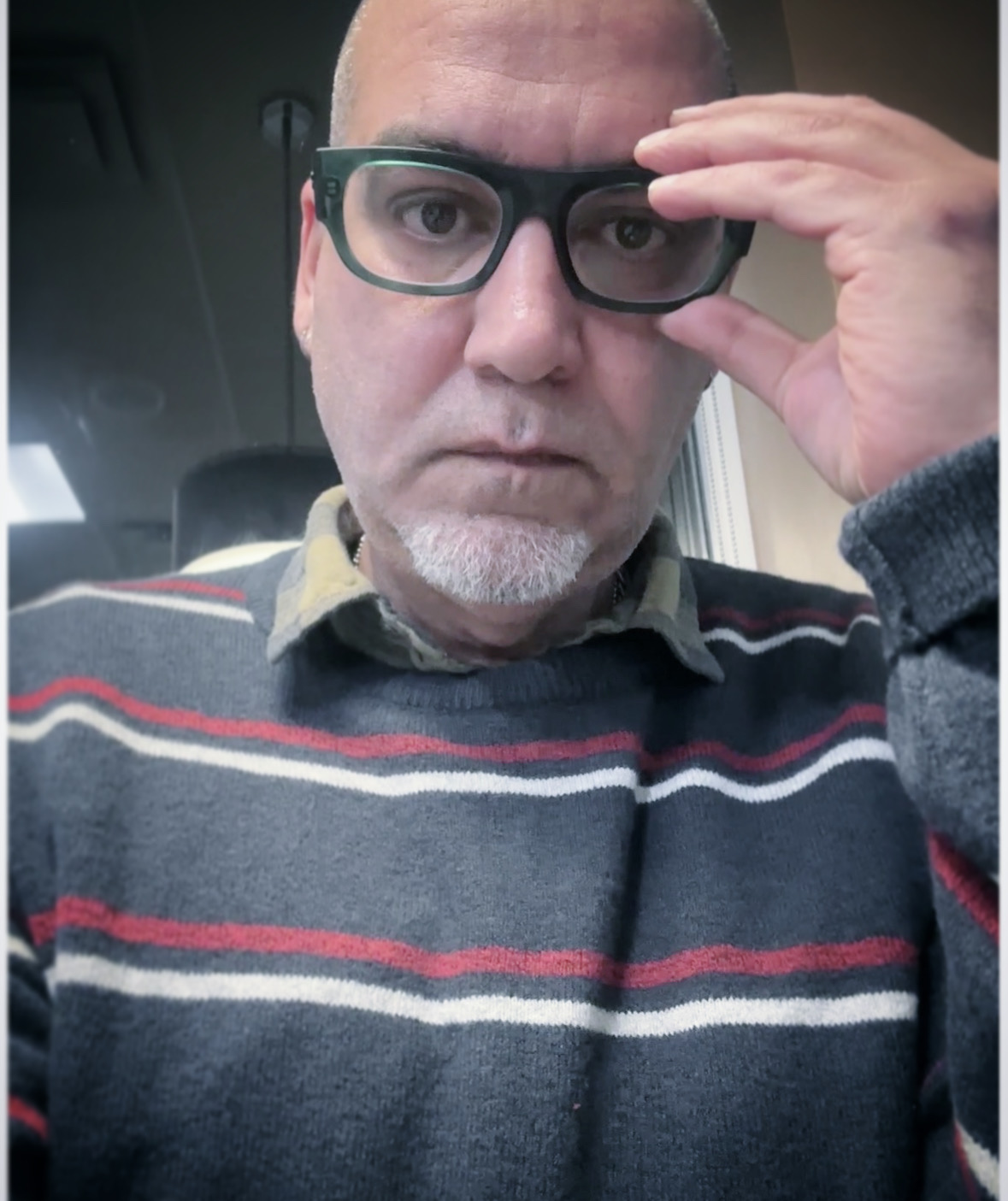
There was a colourful toy; and a wooden dog upon a string, and these things were from long before and there were as a rainstorm and the water climbed up the stream sides incredibly high to almost the tips of hills where evergreens lived. But even before that, the lady who was old and a guardian kept gardens and had flowers and raspberries that were colourful and robust and always happy during the summer sun under which they lived. She collected the raspberries sometimes, walking slowly, and carrying a bowl to put them in. She was then healthy, joyous, and often the boy that she took care of followed her and helped or just watched the world the, the trellis and brick and there were a wooden archway and gate that led to the backyards, to those raspberry and flower worlds…
How later the night darkness became full and the spirits spoke, but they were good spirits and angels and a group of them sang songs and comforted him in his ears if spiritual ears and other worldly hearing. And an oval carpet and God or existence was strongest, wisest, and once, even before that, he was sitting with his grandmother on porches and wore comfortable clothes and had curly hair and was happy, smiling, even laughing.
Oh, he remembered her then and thought she was around currently. A guardian. And she was as she was then. Making things, sweaters, hats, and tablecloths. These were crocheted and useful, well-made, and made confidently and often. And he thought then that, Thank God the world had made her and that she cared for him, made him food, and gave him shelter.
In the far south there was a fine cement pool and beyond it, the sea. These things were good things and markers of the divine. He had been swimming in both. Sometimes the guardian was there, had been there, and that was good. In the modern time he wore a large blue winter coat and as he glanced almost accidentally in a mirror one cold winter day, he remembered the time of guardian and that he wore then a blue coat at least one winter and that it had zippers and a button and kept him warm. He thought it nice and somehow even auspicious that both coats were similar and that somewhere his light and the light of the guardian plus the angels and spirit was the same.
I won’t get up in the afternoon, let the taste not go away
Let the memory that keeps me alive not go away
Let the name not go away from the name of my heart
If I dream of my poem one night
My poem, I say, is a beautiful mother
The world is on one side, she is on the other side
She knows that her love is a golden palace
If I dream of my poem one night
Love recognizes itself in me
A kiss in your bosom makes my poem bleed
It feels like a gentle, kind hand
If I dream of my poem for one night
I am Elman will not let me go
Where will I leave my Azerbaijani son
It will not leave my heart wounded with longing
If I dream of my poem for one night
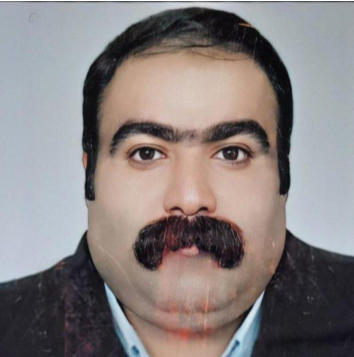
Oruj Dadashi Elman was born in 1978 in Iranian Azerbaijan. He is a poet, lives in Tabriz city. His poems are published in Tabriz, Urmuy, Tehran magazines and newspapers, and in Azerbaijan in “HAKARI”, “SÖZÜN IŞIĞI” and “BÜTÖV AZERBAYCAN” newspapers. His poems are also published in “AY IZİ”, “HİCA TAŞLARI” and “GERGEF” magazines in Turkey. His poems are also published in AQSU newspaper of Khurmatuz city of Kirkuk region in Iraq. A one-volume book titled “MÖVLA MAHABBATİ” was published in 2023.
Unwilling to surrender to telegraphic communiqués of the heart, I engage, instead, in the artifice of acceptable conversation— Recounting an amusing anecdote, or rendering up some snatch of cultural arcana, Ever hopeful to prolong your precious glance.
Content in contentment, precious slings and arrows, Resolute in purpose. Time measured in its works and days.
The chaos of you belies the static wisdom of the stars And makes a mockery of grand design. Your exquisite spiral of a soul, Circumnavigating my sphere, Confounds my geometric fate.
I can only sigh, exhausted by your velocity, The sheer wondrousness of you, And dispel ancient questions, Putting aside Socratic notions of the heart And conversational artifice at last.
On the outskirts of the city lay an old park, covered not with people, but with fallen leaves. The wind carried them gently from one place to another, as if each leaf were wandering in search of the place where it truly belonged. At the far end of the park stood an old wooden bench, worn smooth by the passing years. Every single day, an old man sat there. No one knew who he was. He was neither a beggar nor a merchant, nor did he look like an ordinary retiree. His clothes were always neat, his hair snow-white, and his eyes remained fixed on some distant point beyond the trees. Beside him rested the same old leather bag every day. People walked past him. No one paid him much attention. Except for one boy.
Ozod, an eight- or nine-year-old schoolboy, passed through the park every afternoon on his way home. For reasons he could not explain, he found himself drawn to the old man.
One day, he finally approached him.
“Sir, why do you come here every day?” The old man smiled.
“I’m waiting.”
“For whom?”
“Perhaps for someone… perhaps for the chance to be forgiven…”
The boy did not understand his answer. Even so, he began sitting beside him every day after school. Weeks passed. They did not talk much. Sometimes they would sit together for an entire hour without saying a single word. Silence, somehow, became their conversation.
Eventually, winter arrived. Snow began to cover the park. One afternoon, Ozod ran to the bench as usual. It was empty. Two days passed. Then three. A week. The old man never returned. Unable to bear his curiosity, Ozod asked the elderly groundskeeper who was sweeping the paths.
“Where is the old man who always sat here?” The groundskeeper let out a quiet sigh.
“He won’t be coming back, son.”
“Why?”
“His time came.”
The boy lowered his head. For reasons he could not explain, it felt as though something inside him had quietly broken.
“Who was he?” The old man gazed into the distance before answering.
“Twenty years ago, there was a terrible car accident right here in this park. A drunk driver struck a young family. The parents died instantly. Only their little daughter survived. The driver was imprisoned. When he was finally released, he searched everywhere for that little girl. He wanted to ask for forgiveness, but he never found her. So every day… he came back to this bench. Day after day, he held on to the hope that she would one day appear.”
“That she would look into his eyes and simply say…”
“I forgive you.”
“But she never came.”
Years passed. Ozod grew up. He graduated from university and began building his own life. Life, however, tested him in ways he had never expected. One evening, while returning from a business trip, he became involved in a traffic accident through a moment of carelessness. Fortunately, no one was seriously injured. But the owner of the other car stormed toward him in anger. Ozod apologized repeatedly. Nothing seemed to calm the man’s fury. Then, suddenly, the image of the snow-covered bench flashed before his eyes. The old man’s quiet voice echoed in his memory:
“Perhaps for someone… perhaps for the chance to be forgiven…”
Without another word, Ozod took out a piece of paper and wrote down his phone number. “I will pay for every bit of the damage,” he said quietly. “And even if you cannot forgive me today, I understand. But I hope that someday you’ll remember there was once a stranger who was truly sorry.”
The fury in the man’s eyes slowly melted away. Neither of them spoke again. Sometimes sincerity speaks louder than words ever can.
Many years later, on another autumn afternoon, Ozod returned to the same park, this time holding his grandson’s hand. The old wooden bench was still there. Only now, it stood empty. His grandson looked up at him.
“Grandpa… why are you staring at that bench?” Ozod smiled faintly.
“A person’s shadow disappears when the sun sets, but the shadow of their deeds remains in the lives of others forever.”
The child looked at him without understanding. Ozod turned his eyes toward the falling leaves. The wind lifted them gently into the air. This time, they no longer looked lost. They seemed to know exactly where they belonged. And for the first time in many years, the empty bench no longer looked lonely.
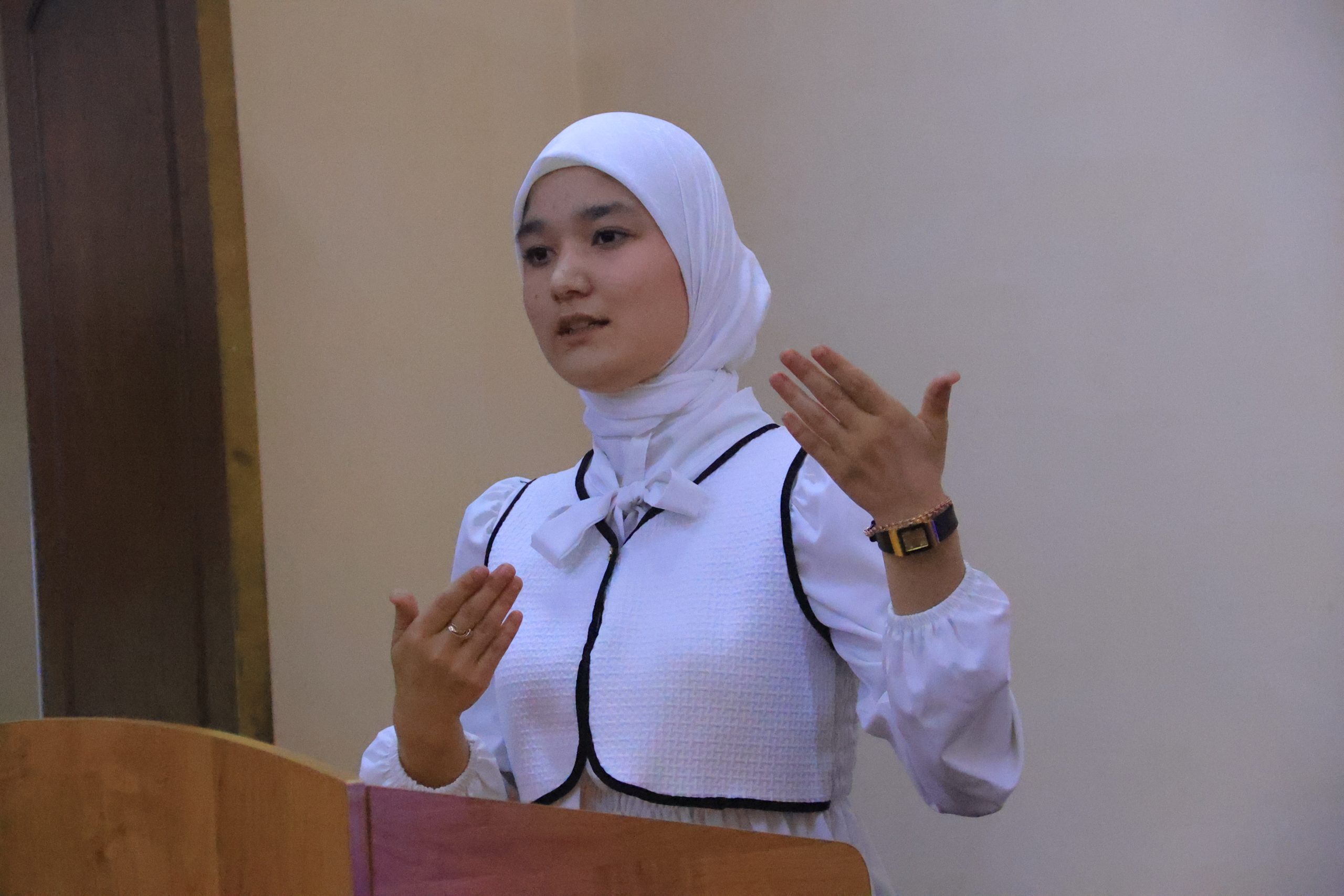
My name is Kozimjonova Saidaxon Alisher qizi. I was born on November 27, 2007, in Asaka District, Andijan Region, Uzbekistan. I am currently a third-year student majoring in Economics at the Faculty of Economics and Management, Andijan State Technical Institute.
From an early age, I have been passionate about numbers, analytical thinking, and economics. To me, economics is more than just an academic discipline—it is a vital field that helps us understand the development of society and improve people’s lives. For this reason, conducting research and pursuing lifelong learning have become an integral part of my life.
To date, I have published more than 30 scientific articles in national and international publications. I have also presented my research at six scientific and practical conferences. During my academic journey, I became the regional winner of the Economics Statistics and Data Analysis Olympiad and later represented my region at the national stage. In addition, I won first place in the institute stage of the “Zukko Kitobxon” (Intelligent Reader) competition, participated in the national “Munozara” (Debate) tournament, and have been an active participant and winner in numerous academic and intellectual competitions.
After entering university, my interests expanded beyond academic research to include creative writing. Reading books, participating in literary events, and creating stories that touch people’s hearts have become an important part of my life. The Shadow, the story you are about to read, is my first work of fiction. I believe that every story I write should encourage readers to reflect, inspire kindness, and promote universal human values.
I am also actively involved in community service. I participate in volunteer initiatives and am the founder of a volunteer-focused startup initiative under Ko’ngilli.uz. To me, contributing to society is more valuable than any personal achievement.
Reading is one of my greatest passions. So far, I have read more than 50 books, each of which has broadened my knowledge, enriched my perspective, and inspired me to pursue greater goals.
My guiding principle is: “Seek knowledge from the cradle to the grave, acquire it, and share it with others.” I firmly believe that knowledge elevates individuals, while education has the power to transform society.
My greatest ambition is to become one of the leading specialists in the field of economics, further develop my academic career, and use my knowledge and experience to benefit others. If my writing or my work can make a positive difference in even one person’s life, I will consider that my greatest achievement.
It cannot be measured with coins or weighed on scales.
It is the root that, even if the wind bends the stem,
never forgets the sky toward which it rises.
It is the light that filters through the darkest cracks,
when everything seems to be collapsing,
and remains a flame that no one can extinguish.
It has no price and is not given away for convenience.
It dwells in every heart like a sacred territory:
no one occupies it without permission,
no one reduces it to what you possess or cease to possess.
It is the pulse that does not stop in the face of injustice,
the voice that, even if it trembles, does not fall silent,
the certainty that you are worth what you are,
not what the world says you are worth.
It can be wounded, it can grow weary,
but it never completely surrenders.
Because it is like the ground we walk on:
even if covered with rubble,
it remains earth capable of blossoming.
It is your essence, intact, undeniable,
what no one can take from you:
the right to be you,
standing tall, whole, free.
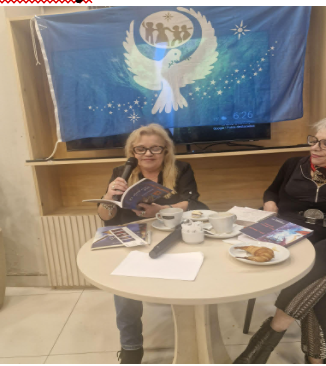
GRACIELA NOEMI VILLAVERDE is a writer and poet from Concepción del Uruguay (Entre Rios) Argentina, based in Buenos Aires She graduated in letters and is the author of seven books of poetry, awarded several times worldwide. She works as the World Manager of Educational and Social Projects of the Hispanic World Union of Writers and is the UHE World Honorary President of the same institution’s Activa de la Sade, Argentine Society of Writers. She is the Commissioner of Honor in the executive cabinet in the Educational and Social Relations Division of the UNACCC South America – Argentina Chapter.