My School
The name of our school is Harimohan Government High School.
This is one of the biggest and oldest schools of Bangladesh.
A place of pride for the students.
The school has a great reputation.
Reputable for us.
We have gotten the school,
By a great person’s contribution.
His name is Harimohan.
He was a big landlord,
His full name is Harimohan Mallik.
The school has many great achievements.
It has been considered the best school of Rajshahi Division in Nineteen-Eighty-Seven.
Our school has many co- curricular activities.
Scout, Red-Crescent are worth meaning.
The students of our school are very smart than the other schools.
The teachers of our school are very skilled than the other schools.
The technologies of our school are very advanced than the other schools.
So, I feel very proud to be a student of this school.
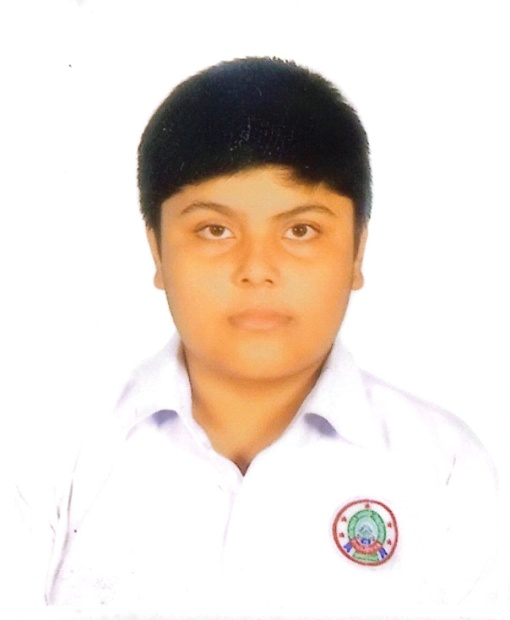
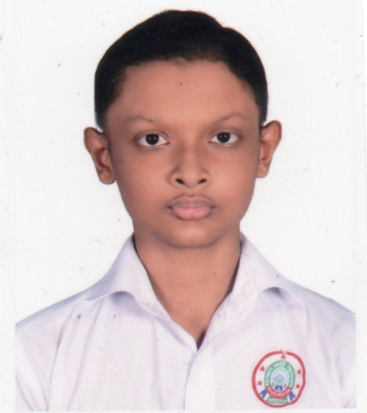
Don Bormon is a student of grade 8 in Harimohan Government High School, Chapainawabganj, Bangladesh.
Yearning
The crickets sing accompanied by their sonorous violins, I wonder where you will be... See that the moon flirts with them, and who will you smile with?
The fireflies illuminate the recital, and your face does not appear. In my thoughts you fade like the moon. The cocuyos dance happily to the beat of the cello,
He smiled, they dissipate me to solitude, while I lose myself in the bonfire that my cigarette lit.
Colombia
HOW NOT TO DEFINE A COUNTRY
after Mubarak Sàid
I inhale the stench of isale eko - the dirt of mile three park.
How does the boy learn to speak seven languages that can hide the lingua franca of joy?
How does he rehearse the dictum of pain?
How does he master the syllables in grief?
How does he converse in sorrow?
How does he achieve fluency in anxiety?
He questions his existence like a man seeking reality in a tabula raza.
He tells the tale of a girl caught in the peril of a nation that gives adulation to the antonym of goodness.
This girl sheds Antarctica into her dress;
It is how she fights wickedness.
How do I gather the casualties in my heart, delete the record and start again?
We are taught to understand that
to die is to live
to revolt is to fault
to complain is to end in pain
to hope is to hang on a rope.
The skylarks fly quickly, I watch their steps, their posture; how trickily they become
lords of the air.
How they deceive us to let them roam the sky, now see
them own it, see them seize the sky.
See them leave fragments of the sky for the grass,
For the grass who let their tongue get wet from political fore-play that is well played -
The grass that is gardened yet dies.
I remember that a poet should not fret
I give heed to the voices from the root -
They speak of
How the truth is a tongue that has lost its language to the colonization of deceit.
How my country is a testament of Golgotha with barrage of bodies torn apart into fleshy crumbs.
How is my land a metonym of distress?
We ask 'how' until we don't know how to define the complexity.
We ask how until our voices become an orchestra
screaming; 'eli eli lama sabachtani'
How not to define a country is to say the sun sets at noon -
To say wahala is a facade.
Look at him defining a country in metaphors when
he is the metaphor for a wailing parrot
caged in a place
where good plays the role of evil.
He sees the country as
the synonym of hell
&
It is written in the book of abnormality;
That the parrot will wail on the way to damnation & not find rest.
Yet in the dome of gods, there is peace for the wicked.
JOEL OYELEKE studies Literature in English at Obafemi Awolowo University, Ile-Ife, Osun state. He is a published poet, literary enthusiast, God addict, poetry reader for Arting Arena Magazine and curator of Poetry Village, OAU. Author of THE THEM IN ME (Direwords, 2022). Co-author of LET ME GRIEVE (Arting Arena Magazine, 2023). Joel won the Arting Arena Poetry Prize in 2022.
Asides writing, he loves to teach, talk and play football.
Across The Rift
We constantly try to go across the rift
If only we get accepted by the hand
Our land is green but still we leave
Moving over to find greener pasture
If there were no airplanes
Some would go across on bare feet
To a place the mind paints as good
Risking the quotidian lives in a desert.
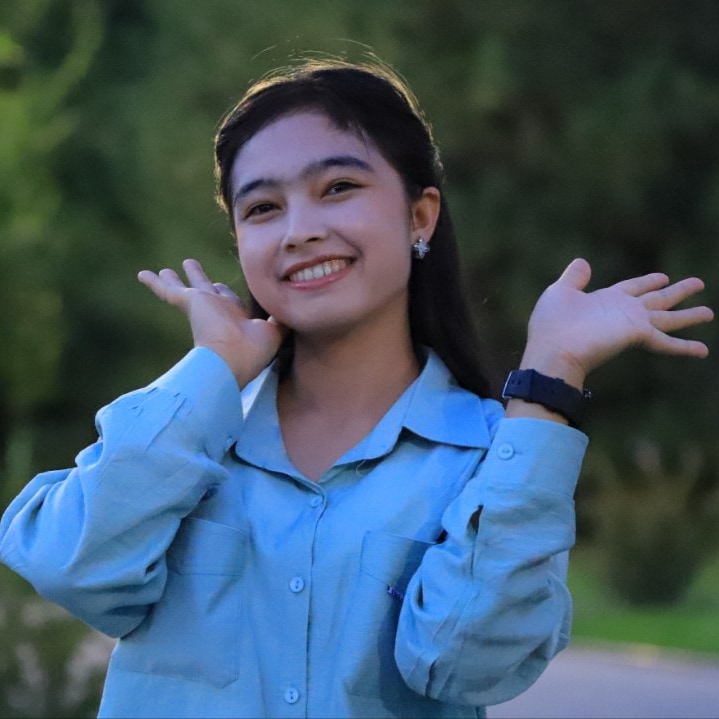
Sabrid Jahan Mahin is a student of grade 9 in Harimohan Government High School, Chapainawabganj, Bangladesh.
Welcome to a fresh month of Synchronized Chaos! We’re exploring reality from different perspectives, experimenting with different takes and different frames.
Mark Young’s poetry evokes reframing, repurposing, contrast, and juxtaposition.
Ellie Ness contributes a sketch of cultural exploration by contrast: an Englishwoman abroad in Iraq under under Saddam Hussein. We see a sketch of domestic life, the different spheres of influence of men and women, the power relationships and norms.
Caleb Ishaya Oseshi’s black and white photography illustrates ordinary people of Nigeria. We see them living everyday life, walking, bicycling, carrying children and other objects in vibrant street scenes.
Isabel Gomes de Diego photographs a barbecue, inviting us to imagine the people who will gather to enjoy the feast.
Ahmad Al-Khatat speaks to romantic love, grief, and the desire to connect across cultural and physical differences.
Sa’ada Isa Yahaya conveys the physicality of grief, the pain of a nation stored in a person’s body. Fortune Simeon illustrates how grief transforms and colors our everyday perceptions. Ogwuche Bella’s speaker attempts to love despite overwhelming personal and societal grief.
Mykyta Ryzhykh writes with the feeling of a cold winter’s barren landscape, addressing death and our search for meaning. Christopher Bernard references the whole cycle of life with his piece on a fallen tree in someone’s backyard. Azemina Krehic evokes a history of wartime loss in her piece on a fruit that never ripens. Jerry Durick explores how we cope with different types of global or local disasters.
Duane Vorhees probes how our minds seek purpose and consciousness behind random and arbitrary forces in society and nature. J.D. Nelson confronts us with sets of words that seem haphazard, inviting us to co-create potential meaning.
Texas Fontanella describes an uneasy peace among roommates in different states of sanity. Lauren McBride’s structured poems highlight confusion and chaos of various kinds, mental and horticultural.
Aklina Ankhi expresses union with nature, even as it’s being crushed by the growth of civilization. Rezauddin Stalin joins in with nature’s other creatures in individual expression through his poetry.
Channie Greenberg photographs various kinds of colorful fish while Sayani Mukherjee revels in the intoxicating sight and scent of white roses in summer.
For Don Bormon, the wind inspires thoughts of freedom and adventure. John Culp references snowmelt on a glacier to convey his joy at opening up emotionally to love and personal growth.
Mahbub Alam talks about love in the age of climate change and extreme weather while Kristy Raines explores how love can help us see and appreciate different sides of people and Lilian Dipasupil Kunimasa relates her quest to live to the fullest, to find and understand true love.
Annie Johnson reverently speaks of long-term love and stillness under the moonlight while Jerry Langdon sends up cleverly crafted and structured poems about life and love.
Texas Fontanella’s offbeat love poem concerns falling for someone and not being able to explain why.
Anna Ferriero gives a poetic take on love and creativity, drawing on fairy tales. Kristy Raines shows how love can help us see and appreciate different sides of people.
Tanvir Islam describes a deep love and intimate connection with another person while Shakhriyo Kurbanova regales us with a lyrical paean to her Uzbek homeland and Borna Kekic raises a verbal flag and shows his pride in and affection for his Zagreb hometown.
Mantri Pragada Markandeyulu sings exuberantly about the joy of love and life while Daniel De Culla’s funky photographs reflect humor, observation, and a bit of social commentary.
Noah Berlatsky offers up a funny take on poetry that isn’t up to par.
Ian Copestick’s humorous poetic speaker faces mortality with ambivalence while J.J. Campbell reflects on getting old and feeling upstaged and left behind by modern society. Meanwhile, in another piece, Copestick presents some people who celebrate life in the golden years, standing proudly outside with a Bentley.
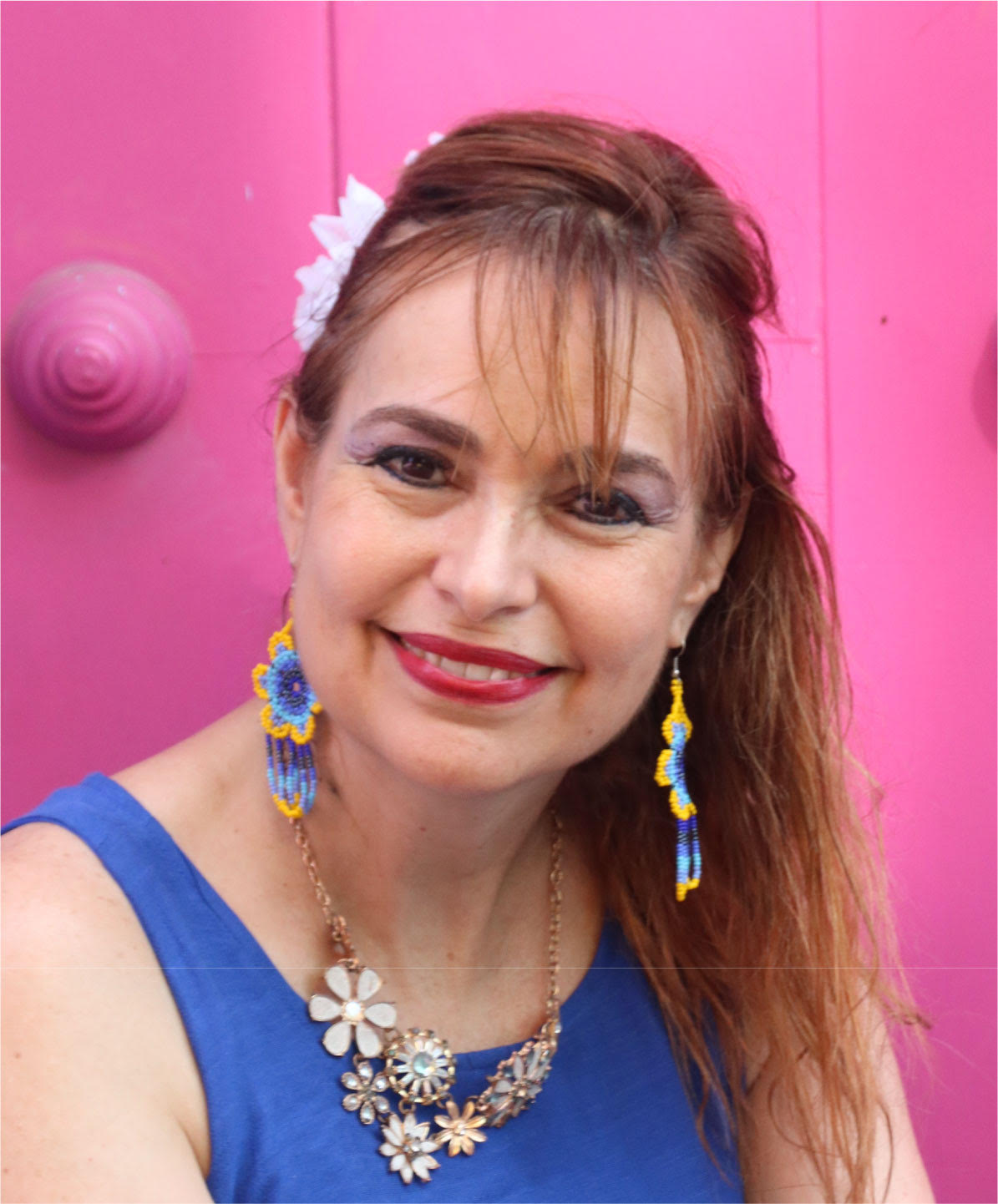
Mirta Liliana Ramirez writes of the comfort and pleasure of nostalgia in our later years. Mesfakus Salahin urges people to go forth and live with gusto at any age.
John Grey looks at how people from various generations perceive each other.
Bahora Bakhtiyorova points to how men who embrace traditional male gender roles can live them out in a positive way as protectors and providers and role models for their sons.
Gustavo M. Galliano illustrates the progress of dementia through a first-person tale where a man remembers emotions but not the names or categories for relationships.
Sabohat Saidova’s story concerns the importance of caring for and remembering family while Dilfuza Dilmurodova offers up love and respect for her mom and Wazed Abdullah crafts poems of tribute to his mom and his dad.
In Chimezie Ihekuna’s story, parents’ sharing their own former failings and becoming vulnerable encourages their son to get back on the right path. Meanwhile, Toshmatova Madinaxon Kodirovna highlights ways young people are changing the world.
Shoshura Husaynova compares international educational systems and suggests ways the Uzbeks could learn from the Finnish. Xudayberganova Mehriniso sends up pieces on school and the value of education while Ravshanova Gulnoza Shamsiddinovna surveys technology for learning and teaching foreign languages and Dildorakhon Eshmurodova gives thoughtful consideration to the debate between paper books and e-books.
Z.I. Mahmud explores Western literary criticism through a piece examining the story structures employed by British author E.M. Forster in contrast to those of other novelists.
Doug Holder satirizes the now-problematic figure of Archie Bunker, reviving an old caricature for comic effect.
Muhammed Aamir’s story illustrates how people cannot ultimately free themselves by abusing or denying the humanity of others. It is in resisting that temptation that we can reclaim personal agency.
Slavica Petrovic reminds us of how we can find ourselves in different stories as we grow.
Maja Milojkovic celebrates the power of change and renewal while Emina Delilovic-Kevric speaks to creating a joyful home amidst the scariness of the world. Eva Lianou Petropoulou conveys her wishes for hope, peace, and comfort and Elmaya Jabbarova’s strident piece urges us to get busy making a kinder and more peaceful planet.
We hope the diverse palette of work showcased in this issue inspires you to reach out and view the world from a new perspective.