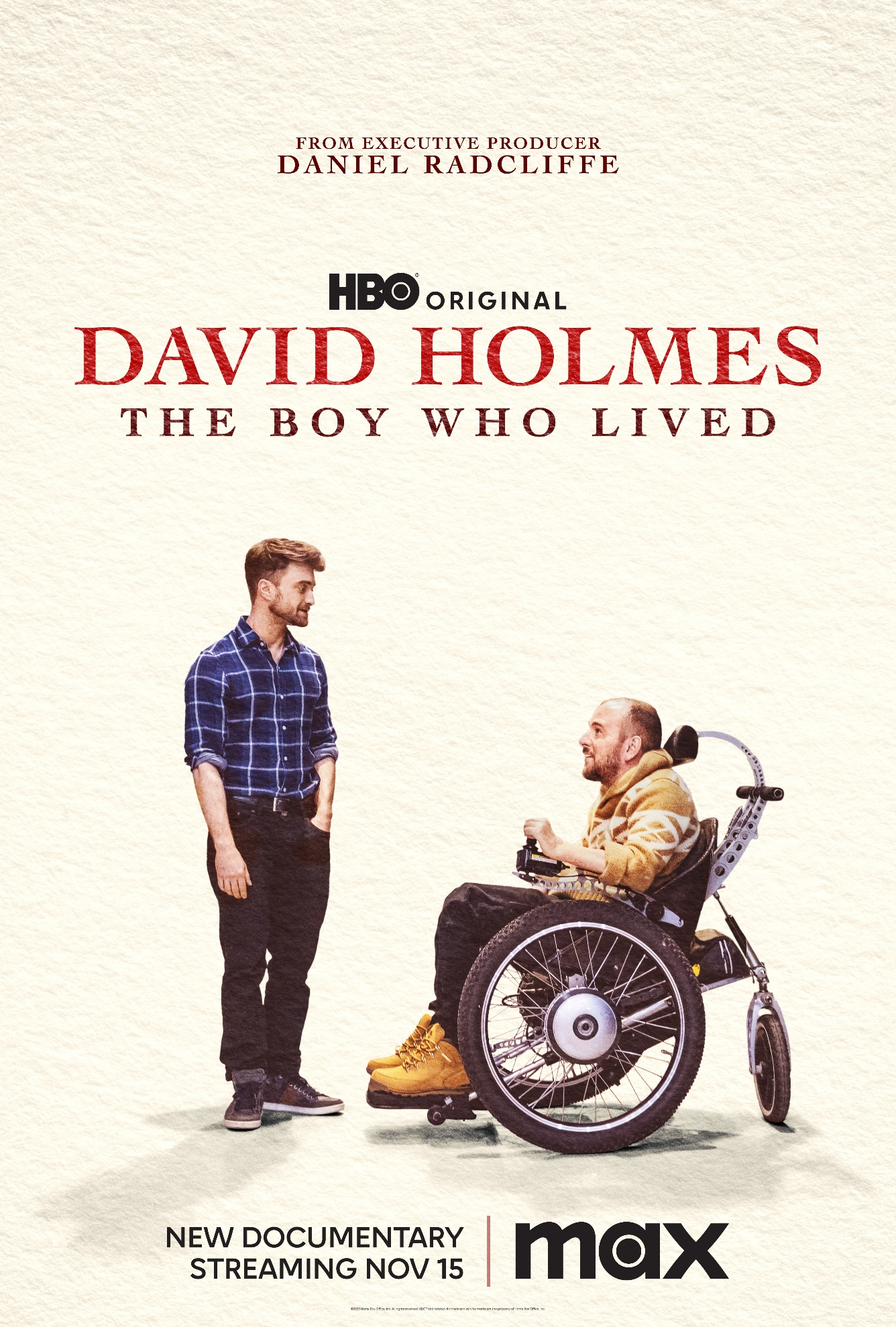
DAVID HOLMES: THE BOY WHO LIVED – A Documentary About Healing, Defying Gravity, and Living after the Fall
David Holmes always wanted to defy gravity. At such a young age, he had a desire to play God, since he was merely a child, David tested his limits, and his heart -as his mother and father affirmed- never knew fear. A dream that turned into the reality of life when David flew and flew until, like Icarus, the laws of the universe decided to intervene and restructure his life.
It was like fear shrunk and coagulated, becoming smaller and smaller, occupying less and less space in his heart. David Holmes was invincible like a Greek prince from Greek mythology, Hercules or Atlas. And this young Hercules set his sails for “Harry Potter,” a magical beyond magical set for kids, a place where he could stretch his divine muscles and reach the heights of Mount Olympus.
On movie sets, dynamics are different. Actors are not the only ones who shine. They are not the ones who attract the most attention, and sometimes they’re not the heroes of the story, at least not the true ones. So in Daniel Radcliffe’s eyes, David Holmes was a hero, someone larger than life. To Daniel, David was the real Harry Potter, strong, confident, and defying gravity, in a game of Quidditch, David could have easily been the winner.
But this movie is not about defying gravity, it’s about defying what weighs people to the ground. David Holmes in all his cheery acceptance and also struggling with a new life, gives an example of a friend whom everybody needs during tough times. David oozes hope despite the hardships of a newfound condition and the difficulty of coping with friends and family the most; those who love but sometimes can’t separate the past and the present from their mindsets.
“DAVID HOLMES: THE BOY WHO LIVED” is an eye-opener to a world I haven’t had an idea about before. Have you ever been mesmerized by the skill and athleticism of stunt performers? The way they effortlessly maneuver their bodies, manipulating bones and muscles to execute daring feats is truly awe-inspiring! They are in tune with all the scary prosthetics and harnesses, they hang up from high distances, get kicked and shoved, and get the full treatment. How actors are sometimes the ones left starstruck with people who are doing the real work. In “Harry Potter”, those were the stuntpeople like David and Marc Mailley.
One of the things I liked about this documentary, was how Daniel receded into the background, allowing David to have his moment and shine. It wasn’t a vanity project for Daniel where he could flex his muscles and make himself the focus of the narrative but gave David the air to breathe and fully express himself.
Dan Hartley does a great job of orchestrating this whole movie and leading a cast of actors and non-actors, the interviews were fresh and highly engaging, interweaved with the massive and compelling behind-the-scenes footage of David as the true Harry Potter, the real wizard whom “film people” used as the vessel on which they could place Daniel’s movie star face, and create magic. It was strange to see the tragedies behind a story that compelled millions and millions of kids worldwide, but it was also a testament to the power of filmmaking, the resilience of a human spirit, and the real love between friends, the love that made Marc stay by David’s side, and Daniel executive-produce his friend’s story, eager to let it out into the world.
FRIENDSHIP IN WAR

THIS IS A STORY OF A WARRIOR MEANS ABOUT A FREEDOM FIGHTER, WHO WAS IN THE MOHIUDDIN JAHANGIR’S TEAM.

The day was 12th December 1971. Yes this is a story that was happened in the liberation war. A warrior named Abdul Motin was eating his food after two days because the supplies were off for two days. Suddenly their captain Mohiuddin Jahangir came and told them:

Mohiuddin: Hey my brave warriors, there is a good news that our country is almost independent but we have to kill Pakistani enemies to free Chapainawabganj.

Mokshed: Yes captain we will!

Kinu: But captain, we don’t have enough resources to fight.
Mohiuddin: Yes, I already sent a message and I think the recourses will come soon.

Motin: Inshallah captain, Joy Bangla.
Mohiuddin: Joy Bangla

After that day the freedom fighter team of Gazi Rahim Uddin came and said,
Rahim Uddin: Hey, Mohiuddin, your team can’t fight against the Pakistani army. Please give the opportunity to us to free Chapainawabganj.

Mohiuddin: NO! Rahim, I know my team is not as powerful as your team but we have enough mind power and confidence to beat them.
Rahim Uddin: Ok, but you have only the next day to prove your team. If you can’t, my team will smash them.

Mohiuddin: Oh! my warrior brother.
On that 13th December night there was a meeting with Mohi Uddin’s team that how they could attack next day.

Mohi Uddin was briefing the plan:
Mohiuddin: I and Mokshed will remain in the front and we will always fight to make them surrender.  Then Kinu will throw bomb if there were any barracks or barricades. Got it?

Mokshed: Yes, captain.
Kinu: Yes, captain.
Mohiuddin: Now Motin, Karim and Hakim will cover us firing.

Then Mohiuddin made 10 teams with these patterns and they started to go with the street of Mahanada river because the Pakistani base camp was situated at the other side of the river.

Now that was the war time, Captain Mohiuddin Jahangir was walking and saw the base camp but suddenly there was an artillery attack and captain shouted "attack down’’. Many of them jump to bunker.

The enemy was informed that they will attack and they were ready. But Mohiuddin was a very brave man. He took a machine gun and firing to the enemy, he does not have the fear of death and his partner Kinu was throwing bombs and destroy the bunkers with
Mohiuddin.

But then the Pakistani military started firing rapidly with their modern
weapons. Suddenly a bullet hit to the head of Mohiuddin Jahangir and he fell down. The captain was down and the team was like a boat without a controller. Suddenly an artillery blasts beside Motin.

He jumped in the bunker but when he stood and looked that he was
surrounded by four Pakistani army and he couldn’t fight with them because he had a rifle which could only fire one bullet in one round. When he was on the corner of the death, his best friend Mokshed saw it and he had a machine gun and he fired rapidly to save his best friend’s life and his accuracy saved Motin. The war finished after 30 minutes. Mohiuddin sacrificed his life to free Chapainawabganj.

The next day the team of Gazi Rahim Uddin came to fight and won the battle. And finally, on the 16th of December, 1971, Bangladesh officially got their independence.

We lost a hero just two days before the independence.

N.B: The story was inspired by a real story about Motin and Kinu is my grandfather.

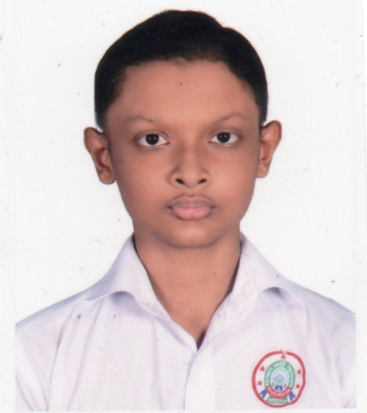
Fahim is a student of grade 7 in Harimohan Government High School, Chapainawabganj, Bangladesh.
Caballo sobre mi espalda
Mis piernas pegadas a tu flanco sudoroso,
Apretando con fuerza, mis manos sujetando tus crines. Sin rumbo corremos desbocados.
Tus cascos golpeando mi tierra, sonido de castañuelas. Levantando polvo, haciendo camino en tierras de nadie.
Ritmo y movimiento, tierra adentro.
Adrenalina y susto nos recorren, una bestia sin pensamiento me lleva sin destino. El viento silva en mis cabellos y se cuela entre mis brazos  tensos.
Nadie lleva las riendas. Corcoveando, tus músculos fibrosos te dirigen.
Coordinamos tu carrera. Subimos y somos aire por un momento, caemos y somos tierra al instante. Llano adentro. Donde todo es verde, vigoroso y equilibrado. Me dejo llevar y me convierto en una amazona griega. Llegamos a donde pertenezco, el límite exterior del mundo conocido y lo cruzó, sin fronteras.
Soy yo sobre tu espalda o tú sobre la mía. Cabalgando como uno.


horse on my back
My legs stuck to your sweaty flank,
Squeezing hard, my hands holding your mane. Without direction we run wild.
Your hooves hitting my land, sound of castanets. Kicking up dust, making way in no man's land.
Rhythm and movement, inland.
Adrenaline and fear run through us, a beast without thought takes me without a destination. The wind whistles through my hair and sneaks through my tense arms.
Nobody takes the reins. Bucking, your sinewy muscles direct you.
We coordinate your career. We rise and are air for a moment, we fall and are earth instantly. Flat inside. Where everything is green, vigorous and balanced. I let myself go and become a Greek Amazon. We reached where I belong, the outer limit of the known world and crossed it, without borders.
It's me on your back or you on mine. Riding like one.
Taylor Dibbert is a writer, journalist, and poet in Washington, DC. He’s author of the Peace Corps memoir “Fiesta of Sunset,” and the forthcoming poetry collection “Home Again.”
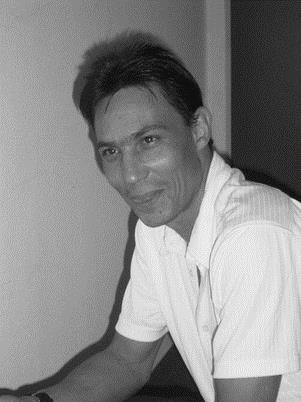
From South-Western, Michigan, Jerry Langdon lives in Germany since the early 90’s. He is an Artist and Poet. His works bathe in a darker side of emotion and fantasy. He has released five books of Poetry titled “Temperate Darkness an Behind the Twilight Veil”, “Death and other cold things” “Rollercoaster Heart” and “Frosted Dreams” Jerry is also the editor and publisher of the literary magazine Raven Cage Zine poetry and prose. His poetic inspirations are derived from poets such as Edgar Allen Poe, Robert Frost and Henry Wadsworth Longfellow. As well as from various Rock Bands. His apparently twisted mind, twists and intertwines fantasy with reality.
2. KUĆA I TI

Zakači kaput tuge u ormar,
iznošene grešne potpetice stavi u cipelar
sa ostalom pocepanom obućom,
čaršav i sve na krevetu što je upijalo
sve tvoje neprospavane noći
iznesi na sunčev zrak zaborava.
Potom svoju suzu urami u drveni okvir
i postavi iznad kamina
da je toplotni zrak pusti na slobodu,
onda kada dođe vreme.
Uđi u dečiju sobu i seti se sebe tako male i bezbrižne.
Uzmi platno bele boje i obmotaj se
u više slojeva odvojenosti,
raspusti dugu kosu da miluje tvoje telo.
Stavi ploču The Beatles-a u stari gramofon i pevaj uz daire,
izađi iz kuće čiji nisi vlasnik,
sama si je stvorila misleći da ti pripada, ali ne.
Ti nemaš dom u svetu prolaznosti.
Spoznaj Njega i prizivaj odricanje
i pleši da prizoveš nebesku ljubav.
Cigle se otapaju u crveni prah od plesa,
a ti u ruševinama spoznaješ svoj mir
i shvataš tek tada da je tvoja kuća bila
gvozdeni kavez koja ima izlaz.


2. THE HOUSE AND YOU

 Hang the coat of sorrow in the closet,
 put the worn sinful heels in the shoebox
 with other torn footwear,
 sheet and anything on the bed that was absorbed
 all your sleepless nights
 bring out into the sunshine of oblivion
 Then frame your tear in a wooden frame
 and place above the fireplace to
 let the heat ray set her free
 then when the time comes.
 Enter the children's room and remember yourself so small and carefree.

 Take a white cloth and wrap it around yourself
 in multiple layers of separation,
 let your long hair down to caress your body.
 Put a Beatles record in an old record player and sing along the     tambourine,
get out of the house you don't own,
 you created it yourself, thinking it belonged to you, but it didn't.
 You have no home in the world of transience.
 Know Him and invoke renunciation
 and dance to invoke heavenly love.
 Bricks dissolve into red dust from dancing,
 and you find your peace in the ruins
 and you realize only then that your house was
 an iron cage that has an exit.
Once again, Synchronized Chaos Magazine expresses sympathy for all the people affected by the recent violence in the Middle East and shares the hope for a peaceful and just resolution and for justice and equality for the region’s many groups of people.
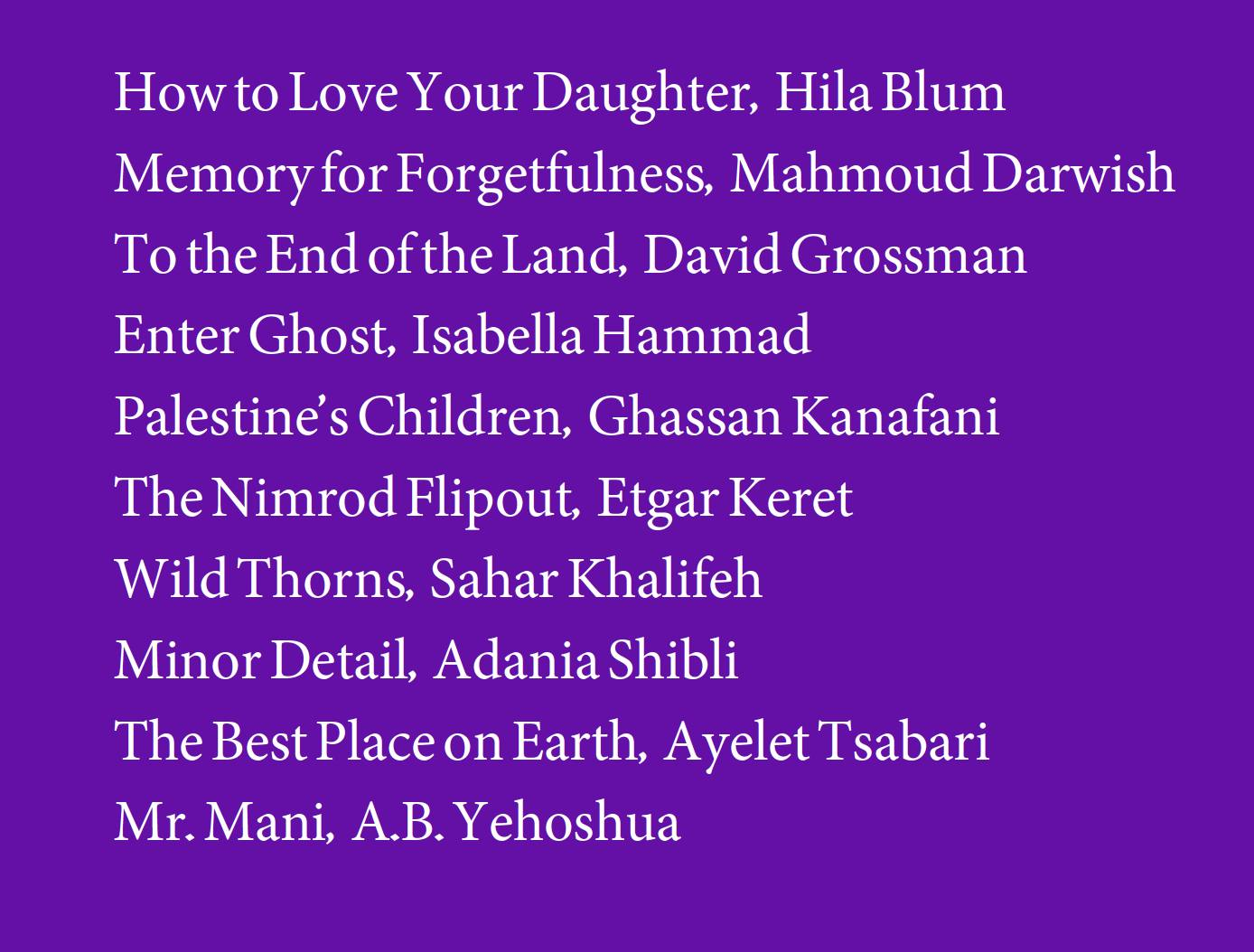
In the spirit of what we do here, we are sharing author Michael Lukas’ recommendations of fiction and poetry from both Israelis and Palestinians that he and others believe will help people understand the issues and the cultures in the region.
Please feel welcome to suggest other titles.
We are also aware that Afghanistan has suffered an earthquake that has killed thousands of people. We invite people to help however they can and suggest the Afghan-founded and led organization RAWA which assists those of all genders and racial backgrounds in the country. They are seeking people to translate articles on their website and help in a variety of ways.
Also, we stand with the people of Burma who are continuing to undergo war and repression. We encourage people to assist through groups such as Doctors Without Borders. And we acknowledge the great conflict and displacement crisis in Sudan and encourage people to donate books (textbooks included, everything except murder mysteries and encyclopedias) to schools in Africa through Books for Africa.
This month’s issue looks at life from different vantage points: from speakers who are fully engaged in their surroundings and from others who overhear or watch from a distance.
Brian Michael Barbeito shares the experience of sitting alone and catching bits of nearby conversations. Michael Tyler relates encounters with random people at a party. J.D. Nelson reflects on the sounds he hears at night a men’s homeless shelter.
Christopher Bernard’s poem’s narrator finds herself mistakenly at her own funeral, overhearing snatches of gossip while entombed in a coffin.
In his photography, Daniel De Culla focuses in on objects and creatures that are slightly out of place. In Mark Young’s poem, a postwoman brings the slightly-askance world to the speaker’s doorstep. Nathan Anderson plays with words and letters in a rhythmical manner reminiscent of electronic music while Thomas Fink contributes unique horseshoe-shaped concrete poems on memory and change.
Taylor Dibbert writes of his speaker’s loss of London the dog, a moment he never knew would be the last with her.
Qosimova Parizoda speculates on the psychology of a short lived butterfly. Do they grieve the brevity of their existence?
Jerry Langdon evokes mortality in a philosophical, tragic sense through the symbol of a gathering of ravens, while Zahro Shamsiyya speculates on the world after her future death.
Others focus in, deeply absorbed by a place or setting.
Isabel Gomez de Diego sends up photographic vignettes of fall country life, people, leaves, and apples. Brian Barbeito’s photography is a selection of natural moments, a mix of panoramas and closeups. Monira Mahbub celebrates the natural and human beauty of her country, Bangladesh.
Mesfakus Salahin describes the poetry written in the shapes of clouds, while Annie Johnson reflects on night’s blurring the edges between imagination, sentiment, and reality. Azemina Krehic meditates on danger through a surreal image of a mulberry tree.
Wazed Abdullah highlights the beauty and charm of music. John Culp metaphorically illustrates how the world of natural and human-built objects metaphorically calls to each other and communicates.
Graciela Noemi Villaverde loses herself and her bearings in the vast fiery energy of her creativity.
Kristy Raines highlights how true love fosters her personal growth and helps her become her best self, while Samuel Dayo evokes the intense emotions that come from romance. Faleeha Hassan depicts a love that consumes a woman’s life yet perennially remains a fantasy. Elmaya Jabbarova wistfully reflects on the tender feelings that can come with love and separation while Lilian Dipasupil Kunimasa rejoices in romantic and family love that shines like a light in a sea of cruelty.
Jim Meirose sends up a story about how we relate to the physical, animal parts of ourselves.
Denis Emorine’s new collection A Step Inside, reviewed by Cristina Deptula, probes the inner struggles of an artist to create.
Many others are involved in their worlds, yet still observing themselves and others from a distance.
John Grey reflects on uncertainty through his humorous poems on life’s caprices. Noah Berlatsky considers his relative importance in the poetic sphere with humility.
Jerry Durick’s poetic speakers attempt to figure out their travels in various humorous ways.
Duane Vorhees writes of living within this world and seeking transcendence beyond it, while J.J. Campbell speaks to mortality and nostalgia and Dilnurabonu Vaisova sends up a poem of love and longing. Niginabonu Amirova looks back on the games her grandparents played on the playground and the life lessons they learned from them.
Muhammad Ubandoma writes of natural and supernatural forces which people can’t escape. Shamsiya Khudoynazarova Turumnova expresses a sadness so deep she wishes to destroy her own poetry. Aasma Tahir relates a kind-hearted soul’s escape from a city that had hurt them, while Aklima Ankhi watches the state of the world with concerned vigilance.
This frame of mind has the advantage of allowing contributors to see the world as it is, yet speculate on alternative possibilities.
Maja Milojkovic urges all humans to heed the call of Mother Nature and keep the Earth clean and healthy. Mahbub Alam laments political violence and environmental destruction. Amanda Dixon describes her trip to a nature sanctuary along Georgia (USA)’s Ocmulgee River’s longleaf pine forests in great detail and reflects on how she and others can reconnect with nature. She further develops this theme in a poem on how embracing natural jungle environments helped heal post-traumatic stress syndrome for children of soldiers home from war.
Parvej Husain Takuder outlines some hypothetical positives and negatives of artificial intelligence technology.
Muhammad Ehsan offers a guide to leadership that inspires people towards competence rather than rote obedience.
Santiago Burdon conveys the continuing pull of past bad habits and wishes for better for himself.
Odina Rustamjonova resolves to make the most of life and keep a good attitude in hard times, while Terna Nicholas dreams of a better day in the future. Manzar Alam holds out long-awaited hope for a kinder world amidst terrible social injustice and violence.
Begim Khadjieva outlines a moral dilemma on friendship, family, and hospitality, while Rukhsatbegim Hojieva shares a story about the virtue of being good even at risk to yourself. Ochilova Nozima speaks to the importance of respect and love for one’s elders.
Sevenchbonu Ozodova contributes an essay on how girls and women need education and skills to ensure their security. Bakhtiyorova Gavkhar outlines the educational programs of a leading university in Uzbekistan.
Yahya Azeroglu describes the accomplishments of Turkish human rights campaigner Nergiz Muhammedi and her qualifications for the Nobel Peace Prize. Susie Gharib pays tribute to dead Middle East human rights activist Rachel Corrie while reflecting on loss, regret, and silence.
Daniel De Culla draws on a dead pigeon as a metaphor for civilians who die in wartime, while Taofeeq Ibrahim issues a strident call for peace in his nation. Mykyta Ryzhykh evokes the tragicomedy of life and death in light of modern warfare while Stephen Jarrell Williams speaks to death and desolation and to the day when the powerful who wish harm to others will be brought down. Sayani Mukherjee highlights the preciousness of peace, how working through conflict and finding common ground can be even more difficult than love.
This issue suggests that there’s a place for both spectators and participants, both for those who actively take part in life and those who stop to listen and learn first. We hope you enjoy these reads!