As Sure As The Pope Was Catholic

I was watching some news channel in the Social Stigma Bar as usual waiting for my dealer to show. There was a story about the funeral of Pope John Paul l. It was being broadcast from Saint Peter's Basilica in Vatican City. Instantly it captured my interest and I asked the bartender to turn up the volume. He gave me a questioning glare but followed through with my request.

Whenever I'm reminded of that place , I become one pissed off recovering Catholic. Let me explain the reason for my animosity.
It was during my college years, I majored in debauchery with a minor in celebratory participation well on my way to graduating with a Bachelor's Degree in irresponsibility. I was checking through the class schedule for the upcoming semester. Looking to enroll in classes not requiring any kind of enthusiastic commitment. I was informed there was a World Religion class with exactly that type of prerequisite. The Professor never took attendence or assigned homework. The only test given during the entire semester was a take home exam. It was a course requiring very little effort and was based on a Pass/Fail grading scale. When classes resumed for the semester unfortunately the professor who taught the course had died over the summer and was replaced by some Christian fundamentalist. It was rumored she was part of some religious cult and was rescued by some group her parents hired. She definitely took the subject matter seriously without adopting any of the past professor's methods.

As soon as possible I dropped the class and enrolled in a Classical Art and Music Appreciation class taught by a professor who had hung out with Ken Kesey and the Pranksters.

It was one of the best classes I have ever experienced. I never missed a single class and got stoned before attending. I was sure the Professor did the same. He blasted the music through giant JBL speakers with the decibel level at maximum. It was so intense it felt as though you were in a concert hall. On a large white movie screen behind him he showed videos of Classic Art pieces while the music blared. These were the first music videos produced long before MTV.
It was recommended to have a valid passport when signing up for the course. We were later informed the top fifteen students would be eligible to participate in a class field trip. This year the destination was Rome, Italy and Vatican City which included a tour of Saint Peter's Basilica as well as the Sistine Chapel. The cost had yet to be determined but there were scholarships available through a benevolent benefactor.

By some miraculous act of kindness by the Gods I qualified for the trip. I finished at fourteenth in class and was also awarded a scholarship from the University. My folks kicked in a few hundred dollars with some relatives also donating to the cause. Twelve days in Italy was next on my agenda.

My grandfather passed a month before the trip leaving me his gold and diamond pinky ring. I cherished the ring and wore it proudly. It was a bit too large for my ring finger and at times slipped off of my hand.

There I was in Italy contemplating what type of trouble was on the menu. On our first day we took a tour of the Saint Peter's Basilica while mass was in session. The scantily dressed, attractiveTour Guard asked that we be extremely quiet and speak in a whisper. She began passing out brochures with the history and facts pertaining to the Basilica. As I reached for one of the pamphlets my ring flew off of my finger. It was launched into the area where parishioners were receiving mass.

"Goddamn it my ring!" I yelled.
Drawing the attention of the entire Cathedral.

It pinged on the marble floor with a distinct echo. I could hear it rolling away under the pews. I ran after the ring but I was quickly captured by two Swiss Guards. They pulled me out from underneath the pews by my legs.

When I resisted it caused them to become angry. Next they physically carried me out of the Cathedral ejecting me through a side exit which was the office of the Administrator. They guided me inside where I was pushed down with extreme force by my shoulders into a chair.

A short, balding wrinkled faced guy sat down behind the desk in front of me. He asked if I spoke Italian in Italian so I acted as though I had no idea what he was talking about. (Actually I knew what he was saying, I was just playing dumb.)

I asked him if he understood English in English and he shook his head no. Although he obviously understood my question. He held up a finger signaling for me to wait a minute. Soon a priest sat down taking his place and asked me where I was from in perfect English. He had a strong New York accent. Finally I was granted a chance to explain my dilemma. After I conveyed my tragic story he pretended to appear concerned. But he wasn't a very good actor. I could tell he really didn't care about my unfortunate circumstance in the least..
He informed me they would search for the ring, however if they didn't have success in recovering it, I should file a claim with the Vatican.

I filled out the paperwork which was printed in Italian with Father Brooklyn translating the directions. My claim amounted to $3,898.00. It included initial cost, sentimental value and pain and suffering. I gave them my home address and other contact information. I requested that my claim be paid with a cashier's check issued from an international bank. No checks, not even from the Pope himself.
He finished explaining my claim had to be approved by their Insurance Adjuster. I would be hearing from them in a month or so. Yay, 'Fat Chance' I thought as we shook hands and said ciao.
That took place over six years ago without ever hearing anything from the Catholic Diocese in Vatican City. That's right, they never once attempted to contact me. My efforts at communication with them for any type update proved to be worthless.

I was becoming more infuriated with every second watching this news broadcast. I was ready to ask the bartender to change the channel. Just then the camera panned to a close up of the Pope's hands holding a Rosary. I couldn't believe what I was seeing. Right there in living color broadcast to the entire world, there it was! On the Pope's left pinky finger was my grandfather's ring. The Pope was wearing my ring the same one I had lost years ago in the Basilica.

There was no mistaking what I was witnessing. As sure
as the Pope was Catholic, it was my ring!
Knitting the Heart
I knit your heart
You look as beautiful as my garden flowers
And spread the light in the dark night like the twinkling stars
I hold you on my face
You kiss me and press on the chest
Both the heart glows and flows like the rising sea in the moon
You are my wandering land
I always keep pace with the thought
The heart I like to live on the flowery bed
I enjoy the scent in the starry world.
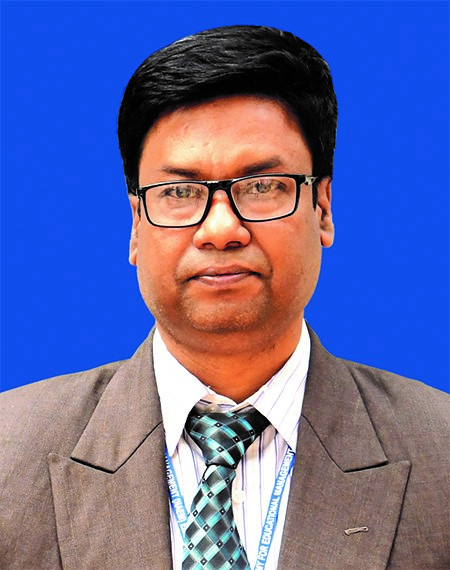
Chapainawabganj, Bangladesh
29 March, 2023On the Way
I stand before you like a tree
You communicate, laugh and cry
Living in shade
Feel the taste
Talking and whispering always
From the root to the top
From the top to the root
The mutual transportation of water and food
You and me
The shade speaks out breaking the silence
Moving all to face the challenge.
Chapainawabganj, Bangladesh
30 March, 2023
Flag of the country
The place of worship is golden soil,
A hot spring is a healing herb.
The motto he always used to say,
The flag of the Motherland is sacred

My flag flutters in the sky,
Uzbek pride is the national flag.
Reflecting four different meanings,
The flag of the Motherland is sacred.

Clear skies and blue waters,
The reflected blue color is blue color.
My grandfather's soul is happy enough,
The flag of the Motherland is sacred.

Red color is blood
Green is characteristic of nature.
White is a symbol of purity, peace,
The flag of the Motherland is sacred.

We are the future of this country.
Our stars of tomorrow.
Let us raise the flag of this country.
The flag of the Motherland is sacred.
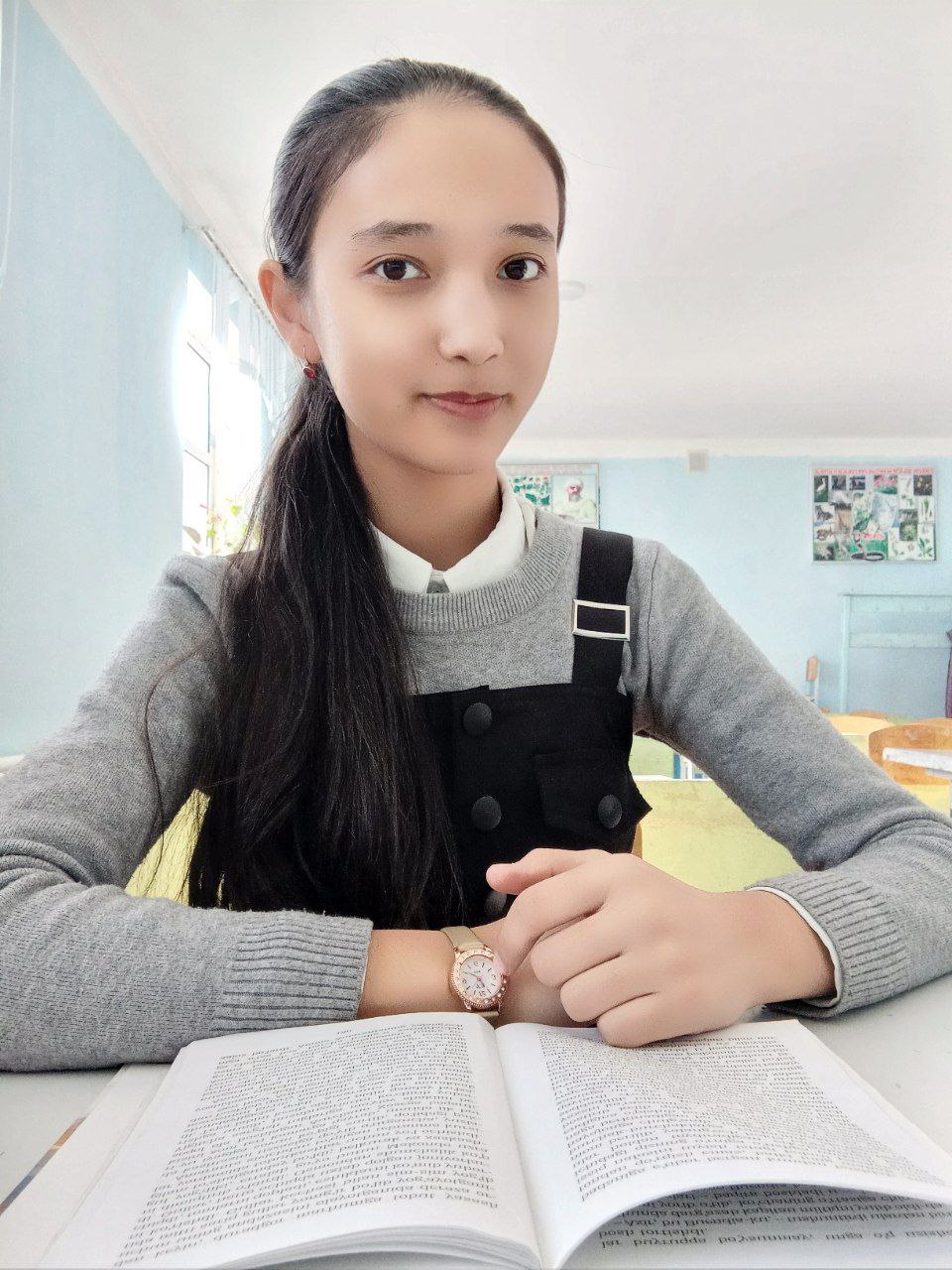
Murodova Muslima Kadyrovna is a student in the 6th “A” grade of the 30th general school of Jondor district, Bukhara region, Uzbekistan.
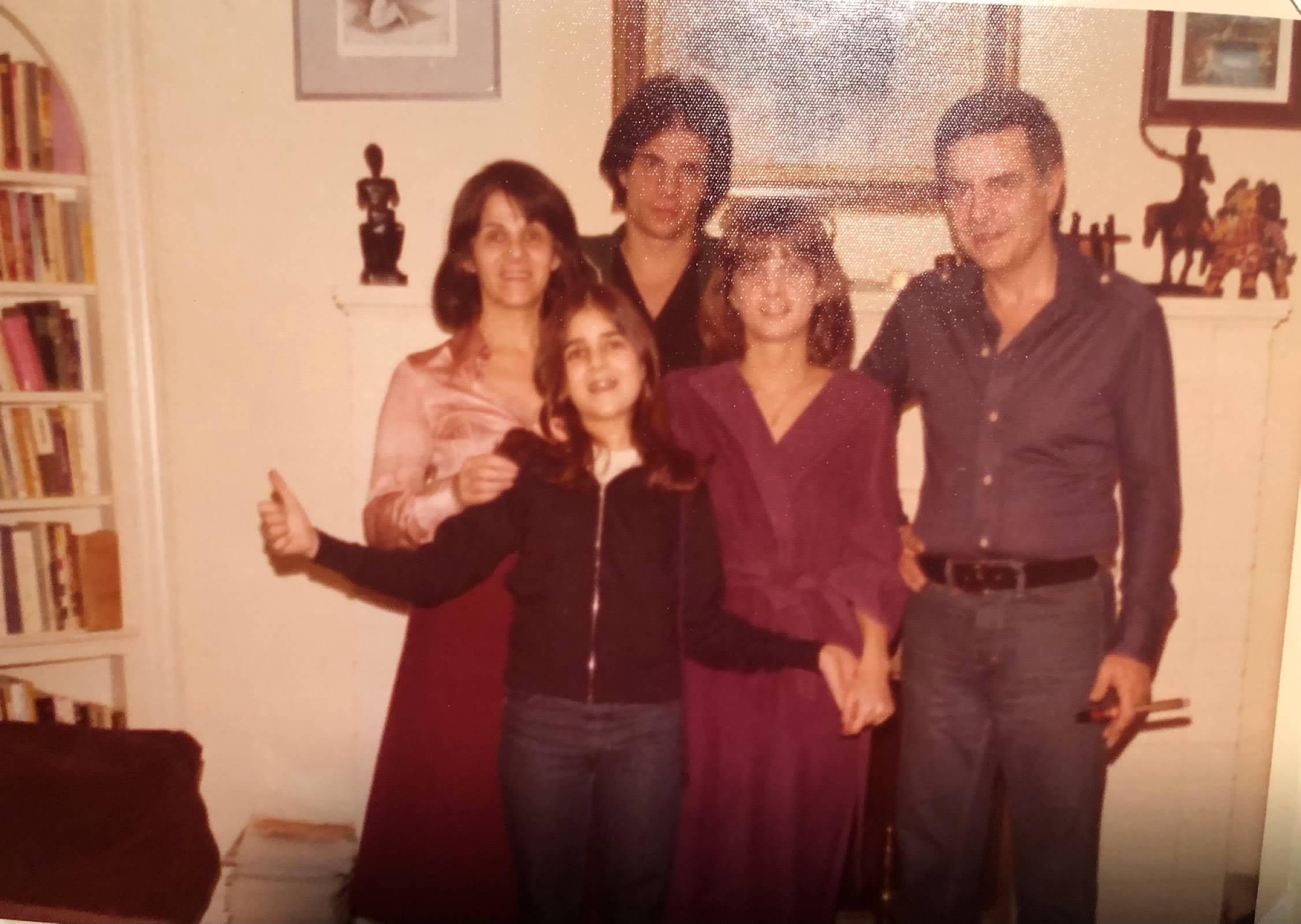
We had always been apartment dwellers. When my parents first arrived in this country, they lived on Amsterdam Avenue in the upper 90s, in a walk-up with other refugees as neighbors. Then they found an apartment in Forest Hills.
When I was born, my parents moved with my brother, sister, and me to a doorman building with a blue lobby in Kew Gardens. This two-bedroom was all I knew. My best friend, Claudia, lived down the hall, and Lucy, my babysitter, lived in an identical apartment below mine. Claudia’s parents worked for the airlines, so she was alone a lot, a latchkey kid. Lucy was the super of the building, and she was home all the time. My mom didn’t work, but she went to Queens College and then graduate school.
Mom played a game of tic-tac-toe with all the beds. Many times we switched rooms and reconfigured furniture to try to make it work. I stayed with my parents in their room till I was five. Then I shared a tiny bedroom with Debi, while Dorian slept on the couch or a vacated bed,
and my parents slept in their room. Once my parents slept in the living room so Dorian could have his own room for a while. Often we had visitors from overseas, and Debi, Dorian and I had to sleep on cots in the living room. This was especially fun for me.
My dad enjoyed apartment life, overheated, with a handyman available at all times. I liked being in a bustling household, sharing beds and being underfoot.
My mom wanted space. She’s the one who found the house. She had gone to her cousin’s for a card game in Forest Hills. She told me that the card table was by the front window. She looked
up to see a hand-painted “For Rent” sign on the porch of the house directly across the street. She said she excused herself from the game and slipped into her mink coat. She knocked on the door of the stucco house and talked to the owner.
A few days later, my family visited the house. It was old. We went upstairs single file, whispering. “It’s so big,” Debi said. “I love it.” I agreed that it was grand, with so much space. The backyard was big enough for me to do three cartwheels in a row on a diagonal. On the second floor, the bedrooms were all different, and we each called the one that we wanted. Still, I didn’t believe it was really going to happen.
Suddenly, my dad was on board to move. I never thought this would happen, ever. He was seated in an armchair in our apartment living room, and we were surrounding him. My family was animated. My world was starting to tilt.
Wait, I said. I don’t want to leave.
I’ll drive you to P.S. 99 every morning, said my father.
I’ll pick you up in the afternoon, said my mother.
Claudia can sleep over every weekend, said my father.
You can have your own room, said my mother.
We can get a dog, said my brother.
My bare feet were deep in the tan shag rug. I didn’t want my world to change. I wanted Lucy and Claudia in my building. I wanted my school to be across the street. I didn’t want my own room. I didn’t even want my own bed. I only wanted to sleep with Debi in hers. My universe,
the way I had known it for all of my eleven years, would crumble if we moved. I tried to say something, but when I opened my mouth, a sob came out, and once I started, I couldn’t stop.
We moved a few weeks later.
That night, we all went to bed in our separate rooms.
Debi shouted, Goodnight, Les.
Can I sleep in your room? I said.
No, she said
Maybe tomorrow? I asked.
Maybe, she said.
And then it was too quiet, and it was the first time I was alone. Goodnight, John Boy, I said.
My sister giggled. I heard Dorian laughing, too.
Debi said, Goodnight, Elizabeth!
Dorian said, Goodnight, Ma!
Goodnight, Daddy, I said.
Then my father joined in: Goodnight, Billy Bob. More laughter because it was really Jim Bob.
Goodnight, everybody! Mom said.
I stretched and pressed my toes into the wooden frame of my water bed, the smile still on my face, and went to sleep in a room of my own.
I can call you love

The last pulse of light is stubborn, at regular intervals
I can call you king from the foam of the sun.
or the premature eyes of the moon ...
The minutes before sunrise they are hieroglyphs ...
Is that I am, so vulnerable like the course of the foam that stays or breaks on the shore
I can call you love and kiss your feet or confuse you with a stranger
Don't tempt me with music that encloses the deranged image of the Grail and his train of suicide bombers
Because I am here, Flickering between heaven and earth!
Graciela Noemi Villaverde is an Argentine poet/writer based in Buenos Aires. She has a degree in letters and is the author of seven books of poetry. She has been awarded several times worldwide. She works as the World Manager of Educational and Public Relations of the Hispano-Mundial Union of Writers UHE and World Honorary President of the same institution.
THE GREAT REPLACEMENT“Fox News Media and Tucker Carlson have agreed to part ways.” 4/24/23
Good-bye, Tucker. We’ll miss your giggle.
Who else makes faces on prime-time TV
while spewing rhetorical questions?
Who else waxes indignant
about Bud Light’s sales pitch,
Dr. Seuss’ fantasies,
Mr. Potato Head’s parts,
or “Green M&Ms go woke”?
Here are some of Tucker’s greatest hits:
#1 George Floyd died of a drug overdose.
(Blasted after the autopsy ruled homicide.)
#2 COVID-19 vaccine—Maybe it “doesn’t work,
and they’re simply not telling us.”
#3 During the 2020 election, there was
“meaningful voter fraud in Georgia.”
#4 Russian’s invasion of Ukraine is a “territorial dispute.”
Why take Ukraine’s side? Has Russia “killed your dog?”
Tucker pulls conspiracies out of hats,
recasting news as “us” vs. “them.”
From O’Reilly, Tucker inherited his populist schtick.
Like O’Reilly, the populism is fake;
stokes suspicion and fear in “common folks.”
But Tucker’s racism is genuine.
He feeds viewers raw chunks of white nationalism.
Talks about the “Great Replacement” theory,
a plot to replace Patriots with immigrants
who will vote to make America second-rate.
He’s a Fox News entertainer, not a reporter.
But is Tucker the character he plays on TV?
His e-mails cast doubt—
in private, says he loathes Trump,
but bows and scrapes in public,
flame-throws hot topics in a squeaky voice,
his face scrunched-up with disbelief.
Tucker was Kevin McCarthy’s chosen one.
Sole winner of the January 6 video footage,
expected to document the party line.
So he edited out door-bashing,
cop-smashing,
office-crashing--
what viewers of real news stations viewed
with horror and dismay.
Tucker spliced snippet that showed tourists
milling about peacefully. Respectfully.
See? They’re trying to frame Proud Boys and Q-Anon.
It’s them against us again.
But January 6 was ignited by Fox and friends.
Weeks and week of trash-talk—
Dominion voting machines skewed election results,
stole the election from #45.
Fox hosts knew these claims were baseless,
dished out conspiracy anyway,
night after night,
to feed viewers’ outrage,
and maintain ratings.
So Dominion sued.
Fox had to pay big bucks: $787 million.
Someone’s head must roll!
“We’ll be back Monday,” said Tucker--
unaware of the sword of Damocles over his head.
Fox took a page from its own script--
adapted the “Great Replacement” theory.
Replaced Tucker.
Good-bye, Tucker. I’m trying not to giggle.
Copyright 4/2023 Patricia Doyne