IN TODAY’S WORLD,YOUTHS ARE CREATORS OF FUTURE IN EVERY COUNTRY.SO EACH DECISION AND CHANGING ARE ACCEPTING DEPEND ON THEIR FUTURE!!!
Nowadays, we may see the highly quality education in Uzbekistan. Because of this year’s campaign: “PAYING ATTENTION FOR HUMAN AND QUALITY EDUCATION” in Uzbek national discourse. There are so many changes in the name of this year. With the decision of President Shavkat Mirziyayev there is a new way of teaching pupils in schools. For instance: Mainly, each pupil must be ready for universities after graduating and must know two languages besides Uzbek. These languages may be Russian, Indian English, Spanish, Korean, Dutch or anything else. In addition to loads of useful activities are added to school routine and pupils may choose craft if they don’t want choose job. It can be beneficial to decrease poverty.
On the other hand, the quality of education is rising. We have opened many types of crafts: cooking, sewing, carpentry, carving, embroidery, guide class, computer programming and a lot of crafts of that sort. These crafts help for earning extra money for pupils besides from school. Proof of this in our school every weekend each member of this craft classes holds an exhibition of their works and they may earn money for that.
These ways of education are good enough. For example: on the 4th of March this year many guests have came to our country from Boshkortostan. They are the Minister of Boshkortostan for Public Education and his co-workers. I and my schoolmates were guides for them.
Uzbek education minister Boshkortostan and his colleagues escorted by Uzbek students.
We are members of a group of guides. Guests were very happy because we told them about our historical places.
Besides that, another aspect that pleases me is that women are becoming leaders not only in education, but in every industry.
On the 7th of March, Zamira Abdullayeva, who is the teacher at school number 22, has won a car as a prize for reading a lot of books. It is an amazing prize for being the winner. Reading books benefits people and helps their minds, and cars are given to the people who read the most books.
And Gulzira Shakarbekova who studies in class seven at school number 29 has won the gold medal in Kickboxing. Now she is the champion of Asia!!!
I HOPE THESE WAYS OF TEACHING PUPILS WILL BE USEFUL FOR FUTURE CREATORS OF UZBEKISTAN!!!
The little girl skipping rope in front of Fortgang’s building reminded him of his childhood sweetheart, Claire Needleman. Whatever happened to Claire? He’d never had as much fun with his adult sweethearts, that was for sure. He couldn’t even remember ever having played tag with one of them. With adult sweethearts there’s always the insecurity, the jealousy, the disagreements, the responsibilities, the compromises. With Claire it was all fun and games. Fortgang was overcome by a wave of nostalgia, a wistful question mark in the pit of his stomach. The little girl was singing as she jumped rope, “Little Brown Jug.” That voice—that was Claire’s voice he heard singing, “Ha ha ha, you and me, little brown jug how I love thee.” Fortgang was transported back to a carefree, joyful time.
“You have a beautiful voice,” Fortgang told the little girl.
“Thank you, mister,” the girl replied.
“You remind me of a girl I once knew,” Fortgang said. “Her name was Claire.”
“Claire was my mom’s name,” the girl said. “She died.”
The question mark in the pit of Fortgang’s stomach sank. “I’m so sorry,” Fortgang told the little girl. He wondered if he should, then he did. “By any chance was your mom’s maiden name Needleman?”
“No,” the girl replied, “Sanders.”
Fortgang breathed a sigh of relief. “Nice to meet you,” he told the little girl before heading back upstairs to weep in solitude.
Fortgang Attempts a Cake
There was a couple in Fortgang’s neighborhood, an older couple he would see on his strolls. They look like nice people, Fortgang thought. He never spoke to them, but when they’d pass each other on the street they’d all nod and smile, the standard courtesy among known strangers. He knew where they lived, a row house a few blocks from his own building, as he sometimes saw them coming out or going in.
I’d like to talk to them, Fortgang thought, but he was too shy to make an overture.
Then one day he had an idea. I think I’ll bake them a cake, he thought. He intended it to be a surprise, an anonymous one, but with a message on the icing. It would say “To the Kellers, You seem like a nice couple. Enjoy!” He knew their name because one morning, as he was passing their house, he stealthily went up to their door and saw a brass plaque that said “The Kellers.” He figured just maybe the Kellers would stop him the next time they met and mention the cake, maybe ask him if he had baked it, just the opening he was looking for.
Fortgang had never baked anything before. He hardly even cooked. He often got takeout, and also regularly consumed frozen food, which he’d microwave—TV dinners, chicken pot pies, Mrs. Paul’s fish sticks.
He wanted to bake the cake from scratch. A store-bought cake wouldn’t do, too impersonal. So he bought all the ingredients he thought he’d need: flour, sugar, salt, butter, eggs, yeast, and baking soda. For the vanilla icing he’d use a mix, and he bought one of those cake decorating syringes and some green frosting in a can to write his message with.
Fortgang looked at a couple of recipes and felt overwhelmed, so he decided to wing it. He mixed up some flour and sugar and water and eggs and salt and yeast and baking soda in random proportions in a mixing bowl, but since he didn’t have a mixer he stirred vigorously with a large fork. He poured it all in a baking pan he had greased with some butter and put it in the oven. He didn’t know what temperature to bake at, so he tried the highest setting, which was called “broil.” He put the cake pan in the oven and went to watch an episode of Dr. Kildare, from his collection of DVDs.
Toward the end of the episode, he heard his smoke alarm go off. He ran into the kitchen. Smoke was billowing from the oven. His cake was a charred lump. There was nothing he could do to salvage it. He could forget about the icing and the message. He was despondent. He poured himself a tumbler of Johnnie Walker Red and put another DVD in the player, an episode of The Untouchables.
The following morning, just before daybreak, he went out to leave a note for the Kellers, while he figured they were still asleep. The note read, “To the Kellers, I tried to bake you a cake, but things didn’t work out.” It was unsigned. He slipped it through the mail chute in the door.
The next time he passed the Kellers on the street they all nodded and smiled at each other.
Fortgang Simulates a Broken Heart
It’s been a long time since my heart was broken, Fortgang, now middle-aged, realized. Younger, he experienced frequent heartbreak. The objects of his affection rarely reciprocated, and he was mostly indifferent to the apparent interest of those who might have. Oh, he continued to experience sadness and disappointment in the realm of romance, but he bore them stoically, no longer the gut punch of a truly broken heart. Surely it’s better this way, he thought, none of the moping and misery, the crippling inertia, just, you know, sadness and disappointment. Still, there was something he missed from the time of broken hearts, he realized, an all-encompassing misery to luxuriate in, a most vivid darkness, when the one loved does not love in return.
So he decided to simulate a broken heart for old times’ sake. But first he had to imagine a heartbreaker because, ever since his last breakup, without a broken heart, the time for that was long past, he hadn’t pursued romance, felt he needed a break, a sabbatical. No, it wasn’t romance he was looking for, it was cut-to-the-chase heartbreak. But there’s no heartbreak in a void, you can’t just go through the motions, it needs at least the trappings of the real.
But who would the object of his putative affection be? He couldn’t conjure up memories of the ones who’d broken his heart in the past, that would be cheating, it wouldn’t be a simulation of a broken heart, it would be the echo of a heart broken long ago. And the desired couldn’t be wholly imaginary either—one might seek a partner based on an ideal, but an ideal can’t break your heart. No, it had to be a real person, flesh and blood and breath and eyes and laughter.
Perhaps Lydia, from down the hall, could be pressed into service of the imagination. She was attractive, smart, friendly, and they got along well enough in their limited encounters. Funny, she was single, and just a few years younger than him, yet he had never considered her a romantic prospect.
So Fortgang went ahead created a history with Lydia, alone on his sofa with the lights turned down low. He began with the desire for Lydia, then imagined his pursuit, a date, some misinterpreted signals, an attempted seduction, a rebuff. If at first you don’t succeed, lather, rinse, repeat, but no, it wasn’t going to happen, Lydia tried to be kind, tell him in the most considerate of ways that it was not meant to be. That was it! “Not meant to be.” Those were the secret words. Bingo! Heartbreak!
Fortgang was miserable. He’d lie on the bed in the fetal position feeling sorry for himself. One day he’d sleep poorly and the next for hours on end. He lost his passion for spicy food and swing bands of the thirties.
After several days of this he heard a knock at his door. Who could that be?
“Who is it”? he asked.
“It’s me, Lydia, your neighbor. I haven’t seen you in a while, and I just wanted to make sure everything was OK.”
Lydia! So I still have a chance, Fortgang told himself as he opened the door, happier than he’d been in days.
Peter Cherches’ latest book of miscellaneous prose and poetry is Things (Bamboo Dart Press).
Snow drip
washes winter memories
archived on the sidewalk


Don’t analyze
crickets
cast a spell


No room for panic
across the lake
don’t let him drown


Regeneration

It takes time to know a place.
In a day we lose 330 billion cells.
The new ones born
in this new place
smell these new smells
and recognize
they belong.
The Mammoth inside You

You leave with Ellen on your first trip together while dawn is still bluing so that when you get to that spot on the 60 freeway, she sees the sculpture of the mammoth silhouetted against the sky and says, “Oh my,” and then “What’s that?”

You think about saying, “Are you kidding me? How long have you lived in LA?” but you stop yourself, keep your snide smugness to yourself. Instead you say, “You never drive the 60?”

“Never.”
“It’s a life-sized metal sculpture of a mammoth. Actually it’s kind of funny. It’s wrong?”
“What do you mean by ‘wrong’?”
“I mean that’s the sculpture of a European mammoth. American mammoths looked different.”

“You big freaking nerd,” she says and laughs, and you laugh about what she said and at the surprise of the memory she’s evoking like a spell from 25 years ago, the first time you went out while you both were in high school, and you pointed up at the stars one night and said, “You know a lot of those stars are over 200 miles away,” and she’d called you “a big freaking nerd” and days later you told her that monarch butterflies go through four generations of animals as they migrate across the continent, and she called you “a big freaking nerd,” and you told her later that month that you’d be accepted to the University of Pittsburgh, and she called you “a big freaking nerd,” and then she’d broken up with you a month later because she was going to go to U.C. Berkeley although you told everyone that it was mutual and pretended that you hadn’t begged her to stay together, and the next time you’d heard about her she was married to a banker name Bruce, and when you ran into her 24 years later she told you that her banker man was going to jail for embezzlement, and she was divorcing him because she told him that she didn’t know he could do such a thing, and that was when he backhanded her. All of that between the last time she’d called you “a big freaking nerd” and now.

You laugh and almost say, “Yeah, I’m not a cool guy like Bruce.” But you swallow your words before they leak out of your mouth. Then you think of saying, “I wish I’d been cool. Maybe you would have gone to U Pitt with me,” but you hold that back too, and you’re not sure why you keep almost treating her with some of the same cruelty that Bruce the Banker did.
You say instead, “Yes, but isn’t it nice that I’m no average nerd. I mean, I stick the landing.”
She laughs and lays a hand on your leg. “That you do.”

As you pass the mammoth, you think about asking her about the break-up all those years ago. You didn’t realize that you’re still angry about that, but it must be sitting there subdermally. The memory of you begging and weeping, and your knowledge that she must have been disgusted at your weakness is there too. The memory of your rebound girlfriends, and the woman you almost married and then who broke up with you because you were still in love with Ellen is there. The sickening happiness you felt when you discovered that Bruce the Banker was such a bad man is there. All of it is there. These emotions loom inside you, hidden as big as the mammoth you’re passing on the hill.
She says, “Yes, nerdiness is just one of the things that I love about you.”

And you take her hand. It’s the first time she has used the word “love” in connection to you in 25 years. It is maybe enough. Right now you think that it probably is enough.
The role of Annimarie Schimmel in the history of Uzbekistan

It is known to many people that the people of Uzbekistan have followed Islam since time immemorial.
Therefore, some of our scholars have conducted research on the reasons for the emergence of the history of Islam.
Not only our scientists, but also non-religious people were interested in this situation.

Annimarie Schimmel, the leading German scholar of Islam in Germany in 1925, is one of those interested.
Her work "Johnon Mening John" occupies a great place in the history of Islam.
Throughout her life, Mrs. Schimmel has brought to the attention of culture lovers profound and discussion-provoking facts about Islam and its history.

On October 12, 1995, she was awarded the "Peace" prize by the German Book Organization, which clearly reveals the importance of her works.
Mrs. Schimmel loved the spiritual world of Islam with all her heart, and for this reason Muslims give her great recognition.

The work "Jonon mening jonimda", translated into Uzbek, is adapted to highlight the life, customs and cultures of women and girls in the Islamic world.
During the work, the lady tried to shed light on the importance of women and girls in the Islamic world over the centuries, and I would not be mistaken if I say that she succeeded.

The work mainly deals with books on the history of Islam and controversial topics in them.
   Emphasizing, the issues of wrong propagation of religion and disrespect for women and girls were specially touched upon.
     It is mentioned in the work that from the time of the Pailambars, women were given honor, education and upbringing, and they were even allowed to participate in battles as commanders.

       When Mrs. Schimmel wrote the work, there were no deviations or exaggerations in the laws of Islam regarding women and girls.
  For this reason, it is natural that Mrs. Schimmel and her works are glorified not only in the history of Uzbekistan, but also in the eyes of people who believe in the religion of Islam all over the world.
Note: Dedicated to the passing of beloved Katie Balaskas.
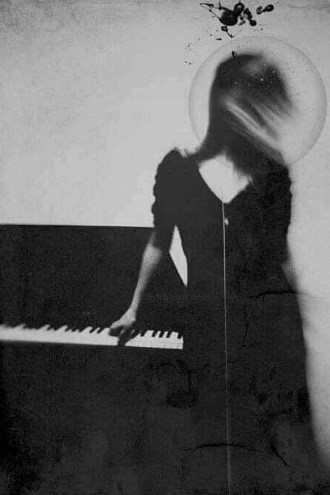
Priscilla, Let’s Dance (V2)
Priscilla, Let’s Dance
Priscilla, Puerto Rican songbird,
an island jungle dancer, Cuban heritage,
rare parrot, a singer survivor near extinction.
She sounds off on notes, music her
vocals hearing background bongos,
piano keys, Cuban horns.
Quote the verse patterns,
quilt the pieces skirt bleeds,
then blend colors to light a tropical prism.
Steamy Salsa, a little twist, cha-cha-cha
dancing rhythms of passions, sacred these islands.
Everything she has is movement
tucked nice and tight but explosive.
She mimics these ancient sounds
showing her ribs, her naked body.
Her ex-lovers remain nightmares
pointed daggers, so criminal, so stereotyped.
Priscilla purifies her dreams with repentance.
She pours her heart out, everything
condensed to the bone, petite boobies,
cheap bras, flamboyant G-strings.
Her vocabulary is that of sin and Catholicism.
Island hurricanes form her own Jesus
slants of hail, detonate thunder,
the collapse of hell in her hands after midnight.
Priscilla remains a background rabble-rouser,
almost remorseful, no apologies
to the counsel of Judas
wherever he hangs.
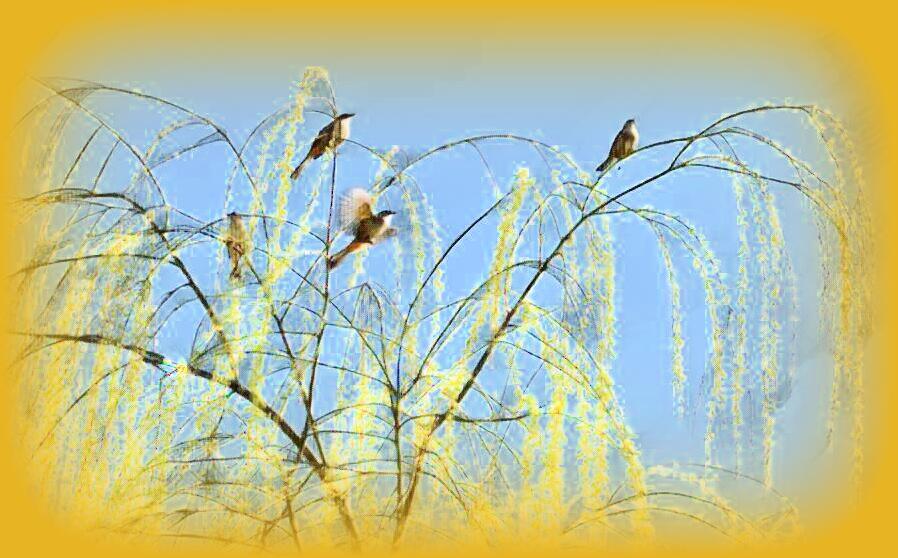
Willow Tree Poem(V2)
Willow Tree Poem
Wind dancers
dancing to the
willow wind,
lance-shaped leaves
swaying right to left
all day long.
I’m depressed.
Birds hanging on-
bleaching feathers
out into
the sun.
Michael Lee Johnson
Michael Lee Johnson lived ten years in Canada during the Vietnam era. Today he is a poet in the greater Chicagoland area, IL. He has 283 YouTube poetry videos. Michael Lee Johnson is an internationally published poet in 44 countries, a song lyricist, has several published poetry books, has been nominated for 6 Pushcart Prize awards, and 6 Best of the Net nominations. He is editor-in-chief of 3 poetry anthologies, all available on Amazon, and has several poetry books and chapbooks. He has over 453 published poems. Michael is the administrator of 6 Facebook Poetry groups. Member Illinois State Poetry Society: http://www.illinoispoets.org/.
Gummy Bears

Val and I were in Amsterdam.  Queen Elizabeth had just died, and no one was wearing Covid masks anymore. It was cold for September; I wished I had brought warmer clothing.  I wore my hoodie and a thin leather jacket, which wasn’t enough.

Walking in the Red Light District, Val put his arm around me. “Do you want to get high?” he whispered.  Val has a nice voice – deep and seductive – but he asked as if he were certain I would refuse.  We were on vacation, just the two of us, without our sons. When I said, “Okay,” he raised his perfectly arched eyebrows and smiled.
He bought a brownie edible and some gummies from a “coffee house.”  With the goods in the chest pocket of his flannel, we rode our rented bikes back to the hotel and locked them in the front courtyard.  If we were going to do this, we shouldn’t be on two wheels. On the way to dinner, we each ate a gummy, so innocent seeming, a candy in the shape of a bear.

Walking in Amsterdam was treacherous.  Bicycle lanes appeared seemingly out of nowhere, crisscrossed streets, and reappeared where we least expected them.  It made us apprehensive and jittery, swinging our heads around and stopping short, catching our breath.  We decided to walk in a quieter neighborhood, along the canals and residential streets, as we searched for a restaurant.
A few minutes later, Val said, “Do you feel anything?”
“Nothing.”
“Me neither.”
We each ate another bear while the canals twinkled in the night and the houseboats bobbed in the water.

Debi, my older sister, used to get high.  In the 1970s, when I was 6 and she was 16, we shared a room, a small space where I witnessed her teenage life.  When she was stoned, I hated her.  She laughed too much and was distant. I didn’t like the pungent odor of the smoke, different from cigarette smoke.  I needed her to be her usual caring self, someone who was responsible for me after school.  Instead, she and her friends spread out on our twin waterbeds, which were not more than two feet apart.  When I came home and smelled the pot, I folded my arms in front of my chest and asked her if she was high.  This made her laugh even more.  “I’m going to tell Mom,” I would threaten and march off to the living room to watch TV. She made being a teen seem like a disease I wanted to avoid.  When I was in high school, I experimented a little, but I never inhaled enough to feel any effects.  It had no appeal to me. When a joint was being passed around, more often than not, I just handed it along.
Val and I peeked into restaurant windows, looked at the menus posted on the street, and didn’t find anything.  Some were too crowded; some didn’t have enough ambiance.  Some needed reservations.  We walked some more.

“How about now?” he asked.
“Nothing.  You?”
“Not a thing.”
He broke off a piece of the brownie and gave it to me.
“Yum,” I said.  It tasted sweet and cloying. “I love chocolate.”

He took a bite, too, and put the rest back in his breast pocket.
Val and I finally found a restaurant that was neither nice, cool looking, nor appetizing.  We were running out of options, and closing time was near.  We took seats and wiped down our table with a napkin.
While we were eating, Val said something, I don’t remember what.  For some reason it made me laugh.  “What’s so funny?” he asked. “Nothing,” I said, and then we laughed so much that no sounds came out of our mouths, except for occasional gasps for air and a kind of whine from trying to suppress the laugh.  We were attracting attention. After we finished our food, Val paid the bill, and then I grabbed his arm across the table and said, “I don’t think I can walk.”  Either he didn’t hear me or he ignored me because he got up and left the restaurant.  I hauled myself up, willing my legs to function, knocked into the edge of the table, which didn’t even hurt, and followed him to the street.

I hooked my arm into his and followed his lead.  I knew I was walking but was not sure how.  As if emerging from a blackout, I was standing someplace new.  Then there were shouts and screams.  I hugged Val and realized that I couldn’t really see.   A bicycle swerved around us and then another.  We were standing in the middle of a busy bike lane. I tried to open my pink umbrella.  I was confused.  Was it raining?  Why did I have an umbrella in my hand? Val brought my arm down.
Time must have passed because again we were standing someplace new.  I felt afraid. I didn’t remember how we got there.  My mind was flashing on and off, like a slide projector with a missing slide.

Val was talking to someone on his phone.  It was our son in New Rochelle.  Aaron and Oliver were locked out of the house.  The key had jammed inside the lock of the front door and broken off.  Val was talking with them on the phone, trying to figure out what to do.  I said I could open the garage remotely from my phone, and I did.

Five minutes later, the boys called again.  I asked why they were calling.  “Are they okay?”
“Yes,” he said. “They got in the house.”
“They were locked out?”
“Les, we just talked about this.”  He looked at me, incredulous.
“Are they okay?”  I felt panic mounting, almost a sense of hysteria.  “What happened to them?”
Val told me how I had already let them in with the remote garage code on my phone.
“I can’t remember,” I said.

But then, like recalling an elusive dream, I did kind of see myself unlocking my phone and punching in a code.  “Did I do that?”
I was in a fog that was dense, and I couldn’t see my way out.
Val said something to me.  His sentences seemed so long.  I couldn’t follow.  I could only absorb a few words at a time.  “Can you say the first part of the sentence again?”
Suddenly I was standing near the reception desk of our boutique hotel.  My mouth was so dry.  I felt like coughing. I saw Val grab a beer from the cooler.  I asked him for water.   Or I thought I did.

“Am I talking?” I said.
“Huh?”
“Am I asking you for water out loud, or am I just thinking it?  Am I talking now?”
The slide projector brought me to blank slide. When I came to, a bottle of water was in my hand, and we were in the tiny glass elevator going up up up.

“Don’t lose me,” I said. And I clutched his arm with both hands.
Then we were miraculously in our 129-square-foot room that didn’t have a closet.  Our clothes were strewn on a chair and a deep windowsill.  I contemplated undressing.  As I stood staring at our bed that took up most of the room, Val opened the beer and it sprayed all over my leather jacket that I loved so much.  I looked at my suede boots and said, “Oh shit.”  I kicked them off along with my socks, took off my gold hoop earrings, and fell into bed.

“Please let me wake up okay,” I said as I drifted into unconsciousness.
The last thing I heard was Val saying, “Who knows how we will wake up.” His jokes weren’t funny anymore.  He wasn’t funny; he was mean.
The next day I opened my eyes.  The room smelled like beer. The floor was wet, and my boot was resting in a beery puddle. My foot was cold from not being under the covers.
“Say something,” I commanded.
“That was interesting,” he said.


I showered, washed my hair, wiped down my jacket with a cloth, tried to clean my boots, brushed my teeth, and put my gold hoops back on.
We went to get breakfast. Val still had the rest of the brownie in his shirt pocket.  “Wanna bite with coffee?” he asked.  I shoved him.
We sat on a bench overlooking the canal.  The buttery croissant melted in my mouth, and the warm coffee restored me. I zipped my leather jacket up to my neck and gave him a kiss. “Thanks for getting us back home in one piece.”
We got on our bikes and did not return to the Red Light District.  We went to the Van Gogh Museum instead.