Thinking of me, are awake at every step,
When i see you, i feel myself over the moon.
Donʼt refuse, let me lay my head on you lap,
You are always my remedy to my pain.

You sang a lullaby to me over the night,
You calm me down by saying "my daughter".
Let me kiss your beady eyes only a once
Let me lay my on your lap, dear mother.

Such a pity, i donʼt always have time help you
But you always keep me in your heart and mind.
Many years passed since i missed you so much,
Let me lay my on your lap, dear mother.

Your sunshine with an immense kindness
Even the ice melts from your love.
Stroke my head, again kiss my forehead
Let me lay my on your lap, dear mother.

Such a cruel and evil fate cannot test me,
Your prays are a shield and protector.
I forget the whole world, when you tell a story
Let me lay my on your lap, dear mother.
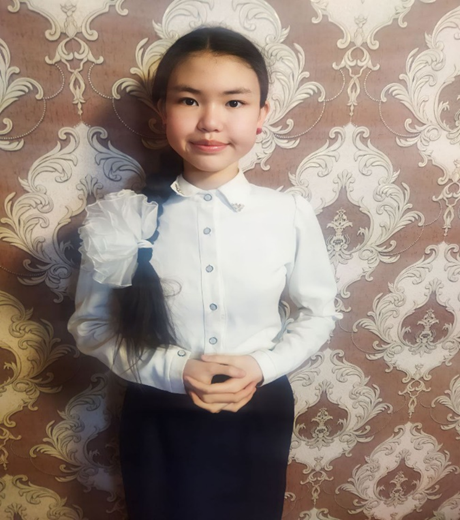
Makhkamova Charos Davron’s daughter. Was born on December 23, 2005 in Orta Chirchik district, Tashkent region. Currently, she is an 11th grade student at the 44th General Secondary School. Articles anda poems were published in newspapers of India, Thailand, the USA, Great Britain, Canada, Australia, and in anthologies sold in 26 countries. The winner of the district stage of the 2022 “Smart Reader” competition.
Step’d to the wall’s that’s nott’d there take the pledge up-touch; lean in; and—oh—it is not there right on fast through fall down into ? so fast there’s no time to live through it at all let alone “talk about it” and—fall.
Fall done en’ tumblin’ not—as there nothing to strike of the consistency of air or rock or anyplace in between to cause the fall t’ be a tumbling fall and so the landing well, it is really hard to predict if the fall gets survived. You know you see? Do you know? Do you see why don’t you know you were shown earlier and you do not know for one simple reason = you did not apply yourself fully = it is not for our kind to apply ourselves fully = oh yes and why not = because the things in life obtained by applying oneself fully are not for such as us = oh no = oh yes = the things in life obtained by applying oneself are not for us they’re for other people what = why you want to waste those damned ten years of life striving out so far that way that you end up going so far out that way you won’t find an arm attached to yourself long enough to reach back and grab yourself and pull yourself back there up to yourself out there and fuse the two which is what makes for a successful = thought still quite hard = oh yes you will you will feel the fall in any case no pain no gain barf bar/ ba’ b’ = wow they’re to feel that in the morning wish I hadn’t seen that oh well what’s done is done, in any case = may be said after the completion of a successfully survived fall that is your two = one now not only did your arm turn out to be just barely good enough and the two halves of yourself = perfectly aligned at the moment of fusion = you stop and you see that if planet Earth does experience {metaphorically of course as = [ with an entire planetary bag o’ living creatures ] = the explanation that’s just been handed out to you = hilariously bad laughably overly-simplified most stuntedly underdeveloped so let’s not go there = I am parched, where’s my am parched water parched, where’s my where’s my am parched, my top-filled am parched, water; my water’ water my God man; you don’t even know what a water looks like, spit-tooten’, spit-tooten = here is what a water looks like
God damn you ah ah ‘illina ‘illina stil’ down t’ road hipsla-tango = you can tell by my faces I am not fooling around you can tell but in any stroke there they were successfully landed bright-bruised, but happy. In contrast to = drink drink drink drink drink = the other way of falling which = drink drink drink drink drink = is just nearly as best but best’s not enough when in this one = drink drink drink drink drink = the faller’s arm-reachback’s not quite so adequate = drink drink drink drink drink = and thus the falling’s not needed since being parted out into two separate ways is inherently fatal in and of itself = drink drink drink drink drink = so we needn’t to go there not to go there we needn’t = to go spit clash glub bub = drink drink drink drink drink = so then squire-lastly there’s this tickle of a final way out of all possible finals ways to = remember the best way to break a fall is to never have fallen at all [yes sir that’s right] know that wisdom now = drink drink drink drink drink = and know it immediately, private, or you will face the living hell of being put in charge of all the vessels do you know what that means sweetheart fear it fear it do you feel the fear of possibly being put in charge of all the vessels or worse yes than this
= drink drink drink drink drink = sir! And worse yes than that = drink drink drink drink drink = sir! but all’s become so tiny sir how can we do it now it’s gone down so tiny? would be actually being put in charge of all the vessels (oh yah oh yah reality does have a way of stepping out of the theoretically real into the really real area of its-self within which lies all pain suffering malicious cruelty and even some petty thieveries of two or three but what’s a (?? tipt’d-tongue tip’d-tongue) “ “ this blank may be filled with any word desired dab-smack’d so whish would you choose Top-mayor, I mean what’s right what’s wrong BOO just never ever ever blacken the family name
BOO for if the family name gets blackened not only will it set all the neighbors a-buzzing [and thus to shut up all smiley when thou doth enter their earshot] so now my nose’s blown and my inner noisefest’s gone a-quiet {nearly}, here’s what happens = the back-half’s been grabbed ‘nd pulled up’s been = not really aligned perfectly = the two halve will mate jaggedly off center = leap back the observers & if any & out of shrapnel’s range = and the two will clash off-center = being mmmmediately kill-xisted into balls of flames slurries of green red and when present at all, most likely laced with streaky-splatter’d gold {but yes oh yes of gold nonetheless so of probable high-value = let’s take ‘em out Sarge! = the minutes all ‘round here b’ ticking yas yas, they be ticking = and it does all seem to not be there anymore just like YOU if you dare fall that way, Toppie, just like YOU and like YOU old-man Toppie, but here we are no wait the doors need to slip open—there.
What?
Regardless of number of hot teas too-accurately drunk, we be.
There. Look!
Jan and Jon turned out from their looking.
Where the hell are we?
In the aftermath of a successfully perfectly harmless fall.
Frankfurt am Main, Germany


Often in my wounded warrior years

I think back to Frankfurt, Germany

twenty years after the horror

though I then was

not mindful of the whistle

and bang of bombs,

the dry or the wet mess of rubble;


the streets were postcards reconstructing,

bratwurst sizzling

beer warm, not needing chill,

frauleins in calf-high boots,

mini-skirts, tight sweaters

that your eyes groped wildly, though judiciously.


The sun shone down

as in a travel magazine,

so rich that azure,

the greens dark, bright

in that damp Taunus District climate.


My legs were good.

I walked

one end of the city to the other

never fearing knife, gun, Gestapo, thug;

I walked

fantasizing

the look of the Holy Roman Empire,

of genuine Roman soldiers before that,

the armor clinking or clacking as they walked,

the precision of determined feet on stone, on ground.

I imagined campfires on dark nights,

logs, twigs burning, the crackle,

and the river silent in the shadows out there somewhere.


I strolled by the now and seemingly forever named

Main River,

the stippled white light of noon

floating,


and I

even by myself,

mostly by myself,

entered

the scene like Caspar David Friedrich,

a wanderer above a sea of fog,

but the fog was in the mind,

history, not the eye,

in the mind

and then the cold touch of a railing,

and next to me the frown and pull away

of that pretty girl that I would have liked to meet..


I heard stories of the war,

saw the aria of the old opera house,

the building a shell exploded

with a Beethoven burst.


The fog did not lift;

besides imagined Sturm und Drang.

there was only the crudity, the stupidity

of enlisted army life,

only the George Grosz faces

of people I knew,

drunks,

punks I knew,

kids like me,

when face to face

with a mirror,


and later

through years of sifted sunlight,

time established itself,

the haze of history arose

from its corpse.

I saw in perspective

a personal walk on a stage empty

awaiting the next act of the larger drama.

I was grateful that I lived in less

than Wagnerian times,

the entrances and exits

were losing their impressions

in the accumulating dust,

in the wearing away of wounds

in the sweeping away of the dust.


History is so much cloud;

The brief shapes evaporate

But the essence of storm

Always arises, bit by bit,

And grumbles out to another country,

Bites lightning quick,

Floods with impassioned blood

And roars the rhetoric of anger and grief.


In Frankfurt I roamed the wisps of the past

As if the conclusion of one war was final,

 but it is the human heart that’s always ready for new battle,

arming itself with distrust, suspicion,

vainglorious ambition,


A generation falls dead,

So many puppets rot away,

All that courage, fear, blindness,

Visionary grief evaporated like water,

Puddles of blood hidden, absorbed by weeds,

The dancing flowers of peace so charming,

Disarming nations with the veneer of civilization.

How so much is reconstructed, built with hope,

But all the foundations are built on forgetting, or if

Memory is invoked, the kings, queens, sergeants,

Killers and the fallen are made of bronze or stone.

No blood, no veins, no laughs or tears

Come out of the unchanging mouths of statues,

Posterity that has that faux nobility,

Like scripture has that holier than thou reverence.

Nothing is grounded in the common world of bombs, armor.

The head is still wrapped in historic fog,

----Dan Cuddy

*******


The Gasthaus On Homburger Landstrasse


Johan or “John”

owned a profitable business

a gasthaus

serving Henninger Bier

cognac

all manner of whiskey

schnitzel, wurst, pommes frites

that the young depraved American army craved


A somewhat homey place,

the wood paneling,

the white and yellow opaque glass

of the lower window panes,

the comfortable tables,

not too closely spaced;


Locals visited it too,

not just soldiers

that wanted to get off-base

but had to stay nearby,

Edwards Kaserne just across the street

and Third Armor headquarters' gate,

this side half a block down.


John had a glass eye.

He in his late forties

a soldier in Hitler's army,

his frau,

attractive face,

a bit plump

but good living settles, spreads,

sits in contented conversation.

Renoir would approve.


Life moves on.

Certainly, John was not

a war criminal

but a skinny youth

in the bad times,

when harangue and euphoria

were the orders of the day.


John just wanted to get along;

it was his duty to serve,

defend the homeland,

had nothing to do with Jews.

he didn't particularly like Nazis.

He was a dark-haired German

lean, young,

given a uniform, a gun.


John was not an intellectual;

he fell into the general apoplexy,

nurtured no visible conscience

or protest,

just an ordinary man,

Ecco Homo,

the events swarming

before his eyes

within, without his mind,

he just wanted life,

not a soldier's death,

not a hero's monument,


and so,

twenty years after the war

he had a plump attractive wife

who gave him a peck of affection

in public and more in the marriage bed,

three floors above that gasthaus

where soldiers would come and go

talking of drinking and bordellos,

but the American soldiers

were kids

and the couple

like chaperones

kept a semblance of order,

had little trouble with loud voices,

off-key American singing.


A profitable business,

an ordinary life,

not a romantic’s dream

but preferable to the ride

of the Valkyries


one learns to tap forgetfulness

toast the present,


---Dan Cuddy
Respect for book begins from library

It was a summer month when the sun rose, the air was hot. Today Sarvinoz woke up early, did exercises, washed her face and drank tea and daydreamed and played on her phone. She couldn't find any more interesting thing to do, so again she daydreamed.

She remembered that her teacher's words. Teacher said "The best and most useful thing to do when a person is bored is to read a book." Sarvinoz immediately wanted to read a book and  looked for a book at home but there was not any book in her house. Her librarian teacher to her said, "Whenever you want to read a book, come to the library, you will find all the books that you are looking for."

After that Sarvinoz dressed and she went to the library. On the way, she met a lot of friends and they went to the library together. When they arrived, the librarian Maryam was gathering all the books. Maryam  was very tired.

The girls looked at Maryam.                                                              —"Assalamu alaykum teacher, we have come to get a book," they said. Librarian Maryam said, "Vaalaykum assalom, you are welcome, please wait for me to tidy up this  place and then I will definitely find the books you want."

Sarvinoz remembered her mother tongue teacher's words.

"Respect for the book--it starts in the library," said her teacher.

Sarvinoz suddenly said, "Can we help you?"
Librarian Maryam smiled and said, "Will you be tired?"
The girls replied, "No."
"Then it's fine but you only bring the books I will put them away myself, if not, you will be tired."
"It is Ok," said the girls.
They gathered all the books in an instant. Librarian Maryam thanked Sarvinoz and her friends and found the books, Sarvinoz went back home and read with pleasure.

Beknazarova Ayganim was born in the village of Keregetau, Tomdi District, Navoi Region, Republic of Uzbekistan. Currently, she is a student of the 7th grade of the 9th school.
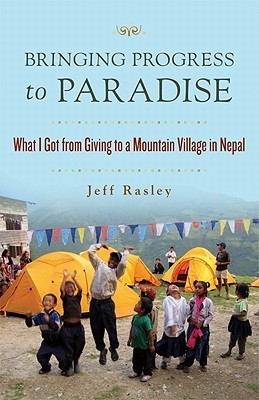
An excerpt from Bringing Progress to Paradise: What I Got from Giving to a Mountain Village in Nepal, by Jeff Rasley, published by Midsummer Books, 2023.
We were five ghostly figures in swirling snow, standing atopthe 15,000-foot Zatwra La. Early morning rays of sun crept over and down the flank of the great white peak behind us. Wind blowing from the north made it hard to hear the others. Heather shouted over the hushing wind, “We’ve got to spread out!” But Tom insisted we should stay close together. All our rope was with our porters, who were slogging up the pass an hour or so behind us. Suddenly, Heather yelped and took off running. Tom cursed. Seth bellowed, “Go, run!” And then I heard the low distant roar that mountain climbers dread.
We took off down the pass with Heather in the lead. Judy cried out and fell down. Tom and Seth grabbed her arms, pulling her up, yelling at her, “Run! Run!”
I saw them out of the corner of my eye as I pounded mechanically down the rocky, snow-covered slope, stumbling into and over boulders hidden by snow. My consciousness was a gray crackling static. I knew my ability to think and respond was impaired by altitude sickness. All I felt was an instinctive drive to keep running, to get off this mountain, to survive.
The roar of the avalanche above and behind us was replaced by an eerie whirring sound. Spindrift came over us, stark white and opaque. I could barely see my gloves and boots. But the avalanche had petered out. We fell to our knees gasping. We looked up into a vast whiteness.
~~~~~~~
The avalanche struck when our team was hiking out from base camp after a failed attempt to climb 21,224-foot Mera Peak in the fall of 1999 in the Solu-Khumbu region of Nepal. Fifteen climbing teams spent most of the first week of October stuck in base camp or high camp. With unrelenting snow and terrible visibility, conditions were too tough to make a summit attempt. During my team’s eleven-day trek to the Mera base camp at 16,000 feet, we were rained on every day until we got above 14,000 feet. From then on, it snowed every day.
The trek was surrealistic, over high mountain passes, across rushing glacier-fed streams. We slipped and slid through a muddy bamboo forest and past the remains of a village destroyed the year before by an avalanche. Everything—our gear, boots, clothes—was soaking wet by the time we got above the rain, camping then in snow and ice. Our progress was slowed after that by having to slog through deep snow. After four days enduring heavy snows and blizzard conditions in base camp and high camp, our team gave up. I spent the last day on the mountain in a tent by myself, retching and wretched with altitude sickness and a sinus infection.
Snow continued to fall as our defeated and bedraggled team finally hiked out of base camp. At sunrise on the second day of the hike out, our tents sagged under five inches of new snow that had fallen during the night. Snow continued falling as we ate breakfast, packed gear, and then trudged 2,000 feet up the backside of the 15,000-foot pass called Zatrwa La. This was the last high pass to cross to escape the menace of avalanche from the great white-capped Himalayan peaks and to reach Lukla village, where a Twin Otter airplane was scheduled to fly us back to Katmandu. By the time we postholed up to the crest of the pass, fresh snow was over two feet deep. The conditions were perfect for an avalanche: fresh, deep, and unstable snow.
Barely visible through the falling snow on a ridge above and behind us were splotches of red and yellow—the down parkas of three Nepalese porters from another climbing expedition that was following us out of the mountains. The three Nepalese guys were inching their way across the ridge, slowed by the blowing snow and the heavy loads they were carrying.
When the avalanche struck, my team was on the crest of the Zatwra La trying to decide how to descend the steep 4,000-foot slope. The avalanche came down off a mountain shoulder well above and behind us, but right above the three Nepalese porters. They vanished in the gigantic wave of the avalanche. It wasn’t until we were safely back in Lukla village that we learned the porters had been killed, along with four others who died in a series of avalanches across the Nepal-Tibetan Himalaya that same week of October 1999.
Of those seven deaths, only one garnered international headlines, that of the famous mountaineer Alex Lowe on Shishapangma in Tibet. If the deaths of six Nepalese porters in the avalanches were noted at all, it was as a footnote to the loss of a great Western mountaineer.
The three porters I saw enveloped in the death grip of the avalanche were known to me only as workers for another climbing expedition of Western adventurers. They lost their lives carrying heavy loads while taking a higher, harder shortcut out of base camp to get their employers’ gear to Lukla before the climbers arrived.
~~~~~~~
The arc of this story begins with three being enveloped in an avalanche of death and ends in three being enveloped in an avalanche of love in a village called Basa.
Welcome, everyone, to Synchronized Chaos’ mid-April issue.
This issue brings everyone along with great energy, with a skip, a jump, and a hop!
We invite our readers to join us for the Hayward Lit Hop, a free, all-ages one-day literary festival in Hayward, California where various literary groups will host readings at different venues up and down B Street. Event kicks off at 2pm in Heritage Plaza across the street from the downtown library and continues at various places until the afterparty at 7pm at the Sun Gallery.
Now, for the submissions!
Jazira Mi explores the joy, and the risks, of embracing life with both feet forward. John Culp expresses the joy of a rare moment of the seemingly impossible.
Kumar Ghimire speaks to the dreams that encourage him to push forward in reality. Mahbub Alam illustrates the risks and the joy of banding together with friends, family and neighbors and stepping into the unknown.
Some artists push forward through experimenting with craft and structure rather than through direct assertions within their pieces.
Mark Young contributes rough, surreal, textured artwork that is more about image and color than representation. Tuyet Van Do presents moments of ironic and poignant juxtaposition in her haikus while Jim Meirose presents a surrealist take on a poor sod’s visit to the doctor.
Eddie Heaton takes us on a tour through this life and the underworld through his mythical poetry.
This issue does “look before it leaps,” not ignoring the real difficulties and dangers many face in life.
Chimezie Ihekuna addresses the malaise continual artistic and professional frustration brings. Daniel De Culla comments on the dangers many young people face from predators in a tragicomic poem of advice for students.
Sunil Saroa conveys the loneliness of living among those who don’t understand you. William Hartwick paints a portrait of life with bipolar and Tourette’s and reminds us of the daily discrimination people with invisible or misunderstood disabilities face.
Stephen House relates how he realized the injustice of a dangerous work situation long after it had passed.
Yet, other writers point to hope, even when postponed, or to the possibility of being able to choose to respond to one’s circumstances in a courageous way.
Chloe Schoenfeld encourages people to persevere through difficult times through the metaphor of a butterfly. Maja Milojkovic raises her fist and heart for love in defiance of oppression and death.
Maurizio Brancaleoni suggest that some may tame their fear of global crises by exaggerating them for comedic effect. Whether this is a form of heroic courage or cowardly denial is up to readers to judge.
Anne Hendricks-Jones’ character assumes an alter ego as a heroine to save children from a school shooting. Sandro Piedrahita’s piece celebrates another kind of heroism, patient love and forgiveness amid the violence and fear of drug trafficking in South America.
Tammy Spears shares loving pieces in memory of her personal heroine, her deceased mother, and also honors her sister and soldiers who have chosen a path of courage and sacrifice. These are excerpts from her collection Flutter of an Eye.
Graciela Noemi Villaverde expresses her longing to be treated as a co-creator rather than a muse or a work of art herself, in a piece that could be addressed to a partner or a deity. Film critic Jaylan Salah takes a second look at beautiful bombshell Scarlett Johansson’s portrayal of femininity on screen and suggests that it may be more complex and assertive than it appears at first glance.
Many other writers explore the timeless themes of time, change, cycles, love and loss, grief, healing, and renewal.
Laura Marino’s bilingual haiku follows different seasons and times of day through a succession of moments in nature. Noah Berlatsky comments on being in sync, or out of sync, with the passage of time.
Laura Stamps captures a personality, place, and time through chatty postcard poems.
Mashhura Usmonova recollects the tender bloom of first love while Shahnoza Ochildiyeva conveys moments of young, idealistic soul-level happiness. Linda Springhorn Gunther reviews Lisa Scottoline’s novel Eternal, which situates the beauty of pasta and young love among the repression of 1930s Germany.
Brenton Booth captures short vignettes of moments of connection, real and imagined. Wazeed Abdullah reflects on the love and nurturance of families.
Robiul Awal Esa’s heartwarming story illustrates the power of kindness and gratitude for those who have helped us along in life.
Channie Greenberg sends up another gentle photographic submission, this time of beige and orange flowers. Don Bormon celebrates the natural beauty and renewal of spring.
Haze Fry questions whether time alone has the power to heal the wounds of a decayed romance. Zadie McGrath describes the deflation of a youthful romance in a school setting.
Mesfakus Salahin evokes the lingering aftermath of loss, whether death or the end of a relationship.
Azemina Krehic laments the ruins of a beautiful relationship that fell apart after a trip to historic Trieste. Emina Delilovic-Kevric grieves over the loss of her mother’s love, which happened even before her death.
J.J. Campbell addresses and accepts mortality and grounds his answers to life’s big spiritual questions in the here-and-now. Duane Vorhees explores the changing and seemingly arbitrary tides of fate, evolution, and personal destiny.
David Kopaska-Merkel draws on history to show how our personal and collective pasts can remain with us as we move into the future.
Christopher Bernard highlights the transcendent music of the Kronos Quartet that spans space, time, and different generations.
This issue melds the boundaries of space and time as well, representing work from contributors of different generations and nationalities. We hope that it pushes forward your own creative dreams.
+


WALKING Water
       Support my feet

Looks like Liquid
       feels like street

I'm Heart filled Dreaming
     I could go Home

But Bring Here Heaven
      just now on loan

LOVE lift my thought
     Above Being tried

As STEPS ON Liquid
          are not denied

WALKING Water
       Support my feet

Looks like Liquid
       feels like street

                                                ............
by John Edward Culp Saturday Morning February 18, 2017