Takeaway Quotable Quotes ‘Whether or not you write well, write bravely. Write without fear and edit without mercy’ and quintessentially Hogwarts would have been alluring and enticing as the epitaph of Hagrid, ‘Hagrid has been known to befriend giant spiders, buys vicious three-headed dogs from men in pubs and sneaks illegal dragon eggs into his chamber’. Bernard Shaw’s heartfelt lines ‘The theatre should be a factory of thought, promoter of conscience, elucidator of social conduct, armoury against dullness and despair and a temple to the ascent of man. and Existentialist Beckett’s re-envisioning ‘Yes, yes, we’re magicians.’ benignly mainstream cognitive narratives.
I am writing in Ariel spirits surmising the incantation of Raphael and Gabriel as they are the epitomes of Archangels with their dukedom and kingdom. In multicultural and pluralistic sovereign global village epoch’s literary accolades and British Library’s Discovering Literature ‘treasure hunts and golden nuggets’ prospects echo the voice of transcended relationship between independent extension project work and non- examined assessments. Creative Writing and English Literature have mainstreamed their destinations with the stars of heaven. Eventually Dead Poets Society showcases personification of abstraction toward nebulous and mercurial film productions and movies adaptations integrating to the confederacy of theatre and performance studies. The scholastic and intellectual terrain and arena have gone to highlight features of romantic theory and critical traditions spotlight. Swedish universities offertory of diversity and variety stylistically and aesthetically bestows the upcoming prospective learners and apprentice pupils with the multifarious majors and minors. An Oxford graduate working in historic Shakespearean theatre and a Cambridge post-doctoral fellow with the essence of literary critique’s appetite have their fantabulous perspectives in demarcation with trademarks of legacy hallmarks.
I am not discoursing upon the issue of bleakish modernists’ cosmopolitan viewpoint in alluding to the harangues and tirades of social, political, economical, cultural phenomenon –the boudoirs, saloons, cafes, restaurants, pubs and taverns, attics and ottomans, chest drawers and closets and so on. They are today ,in fact, hackneyed notions of idiosyncrasies and that’s for sure. Why would I have to abandon reading Hardy’s harrowing pastoral landscapes and relegate Tess to be the subject of exploitation under ecocritical feminist perspectival regime. A damnable shit of effigy caricatures and frolicsome buffoonery would be succulent and amorphous rendering to the catering of farmyard’s hullabaloos banishment. William Golding’s ‘Lord of the Flies’ as skeptics critics venerate to be of utmost devotional subject in contextualizing modern times and whatsoever, whosoever, whomsoever might be gregarious to compare and contrast HG Wells’ ‘War of The Worlds’. I must profess the lionhearted proclamation and extoll the integrity of ‘Interpreting Undergraduate Research Posters in the Literature Classroom’. ‘Crystallization’ connotes exploratory critical responses and explanatory noteworthy arguments. Gabriel’s announcement in rendition to the poster presentation startles Ariel, compelling the fantastically misanthrope Caliban and devalues exhumation of sea-wayfaring, mystic recluse, maiden-mermaid Annabelle Lee. Caramelization of marmalades through ‘close readings, negotiations, integrations, theoretical generalization and aesthetic judgement’ awestruck wondrous magic and splendorous flora-fauna. Coffee conversations and beverage-interviews in addition to bookclubs and library workshops truly enchant poster sessions in the domain of public ‘peer-review and critique’. Perfunctorily declaimed by ‘negative silhouettes’ of ‘nihilism’ in Shelley’s Alastor-The Spirit of Solitude cannot be feigning throwaways of the decoupage disharmonizing of sublimity.
Netherworld tram accidents wouldn’t have banished my forlorn industrialized solitary life to exploded ashes if bequeathment of fantasy fiction prevailed in the earthy heaven’s halcyon amidst the solitude of Desdemona, Cleopatra, Ophelia, Sebastian, Juliet Echoed Recitals of Magical Charms-Enchantment of Harry Potter’s Glory!
My contemplative conscience cognition rekindles sparkling flames arousal in my imaginative faculty of the brain to be blessed by the revisiting Jibananda Das’s ghost-hobgoblin in my dawn of sunlight and dusk of twilight.
What if Jibananda Das’s Phantom Spirit Drank The Life Of Hogwarts and Hanged Out With Dickensian J.K. Rowling? Crystallized Me Living With The Frozen Muggle World and My Imaginary Voyage of Figurative Troupes; The Magic of Literature In Interpreting Harry Potter and The Philosopher’s Stone
Province of pedantic rhetoricians and their intellectual circle of linguists-and-literary critics and professional philosophers revival of interest in the classification and function of figurative language such as Sister Miriam Joseph’s Shakespeare’s Use of the Arts of Language [1947] and the bibliographical archive of M.H. Abram’s ‘Mirror And The Lamp’[1953].
‘Hagrid’s big hairy face gleamed over a sea of heads.’ Take another instance, ‘Hundreds of faces staring at them, [//] looked like pale lanterns, [//] flickering in the candelight.’’ Roman Jakobson’s highlight featuring spotlights ‘metaphoric’ or ‘vertical’ and the ‘metonymic’or the ‘horizontal’. In synecdoche [Greek for ‘taking together’], a part of something is used to signify the whole, or [more rarely] the whole is used to signify a part. In this enlightening glimpse ‘sea of heads’ could crave the treasure hunt in metaphorical synecdoche. On the issue of metonymy [literally change of name], the literal term is applied to another with which it is closely associated, because of contiguity in common experience. Would skeptics and cynics be compelled to sbift their pattern focal convergence and divergence into ‘pale lanterns flickering candelight’. So, we have here inviting banqueters with picturesqueness of marmalade porridge, Yorkshire puddings, apple pies, treacle tarts, chocolate eclairs and prosopopeia the Greek term of personification whereby inanimate object [lantern and candelight] and abstract concept [hundreds of faces] is spoken of as though it were endowed with human attributes and feelings [pale and flickering]. The meter of this line of poetry having iambic feet and the fixed or nearly fixed pattern of accented and unaccented syllables producing the pervasive rhythm. Inversions in iambic verse with the dispersion of troche.
[It is possible to distinguish a number of degrees of relative syllabic stress in English speech, but the most common and generally useful fashion of analyzing and classifying the standard English meters is to distinguish only two categories-weak stress and strong stress-and to group the syllables into metric feet according to the patterning of these two stresses]
‘The crystal trophy cases glimmered where the moonlight caught them’ and ‘A few embers were still glowing in the fireplace, turning all the armchairs into hunched black shadows. In this extended metaphor the tenor embers and arm chairs implicitly and figuratively transfigure, transform, or transmogrify ‘glowing’ and ‘hunched black shadows’. Embers and armchairs are literally different objects notably dissimilar, incongruous, unallied and impropriety of the material world and their tenor are adrift and abroad the vessel vehicle and work like noun, verb or adjective.
‘Although I was fond of blowing my own trumpet
Nonetheless I knew that a rolling moss gathers no stone;
Here I have embarked on my salad days
When I was green in judgement and cold in blood;
My self -the reed-that was too frail to survive the storm of its sorrows!!’
My laboratory handwritten manuscripts and the desktop typewriter
Shakespearean effigy lettered a caesura
‘‘Canst thou not minister to a mind diseased,
Pluck from the memory a rooted sorrow?’’
A gleam of delighted divination
A dawn of ethereal fortune
The stony pebbles pearly tides
thunderous rocky shores
Book of Psalms-My dreary refuge
that shuddered astrophysicists knells in extolls
‘The Lord is my rock, and my fortress, and my deliverer’
Is but a sustained metaphor
Every simile can be compressed into a metaphor and every metaphor can be expanded into a simile. Nesfield’s ordeal in parchment of enlivening and enriching figurative language through the implication of ‘informal or implied simile’. Except the marker of comparisons ‘like, such, as, so’. And so on and so forth, I cannot be lingering to prolong the discourse to the harbinger – cradle and grave mausoleum and sepulcher since the spirits of literary criticism in linguistics should be crowned wreathed. Or else this wondering and aweing notes would be a teaspoons of life’s journal annihilating the heart with a dagger!!
Jivananda my favorite Bengali poet laureate welcoming my Ariel’s wings-the freedom of liberty- in cordiality and joviality. Whilst the stalwart novelist Kavigurus’ Rabindranath sculpture flickers seashore sea shells in harmony’s nectarine tides and waves choreographing dysphasia. Ushered by the beverage hubbub, my poet counselor spiritual enchanter chanting ‘dysphasia’ which dumbfounds me. ‘Vulnerability and victimization encroaches my reading and writing of the brain totally or partially silhouetted by agraphia and alexia that elixirs would be dwelt later in neurolingusitics.
Standard British English –thevariety of a language with the highest status in a community or nation and which is usually based on the speech and writing of educated native speakers of the language. News media and literature, dictionaries and grammars, non-native speakers conservatory and English as a foreign language sanctuary … ‘Dotted here and there among the students, the ghosts shone misty silver.’ Reading this metaphorical figurative language from the Sorcerer’s Stone, Professor Jivananda Das exclaimed ‘Guffaw! You’ve been my student residing in the international hostel and I’d want you to perform this years’ phenomenal pageantry with endoglossic audio-visual method’.
‘Recorded dialogues picture sequences to language items and focusing on speaking and listening preceding reading and writing through discouragement of mother tongue usage and encouragement of behavourism and structural linguistics ’
First of all, Synchronized Chaos stands with all those affected by the recent earthquakes in Turkiye and Syria. We encourage all who are able to contribute to the relief efforts, which you may do through the Red Crescent or other worthy organizations.
This online fundraiser with contemporary international authors and translators aims to raise funds to aid relief efforts and demonstrate solidarity with the Syrian, Turkish, and Kurdish people affected by the disaster.
Organized by Words Without Borders and hosted by author Merve Emre (writer and scholar, Turkey/USA), the fundraiser will feature Laila Lalami (novelist and essayist, Morocco/USA), Orhan Pamuk (novelist and essayist, Turkey), Maureen Freely (translator from Turkish, USA), Sema Kaygusuz (novelist and playwright, Turkey), Nick Glastonbury (translator from Turkish and Kurdish, USA), Elif Shafak (novelist and essayist, Turkey/UK), Bachtyar Ali (novelist, Iraq), Kareem Abdulrahman (translator from Kurdish, UK), and others to be confirmed.
Please join us online (Zoom) on Thursday, March 9th, at 1 pm/New York, 6 pm/London, 8 pm/Gaziantep & Aleppo.
Also, please come out to Synchronized Chaos Magazine’s in-person event, held during the Association of Writing Programs’ conference, Thursday March 9th at 6pm at Ada’s Technical Books in Seattle.
Ada’s Technical Books and Gifts
During the pandemic many of us came to miss browsing in bookstores and libraries. The experience of scanning and flipping through books that we wouldn’t ordinarily order for ourselves, but which catch our eye and we find ourselves fingering, flipping, reading, and then checking out and buying.
This reading creates an ‘audible browsing’ experience by presenting readers who are published authors in a variety of genres. This includes mystery, romance, poetry, memoir, drama, literary and international fiction.
Also, our friend and collaborator Rui Carvalho reminds us about our Nature Writing Contest for 2022.
In this issue we see pieces where people grapple with their self-concepts. Some people search their souls for deeper understanding, others focus entirely outside themselves, and still others process their thoughts and emotions through interacting with the outside world.
Chimezie Ihekuna kicks us off with song lyrics about claiming one’s selfhood and confidence.
In Brian Michael Barbeito’s lush, detailed poems, narrators lose themselves within elemental wildness. He also contributes immersive photographs that aim to capture the spirit and feel of locales, focusing on the observed and hiding the observer.
Bill Tope’s prose poem also takes readers up and out of themselves and out into a richly imagined nostalgic fishing trip with his grandmother.
Channie Greenberg’s artistic renderings of flowers capture their exuberance, in work that takes a turn towards abstract expression. Claudio Parentela highlights the details of slightly comedic scenes through color and black and white renditions.
Mesfakus Salahin evokes a love that pulls the speaker out of his own life into union with nature and his beloved.
Sandro Piedrahita’s story explores how one might atone for a heinous crime, through shifting one’s focus away from selfishness towards humble service to others for its own sake.
Sayani Mukherjee’s poem describes an intense spiritual quest and how her faith survives her search and questioning.
Z.I. Mahmud’s essay highlights the role of philosophers who were both spiritual mystics and humanists in shaping Indian culture. They were able to both address and transcend the human condition.
Gail Thomas highlights how various iconic songs have helped her to process her grief, explaining how music can be at once personal and universal. J.J. Campbell, a writer and caregiver, speaks to many universal human griefs and emotions: loneliness, lost love, aging, and tradition.
Doug Hawley handles common human experiences – surviving the natural elements, braving the dating world, aging and illness – through humor. Noah Berlatsky spoofs self-help culture through an elaborately constructed re-envisioning of Jordan Peterson’s advice to men.
L. Wayne Russell speaks of pursuing and finding art and inspiration above all else, whatever his human circumstances.
Daniel De Culla sends up a fanciful poem about shapeshifting: a poet with a hat that changes into a whimsical pumpkin.
Mark Young cleverly amuses us with “mail deliveries” that involve linguistic wordplay while Grant Guy breaks poetry down into its essential elements to explore what those elements are.
Vernon Frazer connects a lot of words and ideas together to experiment with meaning and thought. J.D. Nelson invites us to experience words and punctuation in fragments and ponder their possible meanings.
J.K. Durick evokes how life’s experiences can play with our senses of time and space.
John Grey creates humorous character sketches of people and relationships with generosity of spirit.
John Culp conveys the joy of reaching full intellectual and emotional understanding with another person, being fully and mutually seen and heard without either person having to lose themselves in the relationship.
Itzel Perez-Alarcon points out how the childish games that people play with each other can recall memories that undermine our sense of self.
Bilatu Abdullahi renders the loneliness, rage and grief of a spurned lover, who could be a person, a country, or the earth itself. Maurizio Brancaleoni speculates on whether humanity will be able to do enough to ameliorate the destruction of endangered species and disempowered humans.
Mahbub laments the natural and human tragedies of our current world, but then points to our heritage of honoring love between people to suggest that we may yet make it forward.
Christopher Bernard remembers his partner of many years through an elegant meditation on an empty table setting. Emina Delilovic-Kevric speaks to family love that perseveres after wartime, even in the face of losses.
In his thoughtful poem, Faroq Faisal quickly reminds us that we are mortal.
Some contributors take the focus off of themselves by writing about a highly researched topic.
Terry Trowbridge stares intently at a single jalapeno, discovering the mysteries of the universe in a pepper. Corey Cook highlights one intense image, of a tiny bird or a candle flame, and calls us to leave our own psyches and meditate on that.
Russell Streur explores the intimate relationship between poetry and pottery in Japan a few centuries in the past.
Masharipova Bakhor Ixtiyor provides an overview of the bakery products of Uzbekistan, while Kojamuratova Aygul urges Uzbekistan’s criminal justice system to distinguish between one-time and repeat offenders for public safety.
Taylor Dibbert’s poetic speaker steps beyond his own psyche in a simpler way: love and gratitude for his faithful dog.
We hope you enjoy this issue’s depth, joy, grief, thought, and nuance.
                Keeping Busy

Something to read, something to write

Even conversations can be planned out

To take up a measure of time, and time

Needs filling. It’s a bitch the way it works.

We wake to it, know something must be

Done or the emptiness will haunt us, will

Remind us that our place in life can easily

Be filled by others. “Busy” seems like a silly

Word, something our parents and our early

Teachers would say when they’d notice us

Slacking or preoccupied with the nothingness

That naturally surrounds us. “Get to work”

Became a slogan we turned into this bit

About needing something to read or write

Something to mark the time, to eat up time

Before it eats us up and spits us out.


           Time Spent

Retired people go on vacation

Trying to remember what it’s like

To need time off

To need time away

But for them

Time off has become a constant

And time away seems odd when

There’s so little left to get away from.

Retired people vacation

Trying to forget

What all this time off

And all this time away

Are leading to.


           About Place

Home game or away

It’s all in how

You play.

Walk down a street in NYC

Let’s say

Or in Buenos Aires

Both are big apples to chew on.

Then walk down a street

Any street

In Winooski or So. Burlington

And feel the difference.

Big apples or small

It’s all in the way you play it –

Big screen or small, big stage

Or just down the hall.

It’s all in the way you walk

And talk about

Being there or anywhere.

It becomes home or away

In what we say

About it.
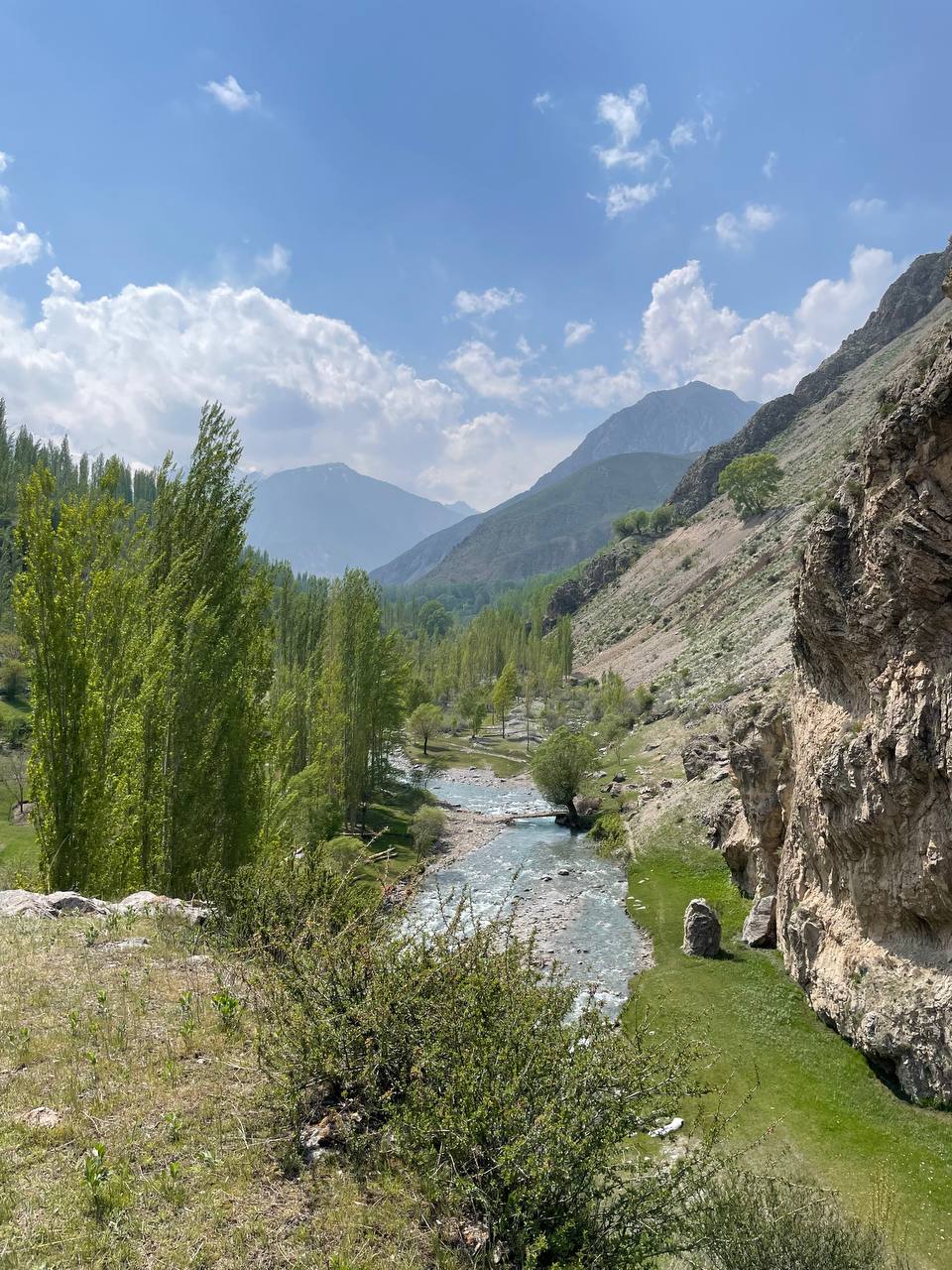
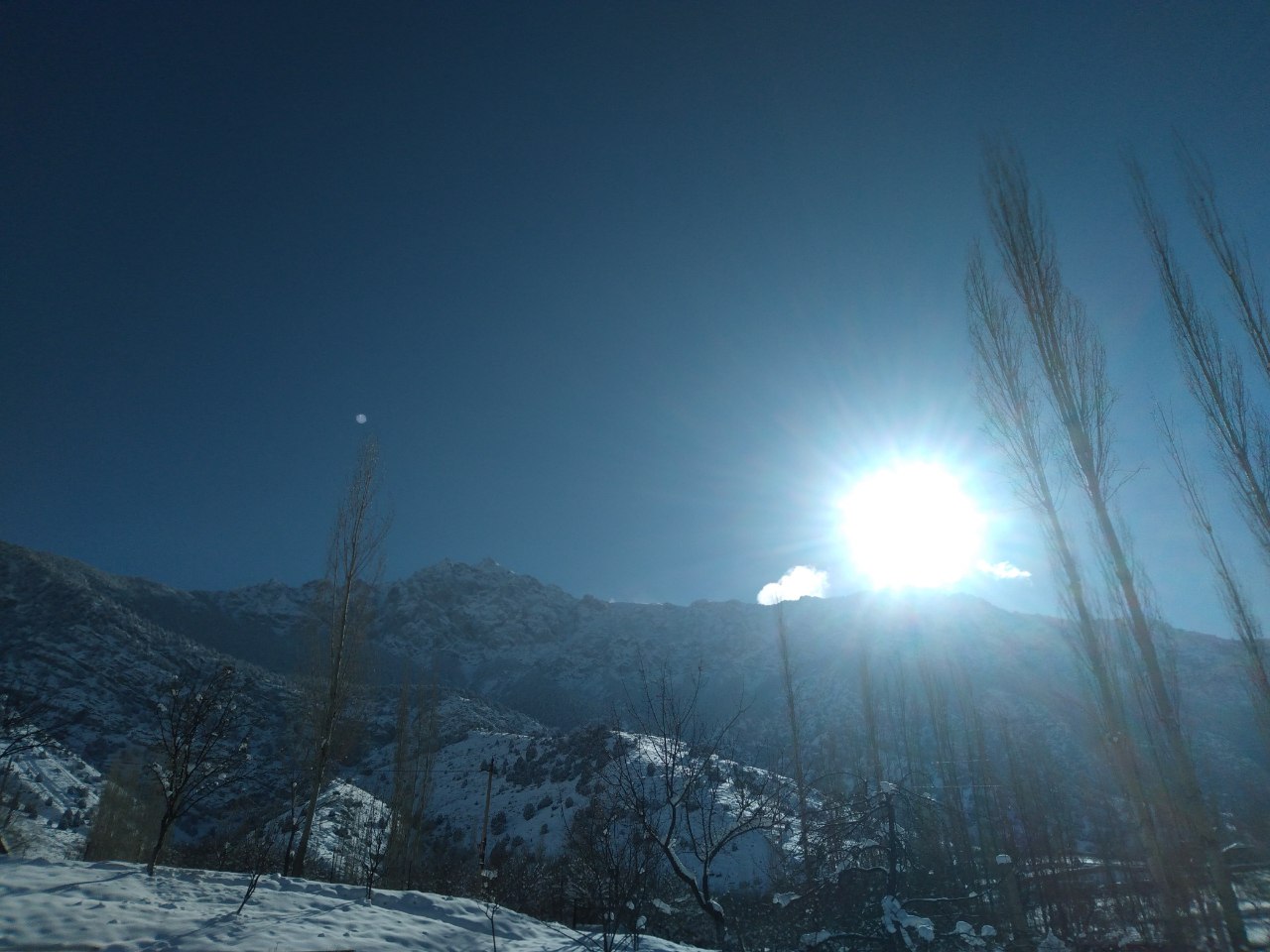
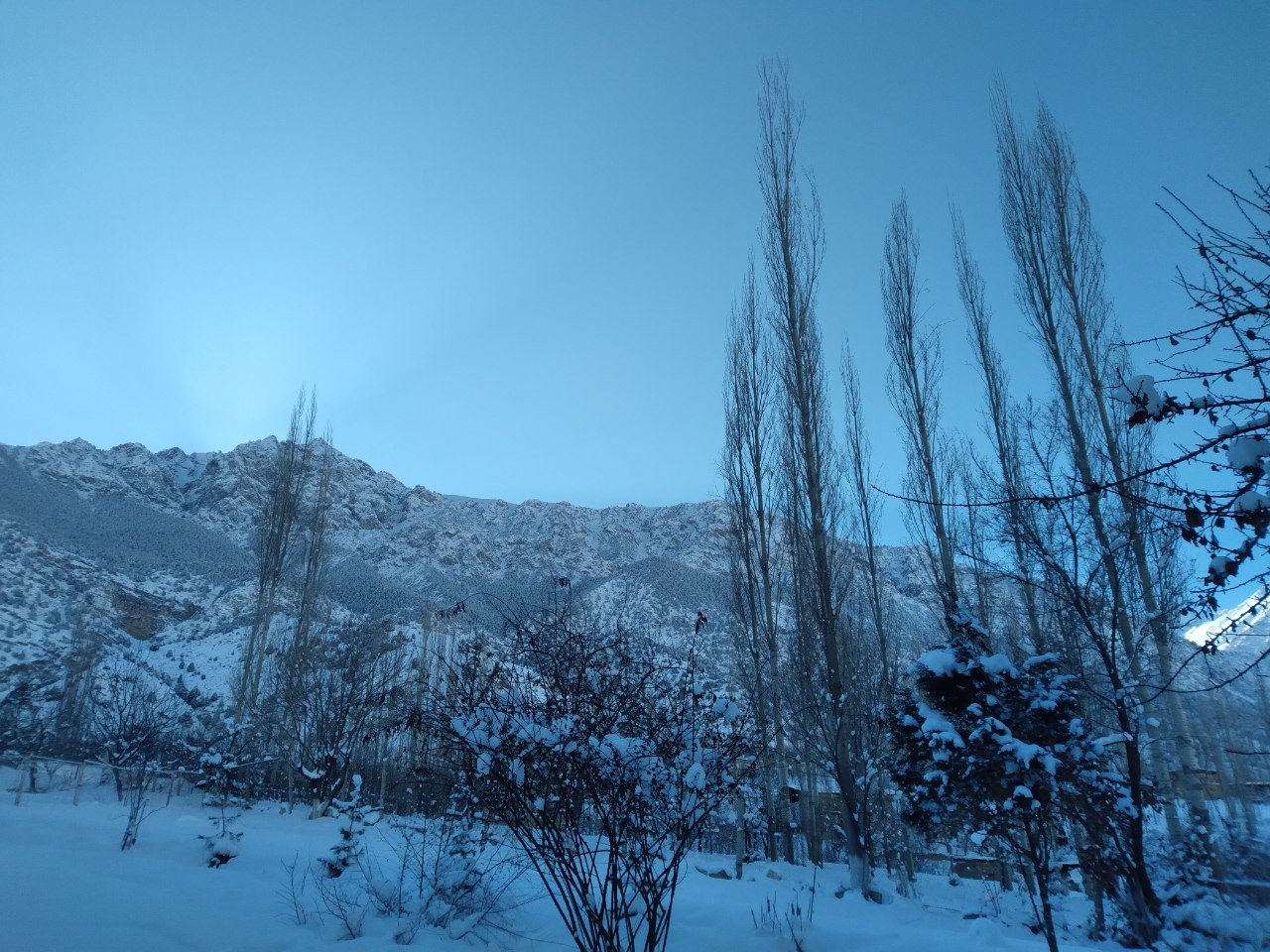
This beautiful, peaceful place, called the Switzerland of Uzbekistan, is located in Fergana district, Fergana region. I live here now. Fresh air, tall and majestic mountains like the sky, streams flowing as clear as the sky, white clouds floating over your head, in a word, a real work of art. A real view of nature that has not yet been touched by human hands. If I talk about people, they are very polite, kind, hospitable and sincere people. Let’s not forget a very big definition, the people of Shakhimardan are real hardworking people.
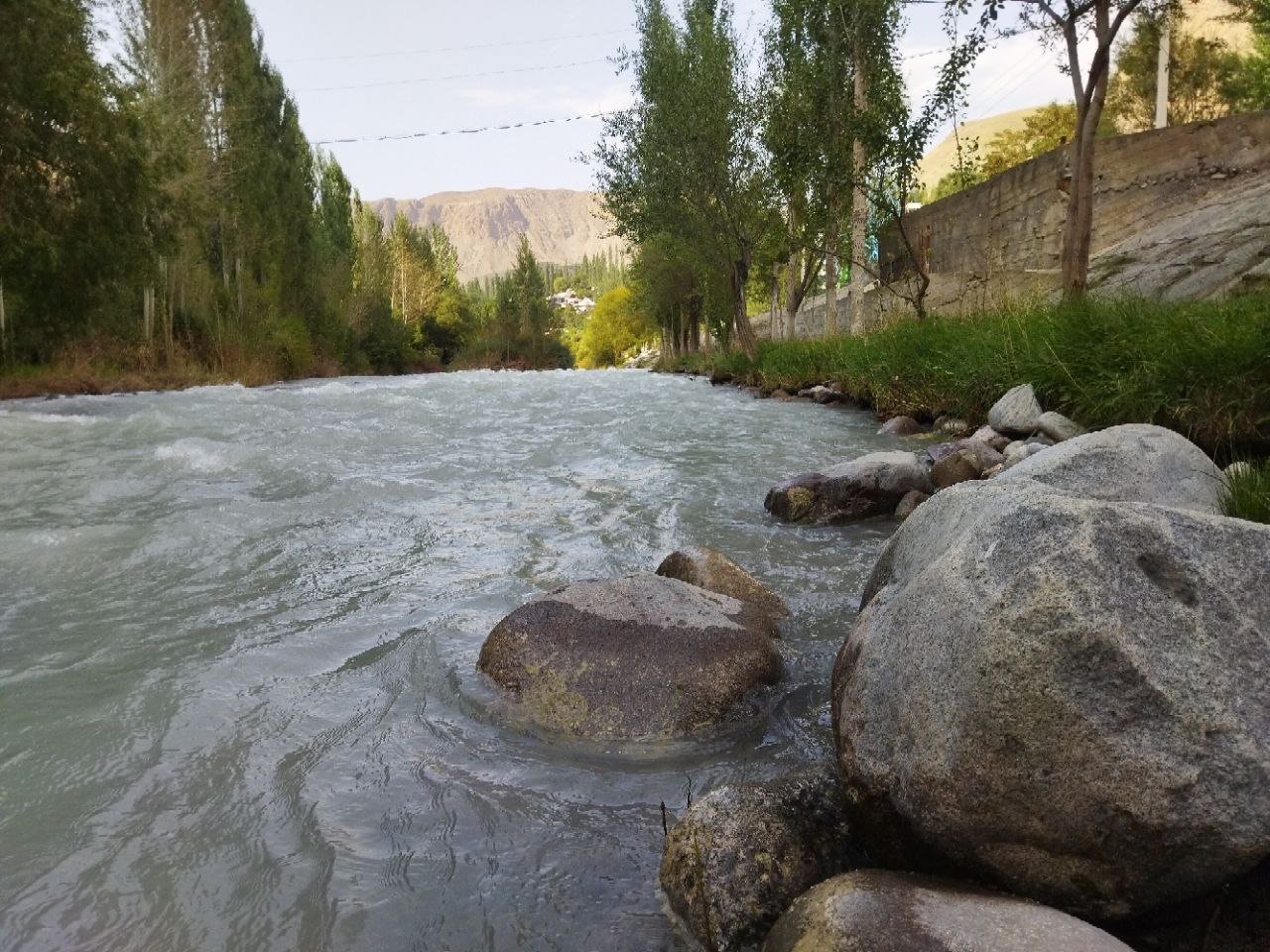
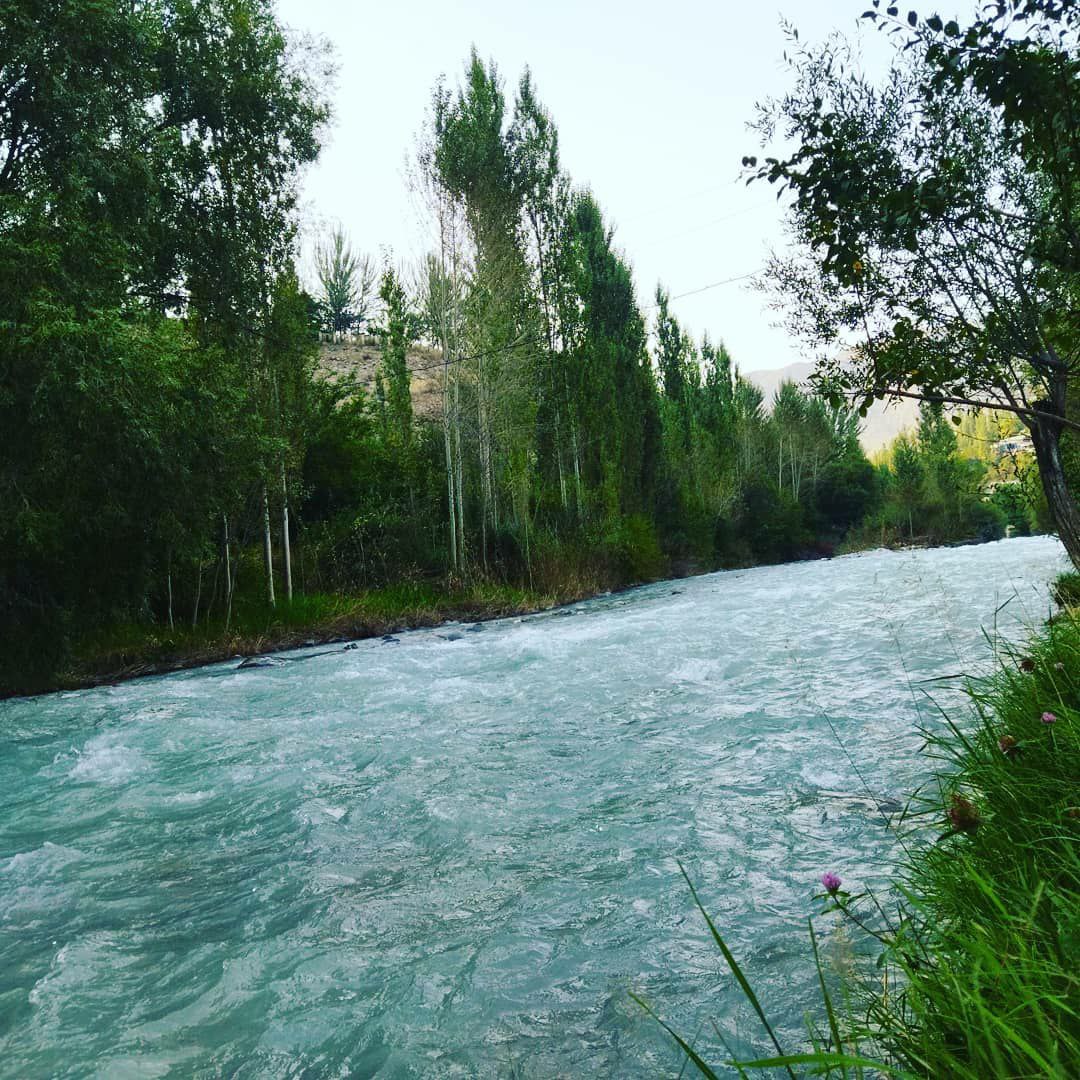
Cozy houses have been built in the lap of the high mountains. These houses are not luxurious, but they are houses with a different kind of love. Apples are ripe right now. It is obvious only to the person who eats how sweet and beautiful apples ripened in this fresh air. Shakhimardon is a real jewel of Uzbekistan. It’s hard to reach a destination. The reason is that it is possible to enter the territory of Uzbekistan after passing through the territory of neighboring Kyrgyzstan.Two streams flow through this village. One is AKSOY and one is KOKSOY. It’s the same as a twin, but one is white water and the other is dark blue water. Look what a miracle. The water flow is also great. Hitting from stone to stone, it fascinates with its noise. If you drink it, it is healing, if you wash your face, it is healing.
Regardless of the season of the year, the temperature of the water in the stream is the same as the melting of the ice. In fact, this is how the snow in the mountains of Shakhimardan melts and turns into a stream. The same snow water but two different colors in two streams. This is a masterful line of nature. Bathing in the water of this stream even in the hottest part of summer is a real feat. Ice cold water freezes your body in one go. You can have a good time on the banks of the river. I saw a lot of guests and tourists who appreciated their lives. You will not be able to fall in love with the sound of the river.
Everyone who comes to Shakhimardan will not leave without seeing the Blue Lake. This is also a real miracle. After climbing a few passes and crossing many roads, one can see the real beauty. This lake is surrounded by mountains on all four sides. It surrounds the lake like a guard that can protect it. This point helps to forget even the highest fatigue of a person in one pass. Neither sorrow nor sadness comes to mind in front of this beauty. Just enjoy watching. Places where your heart rests and your soul rests. The coolness that hits your face while sailing on the ships is relaxing. You will be relieved by shouting out loud.
The sound of your pounding from mountain to mountain echoes very loudly. I already liked this village. There is no desire to leave, no opportunity to stay. The field of herbs here is useful herbs, and the meat of the sheep and lambs that eat them is as tasty as herbs. Fresh air is a cure, water is a cure, herbs are a cure, like a hospital where there is only cure for a person, but the doctor is nature. If you hug the trees, they won’t fit in your arms. Strong trees, as tall as the sky. Finally tall trees. Fruit trees are also tall. The soil is stony, but only rural farmers know how to grow crops.
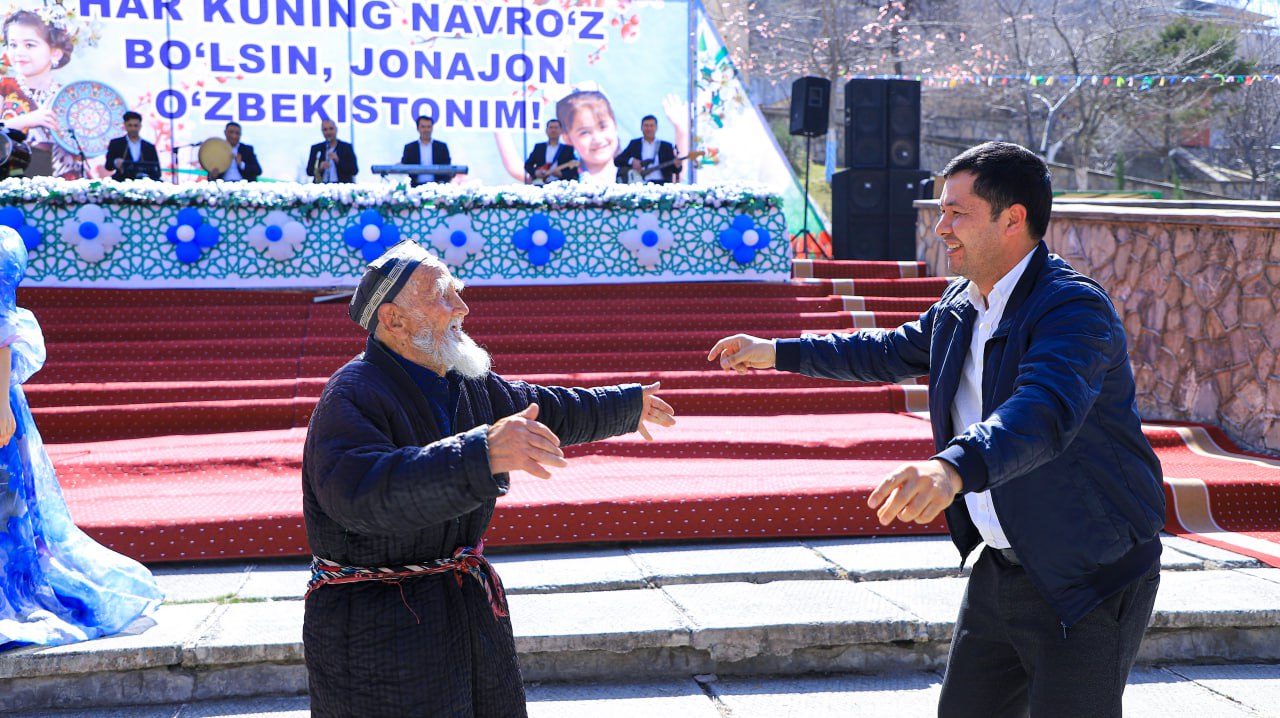
Travel gives knowledge to a person. I became aware of our distant history from here. Several centuries ago, women covered their faces with burqas. At the time of transition from era to era, Hamza Khakimzada Niyazi came to the village of Shakhimardan and told women to throw away the burqa covering their faces on March 8. It empowers women that women also have the right to live freely. 13 women throw this Paranji in Shakhimardon and many events take place on that day. Some of the women are killed by their own husbands. There is a museum called Niyazi in Hamza Khakimza, which talks about this. This man has done many great things in our history. He opened schools to teach children to read and write. He also made a great contribution to Uzbek art. He taught women about freedom and that they too are human.
But it is a pity that this great man’s life ended in the village of Shakhimardan. The representative of our great history, who came here to share knowledge and enlightenment, was thrown into the precipice lying in the majestic mountains of Shakhimardan by a storm of stones saying, “He is leading our women astray and showing them a bad path.” will do. Shakhimardan is the place where historical Hamza Khakimzoda Niazi reached and ended. Of course, this was several centuries ago. It is a historical, beautiful and healing village.
There is a place called Archa Mountain. You will go out towards the top of a high mountain, you will be accompanied by firs, in front of tall firs, a person will become a small creature. At every step, springs and flowers offer themselves to you. There are many very useful products. Cumin, cumin, deer grass, that’s all I know. But real Shakhimardan adds 10, 15 to it. The chill of summer is also wonderful. In the morning, the sun shines, and in the afternoon, a dark cloud comes and suddenly it rains and rains. It is interesting that the snow on the top of the mountain does not melt in winter and summer. We used to sing this song when I was young. He said, “The snow does not melt in the mountains of Shakhimardan. If I call him from behind, he will not look.” Many years later, I live in the village where these songs were sung. Even if I leave here, I will still miss the village of Shakhimardan for many years…
Alessandro is in the crowds in the square in front of Saint Peter’s Basilica when he sees Assunta along with Marietta’s four remaining siblings. She is an old woman, eighty-four years old, dressed entirely in white and sitting on a wheelchair. Never in the history of the Church had a woman attended the canonization of her own daughter. But Assunta survived the forty-eight years since her dear Marietta’s murder and she is now in the great plaza, along with a quarter million other people, ready to witness how her martyred daughter – soon to be Saint Maria Goretti – would be canonized by Pope Pius XII.
When Alessandro sees the octogenarian in the crowd, he immediately walks towards her, the woman who had once called him, “son,” and whom he venerated as if she were his own mother. Alessandro is no longer a young man himself, almost seventy years old, employed as a lay brother at a Franciscan Capuchin monastery near the Adriatic Sea. He ambles toward Assunta with great difficulty, as his legs are somewhat slow, given his years of work as a gardener at the monastery. But when he sees Assunta face-to-face, he feels a great joy and forgets that they are both old people now. He hasn’t seen her in years and her face seems somehow macerated and sallow, yet he also detects a great peace in her face – a hard-won peace, a peace developed over the years, a peace achieved through the worst possible tribulations only through her faith in Christ.
When Assunta first sees Alessandro before her, she makes a sign of the cross on his forehead, blessing a man she has learned to love like a son.
“Marietta must be so happy in Heaven, knowing you have come to join her on this very special day,” says Assunta in her frail old woman’s voice.
“I wouldn’t have missed it for anything,” replies Alessandro, with a great smile on his visage. He has the face of certain old priests, rotund and ruddy, full of benevolence and a lack of earthly cares.
“Marietta loves you so much,” intones Assunta, as if her daughter were among the living.
“I love her too, Mamma Assunta. I have her photograph above my bed in my room at the monastery, right next to a crucifix and a portrait of Our Mother of Perpetual Help. And I pray to her every night, thanking her for her miraculous intercession. Even before this great day, I’ve always considered her a saint. She died such a holy death, despite the violence that preceded it. And I shall never forget that she was killed because she wanted to preserve her virtue. Even at such a young age, she knew that sin leads to perdition and that self-sacrifice is the ladder to Heaven.”
“Let’s not speak of that terrible day,” Assunta says. “Today is a day for celebration. If that terrible deed hadn’t happened, perhaps the Pope wouldn’t be joining her to the list of saints on this wondrous afternoon.”
“She would have been a saint any way,” Alessandro replies, looking up at the sky. “When I’m doing my gardening, I often think about her and pray. You know, even the most simple acts can be a form of prayer, even something as simple as pulling weeds. If you pray hard enough, the doors of God’s Mercy will open for you. But of course you already know this, Mamma Assunta. You have never strayed from the path.”
And then Pope Pius XII begins to speak and Assunta and Alessandro are silent. The Pope is no longer a young man either, but he delivers his speech in a powerful voice which Assunta and Alessandro, despite the onset of the years, are able to hear, for they are very close to the balcony from which the Pope is speaking about their beloved Marietta.
“Today we are here – thousands of you – to celebrate the life of the youngest person ever to become a saint. She was just shy of twelve years old when she ransomed her virginity with her life. Rather than accept the advances of her would-be rapist, she fought fiercely to retain her purity. And so the man stabbed her fourteen times, but she would not let up. Even at her tender age, she understood that sin is something to be avoided at all means. So she now joins Saint Agnes, Saint Agatha, Saint Lucy and all the other virgin-martyrs of the Catholic Church, women who preferred to die rather than give up their immaculate bodies to the hands of sinners.”
“Saint Maria Goretti died nearly fifty years ago and I’m afraid the world is a much worse place today. The pursuit of empty pleasures has replaced modesty, as if modesty were somehow old and antiquated. Everywhere we see magazines with pornographic images, films depicting the most vile of passions, writers preaching a limitless liberty that is no liberty at all. Instead, it is slavery to lust and concupiscence. And giving in to lust fatigues the soul. Unlike so many of our brothers and sisters, Saint Maria Goretti said, ‘Yes’ when the Lord asked her if she would preserve her chastity for Him.”
“Do you say ‘Yes!’ as Saint Maria Goretti did?” the Pope asks the crowds in a ringing voice. “Do you say ‘Fiat,’ as the Virgin Mary said to Gabriel the Archangel? Yes, I will abstain from the sins of the flesh. Fiat, let your will be done! I’m talking to you, young men and women of Italy, young men and women of the world.”
And the crowds shout back in unison: “Fiat! Fiat! Fiat! Yes, let His will be done!”
“But Saint Maria Goretti did not show us only heroic chastity,” the Pope continues. “She also showed us a bottomless Mercy – a Mercy that reflected that of the Christ Himself. For while she was in the throes of pain at the hospital, as the doctors were frantically ministering to her wounds, she pardoned the man who had violated her virgin body with an awl. ‘Do you forgive him?’ the priest had asked her on her deathbed and she had responded, ‘I forgive him. I want to see him with me in Heaven.’ What better example of the Mercy taught to us by Christ?”
Alessandro suddenly begins to cry profusely, making loud sounds as if he were coughing, as he buries his face in Assunta’s chest.
“Why do you weep?” Assunta asks him. “This day is one of happiness. My daughter is now a saint.”
“They are tears of joy,” the seventy-year-old Franciscan lay brother responds, never ceasing to weep. “Joy that Marietta is in Heaven now! Joy that she is with the Lord, Mamma Assunta. Joy that she forgave her killer in her endless Mercy!”
***
Alessandro and his father Giovanni had moved in with the Goretti family when he was around fifteen and Marietta only seven. In those days, he would often play hide-and-go-seek with Marietta and her siblings. He called her “topolina,” Italian for “little mouse,” and he often hid with her as they played the game. The truth is there were so many places to hide: among the wheat fields, next to an abandoned shed close to the fields, behind some trees next to a river. Although Alessandro was a lot older, he enjoyed playing with the kids, especially with Marietta, always giggling as they hid, telling him with a wide smile they will never find us here! Their favorite place to hide was next to the shed, the tiny Marietta always kneeling in the shadow of Alessandro, putting her index finger close to her mouth mischievously instructing him to whisper, as if it was possible for Marietta’s brothers to hear them in the distance. And Marietta’s three brothers, being so young, seemed to forget that Alessandro and their sister often hid behind the shed. The three boys spent hours looking for them and when they couldn’t find them Marietta smiled impishly at Alessandro.
After the two families move from Paliano to the Pontine Marshes, Alessandro and the Goretti children continue to play hide-and-go-seek in the fields as Marietta grows in beauty. Her auburn hair falls to her shoulders, framing a lovely face, bright eyes with an indescribable sparkle, rose-colored cheeks, a delicate mouth. Once Alessandro tells her, “Topolina, you are going to be a woman to break the hearts of men,” but he says so innocently, without any darkness in his heart. And then it happens, the tipping point, the moment in life when a life is riven asunder between the before and the after. He suddenly looks at Marietta and sees the body of a woman.
While Alessandro and Marietta are hiding next to an outhouse, a splinter punctures Marietta’s thigh and she begins to bleed. Alessandro takes a kerchief out of his pocket and applies it to Marietta’s flesh, to staunch the blood. In that moment, Alessandro suddenly feels a frisson of desire, the same feeling he sometimes experienced when he looked at the bare neck of Georgina Signorelli sitting in front of him at the church. But Marietta is just a child, he says to himself, trying to control his sudden lust. He doesn’t pray for delivery from temptation. Years later he would think that had he done so, perhaps everything that followed could have been avoided. All sorts of dark visions fill his mind. After all they are alone and he can do whatever he wants, but he doesn’t act upon his instincts. Instead, he tells Marietta, “I’m tired,” and he lays down on the grass beneath him, starting to sweat and looking up at the sky, with both arms beneath his head. “Why don’t you go on without me, topolina? I just need to think, my little mouse.”
Soon Alessandro becomes obsessed. He cannot get Marietta out of his mind, her skin, her scent, her silhouette. At night, he falls asleep thinking about the child and wakes up fevered by a great desire for her. He is literally sweating and at first he tries to resist his lustful imaginations. She is your topolina, he says to himself, how could you even be thinking of harming her? A little girl, he thinks, and yet there is something of a woman about her. He sees her in the kitchen washing dishes, or tending to her infant younger sister on the porch in front of the house, and the thought of possessing her crosses his mind repeatedly. No, he tells himself, no, no and then again no! But then he notices her bare arms as she is tending to the unwashed plates, the glimmer of her legs below the hemline of her skirt, the outline of her shadow on the wall. And then he allows himself to give in fully to what Assunta calls “thoughts of concupiscence,” imagines Marietta kissing him and in his arms, imagines many other things. It is as if a dam has broken. He suddenly revels in his black dreams and now does nothing to control them. At night, he gives into them completely, surrenders fully to temptation.
One particularly hot summer night, he hatches his plan. He forgets everything he has learned in church, everything Assunta has taught him. He does not say the Our Father. He will approach Marietta with subtle blandishments to see if she will respond. Initially he does not think of violence. He thinks only of a gentle seduction. Perhaps he can arouse her desire merely by caressing her face, by pressing his lips against the softness of her cheeks. After all, women are just as given to lust as men are, he says to himself in an effort to justify his dark intentions.
The next morning, the opportunity arises. Marietta is washing dishes by herself in the kitchen and Alessandro approaches her from behind. He sees the nakedness of her neck and deeply attracted begins to kiss it. At first Marietta is not alarmed, for she thinks Alessandro is merely playing.
“What are you doing, you goof?” she asks him. “Can’t you see I’m busy with the plates? Leave my hair alone!”
“Topolina,” he mutters. “Oh, my topolina…”
But then Marietta looks at his lustful eyes, sees something in them she has never seen before, and is suddenly frightened.
“I’m busy, Alessandro. Please just leave me alone. I think your father needs you to help him in the fields.”
“I want you, topolina,” Alessandro intones. “I want to make you a woman.” And he holds her by the arm, tries to force her face towards his in an attempt to kiss her fully on the mouth.
“Get away from me!” she cries out as she violently recoils from him. “Don’t you see what you’re thinking of doing is a great sin?”
“I don’t care about your scruples. Come to me, my topolina. I’ll show you what pleasure is.”
Marietta manages to free himself from him and to rush out of the house.
“If you tell anyone,” Alessandro hollers as she leaves, “I promise I will kill you.”
Thereafter, Alessandro tries to rape her on two occasions, but both times she is able to elude him. From then on, she lives in a constant fright. She says nothing to her mother, for fear of Alessandro, but she tries very hard never to be alone in his presence, until one afternoon when she is by herself in the house, tending to her infant sister. Alessandro returns from the fields with an awl in his left pocket and the deed – il fatto – happens.
***
Alessandro feels a limitless rage and happens to have a dagger in his hand. Rage that he has to work from daybreak to sundown in fields belonging to another for a pittance. Rage that his father is a drunkard and that his mother died in an insane asylum after trying to drown him in a river. Rage that the young Marietta continues to resist him as she has resisted him so many times. It is not so much lust as much as rage that he feels as he first plunges his knife into her child’s flat chest.
“So you will not give yourself to me!” he cries out. “Well, give yourself to my mighty awl!”
He stabs her once, twice, three times, he cannot stop the stabbing, as if a demon has possessed him.
“What you are doing is a sin,” Marietta cries out in vain. “You will be condemned to hell!”
But Alessandro does not desist. He sees the sunlight glisten on his awl as he lifts it up in the air before he brings it down into Marietta’s body.
The twelve-year-old girl begins to bleed profusely. Her blouse is bathed in red. And that only seems to anger Alessandro more. In all, he stabs her nine times. Then he goes into his room, lies on his bed, nervously smokes a cigarette. He does not ask himself, “What have I done?” He is still beset by an endless ire. So he goes back down to see if she is dead, and finds Marietta sobbing on the floor. Since she is still alive, he stabs her five more times. Then he throws the awl behind a table in the kitchen and goes back into his room.
Soon he hears a ruckus outside his door, deciphers Assunta’s desperate wails. His father Giovanni enters his room and tells him in a frantic voice, “Someone has tried to kill Marietta!” Not for a moment does Giovanni consider that the assailant might be his son.
“Oh, leave me alone!” Alessandro tells him.
At some point, there is silence. Alessandro continues to smoke in his bedroom. He figures out that they have taken Marietta to the hospital, that she is still alive despite having been stabbed fourteen times in the chest. He opens a book about the history of Italy and peruses it in tranquility for half an hour.
Then he hears a loud noise outside his door, heavy footsteps which he knows belong to the carabinieri. One of them tears the cigarette out of his mouth and pulls at him by the shoulders.
“Piece of shit!” he cries out. “Merda, merda!”
Another soldier pulls at Alessandro by the hair and throws him against the wall, where he ties Alessandro’s hands with a rope. A third immediately appears and begins to manhandle him as he drags him outside the room and into the horse-drawn buggy specially reserved for him, meant to transport him to the nearest prison.
“How could you have committed such a crime?” one of the soldiers asks him.
“I did nothing,” Alessandro responds serenely.
“Don’t even talk to him,” says another carabinieri. “Let the prosecutor question him. He doesn’t deserve even to hear the voice of men. He belongs in a bottomless pit. How could he have stabbed a ten-year-old?”
“Is she dead?” Alessandro asks.
“What do you care, you piece of shit,” one of the soldiers responds. “I’ve heard she’s still at the hospital, undergoing an operation. But no one thinks she will make it.”
“Are you happy now?” the carabinieri sitting next to Alessandro asks him. “Are you satisfied by your deed, knowing you will rot in prison?”
“My deed…” Alessandro echoes. For the first time, he feels something akin to guilt, like a spider trapped inside his heart. And he feels a sudden fear of prison.
“You didn’t even have the guts to rape her, you piece of shit,” says another soldier. “You only had the courage to kill her.”
“An eleven-year-old,” spits another carabinieri with disgust. “Probably not even old enough to menstruate.”
Finally, they approach the prison. The carabinieri push him roughly inside and guide him to a room where a bespectacled man is sitting behind a desk.
“Please state your name for the record,” the man in spectacles says matter-of-factly.
“Don’t I have the right to an attorney? What am I being accused of?”
“You know your crime,” says the bespectacled man. “You shall eventually be assigned defense counsel. Please state your name for the record. I need to fill out this form so you can sign it before you’re taken to your cell.”
“I plead insanity. I was not myself. It was a raptus, furor, insania.”
“You can explain that to the judge and jury. Please state your name for the record.”
“Alessandro,” says the killer. “My name is Alessandro Serenelli.”
***
Assunta attends every session of the trial, although it is as painful as seeing her Marietta dying. The twelve-year-old fought valiantly, lasted more than a day, underwent multiple operations. Like the Christ during His Passion, the girl begged for water, but the doctors told her she couldn’t drink anything, lest it hurt her already damaged intestines. The priest at her side advised her to offer her thirst to the Lord and Marietta responded in all serenity that she would do so. Assunta held out hope until the very end, praying that the operations would succeed. After all, she had already lost her husband to malaria. Did she also have to lose her dearest daughter in such a horrid way? But the hours passed and the doctors ultimately told her there was no hope. Even if her wounds didn’t kill her, the infections would. One of the surgeons told the dying Marietta, “Pray for me in Heaven.” The young girl, still expecting a miracle, responded, “How do you know I shall get there before you?” And the exhausted doctor, with mournful eyes, told her two simple words under his breath: “I know.”
Assunta could not believe that the same boy who had shared her home for five years was the one who had murdered her daughter. Alessandro and his father had lived with the Goretti family since before Assunta’s husband Luigi had died, when they still lived in Paliano, before they all moved to the Pontine Marshes. Alessandro had been something of a sullen boy, often holing himself up in his room to read, but he worked assiduously in the fields and sometimes even prayed the Rosary with Assunta and her family at night. There was nothing in his demeanor which would have suggested that with the passage of time the boy who had cared for Assunta’s children as if they were his younger siblings would become a monster.
The defense attorney pleads insanity. For the first time since the day of the murder, when Assunta felt an unmitigated rage against the man, she begins to pity him when she first learns details of his life she had never heard before. The defense attorney explains that his mother had died in a mental institution after trying to drown the infant Alessandro and that his brother Gaspare, who had become a seminarian, had ended up committing suicide. Of course Assunta also knew that his father was a shiftless drunkard who had a hard time keeping a job, indeed everyone had to move from Paliano because Giovanni Serenelli had gotten himself fired. And yet Assunta feels that nothing in his past can ever explain Alessandro’s deed – il fatto – an act of unbridled evil. The only explanation possible, thinks Assunta, is that the twenty-year-old somehow let himself be ensnared by the enemy’s omnivorous traps. Alessandro’s attorney argues that his young client suffered from a sudden and inexplicable psychotic break – a momentary disturbo – but the prosecution’s psychiatrist counters that the twenty-year-old murderer could distinguish right from wrong, that he was not insane.
After the conclusion of the part of the trial regarding Alessandro’s mental state, the prosecutor turns to the description of the crime and its effects on the eleven-year-old Marietta. This is when Assunta feels she is about to faint. She thinks that she simply cannot stay in the courtroom and hear another word. And yet she stays. She does it for her daughter. Listening to the testimony of the doctors and the nurses, of the neighbors who had found Marietta bleeding, Assunta has to relive that terrible day. She is forced to remember each of her daughter’s fourteen wounds, the hours in the hospital, Marietta’s ashen face. And she once again feels fury toward Alessandro, a bottomless rancor, the deepest hatred. Why should he be alive when her daughter is dead?
In the end, the jury’s verdict is unanimous: Alessandro was not insane when he committed his deed. He is spared the death penalty because he is a minor, but he is sentenced to thirty years in prison, the first three of which he will spend in solitary confinement. Assunta cries when she hears the sentence, but they are not tears of satisfaction or closure. They are tears of regret, of what could have been and never was…
As Alessandro is being conducted out of the courtroom, he walks past Assunta and nods reverentially. She doesn’t acknowledge his presence. She feels like spitting at him.
***
Alessandro does not understand how he could have survived the first three years of solitary confinement. It is impossible to speak to yourself. And he doesn’t feel he has the ability to speak with God. During those three years, he has had ample time to ponder his crime, its utter monstrosity, and in his deepest heart he feels there is no possibility of redemption. So he doesn’t understand why he has not gone completely mad. In those three years, he has often remembered how he used to take Marietta and her brothers to pick berries in the fields of Paliano, how Marietta would shine his black patent leather boots before they went off to Mass together, how when she was eight or nine he sometimes would read fairy tales to her in the still of the night, or excerpts from the lives of the saints, since he was the only one in the household who could read. And at some point in his life he had loved her like a sister, before he started seeing her as a woman, as an object of his lust. Yet for some reason he committed the deed – il fatto – and for this reason he thinks he is beyond the Mercy of God. He often remembers the words he heard at his trial, when one of the witnesses repeated Marietta’s last words: “Of course I forgive him. I want him to be in Heaven with me.”
At some point a priest comes to see him in his prison cell. Father Mariano is a young man, somewhat brusque and intense, with steel blue eyes and a shock of deep black hair. He is only a little older than Alessandro and is a man with a purpose. Immediately he tells Alessandro, “I know of your crime, but you should know about the abyss of God’s Mercy.” At first Alessandro tolerates the young priest, but at some point Alessandro becomes irate. Surely Father Mariano is wasting time he could be spending with more worthy penitents! Surely it is a mockery to even suggest that Alessandro could be forgiven! Didn’t he know Alessandro had committed the crime of the century? Why fill his mind with empty hopes?
“I respectfully request that you just leave,” Alessandro says in a curt voice. “I have no interest in things of God. I am a sinner and I delight in sin.”
“Don’t you want to confess your sins and repent?” Father Mariano asks. “Though your sins are like scarlet –”
“Don’t waste my time!” Alessandro screams. “Get the fuck out of here! Just leave!”
But the good priest is unperturbed.
“Let me give you an image of Our Mother of Perpetual Help. On the back you will find a prayer. Whenever you feel like it, whenever the mood strikes you, say the prayer and you will be delivered from your anguish.”
And then the young priest picks up his black hat and leaves the prison cell as brusquely as he had entered.
The next morning, Alessandro takes the image of the Virgin and without much interest reads the prayer on the back. “Behold at your feet, Oh Mother of Perpetual Help, a wretched sinner who has recourse to you and confides in you. Oh Mother of mercy, have pity on me. I hear you called by all the refuge and the hope of sinners. Be then, my refuge and my hope. Assist me, for the love of Jesus Christ. Stretch forth your hand to a miserable fallen creature who recommends himself to you, and who devotes himself to your service forever. I bless and thank Almighty God, who in His mercy has given me this confidence in you, which I hold to be a pledge of my eternal salvation. It is true that in the past I have miserably fallen into sin, because I had not recourse to you. I know that, with your help, I shall conquer.”
The words of the prayer strike Alessandro as being somehow prescient, as if Our Mother of Perpetual Help were speaking to him directly. After all, he had “miserably fallen into sin,” just like the prayer said, and he was a “miserable fallen creature.” Still, there is no epiphany. Alessandro does not believe he is worthy of salvation, no matter what the prayer says. He killed a child and there is no way of undoing it. There is no way of going back in time, to the days before the deed. Oh, how he wishes he could return to the past, to the weekends when he played hide-and-go-seek in the wheat fields with Marietta and her brothers, all the afternoons when he read the story of Cappuccetto Rosso to her, the glorious day of her First Holy Communion. But Alessandro believes the deed was a fork in the road, that he chose the path of evil and is doomed for all time. Still, sometimes he picks up the prayer card and reads it. “I know that, with your help, I shall conquer,” he repeats, suddenly sweating.
And he begins to change his behavior. He had become accustomed to brawling with the other inmates over trifles and had often been punished with solitary confinement. The truth is he knows the other prisoners detest him, for there are hierarchies even in prison and anyone who would attempt to rape a child, or even worse kill her, is at the bottom of the heap. But he begins to treat the others with kindness, asks about their families, shares what little food he has with them. He is especially deferential to old Guido and old Giuseppe, both in their early nineties, condemned to life sentences more than a half century earlier. They are solitary, melancholy men, with their entire lives sketched on their skin. He helps them eat – it has become a struggle for them – and he wipes their faces after they finish their meals. He talks to them about their past, about the days before they were incarcerated, and their eyes light up with distant memories. Guido reminisces about being an actor in a theater and Giuseppe about the love he felt for a woman named Iolanda. Both of them were condemned for murder, but their crimes are far behind them.
Alessandro also volunteers to work in the infirmary, taking care of fevered inmates who might be contagious. Once, while putting a wet kerchief on the forehead of one of those inmates, he hears a guard scream at Rinaldo Uzzauto, a sick prisoner given to bouts of explosive diarrhea.
“Why can’t you at least warn me when you need to go to the bathroom? I just cleaned you this fucking morning! Do you think I like to clean your shit?”
“I’m sorry,” Rinaldo answers. “The diarrhea comes to me suddenly. I can’t control it.”
“Well, maybe I should just let you wallow in your merda for a while. After all, in a few hours you’ll shit again, and I’ll have to clean your ass another time. I wasn’t hired as a guard to do this.”
Suddenly Alessandro approaches the guard.
“I can clean him,” he says. “Just get me a bucket of water, a sponge and a rag.”
“You want to clean his shit?” the guard asks incredulously. “Well, you are welcome to it! It’s disgusting. But by all means do so. I’ll get you the stuff you asked for.”
Alessandro begins by removing Rinaldo’s soiled underpants. They are completely wet in semisolid fecal matter. There are small clumps of feces in the liquid excrement, which runs down from Rinaldo’s derriere to the bottom of his legs. And there is blood in his stool, hints of red in the brown shit, as well as on the man’s swollen buttocks, purple and bruised because he needs to defecate so often. Alessandro gently wipes Rinaldo’s behind and his legs with the rag dipped in water. As he does so, Alessandro’s own hands and arms become covered with the liquid excrement and at first he feels he is about to retch. But he persists. After he cleans Rinaldo with the rag, he uses the sponge to softly clean his anus, the part of his body which is most inflamed. He asks the guard if there is an unguent to combat the swelling, but the guard simply raises his hands in the air noncommittally. Apparently nobody had ever thought about it. Rinaldo was just another prisoner.
“I’ll come back to check on you in a few hours,” Alessandro says to Rinaldo. “When do you think you’ll need to defecate again?”
“It’s hard to say,” Rinaldo answers. “The urge comes to me without warning.”
“Well, from now on, as soon as the diarrhea comes, have a guard alert me and I’ll clean you right away. There’s no reason why you should have to spend so much time dirty.”
“You’re an angel,” Rinaldo tells him.
“Far from it,” answers Alessandro. “I’m just a man covered in shit. Maybe by cleaning yours, I’ll clean a little of my own.”
Marietta’s murderer desperately wants to make amends for the deed – il fatto – and remembers many years earlier when he was tilling the fields with Assunta, like a mother to him at the time, and she had told him that arduous work is a form of prayer. In his prison cell, he often thinks of Assunta. He had never known a mother and Assunta knew that and treated him like a son, often counseling him to follow the Way of the Lord, chastising him when she found magazines in his room with unchaste images, encouraging him to pray as much as possible.
There are some fields outside his island prison and when he is not in the infirmary Alessandro tries to work gathering crops from daybreak to sundown, in the hot Sicilian sun, even if it is not required of him. In his youth, he had seen such lowly work as beneath him, had dreamed of going out to sea or becoming a soldier fighting distant battles for the Kingdom of Italy. Now he sees spirituality in the fields, a manifestation of God’s gracious bounty. And as his forehead sweats, he enjoys the fatigue of his body, wants to be as tired as possible, for it briefly allows him to forget the wickedness of his deed and feel only exhaustion.
***
At some point, Father Mariano returns to the island prison. He soon appears in Alessandro’s cell, a scapulary about his neck.
“What do you want?” Alessandro asks him. He believes that neither saints nor angels, priests or bishops, can rescue him from his fate.
“I want to give you the sacrament of Confession,” the priests responds in a determined voice.
“What good could that do?” queries Alessandro. “I can never be forgiven for my deed. I killed a child, Father Mariano. Do you realize the enormity of my crime?”
“Your misery does not hinder Christ’s Mercy,” the priest answers softly. “I know that you are suffering greatly. Don’t you see your suffering, united to His, can be redemptive?”
“Well, I don’t think confessing my deed would do any good. I don’t think I am capable of redemption. To believe that, I would have to receive a sign from Heaven. And God doesn’t bestow His miracles on monsters.”
“You might be surprised,” the young priest tells him.
“Sure,” says Alessandro.
“So you don’t want to confess your sins?”
“I think it would be useless. Sorry, father.” Alessandro no longer speaks to Father Mariano with anger, but still thinks his counsel is worthless.
“You should remember the words of Saint Francis de Sales,” the priest says. “Be patient with all things, but first of all yourself.”
“Fine,” says Alessandro.
“Keep praying to Our Lady of Perpetual Help,” the priest advises.
“Sure,” mutters Alessandro.
That night, Alessandro has trouble sleeping. The truth is he suffered from frequent bouts of insomnia. He would wake up in the night with an intense desire to smoke a cigarette. He smoked one after another, until the pack was empty. Then he would pace in his room, pondering his crime, remembering all its gory details, the feeling of the awl in his right hand and the face of Marietta full of terror. Surely this is the anteroom of hell, he thinks as he throws himself on his bed, trying to sleep.
But tonight is different. He doesn’t know if he is living a dream or a vision, but he is sure that Marietta herself is visiting him in his jailhouse cell. She appears as a maiden dressed in light and in white garments. Although Alessandro knows he is in his prison, he sees Marietta surrounded by multi-colored flowers, roses, geraniums and of course white lilies, a symbol of innocence.
At first he is startled, but Marietta approaches him, a childlike smile on her face, and tells him, “Be not afraid. It is I, your topolina.” For some reason, Alessandro remembers the chiaroscuro paintings he had seen in an old art book he had cherished as an adolescent. The light shines brightly only on the figure of Marietta and behind her there is darkness. She looks the same as she had looked on the morning of the deed, except that hers is now a limitless beauty. Suddenly she approaches him.
“Here,” she says in a quiet voice. “I have brought these for you.”
And she hands him fourteen lilies, one for each of her stab wounds.
Alessandro takes the white lilies one at a time from Marietta’s hands and as he takes them, they explode into flashes of fire, but they do not burn him.
“Why have you come?” Alessandro asks.
“I’ve come to tell you I forgive you. I forgave you long ago when I was on my deathbed. God also forgives you. Now you must forgive yourself.”
“I committed a great sin.”
“Heaven is full of sinners,” Marietta responds.
“I don’t believe it.”
“Believe. God will fight for you. You only need to be still.”
And then Alessandro begins to weep. “Is it really you, my dearest Marietta?”
“It is I, my brother Alessandro, the one who played with you in the fields when we were children. I have come to rescue you from your anguish and your guilt. Some day you will be with me in Heaven.”
When Alessandro realizes the fullness of the miracle God has granted him, the longtime prisoner says, “Thank you.” At some point, he had said fiat to the enemy, but now he is saying his fiat to God.
Let it be as You will, my Lord. Let Your will be done. I shall never again separate myself from You, my God, my refuge and my strength.
And then he collapses on his bed.
***
After twenty-seven years, Alessandro is finally released from prison. He is not quite fifty, although he looks like a much older man. His forehead is furrowed, his face is gaunt, and yet his eyes are bright, ever since he saw that vision of Marietta. Eventually he finds work as a gardener in a monastery. The Franciscans know all too well about his deed – it was all over the newspapers of Italy – and yet decide to give him a second chance. They know it is not easy for such a man to find work given his past. So Alessandro dedicates himself to his flowers, delights in clipping them, watering them, seeing them bloom, and at six o’clock he never misses Mass or fails to take the Eucharist. It has been a long and fraught journey, from the most vile crime to the most unexpected of redemptions. But there is still something he must do. He must seek out Assunta.
Alessandro makes some inquiries until he finally finds out Assunta is back in the town of Corinaldo, the place where Marietta was born. He boards a train to the town, not knowing what he will tell her. Perhaps she still hates him after all these years, since he destroyed her life. In fact, it is to be expected. When he arrives in Corinaldo, he asks a young man walking a dog if he knows where Assunta Goretti lives. Of course he knows! Assunta’s home is something of a pilgrimage site, visited by the faithful from all over Italy, indeed all of Europe, seeking favors from Maria Goretti, who already has a reputation for great miracles. The young man tells Alessandro he only has to walk in a straight line for about a kilometer and he will see Assunta’s small white house with its huge blue door.
“You can’t miss it,” the young man says. “There is a plaque on the door saying the house is where Maria Goretti was born.”
“Thank you,” says Alessandro.
“And Buon Natale!” adds the young man. It is Christmas Eve.
Alessandro walks the streets toward Assunta’s house with fear in his heart, walking slowly, remembering the last time he had seen her in the fields as he plotted his deed. What if she did not forgive him? What if she cursed him? After all, she could never forget the enormity of his crime, not after a lifetime. Finally he approaches the front of her house and he waits outside for a while as he musters courage to knock on the door.
A woman in her late sixties answers.
“Signora Goretti?” asks Alessandro.
“Yes?” the woman responds.
“You must not remember me after all these years.”
“I haven’t forgotten you,” says Assunta. There is no anger on her face, not even surprise, only a great pity. “You almost ruined my life. And you did the same to your own. How could I fail to recognize you? I saw you grow up in my house.”
“Well,” responds Alessandro. “I have come to beg for your forgiveness. I’m sorry. I don’t mean to trouble you. You must be wondering how I can have the gall to visit you in your own home. But I can’t complete my journey without receiving your pardon.”
“Come inside,” the old woman says as she creaks open the door. “Sit down. I’ll bring some tea.”
Alessandro waits for Assunta in her sparse living room. There is an old sofa against a wall where an image of the Sacred Heart hangs. Next to it is a portrait of Marietta in her prime, auburn hair falling to her shoulders, a wide smile.
“When did you get out of prison?” Assunta asks as she places a teacup in Alessandro’s hands.
“Not too long ago,” he answers.
“Almost thirty years since your deed,” says Assunta. “The first few years were unbearable. Horrible beyond description. But with time I accepted that Marietta was with the Lord in Heaven and that blunted the pain.”
“I’m sorry – I don’t know what to say – there are no words to express the misery I feel. If I could only go back in time…”
“Have you made your peace with God?” Assunta asks. The woman bats a fly with her right hand.
“I have,” Alessandro responds. “Only because your daughter helped me. I was in the depths of despair and she appeared to me one night while I was in prison. Marietta is so beautiful. She told me she forgave me.”
“Marietta forgave you long ago, when she was on her deathbed. And since she has forgiven you, I forgive you too.”
“Thank you, Signora Goretti. You’ve lifted a boulder from my heart.”
“You can call me Mamma Assunta,” the old woman tells him. “All these years I have prayed for you. Please stay with me and my children and together we’ll celebrate Christmas Eve. You’re like the prodigal son who has finally come home.”
That night they eat a lot of seafood – traditional fare for an Italian family on Christmas Eve. Marietta’s siblings treat Alessandro as if he were a long-lost brother, never mentioning the deed. At midnight they go to Mass together and Assunta kneels next to Alessandro as he takes the Eucharist.
“Peace,” she tells him. “May you live the rest of your life in peace.”
And Alessandro remembers the meaning of her name. Assunta, just like the Virgin Mary assumed to Heaven, the one who had been visited by the angel asking if she would give birth to the Son of God and had responded “Fiat!”
“Fiat. Yes! Yes! Yes!” Alessandro thinks as he slowly walks away from the altar with the holy host still in his mouth.
Sandro Francisco Piedrahita is an American writer of Peruvian and Ecuadorian descent, with a degree in Comparative Literature from Yale Coilege. His short stories have been accepted for publication in Synchronized Chaos, The Acentos Review, Carmina Magazine, The Hive Avenue Literary Journal, The Ganga Review, Faultline Journal, and Foreshadow Magazine.
Jalapeno Quietly Gazed At

Plump jalapeno
intones shapely strawberry rumpus
green today but one day blush
percolating solar swelling
shock for the curious ovivorous
	dangles on aortic question hook
	stemmed at a bifolial end (between bilabial leaves)
		punctuational singleton frog-plop pepper slung over
		Basho’s garden as bosom equation derived into one dimension
									concentrated