
THE INFLUENCE OF MOTHER TONGUE ON ENGLISH LANGUAGE ACQUISITION
Uzbekistan State University of World Languages
English language and literature faculty
Group-2406 student Abdurahimova Anora
https://orcid.org/0009-0005-8510-8065
Email: anoraxonabdurahimova@gmail.com
+998 33 316 47 17
ANNOTATION: The article will scientifically analyze the mastery of English and the influence of the native language on this process. The mother tongue is one of the most important aspects that affect the acquisition of English, and it determines how perfectly we master this language. The advantages or disadvantages that the native language creates during the process of learning a second language are also clearly illustrated with several examples. The result of the study provides a comprehensive statement of the advantages of the native language and the disadvantages of the learners’ language learning process for English learners.
KEYWORDS: mother tonguage, second language acquisition, foreign language teaching, pronunciation difficulties, grammatical interference, bilingualism, positive and negative development, learning strategies, English language learning.
ANNOTATSIYA: Maqolada ingliz tilini o’zlashtirish va ona tilining bu jarayonga bo’lgan ta’siri ilmiy jihatdan tahlil qilinadi. Ona tili ingliz tilini o’zlashtirishga ta’sir qiluvchi eng muhim jihatlardan biri bo’lib, u qanchalik bu tilni mukammal o’zlashtirishimizni belgilab beradi. Shuningdek, ikkinchi tilni o’rganish jarayonida ona tili yaratadigan qulayliklar yoki qiyinchiliklar bir qancha misollar bilan aniq yoritiladi. Tadqiqot natijasi ingliz tili o’rganuvchilarga ona tilining afzalliklari va o’rganuvchilarning til o’rganish jarayonidagi kamchiliklari haqida to’liq bayonot beradi.
KALIT SO’ZLAR: ona tili, ikkinchi tilni o’zlashtirish, chet tillarini o’qitish, talaffuzdagi qiyinchiliklar, grammatik aralashuv, ikki tilli, ijobiy va salbiy rivojlanish, o’rganish strategiyalari, ingliz tilini o’rganish.
АННОТАЦИЯ: В статье будет проведен научный анализ овладения английским языком и влияния родного языка на этот процесс. Родной язык является одним из важнейших аспектов, влияющих на овладение английским языком, и от него зависит, насколько в совершенстве мы овладеваем этим языком. Преимущества или недостатки, которые создает родной язык в процессе изучения второго языка, также наглядно иллюстрируются несколькими примерами. Результат исследования дает исчерпывающее представление о преимуществах родного языка и недостатках процесса изучения языка учащимися, изучающими английский язык.
КЛЮЧЕВЫЕ СЛОВА: родной язык, овладение вторым языком, обучение иностранному языку, трудности с произношением, грамматические помехи, двуязычие, позитивное и негативное развитие, стратегии обучения, изучение английского языка.
INTRODUCTION
Today, the desire to learn a language is growing, one of which is English. There are many problems that learners face on this path. For example, pronunciation problems, grammatical errors, difficulty understanding listening, low self-confidence, and inability to communicate freely. All of these problems are inherent in the native language of each learner, which means that the native language can have a positive effect on the process of mastering the English language and can help solve problems. It is clear that this article proves how effective the mother tongue is in teaching English and provides useful suggestions.
Nowadays, there are many opportunities for language learners, especially English learners. An example of this is that linguists who have achieved 7.0 and a high score in the IELTS exam in Uzbekistan have been reimbursed for the cost of the exam, and the opportunity for foreign universities to win a full grand can also open this very English. As our president explained: “it’s time to establish a new environment in which the future will be the foundation for teaching foreign languages.” Therefore, this article presents the results of effective, useful, and beneficial research towards creating this environment.
RESEARCH METHODOLOGY: The extent to which the native language affects the process of second language learning during this introduction has been determined through several methods:
- Theoretical analysis: with the help of this method, an analysis of scientific works and articles, tutorials on the role and importance of the native language in mastering English was studied in depth. The research of researchers such as David Nunan, the valuable information they gave, the concepts were analyzed one by one.
- Observational and applied research: the shortcomings or achievements of young people whose native language is other in the learning process of English have been meticulously observed, and the difference between the two has been clearly demonstrated.
- Experimental group and control group: two other groups with the first language were selected and approaches and guidelines in their language learning process were established. The results shown were compared in each group.
- Survey and evaluation: questionnaires were distributed and the results were compared to those who were knowledgeable and received about the impact of their native language on the second language learning process.
REVIEW OF USED LITERATURE
This topic is much more relevant now that the passion for learning a language is high. Also, the work of all the researchers who worked within the framework of this topic was analyzed one by one Also, the work of all the researchers who worked within the framework of this topic was analyzed one by one. Obviously, the problems of several language learners have also been solved in a positive way, but to this day no new ideas for the distribution of new methods, a separate group or teachers have been developed, depending on the native language of the students and to what extent they know the grammar of this language. It is very easy to find out from their result that the work of the researchers mentioned earlier was also thorough, consistent and negative.
Focusing on foreign sources Do Quoc Khanh, on the other hand, shares his experience with 100 readers in his article and touches on their origins, problems in pronunciation, grammar, vocabulary. Another researcher Kuldashev Rustambek Avezmurodovich mentions that the native language plays an important role not only in language learning, but also in teaching, and focuses more on the useful aspects of the native language that the English language gives to the learning process.
RESULTS
This section introduces the outcome of the above-mentioned experiences and compares young people with two different native languages. The results show that students who know languages whose grammar, position in the sentence structure English is the same, have a 20% higher language acquisition process efficiency than other learners. The role and significance of the first language is also felt when working with the group is given in this study. In addition, the results of a survey from teachers and students show that 80% of people have assessed that the learning process of English is influenced by the first language of the learner. The result of the study:
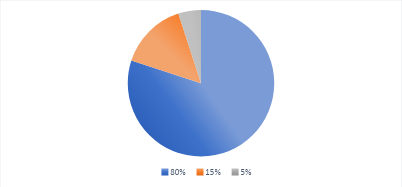
A total of 80% of people shown in blue and they consider their native language important in the language learning process. The people shown in yellow consider effort and exploration important in the process of learning a language. The percentage of people who prioritize motivation is in gray.
CONCLUSION
It is clear that the learner’s first language has an impact on their language acquisition process. The grammar, pronunciation, and word order of a learner’s native language can make learning a new language easier. It is clear that along with a passion for language learning, motivation, and relentless efforts, first language is important for language learning. The results of research, scientific works, and studies show that language is a social phenomenon, and the first language a learner acquires determines their subsequent language acquisition process.
We can say that the first language of the learner brings with it opportunities or challenges, depending on what it is. It is undeniable that each language has its own opportunities or challenges. If I offer suggestions and recommendations, the method of grouping learners based on their first language can facilitate the language acquisition process and provide several opportunities.
REFERENCES
- Nguyen, M. T., & Do, Q. K. (2025). The influence of mother tongue on English language acquisition: A case study at Nguyen Tat Thanh University. American Journal of Psychiatric Rehabilitation, 28(1). https://doi.org/10.69980/ajpr.v28i1.38
- Kuldashev, R. A., & Shabonova, S. B. (2024). The role of mother tongue in teaching foreign languages. Excellencia: International Multi-disciplinary Journal of Education. https://doi.org/10.5281/
- Nguyen, D. T. T. (2020). The roles of mother tongue in enhancing English language acquisition in English-policy classes. International Journal of Applied Linguistics and Translation, 6(4), 109–115. https://doi.org/10.11648/j.ijalt.20200604.11
- Raut, B. B. (2024). Influence of mother tongue on English language learning in the EFL context of Nepal. GS WOW: Wisdom of Worthy Research Journal, 3(2), 33–44. https://doi.org/10.5281/zenodo.14542586
- Kotipalli, N. D. (2025). A study on the role of mother tongue in English language acquisition among rural learners. International Journal of Research Publication and Reviews, 6(8), 1499–1502. https://doi.org/10.55248/gengpi.6.0825.2914
- Asad, M. (2025). The impact of mother tongue interference on English syntax: A case study of EFL students at Technical College, Saudi Arabia. International Journal of Language, Linguistics, Literature and Culture, 4(3), 13-30. https://doi.org/10.59690/ijlllc.v4i03.018
Pingback: Synchronized Chaos’ First February Issue: Paying Attention | SYNCHRONIZED CHAOS