
INTERPRETATION OF PRINCESSES IN THE NOVEL “ONA LOCHIN VІDОSI”
Abstract
This article analyzes the artistic interpretation of Timurid princesses in Pirimqul Qodirov’s novel Ona Lochin Vidosi. The study examines how the female characters Saroymulk Khonim, Shodimulk Begim, Khonzoda Begim, Husn Nigor Khonim, Habiba Sultan Begim, Robiya Sultan Begim, Feruza Begim, and Gulruhbonu are portrayed through diverse character traits. Particular attention is paid to the fact that the author emphasizes not merely external beauty but also the spiritual and moral qualities of the princesses, including motherhood, loyalty, political activity, courage, and devotion.
Keywords: Pirimqul Qodirov, Ona Lochin Vidosi, Timurid princesses, Saroymulk Khonim, Khonzoda Begim, Habiba Sultan Begim, Robiya Sultan Begim, Feruza Begim, artistic interpretation.
Introduction
In historical novels, the process of creating images of historical figures combines documentary information with the author’s artistic imagination. In particular, the portrayal of women who lived alongside rulers and influenced family and political relations is one of the factors determining the historical and aesthetic value of a literary work. Pirimqul Qodirov’s novel Ona Lochin Vidosi depicts the complex period of the Timurid dynasty and presents not only more than a dozen princes and rulers but also numerous princesses through artistic interpretation.
The female characters in the novel are not presented according to a single stereotypical model. Some princesses appear as wise mothers and devoted wives, others as active participants in political struggles, while still others are portrayed as complex and contradictory personalities. Therefore, it is important to examine the portrayal of the princesses on the basis of their individual characters, their roles within the family, their attitudes toward state affairs, and their moral and spiritual qualities.
Main Part
In Ona Lochin Vidosi, Saroymulk Khonim is portrayed as one of the most influential figures among Timurid women. Historical sources record her position within Amir Temur’s family, her interest in education and enlightenment, and her participation in matters of state administration. In Qodirov’s interpretation, these aspects enrich the content of her artistic image. She is portrayed as a wise woman who directly influenced the upbringing of such representatives of the dynasty as Shahrukh Mirza, Muhammad Sultan Mirza, Khalil Sultan Mirza, and Ulugbek Mirza. Her advice to her daughter-in-law Gavharshod Begim embodies concepts of court etiquette, responsibility, and family duty.
The tragic fate of Saroymulk Khonim in the plot further emphasizes the spiritual elevation of her character. The novel presents her mysterious death and suspicions that she was poisoned. Thus, the writer connects the life of a wise woman, attentive to the upbringing of children and supportive of education and enlightenment, with political conflicts within the royal court. Through this character, the continuity of goodness and loyalty in the memory of subsequent generations is emphasized.
The character of Shodimulk Begim differs sharply from that of Saroymulk Khonim. Although the writer particularly emphasizes her external beauty, he also reveals contradictions within her inner world. At a time when Khalil Sultan was indifferent to matters of state, Shodimulk Begim actively interferes in political processes. Her decisions concerning her rivals and her involvement in the circumstances surrounding Saroymulk Khonim’s death make her character more complex. Thus, the author portrays the princess not merely as a symbol of beauty but as a contradictory personality whose decisions are influenced by power and personal interests.
The image of Khonzoda Begim combines maternal love, loyalty, and a tragic fate. She is portrayed as a woman who was forced into marriage twice amid historical circumstances and who later experienced the tragic fate of her son, Khalil Sultan. Her inability to endure the death of her son and her passing away shortly afterward demonstrate the strength of maternal feelings. At the same time, her fate artistically expresses the human consequences of marriages based on kinship and political interests.
The interpretation of Husn Nigor Khonim is also connected with the inner suffering of a mother. She is portrayed as the wife of Ulugbek Mirza and the mother of Abdulatif. Abdulatif’s opposition to his father causes deep psychological suffering for Husn Nigor Khonim. In her conversation with Gavharshod Begim, she expresses shame over her son’s actions and distress that her grandchildren have also been subjected to reproach. Therefore, in this character, the responsibility of a mother for her child’s fate and the emotional experiences of a mother’s heart are emphasized more strongly than her status as a princess.
Habiba Sultan Begim is portrayed in the novel as an active and positive female character. Along with her beauty, her wisdom, good manners, and loyalty are revealed through the actions of other characters. Gavharshod Begim proposes marrying Habiba Sultan Begim to Abdullah Mirza in an attempt to prevent him from becoming involved in internal conflicts. As a result, the heroine’s personal qualities become an important part of the development of the plot. Habiba Sultan Begim uses her valuable possessions to persuade officials and save her husband, Abdullah Mirza, from imprisonment and the threat of death. Thus, her loyalty is not merely a passive emotion but is demonstrated through practical action.
In the portrayal of Robiya Sultan Begim, political and educational activity occupies a special place. She rises to the status of an influential princess at the court of Abulkhayr Khan and influences the upbringing of her children, particularly the attitude of Kuchkunchi Khan toward science and culture. Her ability to instill respect for Amir Temur in her son and develop his interest in scientific and cultural heritage demonstrates the educational power of her character. Robiya Sultan Begim’s support for protests against Abu Said also presents her as a princess who directly responds to political events.
Courage and devotion are the leading characteristics of Feruza Begim. She is portrayed as a mother who played an important role in the upbringing of Husayn Bayqara and wished her son to grow up independent and strong. When her son was imprisoned, she personally went to Samarkand and spoke courageously with Abu Said in an effort to save his life. Despite the confiscation of her property, she continued to support Husayn Bayqara’s future activities. Therefore, the image of the “mother falcon” in the novel is not limited to one individual; it also continues through the images of mothers who prepare their children for difficult trials and struggle for their future.
Although Gulruhbonu is not a princess, she contributes an important dimension to the representation of women in the novel. She is portrayed as the nurturing mother of Alisher Navoi. Despite the confiscation of her property, the loss of close relatives, and difficult living conditions, she directs her child toward education and enlightenment rather than war and violence. In this respect, the character of Gulruhbonu strengthens the spiritual and educational dimension of the mother image in the novel.
Furthermore, the portrayal of princesses in the novel demonstrates that female characters extend beyond the family sphere and are connected with social and political processes. In the characters of Saroymulk Khonim, Gavharshod Begim, Robiya Sultan Begim, and Feruza Begim, upbringing, advice, political responsibility, and influence on the fate of future generations are closely interconnected. In this sense, the princess is presented not merely as the wife of a ruler or a member of a dynasty but as an active participant in historical processes. Turgun Fayziyev’s work Timurid Princesses, which provides information about the genealogy, status, and historical role of Timurid women, also helps readers understand the historical foundations of some of the characters portrayed in the novel.
The relationship between historical fact and artistic interpretation is also important in the poetics of the novel. The lives of some characters recorded in historical sources are expanded in the novel through psychological states, dialogues, and dramatic situations. For example, the influence of Robiya Sultan Begim on her son’s upbringing, the role of Feruza Begim in the fate of Husayn Bayqara, and Habiba Sultan Begim’s efforts to save her husband connect the personal qualities of women with the development of historical events. Such a method of representation prevents historical figures from remaining merely biographical subjects and contributes to revealing their inner worlds and human relationships.
In this respect, the system of princesses in Ona Lochin Vidosi is notable because it is not constructed according to a single model. In one character, motherhood and education are dominant; in another, loyalty and devotion; while in another, political activity or a tragic fate becomes the defining characteristic. Consequently, through the images of Timurid princesses, the writer presents the diverse dimensions of women’s lives in a particular historical period. Historical information recorded in the National Encyclopedia of Uzbekistan also serves as an important source for understanding the subsequent fate of some of these figures. The artistic interpretation in the literary work enriches such historical information with human emotions, family relationships, and psychological conflicts.
Conclusion
The portrayal of princesses in Ona Lochin Vidosi is not based on a single character model. Saroymulk Khonim embodies wisdom and enlightenment; Shodimulk Begim represents a contradictory psychological character; Khonzoda Begim and Husn Nigor Khonim embody the tragic emotional experiences of motherhood; Habiba Sultan Begim represents loyalty and devotion; Robiya Sultan Begim demonstrates political and educational activity; and Feruza Begim embodies courage and maternal devotion. Thus, the writer does not limit the portrayal of Timurid women to external beauty or their status within the royal court but seeks to reveal their inner worlds, moral qualities, and attitudes toward historical processes. In this regard, the depiction of the princesses contributes to creating an active and multifaceted image of women in the artistic structure of the novel.
References
1. Qodirov, P. Ona Lochin Vidosi. Tashkent: Yoshlar Matbuoti, 2023.
2. Fayziyev, T. Timurid Princesses. Tashkent: Abdulla Qodiriy National Heritage Publishing House, 1994.
3. Chuvashova, S. The History of Khoja Ilgor. Tashkent: Fan, 2006.
4. National Encyclopedia of Uzbekistan. Tashkent: State Scientific Publishing House of the National Encyclopedia of Uzbekistan, 2000–2005.
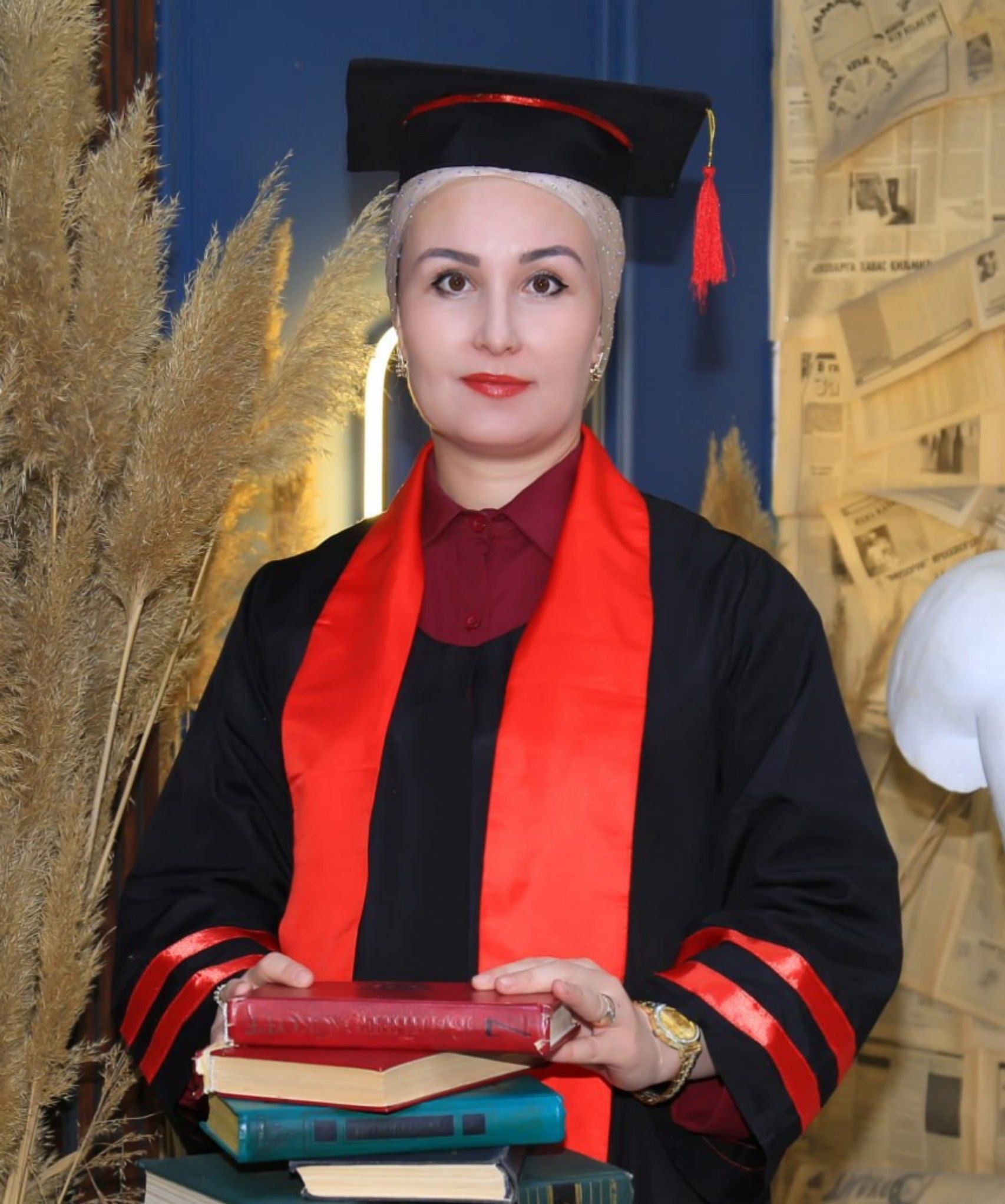
Mahfuza Abduqaxor qizi Sharipova was born on September 18, 1993, in Bogdod District, Fergana Region, Uzbekistan. In 2009, she graduated from General Secondary School No. 8 in Bogdod District, Fergana Region. In 2016, she successfully completed her studies in the field of Philology and Language Teaching: Uzbek Language at Fergana State University.
Since 2016, Mahfuza Sharipova has been working as an Uzbek language and literature teacher at General Secondary School No. 11 in Chortoq District, Namangan Region. Throughout her professional career, she has paid particular attention to increasing students’ interest in the Uzbek language and literature by applying modern pedagogical approaches and effective teaching methods. She currently holds the highest qualification category as an Uzbek language and literature teacher.
From 2024 to 2026, she studied for a master’s degree in Uzbek Language and Literature at Namangan State Pedagogical Institute and successfully completed her master’s studies. She is also a holder of an A+ level certificate in her field of specialization.
Mahfuza Sharipova’s academic and professional interests are closely associated with Uzbek language and literature, literary studies, and language teaching methodology. At the same time, she has a particular interest in the in-depth study of the Turkish language. She holds a C1-level certificate in Turkish and currently conducts courses in this language. She is also engaged in translating literary works from Turkish into Uzbek.
Mahfuza Sharipova’s primary goal is to continuously enrich her knowledge and professional experience in her field, deepen her academic research, and become a highly qualified specialist in philology. In the future, she aims to obtain the academic degree of Doctor of Philosophy (PhD) in Philological Sciences, further develop her academic and pedagogical potential, and share the knowledge and experience she has acquired with the younger generation.