
Nature and the Philosophy of Life in the Poetry of Aleksandr Faynberg
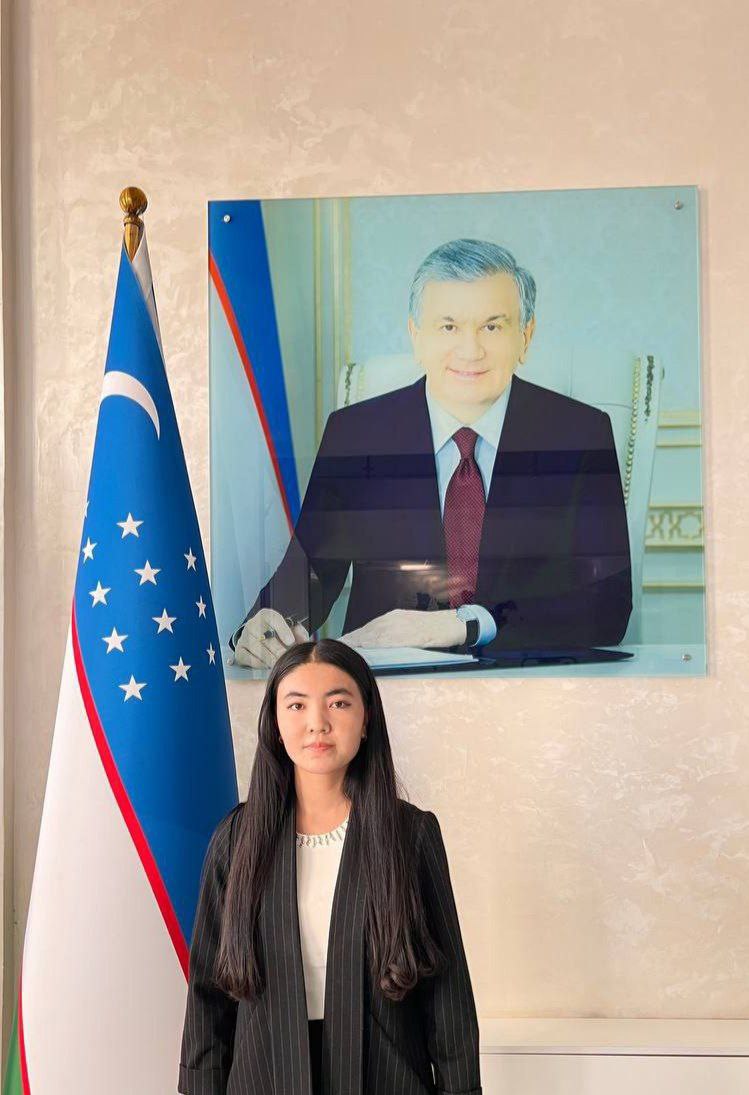
Zamira Moldiyeva Bahodirovna
Student of English Filology faculty, UZSWLU.
Email: zamiramoldiyeva219@gmail.com
Scientific advisor: Zulxumor Bannopova
Abstract: This article investigates how nature imagery and philosophical reflection function within the poetry of Aleksandr Arkadyevich Faynberg, demonstrating that his natural motifs are deeply tied to emotional expression, symbolic meaning, and existential contemplation. Using scholarly studies of his works and specific poems, the research highlights how elements such as wind, sea, seasons, and landscape perform not only decorative functions but also convey inner world processes, memory, and human relationships to their surroundings. Natural imagery in Faynberg’s poetry thus becomes an essential medium for exploring life’s meaning, emotional experience, and cultural identity.
Keywords: Aleksandr Faynberg; nature imagery; symbolism; philosophical reflection; Uzbek–Russian poetry; emotional symbolism.
Introduction
Aleksandr Arkadyevich Faynberg (1939–2009) was a Russian-Uzbek poet, translator, and cultural figure whose lyrical works combine emotional depth with philosophical and symbolic imagery. Born in Tashkent, he became one of the notable voices in Russian-language poetry in Uzbekistan, and his poetry often relied on natural imagery to reflect inner sentiments and broad human themes.
Scholars note that Faynberg’s works not only describe the external world but also engage with deeper emotional states and existential reflections through landscape, sky, wind, and sea motifs. These images serve as both metaphorical mirrors of internal experience and symbols of philosophical inquiry, positioning nature at the core of his poetic expression.
This article aims to analyze the role of nature imagery in Faynberg’s poetry and how it contributes to understanding life’s meaning, emotional resonance, and existential depth.
Discussion
Nature as a Symbolic System
In Faynberg’s poetry, natural imagery often functions as a symbolic system rather than mere decorative scenery. According to the study “ALEKSANDR FAYNBERG SHE’RLARIDA TABIAT OBRAZLARI VA RAMZLARI”, elements such as wind, rain, autumn landscapes, and ridge views frequently appear as metaphors for inner emotional states and philosophical visions. The poet views nature not only as external beauty but as a structure carrying symbolic and emotional meaning, where natural elements become “mirrors” reflecting human emotions and thoughts.
For example, wind imagery in his poetry often symbolizes not only physical motion but also change, freedom, or emotional turmoil, suggesting deeper layers of meaning beyond the literal. These symbolic associations allow readers to interpret natural scenes as reflections of inner psychological states, reinforcing the connection between the external environment and the inner world.
Thus, Faynberg’s use of natural imagery goes beyond aesthetic description — it becomes a language of meaning, where each element conveys emotional and philosophical undertones.
Emotional Resonance through Natural Motifs
Another key dimension of Faynberg’s nature imagery is its ability to evoke emotional resonance. According to the article “AN ANALYTICAL STUDY OF ALEKSANDR FAYNBERG’S POEM ‘LOOK FROM THE BOTTOMLESS SEA’”, nature motifs such as sea, stars, leaves, and wind serve as companions to human emotion, constructing a symbolic dialogue between the internal experiences of the poetic speaker and the external world.
In the specific poem “Look from the Bottomless Sea”, the natural environment does not merely set a scene — it mirrors the speaker’s inner state, acting as both witness and participant in emotional and spiritual reflection. The sea’s vastness, stars above, and whispering wind become metaphors for memory, longing, and the connection with future generations.
This use of nature as an emotional mirror enables Faynberg to express subtle and complex feelings indirectly, allowing nature to speak for the human heart. This indirect mode of expression enriches the poetic experience and deepens the reader’s engagement with the emotional content.
Philosophical and Existential Themes
Beyond emotional expression, Faynberg’s natural imagery often opens into philosophical and existential reflection. Natural cycles such as day and night, seasonal transitions, and horizon lines serve as metaphors for the continuity of life and human experience. Nature becomes a framework within which questions of time, identity, and human purpose are contemplated.
The interplay of light and darkness, wind and stillness, and changing landscapes invites reflection on the passage of time, the fragility of existence, and the perpetual search for meaning. In this sense, Faynberg’s natural imagery transcends mere representation and enters the realm of existential meditation, where the external world becomes inseparable from internal philosophical inquiry.
Cultural Identity and Landscape
Faynberg’s natural imagery also reflects his cultural identity as a Russian-Uzbek poet embedded in the Central Asian environment. While writing in the Russian language, his use of landscapes reminiscent of Uzbekistan — open plains, clear skies, and warm winds — brings a regional texture to his works. These elements reflect not only personal experiences but also connections to cultural and geographical spaces that shaped his worldview.
This cultural dimension enriches the symbolism of nature in his poetry, making it resonate not only as personal reflection but also as an expression of belonging to a specific cultural and geographical community. By integrating natural imagery with cultural context, Faynberg’s poetry builds a bridge between universal themes and regional specificity.
Conclusion
In the poetry of Aleksandr Arkadyevich Faynberg, natural imagery functions as a powerful artistic device that conveys emotional depth, philosophical meaning, and cultural identity. Through wind, sea, landscapes, and sky, Faynberg’s poems explore the intricacies of human emotion, memory, and existential contemplation. The symbolic use of nature allows his work to transcend mere aesthetic description, engaging readers in a reflective dialogue between the inner self and the external world. Such integration of nature and philosophy secures Faynberg’s lasting impact on Russian-Uzbek poetic tradition and literary scholarship.
References:
1.Nurmaxmatova Firuza Rasulovna. ALEKSANDR FAYNBERG SHE’RLARIDA TABIAT OBRAZLARI VA RAMZLARI. TADQIQOTLAR, 72(1), 135–136 (2025). https://journalss.org/index.php/tad/article/view/2553
2.Zoirova Diyora. AN ANALYTICAL STUDY OF ALEKSANDR FAYNBERG’S POEM “LOOK FROM THE BOTTOMLESS SEA”. Ta’lim Innovatsiyasi Va Integratsiyasi, 59(1), 276–278 (2025). https://journalss.org/index.php/tal/article/view/9238
3.Файнберг, Александр Аркадьвич — Biographical entry. Wikipedia (Russian). https://ru.wikipedia.org/wiki/Файнберг,_Александр_Аркадьевич
Zamira Moldiyeva Bahodirovna was born on May 14, 2006, in Zomin district, Jizzakh region. From 2013 to 2024, she studied at School No. 47 named after Khayrulla Akhmedov in Zomin district. During her school years, a collection of poems titled “Qaldirg‘ochlar” (Swallows) was published with the participation of amateur student writers.
She is currently a second-year student at the Uzbekistan State World Languages University, Faculty of English Philology. She is a member of the “Aurora” volleyball team and a winner of several competitions. Zamira has been an active participant in projects such as “English Quest: Freshmen Edition,” “EmpowerHer: Republican Forum of Young Women Leaders,” and “Eco Marathon.” She has also taken part in various conferences and is the author of several articles.
Pingback: Synchronized Chaos First March Issue: Fingering the Spines | SYNCHRONIZED CHAOS