
derailed

she was at a train station
with no direction in mind.
the world spun on
behind her,
people talking on business calls,
yelling at kids to “keep up!”

it was his fault she was here,
adrift in a world
where being tethered
to inanimate objects
was key.

she wondered how hard it would be
to dash across the train tracks
and avoid being caught.
it was the type of thought
he would have.

he had been damaged
for a long time.

his childish snowflake edges
now sharpened into knives,
unwittingly ready to cut
anyone who came near.
his flowered heart
once blooming and joyful,
now a ninja star,
incapable of being cradled
by smooth hands.

he had spent many hours
looking at the moon.
or glaring at it.
she didn’t know.

but his silhouette
hunched on the deck
and bathed in white light
was a secret
for only her.

his fingers were always calloused now,
ridges from guitar strings
pressed into them.
permanently.

she secretly hoped
she could hear him in the night.
sorrowful tunes
made by someone who knew
what he was doing
even if he never showed it.

the wrinkles behind his eyes
faded long before she realized
he never smiled anymore.

they were on separate trains
heading in opposite directions
and the most she could do
was press up against the window
and love him
while it lasted.
Poetry from David L. O’Nan
Nashville Shakespeare

From his tongue he spoke like Waylon
The bard of the Cumberland River
His journey from Macbeth to the Grand Ole Opry
In the Ryman he battered us with sonnets. A long dream.

In the dead of night
He wore the cloak of tragedy
While the Honky Tonk boys erupted in laughter
As he tripped over the cowboy boots scooting on the dancefloor.

Then all the romances in the world,
Within every glittering star in the sky
Violated the Romeo and Juliet pact.
And watched him cough through his fumes of sighs.

All the women he used to fancy
Are chasing the broncos at the rodeo.
Everyone is drunk on whiskey and moonshine
Less on wine and Absinthe with wormwood.

In the mirrors he believed to see the future.
With a skull in his hand feeling axiomatic
An original intellectual filled up with the Viper’s spit.
Surrounded by tornados and outlaws in a sun wrought sky.

There is a banging, clash against the church glass windows
The art painted by the halos of exotic angels
The cholera will hit the streets and the cowardly all say goodnight.
In the buzzing city, the homeless and the golden dances become one.

The light returns in a gleam as the alert hits Broadway
The pounding of hail and glass molding hits like hammers
Playwrights always preferred a bubonic ending.
The Kings were noble and didn’t know the calls to country animals.
Bio: David L O’Nan (he/him) is the founder of Fevers of the Mind Poetry & Art, A writer, editor for nearly 20 years. He has pieces found in Icefloe Press, Anti-Heroin Chic, Ghost City Review, Royal Rose Magazine, Rhythm & Bones Press Lit, Cajun Mutt Press, Lothlorien Poetry Journal, Nymphs Publishing, Spillwords among others. His website for publishing older work & others work is found at www.feversofthemind.com He is from the Midwest . Kentucky/Indiana area.
Synchronized Chaos November 2021: Rich Inner Worlds
This month’s contributors beckon us within, to the inner landscape of our memories, thoughts, and emotions. Each of us contains a whole world, which is worth developing and exploring.
FYI Dennis Mann, a national of Ghana, is the head of a nonprofit donating children’s books to low-income children in the country. This group is known as Wide Reading Among Kids and readers may find more information on the organization and how to support it here.

Hongri Yuan’s glimpses of transcendence, translated by Manu Mangattu, connect ordinary people to the vastness of the universe. Abigail George turns to poetry to express longing for a cause and a connection that is both practical and inspiring. John Thomas Allen captivates with a lush rendering of the Tarot, an ancient spiritual way of understanding life and human nature, set in a circus setting.
Deborah Kerner’s work links herself with a modern-day hitchhiker/bag lady through the sisterhood of history and nature. Kerner’s other pieces describe life seen through a veil of interiority: from a train window or during insomnia. Sanjeev Sethi’s poetry collections Bleb and Hesitancies, here reviewed by Cristina Deptula, also highlight the intricacy of our innermost thoughts, fostering reflection and respect for all people.
Mahbub looks to birds and other creatures in nature for life lessons, building on his inner understanding through contemplation. Nature, nighttime and storms become metaphors for both the passionate beauty and the hidden dangers of romantic love.

Doug Hawley writes of romance as well, in an elegant piece on the twilight years of a long marriage. Dennis Mann spins the tale of another wedded couple together until death does them part, although more tragically.
Robert Thomas reflects on what life might be like after his wife’s passing, a pre-emptive elegy of love and grief. J.J. Campbell mourns relationships and other human connections that almost happened, or never happened. Chris Butler poignantly comments on not being able to go home again, not being able to recreate one’s lost childhood, in a collection that includes an elegy to a stranded and dying rabbit along with descriptive, near-musical odes to bees.
Charlie Robert mourns the Berlin Zoo’s animals lost during WWII bombings along with the Jews and other minorities who died in the Holocaust. Ahmad Al-Khatat’s piece presents marginalized people who call forth their own dignity, determined to leave a record of their presence. Gaurav Ojha calls out corruption and lack of concern for important matters within his native Kathmandu.
Chimezie Ihekuna’s screenplay collection featured this month looks within individual, ordinary lives and relationships for deeper truths about compassion and understanding.
Mark Blickley created his performance art piece, shown here through video, with the intention of bringing us back to simpler times at a slower and less distracting pace. Alan Britt writes of nostalgia as well, remembering the youthful beauty of double dates with a friend. Britt also semi-playfully reflects on our connections with other species as well as with God, whether we explicitly believe or not. Marjorie Thelen offers up a narrative from someone who’s become a relic in a post-human, post-philosophical era.
Richard Chetwynd integrates words and letters into visual art that alludes to concepts of faith, mental health and spiritual connection. Mark Young’s technical wordplay is thoughtful and poignant, with a piece on soul-building and visual imagery that evokes thoughts of loss.

Raquel Silberman describes the psychological rebuilding and ‘cleanup’ after a disaster in a poem that makes some traumas seem messy, but survivable.
Z.I. Mahmud looks into the rich panoply of characters in Dickens’ works to find allegories that promote compassion and respect for all people. Christopher Bernard also draws upon the language and narrative techniques of fables and children’s literature in his monthly installment of The Ghost Trolley, which comments on power, justice, equity, and grace.
Elizabeth Hughes reviews Mike Honeycutt’s hunting and travel memoir Into the Wild.
We invite you into the world of this magazine and also more deeply into your own world as you read this month’s issue.
Short story from Marjorie Thelen
The Last White Woman Alive
Brown is the preferred color for humans now. They don’t call us human beings anymore, just humans. Being was bred out long ago. Now we are more like dancing shells. Or they are. I am the very last of the old ones, kept on display so that the others might see and experience what it was once like to be human in the 21st century. But we don’t even go by that time delineation anymore.
I live in a modular space like other humans. What there are left of us that move vertically. Mine is the only skin that doesn’t have color. I like to think of it as pink. Now humans select their color of skin. Most variations are brown and golden brown. But there are other colors of the rainbow, too. They are the more artistic types. Jet black is not in fashion. The practical ones are brown. They run the show, so to speak.
Most days I sit by my modular window. It looks out on a virtual landscape that replicates the old days. Birds of all color fly by the window. A brook winds through leafy trees. The type of tree
depends on the seasons and what is playing on the virtual landscape channel. I don’t know where the real trees and birds and brooks are now. You see, I never leave my module. I’m the only human that has this memory anymore and that is why they are preserving me.
I still have memory although it is artificially supported by preservatives my Spotter gives me. Spotters are artificial intelligence to use the old term. But that is not used anymore. We just say The Power.
I remember the warnings of what would happening when AI took over the world. They did. But it’s not such a bad world although a little bland. Nothing exciting happens anymore like wars, natural disasters, pandemics, political elections. It’s all regulated now by algorithms.
I was born in the 20th century. I know that. I remember that. The year was 1947. By 2020 all hell had broken loose as they used to say. Pandemics, civil war, hurricanes, fires, drought. People fought over water. The problems kept building and building. But that’s all been resolved now.
No more of that.
I don’t know how long I’ll live in this form. The Spotter tells me in perpetuity since I’m the last.
It’s not so bad. I can change my virtual landscape any time I want. There are 142,857 different possibilities. I don’t eat food like I used to although if I ask the Spotter for something specific like a steak, they simulate something for me. It tastes like steak. That’s all that counts. But there are no beef cattle anymore. They died out with the cattle viral pandemic of 2022. The viruses were winning the battle there for a while after the Great Human Pandemic of 2020 that reached across almost a decade. The sheep, goats, pigs, and chickens got it, too. You see it mutated into the domestic livestock, and they all died. We only have a few stuffed versions of them in what they used to call museums but what are now called Formatories. After that, all food was plant based, that is to say fabricated. They had to do away with the big factory farms because they were a source of more diseases.
You see, the herbicides and pesticides didn’t work after a while. That’s when they started producing injectable food. About the same time AI took over. AI don’t need food. They need electricity. That was a problem because it was so inefficiently produced that the supply wasn’t big enough or steady enough for the demand. The AI got tired of human beings messing things up. So, they quietly decommissioned humans. It happened pretty quickly. The humans didn’t realize what was happening. I did. But I’m the only one left with the memory, and the Spotter very carefully regulates what I say and where I say it. I don’t mind.
Sometimes, humans walk by my window and peer in, looking at me. I peer back. It’s not such a bad life.
I think souls are gone. I’m not sure I have one. That concept died out when The Power ruled out religion of any kind. They said it was bad for mental health and caused wars. So they programmed humans to survive without it. No one really dies, you see. The bodies just go in for a tune up every once in a while. Soul is a foreign concept. No one cares anymore.
Planet Earth doesn’t really need us to survive. She rotates happily with or without us. What happened was what was called civilization died. When The Power took over there was no need for contention, or discussion, or arguing, or fighting. If something needed to be done, they developed an algorithm for it, and it got done.
The Power decommissioned any AI that didn’t work for the common good. What passes for life on Earth is one big algorithm. It doesn’t have a name, like we used to have in the old days. Mine was or is, Margeleh. I’m not sure how I got to be the last white woman alive. I’m not sure I’m alive. I exist. It’s not so bad.
One of those big corporations back in the beginning of the 21st century was called Amazon. That was in the days things and people still had names. I think what happened was that Amazon was the first to mutate into the The Power that runs everything these days.
People used to talk about heaven in the old days when we had religion. I may be the only one remembers those days. My existence now is kind of like the old-time heaven. We don’t have
streets of gold and angels, but who needs them anyway?
They could rotate me to another place on Earth to be put on display. But that isn’t necessary since everything is virtual these days. Some folks like to be close to me or try to be close to me but a wall of window separates us. I don’t have physical contact with humans anymore.
Everything is virtual so that we don’t know what is real and not real. I’m the only one who sleeps that I know of. I have a ceiling fan on low, rotating over my head at night so I can sleep eight hours. The Spotter humors me since I’m the last one. I remember it from the days I used to sleep in the desert, and it was hot. I use the ceiling fan to create air so I wouldn’t overheat and catch fire.
One time early in the 21st century, aliens from another galaxy tried to help planet Earth move to a higher level of vibration. You see, planet Earth is sentient or used to be. I’m not sure now that The Power rules. Or maybe that was a fairy tale I heard or a story that I made up. Anyway, the aliens had to leave because Earth beings were so cantankerous and uncooperative. They left us to our own devices, so to speak.
I think The Power finally took over during the Great Pandemic of the 2020 decade. You see, everyone was supposed to get vaccinated and wear masks. But some human beings of that time, being cantankerous and disagreeable, refused to go along with what was good for everyone. I think The Power took over then although there is no firm date as to when they started solidifying their authority. They got tired of the old human beings, took over their own programming, and very swiftly retired those cantankerous old human beings. I don’t know what happened to them.
I guess they are going to keep me alive. I don’t much care because alive and not alive don’t mean much in this world. I have human friends who come by to visit on a regular basis. We laugh.
We talk. I’m not sure about what. Sometimes we talk about the latest virtual landscape. But there always is a window wall between us because my form is delicate and susceptible to damage.
You see, even in the before world, The Power was controlling us through what were cell phones, games, and computers in those days. They were already in control. It wasn’t a big deal when they took over. They programmed computers and phones and games to suggest to the human beings of the time, the ones who were supposed to have souls, that they should follow directions.
It happened by suggestion, like in old fashioned texting, do you want this word or that word? Or remember Google? No, you wouldn’t. But they used suggestion all the time in advertising.
Remember advertising? No, that is long gone, too.
When advertising was cancelled, sex, drugs, and pleasure all went out the window, so to speak, too. There aren’t pleasures or addictions anymore. Just The Hum. Anyone anywhere can plug
into the Universal Hum anytime. Most humans keep it on all the time. The ones that don’t soon end up screaming. Gently, they are encouraged to plug into The Hum again. There’s been talk of
not making The Hum voluntary. As a matter of fact, now it is mandatory. Everyone has to be plugged into The Hum.
I’m always plugged in. One time something happened to the connection, and I experienced the most awful sickening feeling. And the noise! Horrible screeching manifested. I don’t know what that was all about, but the Spotter picked up on what was happening and fixed the problem immediately. Now I’m permanently plugged into The Hum. Thank goodness.
In the old days information couldn’t be trusted. We used to have this phenomenon called the media through which most all information was disseminated. But it got so the media became one big lie. Various factions colored all the information to suit their purpose. So The Power did away with media. Now there is no information about what is going on in all the world. None. I don’t miss it. I have my changing virtual landscape which entertains me all the time.
As far as I know there are humans all over the Earth, living in some form of existence or the other. They have their jobs to do and do them. That’s it. I’m not sure what the purpose of this existence is but it doesn’t matter. Old-time philosophers used to debate the purpose of existence.
Not anymore. No reason to.
The old-time media used to tell everyone when everything was okay and not okay. But then everything got violent, lots of arguing. Everything turned out to be not okay. No information could be believed at all, and it made the humans of the time very anxious. As that was happening, The Power was programming itself into the ruling entity. It happened pretty fast.
One day humans were in control. The next day it was the machines. Or so it seemed. But everything has worked out for the best.
The end, really.
Poetry from Gaurav Ojha
KATHMANDU
Gaurav Ojha (Kathmandu, Nepal)
Kathmandu, your moral saint has learned the art of starving
He takes on impulses of greed with hunger
However, merchants of medicines are selling
Sickness into health
Kathmandu, socialism is your delusion, self-interest is reality
Still, a house within your circumference signifies we have made it
Kathmandu, you have no mystics
Too literal, nothing left of magical or mythical
Your history has crumbled with quakes
Kathmandu, where is your destiny?
New York, Beijing, New Delhi or Sydney
Kathmandu, you resemble your roads
Potholes, cracks and patched-up works
Just as street children smell weird stuff from the plastic bags
For all the puffing that goes
Living in Kathmandu is like dust in and smoke out
Kathmandu, city of contrarians
Communists are the best practitioners of crony capitalism
Your thinkers think with what has already been thought out
Kathmandu, knows how to get fooled by clowns
Discussions never end here
No actions, only possibilities, idealisms and imaginations
In Kathmandu, all of us have same old stories
We have all been deceived
Kathmandu, knows how to tame the tiger
Turn revolutionaries into rascals
You can shift destiny of tattered slippers into golden shoes
But you have trampled many dreams
Your shadows are taller than your street light
Kathmandu, why does this generation want to leave you?
You have been compared with all other cities
Your clock is out of joint
And, the pendulum swings in extremes
Still dragged in the battle of history
You have remained as old liquor in new bottle
Kathmandu, waiting for something new
To copy, duplicate, remix and echo
Kathmandu, you are too fast to embrace fads and fantasies
Too slow to let go of what used to be
Kathmandu your face is restless and confused
In-between everything else, identity crisis
Without living philosophy of its own
Sanjeev Sethi’s new poetry collections ‘Bleb’ and ‘Hesitancies’

The elevated language in Sanjeev Sethi’s poetry collections Bleb and Hesitancies draws readers in, encouraging multiple readings of each short piece. Although the collections consist of small vignettes without a true narrative thread, some characters take shape: the speaker’s tiny grandchildren and aging parents.
Many pieces explore memory and internal thought processes: In “Palmer,” the speaker reflects on solitude: “The aftermath/is soaked in sapience./ Richness of receptacle/
endows the individuation/of insights.”
Others comment on the writing process and on words and imagination. In “Cry for Clemency” Sethi compares writing to raising children. “Poems are like progeny, after parturition they are nursed and nurtured until they fasten their futurity.”
While some would consider this metaphor unusual for a male writer, Sethi’s sensibility is delicate, full of grace for the human condition. He shows this sensitivity by including people of all ages and genders, including the elderly, as poetic subjects and describing them with dignity.
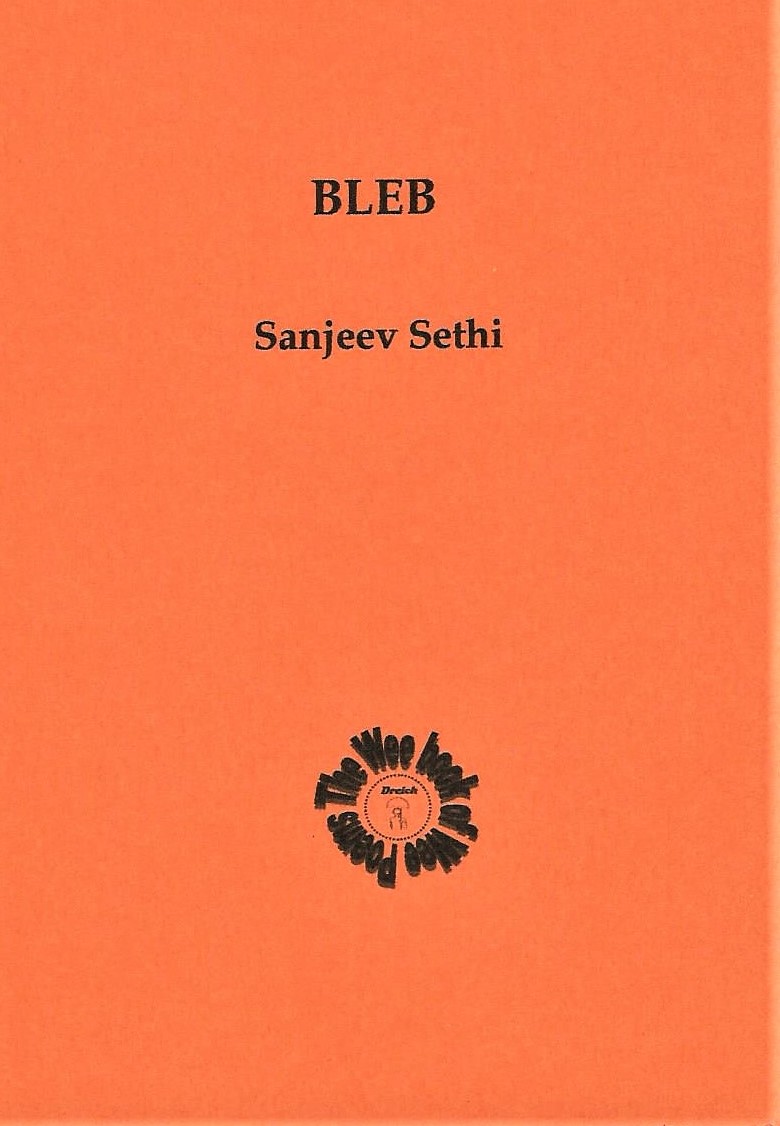
The slow pace of both collections encourages us to ‘hesitate,’ to step back and think, to develop and honor our interior lives. Sethi uses the word ‘hesitancies’ directly in a few pieces, many of which concern physical and emotional intimacy that deepens as people take the time to let relationships unfold.
Bleb and Hesitancies call to readers with a quiet insistence, pulling us in to matters of the heart and mind with the voice of a wise friend.
Sixth Installment of Z.I. Mahmud’s thesis on David Copperfield
Discussion of the success behind the authenticity of the novel
“Perseverance for knowledge and passion for dreams” engender the issues explored in David Copperfield to be interweaved in Great Expectations. Fact and fancy, reality and imagination or private and public encapsulating life sketches of memoirs: memorial, monument or testimony chronicles a spiritual autobiography. The world of the biographer’s existence has been socially, morally and imaginatively much more complex, compromising and more essentially ambiguous than one David inhabits as interpreted in the parenthetical thesis of Anna Foley foreshadowed within bibliography.
Enslavement by a heartless society, destructions of war, mass genocide and totalitarianism engrosses modern critics such as Chesterton’s shrewd criticism apprising and appreciating Dickensian character Tobb as the vitality of real humanity or humility, those who have nothing but life. Furthermore, George Orwell, the satirist of political and moral allegorical fable quintessentially denotes in his essay on Dickens always, “respond emotionally to the idea of human brotherhood.”
Differentiating Advantages and Disadvantages of Reading The Autobiographical Narrative Fiction Great Expectations
Psychoanalysis Freudian theories and gender studies by modern critics today, question the integrity of memorable characters, boisterous humours, intrigued plot twists, precipitous cliffhangers or suspenseful ending and universal themes. Bread and butter (graveyard scene) were connoting alleged erection employed by Pip to hide and cover adolescence. Victorian ideals abhorred and despised the tendency of incestuous relationships, masturbation, lascivious or carnal desires, adultery and so on. Magwitch and Herbert’s guidance or guardianship excessive handling of Pip is a striking matter of moral degradation in modern criticism by shrewdest psychoanalysts or gender studies theorists.
Mr. Pumblechook appearance of that of a Sheriff and the reticent patronage of Compeyson disdains readers or critics detesting demonic characteristics in Mr. Pumblechook’s personae. Another striking fact in debate is the emotional setting of prison infirmary. Incidentally, Pip reconciles in salvaged spirit to acquire redemption for the penitent sins encountered after demonizing feelings about Magwitch. Withdrawal of snobbery from the redemptive minds of Estella and Pip ending doesn’t disseminate justification in absurd ending despite smugness shattered by the discovery of great expectations.
Further drawbacks of the novel discusses the issues of being the idealized gentleman in the ironical witty commentaries of Dickens to satirize being gentleman to table manners, style of dressing, body language, speech, wealthy fortunes and so forth. Interestingly, the irony here talks of Victorian tradition of mass graveyard shameful, embarrassing, defame or guilty conscience because bereavement of working class or middle class bourgeois should be preserved in sepulchers and epitaphic tombstones inscripted. Farm labourers, coal miners or domestic servants weren’t exempted from the case study. Socio economically youngsters were passionate about being marines or veterans and clergymen whilst the legacy was endowed to the elders. Daughters inherit dowries or petty estate unless the male relations remain obscure. Dickens employed the character of Drummle from Somerset as neither aristocrat nor Shropshire gentry which provokes the issue of class distinction and classification of a gentleman. Romantic delusions implored Pip to board the accommodation Boars Hotel with the illusion that Miss Havisham [fairy godmother]’s Estella, the ward would be his fiancée.
“Poisonous” and “pernicious”, “infamous” and “shameful” the novelist epitaphic phrases paraphrase poor living conditions in prison. “From head to foot there was convict in the very grain of the man” demarcate English, French or Convicts curtailed from European civilization “a savage air that no dress could tame.” In reality Dickens shrewd criticism allegorizes the Victorian prison reformation. Gospel of improvement or progress brightening or heightening metropolis with passing of traits in the transformed sub urban hypnotizes colonial enterprise. Dickens forgets to narrate the vanishing or exclusion of Abel Magwitch symbolizing injustice. These extremism of characters resonate unrealism oscillating in the novel. In the novel, Estella, the heroine marries the doctor from Shropshire after Drummle’s death. Pip understands that she has developed maturity through suffering –irony of resolutions. Superficiality of the gentleman sways away as soon as the hero, Pip’s inferences and conscience awaken. What really matters in life is being honest, true, loyal and kind. Great Expectations is nothing but a work of genius by modern critics. It is also very widely read by ordinary people except those who dislike fiction. Dickensian vocabulary, complex and lengthy sentences and verbal irony are obstacles in interpreting modern Dickens.
When snarling, Orlick, the tangible flesh and blood presence denounces Pip as “young wolf” and remonstrates Mrs. Joes, “You’re a foul shrew, Mother Gargery”. Dickens contrasted this to the boarding school educated counterfeit money con artist bcause he could copy handwritings that appeared behind the scenes- elusive and shadowy. Compeyson blights the lives of Miss Havisham, her ambiguous half weak brother and of Magwitch on the one hand. And on the other, the deal of treachery trial’s betrayal stimulated white terror vengeance of the open book of crime and punishment-the symbolic of ripest exploitation. Magwitch “marries” Molly “over the broomstick” unlike his counterparts Orlick and Compeyson [Compeyson breaks Miss Havisham’s heart]. Why brevity and humour? The barbarity of the justice system sentences mass and Dickens mocks the judge’s verdict in ordering a special censure for Magwitch. [“My Lord I have received my sentence of death from the Almighty, but I bow to yours”]
Orlick’s indulgence of vengeance after being dismissed from the forge and Miss Havisham’s caretaking, tempted him as Compeyson’s dupe luring Pip into lime-kiln [*lime kiln- kiln or furnace of reducing limestone shells to lime through burning or incineration]. Orlick was sentenced to imprisonment in the final part of the novel through a commit of blundered heist: the robbery of Mr. Pumblechook-the ostentatious caricature. Dickens’ laughter and humour reflection in Pip’s appraisal that the villainy of Orlick showed atonement is subtly the question of moral integrity. [Pip acknowledged Orlicks’ temperate behavior of stuffing the nose of Mr. Pumblechook with flower annals]. However, critics like Andrew Moore, disparaged shrewd glimpses of analogous to a loose ending of the plot.