My eyes are numb from crying,
my hand hurts from writing,
my head is slowly attaching
my neck to the cords of death,
-due to the sorrows, I have
adopted by myself.
Drop the Curtain
Drop the
curtain, please?
The slam poetry
is finally over
The ones with
the sad faces
Will finally
pull the trigger.
The Limits of the Sun
Take me to the limits of the sun
Away from the miserable nest
-of skeletons, simply because
they remind me of my thirty-five years
Take me back in your warm dream
Where life’s bitterness appears more
like a blooming rose in the direction
of the cemetery, in which we can smile
Take me to the sorrows of our
home
To learn how to love without weeping
To learn how to raise you to the rainbow
And learn about each other as we are one heart
Take me somewhere far away so
You and I we are one route to the darkness
Nobody can get in our way, nor damage us
The ones who are in, they will win and the
-ones who escape will die for
being lonely
If you cannot take me anywhere near you
Then allow me to sip on some of the best
-poison, since I am weak to go on my own
to the limits of the sun…
My New Bio
Ahmad Al-Khatat was born in Baghdad, Iraq. His work has appeared in print and online journals globally and has poems translated into several languages. He has been nominated for Best of the Net 2018. He is the author of The Bleeding Heart Poet, Love On The War’s Frontline, Gas Chamber, Wounds from Iraq, Roofs of Dreams, The Grey Revolution, and Noemi & Lips of Sweetness. He lives in Montreal, Canada.
 Thrills

 Let me introduce beauty in a non-physiognomical form:

 A ripple lapping reclusive toes
 that have shunned the elements for a century or so,
 that never graced the ground with silken soles
 for barefootedness is only common among the low
 in this sad part of the globe.

 A tremor running through my bones
 Upon meeting the eyes of a life-sworn foe,
 having repented his gall,
 replenishing his ocular liquid with sheets of gold,
 intricately woven by a contrite soul.

 A shadow that was banished decades ago
 before I could utter my very first words,
 before I could even walk,
 conjured up from the other world,
 gliding into my dreams to illumine their void.

 Downfall

 Of all his traits, furtiveness repelled me most,
 a secretive nature that coveted moss,
 that concealed the truth,
 and cloaked every action with a surreptitious look.
 I could never digest his oxymorons,
 his classy puns and tinsel tropes.
 I was straightforward. I always spoke
 not from the depth of my heart
 but from the bottom of my stomach.
 Un-arrayed, the words came naked,
 unchaperoned by punctuation modes,
 with un-softened tones,
 unfiltered by social codes
 or decorum protocols,
 unabashed and bold.
 This capacity to divulge my innermost thoughts
 brought about my downfall.

 Domestic Eloquence

 He wants her utterly silent around the house.
 She wonders whether her utterances are full of discordant sounds,
 for his persistent repudiation of her voice
 has begun to aggravate knots of nerves.
 He says she is always very loud,
 but when she softens her tone,
 her words produce the same impact:
 a face full of repugnance and some articulate spite.
 She recalls being once told by the only man
 with whom she fell in love
 that he would be contented with listening to her voice
 for the rest of his life,
 a relationship of the verbal type
 if it should come to nothing else.
 Others had intimated that she possessed mellifluence
 suited to some public broadcast,
 or perhaps singing if she had the gift!
 Such remarks make his revulsion even worse.

 She examines their daily interchange
 to see what stimulates his undisguised disgust.
 She usually speaks of long-needed repairs
 that derail the orbit of their life,
 of grease-stained plates that he loves to pile
 for his favorite germs,
 of expenditure that taxes her every hard-earned pence.
 Now she realizes after years of domestic eloquence
 that what unsettles the parasitic in him is not her voice:
 It is finance.


 What About

 We tend to dwell on the sorrowful
 what renders us lachrymose,
 what piques and wounds our pride,
 what robs us of cheerful discourse,
 but what about the precious moments
 that we snatched despite all vigilant foes,
 the bouts of hearty laughter
 the cordial episodes,
 the communions we held with surroundings,
 the ripply warmth,
 the feelings that no matter how fleeting
 can buoy us up until our final repose.


 Burdens

 I wonder how the Swiss can cope
 with their surplus of annual gold.
 It must be a burden on one’s thoughts
 to have much more than one can hold.

 I wonder how the glib dispense
 with their surplus of sugared words.
 It must be a burden on one’s tongue
 to feel the trickle that audiences shun.

 I wonder what Arabia would do
 to its surplus of petroleum fuel.
 It must be a burden on one’s secretion
 to pump such liquid to warring nations.

 I wonder what new world orders can do
 to combat their surplus of nuclear feuds.
 It must be a burden on one’s mind
 to save the planet from spurious wile.


 When there’s so much

 When there’s so much ugliness in our daily norm
 where can we purchase beauty in an undiluted form,
 neither canned, modified, nor cloned?

 When there’s so much hate in our daily debates,
 where can we excavate love that’s not outdated,
 neither a relic nor reincarnated?

 When there are so many fumes in our modern rooms,
 where can we distil pure air into our tubes,
 with no filters sticking out of our throats?

 When there are so many creeds scattered like seeds,
 where can we worship without excludees,
 a temple for all, at home and overseas?
Hermetic thoughts. These words, taken from Henry Bladon’s imagistic poem, reflect the state of many of us, sealed up in quarantine.
Whether we have gained longer hours to spend in reflection, or just changed up our schedules and daily rhythms, we’re likely living and thinking in different ways.
Each contributor’s creative works in this issue are highly distinctive and personal.
Sometimes the same pieces, or collections of work, vacillate between hope and despair. Chimezie Ihekuna’s personal essay describes how he developed the inner self-worth to withstand social exclusion due to a facial disfigurement, and how practicing the craft of writing gave him strength and a different focus and source of identity.
Steven Croft conveys the tension of war and other disasters by illustrating the small visual details that can loom large when strong emotions distort our perception of time and space. A glimpse of a woman’s hair under her headscarf, the sight of church windows overlooking an empty baseball diamond, and a rescuer replacing his shoes after saving a swimmer in distress draw and keep us within Croft’s scenes.
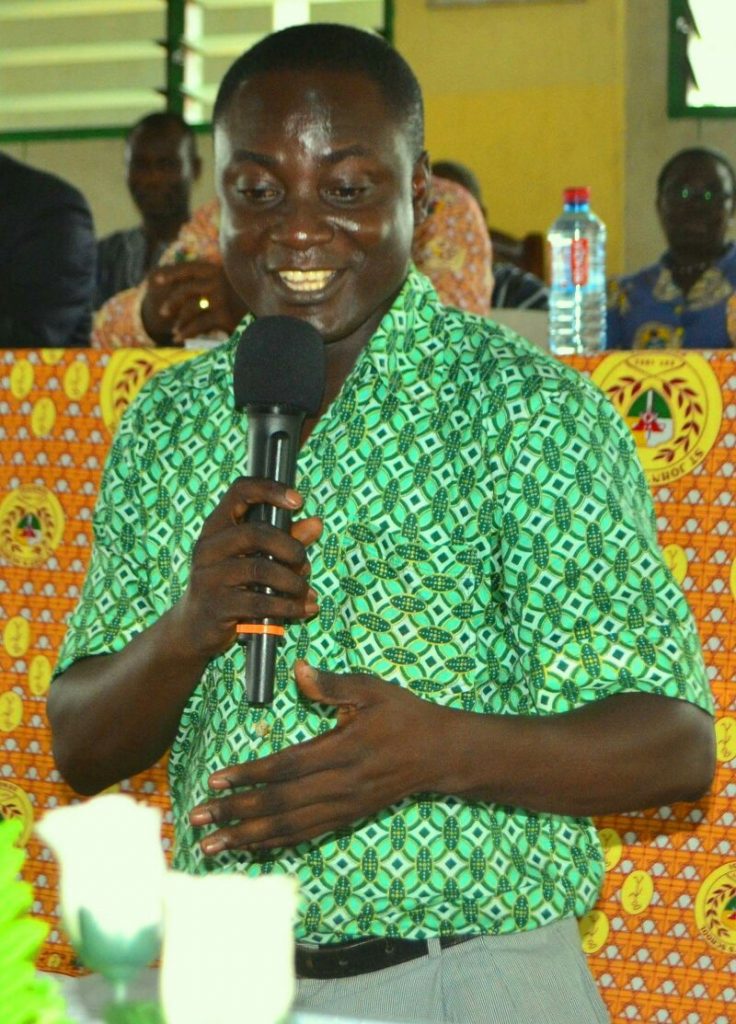
Ike Boat offers up a radiant celebration of life, reciting a spoken word piece that’s an ode to the beach where he stands on a brilliant summer day in his native Ghana. A man of faith, Boat gives thanks to God for his existence.
Mark Young’s artwork also shifts our expectations, combining the abstract and the concrete, lines and curves, defined and implied shapes and spaces. He incorporates text that’s meant to be aesthetic rather than literal and readable into his fanciful and at times humorous images.
We hope that readers resonate with the aesthetics of this issue, whether in the abstract visual art or poetry or in the concrete images or emotions or the narrative storytelling.
Everyone has different ‘hermetic thoughts,’ we all experience this season of isolation in our own ways and follow our own trains of thought. This issue points towards making space for all our varied mental states and different pathways towards co-creating a healthier future.
song & self-compassion a weight on my chest and a still in my limbs, a spill from my heart of a will within, I wait on my best and just instill my grin to wash up the mess of self-listening
Myself, I prefer a city with no one in it, or, if not exactly no one, only a few.
It’s like being in an enormous sculpture garden, immense minimalist slabs of glass and concrete throwing shadows dark as poetry across streets grown modest with stillness and opening trustingly as a child’s hand. The few people there look less grotesque when teased out of the crowd – the way a solitary farmer turning his field, a pair of friends or lovers, a daydreaming hiker, seen in a summer countryscape between bays of woods and folds of pastureland and field, under an ingenuously immense sky make the dignity of humankind, its vulnerable nobility, palpable, and not the poorly spun joke it seems so often in a city hysterical, delirious, and crammed.
No: our monuments, our things, the traces of care in the woodwork, the shadow of a mind molded from a sun – tools and toys and trinkets, engines and edifices, the shape of a hand on a prehistoric cave wall, a flute played shyly on a Sunday morning – make me less ashamed of being human.
I wander the empty city like a hunter in a wilderness, except that I have found the object of my hunt, and hold it close inside my coat, where I can feel its heart beating, and its warmth, and its wings.
*****
The Coyotes of North Beach
Sunset, spring: a strange wailing rises from the gorge under our house cautiously balanced on a cliff edge as on a knife above a valley where coyotes are gathering. Strange indeed for a city (our neighborhood, part declivity, part escarpment, is strange enough for any city). But maybe not strange for a city largely emptied from a malady emptying much of the world – and giving meaning to the "pan" in panache, panama, pancake, panjandrum, Panglossion, Pandragon, pandemic – and so giving way to wilderness seeping back into the streets, crows appraising the roof tops, mountain sheep strolling about in Wales, curious spiders measuring bus shelters with their delicate silks, coyotes gathering at cross streets and dancing in the glimmering streetlights as they flicker on in the dusk and making their coyote-like noisings, as sweet as they are uncanny, in the city's deepening twilight.
Why are they wailing so? Is it from fear, or loneliness, or need for love?
How did the coyotes know that they are speaking for us?
*
Christopher Bernard is co-editor and poetry editor of the webzine Caveat Lector. His new novel, Meditations on Love and Catastrophe at The Liars’ Café, appeared in January 2020.