My name is Jull Soares and I am a bastard. This is not a particular opinion that I, or anyone else that I’m aware of, has placed on me. It is objective truth. My mother was an unlicensed sex worker and neither she or I have any inkling of who fathered me, although a couple of gringos are among the suspects.
There is nothing more painful than longing for things that never were. Many of my friends grew up with fathers and when I was young, I was very jealous. However, based on what I’ve witnessed in films and in real life, it doesn’t seem that I missed out on much. If you are loved—it doesn’t matter by whom or how many—you’ll be fine as long as you feel worthy of being loved.
I am old now, but I do not think that I fear death. Sometimes I get upset that while I am rotting in the dirt others will be drinking beer and dancing, or laying on a beach with closed eyes, caressed by the sun. My love of history has been an enormous help in smothering my panic of not being alive.
Ever since I was a child, I’ve adored hearing city elders tell stories about Cartagena. How my ancestors fought and killed the Spanish invader Juan de la Cosa when he tried to steal a 132 pound golden porcupine from our Sinú temple. And how we citizens repelled an attack of the English armada that included George Washington’s half brother Lawrence. Or when the great North American female matador, Patricia McCormick, one of the finest bullfighters of her time, slew a bull at the beloved Circo Teatro. Streaked in blood, she knelt by the animal she just killed and stroked its head while screaming out, “I love this brave bull!”
I can accept and enjoy that all these events took place without my being alive to witness them, so why should I regret events I will be unable to experience after I die? I have come to believe that when we die, we return to wherever we were the year before our birth. As I was born in 1959, I will simply return to whatever I was doing in 1958 and that’s where I will be for eternity. There seems to be very few second chances in life and I suspect the same will be true in death.
I like lying on this ledge, becoming part of this glorious mural. I feel as if I’m a horizontal recruiter enlisting pedestrians to take some time outs during the day and not to fear exposing themself in public. Often kids, mostly teenagers, come over and tease me that I look dead when they shake or kick me into awakening. I can appreciate their concern or forgive their mockery, but I don’t like it when they pee in a wine bottle and try to force me to drink. Or pour it over me while I sleep.
Sleeping in public can give you interesting insights into human nature. It’s been my experience that the good are pretty evenly matched with the bad, although it does tip a bit more in favor of the positive. Many people think I’m just a homeless misfit and don’t realize I’m actually giving them a chance to join me in creating a temporary public family. Compassion and cruelty is what I frequently dream about while I sleep on this beautiful ledge, and is what I often wake up to.
Since I was a child, I’ve always hated shoes. Most men like to appear tough. If a person really wants to be tough it must start with their feet. Our ancestors probably went tens of thousands of years travelling in their bare feet—tough, grizzled, calloused—but not indifferent. Growing up without family except for my mother, I don’t think of being shoeless as a sign of poverty. I am walking in the footsteps of my ancestors where each step I take is headed in the direction of a family reunion. The soles of my naked feet scrape along the same paths where the souls of my forebears once walked. Please forgive my clumsy attempt at poetic wordplay, but it is a holy trail.
A human head should always be cradled. That is why I always carry a pillow in my pouch. A good pillow allows you to dream in color. My pillow is very old and even when I wash it has a distinctly peculiar smell to it. That’s because of the many beautiful dreams and disturbing nightmares burrowed inside it. My sweat and tears puddle into the stains of my life. A kind European visitor once told me I should consider my pillow as a work of textile art. I’m not sure what that means, but I like how it sounds.
It is a pillow almost as old as me. My mother made it for me when I was still “shitting yellow” as she used to like to say in her colorful way of labeling me a baby. Each day I ensconce myself into this bright yellow mural, beneath a stunning young woman with legs spread, as if birthing me onto this ledge.
Freedom is isolation. Slavery is the obliteration of isolation. I abhor flophouses, government housing and charitable hostels. Once you lose your ability to desire isolation, you become a slave. Creativity can only flourish in silence and solitude. If I was in some kind of forced shelter do you think I would be writing in this notebook and accompanying these words with images torn from magazines, newspapers and catalogues? The European woman who told me my pillow was textile art also said that I have a collagist mentality when I showed her a few of my notebooks.
Do not pity me as homeless. Celebrate me as one who possesses the special gift of being able to live alone. Sometimes I am forced to enter the dark doors of slavery, but I maintain the wherewithal to escape back into freedom and return to this colorful ledge.
And so here I lay, precariously balanced between moments of exaltation and the fear of being disturbed. In between those two points lies the secret to a healthy and productive life. Boredom is not having nothing to do, but feeling like nothing is worth doing. No one volunteers to experience life. We don’t have a choice. That is why anyone who completes this journey without taking short cuts is heroic.
Can you spare a few pesos in support of a pilgrim’s progress?
Katya Shubova is a photographer and former competitive gymnast who grew up in Ukrainian Odesa. She stars in the upcoming short film Hunger Pains, directed by Iorgo Papoutsas for Wabi Sabi Productions, as well as dancing Tango internationally.
Mark Blickley is a proud member of the Dramatist Guild and PEN American Center. His most recent book is the text-based art collaboration with fine arts photographer Amy Bassin, ‘Dream Streams’ (Clare Songbird Publishing House).
I forgot what a kiss is – the taste of an afternoon coffee. So as the waves pulled from the land, I feel like a desert ship.
Contact, I forgot what that word means, Shipwreck for months In books.
I look for a meaning to embrace me, to tell me everything will be fine .. To go and leave those roses in my father’s memory, To light a candle to the Virgin Mary.
Contact, To be in your dream hug. Let me see your eyes, To smell your perfume. I’m looking for that word in that old dictionary.
Eva was born in Xylokastro where she completed her basics studies. She loved journalism by small and attended journalism lesson at the ANT1 School. In 1994 she worked as a journalist in French newspaper “Le LIBRE JOURNAL,” but her love for Greece won and returned to her sunny home. Since 2002, she lives and works in Athens. She works as a web radio producer reading fairy tales at Radio Logotexniko Vima every Sunday. Recently she became responsible for the children’s literary section of Vivlio Anazitiseis Publications in Cyprus.
She published books and ebooks: ” I and my other avenger, my Skia publications Saita.” “Zeraldin and The elf of the lake” in Italian and in French as well as “The daughter of the Moon” in 2 languages English and Greek. The Moon Daughter published by Ocelotos 4 times, received best reviews for author’s writing and writing style.
She is a member of the UNESCO Logos and Art Group, Writers of Corinth, and Panhellenic Writers Association. Also, her work is mentioned in the Known Greek awarded encyclopedia for Poets and authors, Harry Patsi, page 300.
Her books have been cleared by the Ministry of Education of Cyprus.
Eva’s recent work includes: “The water Amazon fairy called Myrtia”, illustrated by Vivi Markatos, dedicated to a girl that become handicapped after a sexual assault, the translation of stories by Lafcadio Hearn, “Fairy travel with stories from Far East” – an idea that she worked on for more than 6 months – illustrated by Ms. Ntina Anastasiado, a very well-known sculptor and sumi e painter in Greece.
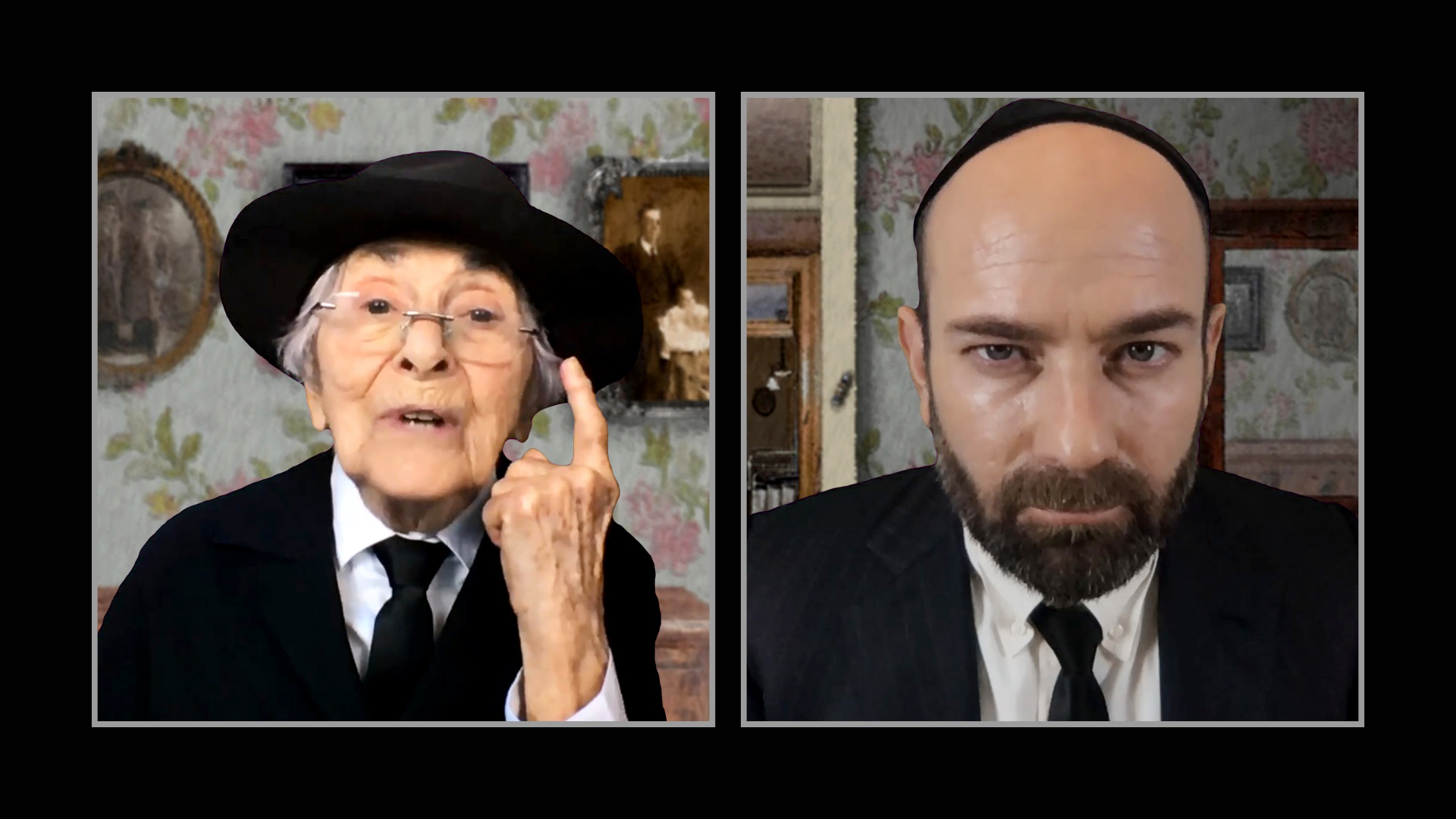
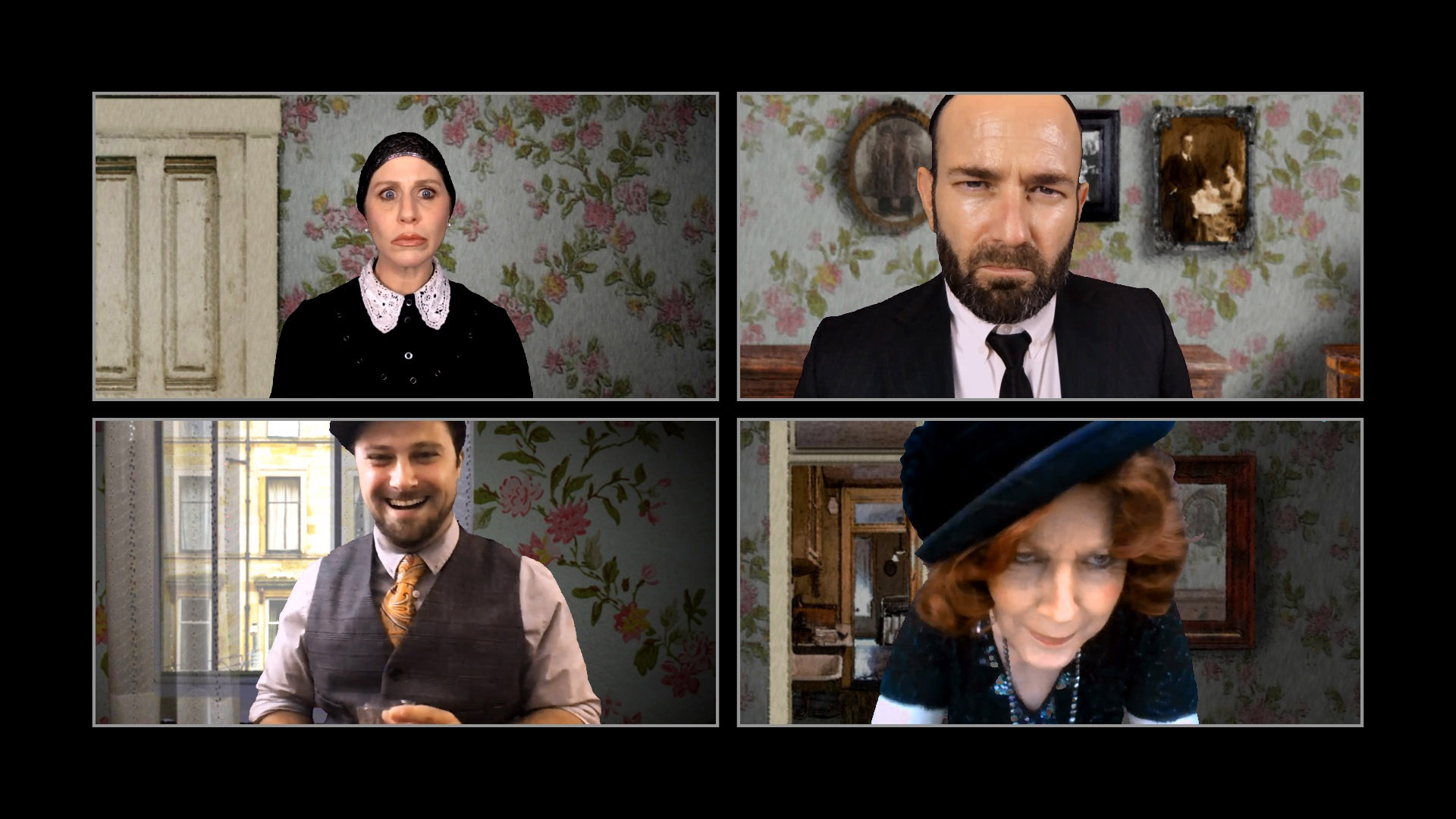
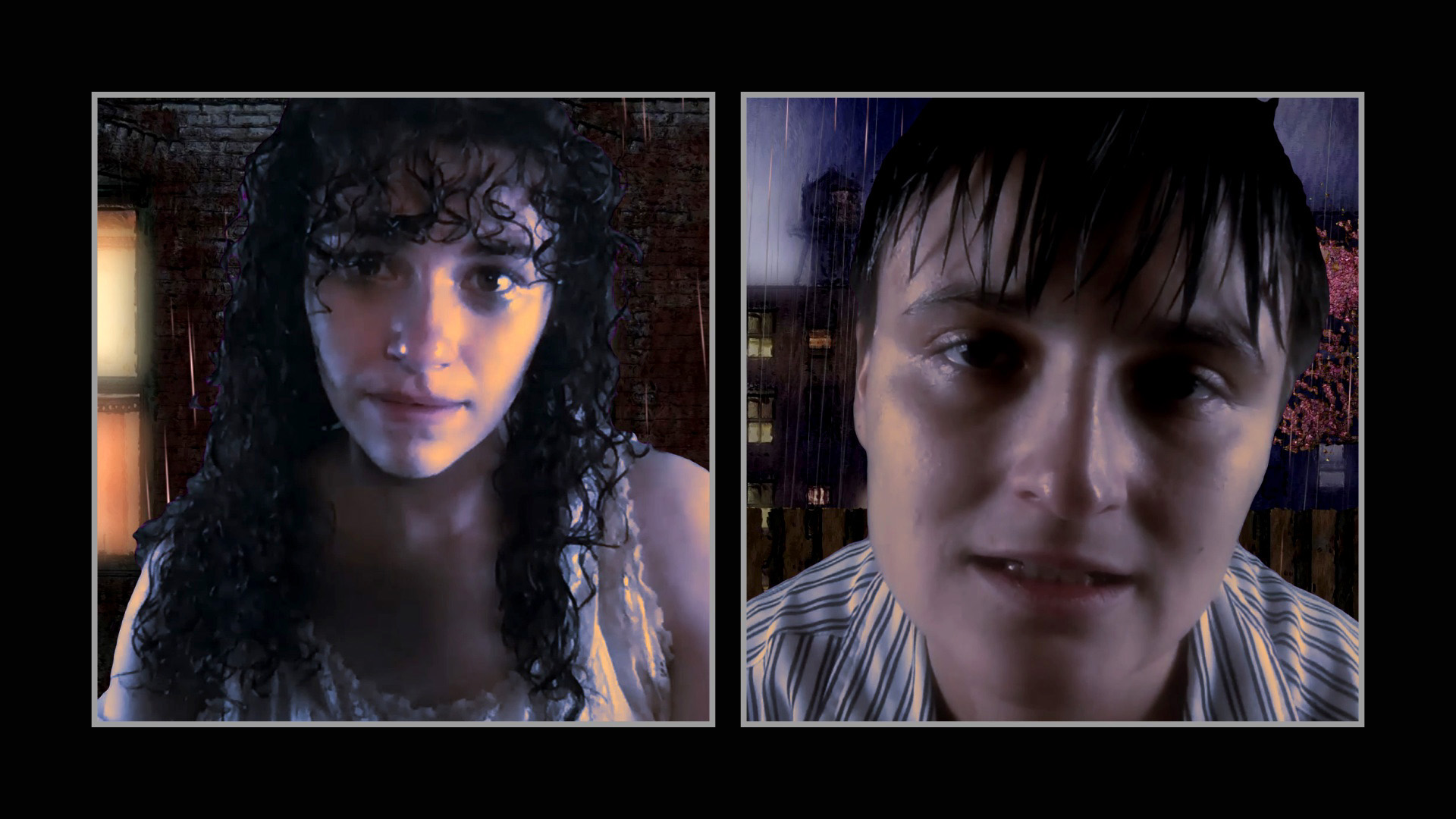
Berkeley, CA… The Yiddish Theatre Ensemble (YTE) planned on presenting the English language translation of the 1906 controversial Yiddish play God of Vengeance (Got Fun Nekome) by Sholem Asch in September 2020 at a theater in Berkeley, California but had to halt production due to the pandemic. Dedicated to this endeavor, YTE devised an innovative approach to presenting theater during this unprecedented time. The play will now be mounted on Vimeo on March 20-23, 2021 as an artful video adaptation with actors from around the country. Due to COVID restrictions, the actors were rehearsed and filmed on Zoom in full character and costume from their respective locations. (The cast was never actually in the same room together).
The multi-cultural, multi-generational and diverse LGBTQ cast of 17 actors, many of whom had never spoken a word of Yiddish before, comes from the San Francisco Bay Area and beyond (New York and Las Vegas) and includes nonagenarian veteran of stage, Naomi Newman, co-founder of The Traveling Jewish Theater. Local Treasure Naomi Newman: 90 Years Old and Still Acting
As the play has been re-set in New York’s Lower East Side during the Depression, digital set designs (or backdrops) were added creating the 1930’s atmosphere with a distinct graphic novel style. The sets, designed by Production Designer, Jeremy Knight, of West Edge Opera, are inspired by photographs courtesy of the Tenement Museum collection with period costumes coordinated by Wardrobe Consultant, Suzanne Stassevich, formerly of San Francisco Opera. The play will be enhanced by an original score, by San Francisco Bay Area Klezmer musician, David Rosenfeld, anchoring the emotional voice of this evocative family drama.
This adaptation based on the English translation (but including some Yiddish language and idioms) by Caraid O’Brien stays close to the script with new interpretations of character portrayals and plot development. Themes explored include: issues of domestic violence, dignity and portrayal of sex workers, freedom of expression and acceptance of LGBTQ relationships. As with many of Asch’s plays, powerful female characters give voice and agency to women. The themes speak directly to the inequities of human and civil rights still being fought for today. The play is peppered with humor.
Jill Eickmann-Soreh, Roni Alperin-Yankel, Simon Winheld-Shlomo, Esther Mulligan-Hindl
ABOUT THE PLAY:
God of Vengeance tells the story of a seemingly observant Jewish couple and their daughter Rivkeleh who live upstairs in their Lower East Side apartment during the Great Depression. Yankl and Soreh do their best to protect their only child from mixing with their bustling livelihood—a thriving ‘brothel’ business downstairs in the basement. Rivkeleh is at a marriageable age and plans for a future husband are being made. She is ensured an attractive dowry when her father commissions a Torah scroll, worth thousands, to be written just for her. Supposedly, the hand-written scroll is believed to protect her and keep her kosher. Meanwhile young Rivkeleh has fallen in love with Mankeh, one of his prostitutes and a tender relationship blossoms. Tensions mount and soon life upstairs and downstairs begin to entangle. As Yankl’s plans are threatened, he begins to unravel.
The themes of this play are deep and resonate today: can money buy salvation, happiness, holiness? All are explored in this family drama story that has extraordinary tenderness, elements of Greek drama —and a bisl (little) Yiddish.— Laura Sheppard, Producer
Audiences should know this is not, God forbid, a moralistic play! Sholem Asch himself said he didn’t care if he wrote a moral or immoral play. He only cared about writing a good play that had an impact and spoke to people. — Bruce Bierman, Director
Elena Faverio-Rivkel, Zissel Piazza-Mankeh
HISTORY:
After the play’s opening in Berlin, God of Vengeance had tremendous success throughout Europe and was translated into many languages. Upon arriving in New York, it was first seen in Yiddish at the Provincetown Playhouse in the West Village. The 1923 production in English at the Apollo Theatre in New York was the first to portray a lesbian relationship in a sympathetic light and included the first lesbian kiss on Broadway. That production was assailed by members of the religious and cultural establishment and was charged with obscenity and shut down. The producer and company members were arrested and found guilty.
The history of Asch and this play was inspiration for the 2015-2017 Tony award-winning Broadway production Indecent which was also seen at the Oregon Shakespeare Festival for which Director Bruce Bierman served as Yiddish Dance Dramaturge. This production only scratched the surface of the original play. Yiddish Theatre Ensemble would like audiences to experience the power of the characters and immediacy today. Yiddish Theatre Ensemble is particularly interested in Sholem Asch because he was the first playwright to incorporate modernity into his plays, mirroring 20th century life in cities and towns rather than focusing on Biblical stories or folk tales of the past.
ABOUT THE PLAYWRIGHT:
Sholem Asch (1880–1957). Although he penned several of his 18 plays, shorts stories and novels in the US on New York City’s Lower East Side and at his home in Staten Island, Asch wrote only in Yiddish. Asch is often mentioned in the same breath as other modern Yiddish fiction writers like Sholem Aleichem and I.L. Peretz. The Polish-born author and playwright is the first Yiddish writer to be widely translated into English and to gain worldwide renown, and to have a bestseller in English (The Nazarene). The star literary contributor of the Yiddish newspaper, The Forward (Forverts) from 1915-1940 was the most widely reported and caricatured writer in the Yiddish press from 1915-1950.
ABOUT YIDDISH THEATRE ENSEMBLE:
Laura Sheppard, Producerand Bruce Bierman, Director, have collaborated for twelve years to create community-based productions in affiliation with fiscal sponsor KlezCalifornia. Their collaborations include the popular Yiddish musical Di Megileh of Itzik Manger, produced as part of the Jewish Music Festival (2014, 2015), as well as KlezCalifornia’s Cabaret by the Bay. Yiddish Theatre Ensemble is dedicated to producing the rich, rarely performed repertory of the Yiddish theater as well as new works by living artists.
This production is part of the 40th Anniversary of the Yiddish Book Center (Amherst, MA), the nation’s acclaimed center for the preservation of Yiddish literature and culture and their Year of Translation. This production is fiscally sponsored by KlezCalifornia and supported in part by a Civic Arts Grant from the City of Berkeley.
Our co-editor, Kahlil Crawford, and I believe this will inspire and encourage fresh ideas and be a fun experiment. So please send ekphrastic submissions our way at synchchaos@gmail.com before February 27th and they will go in the issue!
Welcome all to Synchronized Chaos’ February issue, ‘Polish and Refine.’ This month, each of our many and varied contributors takes some sort of thought or experience and turns it over in their mind, rendering it into a piece of craft.
BY: Arthur C. Ford, Sr., poet/lyricist, editor of “The Pen”(of Pgh., PA.)
Copyright, A.C.Ford, Sr., 2021
BIO-SKETCH OF Arthur C. Ford,Sr.
Arthur C. Ford,Sr., was born and bred in New Orleans,LA.. He earned a Bachelor of Science Degree from Southern University in New Orleans, where he also studied creative writing and was a member of the Drama Society. He performed the lead role in Ossie Davis’s “Purlie Victorious.”
He has visited 45 states in America and resided for 2 years in Brussels, Belgium(Europe).His poetry(lyrics) and prose have been published throughout America, Canada,etc. He travelled for 30 days(July,2011) to various cities in the country of India.
He presently resides in Pittsburgh,PA., and continues to write and publish a quarterly poetry newsletter called “The Pen”(http://thepoetbandcompany.yolasite.com(Click on guidelines at the top of the page).