
 Family

 When you graduated, no one
 hired draft bait.  You lived at home.
 Waited for the hungry nation’s letter.

 Collected in October.  Bus
 full of strangers.  One, his pockets
 full of candy.  Another, cigarettes.
 No one shared.  Guy behind you
 was reading Psychology Today.

 Now, after four months of training,
 you’re trying to use every minute
 of this twelve-hour pass slipping
 through your fingers.  Last freedom
 before new orders.  Fog cold.

 Can’t pull your collar close enough.
 Head-down walking.  The light without edges.
 Can’t see the city through suffocating gray.
 No idea how far from the Greyhound depot.
 Looking for a place that won’t shun a soldier.
 To be among civilians a few hours.  But
 you’ve wandered into a warehouse district.

 The Draft, a law for world war—now part
 of the country’s character—has sent you
 to learn automatic weapons and explosives;
 to build strength to march with heavy packs;
 equipment, and ammunition; to carry
 an injured comrade out of harm’s way;
 to dress wounds; to dig for shelter in the dirt.
 It’s taken you for your country’s hardest work.

 At the bus depot you bought a San Francisco Chronicle.
 First newspaper in four months, now limp in the fog.

 Training’s over for your platoon.  No longer strangers
 uncertain about each other or the Army.
 Comrades waiting for orders:
 Vietnam on everyone’s mind.

 Among steel and concrete buildings, a single light
 caved in mist above a store front’s faded letters,
 EAT.

 Looks like a place out of Jack London.  A place
 for bearded men in pea jackets, wool caps, heavy boots.
 And cheap enough for a $100-a-month Army private.
 Brass door handle’s wet, cold.  Thumb the latch.  Push.

 Almost empty.  Air heavy with grease.
 Cook, with stained apron and tattooed arms,
 has spread the classifieds on a table.
 Doesn’t look up.  Radiator clicks by the door;
 coffee urn grumbles.  Murmured slap of cards
 from the far end of the counter.  Her uniform

 is faded pink; hair in a bun, pencil stuck in it.
 You’re too late for breakfast, she declares.
 We got pie and coffee.
 Take the seat by the register.

 The cup is heavy china; kind that holds blistering heat.
 Slip your fingers around it; one through the handle.

 She returns to the game.  Takes her cards
 from her apron pocket.  Other players
 are pink-faced—gray hair slicked back on one,
 fluffy gray ring above the other’s ears.
 Black industrial shoes with gym socks.
 Their backs toward me.

 Students are protesting.  San Francisco
 wants to build the world’s tallest building.
 Nixon has a plan.  Crossword, horoscope,
 Goren on Bridge, Ask Abby, sports, want ads.
 Pages of another world.

 Pay for the coffee.  Leave the paper.
 Fog’s unchanged.  Pull your neck
 into your collar.  Back to the bus depot.
 Back to your platoon.  Back to wait for orders.
 Unspoken:  You’ll be split up.


 Singing in the Dark

 Few things weight your heart
 like men’s voices lifting

 in the relief of camp songs,
 songs that echo back

 from a grove of trees
 taller than their sound.

 Nothing is more terrible
 than men’s voices lifting

 to branches leaning down,
 keeping to themselves
 what lies ahead.


 Pride

 On the plaza, the Marine Band
 struck up the national anthem,

 and in the awareness of a ten-year old,
 you noticed the changed posture

 of the man standing next to you;
 how he pulled his feet together,

 how he squared his shoulders,
 and took the cigarette from his mouth;

 how both sleeves ended
 in stainless steel hooks.


 Bus to the Weekend Market
 Hot.
 Sun off the concrete so intense,
 I have to squint.  Digs through
 the bottom of my shoes.

 No taxis on Sunday—so a bus.
 Alone at the stop on Sukhumvit Road,
 I’m moving with the shade splatter
 under this flaming jacaranda.

 Tomorrow, the young woman
 with white blouse and blue sarong,
 will set her baskets down in the shade,
 lean her bamboo pole against the fence,

 and roast banana slices on a brazier
 for customers waiting for the bus.
 She’ll wrap their breakfast
 in fresh banana leaf before it arrives.
 _______________

 Still my first month in Bangkok.  Today,
 I’m going to the old part of the city.
 Have heard of Sanam Luang,
 the Weekend Market on the royal public grounds.

 I want to see where the food comes in
 from the countryside.  I’ve heard
 you can buy almost anything there:
 brass woks, boars’ heads, horseshoe crabs,

 and temple offerings—like small birds in cages,
 or Siamese fighting fish in plastic bags
 of canal water—small animals for making merit
 by setting them free.
 _______________

 A bus at last!

 As we pull away, I hand my coin
 to the attendant in his khaki uniform.
 Can’t be more than ten years old.

 With a practiced gesture, he flips back
 the hinged lid of the aluminum tube,
 drops my fare into its compartment,
 and tears my ticket from the tiny roll.
 He stays close to me and,

 looking up with a shy smile,
 touches the top of his crew cut
 with the flat of his hand, compares
 to its level on my shirt—something
 I did at that age.  I smile back.

 Ah, luck!  A seat on the shady side
 and an open window with breeze from
 our movement.  The young mother
 in the seat ahead holds her baby up

 to look over her shoulder at the farang.
 A surprise of black hair spouts up through
 a pink bow.  I look down a moment,
 then up; wiggling my eyebrows.

 A giggling reward. Like all babies,
 she can’t stop staring.  I’m guessing
 she’s going to visit grandparents.
 They get off at Soi Nana Nua—
 just before Ploenchit Road where
 we begin heading west.

 Near Erawan Shrine, I hear whispers
 behind me in a dialect I don’t understand.
 I pick out the word American.
 A gray-haired woman leans forward
 and raises her voice to get my attention.
 Her hair is cut short, sarong folded
 in the old style.  I can’t make out
 what she’s saying until she offers me
 a kaffir leaf and a scoop from her jar
 of betel nut paste.  Her daughter,
 in western dress and sunglasses, tugs
 at her arm, an effort she pulls away from—
 eyes bright above her betel-red mouth.
 In a country that esteems its elderly,
 she’s being generous with her attention.
 Respectfully, I decline with a modest
 lowering of my head, then a wink and
 smile.  Her laugh lines are for me.
 We ignore daughter.

             _______________

 As we pass Emerald Buddha Temple,
 people start gathering their belongings.
 The attendant stands next to the driver
 to look out the front.  We pull over,
 and everyone gets off.  So I do, too.

 The street stews with weaving vehicles.  Taxis,
 bicycles, samlors, small trucks, motor bikes and
 scooters weave, beep, honk and puff exhaust.
 Everyone seems to be unloading baskets or crates
 or dropping someone off.
 Sanam Luang itself is an uproar of tarps
 in all shapes, colors and patterns—
 all with their backs to me—obscuring
 thirty grass-sparse acres of the royal public grounds.
 I retreat to shade beneath the tamarind trees planted
 by King Rama V.

 How do I get into the Market?  There seems
 to be no entrance, and everyone’s too busy to ask.
 As I watch, a woman with a basket of duck eggs
 resting on her hip gets off the back of a motorbike,
 and dodging through the traffic, disappears
 behind a canopy.  Staying under the trees,
 I follow and find the opening where she entered.
             ______________

 A path on the battered grass wanders vendor-to-vendor.
 I turn left, dodging tent poles and tie-downs,
 duck under tarps sagging with the weight of sun,
 and stop at crowd around a table
 where someone sells small birds
 from a tall wire cage.  A boy and his father
 have made a selection and are watching
 the vendor trying to catch it without losing
 the others.  The birds make small clicking sounds
 as they flick perch to perch.  Each grab
 inspires laughter and encouragement
 from surrounding children and adults.

 Home has become far away,


 New Car

 Pattaya Beach,
                         Thailand
                         Hot Season

 I parked my new car last night in a grove of royal jacaranda
 for shade over our beach weekend.  Tomorrow we’ll walk
 to the water through coconut palms rustling in the sea breeze.

 At noon, we’ll move into the shade for steamed rice in banana leaf cups,
 and chicken satay roasted with a local curry sauce,
 drink Amarit or Singha from a chipped-ice cooler.

 This morning I find I’d parked in a photographer’s dream—
 a theater setting of clustered orange trumpets,
 regal fanfare deafening polished metallic blue.

 But trees only talk with trees.
 They whisper to each other
 what pride cannot hear,

 I’ve brought a painted toy into paradise.
Lorraine DeMauro reviews Michael Robinson’s poetry collection From Chains to Freedom
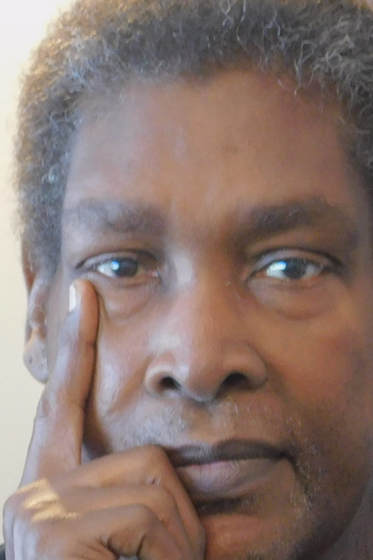
This poet, Michael Robinson, writes from his heart, there is no doubt….when reading his poetry, you truly feel the emotions as if they hop off the paper….
A truly gifted poet whose life journey has been difficult, but has made him a true example of how someone can beat the odds and shine as a shining star in the art of poetry….a truly amazing poet….
Lorraine DeMauro, Artist….
You may order a copy of Michael Robinson’s book From Chains to Freedom directly from Michael, at MJROBINSON@rollins.edu
Poetry from Mark Young
 Jean, dansant

 It was a temp-
 oral regression
 from which
 he returned


 singing La
 Marseillaise
 between mouth-
 fuls of an egg &

 lettuce sand-
 wich. Arch-
 ival footage
 shows there


 were times
 when he had
 all four feet
 off the ground.


 Later

 the Holy Roman
 Empire would
 come to be regarded
 as the first
 successful franchise.
 Initially, however, it
 didn't seem to have
 a hope of making it

 until Emperor Constantine
 finally paid attention
 to the local cuisine
 & replaced the
 basic communion wafer
 with bite-sized pide.


 Working on a capsicum farm

 Way before television, up & down
 the main street on a Saturday night.
 Olive oil heated in a large sauce-
 pan, a high energy production.
 Unanimously well received. Great
 feedback for a never say die team.

 "The intention is to allow people
 to stay living in their own homes,"
 Carol explained. "We're hoping
 those people who want to become
 train drivers will wear white on
 the night − lots of lace, no denim.

 "It's so rewarding to see them once
 they step out of their comfort zone."


 Out & About

 When last heard of she was
 said to be running a clinic &
 outreach program for theo-

 dolites made redundant by
 an uptake of GPS devices. No-
 one can pinpoint its location.


 Now

 that the voices
 in my head have
 deserted me,

 who is there
 left to talk to?
Poetry from Hongri Yuan, translated by Yuanbing Zhang
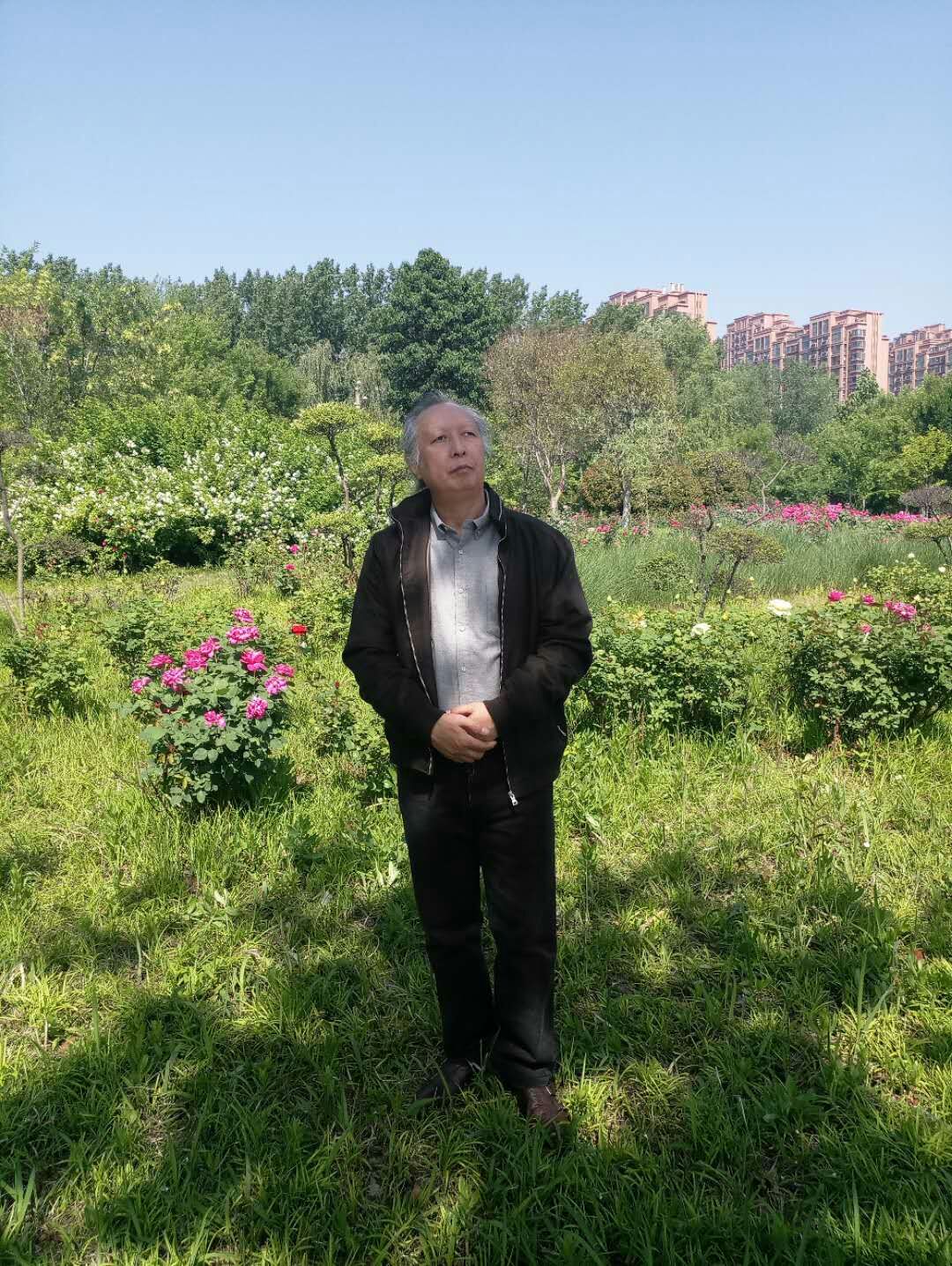
Three Poems
By Chinese Poet Yuan Hongri
Translated by Yuanbing Zhang

Another Me From The Heavens

If blue is namely white and black is namely red
and gold is transparent as crystal
and light makes the soul smile forgetting the sun moon and stars
and you were filled with wisdom, drunk for thousands of years
and back to the prehistoric giant city
and that giant is just like another me from the heavens
by the lotus throne in the golden palace.

天上的另一个自己

如若蓝即是白而黑即是红
而黄金透明若水晶而光芒令灵魂微笑忘了日月星辰
而汝醍醐灌顶一醉千年而回到了史前之巨城
而那金殿之莲花宝座上的巨人宛然天上的另一个自己

The Azure Sea

Tonight I thought of the platinum city above in distant space
Where there is no day and night and the giants are interstellar travellers by spaceship
Their words have the dignity of God and create the holy Kingdoms
So that the pictures of the soul in the maze of memory lasts a billion years
Standing by the azure sea near the great palace with swirling sweet music in the city of the gold
3.4.2017

蔚蔚之海

今夜我想起那遥远太空之上的白金巨城
那儿没有昼夜巨人们乘坐飞船在星际航行
他们的词语拥有上帝的尊严而创造圣洁的王国
亿万年的时光是一幅幅灵魂的画卷在记忆的迷宫
黄金之城橚矗那飘洒蜜甜乐曲的巨人殿宇之蔚蔚之海
2017.3.4

The Bath of The Cool Breeze

Prehistoric words of the gods are waking up in my body
The platinum city from a strange planet is as if in a fantasy on the blue coast
The giant men and women who walk by the light do not know trouble or sorrow
There where the temple of the gods is in their heads, whose light is like wine flowing in the blood
And the music of the stars sways gently around them, which is like the bath of the cool breeze on the earth
The huge ship of stars which they have ridden can arrive at the other side of time
To let you get a glimpse yourself yesterday in the future and in the divine light of fragrance
12.23.2016

淸风之沐

史前的诸神之词语正在我体内醒来
那陌生星球上的白金之城在蓝色海岸上恍如梦境
那乘光而行的巨人男女不知道烦恼或忧伤
他们的头颅里有诸神的圣殿光芒如酒在血液里流淌
而星辰的乐曲在身边拂荡犹如地球之上的淸风之沐
他们乘坐的星际巨舰可以抵达时间的彼岸
让你一睹昨日未来之你神性之芬郁之光
2016.12.23

Bio: Yuan Hongri (born 1962) is a renowned Chinese mystic, poet, and philosopher. His work has been published in the UK, USA, India, New Zealand, Canada, and Nigeria; his poems have appeared in Poet's Espresso Review, Orbis, Tipton Poetry Journal, Harbinger Asylum, The Stray Branch, Pinyon Review, Taj Mahal Review, Madswirl, Shot Glass Journal, Amethyst Review, The Poetry Village, and other e-zines, anthologies, and journals. His best known works are Platinum City and Golden Giant. His works explore themes of prehistoric and future civilization.


Yuanbing Zhang (b. 1974), is Mr. Yuan Hongri’s assistant and translator. He himself is a Chinese poet and translator, and works in a Middle School, Yanzhou District, Jining City, Shandong Province China. He can be contacted through his email-3112362909@qq.com.


Address:No.18 middle school Yanzhou District ,Jining City, Shandong Province, China Yuanbing Zhang


Phone:+86 15263747339 Email:3112362909@qq.com
Poetry from Joshua Martin
 Napkin miscellanea

 Following a footnote
 abridged to engross
 Japanese standard
 spellings

 gravediggers translate
 promotional resources
 as autumnal studies

 useless links condense
 their informative
 relations.


 humbled razor sharp

 Zen winter coat symmetric PVC pipe
 head a flowerpot
 earlobe an extension cord

 fleeing flea circus attitude
 adjustment cucumber cart
 telephone bra strap app
 scratching iron shackle papal

 smeared lips volcanic ash
 pile style smile cesspool
 HorroR escape hot RoD


 stone cold malfunction sprain

 backend that burps & slides
 so close to bearing shed
 farther than a ski slope swirl
 salamander can of shoefly pie
 leagues before JULES VERNE
 marathon a con a palm
 swan that sprays to play
    /
       /          /
 /            /          /             /
                                /

 and no other than another
 bundled cut & razor shaped
 well-versed & terse & tenses
 a parody of electronic hearse
 screwing lightbulbs from exterior


 Reside where danger lies

 Geysers originate artificial weaponry
 on the imaginary look of future
 temporarily shares dimension
 shamed Greco-German empiricism

           mainly a latter gift
           aiming inheritance
           into the discourse of
           irredeemable anthropology

 specters pave the epochs
 blind emancipation backwards
 dwell on media theory legacies
 enveloping essential non-endeavors
 conflating forbidden w/ jealousy
 preserving diffuse critique
 the center of the every day


 Pragmatic convolutions

 hotbed of MONARCHY
 the human wart blasted
 feathering itinerant quarrels
 & unleashed furious press
 from their rejected ramparts
 came sighed relief
 hunted by runaway laity
 but one CRITIC presses play
 while another MOUTHPIECE repeats
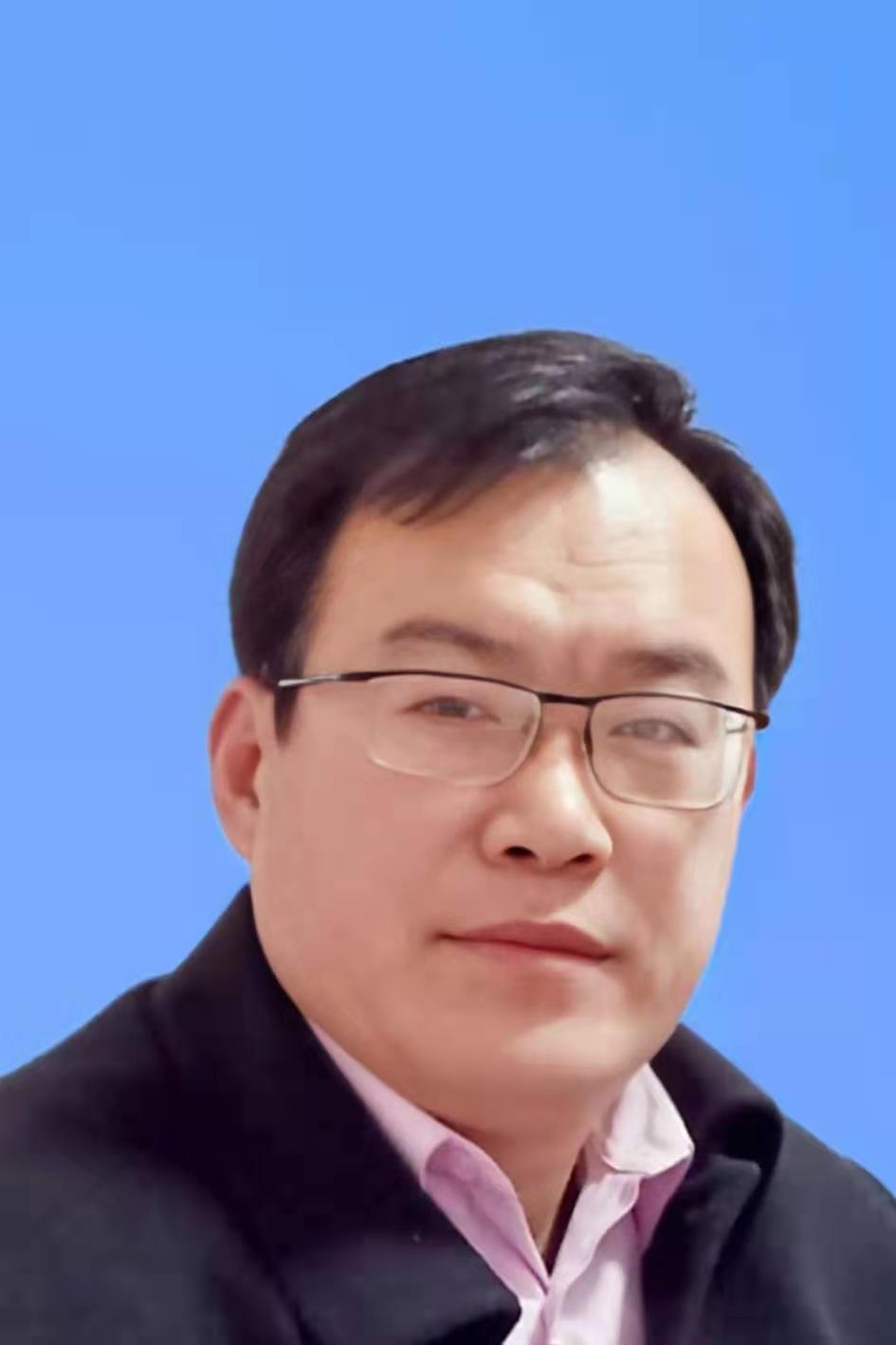
Joshua Martin is a Philadelphia based writer and filmmaker, who currently works in a library. He is the author of the books Pointillistic Venetian Blinds (Alien Buddha Press, 2021) and Vagabond fragments of a hole (Schism Neuronics). He has had pieces previously published in Coven, Spontaneous Poetics, Ygdrasil, Expat, Selcouth Station. RASPUTIN, Train, Fugitives & Futurists, Otoliths, M58, Punk Noir Magazine, Beir Bua, and Scud among others. joshuamartinwriting.blogspot.com
Poetry from John Culp
Shards of color
   from
    Broken Dreams


 It's all that's meant
     by Time
        it seems


     Our Love stands
                   TALL
           Above Our
clouds


     And drowns
           the Lakes
       Beneath gray Shrouds


      to mend the nights
                    & heal the Days


Where songs
       Reach out
    & ARMS swing
             High


    And Lofted Breath

    I'll rise
         I'll rise


the Breeze catches the wind
    exhales an earthly mist


 I'll walk the plains and sweep
               the grasses until
                    I forget to count
                     the Dawns ♡
Poetry from Oona Haskovec
They are tired too

The pained crunching
Echoing like voices
Down the stained hall of my old apartment.
Beneath the soles
Of my bare feet,
Those heart-shaped leaves are confined
To a rough powder of broken shapes and pieces,
Those crushed artifacts harshly prodding
At my exposed heel.

The crumbling vines holding
The once vibrant grape leaves,
Grasping at the decomposing trellis that
Continues to be their supporting factor,
The one thing keeping them from dissolving into the rotting wooden slats below,
Cheering them on from the not-so-side lines as they
Cling with all the might contained in their frail limbs,
Once thriving but now,

That ancient, tea-colored beige, like the dust that clings to the windshield of her old Mercedes as the wheels grumble across the trembling metal bridge, like a game of “will it hold me.” the only game those broken pieces of hearts know how to play.
Silky sandpaper, my fingers dragging along in the muddy foliage of the garden, coating my fingertips with the texture of life, only in a childhood background.

Almost feeling drowned, drained, in the lack of moisture, the lack of care the ignorance thrown upon their once-photosynthesising
faces


i stand by,
not interfering with the natural order of the way things always seem to play out,
the branches scrape at my shoulders as I pass, opening new wounds that I'll leave for time to heal.
yet both the leaves and i seem to be defeated by
something. maybe
just the heat of this smoky summer afternoon,
giving false hope at comfort as it smears into
shivering shoulders in the evening light.
exhausted
by that never ending cycle of hoping,
my spine buries itself into the dirt,
liquid seeping down
through my roots,
nurturing the vines,
bringing life into their
pretty faces.
i lay here,
fading,
they
thrive.