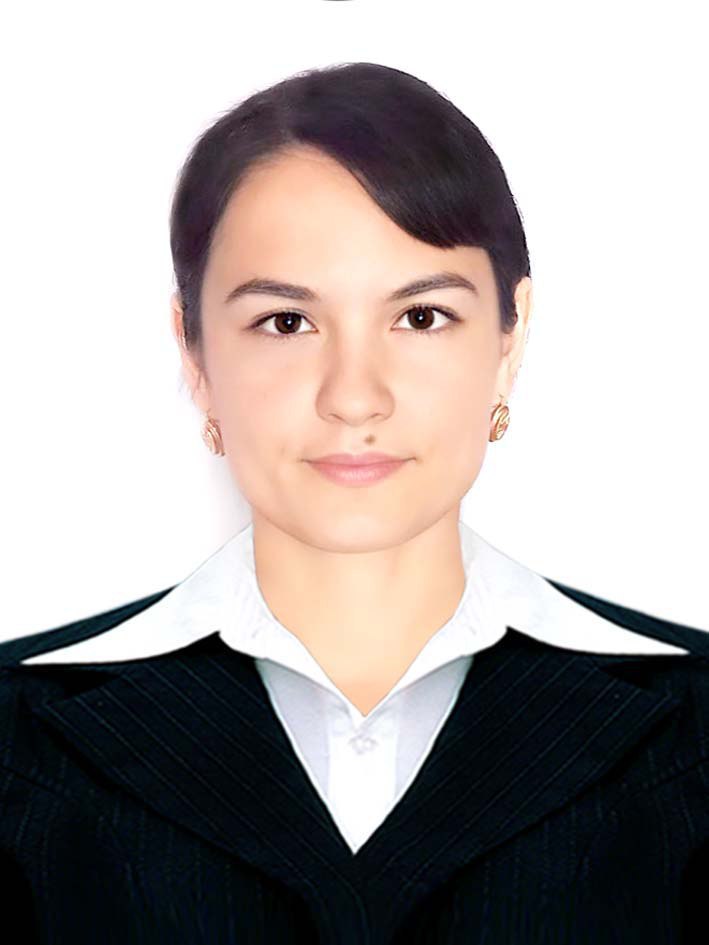
Essay from Kobulova Madina

CONTEMPORARY RUSSIAN PROSE: IN SEARCH OF A NEW HERO

Jizzakh State Pedagogical University

Faculty of Philology

Major: Russian Language and Literature, Student of Group 723-24

Kobulova Madina

Abstract: This paper examines the problem of finding a new hero in contemporary Russian prose of the late 20th and early 21st centuries. The characteristic features of the central characters in works by leading authors of the period — Lyudmila Ulitskaya, Zakhar Prilepin, Viktor Pelevin, and Mikhail Shishkin — are analysed. Special attention is paid to the transformation of the hero’s image in the post-Soviet context, the loss of traditional value orientations, and the search for a new identity. The paper concludes that contemporary Russian prose reflects the spiritual and moral aspirations of society, offering a diversity of heroes, each of whom answers the question of the meaning of life in their own way.

Keywords: contemporary Russian prose, new hero, post-Soviet literature, character image, moral quest, identity, value orientations.

Main Body

Contemporary Russian prose occupies a special place in the global literary process. Shaped by the conditions of fundamental historical change — the collapse of the Soviet Union, the reassessment of national identity, and the rapid entry into an era of globalisation — it set itself fundamentally new artistic tasks. One of the most central among these was the question of the hero: who is he, the person of the new era? What values guide him? Is he capable of a genuine moral choice?

The study of this question is particularly relevant, since literature has always responded keenly to the demands of the age, offering readers models for reflection and spiritual orientation. Unlike Soviet literature, which imposed strict requirements upon the ‘positive hero’, prose of the turn of the 20th and 21st centuries rejects a single canon, granting the reader the right to judge the moral standing of characters for themselves.

Among the authors who have most vividly reflected the search for a new hero are Lyudmila Ulitskaya, Zakhar Prilepin, Viktor Pelevin, and Mikhail Shishkin. Each offers their own vision of the modern person, their place in society and their inner world. The heroes of Lyudmila Ulitskaya are people immersed in the world of private life, family relationships, and moral dilemmas. In the novels The Kukotsky Enigma (2001) and Daniel Stein, Interpreter (2006), the writer creates images of people seeking spiritual support amidst historical catastrophes. Her heroes are imperfect and contradictory, but it is precisely this that makes them vivid and recognisable. Ulitskaya affirms the value of ordinary human life as such, without grand declarations or ideological programmes.

Zakhar Prilepin, in his novel Sankya (2006), turns to the image of a young man seized by a thirst for action and a search for meaning in radical political protest. His hero is a product of an era of social disillusionment — stripped of former reference points and attempting to create new ones. Prilepin raises pointed questions about the relationship between the personal and the historical, and about the limits of what is permissible in the struggle for one’s convictions.

Viktor Pelevin chooses the path of postmodernist irony and mythologisation. His heroes — from Generation ‘P’ (1999) and Buddha’s Little Finger (1996) — exist in a space of simulacra, where reality is replaced by media images and advertising constructs. The search for a genuine ‘self’ becomes for them a quest through a labyrinth of illusions. Pelevin shows how consumer civilisation destroys the individual, reducing a person to a set of clichés.

Mikhail Shishkin, in his novels The Taking of Izmail (2000) and Maidenhair (2010), explores the possibilities of language as the last refuge from chaos. His heroes find themselves through the word — through the attempt to describe and thereby hold onto a reality that is slipping away. Time and memory become the key categories in his artistic world.

Thus, contemporary Russian prose does not offer a single model of the ‘new hero’, but it is precisely this diversity that constitutes its value. The heroes of Ulitskaya, Prilepin, Pelevin, and Shishkin are different answers to the same questions: who to be, how to live, what to believe in. Literature fulfils its eternal function — it helps a person to make sense of themselves and their time.

Conclusion

In the course of the study conducted, it was established that contemporary Russian prose of the late 20th and early 21st centuries actively participates in the process of forming new cultural and moral orientations. Analysis of works by L. Ulitskaya, Z. Prilepin, V. Pelevin, and M. Shishkin showed that the image of the hero in post-Soviet literature undergoes a profound transformation: the place of the monolithic ‘positive hero’ is taken by a contradictory, searching person who has frequently lost former values but has not ceased their spiritual quest.

The particular significance of contemporary prose lies in its capacity to reflect honestly, without embellishment, the reality of a transitional time. Themes of the loss of identity, existential loneliness, and the search for meaning in a world without ready-made answers prove to be close to a broad readership — primarily young people facing the same questions.

At the same time, the study showed that, for all the diversity of artistic strategies, contemporary authors remain faithful to the humanist tradition of Russian classical literature: at the centre of their attention is the person, their inner world, their capacity for compassion and moral choice. This allows us to assert that contemporary Russian prose does not break with the great literary tradition but continues it under new historical conditions.

References

  • Ulitskaya, L.E. The Kukotsky Enigma. — Moscow: Eksmo, 2001. — 448 p.
  • Prilepin, Z. Sankya. — Moscow: Ad Marginem, 2006. — 352 p.
  • Pelevin, V.O. Generation ‘P’. — Moscow: Vagrius, 1999. — 303 p.
  • Shishkin, M.P. Maidenhair. — Moscow: AST, 2010. — 352 p.
  • Nefagina, G.L. Russian Prose of the Late 20th Century. — Moscow: Flinta, 2003. — 320 p.
  • Leiderman, N.L., Lipovetsky, M.N. Contemporary Russian Literature: In 3 vols. — Moscow: Akademiya, 2001. — Vol. 3. — 256 p.
  • Chuprinin, S.I. Russian Literature Today: Life by Concepts. — Moscow: Vremya, 2007. — 768 p.

Poetry from Alan Catlin

“life in the dead zone” 

After  Leonard Bird who stood up

Obey all commands issued

especially those that do not make

any sense:

“Shortly after the implosion, you will

stand up and face ground zero. You will

observe the effects of the fireball and

its subsequent mushroom. Approximately

two hours later, you will mount an assault

on ground zero—“

Welcome to Yucca Flats, welcome to first

hand viewing Shot Hood.

“Stand assured! You will be at no risk.

None whatsoever if you follow our 

instructions.”

“Radioactive dust poses no immediate danger.

Sweepers with brooms will be employed to

remove any dust that remains after the test.

Showers will be available to wash excess dirt

and debris away, as will new uniforms to replace

your old soiled ones.”

It is only later that the danger will become

apparent, that the risk factor will increase.

“Don your gas masks; check your straps.

Check your buddy’s straps. Fall to one knee.

Cover your eyes.  Pull your field jacket over

your head and over you face.  Cross your arms

on your knee.  Bury your face in your crossed arms.”

You are Marines.  You are volunteers;

Volunteers, volunteered, involuntarily.

“Two minutes until zero hour.  Two minutes!

Assume the final position.  Cover your faces.

Block out all light.  Cross your arms on your

knee.  Bury your covered face in your crossed

arms.  Repeat!  Block out all light!”

Think about this:

“March toward ground zero!”

And what good these safety measures will do:

“All right, Marines.  Dust yourself off.

Thoroughly.  Repeat.  Thoroughly!”

The real final position taken much later on,

once the defenses are completely broken

down and the cancer, the enemy is fully established. 

“It is always snowing when I read the Russians”

after a line by Sean Thomas Dougherty

& my head is packed with ice,

my eyes are frozen coals made

harder by the drop forge of burning,

the last white light of heat’s evisceration

stolen from bodies wrapped in fur.

I am reading the Russians

by lamplight: Chekhov’s Country

Doctor rides a pale horse, fights

a duel over lost love and is wounded

but doesn’t die, squanders money

on the tables, drinks last kopeks

meant for the family meal while

his children freeze for want of coal.

I am reading how they survived 

Stalingrad, deliberately starved 

and made more desperate

so they would fight that much

harder to protect what little

remained; for want of potatoes

they ate dirt.

I am reading the Russians

and how they tell of ice breaks

so forceful, soul loud they sounded

like thunder, like a thousand cannons

at the Front, all the unburied dead

rising to fight again; after two years

of holding off the Germans anything

is possible even retribution, even salvation.

I am reading the Russians

and listening to Prokofiev, 

Alexander Nevsky and how 

the peasants sang as they worked,

how they fought, listening to wordless

chanting of a Russian Easter Overture

suggesting after Death, Renewal and

I am listening to Shostakovich, Babi

Yar, Leningrad, those symphonies

that told another story of the Motherland,

the one of terror and murder and exile

to places from which no one ever returned,

the real stories, the ones the State denies

but the People know in their bones.

The Saturation Bombing of Saddam’s Army in Retreat During 

First Gulf War Crusade as the Book of Revelation

after reading Quan Barry

All the precision hits, staged and televised on

CNN News and elsewhere for the world

to witness.

All the cities, towns, enclaves reduced to ruin 

from above with a Biblical kind of Technological

wrath.

All the Kuwaiti oil fields on fire, belching noxious

black smoke, fouling the air, the beaches,

the desert.

All the putative Armies of Occupation bombed into submission,

concussed bodies left whole on the fields

of battle, undamaged on the outside, fucked

on the inside. 

All the corpses made into shriveled effigies of men 

trapped in their fire-ruined vehicles; memento mori 

for conquering armies rebuffed, in full rout.

All those armies in retreat, on straight open roads in

wide open desert spaces, on raised berms, barely

moving targets without defenses or recourse.

And the man who ordered the wholesale annihilation by

saturation bombings and later, rescinded, after tens

of thousands died.

The Killing Fields as Robert Towne’s Screenplay for “Chinatown”

after reading Quan Barry’s Incontrovertibles

Seven million skulls planted on the sloping streets in

soft earth beneath cobblestone streets.

The skulls that sprout are fashioned into masks for

street mimes, performance artists, trick or

treating kids.

Each time a siren is heard, a new round of killings is

announced.

Hovering overhead, chopper blades localize the places where

blood has been shed and broadcasts it to networks,

police headquarters, the general’s palace.

The mastermind behind the most heinous of the ritual killings

sends disciples made totally suggestible by infusions

of drugs, sexual addiction and hypnotic commands,

to continue the killing

Blood of the victims is used to write DEATH TO PIGS 

on walls, or to leave tell-tale prints to warn those

who follow the killers here, that the Future will be

determined by a new kind of Primal Law: Kill or Be 

Killed, Eat or Be Eaten.

Stated fears of race wars, and political persecution, are just a

rationalization, an excuse to insure that the killing will

go on.

Witnessing the senseless murdering reveals that, Death is a release,

that what may be done to the next generation, the unprotected

by arms and man, will be much worse that what has been

done to the dead ones, and you will be powerless to prevent it.

There is no overthrowing the strongman, only Death will survive.

“It’s Chinatown, Jake.”

It’s the Killing Fields, folks

Cold War Entertainment: a triptych

On the foreground of three panels

a lady from the fifties rolls up her

skirt to reveal what is beneath:

shapely legs in silk stockings, 

fetchingly flexed on high heels.

A refuge from a Beckett play

circus clown sprawls on a bare

panel, balancing a Shirley Temple

doll on his nose.

And a well-dressed-for-work-and-

play man, standing on his head, suit jacket

and tie folding over, white shirt neatly

tucked in, black socks and garters

exposed where the pants legs slide down.

All framed against a large-as-life backdrop/

photograph of the aftermath of A-bomb  

on the cities in Japan.

Essay from Rakhimova Dilafro’z Axrorjon qizi

THE ROLE OF THE FOOD INDUSTRY IN SOCIAL LIFE

Teacher of the “Agriculture and Services”                           

Department at Technical School No. 3 Dangara District —

Rakhimova Dilafro’z Axrorjon qizi

Annotatsiya

Mazkur ilmiy maqolada oziq-ovqat sanoatining jamiyat taraqqiyotidagi o‘rni, iqtisodiy va ijtimoiy ahamiyati hamda aholi turmush darajasini oshirishdagi ta’siri keng yoritilgan. Tadqiqot davomida oziq-ovqat sanoatining ishlab chiqarish, qayta ishlash, eksport salohiyati va oziq-ovqat xavfsizligini ta’minlashdagi vazifalari ilmiy jihatdan tahlil qilindi. Shuningdek, mazkur tarmoqning iqtisodiy rivojlanish, yangi ish o‘rinlarini yaratish va innovatsion texnologiyalarni joriy etishdagi roli ham o‘rganildi. Tadqiqot natijalari oziq-ovqat sanoati mamlakat iqtisodiyotining ustuvor yo‘nalishlaridan biri ekanligini va jamiyat barqaror rivojida muhim ahamiyat kasb etishini ko‘rsatdi.

Kalit so‘zlar: oziq-ovqat sanoati, iqtisodiyot, oziq-ovqat xavfsizligi, jamiyat, ishlab chiqarish, eksport, innovatsiya.

Abstract

This scientific article discusses the role of the food industry in social development, its economic and social significance, and its impact on improving living standards. The study analyzes the functions of the food industry in production, processing, export potential, and food security. In addition, the role of this sector in economic development, employment creation, and the introduction of innovative technologies was examined. The research findings indicate that the food industry is one of the priority sectors of the national economy and plays a vital role in ensuring sustainable social development.

Keywords: food industry, economy, food security, society, production, export, innovation.

Introduction

Throughout the development of humanity, the production of food products and their delivery to the population has been one of the most important tasks. Human life, health, and labor activity directly depend on quality food products. Therefore, the food industry is not only an economic sector but also an important field that ensures social stability.

In today’s era of globalization and market economy, the importance of the food industry is increasing significantly. Population growth, urbanization processes, and the rising demand for food products require the continuous development of this sector. World experience shows that in economically developed countries, the food industry is organized on the basis of high technologies and forms an important part of the country’s export potential.

In the Republic of Uzbekistan, the development of the food industry is also considered one of the priority directions of state policy. Large-scale reforms are being implemented in our country to deeply process agricultural products, expand local production, increase export volumes, and provide the population with quality products. In particular, ensuring food security is recognized as one of the most urgent issues of the present day.

The food industry is closely connected with other sectors of the economy. This field operates in direct relation with agriculture, transport, logistics, trade, and service systems. Therefore, the development of this sector positively influences the growth of other economic branches as well.

In addition, the development of the food industry plays a significant role in ensuring employment. Especially in rural areas, the establishment of processing enterprises contributes to the creation of new jobs, the increase of population income, and the reduction of poverty levels.

Currently, environmental problems, rational use of natural resources, and the production of environmentally friendly products remain among the main tasks facing the food industry. Through the introduction of modern technologies, it becomes possible to improve product quality and safety, reduce production costs, and produce goods that meet international standards.

The main purpose of this article is to scientifically analyze the role and economic importance of the food industry in social life, as well as to study the prospects and existing problems of the development of this sector.

Literature Review

In economic literature, the food industry is interpreted as one of the important factors of economic development. Classical economists such as Adam Smith and David Ricardo emphasized the importance of production processes in the national economy. In their scientific views, industrial development is considered one of the main means of ensuring public welfare.

Modern economic studies approach the food industry from a broader perspective. In particular, issues such as food security, export potential, environmental problems, and the introduction of innovative technologies are considered important research directions.

The food industry has also been widely studied by Uzbek economists. Scholars such as Sh. Shodmonov, M. Sharifkhojayev, and Q. Abdurakhmonov researched the economic efficiency of the food industry, its impact on employment, and its role in the national economy.

Reports published by the FAO and the World Bank state that the development of the food industry is an important factor in reducing poverty, improving living standards, and ensuring food security.

Research Methodology

During the preparation of this scientific research, several modern scientific methods were used. The methodological basis of the study consisted of economic analysis, statistical observation, comparison, generalization, and systematic approaches.

At the first stage, scientific literature, monographs, economic reports, and statistical data related to the topic were studied. In particular, information regarding the share of the food industry in the economy, production volume, export-import indicators, and employment levels was analyzed.

During the research, the statistical analysis method was used to study the development trends of the food industry in recent years. Production volumes, product types, export indicators, and domestic market demand were compared. Through this method, the impact of the food industry on economic growth was determined.

The comparison method was used to study the experience of developed and developing countries in the food industry. Special attention was paid to foreign experiences in applying modern technologies, improving product quality, and expanding export volumes.

Through the systematic approach method, the interconnection between the food industry and other economic sectors was examined. In particular, its integration with agriculture, transportation, logistics, and trade systems was analyzed.

In addition, the observation method was also applied in the study. The activities of local manufacturing enterprises, production processes, and product quality issues were generally studied. Based on the obtained results, promising directions for the development of the food industry were identified.

The scientific novelty of the research lies in the fact that not only the economic but also the social significance of the food industry was widely highlighted. In particular, its impact on public health, employment level, and food security was comprehensively analyzed.

The results of the study can serve as an important source for developing scientific and practical recommendations for the advancement of the food industry.

Analysis and Results

The analysis showed that the food industry is one of the most important sectors of the national economy. This sector serves social stability by continuously supplying the population with food products.

First of all, the development of the food industry positively affects economic growth. The increase in production volumes helps provide the domestic market with quality products. At the same time, the expansion of export volumes increases the country’s foreign currency earnings.

Another important aspect of this sector is its role in ensuring employment. Thousands of employees work in food industry enterprises. Especially in rural areas, the establishment of processing enterprises contributes to increasing the income of the population.

The analysis also revealed that the introduction of modern technologies in the food industry increases product quality and competitiveness. Innovative technologies make it possible to preserve products for a longer time, maintain their nutritional value, and produce goods that meet international standards.

In addition, the food industry plays an important role in ensuring food security. The development of local production reduces dependence on imported products and strengthens domestic market stability.

Discussion

Today, the food industry faces several urgent problems. Environmental issues, the need for efficient use of natural resources, rising energy costs, and strong competition all affect the development of this sector.

At the same time, there are broad opportunities for the development of the food industry. By introducing innovative technologies, expanding export geography, and producing environmentally friendly products, it is possible to improve the efficiency of this field.

According to experts, government benefits and investments positively influence the development of the food industry. In particular, supporting small businesses and private entrepreneurship contributes to the growth of domestic production volumes.

In the future, in order to further develop the food industry, it is necessary to strengthen the integration of science and production, ensure environmental safety, and focus on producing goods that meet international standards.

Conclusion

In conclusion, the food industry is one of the strategic sectors that occupies an important place in social life. This sector plays a significant role in supplying the population with quality food products, strengthening economic stability, and creating new jobs.

The research results showed that the development of the food industry is one of the important factors in increasing economic growth and public welfare. The wide introduction of modern technologies, improvement of product quality, and expansion of export potential are of great importance for the future development of this sector.

References

Shodmonov Sh. “Iqtisodiyot nazariyasi”. – Toshkent: O‘qituvchi, 2020.

Sharifxo‘jayev M. “Milliy iqtisodiyot asoslari”. – Toshkent, 2019.

Abdurahmonov Q. “Mehnat iqtisodiyoti”. – Toshkent, 2021.

Rasulov A. “Oziq-ovqat xavfsizligi va uning iqtisodiy ahamiyati”. – Toshkent, 2022.

Smith A. The Wealth of Nations. – New York, 1776.

Ricardo D. Principles of Political Economy and Taxation. – London, 1817.

FAO Annual Report. Food and Agriculture Organization, 2023.

Jahon banki iqtisodiy hisobotlari, 2023.

O‘zbekiston Respublikasi Davlat statistika qo‘mitasi ma’lumotlari, 2024.

Karimov I. “O‘zbekiston iqtisodiy islohotlari”. – Toshkent, 2018.

Poetry from Mesfakus Salahin

South Asian man with reading glasses and red shoulder length hair. He's got a red collared shirt on.
Mesfakus Salahin

‎Tears of the Burning Sun on the Chin

‎Mesfakus Salahin

‎Bangladesh

‎Many  springs’ youth melodies fly away

‎Beautiful days lose their address in pride

‎Butterflies do not touch the mirror

‎Good times are swept away by the wrong current

‎Hungry dreams hang on the wings of grasshoppers

‎The mind of a bumblebee is swaying in the water

‎The lotus and the snail do not tell stories with the pond

‎The tears of the sun burned on the wind’s chin

‎The lover’s cup has stopped

‎The beloved word falls and shadows

‎The breath of the rose sleeps in the silence

‎And our love.

‎Every beauty loses its color, when spring fades;

‎Every spring loses its color, beauty fades;

‎Hiding oneself means

‎Not hiding from the heart of the reality

‎Who in the world wants captivity?

‎Neither you, nor I;

‎To be freed from captivity, the rose flutters

‎Who will give the ransom of its fragrance?

‎Come then, we spread out our mats of hearts

‎And pour life on the back of time.

Essay from Nazarova Hamida

The Harmony of Humanistic Feelings in the Works of Abay and Navoi
Nazarova Hamida

Teacher of Native Language and Literature
Scientific Supervisor: Eshnazar Jabborov


Although Abay and Navoi lived in different eras, it is not difficult to notice similarities in their lives, creative activities, and moral as well as didactic views. According to historical sources, Alisher Navoi
received a very large salary during the reign of Husayn Bayqaro, yet he did not spend this wealth on himself. Instead, he used these funds every day to provide financial assistance to widows, the poor,
and needy people.

During his time as a statesman, Navoi issued fair decrees in order to improve the living conditions of the population and financed the construction of bridges, bathhouses, hospitals, and other public service buildings at his own expense. Navoi carried out many charitable deeds for the welfare of the people. In particular, through various instructive stories in his works, he beautifully and clearly explained to rulers and princes that thinking about the interests of the people and governing with justice are the highest duties of a ruler.


Abay Qunanbayuli was also a person ready to do anything for his fellow villagers. When we examine his life path, we can clearly see that, like Navoi, he never withheld either moral or material support from people in need. In Mukhtar Auezov’s novel “The Path of Abay”, we can witness how noble and generous Abay was. At the same time, history records that these two great poets were sometimes
viewed with hostility. Even during his lifetime, some of Abay’s close associates treated him unfairly. In “The Path of Abay”, when ordinary people suffered under the burden of heavy taxes, Abay defended
innocent poor people and was severely oppressed by local officials for doing so.

Even in such situations, he did not abandon his principles and continued helping those in need. He sincerely struggled for the enlightenment of his people. Through his poems, he called upon the nation to become educated and live in harmony with the spirit of the times.


In the Resolution No. PQ-3598 of the President of the Republic of Uzbekistan dated March 13, 2018, it was emphasized that the immortal heritage of great scholars such as Abay Qunanbayuli carries increasingly important significance for our peoples. Considering the great contribution of his literary works, exemplary life, and social activities to the development of culture, proposals were approved to widely study and promote the creative heritage of the great Kazakh poet and thinker Abay Qunanbayuli.


Abay and Navoi considered serving the people to be the greatest happiness in life. Both poets valued honest service to the people, human virtues, justice, and pure love above any rank or position.


Navoi wrote:
“Turn away from rank toward ranklessness,
Ranklessness is better than any position.”


Abay said:
“A great position is like a high cliff.
Even a snake may climb it if it crawls tirelessly.”


The fact that one gave up ministership and the other abandoned local authority demonstrates how similar their life principles were.
The following excerpt from Mukhtar Auezov’s novel reveals Abay’s courage and nobility:


“They say that a brave man is tested in hardship. Your words lifted my spirits. If danger comes, my companions are ready to sacrifice themselves for me. Why should I fear death? There is no punishment
or anger that can truly harm me.”


These lines reveal the hidden aspects of Abay’s personality.


The following words spoken by Suhayl in Navoi’s “Sab’ai Sayyor” also glorify bravery and nobility:


“If you displayed dog-like behavior,
I shall show you true manliness.”


Navoi glorified labor and encouraged people to work. In his “Farhod and Shirin”, he wrote:


“What use is preserving my skill,
If in the end I carry it into the soil?”


Abay similarly wrote:
“If you work tirelessly,
Your stomach will be full without begging.”


Navoi glorified the power of words:
“The jewel of speech possesses such honor
That no shell can compare to it.”


In Abay’s works too, great importance is given to speech and eloquence:
“If you speak carefully, everyone will respect you.


Wise elders speak with proverbs.”
The feelings of friendship and love are harmoniously reflected in the works of Navoi and Abay.


The lines “Do not be merely your father’s child, be a child of humanity” have become a slogan understood by both Uzbek and Kazakh peoples. These words show that the idea of the perfect human being was an eternal theme for both great thinkers.


All this demonstrates that Abay constantly benefited from the works of great scholars such as Firdawsi, Nizami, Navoi, and Babur, considering them his teachers and showing them great respect.


Although Navoi and Abay belonged to Turkic-speaking nations, the humanism and tolerance reflected in their works prove that such feelings transcend nationality.


References

  1. Mallaev N. History of Uzbek Literature. Tashkent: Teacher Publishing House, 1976.
  2. Auezov M. The Path of Abay. Tashkent, 1957.
  3. Auezov M. Excerpts from Abay, Book 2. Tashkent, 1953.
  4. Alisher Navoi. G’aroyib us-sig’ar. Tashkent, 1988.
  5. Alisher Navoi. Farhod and Shirin. Tashkent, 1991.
  6. Alisher Navoi. Layli and Majnun. Tashkent, 1992

Poetry from Ken Poyner

THE LINK WEAKENS

In the back corner where Thole makes room for used tools, used wire, second-hand nails, even used books, there is a book entitled “Stress Holds for the Neophyte”.  Most everyone who makes it to the far wall re-sale table thumbs through it.  Picture upon picture, and sometimes drawings, of people, parts bent the wrong way, a road map to control, dominance, punishment.  No one reads the smattering of text on the bottoms and sides of pages.  But we speculate amongst ourselves who might have bought it new, abandoned it – before or after practice – here.  We look for need in faces.


THE WEIGHT OF MARRIAGE

My wife was not abducted – she went willingly with the oboists.  For a moment, the notes they were hurling formed the mathematics of music, and she began to dance.  I had not known her to dance before.  Into their clutch she danced, and, as the music fell snarling into disassociated whines, she continued to dance, the center of their affront.  I am going as quickly as I can to salvage from the back of my closet my oboe.  If I can catch them before town limits, it will not be a fair fight, but I have matrimony on my side.

TOLERANCE

We founded our town at the end of the earth.  Not too close, as no one wants to slip into the abyss – but close enough that tour guides can ferry the curious to the edge, travel time justifying the price of a ticket.  Our local economy centers around it, with earth-end hotels, restaurants, and souvenir stands.  Visitors are amazed they can stand at the lip, return to town to exchange experiences at an ordinary coffee shop.  Occasionally, a crowd believing the earth is round blows in.  We don’t argue.  They stay in our hotels, we let them be in error.

UNITY

There is an island in the center of the river where the River People plot against us.  We cannot guess what evil taunts and challenges they are developing for us.  Town Council is always thwarting one plot or another.  Citizens have been briefly abducted by River denizens, come back to town with horrid description of the River People’s lack of humanity.  We are hard pressed to find a logic to their designs.  What we know is that they are in every way counter to ourselves.  When out of-towners observe we have no river and no island, we explain our vigilance.

Essay from Hua Ai

Screenshot

Quintessenceway: Before the World Awakens, the Heart Must 

(A essay I wrote for my spiritual friend Carmen’s service, yes — but one rooted in bodily transformation, artistic revelation, and the hard honesty of seeing oneself clearly. 

Website: https://quintessenceway.com) 

The world has changed. 

Or perhaps it has only revealed itself. 

There was a day when I came to my mentor with my manuscript, carrying it like something alive, something I had been nursing in the dark. He read it, sighed, and told me my writing was a mess. 

Not a novel, he seemed to mean. Too dense. Too essayistic. Too buried beneath itself. 

At first, I could not understand him. My book was never meant to be an essay. It was a living world. Everything was already there: the sadness of a man, the rebellion of a woman, the children no longer naïve, the animals returning during lockdown, nature regrowing while the human world retreated indoors. 

The core was there. 

So why had it not surfaced? 

Why was the wholeness hidden beneath so many layers? Why did the novel feel like an essay when what I had written was, in truth, a cry? 

Something was blocking me. 

I wanted to reclaim my authorship, but I did not yet know how. I could feel the book breathing beneath the prose, but I could not clear enough space for it to speak. 

This is where Carmen’s Quintessenceway entered my life — not as a slogan, not as a shallow self-help phrase, but as a mirror. 

Through her service, a person offers their name, date of birth, and email address, and receives in return a quintessence message tailored to them: a message rooted in the architecture of feeling, thought, action, and connection. It is a way of seeing the self not as a fixed object, but as a living pattern. A movement. A balance. A truth waiting to be recognised. 

Then, under the guidance of my friend Carmen, the architecture of quintessence began to take form. 

Feelings. 

Thoughts. 

Actions. 

Connections. 

Four elements. Four movements. Four gates. 

When they fall out of balance, the self fractures. When they return to harmony, wholeness returns too. 

And is this not what has happened to our world? 

What else is the present crisis, if not the consequence of a great imbalance? 

Feelings have been left undealt with for too long. Men, unable to face their fear, grief, and loss of power, turn toward the manosphere, toward fantasies of dominance, toward the worship of strongman politicians. Day after day, the politicians become giant babies, and the people follow them into infancy. 

Thought has been misdirected. It is constantly steered away from the true core of life, from the force that holds everyone together: love, humanity, tenderness, language. Bloggers speak of optimisation. Teachers are pushed to prioritise maths and technology over the first miracle in a child’s eyes when they discover a snail on a spring leaf. The first knife thrust by education departments is often aimed at the humanities, at language, at the very arts that protect us from being eaten alive. 

Actions drift too far from kindness. Too many are left unexplained, unexamined, detached from empathy at the core. The cold eyes of vegan yogis toward colleagues who refuse to give up meat. Educated blue-collar young men who carry essentialist ideas about gender, only to be laughed at until they turn toward Jordan Peterson or Charlie Kirk. A once pro-feminist Black Christian girl, the tenth child in her family, speaks of the pressure of childbearing, of “deep” philosophies she does not understand, and is sneered at by her white teacher. The cry she never speaks aloud hardens. In the end, she turns toward Christian fundamentalism. 

Again and again, one side looks at the other as if they are beneath them. 

Each contempt creates a counterforce. Each sneer pushes away someone who might have become an ally. Each unexamined wound becomes a doctrine. Each private insecurity dresses itself in religion, politics, purity, intellect, or moral superiority, until one branch begins to hate another. 

And now we have arrived at a stage where the the light given the Morning Star, the fire stolen by Prometheus — threatens to leave the world. 

Once connection is lost, we stand at the apex of civilisation and at the bottom of the animal order. The fire is still here, yes. But without love, without thought, without feeling, without connection, it turns into pure evil’s communion wine. 

What can we do, then? 

What can we do? 

This has been a long rhetorical question for me as a writer. There was a time when I asked it and found no answer. 

In my own book, during the first draft, when my mentor sighed and said it was “too essayistic,” I could not understand him. I thought: But it is not an essay. It was never meant to be an essay. 

Only later, after I received the wisdom scrolls, each one distilled from theosophical canons, did I begin to see the cracks between the lines. 

The big names I tried so hard to place in a chapter? That was my unchecked ego, the ego of someone who had graduated from a Russell Group university and still feared being dismissed. 

The over-the-top intensity? That was the ghost of an ugly duckling — the girl bullied for eighteen years in China — still haunting my mind. 

The five metaphors in a row that made my prose unbearably purple? That was my fear of being seen as empty inside, of being thought intellectually lesser. 

The layers began to fall as the onion unfurled. 

Had I not come to understand quintessence — that pulsing dot, invisible as air, fluctuating as water, warm as fire, and virile as earth; the power that keeps the inner universe breathing — I would never have heard my characters’ voices so clearly. 

Once the masks fell, they began to speak. 

The man whispered years of victimhood inside a coercive marriage, and years of being made a mule beneath an imperial machine. 

The Cossacks were no longer cultural mascots or horse-riders in costume. They became people as simple and alive as someone screaming back at a neighbour’s horse because the horse screamed first — just as an American teenager might meow back at a cat because the cat meowed at them. 

And the woman became whole. Brilliant and cruel. Feral and fine. Dirty and decent. Yet through all her virtues and vices, compassion and kindness remained the driving force. 

Then came a sudden click in my head, a return to Rumi’s insight: 

“Yesterday I was clever, so I wanted to change the world. Today I am wise, so I am changing myself.” 

In the name of changing the world, the world has been tipped toward the edge of falling apart. 

What have we failed to manage, even for a second? 

In pursuing what looks exhilarating, rewarding, illuminating, we overlook the shadow part: the darkness before light is born. 

This morning, even my neighbour said that, for spirits, this might be the worst time since the Second World War. 

I switched off my iPad. I had just finished the day’s writing. I mulled over his sentence with a smile. 

What we see in this reality may indeed be the nadir. 

But as long as we are breathing, as long as someone is still able to say such a line, light is still here. 

It is just an inch beyond what we can see. 

It is waiting at the height where possibility and regrowth begin. 

As the thought completed itself, I heard my characters singing at the back of my head. And I knew then that this was a revelation worth sharing: the knowledge of quintessence, the link to Quintessenceway, the place where each person can offer their name, date of birth, and email address, and receive in return a quintessence message tailored by my friend Carmen — and the understanding that the world does not awaken through domination. 

It awakens through the heart. 

Once the heart is awake, the world will be awake. 

And whoever holds their hands over us through fear, hatred, or domination will become as weak as smoke. 

Below is a taste of wisdom, and a pledge to the journey of light’s return. 

Rumi 

“Yesterday I was smart and wanted to change the world. Today I am wise — and I change myself.” 

Augustine of Hippo 

“Pride is the beginning of all sin.” 

Confucius 

“A wise man looks for his own faults; a foolish man looks for them in others.” 

Socrates 

“He who thinks he knows enough already knows nothing.” 

The Path of Quintessence 

Before you can change the world, you must see who you truly are. 

The Mirror of Truth is the first law of transformation. 

Pride is a distorted mirror. 

Complacency is a silent poison. 

The Path of Quintessence is movement, and anyone who stops moving loses the light. 

By despising others, you despise a part of the truth within yourself.