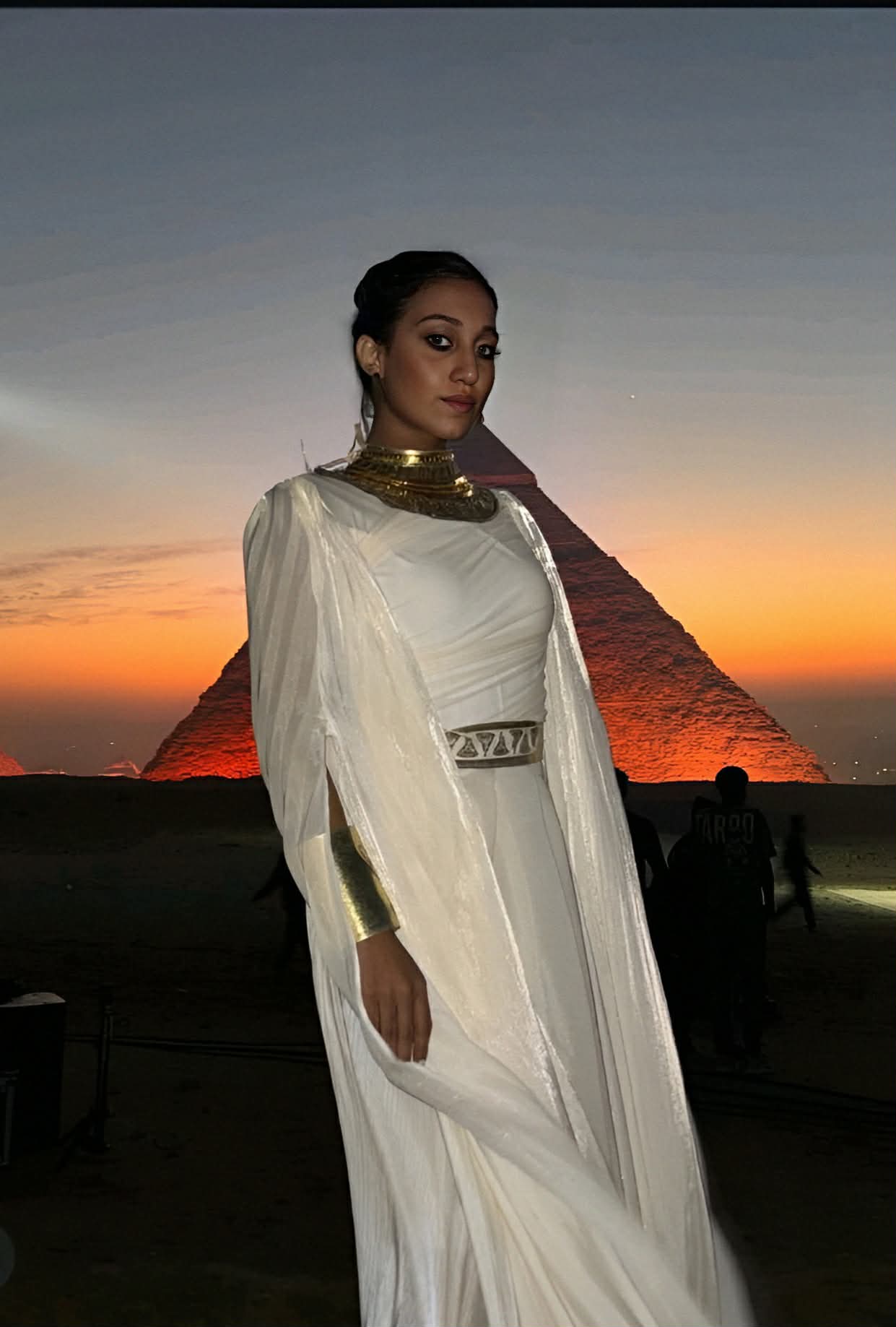
Egypt, and I have Turkish roots from my family and ancestors.
What were you dreaming as a child, and have you achieved your dream?
I used to dream of being a media personality, journalist, and actress, and now I’m a university student studying advertising, journalism, and acting. Also, I’m Deputy Head of Media at the Ministry of Youth and Sports.
I also worked as a reporter, attended academies, and joined public relations teams. I am a voice-over and dubbing artist and also an Ambassador of Middle Eastern Media and a Middle Eastern Program Presenter. Yes, I have achieved much, but I still dream and dream….
What is more important to you, journalism or acting?
Personally, I love both journalism and acting, but I love acting more.
What are you dreaming?
I dream of many things, including being a world-renowned, famous, and skilled actress and presenter.
How do you feel being popular and having followers who are inspired by you?
I feel proud when my followers increase; I feel like an inspiring person, and the admiration grows.
What is your goal now?
My goal is to finish my bachelor’s degree and continue my studies abroad.
What is your favourite dish?
Yes, I love Egyptian food, especially feseekh (fermented mullet) and herring. I love them so much; they are among the most famous dishes in Egypt. I also really love Greek salad.
What is your favourite book?
Yes, I read, but I don’t have any favorite books besides psychology books and language learning books.
What is your message to the new generations?
“To the generations to come: never underestimate the power of your voice. Speak with honesty, act with integrity, and remember that true influence comes from inspiring others, not from seeking attention.”
What is your wish for 2026?
My wish for 2026 is to achieve all my dreams of entering the world of acting, working more, becoming famous, and earning more than my current profession.
Travel and success in my studies are also important to me.
Ruqaya Mahran, a media and journalism student and actress, was an assistant secretary in the Training and Education Department of the Future of the Nation Party and the deputy head of media for the Ministry of Youth. Mahran is also a journalist and member of the public relations team for organizations and an ambassador of Middle East Media. She’s Egyptian with Turkish roots, a citizen of the whole world.
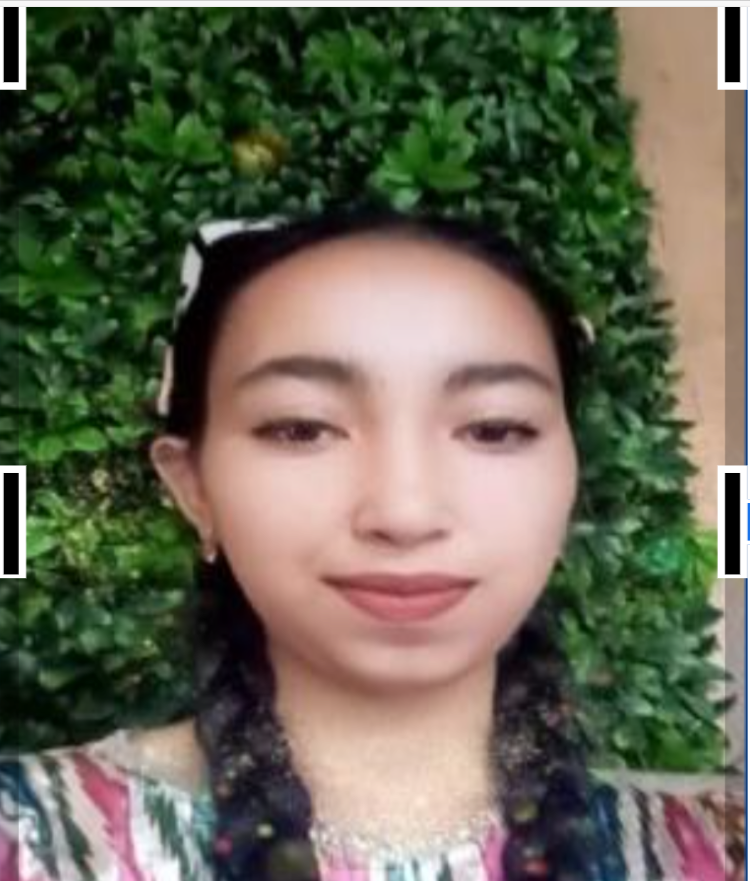
Abdurashidova Sabina Eldarovna was born in Shahrisabz, Kashkadarya, Uzbekistan. She is 17 years old. Currently, she is studying at Uzbekistan State World Language University, at 1st course. Holder of more than 20 international certificates. Certified at B+ level in her native language and B2 level in English.
The Impact of Virtual Communication on Youth Language: Emerging Trends in Youth Speech
Abstract This study investigates how virtual communication affects youth language, highlighting emerging linguistic trends in online speech. With the rise of social media, instant messaging, and digital platforms, young people have developed unique ways of expressing themselves, including abbreviations, emojis, code-switching, and simplified sentence structures. Data were collected through social media posts, chat logs, and semi-structured interviews with 50 youth aged 15-24.
The findings show that virtual communication significantly shapes contemporary youth language, influencing informal and formal contexts, and provide insights for educators to adapt teaching strategies to the digital environment.
Keywords: virtual communication, youth language, online speech, linguistic trends, digital media
Introduction
Digital technologies have transformed communication among youth, making virtual platforms are essential part of daily interaction. Social media, messaging apps, and online forums enable fast, interactive exchanges that differ from face-to-face conversation. Consequently, youth have developed new expressive methods that are creative, efficient, and contextually rich. Understanding these shifts is crucial for linguists, educators, and policymakers to support effective communication and language learning.
Literature Review Research shows that online interaction fosters distinct linguistic patterns among youth. Crystal (2006) emphasizes how digital tools influence writing styles. Tagliamonte and Denis (2008) identify morphosyntactic trends emerging in text messaging. Thurlow and Brown (2003) note that youth employ abbreviations, emojis, and code-switching, blending efficiency with personal expression. However, studies in Central Asian contexts remain limited, highlighting the need for this research.
Methodology A qualitative approach was used. Data were collected from social media posts, chat logs, and semi-structured interviews with 50 participants aged 15-24. Analysis focused on lexical innovation, syntactic simplification, pragmatic strategies, and code-switching. Thematic coding identified recurrent patterns and emerging trends. Ethical standards, including informed consent and anonymity, were strictly observed.
Results and Discussion Key findings include:
Abbreviations and Initialisms: Common acronyms (LOL, BRB) and shortened words (u for you, cuz for because) enhance rapid communication
Emoji and Visual Cues: Emojis efficiently convey emotional and pragmatic meaning.
Code-switching: Youth often mix their native language with English, creating hybrid expressions. Example from chat: laughing out loud (LOL)
Simplified Syntax: Fragmented sentences, omission of auxiliary verbs or articles, and informal structures reflect efficiency and conversational style. These patterns demonstrate that virtual communication shapes both online and offline language practices. Recognizing them helps educators design relevant, engaging teaching strategies. Conclusion
Virtual communication profoundly affects youth language, leading to innovative lexical, syntactic, and pragmatic patterns. These changes offer valuable insights for language education, sociolinguistic research, and policy-making. Awareness of emerging online speech trends is crucial for educators to adapt teaching methods effectively. Future studies could quantify these patterns and examine their long-term impact on literacy and communication skills.
References (APA 7th Edition) Crystal, D. (2006). Language and the Internet. Cambridge University Press. Tagliamonte, S. & Denis, D. (2008). Linguistic ruin? LOL! Instant messaging and teen language. American speech, 83(1), 3-34.
Thurlow, C., & Brown, A. (2003).Generation Txt? The sociolinguistics of young people’s text-messaging.
Abdurashidova Sabina Eldarovna was born in Shahrisabz, Kashkadarya, Uzbekistan. She is 17 years old. Currently, she is studying at Uzbekistan State World Language University, at 1st course. Holder of more than 20 international certificates. Certified at B+ level in her native language and B2 level in English.
“Are you ready? So… will it really happen today?” said the children, about 12 years old, as they stared up the sky. They were waiting for the rain. They lived on the planet Venus, where it rains only once every ten years. During the rest of the time, the temperature stays around +190 ° to 200 °. Because of this, the children had only seen the rain once in their lives – but they could not remember it, since they were only two years old at the time.
“If it rains only once in ten years, does that mean there is no water? Won’t there be drought everywhere?” someone might ask. The answer is no – there is no drought because people get water from underground sources.
Among the children there was a girl named Narya who was different from others. She had moved from Earth to Venus with her parents when she was eight years old. That’s why she was not like the rest of them. While the other kids played noisily, she would sit aside, lost in thought, Deep down she wanted to play with them too, but they never let her join they kept excluding her and treating her unfairly and treating her unfairly. Even now, they had set a trap for her. They locked the poor girl inside a dark, abandoned warehouse.
“Something fell on me – this must be the rain!” said a girl named Nasha. “It fell on me too!” shouted another. “Me too!” the children cried excitedly.
Suddenly, the sky opened up and heavy rain began to pour. The children ran to the garden and happily played under the rain. It lasted only 60 minutes, and after it stopped, they suddenly remembered Narya. They rushed back and opened the warehouse door. Narya was lying unconscious on the ground. They quickly brought her outside, sprinkled water on her face, and helped her regain consciousness. Then they tearfully apologized her.
The poor girl said she wasn’t angry at them: she only wished she could have seen the rain like everyone else. As she said this, she broke into tears. Just then, rain suddenly began to fall again – and this time it didn’t stop for two whole days…
O’rinboyeva Zarina is a 14-year- old student in the 8th grade school No.43 in Oqdaryo district, Samarkand region. She is the winner of 3rd place in the “Bizning faxrimiz” TV program. Two short stories published in the district newspaper. Two short stories published in the American journalSynchronized Chaos. Holder of six international certificates. Recipient of the “Millat Umidi” badge of creative achievements. Winner of numerous republican-level competitions and projects.