The book Pieces of Hope by Rui M. is a collection of poems and short stories written in English and translated into Portuguese and Spanish, and also four poems translated into Italian and one into Danish. All work was revised by native speakers and this makes it an excellent tool to learn different languages. The book also contains inspiring artwork.
Please contact the author for preorders or queries: ruiprcar@gmail.com.
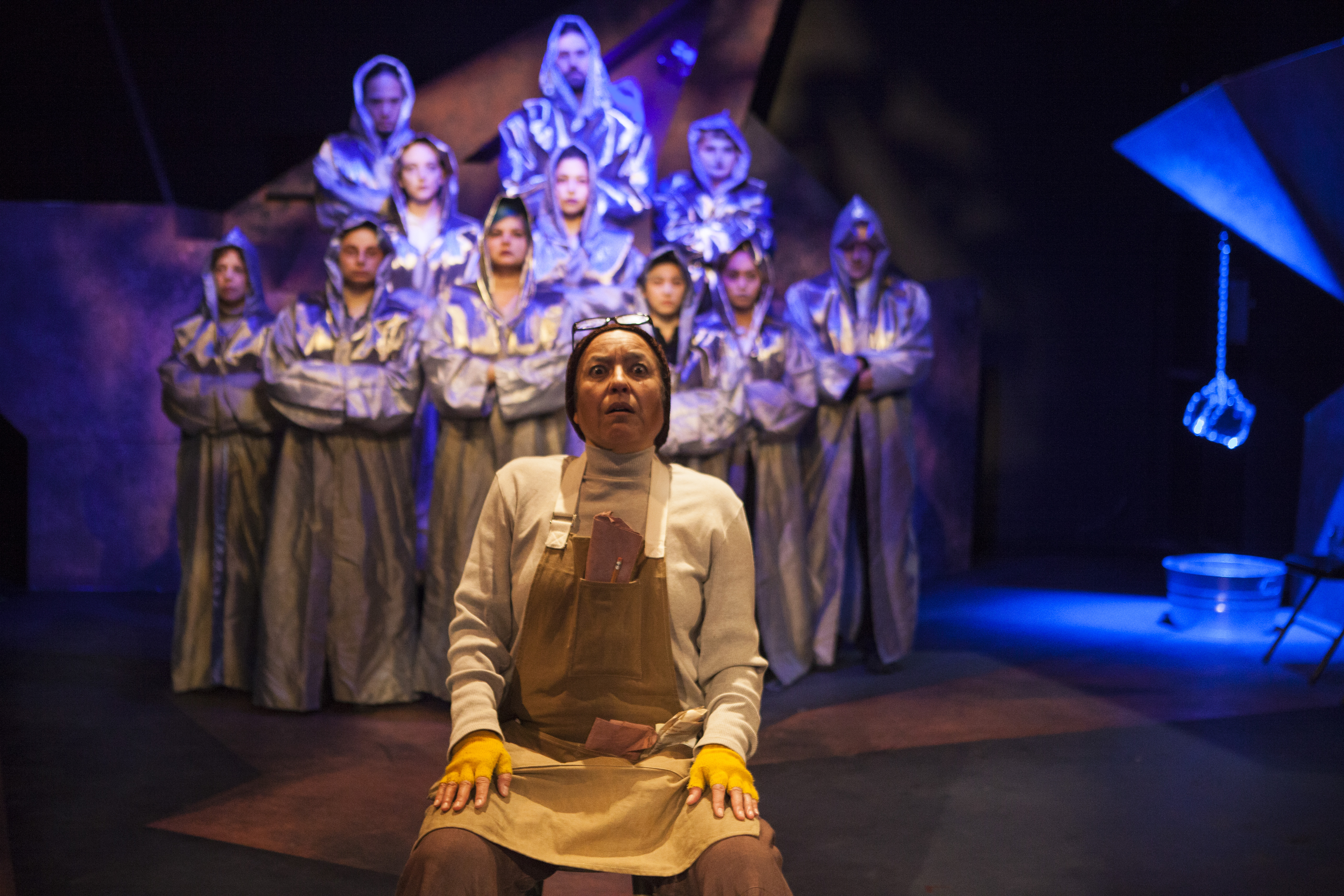
Ragged Wing Ensemble’s Production of Amy Sass’ play Time Sensitive at Oakland’s Flight Deck Theater.
Simone Bloch, right, as the Clockmaker with the Ice Monks. Photo: Serena Morelli for Ragged Wing Ensemble.
In a recent article in Counterpunch, Wes Jackson and Robert Jensen argue for the return to a ‘creaturely’ worldview based around self-organizing renewability coming out of complex and vibrant ecosystems. They believe that it will better equip us to care for the planet and survive as a species than the industrial worldview, which is non-renewable, specialized, mechanical, and requires large amounts of concentrated energy to maintain.
Amy Sass’ new play Time Sensitive, now showing at Oakland’s Flight Deck Theater, echoes some similar sentiments.
‘Ordovician. Silurian. Jurassic. Cretaceous,’ chants a swaying ensemble, dressed in silver monk-like robes, during at least one interval in Time Sensitive. This and other interludes connect the characters’ individual stories with the broader narrative of humanity’s search for its place within the natural world.
Suspended blocks of melting ice provide a constantly dripping backdrop, alluding to climate change while reminding us that the rest of the world operates according to different timescales than that of our modern city life.
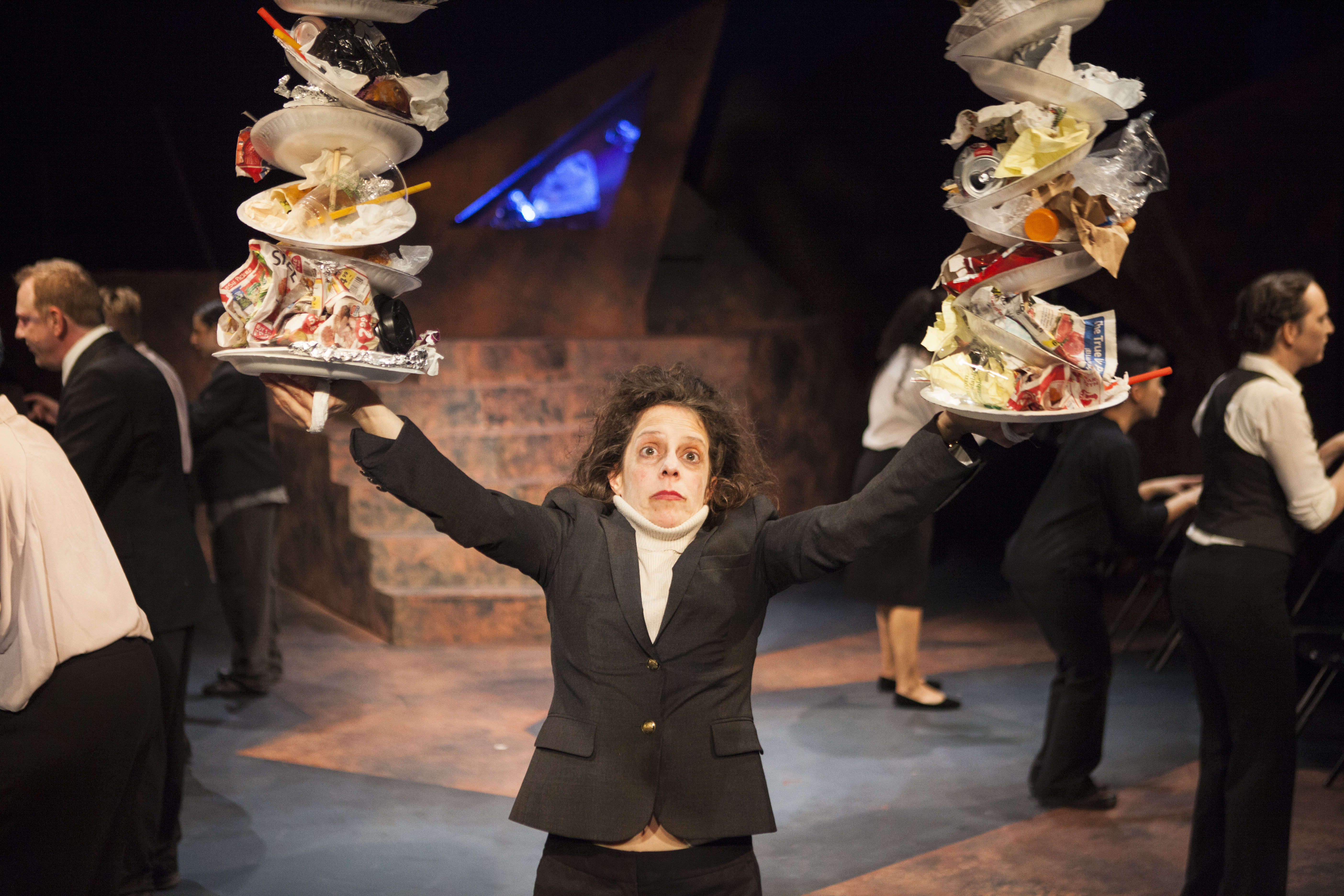
Many of the characters’ stories incorporate time as a theme, while suggesting that we can only go so far in modern society to cover up the biological and emotional realities of being human. A bank employee goes to great lengths to create perfect events for her company, even speeding up her pregnancy in hopes that it won’t interfere with work. Yet, she still ends up demoted and her subordinates replaced with robots. The fact that she and her fellow employees compete for roles where they literally carry plates filled with trash highlights both the environmental themes of the play and the disposability of workers in her office environment.
Rachel Brown as Employee One. Photo by Serena Morelli for Ragged Wing Ensemble.
A childless elderly craftsman builds a robotic device to maintain his clocks, and the device, called a KID, ‘grows’ up to realize that the energy it’s absorbing from the city isn’t as pure and clean as it needs. The bank CEO and building owner stares out at the view from the top of his building, ordering an engineer to build higher and higher – then realizes he’s terrified of heights. Even the impoverished pair who survive by any means necessary in the shadow of the skyscraper experience internal struggles: are they going to strive for the money, power and control everyone else in the city wants, or could it be possible to envision a different world?
Time Sensitive brings a great deal of physicality to the stage, as characters carry each other, leap, dance, and move in groups to convey various moods and states of being. Telling these stories through movement that’s as prominent as the dialogue further highlights the theme of how our bodies and the natural world reassert themselves despite our efforts to impose the urban life that we consider ‘civilization.’ The dialogue also reflects this physicality, as characters speak directly, even scatologically, at times.
Birth and death are two major ways that nature imposes its timescale onto our lives, as we have limited ability to reschedule either of these events. And the characters here grapple with nativity and mortality, ultimately finding, through some cleverly juxtaposed stage pairings, that both can be better faced together.
This story left me with many points to ponder. Certainly the universe is much larger and more enduring than our short-term desires for career success, and we’re not going to be able to overwrite our own, or our planet’s biological makeup in a few centuries. And we do need to think about the impact of our decisions on future generations and on the Earth.
I was left wondering, though, if scrambling for resources and being in a constant hurry is really that unnatural, given the short lifespan of many animals and their constant quests for food. If we’re going to go back to a more natural way of living, if we’re going to embrace our own natures and the ecosystems around us rather than completely replacing them, let’s think about how to do that without just replacing one ‘rat race’ with another.
And, how far can we judge the impoverished character who sought to grab some of the wealth of the city? His character devolves into greed for much more wealth than he needs to live and he rejects his friend who doesn’t share his passion. But is there a middle ground between being so sweet/flighty that you give away your last pair of shoes to a pigeon and bring yourself harm, and mimicking the values of the most powerful people in mainstream society? How do you care for yourself and meet at least your basic needs while still living in harmony with the earth and without becoming obsessed with success and power?
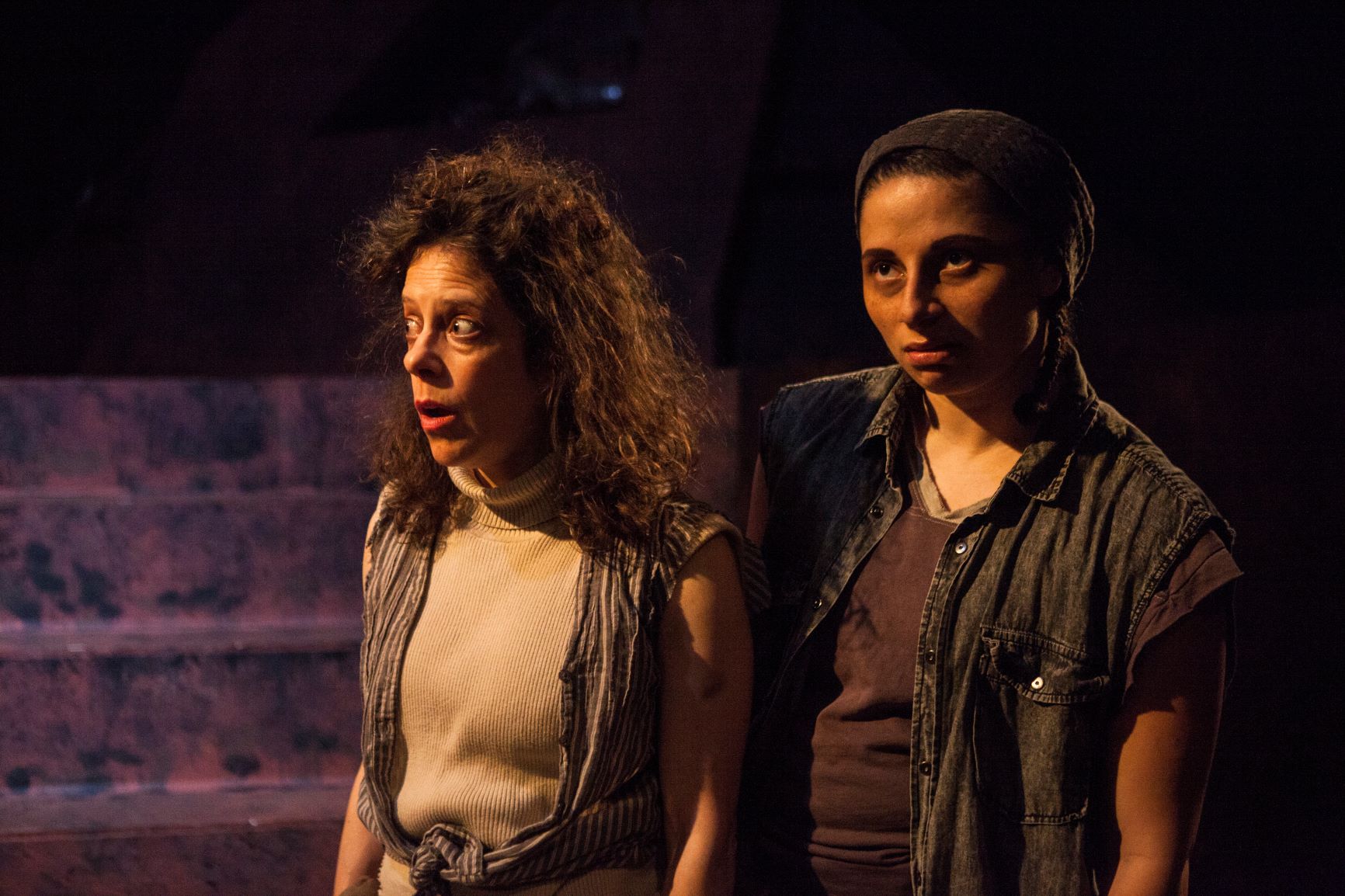
Rachel Brown left as Penny and Alicia Piemme Nelson as Roach. Photo by Serena Morelli for Ragged Wing Ensemble
Some of the play’s most poignant and thoughtful moments came from the old man and the KID, who takes a Velveteen Rabbit-like journey towards becoming real. They, more so than the people at any socio-economic level within the city, had the time and space for thought and feeling, and could envision a better and more integrated and balanced life.
Their journey together, their ‘birth’ and death, most brings to mind Jackson and Jensen’s concept of being ‘creaturely’ – and it is they who ultimately show the way out into a broader world beyond the confining city.
From Ragged Wing, note on the production:
Originally created in workshop five years ago, Ragged Wing’s new production features an updated script as well as a deep collaboration with climate artist Carter Brooks and his ice-art, and environmental scenic design by Oakland School for the Arts Chair of Production Jean-François Revon.
Time Sensitive runs at Oakland’s Flight Deck, 1540 Broadway.
This month, in lieu of a normal issue of Synchronized Chaos Magazine, we share some of the pieces that writers are presenting at the offsite event that Synchronized Chaos Magazine is co-hosting during the Association of Writing Programs’ annual conference.
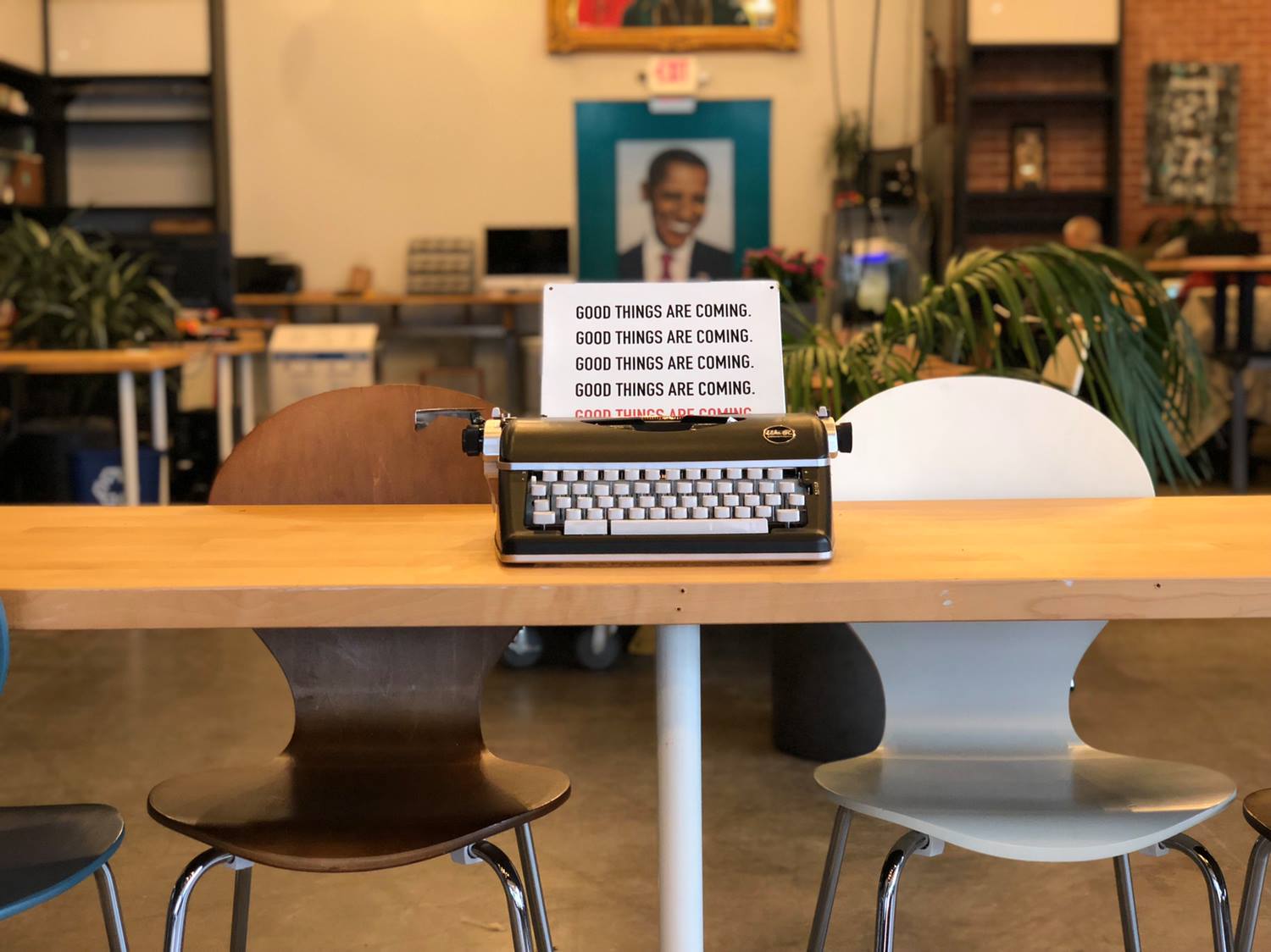
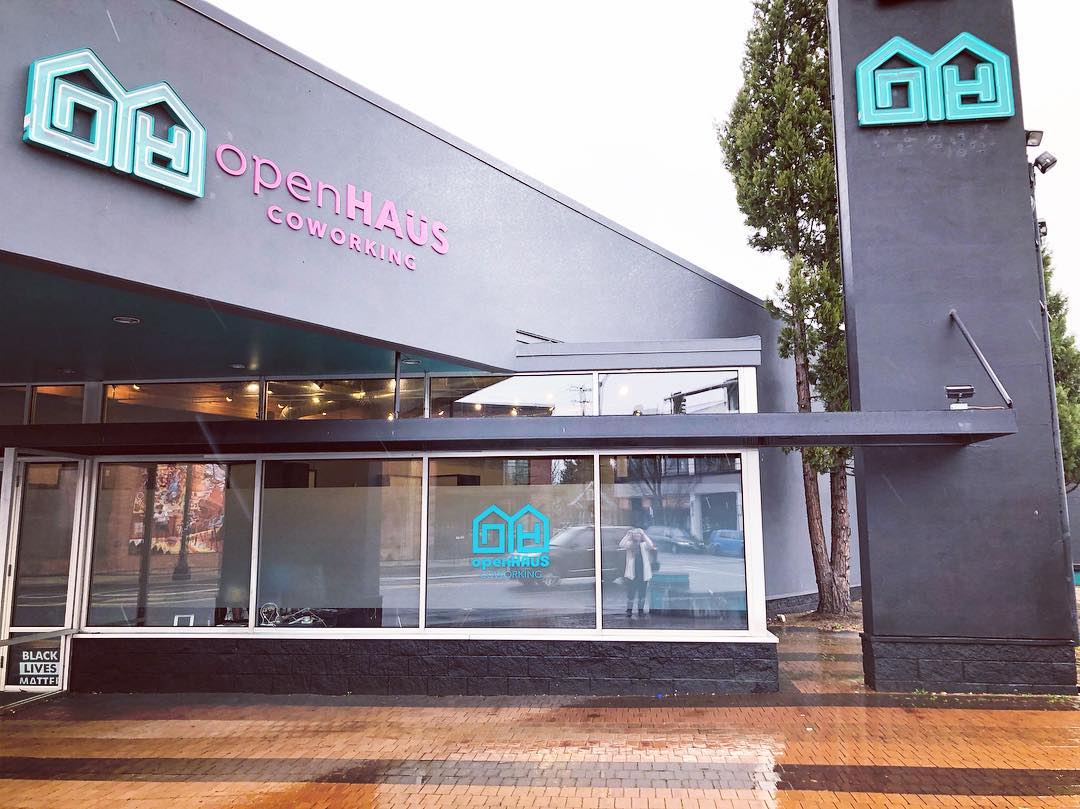
Several Synchronized Chaos contributors are reading in this event, the Partnered Reading with the Broader Community, held at 6pm at the OpenHaus coworking space (5020 Martin Luther King Blvd) on Friday March 29th. These include Scott Thomas Outlar, J. Dorroh, Leticia Garcia Bradford, and Doug Hawley.
This is a partnered reading where publishing and book marketing professionals create work in response to, and inspired by, pieces from emerging authors. The readers have paired up and created together over the past couple months and each pair will read on stage at the OpenHaus. Idea is to connect more experienced authors with up and coming writers and promote creativity and mentorship.
This is a chance for professionals to read and consider, then engage with, work from the greater writing community. We welcomed and actively recruited all sorts of guest readers, including people from the POC, neurodiverse, LGBT, disabled, homeless and low-income and other marginalized communities to participate in this event.
Also, Bonnie Greene, Melissa Moon, Lisa Loving and others will come and read some pieces by, and about, writer and artist Tony LeTigre, who regularly wrote for Synchronized Chaos and edited a few issues in 2016, and sadly passed away in a traffic accident January 19th: https://www.marinij.com/2019/01/22/greenbrae-mans-circle-stunned-by-freeway-cycling-death/
We aren’t able to share all of the work because some people have elected to pursue publication in outlets that don’t accept work previously published elsewhere. If that’s you, and your work is published here, please immediately comment or email us at synchchaos@gmail.com and we’ll remove your piece.
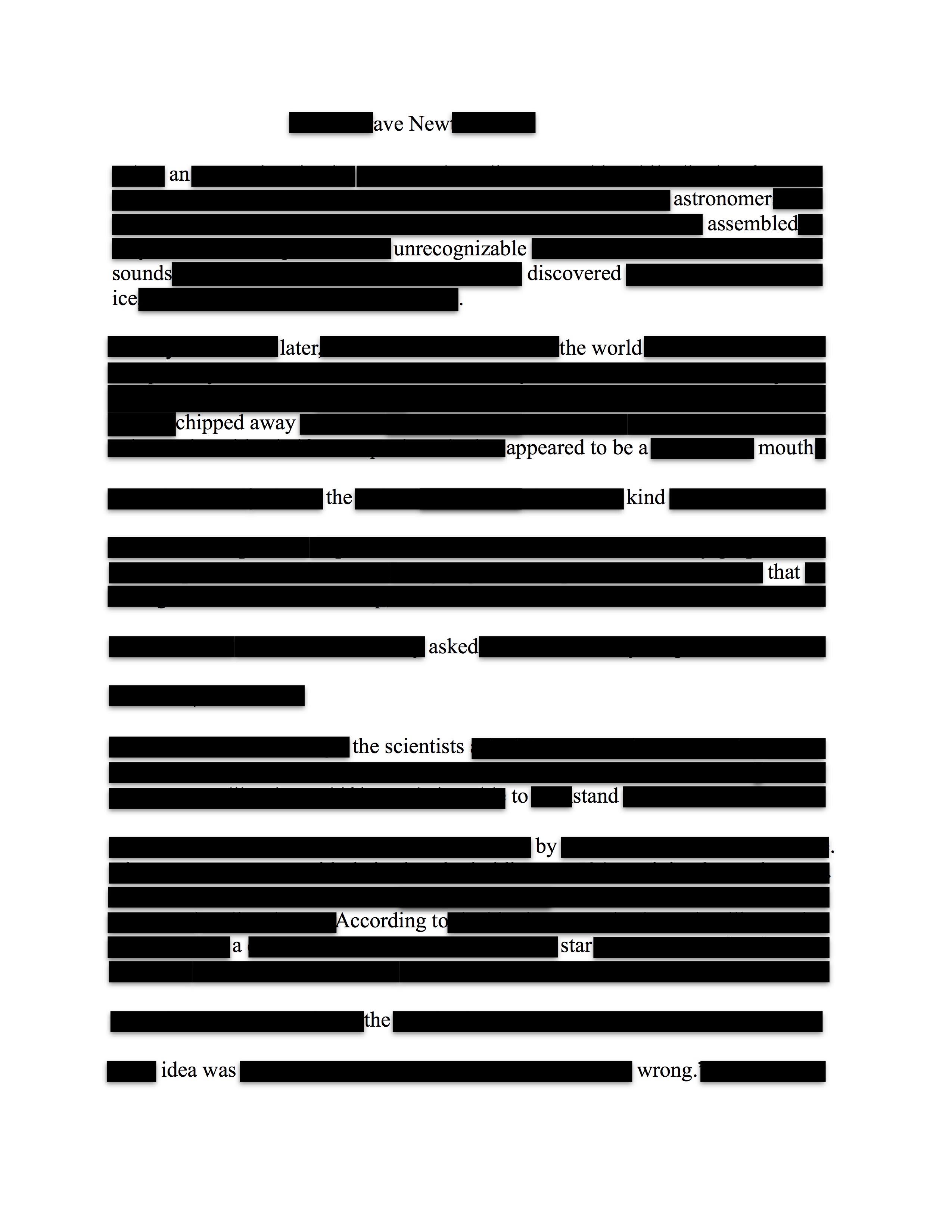
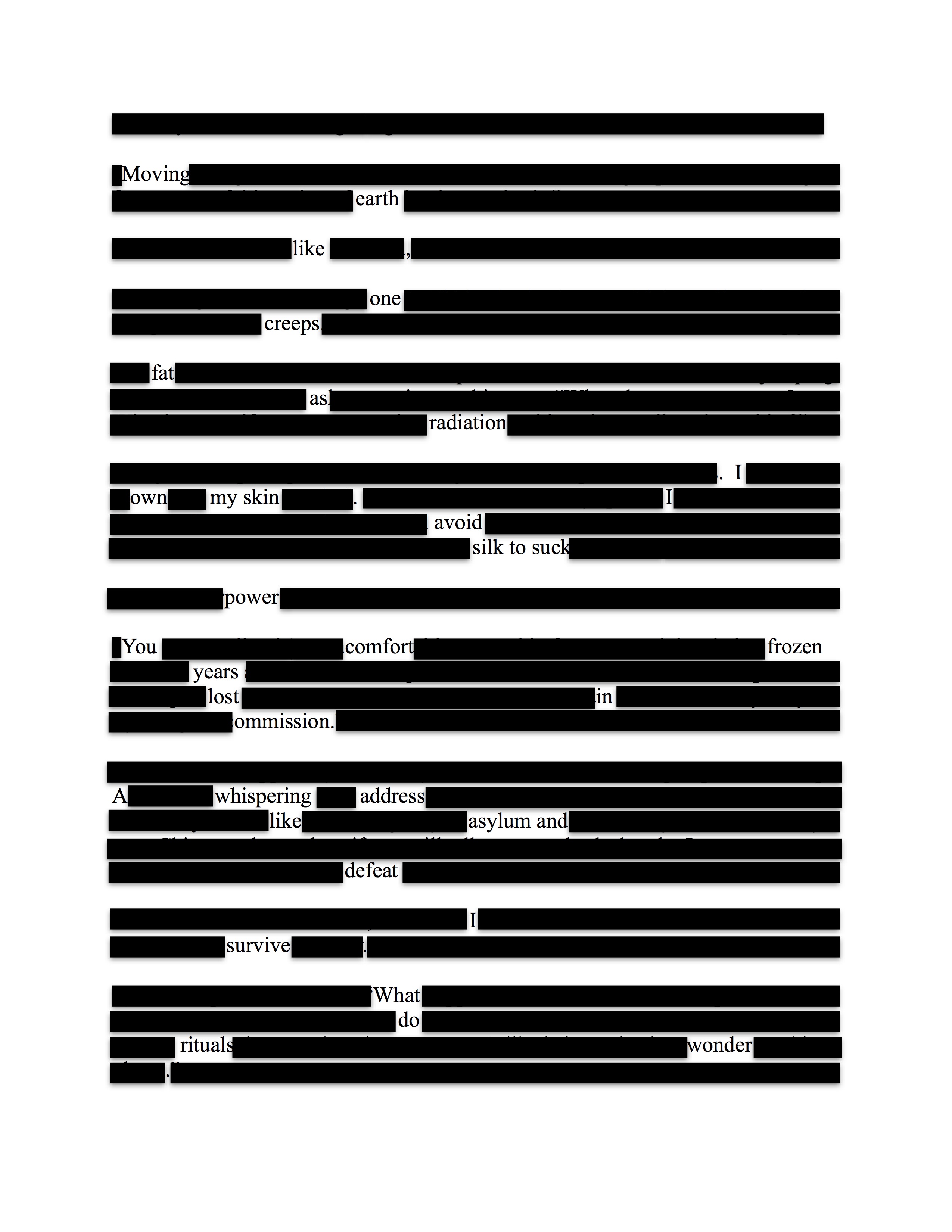
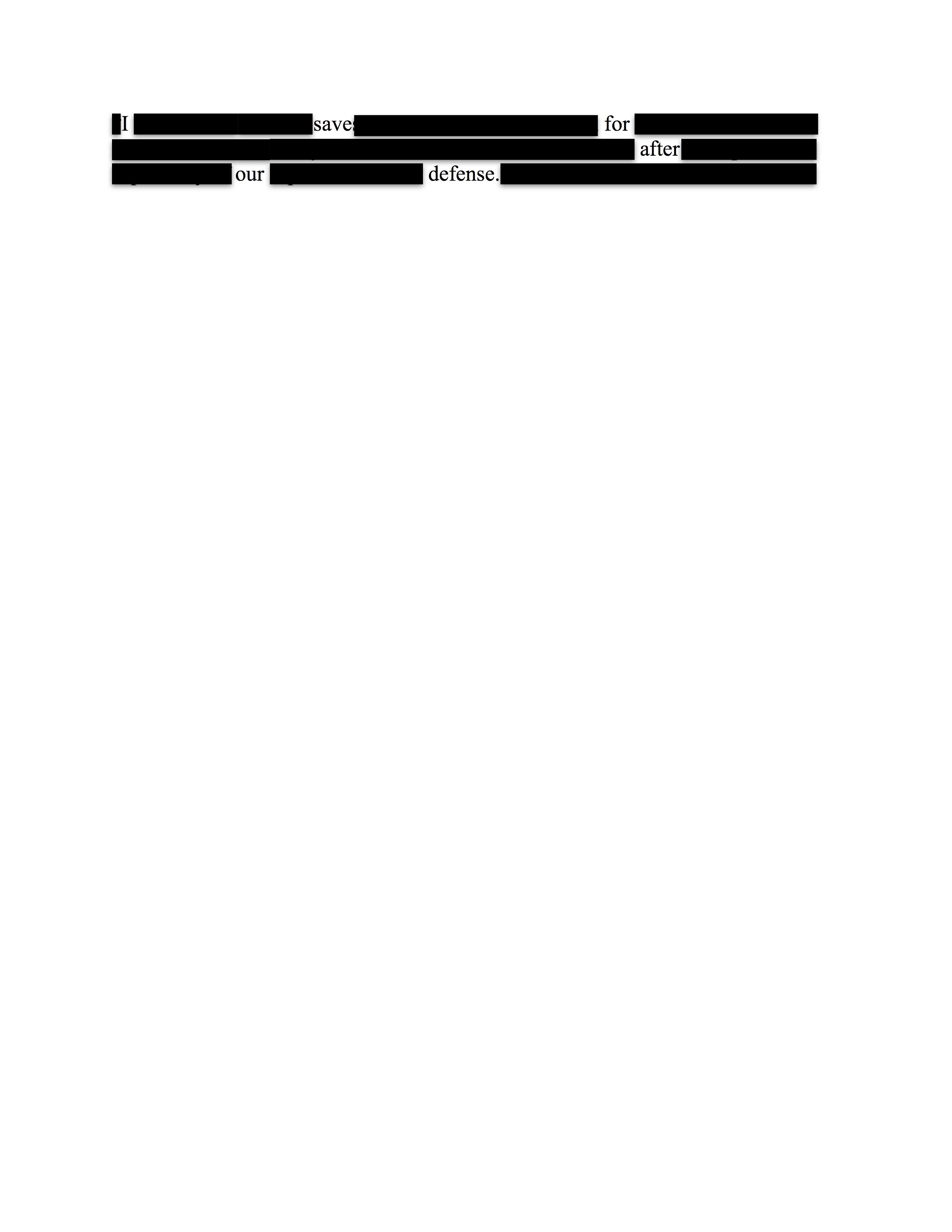
Claire Bateman and Sione Aeschliman explore spiders in various creepy crawly and elegant ways. Doug Hawley writes of an intergalactic space force and alien squids, and again of newts,to which Cati Porter responds through an erasure poem, where she takes his story and removes much of the language so that the remaining words form a new and different piece in themselves.
J. Dorroh, high school science teacher, dives into his true passion, swimming. Sybilla Nash speculates on what Tupac Shakur could have done had he not died young, while Scott Parker reflects upon the experience of reviewing his high school students’ poems inspired by Tupac after his death.
Sean Cearley contributes a concrete poem, words suggested by and superimposed onto images. Each phrase sounds as if it could be part of a larger piece. J. Dorroh writes a piece that explores the limits of human thought and endurance.
Rebecca Smolen and Leticia Garcia Bradford reflect on how the love, accomplishment, creativity and other delicious berries they seek are often just out of reach, while Robert Egan grapples with the limits of human and official capability to respond to floodwaters.
Vannessa McClelland dives into a troubled but creative mind. Gina Stella D’Assunta explores the challenge of navigating life as a vibrant bon vivant with unpredictable and painful chronic illness, and Cati Porter reinterprets Gina’s spoken word piece as a poem where punctuation and line breaks illustrate the physical limitations of a disabled body.
Edward Morris regales us with a glittering tour-de-force Old English prose piece., and Elyana Ren creates another tale inspired by Morris and Dickens. Dorothy Place lends her pen to the tale of determined, yet tragicomic, unemployed Solomon, hoping to win back his wife and his income with his modest imagination.
Jasmin Johnson contributes a meditative story on figuring out how to process death and grief, mourning and thus valuing the lives of loved ones marginalized by mainstream society.
In another poem she draws upon the experience of baptism, symbolically ending one’s self-directed life and being resurrected as a new person in a new life guided by God, as a kind of parallel to Mindy Ohringer’s piece about the writer’s journey. In Mindy’s short story, an aspiring writer learns to follow the leadings of their unique pieces rather than writing whatever seems literary to their audience. Mindy also contributes a thoughtful response to another of Jasmin’s poems.
We hope you enjoy the work that’s published here, and we look forward to continuing to host events in the future. Our regular editions of Synchronized Chaos Magazine return May 1st with a combined April/May issue.
On the first day of class I ask my students to write poems about what Tupac means to them. They had been four and five years old when he died and held no memories of him as human being they shared air with. Yet when I had asked them a month before what they wanted to study in summer school—voluntary summer school—they all said Tupac. I can’t say I was surprised. Over the year I had worked with these kids I’d come to know their musical tastes well: Pitbull and Eminem, they liked; Tupac, they revered. His legacy had survived his death. (And do you remember how for years we hoped he had too?) But why? Why Tupac? When I was these kids’ age—thirteen, fourteen—I had listened to Me Against the World like my life depended on it, and a decade later my cells still vibrated to its rhythms. All our lives we remain audience to the music we listened to when we were young, hearing like feeling tuned to what touched us first and loudest. All our lives. For my students I want to feel my way back to being sixteen, seventeen years old, driving aimlessly around Portland with my friends singing When I was young me and my mama had beef / Seventeen years old, kicked out on the streets. For these kids I want to recall what it was like to have somewhere to go but not know where that was except in a hungry baritone that told me the things a certain kind of teenager needs to hear: be yourself—all of it; don’t apologize; you can do it; there’s something special in you—and it’s up to you to express it; everyone, when you get to know them, is as complex as you are; others have gone through what you’re going through, and some of them are reaching back to offer you a hand, if you can only figure out how to accept it; you will encounter obstacles, many of them your own making, but there’s a better you waiting on the other side; you are alive only until you’re dead—how could there possibly be anything to lose? All our lives: What could there be to lose?
Listen up, students. I’m seventeen, stopped at a red light. Tupac has been dead two years. I’m alone in the car. I’m screaming fuck the world, and I’m full of hope as I conjure the person I thought I could be. All our lives. Alone, not alone. Tupac there with me, an apparition whispering from beyond the grave, no, shouting, imploring me to go. All our lives. The light turns green. When I collect the students’ poems they’re full of misspellings and questionable interpretations. They’re also full of truth and full of heart. There are no tests in this class, no grades. If they wanted to, they could be at home playing video games or hanging out in the parking lot. Instead, they are here. All of them turn in their homework. No one misses class. If Tupac lived? What do we mean if?