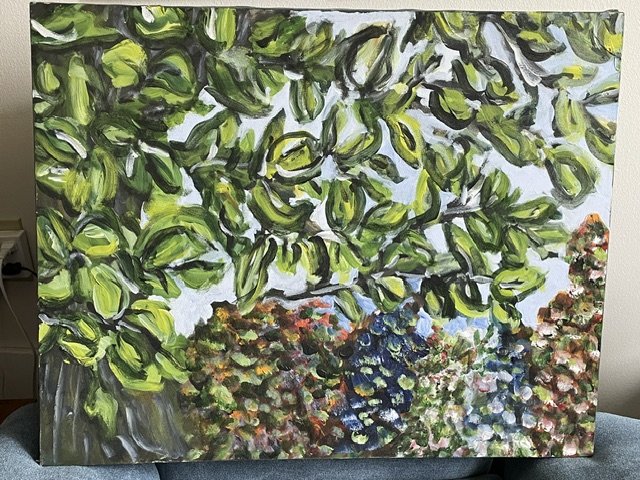
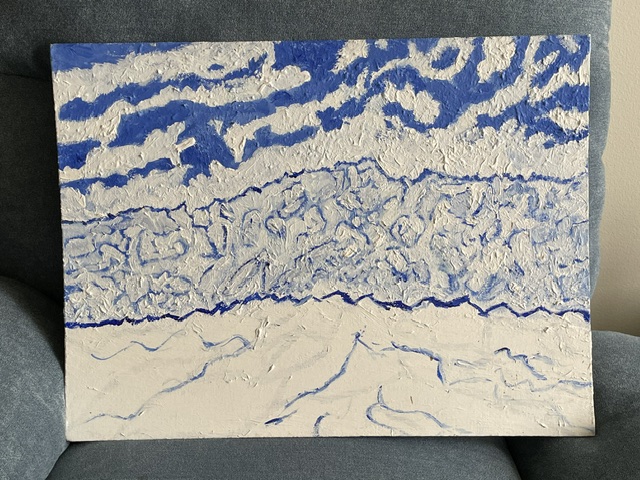
A flowerpot under a flowerpot—my perplexity is faster than a racehorse.
If destiny allows,
I would build a minaret—as grand as a pharaoh’s pyramid—out of a single poem.
I would plant flowers
all around it.
Then I would climb it gently
and gaze upon the world and its people.
I would ask applause for my poems
from whoever has read them—if anyone has.
I cherish poetry deeply,
even though it wounds my heart.
Wandering through astonishing flower gardens,
I place poetry
as a crown upon my head.
Let people send me their love
and call me king—I no longer mind.
Silence is comforting;
it buries the cries and sounds
of sorrow.
The morning sun is magnificent:
the flowers can hear
the sound of its light.
These mountains stand proud;
they pay no mind
to those who pass beneath them.
The sky is a vast embrace—wide enough to hold
every glance.
The poet is the guide of my soul;
from the light of faith
my feelings begin to bloom.
(Translated by Azam Abidov)
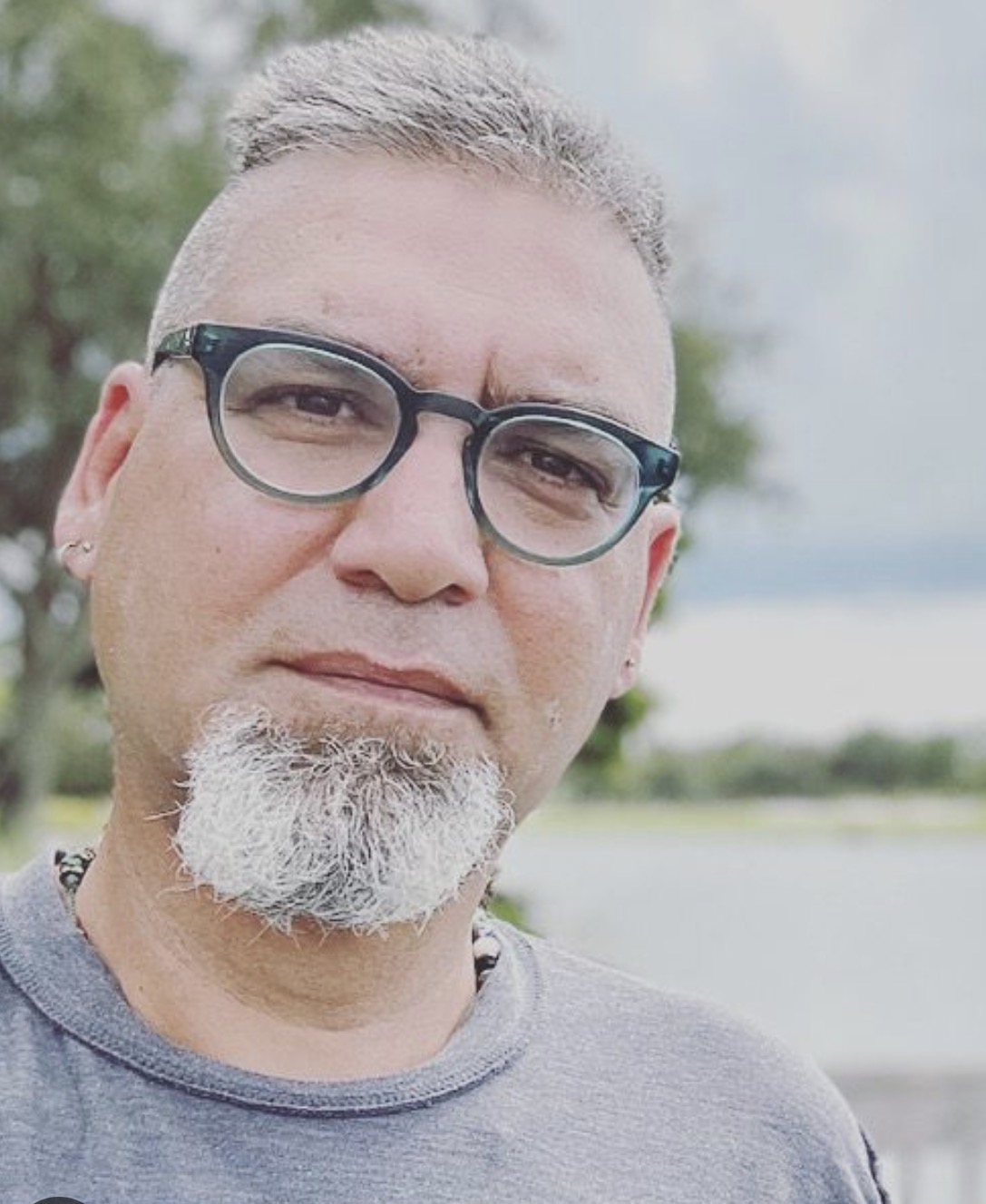
Nurbek Norchayev is a representative of modern Uzbek poetry and a poet. He was born on April 18, 1993, in Koson district of Kashkadarya region, Republic of Uzbekistan.
The Interconnection of Family and Society in Uzbekistan
Abu Rayhan Beruni
Urgench State University Faculty of Socio-Economic Sciences
Field of Study: Jurisprudence
Abstract: This article analyzes the essence of the close interconnection between family and society in Uzbekistan, as well as its social, spiritual, and legal foundations. The family is the fundamental unit of society and a sacred institution. The Constitution of the Republic of Uzbekistan emphasizes that the family is under state protection. The stability of society, the upbringing of a morally mature generation, and the preservation of national values are directly linked to the strength of the family institution.
Conclusion: The role of the family in society is invaluable. Strong, harmonious, and value-based families ensure social stability and sustainable development.
STRUGGLE FOR SURVIVAL AND THE INSTINCT FOR ‘GIVE AWAY’
When from a liquid, a drop is formed, it is trapped into the struggle for survival. Its shape depends on how much the winds press its sides, and how much the light sucks its vitality. The moment it is formed, the eternal countdown begins, and then, as the day passes, a part of it is lived out. Finally, a moment arrives, when winds suck it back.
The sun and the night, the moon and the stars, the oceans and the mountains – they saw it form, flourish, and then finish. When we see this bubble, this drop, this human being, he is in the throes of a struggle, the wise call the struggle for survival.
When man is born, he too resembles a drop of life, and it is not difficult to see how this struggle for survival has started in the womb itself. Parents try to soften the pangs of this struggle in the initial years, but as soon as a child grows up, his march to adulthood is marked with pitfalls and boobytraps, and this struggle continues through the adult years, right up to the time he reaches the ventilator, the launch pad from where, hollow-copters fly on a journey into the unknown.
All through this life, the man was trying to stay alive and he did not mind this struggle which left him alive although so many lost their lives. The first and foremost thing for man is to preserve his life. Once he is secure in his body, mind and soul, he starts thinking of embellishments which make life beautiful. Art steps in, music steps in. Love steps in. It is now a paradigm of passions.
Just think of a journey in a plane. When the plane runs on the runway, and takes the dive up, our hearts sink. That is the initial shock we experience. But as it gains its speed, and becomes stable, we forget we are on a mission of do or die. The hostesses make you oblivious of the perils of the journey with their offer of drinks, food etc. In a few moments, the feeling of danger passes, and we start thinking of our life, some open their laps tops. Some go to sleep. The feeling of struggle will return when the plane lands, because, that too is a moment fraught with danger.
The idea is the struggle for survival is the basic instinct of man, and it remains with him all through. The question in the struggle for survival is when the idea of ‘how’ steps in. To keep alive is the first instinct, and this is animal instinct, the minimal, and the basest. We begin with this instinct. No doubt, throughout life, we have to keep alive till we reach the launch-pad, are we in the survival mode all through?
Can this instinct describe man in his entirety? I think, No. As soon as man acquires a sense of stability, he starts thinking of values, and the quality of his conduct in life. The focus shifts from the body to the mind and we are confronted with higher truths of life.
Existence is the essential truth but adding value to it is no less. I met a childhood friend who had retired from civil services. He held one grouse and it was against himself. He earned money, had a great going in his life, but what he has left behind? We, who believe in struggle for survival, also believe in the idea of a ‘take away’ from this struggle.
But, a time comes when we start thinking, was there any ‘give away’ also?
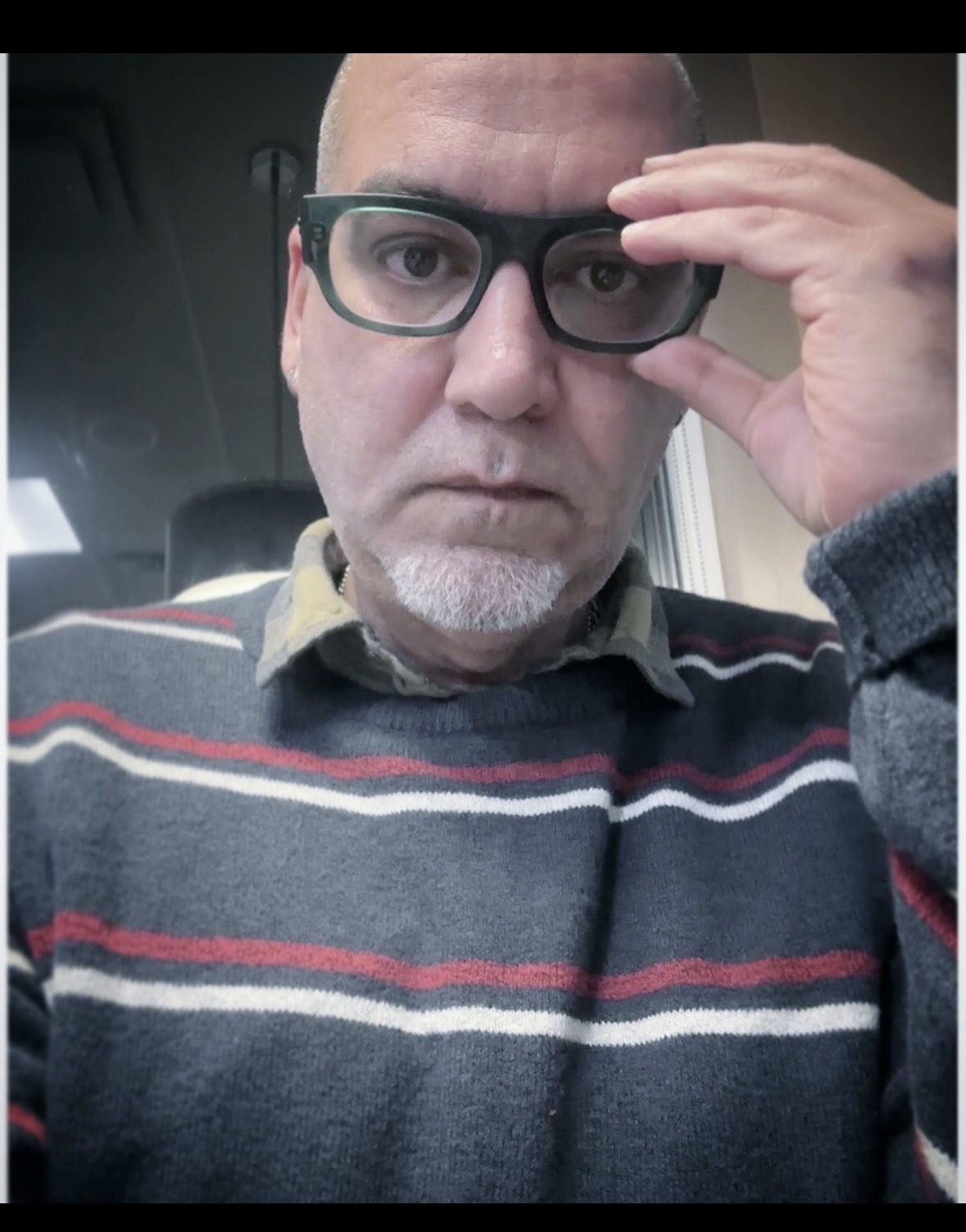
Dr. Jernail Singh Anand, with an opus of 180 plus books, is Laureate of the Seneca, Charter of Morava, Franz Kafka and Maxim Gorky awards. His name adorns the Poets’ Rock in Serbia. Anand’s work embodies a rare fusion of creativity, intellect, and moral vision.