Elizabeth Hughes’ Book Periscope

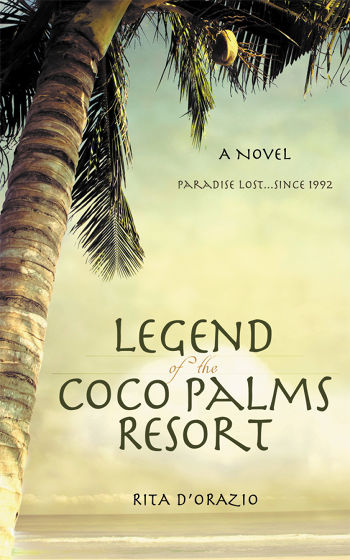
cocopalmscover
The Legend of the Coco Palms Resort
Legend of the Coco Palms Resort is a suspense mystery that is most definitely a must have for the mystery lover and fans of Ms. Rita D’Orazio. I absolutely love this book! It will keep you on the edge of your seat until the very last page with its surprising twists and turns. Abby Parker works for Brickman and Brickman law firm in New York. She is sent to Kauai to obtain the land where The Coco Palms Resort sits. The resort was completely ruined by a hurricane and has stood emptied since. While there, she comes across Kanoa Kahala, whom she was dating and very much in love with in New York until his abrupt departure. As she is walking around the Coco Palms she looks up into a second story window and thinks she sees a woman looking down at her. What follows is a riveting story of romance, suspense and mystery that will keep you gripping the edge of your seat until the very last page. I know you will love this book as much as I do and will read it again and again. This is Rita D’Orazio at her best. You will NOT be disappointed.

Poetry from Suvojit Banerjee


To the non Wonder

In our days of learning the slum-alphabets

we craved of sugar-topped coconut balls

served in a silver dish.

That never came about.

With a pistol in my hand and a raging

youth in my loins, I had given in

to the picture of wonder, and

meekly submitted, like a damaged

Dorian Gray, plunging inside

the dark pollens of rhododendrons.

Love to me was stories

that rich people told their kids

at bedtime. The wagon-breakers,

the mongrels born out of

streetside fucks didn’t get

a Christmas present.

The gentle greenery was swaying with

moist, complaining river wind that evening.

When I saw my son thrusting himself

into a woman, teeth and nails bare,

burning his wonders into

a hot vicious brand, I was sitting with

my share of bullets, counting stars that

never shone on people who grew up

under homes made of plastic shades.

A piece of the forgotten

On the other side of the wall

that moons can see on earth, lies

a river with five faces. The suburban

myth led people to jump to their

death here, thinking that under

the gray abyss of water

was Atlantis.

On mornings laced with fumes

of roasted ducks and fried

catfish, blind hawkers made

their way to the bigger

spectacle of a city with

skyscrapers. Little bougainvilleas

coming out from the creaks

of the wall are fed by

bone-wishes of people buried there.

It is a strange curio-shop of old

people and even older wishes,

wrapped hastily by

banana-leaves, yellowing

every second.

Continue reading

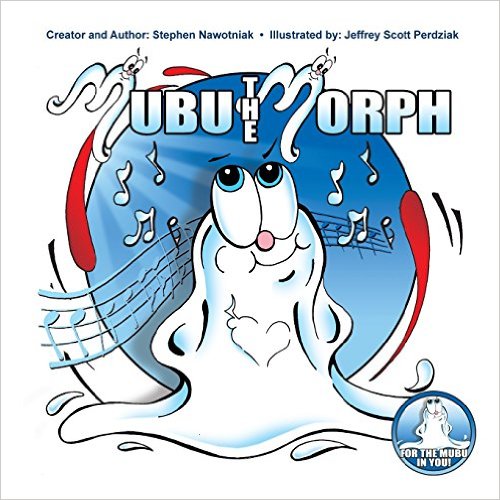
Lewis Mark Grimes reviews Stephen Nawotniak’s children’s book Mubu the Morph


mubuthemorph


Charming is the first word that comes to mind. Mubu the Morph is an anthropomorphized squiggle who takes on many forms. The metaphor for our species and indeed for all sentient life is a powerful one. Treating it to color and form in a children’s book is a perfect idea. What a great way to sneak tolerance of diversity into a seemingly harmless juvenile picture book.

The creatures are endearing and lovable. At least I fell in love.

The text is a mixture of poetry and prose poetry. I was favorably reminded of Ted Geisel’s (Dr. Seuss’s) work with its absurd sing song poems that engage a huge audience. Everyone from that audience would enjoy Mubu the Morph.

Stephen Nawotniak is a formidable writing talent and illustrations by Jeffrey Scott Perdziak were arresting and memorable.

This book is a 5 Star winner and a great gift in the under 11 reader category.

Mubu the Morph can be ordered here. 

Poetry from Mahbub

O my dear

O my dear, you are not here
birds are calling the morning awakes
soft wind blows around me
the sun rays with glowing colours
The roses blossoming I like most
enchants me with its fragrance

O my dear, you are not here
I can hear, feel you just my bear
every time I pay heed to
in the world of silence

O my dear, though not here
every time you call me
the objects of nature beckoning
to see the glory of loving features.

Balubagan, Chapainawabganj

13/09/2015

  Continue reading

Poetry from Michael Marrotti

“When Dealing With A Narcissist”

I make sure
I’m equipped
with two ice
cold beers

It’s going
to be awhile
her self-obsessed
monologue is
endless

I listen as she
rambles on
about everything
from what she
claims to be her
latest achievements
to family gossip
it all goes back
to her

After an hour
I attempt to
mention
the publication
of one of my
poems

It’s dismissed
like a misbehaving
child in the
principles office

I casually finish
my cold beer
raise my
insignificant
body to my feet
and say goodbye
to apathy

I know I’m an author
but this was supposed
to be a day of leisure
I didn’t come here
to write your
autobiography

Continue reading

Review by Christopher Bernard

avantgardarama

Striking a Nerve

Review by Christopher Bernard

AvantgardARAMA!
The Cutting Ball Theater
The EXIT on Taylor
San Francisco

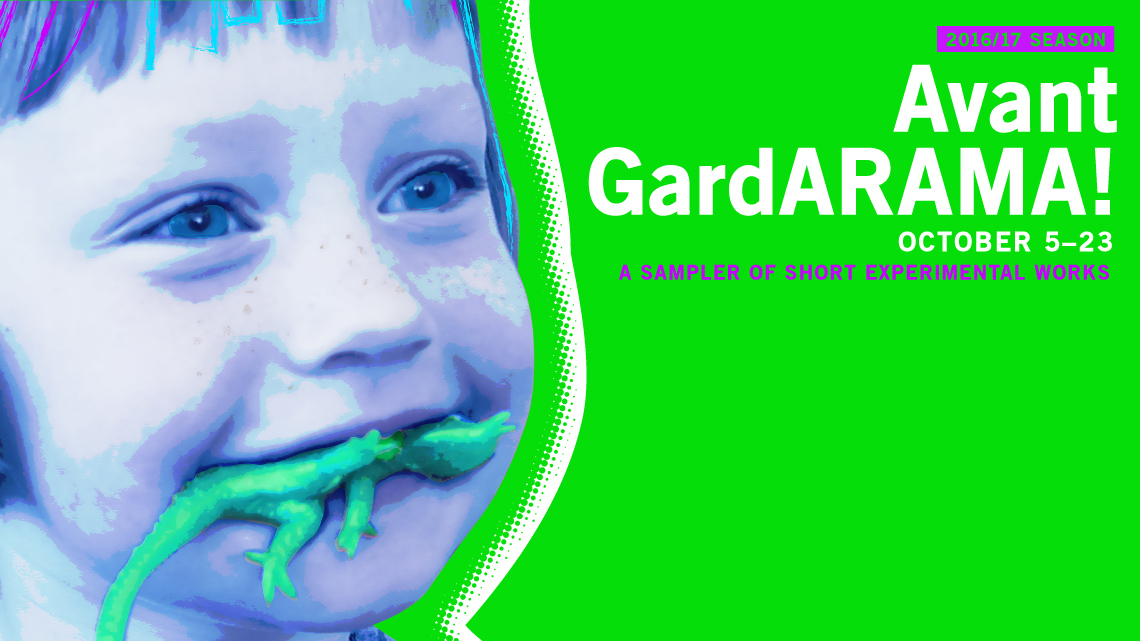
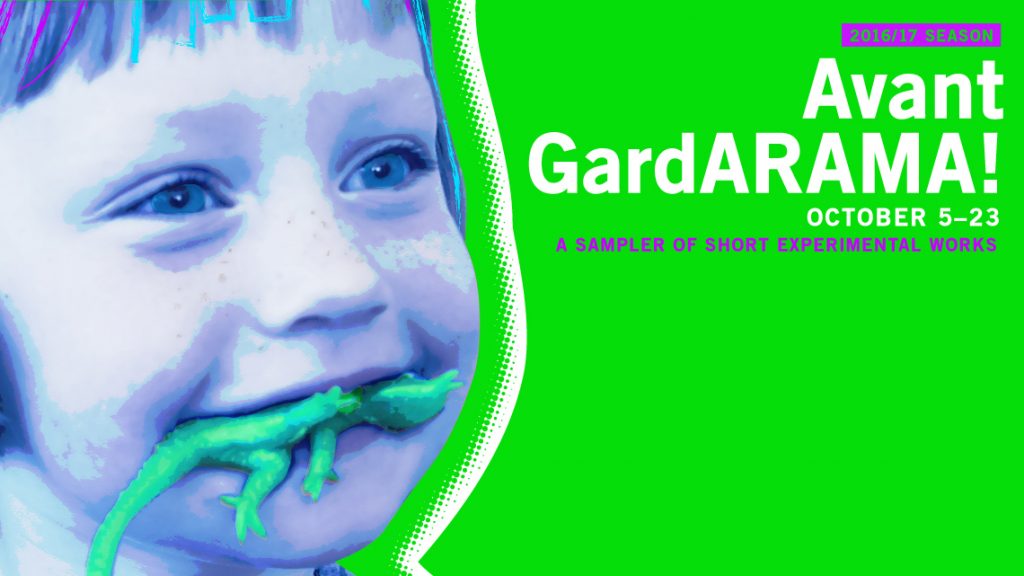
The Cutting Ball Theater, one of San Francisco’s most interesting companies, opened its eighteenth season this fall by resuscitating its old AvantgardARAMA series, quiet since 2008, with an anthology of seven short pieces, some of them more or less “plays,” in the traditional sense, some of them more akin to performance art or the kinetic theater explored by such groups as foolsFURY.

As we have come to expect from Cutting Ball, the evening was stimulating even in pieces that only half-worked. There were no masterpieces but also no flops. There was the usual air of over-earnestness and political correctness that mars so much of San Francisco performance, as though art in itself were never quite enough, it always must always prove its virtue (no doubt a cross between the curse of foundation grants, the eternal American Puritanism even among the promiscuous atheists of the left, and the political hysteria that lies like a perpetual fogbank over the City by the Bay); nevertheless, the production is a must-see for anyone curious about the local theatrical avant-garde.

Cutting Ball advertises these pieces as showcasing the directors – which is fine, for the direction generally worked, sometimes keenly so, and in two of the pieces, the directors were either creators or co-creators. But I was a little puzzled. The essence of theater is not the director, as such – it is, of course, the writer (I use this term, in the abstract, to mean any theatrical creator whose work is basically off the stage). Without a writer, there is no theater – and in experimental theater, it is the writer who gives everybody else something to play with in the first place. The director (whose fundamental work takes place on the stage) is essential for any performance. But a director can do nothing with a bad or nonexistent script – that “something” which was created off the stage, however tenuous it may be – even if it was something he or she created.

And when theatrical works are being premiered – or when it can be fairly certain that the audience, for the most part, has never seen other versions of these works – it is the writers (the “creators”) who are being showcased.

That said, the direction was, as we have come to expect from Cutting Ball, energetic and adroit, though it could have made some of the pieces’ points clearer.

Of the seven pieces on show this season, the strongest, arguably, was the third: “An Evening with Activists,” written by Yussef El Guindi and directed by Rem Myers. Guindi is a past recipient of the Middle East America Distinguished Playwright Award, and it’s clear why.

His piece is an absurdist descent into a dysfunctional marriage between a baffled, spineless but well-meaning Arab named Kamal (according to the script, this means “perfection” in Arabic), played  by Kunal Prasad, and a lily-white, self-righteous, overbearing, entitled left-wing activist (but is there any other kind?), played by Michelle Drexler, with the late addition of a smug, manipulative, soul-destroying right-wing neocon (played, with convincing malice, by Kevin Glass) and a deus ex machina in the form of a mindful, mind-melding sock-puppet dolphin who, for all his compassion, effectively shows Kamal what having a spine means when you are playing politics (there will be no spoilers here).

Despite an early descent into tastelessness (disappointing husband as convenient vomitorium does not a vital coup de théâtre make) it was the most memorable work of the evening, particularly as it worked most effectively as a play.

This was one of two half-hourish pieces; the other, called “The Wasps” (written by Guy Zimmerman and directed by Paige Rogers), is about Jenna and Barbara Bush, daughters of the opprobrious W. (performed with overbearing accents and white trash panache by Melanie DuPuy and Danielle O’Hare), who are awaiting experimental termination by unknown forces in a laboratory after the world has finally been devastated by climate change.

They chatter absurdities, by turn delirious, lyrical, witty, catty, cold, prideful, sexy, and paranoid, careening between the wise and the bizarre, and dance, dance, dance – as though their dancing is all that still keeps the world alive. A cleverly conceived, sometimes brilliantly written piece (though unnecessarily opaque – I didn’t really get what it was all about till I read the press release later – and the program notes provide no help whatsoever), it goes on too long: from mid-point onward, having made its basic philosophical and poetic points, it doesn’t seem to know where to go, so it repeats itself and ends, as T.S. Eliot predicted the world would, with a whimper. But there is many a bright moment along the way.

The shorter pieces contained some of the evening’s most memorable moments. The evening opened with a duet between the two halves of Virginia Woolf’s divided self (this was written by Susan Terris, directed by Carlos Mendoza and performed by Melanie DuPuy and Danielle O’Hare, who didn’t inhabit British mannerisms as comfortably as the dusty, waspish Texas poses of Zimmerman’s piece).

This was followed by a fascinating if not exactly transparent solo piece (created by performer Valentina Ermeri and director Beatrice Basso), written in English and Italian, that seemed to be about a childhood rape and the breaking of the protagonist’s self into “pezzeti” – fragments that may nevcr be pieced back together. It features a long, thick rope (probably a more germane prop than the teddy bear promised in the press release) that the soloist drags about with her and hugs, as she babbles with a kind of insatiable and insane lyricism – the rope ominously suggesting both a horrifically serpentine phallus and a noose from which the splintered protagonist may one day hang.

A contemporary evening of experimental plays would be incomplete without a satire on the breathtaking crudities of our political moment, in this case woven together in a polyphony of internet videos and voiceovers and performed in dance and oratory by Hillary and Donald surrogates, Louis Acquisto and Suzy Myre, who collaborated with choreographer and directer Katerina Wong. “Crooked and Dangerous” was the evening’s bon-bon.

One of the pieces was written in Spanish (with English supertitles): a lyrical exposition (based partly on Francisco Garcia Lorca’s notorious work of “impossible theater,” “An Audience”) of the vagaries of love between a straight Spanish woman who is infatuated with him and the gay poet, and the terrible way he died, during the Spanish Civil War, not only for his politics, but above all and most brutally for his homosexuality. Maria Velasco wrote (Daniel Sullivan translated for the supertitles) and Sonia Sebastian directed “Lorca al vacio”; Xavier Galando played Lorca and Erika Yanin Peréz played his frustrated paramour.

A charming surprise was “Inkwell,” which in four satisfying minutes gives us a writer who escapes into the rhetoric of the past while his muse – and a crocodile – keep trying to drag him back (in one case, literally) into the flatness, blankness, and integrity of the reality about which he must write. This was written by sixteen-year-old Isaac Schott-Rosenfield and directed by his teacher, Isaiah Dufort. I look forward to more plays from Mr. Schott-Rosenfield. The lesson of his play struck a nerve.

All of the plays in this anthology struck a nerve, some more effectively, some less so. But they all left us something to take home with them, think about and argue over. I can’t think of a better reason to go to the theater.

_____

Christopher Bernard is author of two novels, A Spy in the Ruins and Voyage to a Phantom City, and of the play “The Beast & Mr. James.” His new collection of poems, Chien Lunatique, is forthcoming from Regent Press. Mr. Bernard is also co-editor of the webzine Caveat Lector.

Synchronized Chaos October 2016: Love, Loss, and Rebirth

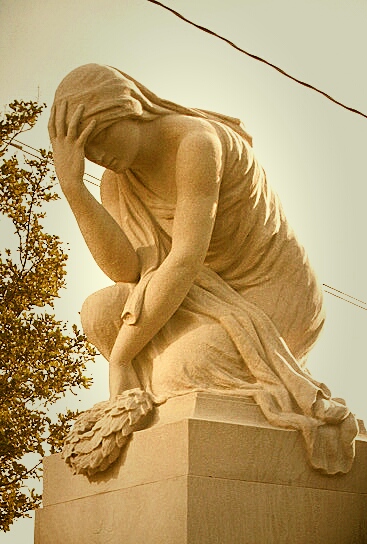
"The Weeper in Ivory" by V. Fairuz

“The Weeper in Ivory” cemetery photo by V. Fairuz

When the wheel of the year rolls over to autumn and the holiday season draws near, chilly weather and indoor activities can cause many people to become more introspective about the age old mysteries of love and loss. Being heavily affected by temperature changes, this is certainly true for me. I find myself drinking copious amounts of hot cocoa and chai and taking more breaks from work to snuggle up with heart-rending poetry or a good tale as I prepare for Halloween and Samhain.

As we plunge deep into the time of year when the major crops (here in the U.S.) are giving up their final fruits and home gardens are being prepared to be bedded down for the winter, I remind myself that though the vegetation is losing its vitality to strong winds and nippy atmosphere, everything will be reborn again in the spring– strong, vibrant and resilient as always.

In this “Love, Loss and Rebirth” issue of Synchronized Chaos we present to you accounts of the erosion of love and confidence in both society and in oneself. These timely pieces drive at the heart of the matter in excruciating detail, yet we must remember there is hope in this life. In telling these stories our minds are opened to different ways of thinking, drawing forth renewed compassion for others, the knowledge that we are not alone in our suffering, and the realization that the proverbial “light at the end of the tunnel” may not be as far off as we may have thought.

This issue’s contributors bring us a prism’s spectrum of musings into the human spirit, like John Grochalski’s thoughtful lament on the deficit of civility between strangers in today’s world and Michael Paul Hogan’s short sea-side tale hinging on unrequited admiration.

From Nina Berggren comes a staggering exploration of alienation of the self in the midst of a society that views disability and poverty with scorn, while poetry from Neil Ellman examines losing oneself to the relentless march of time while struggling to love what is left. Ellman reveals how love can transform a person from the ordinary to the saintly. Both Mahbub and Sheikha A. bring us haunting, endearing poems of beauty, joy, possession, and ethereal deprivation. Michael Robinson shows us optimism and renewal conveyed with well-placed, elegant phrasing.

The struggles of youth against a world that wishes to annihilate them and respect for the wisdom of elderhood are central elements of the poems by PW Covington, making these works particularly poignant at a time in U.S. history where we’re struggling to keep the American Experiment afloat.

Synchronized Chaos’ own Cristina Deptula reminds us of the importance of allowing oneself time to center and rejuvenate– especially after fighting the good fight aiding those who have lost much in life, and Patrick Ward offers up an uncanny bouquet of dark poetry regarding ghostly miasma left after a tragic death, the heart-wrenching pain of being unloved… and the frightening duplicity of clowns.

And finally, Joan Beebe brings us deliciously descriptive poems welcoming the onset of fall, and a short inspirational essay about turning personal devastation into hope.

On a lighter note we have a poetic and oddly hilarious tale of fatal hubris from Christopher Bernard, Michael Marrotti’s humorous short essay displaying a great way to rattle minds at open mics, and a satirical piece from Donal Mahoney whose protagonist readers will find unsettlingly familiar.

Jaylan Salah interviews engineer turned stuntman Brady Romberg about the history and trials of the industry, and Elizabeth Hughes’ Book Periscope column announces the release of Kathrine LaFleur’s sword-and-sorcery fantasy novel Moonlight Hunting, book two of the Cardonian Chronicles.

This issue’s autumnal cornucopia is overflowing with thought-provoking literary treats, so grab a hot drink, a warm blanket (and maybe a little Halloween candy!) and settle in for a bittersweet hayride of thrilling and insightful reads.

V. Fairuz is a multidisciplinary artist, copy editor, and writer. She is also a fan of the Oxford comma because clarity is key. Her online writing and editing landing pad can be found at her blog The Dog-Eared Dragon.