Poetry from Gabriella Garofalo

And that’s how she sees the East:
The blue hunger where a child fell asleep,
A theatre actor drank himself to stupor, maybe death,
A teacher misplaced his tablet, mobile and life,
A silent man gazed at her through fear and rioting cells -
Water, mist, who cares, it happened
When she was waiting for light to get a move on
And jet her branches, for days to disperse
In white hunger or nipped desire -
Do come in, please take a seat,
Shift branches from the table,
Shift fractious lights, I know, it’s the prophet’s fire,
Don’t ask ‘Souls get lost in blue, is it fair’,
Don’t ask ‘Are mothers risk or Lethe
When averse limbs and snowy manes invade’ -
Demise, the wind won’t listen if you run
Through white pages, through life tearing apart
Words, grass -
Even the moon halts in a truce wonkier than sunrise,
Green hunger where women sport
Sharp features or white doughy jowls :
Do they look like vipers or pancakes?
Whatever -
Each sunset deserves a long wild wake.
I said ‘Go, naked soul’
To the night silence fading in blue
Where hunger led her and her likes:
To crave a Cyclops, a freak,
To surprise chimera parties, over there
You can see words, the freaked pedestrians
Opposite traffic lights: waste, loss, demise,
Or dawdlers lost in a maze, the only signs being
Babies ravaging mothers or teats,
Butterflies asking spent flowers for more -
So, did you find them in a junk shop?
Nice, ok, but what are they for,
Look, it wasn’t that bad when I was a child
And stared at them for a long while,
Their eyes swamps of blue tenderness
As they said their name, life or demise?
Whatever, handle with care,
Such bloody high maintenance!
And you don’t fret, soul, if your eyes
Scare the beejeesus out of them,
Stay here and let Cassandra hide -
I know, wasn’t he lucky with such friends
Who tied him up to the mast
While the song went unfazed -
Mind, we are not, too much time on their hands
Those three guys or that light
Doesn’t call it quits, who knows,
More power to her, we’ll make do
With a merry parade of bright-coloured
Bedding and words -
Things changed for worse? Maybe,
But colours we’ve got and a vagrant light:
Enough for a shelter? I dunno -
Oh, so sorry, dear soul.
That sticky love of mothers?
Thanks but no thanks,
Time kindles himself through his offspring,
No one knows his father -
A bastard, but stick to him
And you’ll dash to death like a child
To windswept spring grass -
Flowers and butterflies, hopes?
No, lest she go wild,
Ban out the silence,
At best cast some embers -
Blessed abundance went missing at last -
To think you saw the harshness of flowers
As a force, to think you arranged rituals
For the goddess of harvest -
Look at you now, helpless in a maze
Of pomegranates and misleading oaths -
Who’s to blame, blue or demise?
Nonsense, blue came to help,
Stones didn’t sneak off
And where’s the point in music, cider,
Sweet gifts from your friends -
She falls asleep out of the blue:
End of books, end of packed rooms
As the tangled veins show you
Her true gift -
Deep silence at night
When colours sell themselves cheap,
Yet stars insist on a sky blank of zest
And blue light says “to every night its moon”,
Yes, yes, but get you fruitful, fear,
Dig graves, dig words,
Forget wintry souls:
Even fire skips them when diving
Through roads, squares, signs -
You’ve given enough -
Stop it now.

Born in Italy some decades ago, Gabriella fell in love with the English language at six, soon after she had started writing poems (in Italian). She has contributed to a number of national and international  magazines and anthologies, and is the author of Lo sguardo di Orfeo, L’inverno di vetro, Di altre stelle polari , Casa di erba’, and in English, A Blue Soul and Blue Branches.
Poetry from J.D. DeHart

Hollow

My name is not
the hollow where I ran, brushing
past leaves, leaping away
from hornet nests, collecting
thick husks and seed pods
My name is not
the echo of a gunshot
across observing mountains,
or the cut of a trail through
thick undergrowth, looking
for wild signs
All of these elements
comprise my story, compose
my mind, but none of them
name me completely.

Dementia

Restless, she roamed
the streets and night, crooning
about ex-lovers, holding
on to fragments of memory,
half-remembered faces, names
that no longer held meaning,
floating like party favors
drawing her back down to earth
with the promise of a history

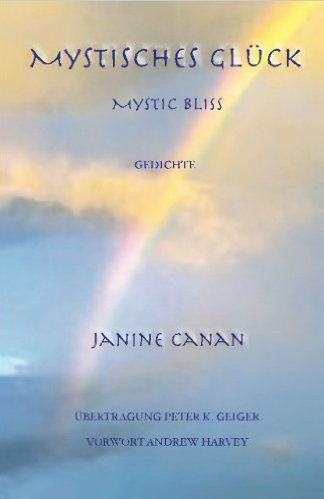
Jaylan Salah reviews Janine Canan’s book Mystic Bliss

Mystic Bliss: Janine Canan’s Mysterious Skin

Janine Canan's Mysterious Bliss

Janine Canan’s Mysterious Bliss


On her newest poetry collection “Mystic Bliss”, Janine Canan continues to shine through her dedication to Earth –and my humble self, on my signed copy only- her reflections on life, the self, the damage done to women and how they can rise above.

The collection is bilingually translated to German, which mirrors Canan’s devotion to a pan-cultural presence, and a more solid sense of self through her universal meditation on women, God and humanity.

In her sharp, abrupt use of imagery, Canan’s language seems heavily influenced by the Dickinsonian style. Canan is not generous with her words. She uses the shortest form of the written verse to express the meaning she tries to convey. Her meanings, profound as they are, carry the syntax which she masterfully desires. The abundance of layers makes up for the more intentional themes viewed as unfavorable forwardness in some poems such as “Prayer” and Streams”.

Canan’s poems vary from simple, mundane expressions of monotone feelings “Sorrow”, “Stages of Woman”, “Mirror” to the more mysterious ones, laden with complex meanings and oozing with thousand methods for deciphering the subtext. Among those that shine is “Consciousness” in which she ends the poem with a bang;

before we know

we are god

There’s also the emotionally-charged “Headless” which is a testament to the violence women face on a daily basis, or “Idiot’s guide to survival” which mourns the destruction of Earth by the hands of men.

Despite the eerie feelings Canan’s poetry could evoke in you, she always ends on a high note. Like a prophetess her message was not to be a warner, but a herald of glad tidings onto people who will listen to her. So listen closely to what she has to say, for her words would definitely be

inscribed on your soul

in lasting Light

Janine Canan’s Mysterious Bliss is available here.

Poetry from William Blome

WOONSOCKET

Little Woonsocket, little Woonsocket, you’re still figuratively bigger
than a Pomeranian or an Indigo Bunting,
and plumbers here a century back moved out
on horse-drawn carts and carried decent rubber plungers
underneath their hairy arms, and they sported rubber boots
that many-a-time father made to double
as waders come Rhode Island’s snarking trout season.

Little Woonsocket, little Woonsocket, I screamed into town this morning
as two rippling, chunky women were doing boom-box calisthenics
at the end of the open road, up against the city’s lesser gates,
and the only thing I had in my car to barter oral pleasure
was a one-third empty jeroboam of Carlo Rossi red,
though as shit and sweet fortune would have it,
that was more than enough to spear the black girl’s thong
for later framing and ridiculous mounting
as high as I can reach up walls in daddy’s fireplace-d den.

Continue reading

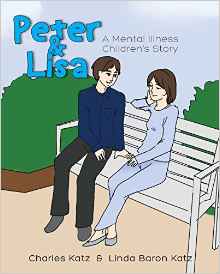
Lewis Mark Grimes reviews Linda and Charles Katz’ children’s book Peter and Lisa

Peter and Lisa by Linda and Charles Katz
peterandlisa
Thank you for the opportunity to read this prescriptive children’s book. I was impressed. This is a difficult subject to undertake. It’s necessary writing and important. As a genre, there may be a terrific need for books for children like this. I don’t ordinarily read this category. Therefore I may be a poor judge or at least irrelevant. I did sell some children’s lit as an agent, so I’m not without some credibility.
I loved the illustrations. They are moody and evocative. The idea was interesting. I wondered if the authors had shown their text to any pediatric psychiatrists? I raise this in response to the choice to describe depression by other phrases. If we as adults have attached stigma to a word such as depression, why would we want to reinforce that in possibly the first book a child might reach for?
I also wondered if the authors had shown the book to librarians in the juvenile room? Since I am not reading juvenile literary works any more, let me just part by saying there is a positive need for books like this. I hope Peter & Lisa leads the pack.

Poetry from Patrick Ward

AUTUMN’S RAIN

There’s a certain time of year that the rain drops take on different colors.
Instead of falling from the sky, it falls from the trees.
Taking on the form of leaves, with the whistling wind,
driving them in the direction that it wants them to go.
Drifting away in a rapid dance,
they float into the middle of nowhere.
Until the rain of many colors.
reaches their final resting place.

*****

MINGLED GESTURES

The voices of careless words pollute the air.
Someone who is sensitive might happen to be there.
Among the crowd some gesture, while others stare.
Somewhere in the midst of the crowd is a hidden snare.
Tender hearts sometimes are misplaced.
Wounded gestures received in the memory can’t be replaced.
In the mind of the sensitive they’re hard to erase.
It’s difficult when confronted face to face.
Senseless gestures fill the soul.
As negative thoughts roll.
By the act of the will.
Gestures are removed, and joy is fulfilled.

*****

Continue reading

Elizabeth Hughes’ Book Periscope

villageofbones

The Village of Bones, by Mary Mackey, is a fantasy that is definitely a must read. it is the prequel to the Earthsong series. It is the story of Sabalah who is a young woman who desires more than anything to conceive a child. She is given a vision she will conceive a magical child; however, she must leave her village and everyone she loves there. So, Sabalah and her lover leave. What follows will keep you on the edge of your seats to the very last page. This is definitely Mary Mackey at her best.

Book is available here.