Poetry from Tony Longshanks LeTigre

AT LAST OUR WAYWARD SON GRASPS THE GLORY OF FIREWORKS
 
 
“Happy Fourth, baby,”
said a woman I didn’t know,
as we passed one another on the Hawthorne bridge
 
(See, being nice is cool:
you Californians should try it some time*)
 
This isn’t usually my thing, either—
this jingoistic pageant of stars & stripes
& children with cherrybombs making more noise than usual
& “God Bless the USA” blaring from the publicly funded
& ridiculously underutilized PA system
 
(Let me pick the music next time—
“Rocket,” by Goldfrapp, shimmering over the water
as the fireworks display crests to its climax!)
 
Truth be told, I prefer the geese sailing serenely
breastdown on the water to the braying obnoxiousness of human beings;
birds, like most sensible critters,
for all their euphonious prolixity at the ripe hours,
also evince a respect for silence that a writer can’t fail to admire
 
But for once, I’m going to check all the baggage of my discontent
at the star-spangled door & go with the gaudy flow,
because it’s damn near 100 degrees,
& the river feels like the ocean on Maui,
& they say it’s safe to swim in now,
since they figured out that pumping raw sewage 
& dubious chemicals into the city’s water main liquid artery
—source of all life & our most precious resource—
was probably a bad idea

Continue reading

Ryan Hodge’s Play/Write column

PW_Banner_LT

-Ryan J. Hodge

For someone who enjoys a great story, is there anything better than a narrative that engages you from the very start? Imagine a world so rich you can almost smell the scents in the air, a delivery so clever it forces you to think in a way you never thought you would. I’m Ryan J. Hodge, author, and I’d like to talk to you about…Video Games.

Yes, Video Games. Those series of ‘bloops’ and blinking lights that –at least a while ago- society had seemed to convince itself had no redeeming qualities whatsoever. In this article series, I’m going to discuss how Donkey Kong, Grand Theft Auto, Call of Duty and even Candy Crush can change the way we tell stories forever.

What Videogames Teach Us About Writing for Religion

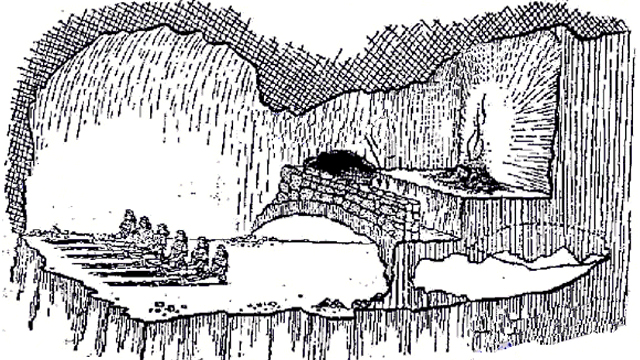
Those who have committed to even a cursory study of philosophy have probably been introduced to something known as ‘The Allegory of the Cave”. This mental exercise, proposed by the Greek Philosopher Socrates, supposes that is a group of men were restrained from birth to stare at the wall of a cave; their perception of reality would only be that of the shadows reflected on that wall. It further supposes that if one of those restrained were to be released and shown reality beyond the cave, should he ever return to his comrades, they would actively attempt to silence him –including killing him, if necessary.

The_Cave

Continue reading

Novel excerpt from Giorgio Borroni

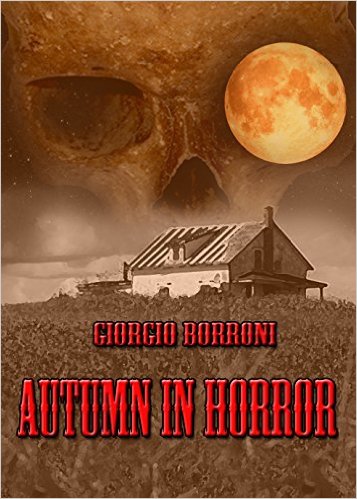
Autumn in Horror

By Giorgio Borroni

autumninhorror

He picked up a hammer, looking at it as if struck by a brilliant idea: “Can I play with him? Can I nail him down like Jesus?”

Jessica smiled, shaking her head. Now more than ever, they looked like siblings.

“Come on, you idiot!” she told him, “Use the duct tape instead. We’ll tie him to the chair and we’ll make him spill the beans so he’ll tell us where he keeps the money.”

Alfio saw them tie the old man’s hands behind his back, whose thick white hair dangled over his chest, then they moved on to the ankles, which were fastened to the chair’s legs.

When they finished, the light of the crystal chandelier, covered in spider webs, trembled and turned off for a couple of seconds before turning back on again.

Alfio realized that he was not dreaming: this wasn’t a junkie delirium. Everything was happening for real.

This room with rotten green wallpaper seemed to squeeze him, he felt as though his lungs were deprived of air.

While cold sweat dripped down his forehead and locks of hair stuck to his temples and cheeks, he struggled to breathe oxygen, but more than ever that sickly and rank smell turned his stomach.

He looked at his hand, which was still holding the crowbar. It was his own, but by now it hurt because of how much he was grasping it, and he shivered like a leaf.

Continue reading

Synchronized Chaos July 2015: Back to the Drawing Board

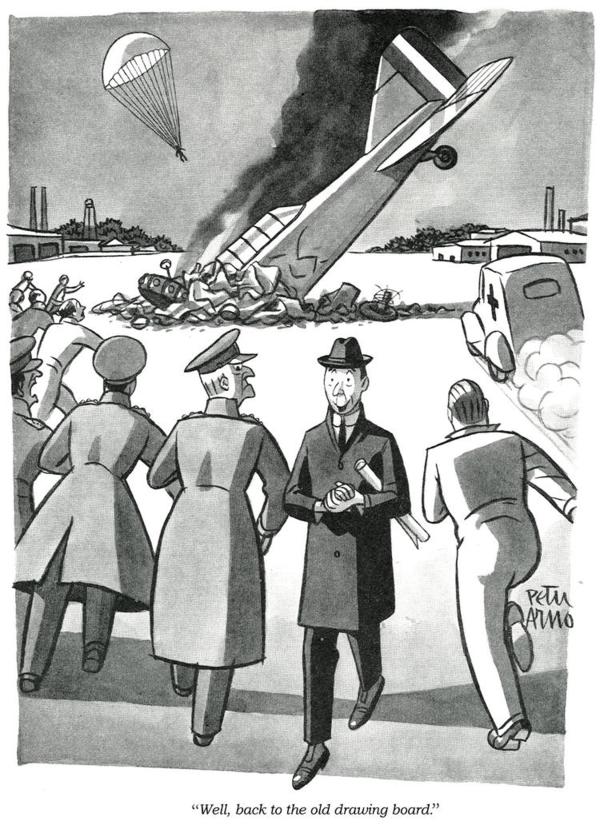
The phrase ‘back to the drawing board’ came into popular usage in 1941 with a Peter Arno cartoon in the New Yorker showing engineers walking away from a plane crash as the passengers and crew exited by parachute. The concept reflects optimism, choosing to rethink plans rather than give up in the face of a setback.

This month’s contributors return to the drawing board in a variety of ways. Brothers Burt and Dick Rutan, pioneers in experimental aviation, literally went back to the schematics many times while designing and constructing the plane for the Voyager Aircraft initiative, which eventually circled the globe without refueling. As technology industry veteran W. David Schwaderer outlined in his May talk to volunteers at the Chabot Space and Science Center in Oakland, CA, reviewed by Cristina Deptula, the Rutan brothers ended up having to rework not only the Voyager’s physical design but also the project’s funding sources, time frame, and itinerary. The entire initiative always seemed to be in a constant state of flux, repair and adaptation until its final landing at the Edwards Air Force Base.

Poetry from Tony Longshanks LeTigre echoes the spirit of the Rutan brothers, as his speaker continues down a path after a marked dead end and then sets up an authentic life within a makeshift home. Shelby Stephenson reviews poet Lester Graves Lennon’s new book My Father was a Poet, inspired by Lennon’s discovery of his late father’s writing. Mr. Lennon’s father was also a man of perseverance, as he worked hard on his family’s farm in the rural American South, helped raise many children and ultimately lost his eyesight, yet found the time to create insightful words. Shelby Stephenson also reviews North Carolina Poet Laureate Ronald H. Bayes’ new collection Earthen Musicillustrating how Bayes celebrates the sound and beauty of the English language.

Joan Beebe reviews two novels from Larry Higdon, The Storms of Deliverance and The School from Hell, both with a theme of rebuilding. We see an addicted man put his life together while dealing with alcohol-induced amnesia, and a discouraged young schoolteacher in a poor country area find hope through getting to know a fourth grade student. Beebe also contributes original poetry, shining a light on German-Americans suffering the stigma of being wrongly associated with Hitler’s regime, celebrating the United States on its July 4th Independence Day, and evoking the wanderlust conveyed by the sight and sound of a train.

Ryan Hodge, in his monthly Play/Write column exploring the intersection of literature, life and video games, points out how several old-fashioned video games and science fiction and fantasy novels reveal that the dystopian governments may not be as powerful as they seem. The authorities invest in making examples of isolated rebels to show that they are in control when in fact they are vulnerable to overthrow by a large enough group of people. In order to win these games, and perhaps to make changes to real-life systems of power, we rebels need to evaluate the situation and rethink our approaches to the conflict.

In her monthly Book Periscope column, Elizabeth Hughes reviews Adam Sachs’ novel Three Yards and a Plate of Mullet, about a young boy so fascinated with sports that he turned his interest into a career as a reporter covering local high school football games in his Florida hometown. Three Yards is a novel of suspense and nostalgic glory, both for big game schools and the shared excitement of cheering for the home team and for old-fashioned journalism, in the 1980s still conducted inside newsrooms and published on stacks of inky newsprint, where even a new cub reporter could make a difference by investigating and uncovering a scandal. As the news industry struggles to adapt to new economic and technological realities, these paeans to days gone by will hopefully inspire a return to the newsroom’s drawing board rather than a surrender of the ideals of reportage.

Kahlil Crawford interviews Leland Ware, founder of the 48Blocks blog, which discusses new trends in skateboarding and hip hop music. Ware urges his readers to remember that skateboarding is an art, and to stay original and authentic with whatever art forms they pursue. To him, much mainstream hip hop lacks creativity and should be invigorated with fresh voices.

Finally, Christopher Bernard gives us a poetic dialogue between the human soul and brain as the two meet in an independent artsy coffeeshop, discussing the relative merits of technical inventions, logic and material progress over idealized thought, meaning, human connection and intuition. In this piece, inspired by Pope Francis’ recent comments on climate change and the environment, Bernard invites us to reconsider and embrace aspects of life and our psyches he feels have been neglected.

FYI we are hosting a reception Tuesday July 14th, 6-8 pm at Oakland’s Octopus Literary Salon, 2101 Webster Street near Lake Merritt. Lewis Mark Grimes, artist who creates unique ‘feather rishi’ Egyptian inspired patterns from peafowl feathers printed on silk scarves, will come up from Southern California for this event to show off his work. All others are invited to read, bring books to sell and share, or just enjoy food and drinks and conversation.

Here’s the Facebook event page: https://www.facebook.com/events/484597488362766/ RSVP appreciated but not required.

Also, our colleague in Portugal, poet and software developer Rui Carvalho, hosts a poetry contest on his blog and invites all writers to participate. Our magazine staff will provide editorial expertise to judge this competition and provide free writing coaching to the runners-up.

International Literary Contest: Poems and Tales for Nature 2015

Competition Adjudicator: Rui M. Carvalho

Prize-giving will be by the end of October 2015 using the web and the website where the results will be displayed.

For further details, rules & entry form visit http://talesforlove.blogs.sapo.pt
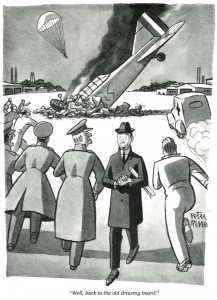
 

Peter Arno cartoon from the New Yorker, May 1, 1941.

Peter Arno cartoon from the New Yorker, May 1, 1941.
Kahlil Crawford interviews 48blocks.com founder Leland Ware

One of my early literary/skating influences was 48blocks.com founder Leland Ware. Leland was a bit more cosmopolitan than most of us; and you’d be hard-pressed to come across him doing anything unrelated to writing/skating in some way, shape or form. I reached out to him recently to see what’s up..

KC: Sup man, it’s been a minute – too long to fully catch up, but what’s been up in a nutshell?

LW: Wow, a lot of things have happened. Highlights include starting my blog 48blocks.com in 2006 and having that get recognized in skating and then starting to work full-time in the industry in 2008. I had a contract with Interscope Records in 2008 and was working as the Editor-In-Chief for this site called SteeloHero.com that they pulled the plug on after a year. Then in 2011 I left San Francisco and moved to LA to work as a staff writer at the Berrics and in 2012 I moved down to San Diego to work as the Content Manager at The Kayo Corp. Kayo makes DGK skateboards, Expedition Skateboards, Organika Skateboards, and Gold Wheels. I run the website, online store, do all of the marketing writing, and help come up with ideas to creatively market our products. We also do a quarterly magazine and I do most of the writing and editing for that. It’s been 3 1/2 years and things are going well. It’s cool cause DGK is really big in skateboarding, but also really connected with Hip Hop as well – so my job works with two cultures that I’ve always been really passionate about; which is definitely a blessing.

KC: Riteon, Bro. You have been on the scene for quite a long time. What keeps you motivated?

LW: I’m really inspired by art, music, photography, and film – so I guess my biggest motivation is being around creative people that are doing cool projects in those realms. I’ve gotten to meet quite a few of my heroes through being involved in skateboarding and the culture that surrounds it – people like Spike Jonze, Sean Cliver, Marc McKee, Tobin Yelland, Ed Templeton, and many more were all people that I looked up to growing up; so getting the opportunity to meet and talk to them over the years has been inspirational. Outside of that, just getting the opportunity to contribute creatively to various projects and work with things that I’m passionate about gets me hyped to get out of bed in the morning.

KC: Word. You put me on to mad flavor back in the day. Who/what would you say are your primary influences?

LW: Man, so many people and things have been influential to me. Definitely Larry Clark and Harmony Korine and the movieKIDS – that was such a raw and honest portrayal of the scene back in the mid-90’s. Everything Spike Jonze has ever done has been amazing. The brand Supreme and pretty much everything that they’ve done over the years, they’re the perfect marriage of street culture and high fashion and have managed to remain on the forefront of those cultures for over twenty years. Early World Industries stuff – the artwork of Sean Cliver and Marc Mckee, and Steve Rocco’s “us against the world” aesthetic, along with Big Brother magazine were highly influential to me growing up. Girl and Chocolate skateboards – the artwork of Andy Jenkins, Evan Hecox, and The Art Dump. San Francisco, LA, and New York and all of the cool stuff that comes out of those cities. Mark Gonzales as a skater, artist, and creator. Chris Pastras and Jason Lee and early Stereo Skateboards stuff – that got me into jazz music and the Blue Note design aesthetic. Basquiat, Warhol, Ricky Powell… I could go on for days, there’s really too many things to mention; but my influences are all over the place.

KC: Speaking of KIDS & Basquiat, hip-hop culture’s morphed quite a bit in the last 20. What’s your take?

LW: I have a love / hate relationship with hip hop. I don’t like most of the new stuff that’s on the radio – it’s super dumbed down and pretty mindless. When people started just repeating themselves and not really rhyming, I kind of got over it – but then there’s newer stuff like Earl Sweatshirt and Run The Jewels that’s amazing. I guess my take is that hip hop became mainstream and like most mainstream things it got watered down for the masses. I still listen to all of the old 90’s stuff and I try to seek out new stuff that’s good. I like early Kid Cudi and Wale when they were both just mixtape artists. Odd Future is dope. I listen to all different types of music though, especially now that I’m older – I spent so much of my life only listening to hip hop that I had to branch out and peep other genres. I really like Santigold, TV On The Radio, Modest Mouse, Yeah Yeah Yeah’s, and stuff like that as well.

KC: I hear you. Any advice to the new breed writers/riders?

LW: I would just say pay attention to everything, because you never know where or what you’re going to draw influence from. I would also say surround yourself with positive and creative people, because the wrong energy can really bring you down. I would also say, don’t force things – just let if flow. Like if you’re in the zone to write, then write; but if you’re in the zone to shoot photos, then do that, and if you do art or music then make time for that too – that way you never really get burned out and one thing usually influences the other. As far as skating, you just have to skate all the time if that’s what you want to do – but remember that skating is also an art, so look at older stuff like Mark Gonzales and Jason Lee in Video Days and how they approach tricks. Also, whether it’s skating, writing, photos, art, etc – style is everything, it’s not what you do; but the way that you do it that counts.

48SMALLER

Essay from Christopher Bernard

A Little Talk Between Brain and Soul (Laudato Si’, Pope Francis)

By Christopher Bernard

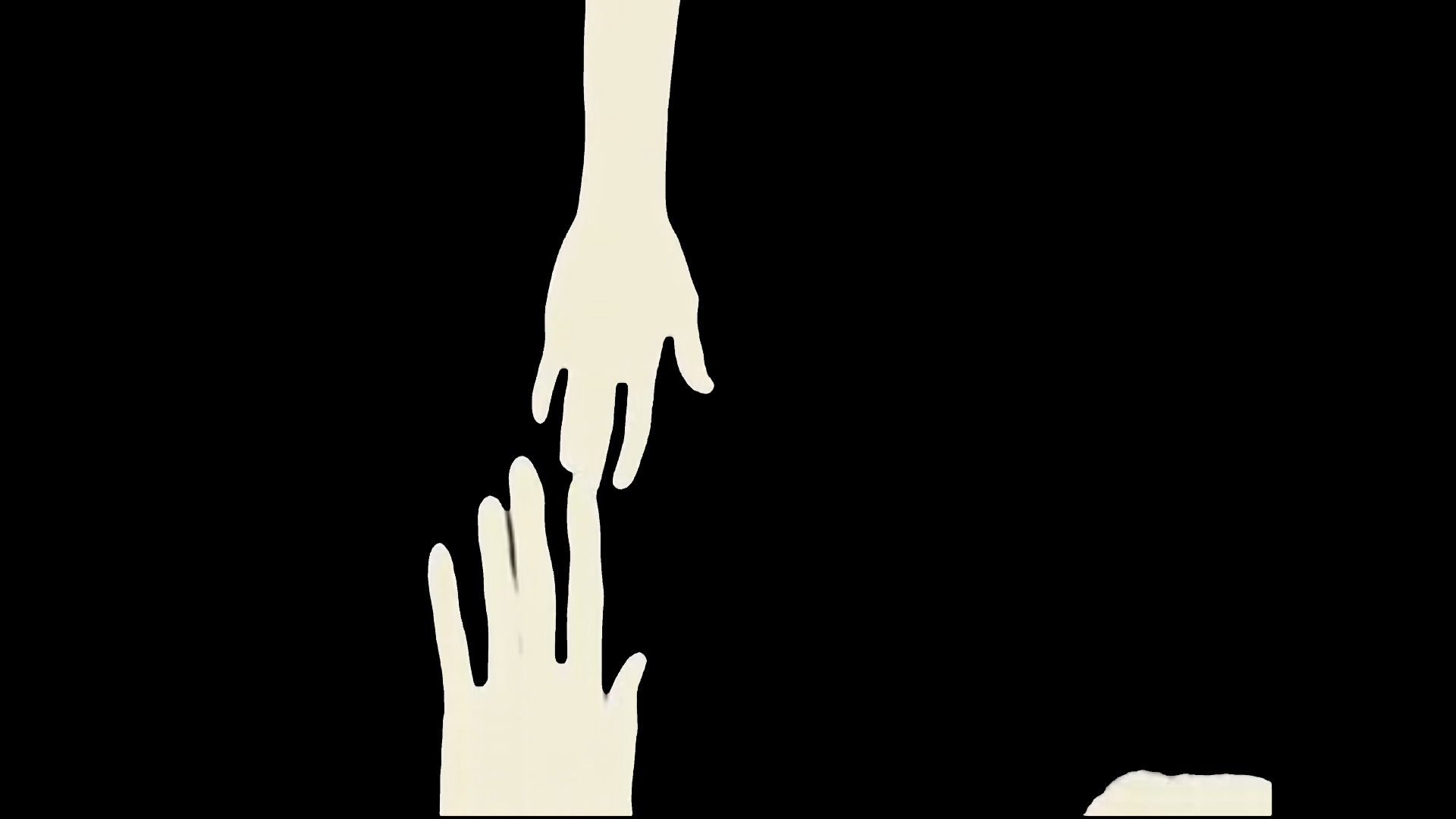
White hands reaching out to touch each other against a black background

The Brain and the Soul are meeting at Philz. The Brain is dressed in computer geek togs: leopard-style TV glasses, a shaved head, a tee-shirt reading Code Earth, leatherette flip-flops, and ragged but expensive-looking jeans. He has an iPad in one hand loaded with a document he is making sure Soul doesn’t see, and the latest iPhone in the other, which he consults every so often to fact check. The Soul is dressed simply in a white shift and sandals, and wears a warm smile. The only possession she brings with her is a ring on her left hand. She is near-sighted and occasionally squints.

We find them already in mid-conversation. The Brain is doing what he does best: talking nonstop.

The Brain:
(Thinking: Got to speak in antiquated tropes,
pre-memes and metalanguages
and undeconstructed syntagms,
but that’s the only
parole and langue coding that
my ol’ prefrontal-cortex-challenged friend Soul
gets.)

“And” “I” “bring” “good” “news.”
(“Does” “that” “ring” “a” “bell”?)
“Guess” “what”?

(Soul smiles even more broadly.)

“You” “don’t” “have” “to” “be”
“a” “scaredy” “cat” “anymore”:
“There” “is” (!)
“no”
“hell!”

(Soul grins happily.)

Continue reading

Shelby Stephenson reviews Lester Graves Lennon’s book My Father was a Poet

LESTER GRAVES LENNON

Translating his father’s Braille, Lester Graves Lennon’s My Father Was a Poet (CW Books, Cincinnati, Ohio) questions who we are as human beings who want to make a difference in a world permanent with bliss and pain. Lennon’s gutsy poems turn family history and color-line into words natural as wind and sun, rain and earth around his father’s grave in Whiteville, North Carolina.

My Father’s Father’s Children

My father’s father, Mack, a rough shrewd son

of freed field slaves, owned a tobacco farm,

thirty years after slavery in Whiteville,

North Carolina. His wife, Aradella,

worked home and soil, gave birth to thirteen children:

D’Ossey, the first born who died at Shaw;

Ben, Quentin, Roscoe – the three who stayed and farmed;

Eva, the youngest all called Tiny Bee;

Bessie, Naomi, Minnie, Lillian,

the four whose high cheek bones and red brown skin

best showed their mother’s mother’s Cherokee

birth; Acy, at four hundred pounds the largest

and closest to my father; Shady Macon,

the youngest boy haunted by crying spells;

Early the first through college; and my father.

Nine shared their field hand grit to earn degrees.

Seven had striking blue-rimmed eyes, the seven

who lost their sight. My father lost his last.

Continue reading