Leah Dearborn reviews Elsie Augustave’s novel The Roving Tree


Review: The Roving Tree by Elsie Augustave

Leah Dearborn

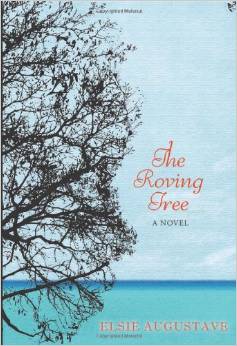
Book cover - Elsie Augustave's The Roving Tree 

The Roving Tree tackles an ambitious scope of issues and themes, from the damaging nature of internalized racism to the impact of heredity versus environment. Adopted from a small Haitian village at the age of five, Iris’ life often reads like an all-too-real fairy tale in a United States poised to enter the Civil Rights Movement.

Iris herself is a very sympathetic character. Forced to bear the baggage of a culture that isn’t even her own by birth, she nevertheless refuses to be victimized by racism. As a child, she’s confronted by many well-meaning (or less so) adults, but struggles to find a place among them. Although The Roving Tree is not the first book to describe such an incident, it’s still shocking when strangers touch Iris’ head without her permission, just to find out what the hair on “those people” feels like.

Continue reading

Elizabeth Hughes’ Book Periscope


Mash Up by Joe Klingler

Cover of Joe Klingler's Mash Up


Mash Up is the follow-up to RATS, also by Joe Klingler. In Mash Up, Detective Qigiq comes to California from Alaska to team up with Detective Kandy of the San Francisco Police Department. They have to find out who is mailing body parts, specifically fingers and an ear, with the message “Don’t Steal Music”. They discover that this coincides with thousands of songs being pirated from the internet. Boxes of fingers start showing up where friends of Sally, the young woman murdered for stealing the music, live.

Detective Qigiq and Kandy also come across the company Silver Platter. The company has introduced a virus that deletes the illegally pirated music files from computers, then disappears before it can be traced. To make Detectives Qigiq and Kandy’s job even more difficult, someone has put up an ad to replace iPods that are “defective”. Then the person sends a replacement with a explosive attached to it. Mash Up is an exciting page turner. You will not want to put this book down until you have read every word on every page. Another five star novel from Mr. Joe Klingler. I highly recommend Mash Up.

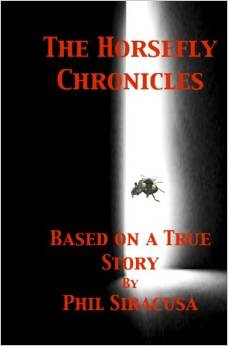
 The Horsefly Chronicles by Phil Siracusa
Cover of Phil Siracusa's Horsefly Chronicles


The Horsefly Chronicles is the first book of Mr. Siracusa’s life of living with the paranormal. He has gone through life with a spiritual entity that is with him always. He talks about doing dark spells, rituals and the use of the Ouija board. He tells of when the Ouija board is used how a portal is opened and can be very dangerous. When the portal opens, there is a chance that dark spirits or demons come through.

In his family’s home there is a spirit named Sara that lives mostly in his closet. Although, Sara has stated there are many more that live in his home. Whenever anything is about to happen a huge horsefly appears. It either flies around him or lands and stares at him. Mr. Siracusa also talks about the weight loss centers he opened and when he worked for the Mafia. He would also do rituals for people who wished to communicate with loved ones who have passed on.

If you are curious about the paranormal and how it can affect someone, I recommend this book. If you are already familiar with the paranormal, I recommend this book. I know you will enjoy the Horsefly Chronicles as much as I have and cannot wait until the next one comes out!

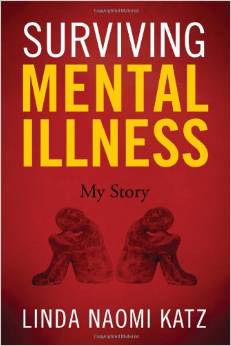
Surviving Mental Illness: My Story by Linda Naomi Katz
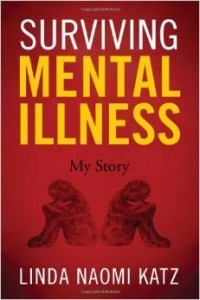
Linda Baron-Katz' Surviving Mental Illness: My Story cover image

Surviving Mental Illness:My Story is the story of author Linda Naomi Katz as she is diagnosed with bipolar disorder and how she learns to live with it and becomes an advocate for the mentally ill. She has included some valuable resources in her book, like NAMI, the National Alliance for Mentally Ill. She meets and marries Charles Katz, and he also has a mental illness. They are able to support and understand each other since they both have some form of mental illness. They learn to work through the hard times in their marriage, which can be hard even without mental illness. They are both very special and brave for learning to overcome these obstacles. Ms. Katz should be commended for everything she has been through and for being able to advocate for the mentally ill. She wants people to understand how they are people too, and can work and live just like people who do not suffer from illness. She works hard to make the stigma and other prejudices a thing of the past.

If you know someone who suffers with any kind of mental illness, you should definitely read this book. You will be able to understand and possibly learn of resources that can be beneficial to your loved one or friend. If you don’t know anyone, this is still an excellent book to read, so, that you may understand and let go of any prejudices you may have toward the mentally ill. I think this is a very good book and recommend it.


Under The Blood Moon by Alexis Kennedy

Under the Blood Moon cover image

 Under the Blood Moon is a fantasy/thriller and the first in a series. Seth, the king of the Lycans, wakes after having a curse put on him 200 years before only to find out that his clan has been killed off. He has to find the right mate that can help him defeat the Prince of Darkness before the Blood Moon and an apocalyptic battle begins. Brad a gypsy of darkness has to find a bride for Prince Armando and awaken him before the Blood Moon to begin the battle. Seth has help from a gypsy fortune teller, Madame Elmira, who warns him that Julia may not be the right mate. Seth argues she must since his amulet showed her everything when she held it. I highly recommend Under the Blood Moon. It is thrilling and will keep the reader on the edge of their seat page after page. I loved this one better than others written in this genre. It has suspense and mystery and will keep the reader wanting more. I am very much looking forward to reading the other books in the series. Thank you Ms. Kennedy, you definitely have a winning series with Under the Blood Moon!


The Price of Love by Maggie Smith

Maggi Craft's book cover for The Price of Love

The Price of Love is an excellent romance novel. The story is about Slayde Price and Arden Simms. In high school, Slayde Price, a football jock, dated Kenedy, the beautiful popular girl and also Arden’s sister. Years later, Arden is enrolled in medical school and after eight years of not taking any breaks, she decides to go to Paris where her sister is living and working a a model. When Arden arrives in Paris at the apartments where her sister lives, she finds out her sister Kenedy is in Milan ona photo shoot. Slayde notices Arden and and to her surprise gives her a hug like they were the best of friends and invites her to his apartment. After awhile they fall in love with each other. When Kenedy comes back she is not at all happy about them being together.

Will Slayde and Arden’s love overcome the obstacles that are thrown their way?! Read The Price of Love and find out what happens in this exciting novel of love and romance. Price of Love will keep the reader wanting more. This book will keep the reader interested page after page. I highly recommend The Price of Love by Maggie Smith. Definitely a five star novel of love!

Misdiagnosed: The Search for Dr. House

(cover available soon!)

Color image of author Nika Beamon

Author Nika C. Beamon

Misdiagnosed: The Search for Dr. House is an excellent book about Ms. Beamon’s search for a diagnosis. She has written it so the story is interesting and keeps the reader interested page after page. She goes through when her symptoms start and how her health deteriorated as she went to doctor after doctor after doctor searching for help, relief from what was happening to her and a diagnosis so healing can begin. She also researched on her own on the internet which is very important when doctors don’t know and won’t admit they don’t know. She includes how difficult it was for her to find and maintain relationships because of her chronic illness especially when she would become seriously ill and need to be taken to the hospital. She had a relationship with one man that lasted quite awhile, but he was out seeing other women also and lying about it to her. She never gave up and persevered until the elusive diagnosis was found. Ms. Beamon includes very
valuable websites and addresses and advice in her book. I highly recommend this book and rate it 5 stars and 2 thumbs up!!

Synchronized Chaos June 2014: Experience Distilled


Welcome to another month’s issue – and Happy Father’s Day to those who wish to celebrate!

This month, the submissions hone in on a particular slice of life: a social group or subculture, or an intense experience, or a singular line of thought. The creators then draw broader observations using that as a starting point.

We begin with Janine Canan’s piece, which invites us to awaken to the experience of life, to become fully present and compassionate.

In her monthly Book Periscope column, Elizabeth Hughes shares three novels that bring us to colorful new worlds while urging us to look inward as well. Joe Klingler’s action thriller RATS explores the lingering consequences of war and the landmines and trauma left behind. William Jefferson’s Messages from Estillyen offers a sanctuary for characters and readers, a forested enclave where monks illuminate old manuscripts, time slows down and people can think. Adam Brown’s Astral Dawn transports readers to a fantastical realm, where good must be defended from camouflaged, vividly terrifying embodiments of evil, into which we can transform when we choose negative thoughts and behavior.

Ayokunle Adeleye, in his monthly column Minding Your Own Business, and his essay “Youths, Save Nigeria,” looks once again at how character and wisdom can guide our personal and commercial ventures. He encourages us to start while young, or bring the purpose and energy of youth to our goals and enterprises.

Several Georgia Southern students bring academic analysis to American subcultures, creating formal social science essays about people who could live next door to them. Moon McCroskey gets to know visiting international students at her university, while Mary Dunaway samples the world of Latin dance. Andrew Perry describes the hidden universe of software engineers, and Chris Kerrigan feels for the beat of hip hop dance. Eleanor Ferrara puts her hand to the keyboard for a game of League of Legends, a popular online roleplaying game, while Anne de Lua sneaks across campus to avoid zombies hiding in plain sight during a round of extreme tag. Kayleigh Hunter visits an elementary school to job-shadow a teacher for a day, and interviews her about what she likes, and doesn’t appreciate, about the classroom.

The topics of some of these essays seem earnest but whimsical, yet hidden meaning lies beneath the descriptions. Anne de Lua points out that Humans vs Zombies: Extreme Tag reminds us not to stop living, even in the face of small and large dangers, and Mary Dunaway and Chris Kerrigan comment on the balance of curiosity and respect necessary to enter into others’ cultures and activities. Eleanor Ferrara looks into concerns about gender and harassment as a female entering a stereotypically male space, and is pleased to find a polite and welcoming environment. Moon McCroskey and Andrew Perry uncover plenty of practicalities driving the decisions people make, in the tech and the educational world. Each essay contributes something to a larger question, of how to create spaces that are both safe and open, where curious newcomers and diverse participants can be accepted, yet the unique character of the space and its culture can remain.

Kayleigh Hunter finds teachers who care about their jobs and students, but who struggle when kids and others disrespect them, and when they end up having to take on roles that others in society used to play, and are not supported in that. Pauline Pang, an immigrant to the USA from Shanghai, also looks into teaching and learning, and the awkwardness that can ensue with changing roles. Her essay is more hopeful overall, but brings up the alienation she felt in China and in the USA, as she never completely fit either culture.

Jordan Taylor writes extensively about her father’s funeral, using the event as a starting point to portray a complex man who drank too much and made plenty of mistakes, but who also stayed married for nearly sixty years and created distinctive memories with his children. The piece conveys how the father and his family journeyed together towards redemption and forgiveness.

Elsie Augustave’s novel The Roving Tree, as reviewed by Susan Maciak, also highlights the strong pull of heritage, whether personal or cultural. The heroine, a young woman of Haitian descent adopted by an American family, finds herself seeking her complex past through volunteer work and personal growth.

Susan Maciak’s own work, Add to Your Edge: 12 Ways to Excel in the 21st Century, focuses on our own ability to take initiative and shape our own destinies. We are influenced by our pasts, but still retain some level of ability to differentiate ourselves as individuals by choosing our own actions and attitudes.

A scattering of poetic selections look deeply into events, and slices of life. John Grey shows us the precarious excitement of a duck hunt, climbing the Rockies by car, and following the call of creativity. John Wesick offers a blend of cleverness, nostalgia and subtle ennui, gently lamenting the departure of aging actresses from the screen, non-wealthy people from San Francisco, and his weekends on Sunday nights.

Stephen Prime peers into a conflicted and complex relationship. Then, he looks at the precarious balance between possessing confidence in ourselves and in our ability to live on through building legacies greater than our own lives, and avoiding hubris so great that we literally outshine the stars with our vanity. Christa Ward’s work crystallizes a moment of intense emotion, where we can empathize with the physical sensations of her speaker even without knowing the situation. Peter Jacob Streitz illustrates an imperfect, broken man enjoying a moment of intimacy, then gives a commentary on the ugliness and classlessness of racism.

John Middlebrook looks at the experience, aural, aesthetic and visceral, of words and paintings, and then imagines a comforting, embryonic realm of silence inside a black hole. In a similar vein, Christopher Bernard elucidates the details of Ivan Arguelles’ new work Ars Poetica, describing how this modern poet can draw upon the finer points of traditional writing craft while still expressing original ideas and personal emotions.

Thank you for taking the time to savor this issue and become aware of the worlds and ideas evoked by small groups and single moments. Many thoughts to ponder lie within the pages of this issue.

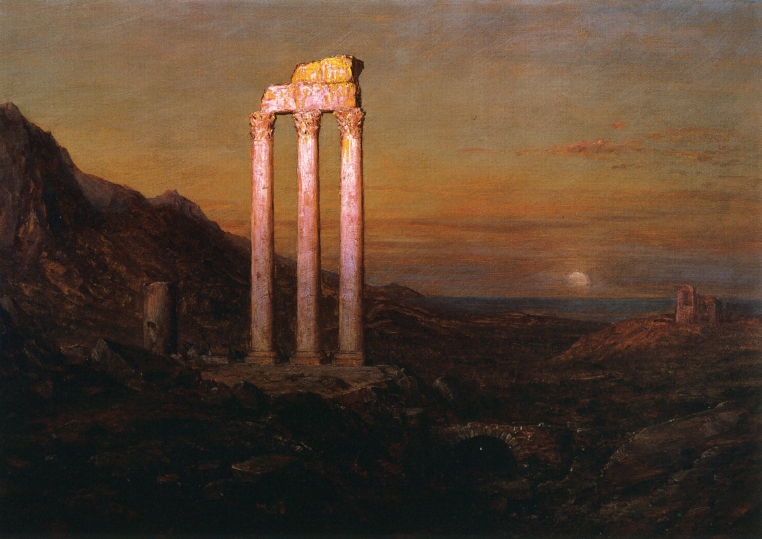
Ruins of an old temple against a landscape at sunset or sunrise

Landscape by Frederic Edwin Church

Susan Maciak reviews Elsie Augustave’s novel The Roving Tree

The Roving Tree

Reviewed by Susan K. Maciak, www.cameo100.com

Book cover - Elsie Augustave's The Roving Tree

Elsie Augustave‘s novel The Roving Tree contrasts black and white cultures in several countries through a riveting story based on reality for many African Americans. It starts with a young girl’s struggle between two completely different worlds. Adopted at age 5 by a white family, Iris tries to reconcile her past as a poor, black child from Haiti, with her present. The story starts while she’s growing up in an affluent Anglo-American household in New York.

Her new family treats her with love and respect, but she soon faces taunts at school where many fellow students muttered when they saw her: “That nigger better not sit here” or “Go back to Africa.” After tossing out in shame her only photo of her birth mother, pinching her nose together with a clothespin to alter her Afro appearance and begging her American family for skin-lightening cream, Iris realizes that she can’t change who she is.

Despite rampant racial discrimination of the Sixties, Iris adjusts to her new life, excelling in school and in dance. In college, she accidentally meets her half-sister Pepe who also lives in the U.S. Both girls travel to Haiti when Iris’s mother dies in the same village where Pepe was raised. When Iris meets Pepe’s father, she finds out that he was also her own father, a wealthy Mulatto who had raped her mother while she worked as a maid for his family.

In Haiti, Iris reconnects with her relatives and experiences their culture, a mix of French and African tradition, Catholicism and voodoo magic of zombies and spirits. She sees discrimination among the natives based on the darkness of their skin, and she realizes that her mother had given her up for adoption to escape poverty and desperation to live a better life in America.

After graduating from college, Iris wants to return to her roots in Haiti, but decides to accept an offer to lead a dance troupe at the Institute of the Arts in Zaire, Africa. There she discovers the same rigid class structure, corruption, greed, poverty and illiteracy that marks her native Haiti. She confronts yet another culture shock – the practice of polygamy. Despite warnings of deprivation and despair for women in 1960s-Zaire, Iris’s friends there were unable to convince her to leave the place of her ethnic origins.

Her story astonishes readers when they realize that finding one’s heritage can compel someone to give up comfort, convenience and culture of the developing world to live in a country that offers much less. Iris’s story opens eyes to the deep yearning of all people to learn and appreciate their cultural backgrounds. The Roving Tree is a must-read for anyone who needs to understand and accept their fellow citizens who came here from the continent of Africa.   

Susan Maciak may be reached at maciak@comcast.net


Book announcement: Susan Maciak’s Add To Your Edge

 newmaciakbookcoverjpeg


Book Review: Add to Your Edge: 12 Ways to Excel in the 21st Century If earning a living seems more daunting these days, you’ll find a few coping clues in Add to Your Edge:12 Ways to Excel in the 21st Century.This recently released book guides readers through a dozen changes in direction that have turned the business world upside down and changed the job market forever.


Small business owners, CEOs of large corporations, seasoned employees and recent graduates all will find out how the game has changed. This book covers new rules for everything from career advancement to customer service. It helps readers climb today’s unsteady career ladder, control inevitable crises, compete in the global marketplace and cope with intense 21st century competition.


Add to Your Edge, by Susan K. Maciak, career coach and corporate trainer, could be called a survival guide for navigating today’s world. This book shows nervous employers, frustrated job-seekers and troubled work teams how to take advantage of current trends rather than be crippled by them. Hints can be found in every chapter, including:


Re-Train Your Brain You ‘Gotta’ Have a Gimmick Stand Out from the Crowd Crack into Your Creativity Be Your Own Teacher Articulate Your Strengths Update Customer Service Control Crises and Conundrums Take Personal Interest in People Think speed . . . and Convenience Understand Added Value Re-Imagine the Road to Success


Add to Your Edge is now available in paperback and eBook on amazon.com, bn.com, cameo100.com and other online booksellers, along with Maciak’s four previous books: What Are People Skills, Anyway?, First Job Jitters, Job Shopping and The Monster Show.


Contact the author at suemaciak@comcast.net Author owns rights and consents to use of photo.


Christopher Bernard reviews poet Ivan Arguelles’ Ars Poetica


Photo of poet Ivan Arguelles

Ivan Arguelles

Ivan Argüelles


Ecstasies in a Great Darkness


Ars Poetica

Poems 2006−2013

Poetry Hotel Press

320 pages, $24.95

By Ivan Argüelles


A review by Christopher Bernard


“Dazzling, brilliant, inspiring, eloquent, demanding, confusing, chaotic, flummoxing, the work of a mad genius, the work of a genius madman” are some of the things that may come to mind as one reads the work of Ivan Argüelles. And this is what one might expect of someone whose dense and difficult poetry is some of the most vital literary work by a contemporary American writer. Dark, lyrical, intense, and at its best of a deep, if at times willful brilliance, Argüelles’ writing shows little patience with the flippant ironies of the postmodernists, yet he takes the modern skepticism of any metaphysical certainty seriously and uses his work to probe some of its darker implications. His work has long been a Commedia of our nihilism.
And yet he is a natural ecstatic, which gives his writing a profound poignancy. He subscribes to a kind of maximalist Augustan modernism, seized with prophecy and the divine afflatus, though fully capable of dips into the slangy and demotic; he is, refreshingly, a master of that rarest of literary voices, the contemporary high style, a style unafraid to assert and insist, yet that, at every step, undermines its own insistence:

Continue reading

Poetry from Janine Canan

Invocation

Mother Earth, it is not you

who need to be invoked—

for you are always here!

But we your human children

who today must be invoked—

who have abandoned you, forgotten

to call upon you, neglected to care for you,

failed to serve you and disregarded your needs.

Help us now to awaken and remember

our obligations to you and all Earth’s beings.

Let your spirit fill us with love, appreciation and joy

and overwhelming desire to serve you in all that we do.

May we think and speak and act as one family of one Mother

who gives life to all and when it is time, takes it away.

Guide us, Great Mother, in every decision we make,

every habit we develop, every action we undertake.

May we never forget you again, beloved Mother Earth,

beautiful and bountiful source and resting place and wonder.

BY JANINE CANAN

FROM CONSCIOUSNESS: NEW & SELECTED POEMS 1971—2014 (Regent Press, Oakland, Fall 2014)

Visit Janine Canan.com from more information.