Essay from Aliyeva Aziza Utkirovna

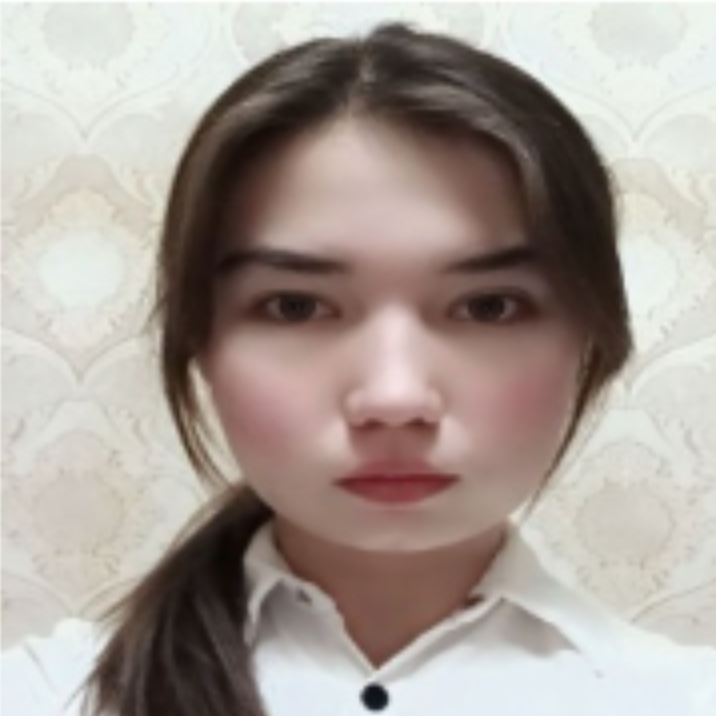
Young Central Asian girl with short dark hair, brown eyes, small earrings, and a white collared shirt and black coat.

HIDDEN HISTORY IN THE EYES: THE INNER WORLD OF HUMANS

Abstract: This article is devoted to revealing a person’s inner world through the eyes. The author interprets the eyes not only as organs of sight but also as the most reliable mirror of human psyche, emotions, and inner history. The article vividly and profoundly depicts how the eyes reflect human experiences, memories, dreams, and inner sufferings. It also analyzes the possibility of understanding a person’s psyche, personal values, and worldview through the eyes. Written in an artistic style, the article harmonizes psychological and philosophical perspectives, allowing the reader to feel the complex and rich layers of a person’s inner world.

“The eye is a secret, the heart is a sea, the mind is the shore.”

— Rumi

Human eyes are not merely organs for seeing, recognizing, or being recognized. The eyes are the oldest book of a person, the most meaningful language in silence, a unique means of communication that needs no translator. Sometimes one cannot trust a person’s words, yet a fleeting sparkle in their eyes can reveal their entire life. A person’s inner history, experiences, suffering, joy, and dreams—all of these fit into these two small windows.

Reading the hidden history in the eyes means feeling the person, understanding their heart, comprehending them without repeated words. One glance draws a person closer, another pushes them away through the years. The eyes have their own truth, their own seal: there is no deception, no sarcasm, no place for polished words.

Every person’s inner world is unique. In someone’s eyes, the dust of ancient cities, old experiences, and heavy trials are reflected. In another’s eyes, there are yet unwritten pages of life—purity, dreams, simple trust. The eyes are a magical bridge that unites a person’s past and future. As long as a person lives, every experience, every loss and gain, every suffering and joy leaves a new line at the bottom of these eyes.

Sometimes people hide their eyes—they fear their own histories and do not wish to reveal the stories within. But it is impossible to completely cover the eyes. A person reveals themselves even without words. Compared to a world tired of excessive words, the eyes speak truth like a wound: noticeable, yet impossible to conceal.

The idea that the eyes are the mirror of the soul is not merely figurative. A person’s inner world, psyche, upbringing, past, and even what kind of person they will become in the future can be sensed there. By looking into someone’s eyes, one can feel who they are, what they have experienced, what they long for, and what they fear.

A person who can read the hidden history in the eyes understands others quickly. For this history never lies. There are no extra phrases in the conversation of the eyes, only inner truth. Some eyes comfort, some give strength, while others carry traces of hopeless events. Behind every gaze lies a world—a universe—a person.

Therefore, if you want to know a person’s inner world, first look into their eyes. There lie unspoken words, unfinished stories, deep thoughts, and hidden secrets. In every person’s eyes is a history written by themselves but never read to anyone.

Studying the hidden history in the eyes also allows analyzing people’s emotional and mental states. Every glance, every tremor, every smile reflects the questions and answers a person gives to themselves. Thus, the eyes are not only a spiritual mirror but also witnesses of the passage of time, human experiences, and inner changes.

The struggles in a person’s inner world are reflected through the eyes. Sometimes in subtle expressions, sometimes in sharp gazes. For instance, when a person recalls a painful memory, dark clouds appear in their eyes; in moments of joy, light shines. These moments, memories, and feelings are all written in the inner history of the eyes, and this history is never forgotten.

Understanding a person through the eyes is not just looking; it is a harmony of thought, intuition, and inner feelings. Sometimes the smooth silence of the eyes says more than words ever could. The eyes are the most truthful part of a person, leaving no room for lies or hypocrisy. Therefore, by observing the eyes, one can sense not only a person’s mental state but also their personal values and worldview.

Every person creates a hidden bridge between past and future in their eyes. Through the eyes, they recall past mistakes, successes, loves, and losses. In this way, the eyes become an open book of a person’s personal history, where every page is an event, every gaze a trace, every slight tremor an emotion.

Studying the hidden history in the eyes helps to understand a person more deeply. This study is not merely observation but feeling, accepting the learned knowledge with the heart. Therefore, the eyes are the most reliable means of exploring a person’s inner world, for they never lie.

The eyes have a unique magical power: they reveal a person’s inner world, memories, dreams, fears, and hopes. In this way, one can learn much about a person’s mental state, human behavior, and personal values. The eyes are a vivid expression of the richest and most complex history of a person.

The role of eyes in human psyche is not limited to individual memories; they also reveal subtle connections in social relations. Through the eyes, a person connects with others, expresses feelings, and even communicates without words. In this sense, the eyes are one of the oldest and most universal “languages” in human history. Each gaze provides the opportunity to read a person’s unique history and personal experience.

The human inner world is complex and layered. The eyes are like a window that reveals these layers one by one. In one glance, the simple memories of childhood are reflected; in another, the deep thoughts of adulthood. Through the eyes, a person’s inner experiences and emotions are revealed: calmness and anxiety, hope and worry, joy and suffering coexist.

Furthermore, the eyes reveal a person’s personal values and worldview. Through them, a person understands their inner problems and dreams, compares themselves with others, and shapes life decisions. Therefore, studying the eyes is an essential tool for understanding the human psyche. Eyes are delicate and precise indicators that provide a map of a person’s inner world.

Studying the hidden history in the eyes is interesting not only psychologically but also philosophically. Every gaze reflects the complex connection between a person’s past, present moment, and future. In this way, the eyes become a key that helps to understand a person’s inner world more deeply.
Poetry from Ratan Bhattacharjee

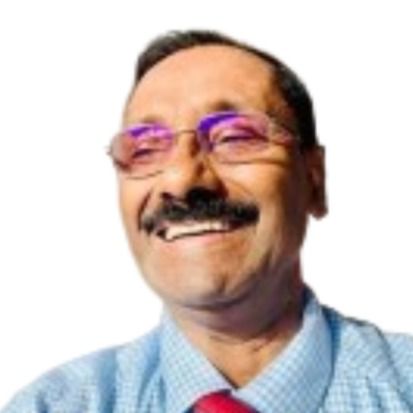
Middle-aged South Asian man with short trimmed hair, reading glasses, a mustache, and a gray and white striped collared shirt and red tie.


Ode to 2026: Harbinger of Hope

Dr. Ratan Bhattacharjee

I

Hail to thee, O year of light,

 You rise to banish the lingering night.

 From weary hearts new dreams shall grow,

 Your dawn proclaims what all shall know.

 Hail to thee, 2026, Harbinger of Hope,

Guide us onward, teach us to cope.

II

The past lies silent, its burdens cast,

 You bring renewal, a future vast.

Injustice trembles, despair takes flight,

You crown the world with courage bright.

 Hail to thee, 2026, Harbinger of Hope,

Guide us onward, teach us to cope.

III

The children’s laughter rings clear and strong,

 The elders join in a timeless song.

Nations awaken, their voices free,

You weave their dreams in unity.

Hail to thee, 2026, Harbinger of Hope,

Guide us onward, teach us to cope.

IV

No tyrant’s shadow shall dim your flame,

 You etch on history a noble name.

With love and justice your banners rise,

 A brighter world beneath your skies.

 Hail to thee, 2026, Harbinger of Hope,

Guide us onward, teach us to cope.

V

So march we forward, hand in hand,

 Across the seas, through every land.

Your promise shines, our spirits soar,

 Hope reborn forevermore.

Hail to thee, 2026, Harbinger of Hope,

Guide us onward, teach us to cope.

Poetry from Bruce Roberts

Wacky New Year to You!

Wham, bam, slam,

Right to the jaw,

Left to the gut,

Wild haymaker and

Bloody New Years nose,

            It’s Peru,

And fist fight catharsis

Clears the air

            For the next 365 days!

Somewhere in history,

Some anonymous genius

            Noticed seasons,

            The cycles of seasons,

And dubbed each

            A year—

 A measurement

            For our lives.

With that,

World-wide imagination

            Kicked in:

Old year, new year;

New year, future;

            New year, hope!

Tradition!

                        Party!

And so the Irish throw

            Bread against walls,

Ecuador burns scarecrows–

            And photos,

Japan smiles, ringing bells

            108 times.

The Swiss drop ice cream,

Thais throw water buckets,

The French eat pancakes,

Russians plant tree trunks

At the bottom

                        of frozen lakes.

Colombians lug

                        Empty suitcases,                

Brazilians jump seven waves,

Estonians eat seven meals,

While Danes hurl

                        Plates and pottery

            At friends’ front doors.

The Brits’ “First Footing”

Welcomes a dark-haired man

            Bearing midnight gifts,

Crazy Scots swing sticks

Stuck to blazing fireballs,

While in the Philippines,

            And Mexico,

All change underwear—

            White for peace,

            Gold for wealth,

Red, of course, for love

            In the new, new year!

Yet in America,

            We keep it simple:

Remember Dick Clark,

                        Watch a ball drop, Kiss.

Then sing Auld Lang Syne

            At the top of our lungs,

Raise many a cup o’ kindness,

Leave our undies

                        Publicly in place,

And have

                        A Happy New Year!

                        Bruce Roberts

            2015— New Years Eve

                                                                                                                        36                             

Poet Eva Petropoulou Lianou interviews historian and influencer Ruqaya Mehran

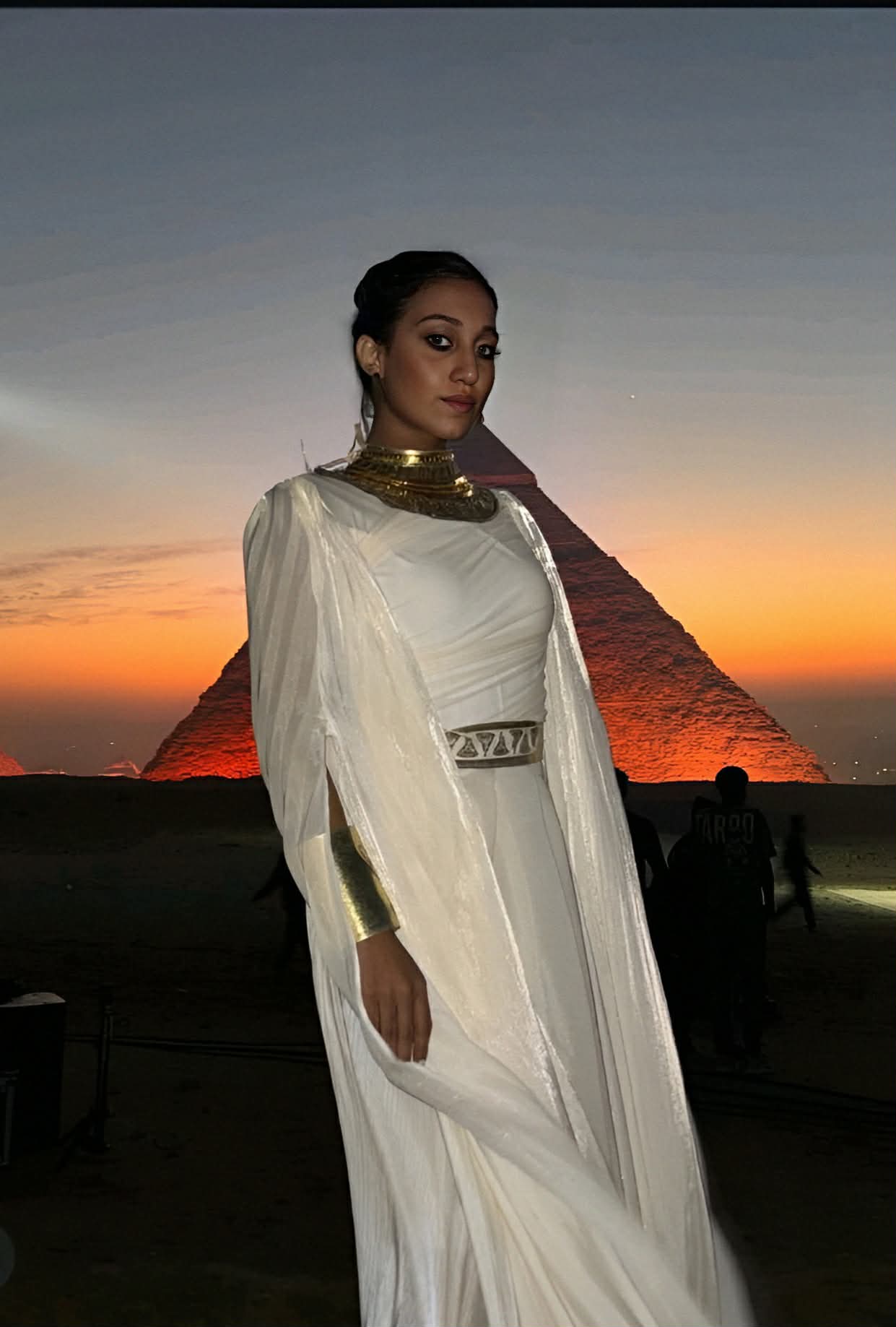
Young woman with long dark hair, brown eyes, a gold necklace, and a white gown, in front of one of Egypt's pyramids at sunset or sunrise.

Interview with Ruqaya Mehran 

Conducted by Eva Petropoulou Lianou 

Dear Ruqaya Mehran, tell us about your childhood.

Where were you born?

Egypt, and I have Turkish roots from my family and ancestors.

What were you dreaming as a child, and have you achieved your dream?

I used to dream of being a media personality, journalist, and actress, and now I’m a university student studying advertising, journalism, and acting. Also, I’m Deputy Head of Media at the Ministry of Youth and Sports.

I also worked as a reporter, attended academies, and joined public relations teams. I am a voice-over and dubbing artist and also an Ambassador of Middle Eastern Media and a Middle Eastern Program Presenter. Yes, I have achieved much, but I still dream and dream….

What is more important to you, journalism or acting?

Personally, I love both journalism and acting, but I love acting more.

What are you dreaming?

I dream of many things, including being a world-renowned, famous, and skilled actress and presenter.

How do you feel being popular and having followers who are inspired by you?

I feel proud when my followers increase; I feel like an inspiring person, and the admiration grows.

What is your goal now?

My goal is to finish my bachelor’s degree and continue my studies abroad.

What is your favourite dish?

Yes, I love Egyptian food, especially feseekh (fermented mullet) and herring. I love them so much; they are among the most famous dishes in Egypt. I also really love Greek salad.

What is your favourite book?

Yes, I read, but I don’t have any favorite books besides psychology books and language learning books.

What is your message to the new generations?

“To the generations to come: never underestimate the power of your voice. Speak with honesty, act with integrity, and remember that true influence comes from inspiring others, not from seeking attention.”

What is your wish for 2026?

My wish for 2026 is to achieve all my dreams of entering the world of acting, working more, becoming famous, and earning more than my current profession.

Travel and success in my studies are also important to me.

Ruqaya Mahran, a media and journalism student and actress, was an assistant secretary in the Training and Education Department of the Future of the Nation Party and the deputy head of media for the Ministry of Youth. Mahran is also a journalist and member of the public relations team for organizations and an ambassador of Middle East Media. She’s Egyptian with Turkish roots, a citizen of the whole world.

Poetry from Yusufjonova O’gilxon

Winter

The cold days have arrived,

A sharp wind began to blow,

Whistling through the streets,

Bringing news that winter is here.

​In the winter season, from the sky,

The snow falls in swirling flakes.

That is why I love the winter

Very, very much.

​The earth puts on a white carpet,

The trees fall into a deep sleep.

It looks so beautiful and bright,

As if sprinkled with silver dust.

Yusufjonova O‘g‘ilxon

Essay from Abdurashidova Sabina Eldarovna

Young Central Asian woman with straight dark hair and brown eyes.

Abdurashidova Sabina Eldarovna was born in Shahrisabz, Kashkadarya, Uzbekistan. She is 17 years old. Currently, she is studying at Uzbekistan State World Language University, at 1st course. Holder of more than 20 international certificates. Certified at B+ level in her native language and B2 level in English.

The Impact of Virtual Communication on Youth Language: Emerging Trends in Youth Speech


Abstract
This study investigates how virtual communication affects youth
language, highlighting emerging linguistic trends in online speech. With the rise of social media, instant messaging, and digital platforms, young people have developed unique ways of expressing themselves, including abbreviations, emojis, code-switching, and simplified sentence structures. Data were collected through social media posts, chat logs, and semi-structured interviews with 50 youth aged 15-24.


The findings show that virtual communication significantly shapes
contemporary youth language, influencing informal and formal
contexts, and provide insights for educators to adapt teaching
strategies to the digital environment.


Keywords: virtual communication, youth language, online speech,
linguistic trends, digital media

Introduction

Digital technologies have transformed communication among youth,
making virtual platforms are essential part of daily interaction. Social
media, messaging apps, and online forums enable fast, interactive
exchanges that differ from face-to-face conversation. Consequently,
youth have developed new expressive methods that are creative,
efficient, and contextually rich. Understanding these shifts is crucial for linguists, educators, and policymakers to support effective
communication and language learning.


Literature Review
Research shows that online interaction fosters distinct linguistic
patterns among youth. Crystal (2006) emphasizes how digital tools
influence writing styles. Tagliamonte and Denis (2008) identify
morphosyntactic trends emerging in text messaging. Thurlow and
Brown (2003) note that youth employ abbreviations, emojis, and
code-switching, blending efficiency with personal expression. However, studies in Central Asian contexts remain limited, highlighting the need for this research.


Methodology
A qualitative approach was used. Data were collected from social media posts, chat logs, and semi-structured interviews with 50 participants aged 15-24. Analysis focused on lexical innovation, syntactic simplification, pragmatic strategies, and code-switching. Thematic coding identified recurrent patterns and emerging trends. Ethical standards, including informed consent and anonymity, were strictly observed.


Results and Discussion
Key findings include:

  1. Abbreviations and Initialisms: Common acronyms (LOL, BRB) and
    shortened words (u for you, cuz for because) enhance rapid
    communication
  2. Emoji and Visual Cues: Emojis efficiently convey emotional and
    pragmatic meaning.
  3. Code-switching: Youth often mix their native language with
    English, creating hybrid expressions. Example from chat: laughing
    out loud (LOL)
  4. Simplified Syntax: Fragmented sentences, omission of auxiliary
    verbs or articles, and informal structures reflect efficiency and
    conversational style.
    These patterns demonstrate that virtual communication shapes both
    online and offline language practices. Recognizing them helps
    educators design relevant, engaging teaching strategies.
    Conclusion
  5. Virtual communication profoundly affects youth language, leading to
    innovative lexical, syntactic, and pragmatic patterns. These changes
    offer valuable insights for language education, sociolinguistic
    research, and policy-making. Awareness of emerging online speech
    trends is crucial for educators to adapt teaching methods effectively.
    Future studies could quantify these patterns and examine their
    long-term impact on literacy and communication skills.

References (APA 7th Edition)
Crystal, D. (2006). Language and the Internet. Cambridge University
Press.
Tagliamonte, S. & Denis, D. (2008). Linguistic ruin? LOL! Instant
messaging and teen language. American speech, 83(1), 3-34.

Thurlow, C., & Brown, A. (2003).Generation Txt? The sociolinguistics
of young people’s text-messaging.

Abdurashidova Sabina Eldarovna was born in Shahrisabz, Kashkadarya, Uzbekistan. She is 17 years old. Currently, she is studying at Uzbekistan State World Language University, at 1st course. Holder of more than 20 international certificates. Certified at B+ level in her native language and B2 level in English.