Nonfiction essay from Pauline Pang

I really enjoyed coming to California, and became a multilingual person. I speak three Chinese dialects, English and a bit of French. When I first came here, I was homesick due to not understanding the language. ABC [American-Born Chinese] kids were racist against me, but I was used to it since Chinese teachers were racist against me too. Even when I was in elementary school, my English level was that of the level of a two year-old. But I told myself that I would learn the language, and I would be proud of myself.

So I spent that was twice as hard and set goals to learn English. Then, they treated me with such respect, because they were surprised how good my English is. Later I had more friends, because my English is so much improved. I can finally be treated with more respect. I like the teachers here, for one thing they never made fun of me, or put me in the spotlight for not being academically challenged enough.

I realized even people who were born here need my help on their English essays, which made me feel very worthy. I love to help anyone whose English is not so great. I also understand homesickness and learning a new language is not easy for Asian international students- it’s never easy. But I’m very happy to help them out, because I can relate to them. It’s especially not easy for them to leave their parents, and live with others or live as a university student by themselves. Asian students learned how to be independent, instead of interdependent. Right now I teach Mandarin, I always told my students not to give up on learning a new language. Being bilingual is very fun.


Memoir essay from Jordan Taylor

The Funeral


NOW

We all knew it was coming; we’d been waiting for it for over two years. Weekly visits to the hospital or down the dirt roads that lead to his old, musty recliner could suddenly be canceled. Sundays could once again belong to naps and lazy afternoon reading instead of guarded conversations and whispered judgments. These were the plusses, the silver linings that came after the storm, after the tears, and after the realization that Papa was really gone this time.

I had always wondered how they would tell me. Would it happen when I was home one weekend and we’d all rush to the hospital together, our good-byes stuck to the tips of our tongues and our fingers reaching out for each other’s? Or would I get a phone call early one Tuesday morning, too close to sleep to comprehend the news and too far away to make it back in time for my tears to matter? In the end, neither scenario came to pass, and the reality of such a loss hit harder than any morbid daydream ever could.

Continue reading

Synchronized Chaos May 2014: Confidence Interval

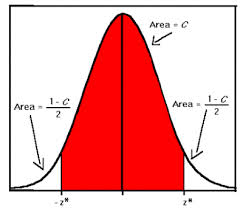
Welcome, readers, to Synchronized Chaos’ May 2014 issue, where we explore the idea of confidence. A confidence interval is a concept in statistics referring to the accuracy of an estimate. Researchers can say they are pretty confident that the number they’re trying to find is within a certain range, known as the confidence interval.

As in statistics, we often find ourselves dealing with estimates and rough ideas in the human and larger natural worlds. We aren’t perfect, don’t know everything, and often possess too much, or too little, confidence, and aren’t sure how we fit into the larger universe.

So, these submissions explore various aspects of the broad, complicated concept of confidence.

Some look at the big picture, exploring how and what we know about the universe and our own minds.

Dr. Inez Fung’s lecture at Oakland’s Chabot Space and Science Center, written up by Cristina Deptula, looks at weather versus climate and what we can understand and predict about complex systems. Christopher Bernard presents a more personalized look at ecological issues through the life of a fictional man attempting to live using the smallest amount of natural resources possible, confident that his life and choices matter on a larger scale.

DanaLynne Johnson’s dramatic piece Toy Law also explores questions of our responsibility to the larger world, in a more personal context. Her speaker avoids speaking up about domestic violence at his neighbor’s home, when he could have made a difference, and finds himself facing consequences.

Other pieces focus on internal, psychological aspects of how we view ourselves and our capacity to deal with our world. Dr. Daniela Kaufer, UC Berkeley associate professor of integrative biology, looks at how acute and chronic stress affects our brains, and how we can mitigate those impacts. As she discusses, in a talk Cristina Deptula has reviewed, an optimal level of challenges in life can build up our ability to function as we figure out how to handle them, but overwhelming, intense stresses can cause physical damage to our bodies.

Austin Harrington shows us a writer whose sense of self is shaken by poverty, and returning poet David Cicerone illustrates the inner wisdom gained through a rip-roaring whirlwind of international travel escapades. Michelle Tholen’s luminous artwork highlights the effects natural landscapes have on us and our sense of who we are. We are reminded that we exist within, and are part of, a larger, natural world that was here before us, and will remain after our passing.

Sandy Hiortdahl’s poetry and prose piece also comment on our place in the universe and the persistence of memory, drawing upon history and mythology to evoke the personal and collective subconscious. Fresh, crisp details bring the ghost on the motorcycle and the fantastic opera house to life.

Rick Hartwell’s poetry explores the tension between fresh anticipation and disappointed hopes, and uses fog, muscled horses, and waves crashing against cliffs as jumping off points for his reveries. Nature here causes him to think, reminds him of who he is, and calls him back to a broader sense of life and his place in the universe.

Erik Stitt’s visual art is inspired by Native American motifs, the landscape of the American Southwest, and Western fantasy and science fiction. Stitt’s work reminds us that wonder, awe, and imagination are not solely the province of our culture and generation, but much more universal.

Walter Savage’s abstract paintings evoke human relationships and our connection to each other, which is another way in which people draw identity and confidence.

Elizabeth Hughes’ Book Periscope column reviews two novels with protagonists who gain confidence as they learn from life and make choices: Audrey from Michelle Carrithers’ Summer Justice and Dr. Pearl Stern, pioneering female physician in the 19th century southeastern United States, from Marie Bartlett’s Pearl, M.D. 

In Kristian Wood’s short piece, the narrator gets up the courage to fly on an airplane. This fictional vignette reflects the author’s own experience of moving out on his own to start his life. Leticia Garcia-Bradford’s speaker also achieves a personal victory, taking her life back from a destructive relationship.

As with most things, including self-confidence, it is possible to go too far. Neila Mezynski depicts proud, self-assured men in her tone poetry, character sketches full of unique, telling details. Essayist Ayokunle Adeleye cautions against overconfidence in business, warning founders of enterprises not to gamble away what they cannot afford to lose.

Governments and larger social structures, as well as individuals, can possess destructive levels of hubris. Grace Chen’s novel Forget Me Not: A Love Story of the East, as reviewed here by Tony Longshanks le Tigre, illustrates the damage caused to individual lives and relationships by the Chinese Cultural Revolution, a time when the government believed it knew enough to manage an entire society through central planning.

Thank you very much for taking the time to read through this issue. We hope that by considering the meaning and value of each submission here, that we all will grow in our understanding of what it means to be a person here on this planet, to share the human adventure with many fellow travelers.

** Announcement, for the Synchronized Chaos family: A group of creative people in and around Hayward, California are starting a hackerspace, Hayhackers, which is an all-ages community center open to the public and should open up soon in the downtown. Hackerspaces are part of an international movement and are sprouting up all around the world. They are places where people can build things and work on electronics, computer, arts, crafts, sewing, creative writing, woodworking, photography etc type projects. You can come in, bring and share tools and do your own project, or join classes and workshops and networking events at the space.

Hayward is a multicultural, multigenerational and lower-income community with a lot of dedicated, interesting people but not a lot of industry or employment or safe places for people to gather. Hackerspaces in other cities have brought companies and industry leaders to town to meet people and consider investing in the community and bringing jobs to the area.

We’d love to see the Synchronized Chaos family get involved with Hayhackers and help them get off the ground. Please check out the website, www.hayhackers.org, which includes an interview with Synchronized Chaos author Ryan Hodge (Wounded Worlds). Hayhackers has regular Meetups at the Eko Cafe on B Street, Thursday evenings from 7-8 pm and all are welcome, even total non-techies, and especially those who want to volunteer! We’ll be at the Maker Faire in San Mateo, May 17-18th with science demonstrations for kids, and will be launching an IndieGogo fundraiser soon.

** Further announcement – the Hayward Library, 835 C Street, downtown encourages people to save the Earth and pass on a love of reading. They’re hosting a book giveaway, where people can bring gently used, well-read and well-loved books they’re willing to part with, to an event on their front lawn from 9-1 pm. They’ll give them directly to people of all ages who want to read them. I will be there myself and would look forward to meeting anyone who comes.


Memoir by Kristian Wood


Flight

“Here’s some gum. Be sure to chew this so your ears pop.”

I remembered my father’s words as I sat with my back pressed against the seat during take-off. I chewed my gum relentlessly, but it didn’t help. I figured out a formula which was to yawn every five minutes, or whenever I felt an increase in pressure. By the end of the trip my mouth was so dry not only from the yawning, but also from the refusal to drink anything the flight attendant offered. Ten years later, and I still do them both. The only way I could peer out of the window was through my peripherals. I refused to turn my head, but I felt other passengers’ eyes glaring past my face through the small porthole, and watched the city become smaller and smaller. Seattle was just as beautiful up close as it was thousands of miles in the air. We were still ascending. I was motionless until the plane leveled out. The clouds encompassed the 747.

Continue reading

Epic poetry from David Cicerone


HISTORY
REPEATS
ITSELF
IN
PARADISE


For Alex Duplain

* * * * * * *


‘Solo y herido, así me dejas,
Sabiendo que mañana irás
con otro al altar’

DAVID CICERONE
DCSK—002

There is a place in life for faith but that place is not in the mind
Security is whatever you get when you’ve outrun your memories,
& redemption only comes when you’ve been damned by what you can’t live down—
But the voice of conscience is as hard to hear as it is to kill
Love is whatever it takes to outlive your regrets,
& when the soul’s as timeless as its absence the heart’s as good as the last place it left

For in Cartagena I was threatened with my head by gangland pawns whose barked commands to pay in blood or money sounded rehearsed enough for the Norwegians and I to bolt to the ocean in full confidence that there was no real menace, only for their leader to ambush our hovel with a pistol three days later demanding hundreds of thousands in ransom for an associate of ours his boys had plucked off the street and held bound and gagged in a minivan which us ashen-faced rubes tried to collect from sympathetic friends but in the end had no other choice than to pony up ourselves
And in Medellín as twisted revenge for the student-anarchist crackdown our taxi driver played slalom with the riot shields at a speed fit to ignite terror in anyone
And in Bogotá the coffee farmer dressed his kneecaps and left elbow in a balm thick enough to conceal the freshly inked smiley-faces, having delayed the forearm winking frown until the morrow because he “just couldn’t get four tattoos in a single day from a one-eyed mechanic”
And in Villa de Leyva I fought through grimy boulevards, thatched-roof shanties and identically dressed families of seventeen just to scratch myself raw from bedbugs and take in animated custody battles between the owner of the flophouse and her most unfortunate favorite mistake

Continue reading

Essay from Christopher Bernard


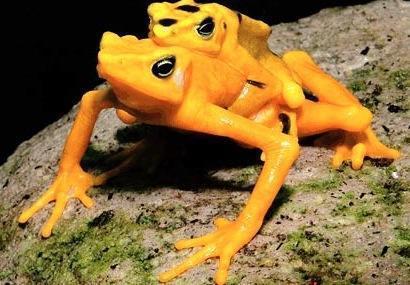
Panamanian Golden Frog, from the Daily Dank

Panamanian Golden Frog, from the Daily Dank


Zero Carbon & the Great Extinction

By Christopher Bernard

It was Sam who got me thinking, one day, after I read a book about how mankind was causing the greatest extinction of species on earth in 65 million years. Sam’s my dog, a black Labrador with deep, sad eyes. It was what I saw in those eyes that changed my mind – actually, it changed my whole life. My name is Johnny José Brennan, and I live in Davenport, Iowa, not far from the Mississippi River.
I read the book over one of my few weekends away from the office. As I read, I often shook my head in alarm and amazement. I’d followed reports on global warming and humanity’s other devastating effects on other living creatures over the years, and fully accepted these were serious issues, but I’d had no idea about this; I’d believed it was mostly a question of rising oceans and more violent hurricanes and unstable weather that would have an effect a couple of generations down the road. But this was a different order of magnitude altogether.

I vaguely remembered my Uncle Jésus (on my Mexican mother’s side) railing against what he called “ecocide” when I was little, and something he had called, with a melodramatic flourish, “the coming holocaust of the species.” My dad, an Irishman with family still in Donegal, had claimed global warming was all made up by liberals, that environmentalism was just a way for Big Science to get grants from Washington and take more of people’s rights away; he and his brother-in-law had had many a memorable shout-’n’-out (angry shouts followed by even angrier, if possible, slamming of doors) while I was growing up, so I dismissed both of them, my father’s conspiracy theories and my crazy uncle’s rants about “species collapse.” But now I wasn’t so sure.

Continue reading

Cristina Deptula on Dr. Daniela Kaufer’s talk on the neuroscience of stress at Berkeley’s Pyramid Alehouse


Most everyone can relate to being stressed out. But, how does stress actually affect us and our brains? A recent talk gave an in-depth look at the neuroscience involved with various types of stress. And, while this may not convince everyone’s employer to let them take the day off and head to the beach, the research will likely lead to better understanding of and therapy for stress-related conditions.

Dr. Daniela Kaufer, a UC Berkeley associate professor of integrative biology, gave a lecture April 3rd at Berkeley’s Pyramid Alehouse. She discussed the dangers that certain types of stress pose to the brain and suggested some mechanisms behind this and new directions for treatment.