Wendy’s Wild World of Books

Alison Nancye’s Note to Self

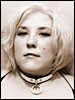
Author Alison Nancye

The book is called Note to Self by Alison Nancye, and it tells the fictional story of a 39 year old single woman named Beth, who has been beaten by the world in more ways than one. Finally being fed up with the losers for men in her life, her job, and the chains of her own past, she packs up everything from Sydney, Australia,and moves to Peru and starts a completely new life, in which she learns to embrace the culture, people, and learns to really live again. I feel I can relate to the character of Beth, as that was me BEFORE I got away from my abusive environment, and got the help I needed. I think the one scene I can relate to the most, is her falling down in the middle of a crowded street in downtown Sydney, and NO ONE caring. This book ultimately not only re-affirmed my faith in the Lord, and how He has given me so much healing from my past, but reminded me of how He gave me the courage to step out on faith and attend PBU (Now Cairn University), develop a backbone with not only my own parents, but also other men (the right way), ultimately leading to the day I met Ricky Saddler, my husband. I highly recommend this book for anyone who is in this situation, and wants to spread their wings, whether for the first time, or again.

Alison Nancye’s Note to Self is available here, from New Jersey’s Turn the Page Publishing: http://turnthepagepublishing.com/books/note-to-self/#.UcYtx_nrz7S

Wendy Saddler is a reader, anti-corruption and pro-domestic peace social activist, and an assistant literary publicist from Bensalem, Pennsylvania. She may be reached at blondetrekkie@comcast.net


Poetry from Frances Varian


Devotion

Frances Varian

For Dinah’s Christina Rossetti

There is a difference between kneeling and bowing
that has to do with endurance
You talk to God & swim in shadows

you say I believe

while catching snowflakes on your tongue
You recreate the watery communion for the others

My friend will quench the loneliness of
your mis-representation though she may seem an unlikely savior,
you are not the first stray she’s taken in

You could both slip quietly into the fold,
cover your slender shoulders and smile
You could both pretend that faith was more
dumbluck than educated guess

Yet you walk swiftly through
late November, with London’s ghosts
whispering in your ear, you imagine the snow falling,
all the water drops for your soul and yours alone

You will inherit the earth.
good luck with that

I love women who talk when no one is listening

la divina

Frances Varian

if you break
do it quietly so that no one hears you

no one comes running

be a small tear in a glass vase
cunningly invisible
until it implodes from the weight

of the holding of water and beautiful things

christ, if you break that way
imagine what they’ll say about you

regret the hours passed when you stood
empty and unnoticed

do not announce
do not indicate. She

walks in beauty
a weeping Madonna

and her sorrowful story line lifts her
like a beacon above

the choir of whores she keeps
confidence with

she’s got tunnel vision for the business &
a $75/hour ass to boot

she’s so sad you can’t help
but get hard

every time she walks by

& it’s not the sadness that’s got your hand
down your pants
it’s the way she holds it be-

cause it’s precious and she might
slip that pouting frown mouth over you
and suck the evil out
of your heart

leave you spent and empty and free    of your will

which has always been miserably mediocre    baby

it’s the way she holds herself
up around the hairline fracture down the center

the way muscle and tendon have adhered
to the split stupidly obedient science

she is a martyred saint voodoo priestess miracle
with her faith bunched around her ankles

picture perfect

mainlines God and the Devil on alternate days
Mom     Dad the custody battle

anything to hold
on cause she

knows    she’s gonna break &
she’ll be damned it you get her to howl


everyone I love has this
hard dirty cough like they could
push up the ugly and spit it back   where
it came from

but they are victims of gravity
and swallow back into them
the notion the poison and poor
folks are made for one another

I rock myself to sleep for this
and I rack my brain for the answers

to days that unravel like symptoms
in a Public Health clinic

begging for diagnosis
and no money for the medicine

everyone I love breaks down like a car
on the freeway going 70
break down that fast ain’t pretty,
No

the best mind of my generation
is not the best heart

and the hearts of my best loves
watch their cunts poison pumped
by the

unworthy

over & over & over again

she’s got you all jacked up on
possibility and redemption fucking fantasies

suddenly you know, you’d
kill to be the one

sucking the sweetness

making her 30 pieces of silver noose
and 2 air kisses for the trip

you say
fuck-doll
bim-bo
sing-song

like you’re waiting to hear

thank you

you’ve got your hands
down

your pants

precious

fluid pumped continuously through
the veins of the unworthy in-

to the mouth of the miracle worker
you’d turn on a
dime to break her ask
her for change when you’re done


All of my rosy people with
their candy cancer sticks and charming
refusal to drop dead

quietly

they march on

obedient as science
but far less ordered

the proletariat as phlegm in
the lungs of the master plan

I no longer believe in our salvation
welcome, true dawn of the revolution:

so sad you get hard every time

sacred

lullaby of the miracle worker her
heavenly chorus of

“cum on my face”

before this over you will
forever understand that
your redemption was purchased for

$75 and the sweetest ass this side of the
tracks

All of my people have been instructed
to break quietly    a

small tear in a glass vase
cunningly invisible until they implode
from the weight of the holding

I believe in one holy and apostolic church

Now Go Rebuild The World

Frances Varian was a member of Seattle’s National Poetry Slam team in 2000 and has subsequently performed on numerous stages across the country, including the Seattle Poetry Festival. At the September 2004 Bumbershoot Arts Festival, she debuted a feature-length, choreographed poem paying tribute to the victims of the Green River Killer. Her work appears in Without A Net: The Female Experience of Growing Up Working Classtsunami, her independently published collection of poems, is available on franvarian.com [link defunct as of May 26, 2010]. She works as a queer/women’s health advocate in Seattle where she lives with her amazing sweetheart and three dysfunctional cats.

Poetry from Colin James

                LOVE EXIT

     Spit and the talk was of
     how your debt was lessening.
     The saliva hovering
     over a sleeveless blouse.
     My arms lattice to your growth.
     Kisses that once reminded me of the sea,
     they rolled like waves
     covering the falling away.
     I have a beer coaster with your name on it,
     and glass that has squandered the opaque.


Colin James may be reached at colinrichardjames@yahoo.com 

‘The Rose Shipwreck,’ poetry from Christopher Bernard


The Rose Shipwreck

By Christopher Bernard

Such a shipwreck of flowers – a petaled wreck
on an azure sea, of blood-red salmon 
stained with peach, with a steady clear
tolling of deep bells under a sheer blue sky
half-deafened in the gale – flowers staining
 
the sea in disintegrating color, like the heads of children
drowning – and the magnificent ship slowly dissolves
in the whirlwind of its wreckage,
a dream of itself, a littering of its losses
to wind and tide, a fatal cry of roses
brimming its mouth – the thunder heaves a shout,
and the sea rumbles like a vast
train in a tunnel – a flare of lightning
disappears, silent as the shipwreck sinks,
spilling its wreckage across the white floor
of a seasick ballroom, bales of flowers
splitting till the petals cover the wastes,
like the Roman’s feasters, drowning them in roses.

The ghost of a sea swallows the ghost of a ship
under the ghost of a sky: listen, you can hear them,
the ancient sailors singing like the sirens,
calling you to sea – to sea – to sea –
steel gray, enamel blue, and white with foam,
to join the ships that blossom like so many roses
and scatter their petals as they perish, and drown, and sing,
like them, calling the next generation
to sea – to sea – like us – well? will you brave it?

will you build your ships of roses and brave the sea?
or is its storm a terror worse than childhood’s,
not to be escaped, the waves and wind
the white of a cage, the ice and snow cold bars
in a burning sky that seals the world and twists
down on our heads even as we heave
out into the open sea, our white sails out
like butterfly wings, our hopes so many hooks
the wild sea can catch and hold us with,
like love itself, a bark, a cage, a brand?

Shall we build our ships of roses and brave the sea,
that rose of fire, garden where winds take root 
and grow into forests?
Though night is coming, shall we aim our bow toward the dark,
though the storm is coming, shall we spot the thunderhead
and steel our sheets till they thrum in the underwind
and the water flails and hisses over the bulkheads
and churns and cries and crashes in our wakes
like an arrow thrusting us ahead, to sea,
to sea, far out, pushing us till we fly
into the storm? Shall we build our ships
of roses? Shall we flower over the whirlwind sea?


Christopher Bernard is a poet, novelist and critic living in San Francisco. His novel A Spy in the Ruins was published by Regent Press (http://www.regentpress.net/spyintheruins). He is also a co-editor of the literary and arts webzine Caveat Lector (www.caveat-lector.org). “The Rose Shipwreck” was originally published in Caveat Lector.

Poetry from Claire Blotter


CUTTING THROUGH SNOW


Whose son is this? I think I know

the one who lost his mind in snow

Why did we freeze him out again?

Why didn’t we listen in blizzard

after blizzard?


What drug is this? I think

I know: purple hash or heaven

knows, ecstasy- Wandering deeper

into the web he popped pills drank

the chill of lacy flakes of roaring winds

of frozen lakes- Can we heal

his shimmering soul strain the stones

from melting snow? What blazing sun

what glacier gone

can keep the ice from

moving on


WHAT WILL WE GIVE?

In memory of Sandy Hook


What will we give to the Queen?

the dreams of her own sweet

children


What will we give to the King?

our taxes and castles


What will we give to the Dark

Knight? The souls of children

mowed down one by one

in their horrified rows


What will we take from the story?

two hand guns a rifle stashed

in the back seat


What do we bleed as a nation?

our children

our children

our children

once more

once more

our children

our children

our children


Each one stands and falls

for them all


ON DEPARTING JOHN WAYNE AIRPORT


High in the friendly United skies

a video screen explodes on the upright back

of the seat a foot and a half in front of me

As soldiers charge a hill bombs explode

with no clear way to stop them-

The guy across the aisle has

tacked a black cloth over the screen

to spare himself the devastation-

He tells me: If you press long enough

on the faintly marked arm of your chair

the war eventually disappears-

But you have to press hard and

keep holding-


REGRET

We vacillate in the luminous night   under white blue stars

      like steering wheels   like flies over

                                                pudding

It’s a true translation  except for the vowels

     guttural with unpronounceable sounds we keep

trying to prove

We insist  grapple search out corners  empty

pockets of coins of tissue unsure who paid us

who loved us

Even the tumultuous river contracts with

   autumn’s caution: crackling leaves   bodies, stiff

        with sudden  indescribable sorrow

We vacillate  pull paper from the windows  then regret

          the light


MIRROR


Mirror to yourself,

mild mercy You look

only when called when

your mother calls you back

to her- Gray sheep

apple blossom and

you come as you did

as you must bringing

the bread or broom

helping helping till

all is clean all is wiped

dry till you look up though

she does not smile back

already planning the next

meal purging dirt that rises

at her door Mirror to yourself,

mild mercy Search again

and again but only

her face stares

back


OUTPOSTS IN THE DARK


The moon is a lemon floating in a vat of

tar glowing really impossible to

peel my heart is a car window stuck

in its groove that won’t slide down my

emissary shut in its safe embassy when

I look up stars shoot down like fiery bees or bullets I

think no where is safe where there is no mother I try but

maybe never ever recover from not enough inside the lemon is healing

juice that’s sour the heart pounds from the strength of its fibery mass

tough woven walls never drop down completely like tired stars Are

they torches in night these tiny guide lights that keep falling or anonymous

weapons from an omnipotent sky I can’t know for sure but sometimes

sense the shining the steady beats of my heart as stepping stones

to jump from then precariously balance one two three before I’m swept

back into treacherous motherless

seas.


From Claire Blotter: 

My poetry has been recently published in Barnwood, Gargoyle Magazine, the California Quarterly, Canary, the We’Moon 2012 & 2013 Datebooks and the anthology, KINDEGARDE: AVANT-GARDE POETRY FOR CHILDREN, among other anthologies and journals.  As a performance poet who competed in the early National Poetry Slams in Chicago and Boston, I’ve concentrated on spoken word performance and collaborative theatrical work in the past. For the last 2 years I’ve focused on revising and refining my poetry for the page. My third chapbook, MOMENT IN THE MOMENT HOUSE, was published this year by Finishing Line Press.

Claire may be reached at savesongbirds@yahoo.com  and lives in Sausalito.


Christopher Bernard reviews Jean Cocteau’s La Belle et la Bete


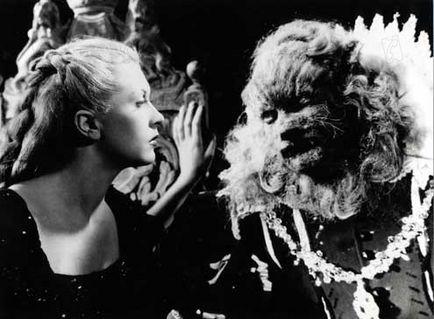
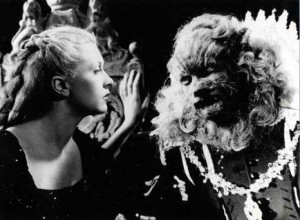
Josette Day as “Belle” and Jean Marais as “the Beast” in Jean Cocteau’s La Belle et la Bête.


GIVE ME BACK MY BEAST!


La Belle et la Bête

An Opera by Philip Glass

(based on the film by Jean Cocteau)

The Philip Glass Ensemble, with vocal soloists

Conducted by Michael Riesman


To celebrate Philip Glass’s 75th birthday, the Philip Glass Ensemble came to San Francisco to perform the magisterial minimalist’s opera, La Belle et la Bête (“Beauty and the Beast,” based on Gabrielle-Suzanne de Villeneuve’s celebrated fairy tale).

What makes this work unique is not that Glass based his work on a film; he had already done so with the first of a trilogy of works based on work by the unforgivably talented, unapologetically gay, and compulsive appropriator of surrealist gestes, Jean Cocteau: the chamber opera Orphée.

Here he went a good deal further. He stripped out the entire original soundtrack (which took some gall, as it’s a very fine one, composed by Georges Auric, an original member of the bad boys of French modern music, “Les Six”) and replaced it with an original score, with singing parts for the original spoken ones, the entirety performed live as the film is screened overhead.

And he chose a nearly perfect source, as Cocteau’s 1946 film – with actors Jean Marais, Josette Day, and Raoul Marco, and handsome camera work by Henri Alaken – considered by many critics to be Cocteau’s masterpiece, is a work itself of near-operatic fantasy.

What might have turned out to be one more lamentable exercise in postmodern kitsch is a near-masterpiece, a posthumous collaboration that would probably have tickled the ever-experimenting Cocteau.

The story is almost too well known to recount, yet is told with a few fresh twists: Belle, a Cinderella-like figure, is scorned and exploited by her two wolfish sisters and ne’er-do-well brother, though doted on by a father oblivious to his daughter’s misery – Belle is an unwittingly willing victim, in which those who love her, and even she herself (through an ideology of self-denial that reinforces the victim’s weakness and the power of the dominant – sound familiar?), comply in her servitude. She has a lover, a companion of her irresponsible brother, whom she refuses to marry because she feels bound to take care of her oblivious father, who allows Belle to be bullied and exploited by her two older sisters, who intend to get married and out of the household as soon as they find victims – er, husbands.

The father goes off to the city after promising Belle he will bring her back the only thing she asks for: a rose. After a business venture goes badly awry, he rides back home through a forest at night, where he discovers a magic castle, magically alive, which he enters and is served a feast by magical servants. Later he visits the castle’s garden, where a rosebush blossoms. Remembering his promise, the old man plucks the loveliest rose for his daughter. Upon which the prince of the castle, a hideously deformed monster (in the film, he looks like a giant cat, with sensitive ears that telegraph his feelings, perking him up when he says a prey for his next meal in one of the film’s deftly humorous touches), appears and tells the old man he has committed the one crime that is unforgivable in that castle, and now must die. The old man pleads for his life, and the monster relents, telling him he can go home to give the rose to his daughter, but only if he promises to return.

Once the old man is home again and tells his children of his plight, Belle refuses to let him go back, and goes in his stead, to face death as punishment for her father’s crime. But the monster, upon seeing her, falls instantly in love and instead of killing her, imprisons her in his castle and begins to woo her, even though he is aware that his hideous ugliness makes it impossible for anyone to genuinely love him.

Some men feel a curious self-contempt when they become aware of the strong physical feelings they have for women they admire and love; this story works well as an allegory for this, in an age that likes to pretend it is beyond such callowness.

The film, while never losing its fairy-tale quality, never falls into camp or archness, satire or over-sweetness, even at the dangerous happy-ever-after ending: it has a darkness, a fadedness and grittiness, that gives it, for all its fantasticality, a hardness, an actuality – like any poem worth its salt. This helps make the film’s final transcendence peculiarly credible and moving. Never has wishful thinking had a kinder, more eloquent advocate. (Though the final transformation of the Beast into a prince has disappointed some; is fabled to have made even Marlene Dietrich cry out, “Give me back my Beast!”)

Cocteau, who had made only one film before this one, in 1930, the surrealist classic Blood of a Poet, had refined his cinematic technique so that he knew just how much magic he needed to create in his world: disembodied arms holding candelabra in darkened hallways, disembodied hands pouring wine into the old father’s goblet, the masklike heads carved into the fireplace mantel shifting their eyes in curious glances at the innocent human partaking of his magic fare without so much as a question, Belle moving down a long corridor wafted by curtains blowing from floor-length windows, on invisible wings, without stirring her dress or seeming to move a shoe.

Joining Cocteau’s magie, douceur et poésie is Philip Glass’s. The signature style of the master musical stylist of our time is much in evidence. The essentials are all there: a steady rain of eighth-note ostinati, with the occasional long arpeggio, broken unpredictably by stately static chords; a steady house-music like pace that rarely varies over the 90 minutes of the work; continuous harmonic variation; and a keen sense of orchestration, which his ensemble, which includes several keyboards that can produce a theoretically infinite number of different sounds, makes possible.

Glass does not always avoid the danger of monotony, though what is remarkable is that he fails so rarely. He does this by constantly varying the melodic shape of the rhythmic ostinati and rarely allowing the music to sink into a groove of exact repetition except where such figures work to create a feeling of oppression or suspense. The singing lines are not arias but quickly paced, almost conversational lyrical recitatives, which cut through the ostinati like shards of roughness through what is sometimes an excessive smoothness of musical texture.

One peculiarity (noted by Romancha Pralapa) is that the original film is 94 minutes long, but the opera is only 90 minutes, as Glass, when composing the score, seems to have used a version of the film projected at too fast a speed. The result is that the performers in the film act and speak at just slightly too brisk a tempo, which has the effect of making the film seem a little like old-fashioned screenings of silent films before modern projectors were able to project them at the originally intended speeds.

The Ensemble has this music in their blood and clearly love the score. The admirable singers were Gregory Purnhagen, Hai-Ting Chinn, Marie Mascari, and Peter Stewart.

The opera was performed, as part of San Francisco Performances, at Yerba Buena Center for the Arts’ Lam Research Theater.

Christopher Bernard is a poet, novelist and critic living in San Francisco. His novel A Spy in the Ruins was published by Regent Press (http://www.regentpress.net/spyintheruins). He is also a co-editor of the literary and arts webzine Caveat Lector (www.caveat-lector.org).


 

Book Periscope: What’s New in Indie and Small Press Books, from Elizabeth Hughes


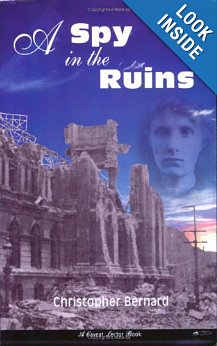
Christopher Bernard’s A Spy in the Ruins

“A Spy In The Ruins” by Christopher Bernard, is a very complex book. It is not a book that can be read quickly and just scanned through. The book is written well and you will want to sit down, put your feet up and drink a cup of tea or a cup of coffee and read it all the way through. I loved this book and highly recommend it. This book is definitely my cup of tea. Thank you Mr. Bernard for a wonderfully complex and great read!!

A Spy in the Ruins is available from Berkeley’s Regent Press and may be purchased here: http://www.amazon.com/A-Spy-Ruins-Christopher-Bernard/dp/1587901110/
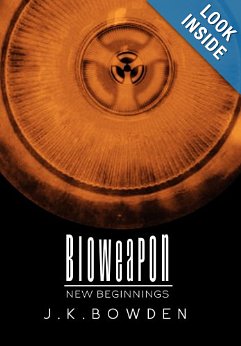
J.K. Bowden’s Bioweapon
‘Bioweapon’ by J.K. Bowden is a brilliant work of science fiction. I loved the book. ‘Bioweapon captured my interest from the start. It kind of makes you wonder how close human kind is to having microchips implanted in the brain and being controlled. The suspense and story flows from page to page, chapter to chapter. The writer captures and holds the interest of the reader to such an extent you don’t want to put the book down. I highly recommend this book. It is definitely’my cup of tea’. Thank you Mr. Bowden for an excellent work of science fiction. I am looking forward to reading the next installment of the ‘Bioweapon’ series.

 Jeremy Bowden’s Bioweapon may be purchased here: http://www.amazon.com/Bioweapon-New-Beginnings-J-K-Bowden/dp/1477159800/ref=sr_1_1?ie=UTF8&qid=1371147495&sr=8-1&keywords=bioweapon