“Spore Suite”: A poem by Teri Louise Kelly

SPORE SUITE


1.

Twisted like acid

Drops

My heart is a sanitary pad

No tears fall

In the desert of my soul

The wind howls

A serenade

My bones chime

Walking this empty land.


2.

Not fucked up,

Fucked down,

down to the pit

where beasts eat

& bodies squirm

where the pain is ecstasy

& the genocide reins

where sins multiply

& gargoyles laugh at impurity,

this hell you talk of,

exists within,

go to it,

consume its madness,

shit out its knowledge.


3.

Talk to me

through the bars,

I don’t bite,

listen to my words,

set me free,

hide me in

your chastity.


4.

Vomiting up boredom

pissing in the gutter

of dead end street

on another frail night;

shooting blanks into

another empty void;

needing nothing

wanting everything

fucking anything

drinking anything

chords & ropes & bells

& fists & boots & blood,

living here is ugly

in a beautiful way,

i was born on the tracks

run over by life.


5.

Those tenements of love we erected,

from bricks of lust & want,

crumbled in the tempest,

turning slowly to slums,

where bare-footed dwellers

& beggars, traded piety

for ammunition.

We could only sit and watch the fall,

stoned and inebriated,

through vacant eyes;

staring down wasteland promises

& shopping cart truths

wheeled through desolation

by promiscuous cunts

& vagabond slags.

We shed our clothes & our skin,

scoured rubble for clues,

until our bones bled;

builders we were,

Shakespearean sots,

architects of our own demise.


6.

Stilled by a bad blood transfusion;

thorazine shuffles toward identity crisis

inter-species communion, cerebral destitution

juice extraction – high-pitched screams

battery acid lozenges

creaking fairground rides

a non-ferrous  smile before you leap,

Out in the garden it/s raining ash

the running men sport surgical masks

jump-starting burned-out wrecks;

Beating hours on dead skin drums

with shinbone sticks

Re-winding time – re-engineering a house of pain stay

to meet all your serum needs

in pathos one they’re cooking spores,

spreading the word via pot-bellied microwaves

I can’t make it out on my own,

the exits are tied with intestinal tract,

the box is dead; the despot hung

All I got left to do, is sit here numb,

Dye my mind blonde

blend in with the pale-faced mob

as they run rampage

down dead clown alley

again tonight.


7.

despise it with a passion,

that four letter word,

loathe its manipulative device,

the way it blinds & corrupts,

spreads septic disease

tortures & kills romance

asphyxiates lust,

breeds infidelity;

that incestuous courtship it nurtures,

murders independence,

drags its swastika from the bedroom

to the courtroom.

Swaggering through lives

with bastard bravado,

& illegitimate sentiment,

bludgeoning honesty

coveting deceit;

love is a plague,

to which we all succumb . . .


8.

Let go or hold on,

watch the masks dissolve

the facts dissipate

in the murky gloom of innuendo

a moment dies

another is born,

there are no steps to retrace

no prints to track

this is the void between truth or dare,

the blurred line;

& you can stand or fall,

live or die,

on the strength of three words,

one heart,

two lies.
Synchronized Chaos, January 2013: Innovation

Welcome, readers, to the first Synchronized Chaos issue of 2013! A new year is a time for new ideas, and innovation is our theme for this month. Our contributors’ pieces involve some of the newest developments in a wide variety of fields—ranging from art to medicine to politics to economics—and all of them are well worth reading. Let’s take a look at this issue’s offerings and the concepts they cover…

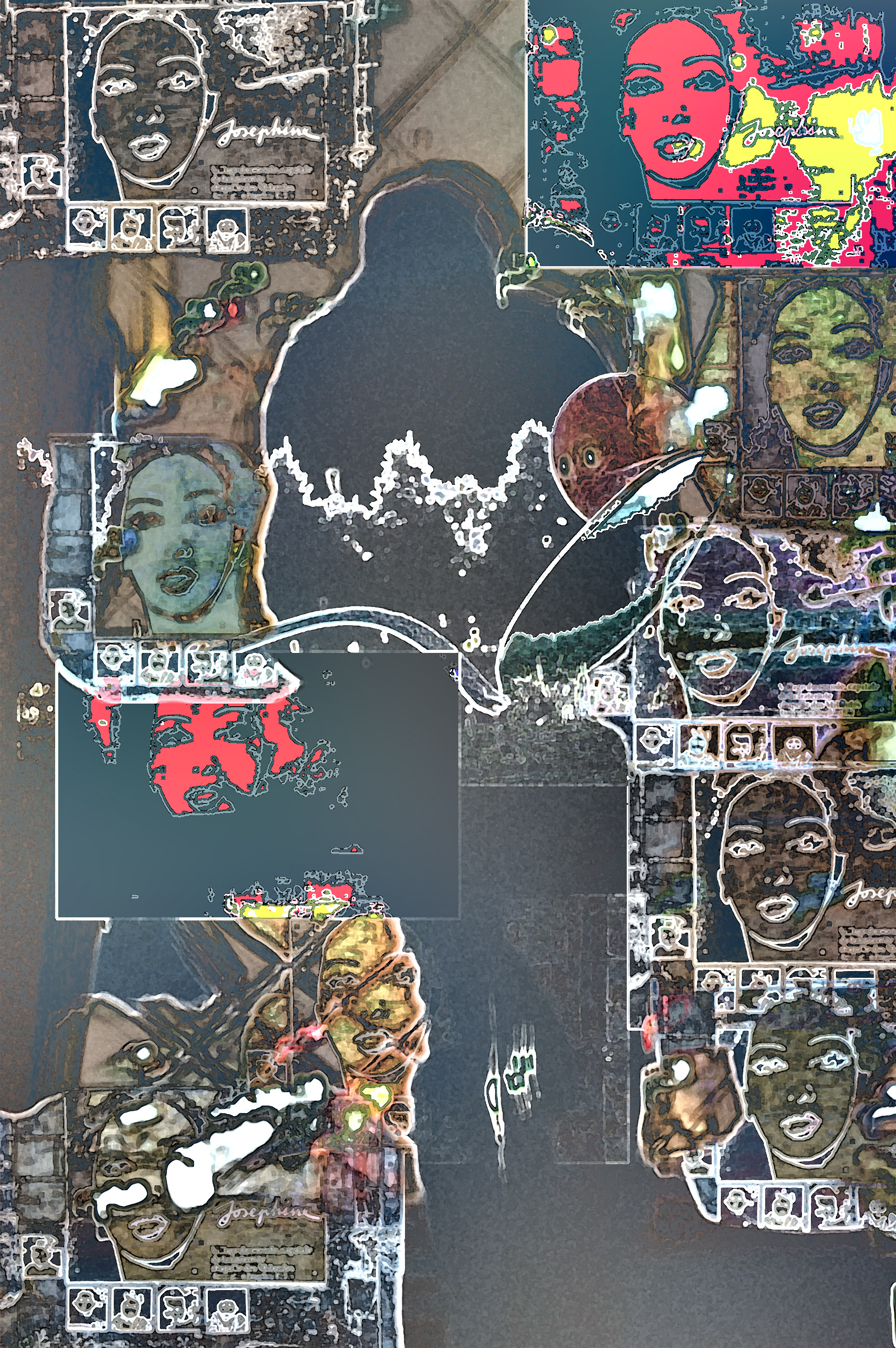
This month, Michael Dickel provides us with three visual pieces—striking, colorful, and powerful—and also a set of four finely-wrought poems. Two of the paintings are inspired by a pair of very innovative musicians: one from the past (Parisian legend Josephine Baker) and another from the present (Israeli singer David Broza). The poetry, meanwhile, portrays issues of the modern world, from violence to inequality to the emptiness of urban life, with unflinching honesty.

Like Michael’s, Julie Shavin’s contribution is made up of art as well as poetry. Each visual piece displays a new and different subject and tone: they range from household scenes to depictions of caves and bridges to abstract marvels, but they share a uniformly high quality. The poems are equally well-crafted, containing a number of philosophical meditations on life, creativity, and human relationships.

Olivia Weaver contributes a set of three excellent poems to this issue. They’re heavily influenced by the bleakness of the natural world, with fog, ice, wind, and harsh coldness setting the tone for “Winter Sundays” and “Oblivion.” The third piece, “Movement,” has an interesting connection with innovation, linking the simple act of motion to a form of creation and performance.

Each month, Leena Prasad’s column “Whose Brain Is It?” educates its readers on the latest developments in neuroscience. Given that this issue is being published at the same time as the New Year’s festivities, this month’s topic is especially timely: “Your Brain on Alcohol” deals with the effect of liquor on the human mind, detailing some of the damage which can be caused by persistent overindulgence.

Moving from neuroscience to climate science, we’re also featuring Randle Aubrey’s review of Dr. John J. Berger’s new book Climate Myths this month. As a writer on global warming, Berger finds himself faced with the need for immediate action in a situation so controversial that forward movement is almost impossible. As Randle points out, climate scientists must look towards the past (learning from the mistakes of history and the actions of those persecuted for their ideals) as well as the future (developing new strategies which can keep the world safe).

Scientific tactics are hardly confined to the world of the laboratory: today, they’re being applied in new and unusual arenas. In this issue, Cristina Deptula reports on a recent lecture by Dr. David Leinweber, who is bringing scientific knowledge to Wall Street: he uses innovative, advanced forms of data analysis to detect stock market fraud and help hold down the financial fluctuations which (as we’ve repeatedly learned) can cause so much damage.

Innovative ideas don’t always produce positive results. In his second essay for this month, “The Anti-Sex League and You,” Randle Aubrey covers some of the increasingly-disturbing new tactics being used by the GOP to legislate against abortion and birth control access. He points out that these laws seem more Oceanian than American: the ideals behind them are frighteningly similar to those of the repressive government of 1984. Perhaps Orwell’s predictions were merely off by a few decades?

We close out the issue with another article from the pen of Leena Prasad, who reviews a show filled with new ideas and methods for interpreting the written word. “You Need to Read Poetry,” put on by Performers Under Stress, contains a variety of poetry-related performances, from simple recitals to poetry slams to collaborative readings.

We hope you enjoy this month’s issue of Synchronized Chaos! As always, feel free to leave comments for the contributors; if you’re interested in submitting some of your work to the magazine, please send it over to synchchaos@gmail.com.

Your Brain on Alcohol: January’s Whose Brain Is It, a monthly neuroscience column by Leena Prasad


Presented within the flow of the lives of real people and fictional characters, this is a monthly exploration of how some parts of the brain work.

Your brain on alcohol…

by Leena Prasad

topic alcohol
region most of the brain
chemicals gamma–aminobutyric acid (GABA), glutamate

By the time Anand arrives at the nightclub, he is looking forward to a glass of single malt scotch. He walks in and immediately spots Matt.  “Your scotch is on its way,” Matt says. “You look like you need it.”

“Thanks, man.  My ex-wife—well, soon-to-be ex-wife—decided today that she doesn’t want to sign the divorce papers.”

Anand’s scotch arrives and they drink in silence while looking around at the stage at the far end where a DJ is setting up. “We are going to get drunk and pick up some chicks and have a great time,” Matt says. That is exactly what they do. Well, almost.

Drawing by Leena Prasad

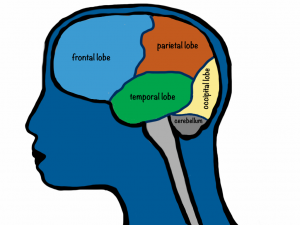
Using alcohol to relieve anxiety is a common practice in many cultures. The reason that it works is because alcohol turns off many parts of the brain, thus numbing their sensitivity. All regions of the brain are affected by alcohol, but some of the regions are affected more acutely than others. The cerebellum which is responsible for motor coordination such as balance and movement is implicated. The limbic system, in the temporal lobe, which handles emotions, consolidation of information, and basic physiological functions is also partly disabled. Parts of the frontal lobe responsible for memory and learning are short-circuited.


After their second glass of scotch, Anand and Matt walk up to the dance floor and approach two women who are dancing with each other.  Anand, who is usually quite shy, takes hold of the hand of one of the girls and spins her around. She likes it, so he does it a few more times. At this point, the amount of alcohol is causing a lack of inhibition, thus making him feel comfortable dancing with strangers. But if he continues to drink, his current poise is likely to turn into clumsy, uncoordinated movements.

Stressed about his wife’s refusal to sign the divorce papers, Anand has sought easy relief. The alcohol in his bloodstream causes activation of gamma–aminobutyric acid (GABA) neurotransmitters which are the chemicals that shut off many parts of the brain. Thus, he is acting out of character because many of the circuits in his brain are essentially “not working” and reducing his normal inhibitions.

Time goes by. It’s 1 in the morning and Matt and Anand are still at the club. They have had several more drinks. The girls are gone. They have no idea where the girls went because now they are clumsily and unsuccessfully trying to dance with other girls. Alcohol inhibits the activity of the glutamate neurotransmitters which causes neural excitement required for memory and learning. This will result in the possibility that Anand and Matt will not remember the people they met and some or all of their behavior. The degree to which a person is affected by alcohol varies by individual genetics, environmental shaping of the brain composition and also by the history of alcohol use and abuse.

When Anand gets home at 3 AM, he is not feeling well. He vomits after eating some crackers. He feels better and goes to sleep. Since alcohol increases the level of GABA receptors which turn off brain circuits, the increase is directly proportional to the amount of alcohol in the bloodstream. Thus an increase in bloodstream alcohol leads to turning off of more and more of the brain circuits until the neurons responsible for controlling breathing and heart rate start to become dysfunctional. This, obviously, can lead to death. Vomiting is the body’s’ way of protecting itself by getting rid of the toxic substance.

Chronic excessive alcohol consumption can lead to permanent neural degeneration.  One of the most well know of the alcohol induced diseases is Wernicke-Korsakoff Syndrome, characterized by memory loss, vision problems, physical coordination problems and other mental deficiencies. Some of the damage can be fixed by restoring the thiamine (vitamin B1) levels that are lost via alcohol consumption, but research does not generally support the regeneration of lost nerve cells. The amount of damage varies from person to person and is a factor of genetics, nutrition, and other personal environmental factors.

Drinking alcohol is not necessarily bad for your brain. But irresponsible chronic overindulgence can cause permanent irreversible damage to the most precious part of the human body.  A single overdose can kill you.


Upcoming…

February:  how do written words affect the brain?

**************************************

Leena Prasad has a writing portfolio at http://www.FishRidingABike.com. Links to earlier stories in her monthly column can be found at http://www.WhoseBrainIsIt.com.

Dr. Nicola Wolfe is a neuroscience consultant for this column. She earned her Ph.D. in Clinical Psychopharmacology from Harvard University and has taught neuroscience courses for over 20 years at various universities.

References:

  1. Doidge, Norman. The Brain That Changes Itself: Stories of Personal Triumph from the Frontiers of Brain Science. Penguin Group.
  2. U.S. Department of Health & Human Services’ National Institute On Alcohol Abuse & Alcoholism, http://pubs.niaaa.nih.gov


Performance Review: Leena Prasad on Performers under Stress’ production of “You Need to Read Poetry”

You Need to Read Poetry

__a review by Leena Prasad


poetry, dramatized

as conversations

as a dance

as experiences —

shared.


The group “Performers under Stress” has developed a unique and compelling presentation of poetry by invoking the dramatic arts of modern dance and theatre. The show titled “You Need to Read Poetry” had a run from November through December of 2012 in San Francisco SOMA’s Bindlestiff Studio. This is an enjoyable venture for anyone with even the slightest interest in poetry.

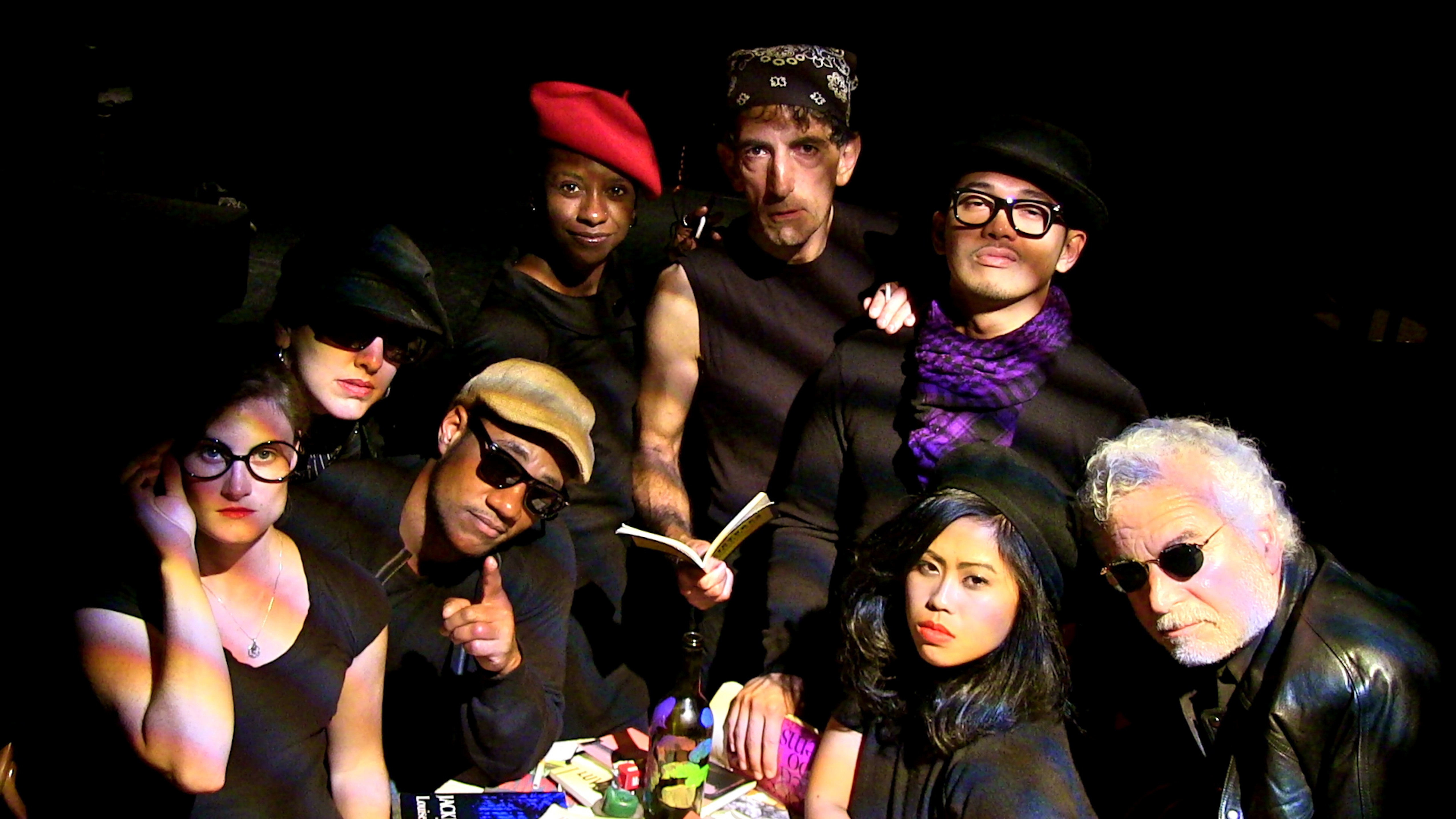
The actors infused life into the poems via dramatic readings in the form of interpretive dance, conversations, dramatic scenes, and sometimes simply by powerful vocal play. The eight performers of diverse ages, ethnicities, and genders worked together to create a poetic symphony. The black walls, ceilings and floor of the space and the (mostly) black clothes of the performers added another level of drama to the visual palate. A husky background sound, created by a woman playing a stand-up bass, infused a sense of intrigue.

The show featured over forty 20th and 21st century American poets, including Anne Sexton, Billy Collins, Charles Bukowski, e.e. cummings, Imamu Amiri Baraka, Jack Kerouac, and Lawrence Ferlinghetti.

“You Need to Read Poetry” was divided into two acts. The first act was outstanding. The second act has some room for fine-tuning.


Act 1

1. Let Me See Your Shadow

“Introduction to poetry” by Billy Collins kicked off the show. Then, the actors vocalized introductory phrases from many poets as the name of the poem and poet was printed in large white block letters against a black background film screen. In between, a black and white kaleidoscope of films rolled across the screen. One of the films was a clip from Martin Luther King’s “I have a dream” speech.

2. Love Poems

Delivered with a combination of seductive movements, theatrical performance, and vocal sultriness, the poems chosen for this set of scenes were captivating.  The scene header, however, should be Erotic Poems.

3. The Beats and Beyond

This was a full reading of several poems, executed in various forms ranging from dance to conversations to straight readings. The most remarkable performance was of the poem “San Francisco Scene” by Jack Kerouac. For this poem, the actors enacted a play set inside a bar where a poetry reading occurs with audience participation.


Act 2

1. Poetry Slam

This was the worst experience in the entire ensemble. The actual poets failed to show and thus the actors were inducted to present their own poems. One of the poets had to scramble to find one of his published poems on the internet. There were four readers. One woman sang, another one rapped, and two people read somewhat mediocre poetry. It did not have the spirit of a poetry slam, but the judges, selected from the audience, chose the rap song as one of the winning entries.

2. Stories from the Men

Several men shared the reading of one poem, adding their own individual interpretation to the lines, or one man read a poem in its entirety.

3. Stories from the Women

Similar to its male counterpart, this segment featured several women sharing the reading of one poem, adding their own individual interpretation to the lines, or one woman reading a poem in its entirety.

A particularly memorable rendition of the poem “Skin” by Lucia Perillo was performed by a beautiful Asian woman, who stood on stage wearing nothing but a red towel.  She used her exposed shoulders, bare legs, and voice to create a sultry effect. Despite being a heterosexual woman, I was completely enraptured by her sensuality.

The last performance in the show, “Cigarettes,” written by B.H. Fairchild, felt shrill and uninspiring, and it lasted too long. In my opinion, the show would be better off without this piece.

Overall, my friend and I enjoyed the night immensely and would probably go back to see another performance. I hope this show returns for another run in 2013.


This is Leena’s first formal poetry review. She runs a monthly poetry workshop and details on her experience with poetry can be found at her writing portfolio site: http://www.FishRidingABike.com.

More details about the show, the actors, and the director, can be found at http://www.PerformersUnderStress.com.

Cristina Deptula on Dr. David Leinweber’s lecture on the stock market

Science and technology revolutionized the early stock market, beginning with telegraphy and Thomas Edison’s stock ticker machine.  Later on, computers made almost instantaneous transactions possible, lessening the need for specialists and bringing aboard wider pools of investors, including robotic traders directed by computer algorithms. Nowadays, researchers and investment managers such as Dr. David Leinweber, of Lawrence Berkeley National Laboratory’s Computational Research Division’s Center for Innovative Financial Technology, seek to safeguard the market from fraud and excessive fluctuations by drawing upon tools previously used only for scientific research.

In his December 5th talk at San Francisco’s Mission District restaurant Picaro, Leinweber placed his team’s work in a historical context. In this way he articulated the role scientists and academics can play in this practical aspect of our society, the past and potential contributions of the “Nerds on Wall Street,” the title of his latest book.

Over tapas and sangria, a group of quirky freelance writers and university communications personnel attempted to grasp the complexity of today’s markets and what we might need to oversee them. After watching the demise of the dot-com and housing bubbles, many understand the importance of relying on common sense and not getting caught up in irrational speculation. However, how can we apply common sense in a world where computer programs automatically trade millions of shares per millisecond?

Leinweber and others are working to create and develop advanced tools to monitor and temper fluctuations stemming from the technology operating our capital markets. For example, recently we’ve seen companies’ stock price crash in less than a minute, due to faulty trading algorithms rather than estimates of the firm’s value and future earning power.  He and his team aim to put infrastructure in place that will detect these occurrences and ‘break the circuit’ leading to this kind of automated panic.

The level of data-intensive analysis required to accomplish this has never before been applied to finance. Yet it has become necessary nowadays, with the size and scope of our global trading. Also, our capital markets now involve multiple complex systems working together, and the combination can introduce instability, even when each individual system is stable on its own. Luckily, recent advances in computer technology have increased our capability to process large volumes of information, making the tools our markets require feasible to build.

In Nerds on Wall Street, which he outlined at Picaro, Leinweber also dissects a variety of analytical rules and guidelines hawked by financial advisors to help investors maximize profit. According to his data analysis, many of them prove rather arbitrary and haven’t brought clients the promised advantages. Some even sound humorous, relying upon certain teams’ performance in the Super Bowl or on the national mood at certain times of the year. While common sense can help people avoid many foolish investments, devising an optimal investment strategy now involves more than inferring a few rules of thumb.

Although he works as a quantitative investment manager, providing advice on how dinner guests could invest wisely was beyond the scope of Leinweber’s talk. He did, though, provide insight into the research behind Nerds on Wall Street, which has received mixed Amazon reviews but many endorsements from business journalists and professors of finance and management. The book intends to illuminate in a clever, funny way the technology operating and safeguarding our markets and seems an interesting and unique read.

Cristina Deptula is a writer from San Leandro, California. She can be reached at cedeptula@sbcglobal.net.

Poetry from Michael Dickel


1. A SHADOW OF DOUBT

from Touching the Dead

A moment looms large

but everyone

says to keep it small—

a pinpoint of light,

not a pretentious

epiphany.


Perhaps they are right,

these advisers, when

they counsel me to

keep my words down on

the floor with the dust

and debris swept up


by eager eyes on a

voyeuristic cruise

of the low domain.

There was, after all,

just a little fluid

smeared on the tiles. So


what if my pants were

wet at the knees from

his puke or piss that

escaped as the guard

slammed the riot stick

into him again


and again? The cloth

dried before he died.

I no longer held

him down when he stopped

breathing—between floors

I ran and ran, out


of breath myself,

a waist restraint use-

less in my left hand.

Counselors continue

to advise: deflate

dark recognition.


2. SALVATION

from Touching the Dead

But voices said: Too easy, too easy

from where you stand.

You have not touched our dead

or kissed the salty blood wounds.

Or buried your child every night,

buried your child deep in your fear,

deep in the mire below your basement

floor, to keep out the rats and brutes with guns

who crash through the door, who rape

as they cut apart the ruined remains.


You have not created a just order

in your world, the voices accuse.

Do not come to us for salvation.


No, I tell these voices. No,

my child is quite safe, it’s true.

How to say this? This, my guilt,

how to say this to you:

The knife wielders and club swingers,

room smashers and wrist cutters,

face hitters and rock throwers,

I guessed those were the ones

I could lock away. But


he fought against these—against the room,

against the leather restraints,

against the uniforms,

against the lock on the door,against the psychiatric intrusion,

Against feeding the machine,

the machine with the faceless How Many.


Tossed down by the guards,

the shouting at his head,

Listen, do you hear?

His grunts and gasps for air.

I thought it was justice.

Just bubbles in the red froth

from his mouth.

I turned away,

my slacks now wet

from kneeling.


You have not touched our dead

or buried your child, they said.

Do not come to us for salvation,

Too easy,

You have not touched

our dead or kissed and

buried your child every night,

buried your child

deep in the mire

below your basement floor,

brutes with guns

tear open

as they cut apart

this world.


Do not come to us for salvation.

We will not give you to it.


3. WHAT I DON’T KNOW

Dreams into words, but silence between

notes makes music—blue skies, red flowers.

A rhyme with something to do with love.

The contrast at the edge of meeting highlights

orange better than red: an opposite complement

to define. Marks form letters, white space shapes

words, words fill lines, lines stretch two dimensions

into infinity. Sound, air, breeze, fan the light

tickling behind my neck. Light, shadow, contrast

in shape and time and again, what? The chemical

exchange, electric spark in living tissue rises up,

a note heard, space recalled—falls back to spark,

exchanged, sung forth. The cerebellum, cortex,

amygdala, corpus callosum—parts create more

than can understand. The whole generates only part

of the meaning.


4. UPTOWN

What time and where your parking meters expire

really determines nothing in the scope of walking

down the streets where gunmen rob late night stragglers

staggering, star gazing along their Uptown nights

as the news bureau crates fear mongering and sells it

to advertisers for suburban life-styles and desperate

housewives watch themselves on tv, wishing they

could fulfill their own fantasies as well as the men

who control their lives fulfill nothing, nothing full,

nothing filled in the hyper tension drive of electronic

disguise, true crimes that keep us behind our locked

doors; I mean, who cares about parking tickets

at a time like this, the end time of end times,

millennium of millennia, Armageddon dawning

dark, dreary, disgusted amid soldiers falling

from skies without parachutes like chickens

exploding on impact, grounded at last; our

patrimony patriotic patter sputters away

to nothing more or less than your parking meters

expiring where and at what time, really

determining nothing, no scope, no walking,

no street, no gunmen, no staggering stragglers,

no gazing stars, no night, no news, no fear, no sale.


Michael Dickel’s prize-winning poetry, stories, & photographs have appeared in journals, books, & online—including: SketchbookZeek, Poetry MidwestNeon Beamwhy vandalism?, & Poetica Magazine. He lives and works in Jerusalem at the moment. His latest book of poems is Midwest / Mid-East: March 2012 Poetry Tour ( http://www.amazon.com/Midwest-Mid-East-March-2012-Poetry/dp/1105569136).

Book Review: Randle Aubrey on Dr. John J. Berger’s Climate Myths

In the opening of his book The Republican Brain, author Chris Mooney describes the tragic tale of the Marquis De Condorcet, a 16th century scholar and philosopher who played an instrumental role in the early stages of the foundation of the new Democratic government following the French Revolution. Condorcet was an eloquent, impassioned idealist of the Enlightenment, a man who fervently believed that the widespread dissemination of facts and reasoned arguments to the populace at large populace would stamp out the spread of politicized disinformation and divisive rhetoric that plagues the advancement of a free society. His vision was as naïve as it was noble, failing to account for the actual workings of the human mind and the ferocity with which the establishment resisted the spread of his idea, and his relentless pursuit of it, while incredibly heroic, ultimately led to exile, a life on the lam, and an untimely death at the hands of his inevitable captors. Great tragedy lies in Condorcet’s legacy, as legions of activists, scientists, and free thinkers have strived to advance this ultimately foolish ideal to the world. John J. Berger is the latest member of the climate science rank-and-file to tout Condorcet’s philosophy, and I’m sure he won’t be the last.

Climate Myths lays out in exquisite detail the history, methods, and guilty parties of the campaign against global climate change reform, indicting dozens of corporations, lobby groups, and think-tanks. This book is as insightful as it is exhausting; you wouldn’t believe the level of conspiracy in support of the fossil fuel industry, and the billions of dollars that have been spent keeping climate change reform off the table both here and abroad. After reading a seemingly endless string of facts and figures concerning the impending doom of the climate apocalypse and those responsible for it, a feeling of numb helplessness starts to creep in, coupled with an urgent desire to distract yourself with all due haste, in order to wipe the horrific images from your mind. The climate change debate has moved into an arena where rhetoric and ideology have all but supplanted reason and civil discourse, and while books like this are an invaluable asset to those who have already been swayed by the cause and are ready to fight, they offer little other than a bitter tale of woe to those on the sidelines who aren’t sure whom to believe, and are certainly not going to change the minds of any entrenched climate skeptics.

Those who believe climate change reform is worth fighting for need to learn from the failings of Condorcet’s legacy, and find new and innovative ways with which to bring the vital urgency of this issue to the widespread attention of our nation. More important than the facts themselves is the way in which they are presented, and climate change advocacy is in dire need of drastic rebranding if it is ever going to have any hope of being successful at anything other than preaching to the choir in the limited time table humanity has left.


Note: More information about Dr. Berger and his work can be found at his website, www.johnjberger.com