“The Anti-Sex League and You”: An essay by Randle Aubrey

A recent Google search under the topic “anti-choice legislation” (the collective umbrella under which restrictive abortion and birth control lie) reveals that America’s “War On Women” has certainly not ended so much as it has become unfashionable to speak on in the mainstream media once again. Michigan, Nebraska, Texas, Oklahoma…in these states and more, the debate rages on, reason and hysteria clashing again and again over exactly how much control a woman should have over her body. While I know most of you, especially the ladies, are tired of hearing one more (mostly) straight white guy tell you why this is either a good or bad idea, consider for a moment exactly what actual stake us menfolk have in this debate as well, and why it’s important.

All of the anti-choice legislation that is being flouted by the GOP today is designed not only to serve as a punishment to women, but also as a warning to men. For either gender, the message is clear: do NOT fuck under ANY circumstances other than that which is necessary: making babies. If you do it for any other reason, punishment will be swift and severe, and penance will be everlasting. Not only will women be forced to carry that child to term against their will no matter where it came from, but the idea of safe, non-committal sex is officially thrown under the bus, due to things like increased risk of exposure to STDs and astronomically higher odds of unwanted pregnancy. Let’s face it: most men, being the horny bastards that they are, are scared to death of both of these things, as monogamy is certainly NOT something that is well codified into our genetics.

So why would the GOP want to control men’s libidos as well, you ask? Because by controlling both, they have a direct handle on the sexual instinct itself. The people that push this legislation don’t want you to fuck, PERIOD. And there’s nothing moral about this, either. The truth of the matter is that energy is much better directed, in their eyes, towards the sort of myopic, hysteric, flag-sucking nationalism so critical to making the GOP’s larger platform the status quo.

“It was not merely that the sex instinct created a world of its own which was outside the Party’s control and which therefore had to be destroyed if possible. What was more important was that sexual privation induced hysteria, which was desirable because it could be transformed into war-fever and leader-worship…There was a direct intimate connexion between chastity and political orthodoxy. For how could the fear, the hatred, and the lunatic credulity which the Party needed in its members be kept at the right pitch, except by bottling down some powerful instinct and using it as a driving force? The sex impulse was dangerous to the Party, and the Party had turned it to account.”
-George Orwell, “1984”

Being one of mankind’s most base and powerful instincts, the amount of energy devoted, whether consciously or otherwise, to the act of reproduction is tremendous. By instilling heaping amounts of fear and guilt upon the sexual act, usually through some sort of religiously dogmatic pulpit-pounding in both church AND state, you can cut people (especially the lesser-educated ones) away from the desire for sexual expression, which is one of the cornerstones of freedom itself. When you start to imagine the immense power that can be harnessed there to garner support greater and perhaps more insidious goals – such as perpetuating endless war-for-profit or the furthered concentration of wealth through monopoly and oligarchy – it becomes abundantly clear why legislation like this is so overwhelmingly favored by the Right: because it works. You can see it in the way your average fundie’s eyes glaze over and he or she assumes almost reverent tones when spouting talking points regarding issues like our supposed “War On Terror”, the protection of America’s “job creators”, and things like entitlement reform. The overwhelming majority of these same people also stand firmly behind anti-choice legislation, while in the same breath claiming to champion “freedom” and “liberty’ without the slightest trace of irony in a stunning example of collective doublethink. America’s Anti-Sex League has done its job well, supplanting sexytime with standing for the Pledge throughout vast swaths of our nation. Nineteen-Eighty-Four was written as a cautionary tale, not as a primer for empire-building. It’s clear that the Right long ago discovered the former; when will the proletariat discover the latter?
Poetry from Julie Shavin

The Holding

A  door like a sun is in front of you
and the screams have begun. It seems
all things ruminate themselves to ruin.

Remember how even your own fire poisoned you
the oxygen thin and cluttered,
your voice sputtered to a consonant.

In the glorious beginning, snow sang
in the darling anatomies of trees,
knowing them in the deep of day.

Birds swooped in and around
the bare-branch mazes,
needle and threading with their trills.

This interior door swaddles you –
what you always wanted, they accused:
you who loped up grassy slopes

and careened on cardboard flats,
who avoided the witch in the woods
with freaked out glee:

who sat on dappled rocks dolloped
in ice cream and sweat –
you did everything right.

Why then the glass-paneled door?
Again, this night, unfurl the velvet dark:
Blind the eyes of the door.

Yes, the dreams will come back,
blue, and black. The door too dreams
of being wall.

Yet it holds.


Deep Night Wings

By night and day I write you,
partner of thirty turns about the sun.
You’ve demanded the rest in silence.

I type yes.

Writing is quiet pursuit,
a lone cow corralled,
grazing on alluvial grain.

I’ll be a hush like deep night wings
humble as the moon
with her referred light.

Already, I was in flight
already a stone divined,
its music near-dismissed.

The sky and spheres
seem quite complete
in their apparent arrest

but fold me into their vast black nest.


Why Assume 

there is nothing to be learned
from the one shivering bird
in the anorexic tree as dawn
lends its coral collar to the
coming paste-faced day?
The violated instinct
is a most worthy instructor,
yet we fold frigidly away
to protect our many mansions,
crying ourselves to sleep like
hollow-bellied babies
bursting our battings
with excess of goodness.


The Android Speaks: Winter Trilogy

I.

There is only so much time
to start what is already started
and forgotten
unseeing the start from the end
that, ending, began it –

be certain never
to answer the door to a dream –
it is a trick, that knock.
Sleep like oasis among oases
desert among mirages of gold.

Ponder the time between times
spent thinking about places
on rims of places,
how minor tragedies
are major in mode

life to the spirit, which,
dreaming or awake
are no molten things
when the light of dark
drifts…..drifts in.

II.

I need pencil or pen
and there are none
and it is – did I say it?
it is cold.  Again.

The worm sits thick
in its bricklayer belowness
the bird follows
its other eye
leaves dream their bones
to dust
skeleton trees sing
their raspy airs.

What does not succumb
to ice, fire or flood
and how to go without writing
with a madness in the blood?

III.

This tall wide piece of plywood
in front of me as I sit
with a small lamp,
reading –

is ugly, old, discolored,
one tiny dead leaf stuck to it.
I study this throwaway from
some throwaway project.

Many shades of brown
white moldy circles at the top
striations, rutted black lines
pits, blots, pocks.

And now … ? I see beauty, as though
seized in a near-death experience
as though they’re not all that
and should not be.


[Note: “The Holding” was previously printed in the anthology Finding Our Voices, and “Why Assume” was previously printed in Julie’s collection Of Mortality A Music.]


Julianza (Julie) Shavin is a composer, poet, and visual artist. Most recently, she was awarded second prize and two honorable mentions in Telluride Arts Organization’s Mark Fischer contest, and in November had three poems published in “Messages From the Hidden Lake,” Alamosa, CO.  A recipient of three Pikes Peak Arts Council grants, she was named 2011 Performance Poet of the Year; in September, Pikes Peak Page Poet.  Shavin has two chapbooks and a collection, Of Mortality a Music.  Her poems are published regularly in literary journals, which sometimes feature her artwork inside or as cover. She currently has four recent compositions/improvs on YouTube and is in process of recording her earlier works. Shavin is past-President of Poetry West (www.poetrywest.org), currently serving as Vice-President.  She is an animal welfare advocate/activist, working with Pikes Peak Animal Rights Team, National Mill Dog Rescue, Denver Animal Protection League, and many others. 

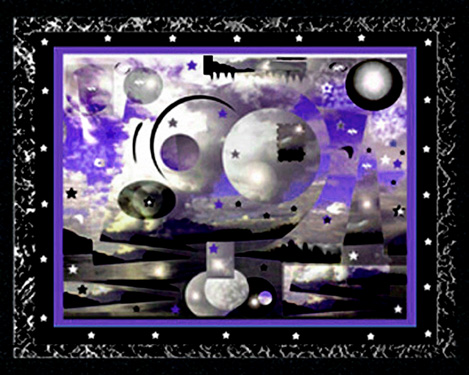
Art from Julie Shavin

Julianza (Julie) Shavin is a composer, poet, and visual artist. Most recently, she was awarded second prize and two honorable mentions in Telluride Arts Organization’s Mark Fischer contest, and in November had three poems published in “Messages From the Hidden Lake,” Alamosa, CO.  A recipient of three Pikes Peak Arts Council grants, she was named 2011 Performance Poet of the Year; in September, Pikes Peak Page Poet.  Shavin has two chapbooks and a collection, Of Mortality a Music.  Her poems are published regularly in literary journals, which sometimes feature her artwork inside or as cover. She currently has four recent compositions/improvs on YouTube and is in process of recording her earlier works. Shavin is past-President of Poetry West (www.poetrywest.org), currently serving as Vice-President.  She is an animal welfare advocate/activist, working with Pikes Peak Animal Rights Team, National Mill Dog Rescue, Denver Animal Protection League, and many others. 

Art from Michael Dickel

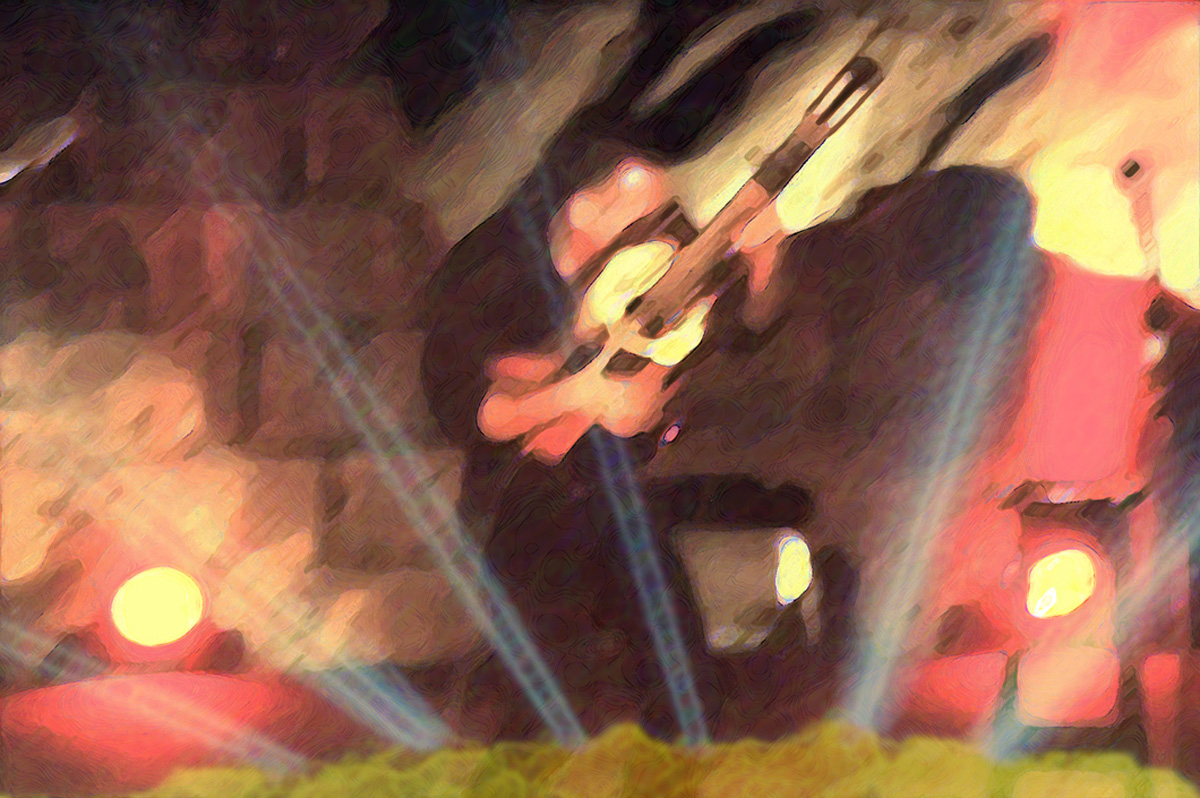
David Broza at Masada

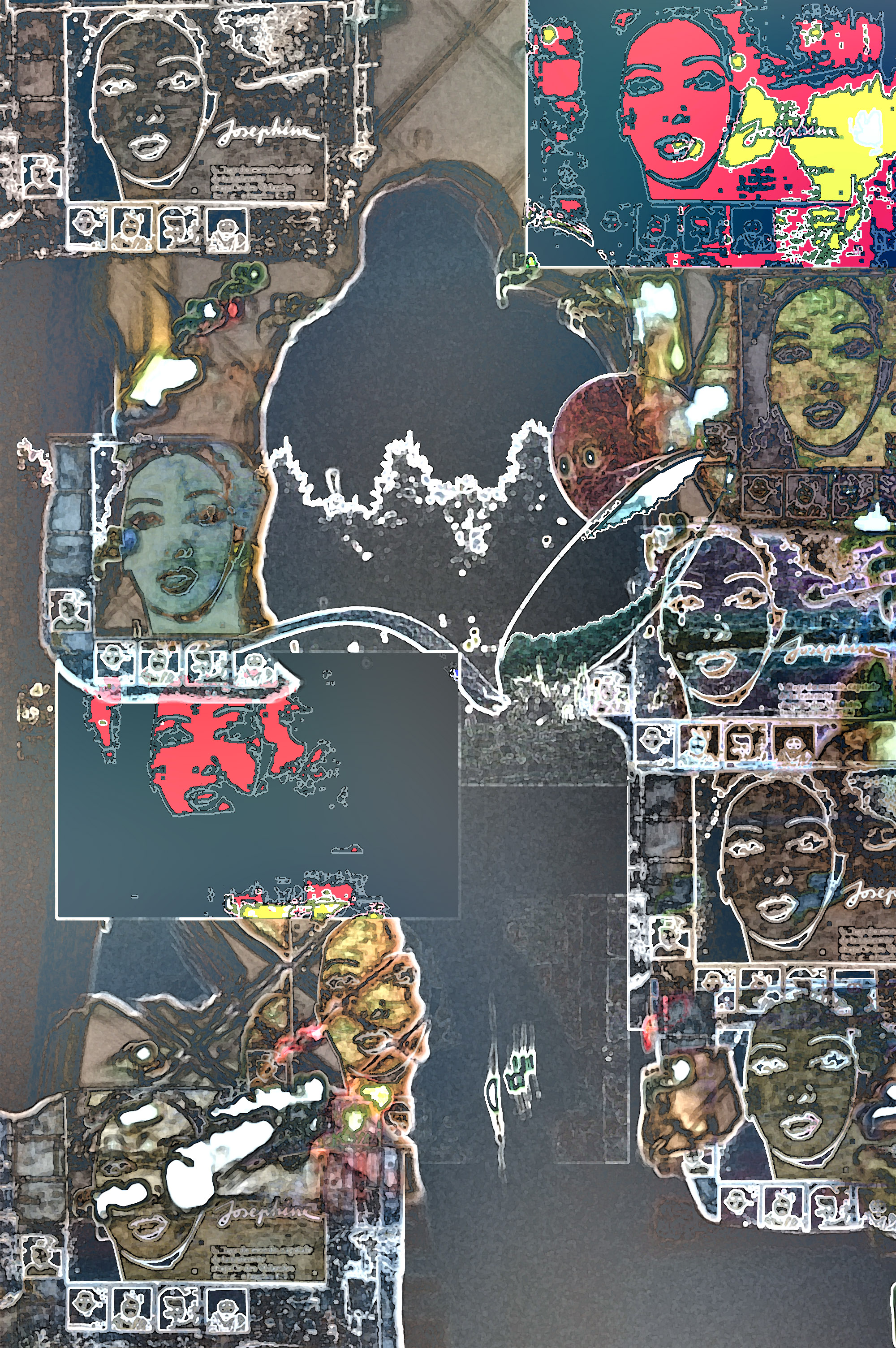
Josephine Baker in France

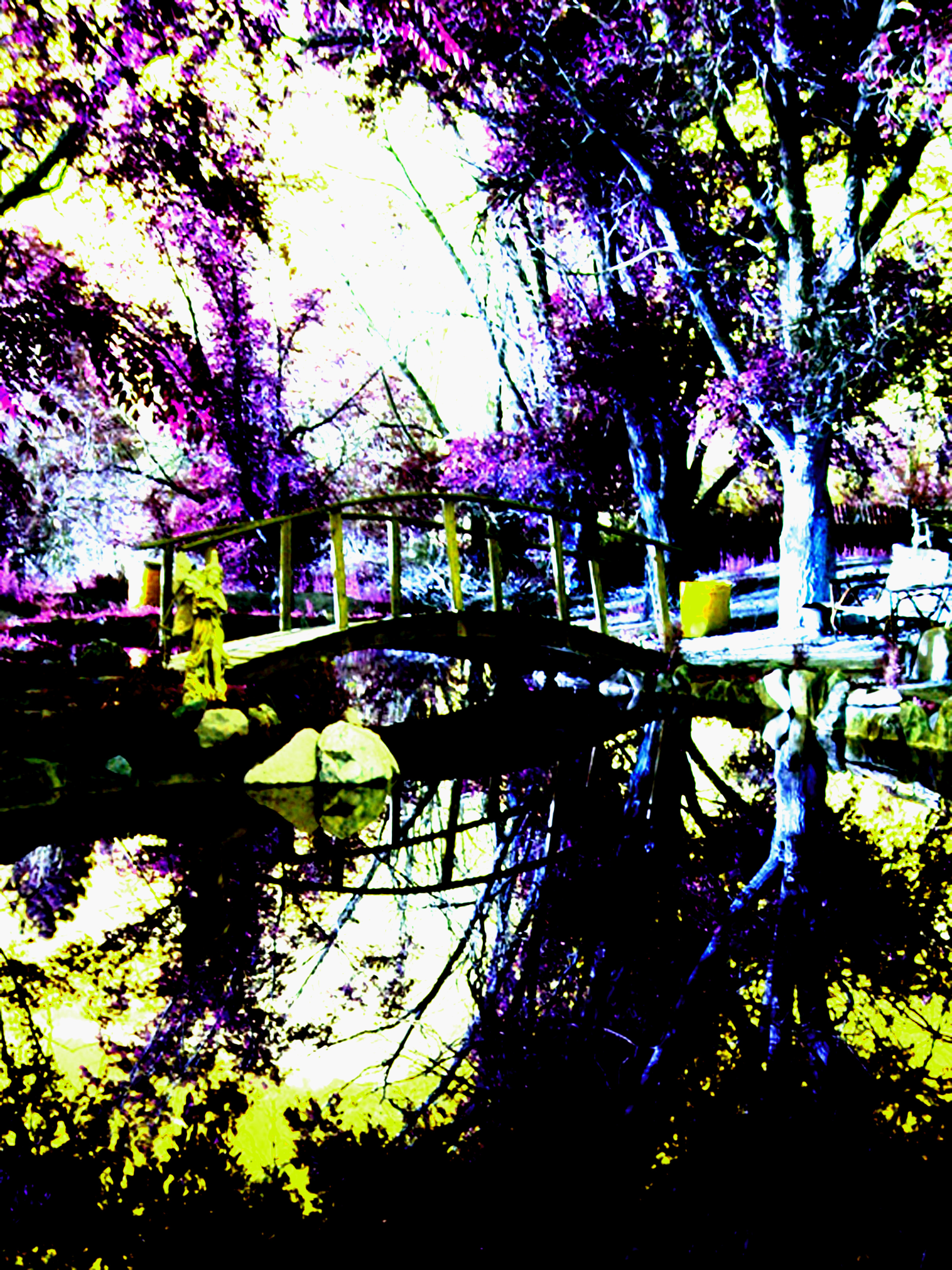
Last Night’s Storm

Michael Dickel’s prize-winning poetry, stories, & photographs have appeared in journals, books, & online—including: SketchbookZeek, Poetry MidwestNeon Beamwhy vandalism?, & Poetica Magazine. He lives and works in Jerusalem at the moment. His latest book of poems is Midwest / Mid-East: March 2012 Poetry Tour ( http://www.amazon.com/Midwest-Mid-East-March-2012-Poetry/dp/1105569136).

Poetry from Olivia Weaver

Winter Sundays

I would wake and hear the cold splintering, breaking

Pull free from the red balmy quilts, almost suffocating

Slip through the gloomy hallways, bigger when they’re sleeping

Trace my fingers through the grooves in the cold walls until

I’d find the soft gleaming of the heater’s metal switch,

Shining like some imitation North Star

Flick it over, listening for the distant thrumming


I used to pretend there was a dragon rumbling

Somewhere within the walls, blooming smoke

A purring furnace against the


Wild howling of the winter

Banging on the door, stamping on the steps, muttering under the sill


The cold is crippling

I’d nest in the plush covers on the couch

Curl within that circle of heat, almost smoldering

Watching through the wide windows the blurring of the whites

The shell of the fresh-fallen sun and the crackling of the snow

The sky and the ground lost definition and merged


I wanted to see the sunrise

Wanted to see those colors play on the blank screen of the ground

Wanted to see the lights pull free from heavy quilts, too

Wanted to see them shatter like mosaics on the ice

But the colors smudged under my eyelids

And when I woke again, dawn was washing her paints off her hands


Oblivion

I’ll take you to my secret places

My scared places, here, shrouded

Veiled behind layers of thick, sleepy mists

On this fading cliff face

I peer into the distance

The city is swathed in heavy gray, stretching


I feel nothing

But the dew that freezes

In the marrow of my bones

I become one with the cold


I hear nothing

Only the gales that roar

Along the folds of my ears

They smother out any possibilities of sound


I cannot smell the world’s ugliness

The rushing fog that howls around me

Swirls into me, through me

The only scent here is ice


My tongue, exposed, is stripped

I feel white soldiers shrinking behind my gums

This probing fog grapples

My yawn is interrupted by chattering teeth


I see surreal

I came here often, and I dreamed

Too much

I was blindfolded by sight alone


Only silhouettes of phantoms,

Shadows of echoes, remain

These spiraling sprits that infiltrate the sky

And leave their damp footprints in my home


Movement

Caught the corner on a gate

Jerked backwards

Askew


Meant to be a dancer

Meant to be a lily, meant to

Be a fencer’s tip or a fish scale

Lost in a revolving door


Turning and hidden

A mind full of mirrors

Eyes like planets

Spinning, heartbeat spinning


Would have been flight

A smooth movement

Would have been more than

Crooked smiles


Fingers like unfurling ferns

Budding fruit, but interrupted

Meant to be a swan, came out a

Boy

Synchronized Chaos, December 2012: Hope and Faith

As we ring in the month of December with this issue of Synchronized Chaos, the holidays are just around the corner. Hope and faith, besides being among the guiding forces of many great works of art, are the cornerstones of the celebrations which will be occurring later this month, so we thought we might make this month’s issue an examination of them. Let’s see what our contributors have to say about hope and faith in all their varied forms…

Hope can sometimes be found in unexpected places, as two of our commentators for this month point out. Dee Allen’s poetry collection Unwritten Law (reviewed here by Sarah Melton) does not shy away from harsh truths: the poet expresses bitter anger at the hate and oppression which is so prevalent in modern society. Yet, as Sarah explains, an element of optimism and life-affirming joy can still be detected in his works. Similar sentiments exist in the works of San Francisco artist James Irvine Taylor, whose exhibition at the local CAP gallery is covered by Randle Aubrey. Taylor’s pieces—brightly colored, imaginative, and sometimes science-fictional—convey the feeling that we’re heading toward a utopian future.

A number of pieces this month express hope for political or cultural change. Randle Aubrey’s essay “The Propaganda Machine: Don’t Get Fooled Again” aims to educate its readers on the number of falsehoods and inaccuracies being bandied about by the American media and looks forward to the building of a more knowledgeable and aware society. Ayk Afowolokoyasire contributes “On Recent Events: Ours Is a Nation,” an examination of the current political situation in Nigeria which criticizes the destructive actions of the Boko Haram, expressing hope for the strengthening of communal bonds and the establishment of peace. Political themes are also at the forefront in Richard Gigax’s novel The Great Escape, whose first two chapters are excerpted here: taking place in the near future, it deals with governmental corruption, revolution, and murder as seen through the eyes of a child.

In this month’s installment of her column Whose Brain Is It?, Leena Prasad examines the topic of obsessive-compulsive disorder. With a positive and optimistic tone, she focuses on therapeutic options, discussing the human brain’s neuroplasticity (the potential for change in its neural circuits) and the ways in which it expedites the condition’s treatment.

We’re also featuring a number of visual pieces in this issue, and many of them are infused with a sense of hope. Michael Dickel gives us several pieces of digital art representing scenes from nature: birds and butterflies in flight, flowers blooming, green trees over blue water. Each one is beautifully crafted, featuring vivid colors and a sense of movement. Michael also contributes five poems, as varied as they are well-written; they range from character studies to political statements to abstract pieces.

More visual art comes from Philip Ma, whose imaginative and innovative works include an awe-inspiring depiction of an Italian cathedral and the exhilarating sight of a winged car swooping over a crowded street, and Brenden Sanborn, who gives us a superb series of portraits emphasizing the beauty of the human body. Be sure to take a look at the work of both artists!

One of the motivating forces behind scientific inquiry is our hope that we can learn more about the mysteries of the universe. In this issue, Cristina Deptula reports on a recent lecture by UC-Berkeley’s Dr. Jason Dexter, who explained the nature of black holes and described some of the recent advancements in our abilities to observe them. And, speaking of things mysterious, don’t forget to check out Loretta Siegel’s poem “Mystery,” which weaves elements of the natural world together with a sense of unforgettable wonder and curiosity.

A happy ending in a work of art can always inspire hope in its readers. Randle Aubrey, making his third appearance in this issue, reviews San Jose Opera’s recent production of Johann Strauss’ Die Fledermaus, and he emphasizes the contrast between its lighthearted, pleasant resolution and the grandiose tragedies of other operas. In another of this issue’s reviews, Joy Ding examines Thao P. Nguyen’s one-woman show Fortunate Daughter and highlights the satisfying and emotionally affecting resolution of the play’s storyline. DanaLynne Johnson’s poem “Tumbling” also features a positive conclusion: it’s a well-written portrayal of initial trepidation followed by eventual success. Read it, as well as two other excellent poems by DanaLynne, here.

However, the lack of hope can sometimes be a powerful subject as well. Regular contributor Sam Burks weighs in this month with a set of three poems, examining such subjects as the crushing effects of stagnancy on human emotions, the bleak atmosphere of autumn, and the psychological makeup of a cynical and amoral character. Some of the poetry of Kamilla Bøgedal also expresses a somewhat bleak outlook: the disintegration of positive values, the inability to pursue one’s dreams, and resignation to a negative future are among the themes of “Answers Are Imminent” and “Depression with a Rhyme-Scheme.”

With the holidays quickly approaching, it’s particularly appropriate that several of the works featured in this issue deal with religious faith. Kim Brown gives us two pieces on the subject: the poem “My Life Today,” which discusses the ways in which God’s gifts have molded her personality, and the prose piece “Kimberly Luves Is a Brand,” in which she discusses several of the facets of her personality and lifestyle, touching on the role of religion in several of them. Meanwhile, J’Rie Elliott contributes the poem “A Babe,” which hearkens back to the birth of Christ and reminds its readers to contemplate his life and lessons as they celebrate Christmas this year.

Another work which touches on religion is Janine Canan’s poetry collection Ardor: Poems of Life, which mixes postmodern verse and social commentary with a look at Goddess-based Eastern religion. In her review here, Kat Merriweather praises Canan’s writing, particularly her original and witty observations about the essence of poetry as a medium.

Christopher Bernard’s short story “Prisoner of Darkness” comes at religion from a different angle—it’s a probing and disturbing examination of Christian/Muslim relations in American society. Touching on religious, cultural, and gender-based prejudice, it’s a truly fascinating and complex piece.

Our final feature of the month is Bramani Quinn’s essay “Drawing Up Blueprints,” in which she urges her readers to plan out a path which might allow them to follow their dreams. If people have faith in themselves and work out a way to achieve their most important goals, they can take the first step in constructing more satisfying and fulfilling lives.

We hope you enjoy this month’s issue of Synchronized Chaos! As always, feel free to leave comments for the contributors; if you’re interested in submitting some of your work to the magazine, please send it over to synchchaos@gmail.com.