“My Life Today”: A poem by Kim Brown

Life is a mixture of blessings and curses?

I’m grieving for my soul in the world; I’m all tuckered out!

I opened my soul back up to this wicked world; seemed like the contented way to live?

Dummy laxed in this crooked old world; the world lacks in thought and care.

my soul irritated and disgusted by tradition and religion. I am who God called, not a clone!

Although I’ve come so far; lately loose, unbalanced and, incomplete.

My genetic make-up is Human; I know God feels me, I know He hears me, when my heart speaks!

God cannot and will not lie; his word lives forever and gives life to lost souls alike!

His forgiveness allows me to shine. I empower, I encourage and motivate others in his truth.

My heavenly father for my own guidance and insight.

I went out on a limb for trouble, the troubled world realm

Overjoyed by mildstone success; Still it seems that I could care less

I could care less about me; even my enemies are my friends

My feelings are induced by my privacy use.

I know that the key to winning the day.

I’ve been sober thinking and chatty writing with God.

I’m so grateful for a God who loves a sinner like me

I am a repeated offender of the sin He doesn’t approve of

I am not worthy of disciple obligation; according to his wisdom and truth.

Still I’m just real; my deceitful attempts won’t crown me world’s greatest champion.

God has promised to give me a new start; a peaceful and abundant march.

I am a walking miracle; one whose mind and heart God changed for the better.

One whose internal scars and wounds were healed because of my belief in Him

”Christ Jesus” that is… He died so that I could live, as graceful as he did.

I have knowledge, wisdom, and understanding; Love for all, I’m real!

Because of God I am honest and live in truth.

I am a servant and not a savior, a mediator and not a pleaser of Men.

I am who I’ve been created for in Him.

I am multi-talented women; I recognize my God given gifts!

Because my Father and heaven loves me so much. He even expresses love to me through foes!

Dear God you are the way; Father Thank you for holding on to me!

I know I’m only human and I will make mistakes…

THANK YOU, LORD, FOR YOUR SAVING GRACE; CLEAN ME UP TODAY.

Continue to clean my mind, body, and soul!!

Flood my surroundings, with people who mimic your temperament and ways!

Give me the courage to live out your life plan for me…

Dear Lord let me be a successful vessel, and steward for you

Let my Cup over flow, with countless blessings like a river bank every day!

Thank you for spiritual freedom and liberty; thank you for giving me back me!

In Jesus’ Name

Amen

Poetry from Sam Burks

The Stagnant

What death or sudden
stop of the tides
could feel worse than this?
Moment-to-moment
and back again,
eternity in a man’s body
hanging from the sun
the sun doesn’t move much anymore.
Nothing moves
except cargo trains
like endless vipers
carrying away my belongings
and the homeless ghosts
of my friends.
Our shadows remain behind
in a swarm of locust
eating the buildings of our city.
Nothing lasts forever
except for this


Autumn in the Winter

From atop the hill
over my house
I watched the summer
fade into winter.

There was no fall,
except for the sensation
in my stomach
where I felt it all
fall away, towards somewhere
deep and foreboding
inside of myself.
A whole season
no one noticed,
no one saw or felt
the hot air
turning the trees
into skeletons,
no one caught the sound
of windows shuttering
against the cold.

No one
was prepared
to bundle up.

We would all soon
be wrapping ourselves
in an early twilight,
deaf to the season
that we were too blind
to see

Look now:
the geese fading
into auburn sunsets,
the sweet rotting flesh
of jack-o-lantern faces,

the limbo between summer
and winter
has found a place
in the dried leaves


Poker

Cold and calculated,
a flick of the wrist executed,
a sleight of hand
and all the cards
on the table
have been taken off
and pinned
to the ceiling

from across the table
behind a thick veil of smoke
two sets of eyes
stare away
from the prize;
a new and different
treasure is sought

I make a move
among the statues
and granite pillars
juxtaposing a movement
without heartbeat
cheating, killing, stealing,
in the name of
my profit

A cold and calculated move
winning only to lose
a tact of mind
leaving only the heart
on the table


Sam Burks is from the San Francisco Bay Area, in California, and can be reached at srburks@gmail.com

Cristina Deptula on Dr. Jason Dexter’s lecture on black holes

Despite my childhood fancies, black holes aren’t about to scoop up the entire universe, or even everything in their paths. Dr. Jason Dexter of UC Berkeley demolished some common myths and provided some information about the mysterious objects during his volunteer enrichment talk at Oakland’s Chabot Space and Science Center.

Deep within the redwood forests of the Oakland Hills, the Chabot Space and Science Center welcomes museum guests and viewers for free Friday and Saturday night viewings through its three large telescopes. Used by professional astronomers, the two refracting and one reflecting scopes search out Mars, Venus, Saturn, and star clusters on the edge of our galaxy.

Chabot volunteers are encouraged to attend free science lectures, such as November 13th’s lecture from Dr. Dexter.

A black hole, according to Dexter, is simply an object in space so dense that even light that hits it cannot move fast enough to escape the pull of its gravity. Hence their name, since light does not reflect back to our eyes from black holes to allow us to see them. If our Sun became denser and exerted more gravity on our solar system, we wouldn’t necessarily get pulled inside it – just drawn closer. So, in the same way, plenty of black holes have stars stably orbiting them, at far enough distances not to be sucked inside.

Black holes result from the collapse of large stars, those greater than 25 times the mass of our sun. Stars 10-25 the sun’s mass become neutron stars, and those under ten times its mass turn into white dwarves. Also, giant black holes exist at the center of many galaxies, up to millions or billions the mass of the Sun. No one knows how or why these formed.

Astronomers and cosmologists can observe black holes by watching for changes in the velocities, orbits and accelerations of nearby stars. Also, material falling into a black hole forms a disc that gets very hot and glows as it crosses the edge, or event horizon. This enables us to ‘see’ black holes.

According to Dexter, “Black holes power the brightest objects in our universe. They’re extremely efficient at generating energy.”

For the rest of his talk, Dr. Dexter discussed current enhancements in our ability to observe black holes’ event horizons. Right now we view the effects of black holes through combined data from a global array of radio telescopes (California’s CARMA and observatories in Arizona and Hawaii). This group of scopes is known together as the Event Horizon Telescope. Researchers are building more telescopes around the world to add to this array, aiming to create sharper, higher-resolution images.

Scientists can locate black holes by noticing the Doppler Effect, where light appears to bend as it moves due to a large object’s gravity. Also, sometimes plasma jets of superheated matter escape from the glowing discs of particles about to enter a black hole. The Event Horizon Telescope has recently detected plasma jets from the area around the black hole at the center of the M87 galaxy, more than 50 million light years away from us. We had to look so far because the black hole at the center of our own galaxy appears too small to incite the formation of these plasma jets.

Dr. Dexter encouraged us to visit the website for the Event Horizon Telescope (eventhorizontelescope.org) to learn more about how we observe these objects, and to see some unique photos and animations.

This enrichment brought out a larger crowd, and everyone seemed engaged, peppering the speaker with plenty of questions. Afterwards, people stayed to discuss what had been quite a valuable and informative experience for those with all levels of background in astronomy.

Cristina Deptula is a writer from San Leandro, California. She can be reached at cedeptula@sbcglobal.net.

“Mystery”: A poem by Loretta Siegel


Mystery


When I am restless and forlorn,

Near sand and sea I am reborn.

Near dancing dogs and gulls that dive,

Near crashing surf I come alive.

I love your symphony so swift and sure,

Your harmony so sweet and pure.

Your waves first tall, then small, then gone.

I counted five, then three, then one.

But that one lingers just for me…..

I think I’ll call it “Mystery.”


Loretta Siegel may be reached at 510-582-1717 and lives in Hayward, California. She encourages readers to attend the Hayward City Library’s book clubs and writers’ groups. 

Performance Review: Joy Ding on Thao P. Nguyen’s Fortunate Daughter

Watching Thao P. Nguyen onstage during the second run of her autobiographical one-woman show Fortunate Daughter, it’s hard to imagine the play, and its protagonist as anything other than fully realized. In fact, during an interview with Thao, I was actually surprised to hear her mention writing jokes. I tend to think of writing as a grind, a process. In contrast, the jokes in Fortunate Daughter are so on pitch, so effortlessly funny that they are instantly believable – it is very difficult to think of them as anything other than perfectly recalled hilarious moments. That is the magic that Thao creates.

One-woman and one-man shows tend to get a bad rap, for a good reason. They are very difficult to do well. A single person has to embody multiple characters, and not only speak for them, but also portray the interactions between characters. Bad one-person plays don’t bother with the interactions, creating a ledger of monologues delivered with different affected mannerisms, rather than a show, populated with its own cast of characters.

Not so with Fortunate Daughter, directed by Martha Rynberg, and written and performed by Thao P. Nguyen. In Fortunate Daughter, Thao creates and inhabits a myriad of colorful characters, a full cast of fully realized people to take us through her struggle to reconcile for herself the pressures and expectations of two conflicting lives as a Vietnamese-American and a queer activist.

There’s a delightful scene where Thao is driving back to San Francisco with her mother while furtively texting her crush Priya. We get to watch Thao drive, text, react excitedly to Priya’s texts, and carry on a hilariously awkward one-sided conversation with her mother that goes something like this:

“Mom, how would you like to go to a dyke march?”

“What is a dyke? Well, a dyke is a woman. It’s a woman march, basically.”

“Oh lesbian! Okay, you know that word. Great!”

“Anyway there are going to be these women and they’re going to be in a parade. You like parades, right?”

Thao’s words, inflection, and expressive reactions create a place for a believable mother next to her in the car.

In another scene, Thao recreates all of the speakers on stage at an anti-Prop 8 rally, and the different reactions of rally attenders. Thao steps up on a chair, moves her body so it is loose and seductive, and becomes Foxy, a passionate, pouty drag queen; Thao steps down, her voice turns foggy and indistinct, she whirls her arms around as if to embrace the sky and she is HeatherFeather, who sings an African American slave song “Freedom”; Thao condenses back to herself, angry that the song has been appropriated, taken out of context.

Each of her characters has real presence; they become real for the audience. Given that, it is even more astounding that Thao is able to reanimate them, to re-hook the audience each time she walks off stage for a break, which she does at least four or five times in a 90 minute piece. That’s roughly once every 15 minutes. Rather than breaking the spell of the piece, these breaks do exactly the opposite. They only serve to further Thao’s charm; they make her main character even more believable, as her patter during the breaks shows the audience that hey, this is still Thao, even when she is supposedly not performing. It reiterates for the audience the common thread that ties the piece together, which is to say Thao’s viewpoint on the world: marked by exuberance, some naïveté, and genuine good humor. It is humor, and the willingness find the funny in hard situations that makes the play sing, and each time Thao breaks the play, whether for a public service announcement (“this sweat break is brought to you by Thao’s glands), or an unpretentious back and forth (“Hey, I’m working hard. Okay, you’re working hard too. Pause. “But I’m working harder) to ostensibly take a break, the humor remains. It is still Thao; we are still in her story.

When I asked Thao about humor, and why she found herself drawn to it, she said: “I’m a big feeler. I let myself feel all of my emotions. Sometimes when I feel too much, I need a release. I need to find something funny about the situation; it’s like I’m letting the air out of a balloon. Audiences need that too.” For Thao, humor is both a way out, and a way to address difficult issues. There is a remarkable scene, during which Thao imagines coming out to her father, and acts out three different ways he could react. It is the one moment of real, reactive anger in the play. Thao’s father becomes suddenly, immediately enraged. His words have a searing bite; the entire stage crackles with his anger. Then, Thao follows up with the hilarious reaction of an exuberant PFLAG wannabe father. This father runs around the room in his excitement and brags, “Mommy and I have a bet going about who you come out to first.” And then her father’s last reaction where he looks up, sighs, and looks back down; it is then that the audience realizes, with a sharp intake of break, that the last reaction – quiet disappointment – is worst of all, which could neither have been understood nor properly processed, without the juxtaposition of the first two. The audience is tense, out of breath, speechless – then Thao takes a break, cracks some jokes. The audience laughs, takes a breath and loosens their shoulders in the aftermath of that devastating scene, and then, they are ready for more, difficult or not. Thao’s masterful attention to this need for release allows Fortunate Daughter to address difficult issues, to be entertaining without being vacuous, thought provoking without being bleak.

Thao’s conflict and the way she ends up resolving it toward the end of the show is heartwarming and truly satisfying. Rather than taking a pre-packaged deal (coming out to your family = happiness and progress), Thao makes a truthful ending for herself. There are so many more moments I would like to share with you – the solemn deliberateness with which Emmy, Thao’s boss explains the complex reasoning behind their phone greeting (“Hello. This is Emmy. You’ve reached the QYC”); her father handing out business cards with Thao’s picture at her sister’s wedding, Thao’s windmilling arms as she edges out of a conversation – but really, you should just go see it, and anything else Thao decides to do. Because whatever story she decides to tell, it’s going to be a great one.


Joy Ding is a freelance editor and marketer living in San Francisco. You can reach her at joy.j.ding@gmail.com.

 

Becoming Someone Else…: December’s Whose Brain Is It, a monthly neuroscience column by Leena Prasad


Presented within the flow of the lives of real people and fictional characters, this is a monthly exploration of how some parts of the brain work.

Becoming someone else…

by Leena Prasad

topic neuroplasticity, i.e., brain’s ability to change
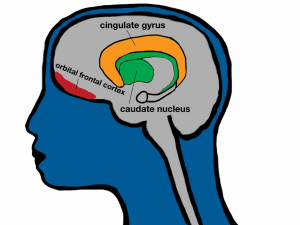
region orbital frontal cortex, cingulate gyrus, caudate nucleus

Dear Doctor Neurostein,

When my 18-year-old daughter was home from college recently, I noticed that she has become extremely germophobic. This makes sense, given that she is currently studying microbiology and is more aware of the ubiquity of microbes in the environment. But her behavior seems excessive. She washes her hands frequently, which is not such a bad thing, but she is doing this as much as 10-15 times in an hour and she also showers three times a day. She wears a mask while holding her year old baby brother (okay, I’m not too concerned about this because it’s probably a good safety measure) and when she does any cleaning at all around the house. Even for common activities like using the television remote control or opening the front door, she uses disposable gloves.

I’m worried that my daughter has or is at risk of developing OCD. Can you please explain how OCD works and what are my options in terms of helping her live a normal life?

Sincerely,

Concerned Mother

Dear Concerned Mother,

This may be a temporary reaction to her new knowledge of germs, but if the behavior persists please consult a therapist for professional diagnosis and discuss the options for treatment.

I will explain the mechanics of Obsessive Compulsive Disorder (OCD) and one potential treatment based on studies conducted by the University of California Los Angeles psychiatrist Jeffrey M. Schwartz.

As per Dr. Schwartz, OCD occurs when there is a problem in the region of the brain that is responsible for steering a person from one thought topic to another. In people with OCD, the caudate nucleus, also referred to as the “automatic gearshift” of the brain, gets jammed.

Before the caudate nucleus gets the signal to move on, however, there are a few other things that happen:

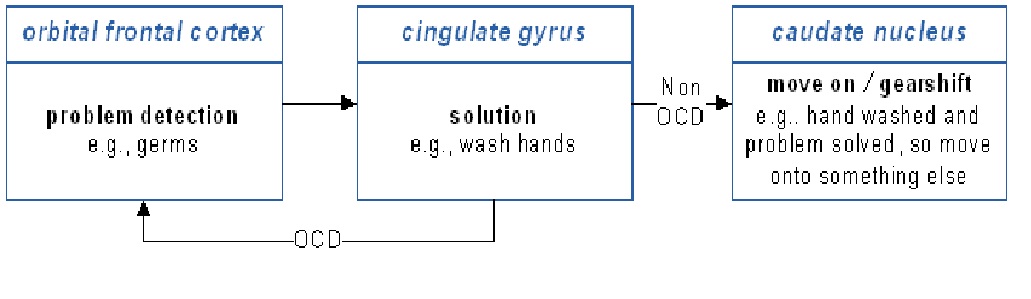
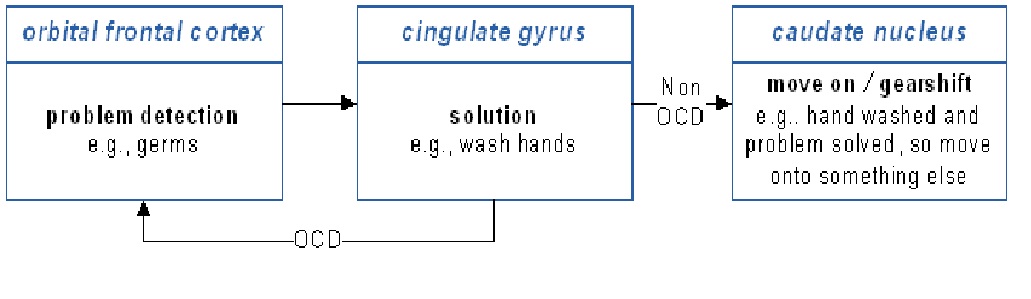
  1. The orbital frontal cortex detects a problem. The problem can be anything that is out of the ordinary. In your daughter’s case, it’s the existence of germs in anything that she might breathe in or touch.
  2. The orbital frontal cortex sends a message to the cingulate gyrus. The cingulate gyrus is the panic center. It triggers physical reactions in the body to perform actions to alleviate the anxiety caused by the “problem”, i.e., washing to eliminate germs.
  3. Once the person corrects the problem (e.g., by washing hands), the caudate nucleus is activated and moves the brain to a different thought. At this point, the orbital frontal cortex (1) and the cingulate gyrus (2) return to their normal state and the problem detection is inactivated since it’s no longer a concern.


In someone with OCD, step #3 does not occur, so steps #1 and #2 continue to occur in an infinite loop. In a non-OCD brain, all three steps occur and the brain’s organs return to their normal state.

Dr. Schwartz has developed a system which helps an OCD patient to break out of the infinite loop by causing step #3 to occur. His treatment encourages the caudate nucleus to move the person onto a different thought so that they break out of the compulsive cycle. His cure uses the theory of neuroplasticity. Neuroplasticity refers to the brain’s ability to weaken old neural circuits and develop new ones. It is similar to un-learning a behavior and learning a new one. In this case, the behavior applies to the neural synapses in the brain, that is, the brain circuitry forgets an old pattern of behavior and learns a new one.

The way that the treatment works is this:

  1. The patient is taught to become more aware of her OCD behavior such that when it happens, she can identify it as such. In your daughter’s case, if she gets the urge to wash her hands without any reason to do so, she can identify it as OCD behavior.
  2. Once the patient acknowledges that there is no real problem but an OCD reaction, she consciously tries to avoid her normal panic-avoidance reaction, and switches to a task that gives her pleasure. This may be difficult for some patients at first and may create anxiety. Patients use medication or yoga or other methodologies to mange this anxiety.  Perhaps you can try this with your daughter if you feel that she might be ready to talk about her problem. If this forced change in behavior causes panic, she can try some anxiety releasing techniques likes walking or listening to music, or mediation. Any of these techniques will also fulfill the role of the next step, step c.
  3. When the patient switches to a pleasant task, her brain secretes chemicals to reward her behavior. This reinforces the new behavior and it eventually becomes much easier for patients to practice this auto-switch and cause a mental gearshift.

As the patient repeats these steps, new connection form between the brain synapses and the old ones weaken and the brain does not get stuck in the infinite loops of steps 1-2.

In many ways, the concept of neuroplasticity is similar to unlearning bad habits and learning new ones, just a new spin on the concept of practice makes perfect. Neuroplasticity is not just about unlearning but it’s also about learning, i.e., creating new neural circuits. Thus it can be used to not just cure problems but also to learn new concepts regardless of the age of the brain.

It is possible that your daughter is already aware of her compulsive behavior. If not, I hope you are able to make her aware of her issues by pointing out the behavioral examples that you have given to me. Once she acknowledges her problem, you can show her this column to help her understand what is happening in her mind and one possible solution. Ultimately, however, a diagnosis and treatment should occur under the care of a professional therapist.

Dr. Neurostein

Upcoming…

January:  what exactly does alcohol do to your brain?

Leena Prasad has a writing portfolio at http://www.FishRidingABike.com. Links to earlier stories in her monthly column can be found at http://www.WhoseBrainIsIt.com.

Dr. Nicola Wolfe is a neuroscience consultant for this column. She earned her Ph.D. in Clinical Psychopharmacology fromHarvardUniversityand has taught neuroscience courses for over 20 years at various universities.

References:

  1. Doidge, Norman. The Brain That Changes Itself: Stories of Personal Triumph from the Frontiers of Brain Science. Penguin Group.

Art from Michael Dickel

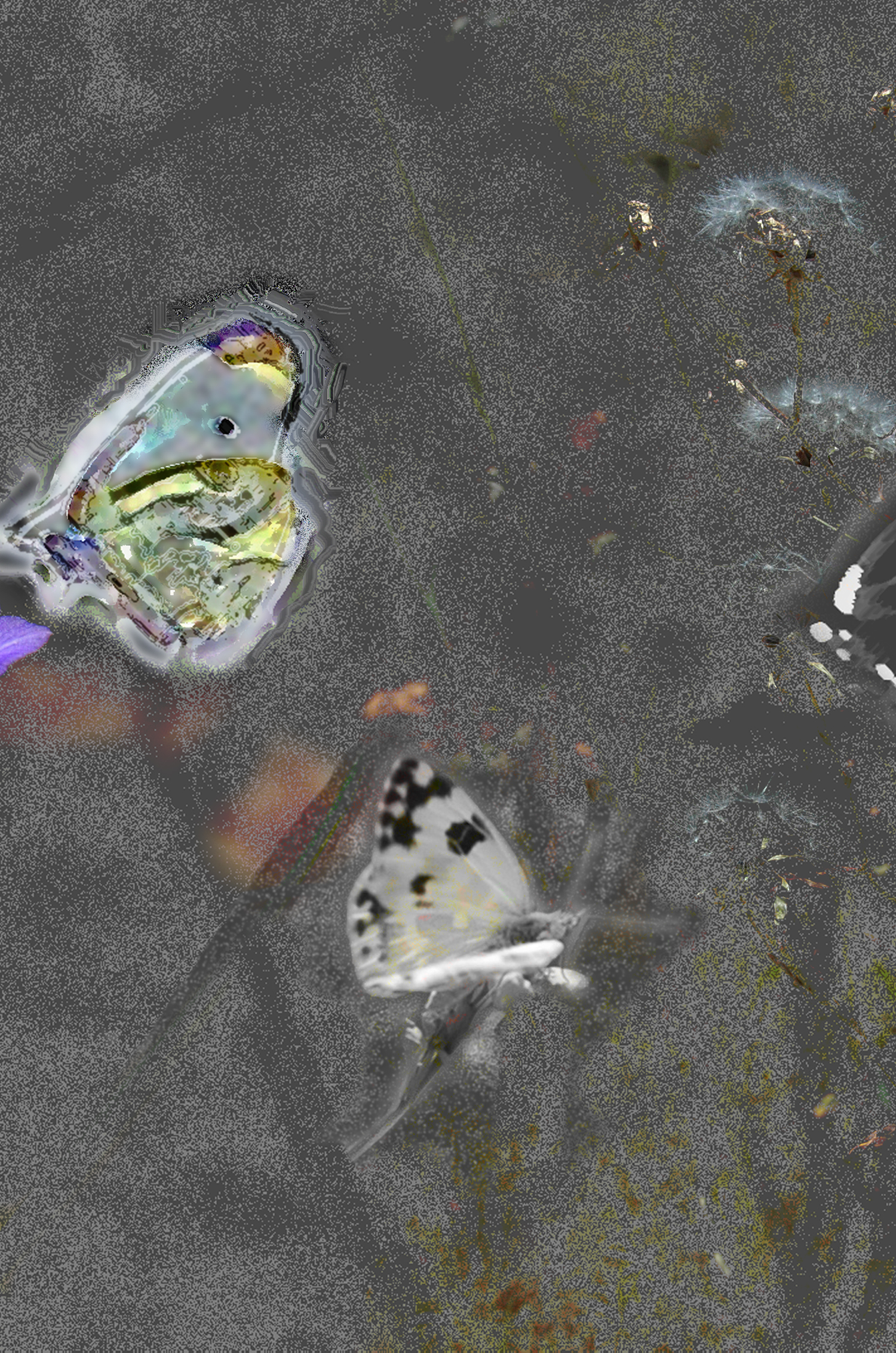
Butterflies

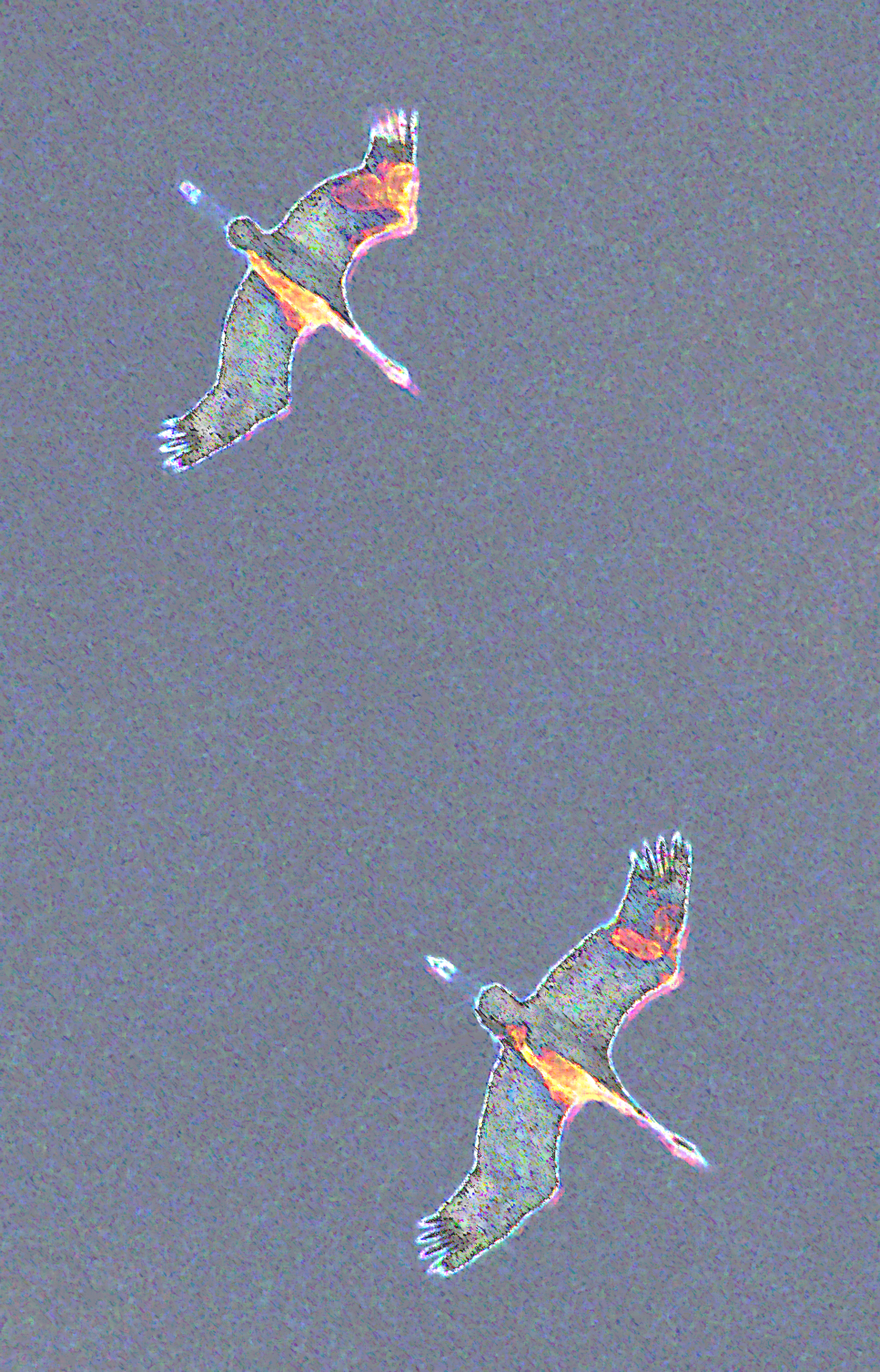
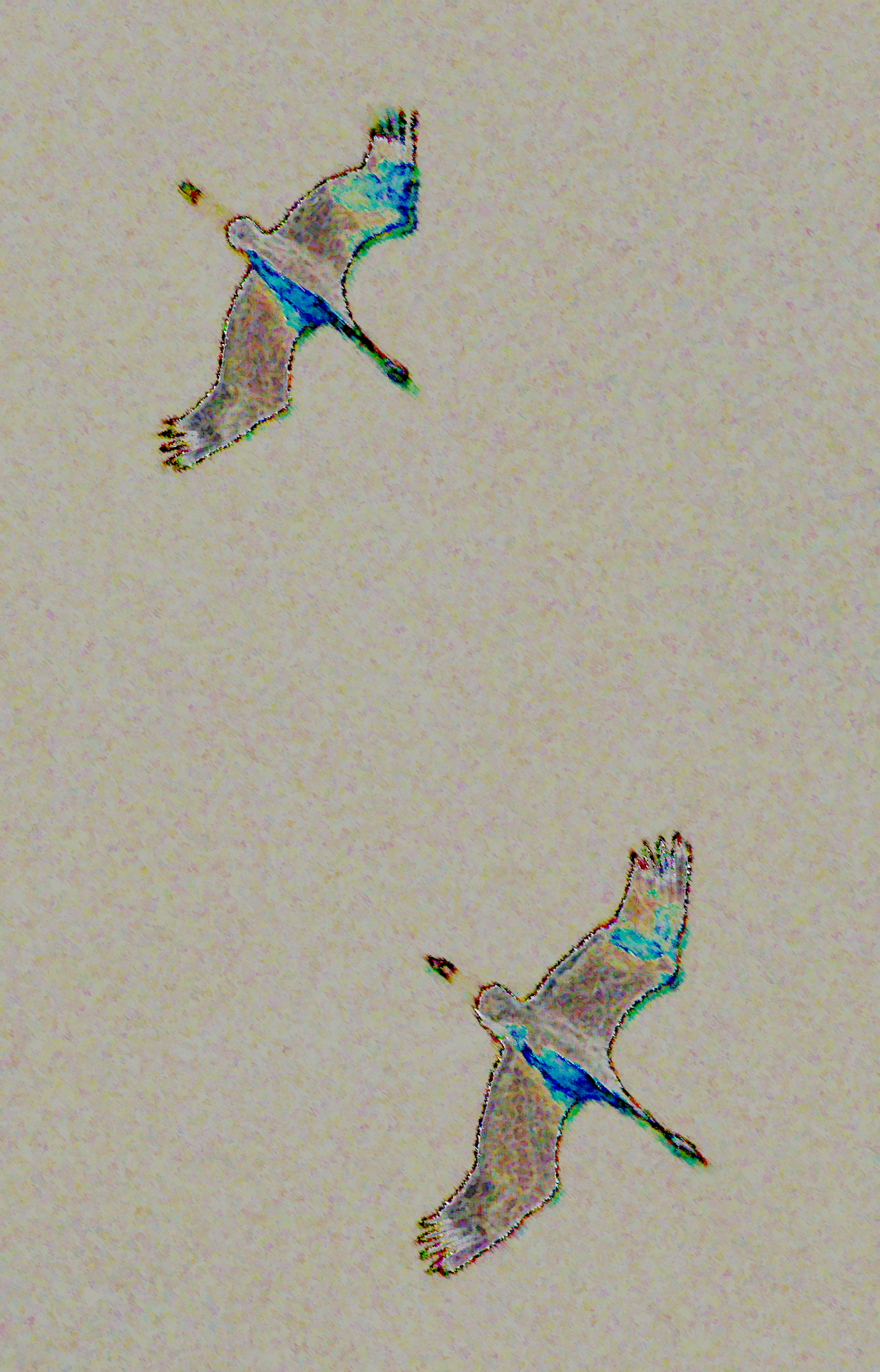
Two Cranes I

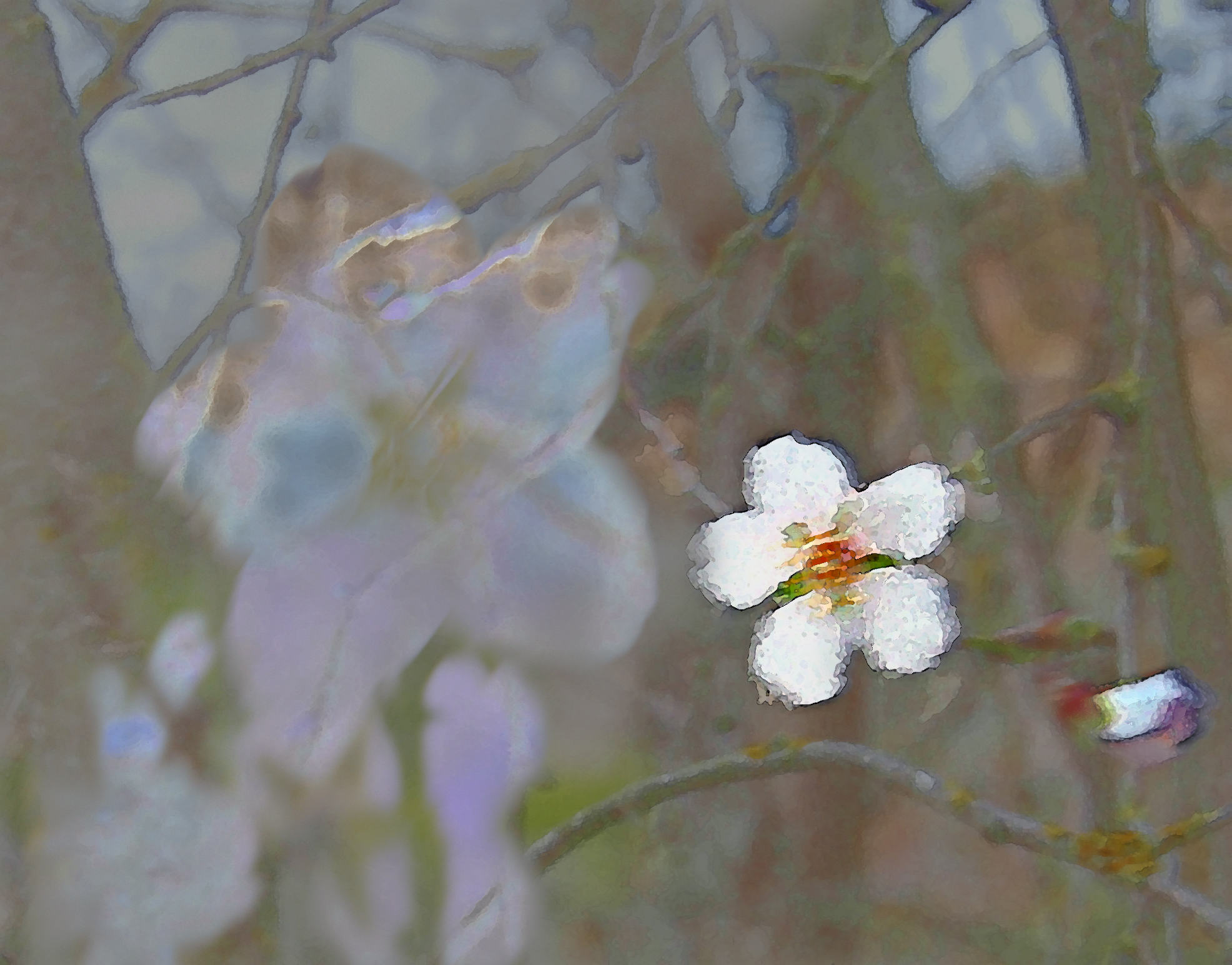
Almonds in Bloom

Two Cranes II

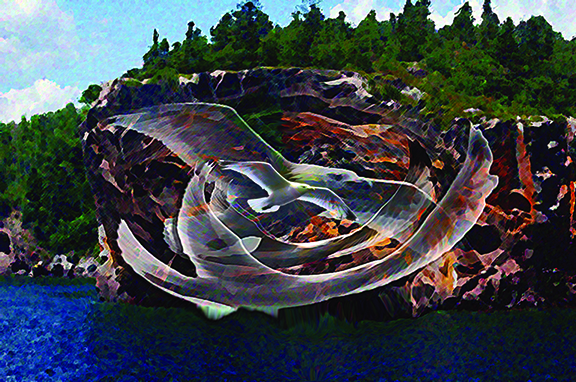
Sea Gull in Spiritual Flight

Michael Dickel’s prize-winning poetry, stories, & photographs have appeared in journals, books, & online—including: SketchbookZeek, Poetry MidwestNeon Beamwhy vandalism?, & Poetica Magazine. He lives and works in Jerusalem at the moment. His latest book of poems is Midwest / Mid-East: March 2012 Poetry Tour ( http://www.amazon.com/Midwest-Mid-East-March-2012-Poetry/dp/1105569136).