Excerpts from Evelyn Posamienter’s poetry collection Brainiography

GENETICS
i’m contending with the girl in the photo.
it could’ve been the day she began menstruating.
brain aflutter with lesions, i watch a blood bubble
blossom from the injection site on my thigh.
in the photo the girl knows she will continually
evade averse events with minimal success.
who goes there, flirting with disability?
in some dreams, there’s nothing on the shelves.
at the injection site, curious spirits gather.
the girl in the photo, the lesions, all in collusion.

____________________________________________________________________________________

THE ALLEY
brain finds an alley to hide in.
no one knows which city lies ahead.
i am thinking of the city of my youth. this city
does not consider itself allied with me.
brain thinks about the lesions, sweet
white spots. brain thinks this looks good on me.
i am holding the city of my youth
& when you shake it, snow falls & settles.
truth talks to brain in alley.
alley trickles off map.

___________________________________________________________________________________

ELEVEN BRAINS
eleven printouts of my brain in an interoffice
envelope. eleven brains vying for my attention.
names crossed out, lists of undesireables.
days like this lie in wait.
eleven dreams stand at attention.
i know who they will become, if i look away.
i saw the brains myself emerge from the copier.
who will receive them, these flat brains.
sweet disease, said the maniac, as she struck
eleven brains from the invitation list.

These poems are excerpted from Evelyn Posamienter’s poem collection Brainiography, first published in 2006. The work is available here: 

http://www.argotistonline.co.uk/BRAINIOGRAPHY.pdf


From patches of light and a few clouds to a model of an atmosphere: UC Berkeley’s Dr. Adamkovics on Saturn’s moons


By Staff Writer Cristina Deptula

Earth is not the only body in the solar system with an atmosphere, so it’s not the only place with weather! Researchers such as UC Berkeley’s Dr. Mate Adamkovics, who came out to the Chabot Museum for June’s volunteer enrichment talk, predict weather on Saturn’s moons based on astronomical observations.

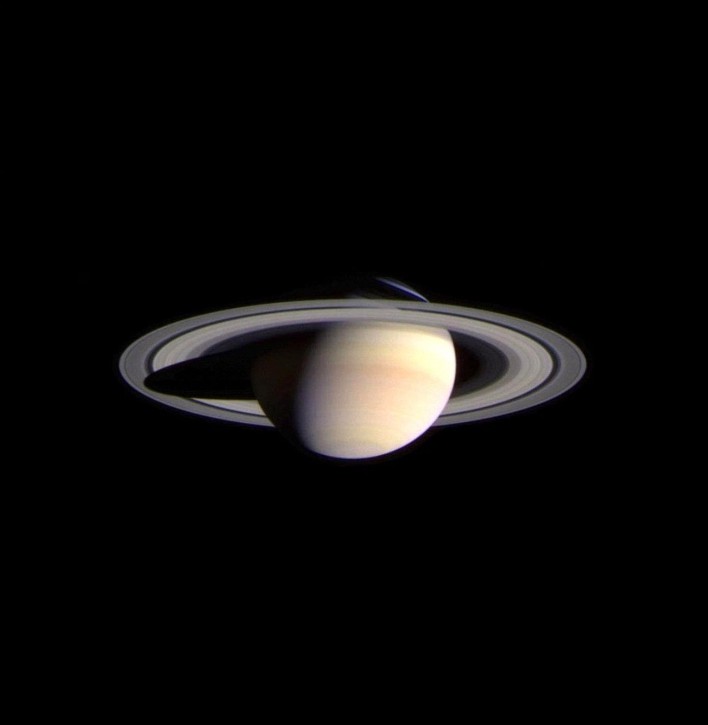
Titan, Saturn’s largest moon, takes 16 days to go around the planet, and 30 years to travel around the sun. Its methane and nitrogen atmosphere also experiences temperature inversions, where at some points air is warmer higher up, as opposed to the normal pattern of cooling with increasing altitude. On Earth, this pattern means that water reaches a triple point, where it can exist as a solid, a liquid, or a gas. So, scientists speculate that Titan may have a methane cycle, like our water cycle.

Astronomer Gerard Kuiper showed through mathematics that bodies with certain masses, sizes and temperatures are likely to have atmospheres. We have observed gaseous methane on Titan, so in turn we can infer the basics of the moon’s physical properties. We also can speculate about Titan’s atmosphere based on what we see through telescopes, especially with adaptive optics technology to correct errors and ‘noise’ and produce a highly accurate view.

On Titan, ultraviolet light breaks apart hydrocarbons such as methane, which become small particles that get absorbed into other substances. (On Earth, atmospheric oxygen absorbs the UV light). Titan’s methane does absorb infrared light, so astronomers can observe infrared images of the moon and estimate localized atmospheric concentrations. Generally, they find more methane lower down, where there’s less ultraviolet scattering.

The Cassini mission confirmed much of what we predicted about Titan’s atmosphere. Also, we noticed small, variable clouds scattered throughout the sky, and fog at the south pole, where there’s a ring of high altitude land. Fog differs from clouds because it touches the ground. Water ice also exists on Titan, and astronomers can predict the rates and amounts of past rainfall from the physics of what would be required to produce the observed rock shapes on the ground. However, we don’t know when the rain occurred.

Scientists previously thought Titan might possess a large ocean of ethane, since the light hydrocarbon is stable as a liquid there. Cassini did not find this ocean, but did suggest the presence of lakes, meters thick, of liquid hydrocarbons. These lakes humidify the air around them as they cool, creating ethane clouds, such as the one at the top of the moon.

Titan possesses some interesting features, such as a squall line, a long, streaky region of arrow-shaped clouds. And sand dunes in a pattern that resembles a cat scratch, from which scientists can ascertain which way the wind blows in those regions. Dr. Adamkovics wondered aloud if researchers could send a drone to Titan, as the cold, dense atmosphere would make flight aerodynamically possible.

He closed his talk with brief remarks on Enceladus, another of Saturn’s moons. Astronomers observe plumes, streaks, and geysers emitted from Enceladus, as well as cracks within its water ice. These cracks may come from cycles caused by Jupiter’s gravitational pull, occasionally heating parts of the moon. Or, possibly from radiogenetic heating, occurring as radioactive isotopes of carbon decay – although scientists think this would have stopped by now.

Dr. Mate Adamkovics’ talk illustrated how much researchers can determine and infer about bodies in space just from a few firsthand observations. In addition to showing us the worlds of Titan and Enceladus, he demonstrated some of the tools and methods of atmospheric science, which also help to predict and understand Earth’s weather.  

Cristina Deptula is a staff writer from San Leandro, California who would take a ride on Dr. Adamkovics’ airplane on Titan, if given the chance. She can be reached at cedeptula@sbcglobal.net

Oakland’s Chabot Space and Science Center’s located at 10000 Skyline Boulevard, deep within the Oakland Hills. It hosts free  public telescope viewings, from 8-10 pm every Friday and Saturday evening. 


Elizabeth Hughes’ Book Periscope


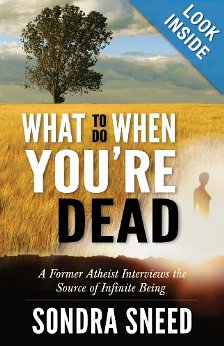
What To Do When You’re Dead, by Sondra Sneed, is a very unique book about her interview with God. It opens up your mind about the true meaning of why we are here on earth and what is expected of us by God. The book tells us what our soul is and what happens to our soul when we die. In her interview with God, He tells of the Grim Reaper and what the Grim Reaper really is. She mentions in the interview how important it is that we live the way God has intended for us to live. Also, if mankind does not change, that mankind will cause destruction not only of the earth in which we live, but, of the destruction of our soul as well. She mentions where our soul goes right after we die, before we cross over. Thank you Sondra for such an insightful and informative book. I highly recommend this book, it is definitely “my cup of tea”!

Sondra Sneed’s What to Do When You’re Dead is available here from Square One Publishers, here: http://www.amazon.com/What-To-When-Youre-Dead/dp/1937907112/ This publisher also discovered the famous Conversations with God book years ago and is excited to bring Sondra Sneed’s words to the public.


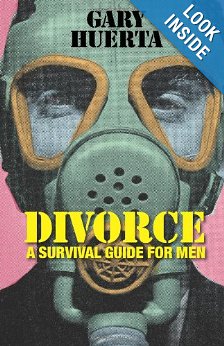
Divorce: A Survival Guide for Men, by Gary Huerta, has some very amusing parts in it. It may be written for men, however, it has some very good advice that can be used by women also. I enjoyed the book very much. I recommend this book even for females! Thank you Mr. Huerta for an amusing and informative book! This book is definitely “my cup of tea”!
Gary Huerta’s Divorce: A Survival Guide for Men may be purchased here: http://www.amazon.com/DIVORCE-Survival-Guide-For-Men/dp/1480173223
Poland At The Door by Evelyn Posamentier is written in a unique style…which I like very much. Although it is a very short book it carries a very powerful message. The book tells of Poland in war times, how frightening and horrifying it was. I enjoyed reading Ms. Posamentier’s book very much. I highly recommend this unique piece about when Poland was at war. Poland At the Door by Evelyn Posamentier is definitely “my cup of tea”!!
The Adventures of Chi-Chi the Chinchilla, written by Ekaterina Gaidouk, and illustrated by Julio Albelo, is a very cute book. The illustrations are very cute and bright. Ekaterina has written the story so that is is not just a cute children’s book, but also teaches a lesson, so that children can learn from Chi-Chi’s mistakes. The lesson in this book is to avoid greed and procrastination. I think that children will not only love this delightful story of Chi-Chi, but will also learn a valuable life lesson. Ms. Gaidouk, I sincerely hope there will be many more adventures for Chi-Chi the Chinchilla. I very highly recommend this beautifully illustrated and delightful book. The Adventures of Chi-Chi the Chinchilla is definitely “my cup of tea”!!!
Chi-Chi the Chinchilla may be purchased here: http://www.amazon.com/dp/110529529X
Lube of Life, by Mindy Mitchell and Edward Land, is a very humorous and delightful book about two [baby boomer age] people who try out an internet dating site. They become fast friends online and exchange personal contact information. The only problem is the distance between them. They eventually overcome their obstacles, and, what a journey they have! I wish you all the best and many years of happiness Ms. Mitchell and Mr. Land. I highly recommend this book. It is a very delightful read and insight to the world of online dating. Lube of Life by Mindy Mitchell and Edward Land is definitely “my cup of tea”!!
Lube of Life is published by New Jersey’s Turn the Page, and may be ordered here: http://www.amazon.com/Lube-Life-Tribute-Happiness-Boomer/dp/1938501144
Hood Wolves, by Taquila Thompson, is a book about street gangs, and how they affect one family in particular. The book begins as the father of four-year-old Bryson is arrested and sent to jail, and his mother Tasha has to raise him on her own. She tries to break the cycle of the involvement in street gangs. The book is an insight into this world and how it works. I loved this book and couldn’t put it down. There are two lines that I really like in this book, that kind of say it all…”When the grass is cut you see who the real snakes are…” and “He shouldn’t have written a check that his ass wasn’t ready to cash. Thank you Ms. Taquila Thompson for a very good book. Hood Wolves will capture the attention of the reader and not let you down. I very highly recommend Hood Wolves by Taquila Thompson. It is definitely my “cup of tea”!!
Taquila Thompson is editor-in-chief of Nu Urban Lyfe Magazine, a cultural and lifestyle publication discussing family, relationships, books, films, decorating and style. You may read Nu Urban Lyfe at http://www.nuurbanlyfemag.blogspot.com and order Hood Wolves here: http://www.amazon.com/Hood-Wolves-Taquila-Thompson/dp/1484899792
St. Peter’s Choice, by Dean T. Hartwell, is a very amusing book. St. Peter talks to three people who want to get into Heaven, but cannot. They bring up specific points, and debate why others get in whom they feel should not. St. Peter’s Choice is a very amusing book and I enjoyed it very much. I highly recommend this book. Thank you Mr. Hartwell for a book that is not only entertaining but also makes the reader think.This book is definitely “my cup of tea”.
You may purchase St. Peter’s Choice here: http://www.amazon.com/St-Peters-Choice-Dean-Hartwell/dp/1490335196/ The author’s an armchair philosopher who seeks to boldly express his beliefs while insulting no one. 
Elizabeth Hughes is a regular contributor to Synchronized Chaos Magazine and may be reached at hugheselizabeth@rocketmail.com 

Poetry from Christopher Bernard


"Haymaking" by Jules Bastien-Lepage


Haymaking

by Christopher Bernard


It’s a big picture. It appears to be dead noon, under shrilling grasshoppers.

The heat looks as heavy as a vice.

Off center, a peasant, wearing a pair of
eloquently battered boots, dozes under his hat.
A metal pail that once held a mid-day meal
pewters dully in the weeds.

Straw-yellow grays ride up to a line of hay ricks,

low hills, a sky pocked with little clouds.


A woman sits by the peasant’s side, slouching forward,
half asleep, awkward, unaware of the observer,
for a moment lost in a wild country of thought
that fills her thick features,
her surprised and dismayed black eyes,
with . . . well, what might it be?
shock?
fear?
an unexpected, and unwelcome,
discovery? –
Whatever it is, it came to her as she drifted asleep,
and thrust her awake with astonished pain.

There’s no way to know: the painter has told us

only what we see.

We know nothing but this fragment,

nothing before and nothing after –

a quick snapshot in oil


on the magisterial canvas.

Then it’s gone.


You step back into the museum crowd,

and her blind, wondering face,
frozen on canvas for as long as the canvas will last,
disappears behind a wall of cloth and backs
into the gallery’s subdued glow,
and the sounds of shuffling feet,
and the bored, suspicious gaping of the museum guards,
and the scratching scratching scratching on paper pads of art students. . . .

It does not disappear:
it follows you out, into the sun,
nagging, futilely, yet with an odd sweetness –
you ponder the woman in the picture as you might
the most obscure philosophical questions,
the metaphysics of loss, the holiness of unknowing,
or a lover’s impenetrable enigma:

a strangely enchanting question that has no answer.


Christopher Bernard is a poet, novelist and critic. He is author of the novel A Spy in the Ruins (http://www.regentpress.net/spyintheruins) and the founder and co-editor of Caveat Lector (www.caveat-lector.org).


Synchronized Chaos July 2013 – Perspective and Scale

Welcome, gentle reader, to July 2013’s issue of Synchronized Chaos Magazine. This time around, our contributors remind us that we can view the universe from various perspectives, including those at many levels beyond or below the human scale.

Staff member and recurring contributor Cristina Deptula illustrates both ends of the spectrum. She looks at the very small with her piece on San Francisco State University’s personalized medicine conference, where scientists attempt to create individual therapies for patients based on their genetics. And at the extremely large, through her piece on a talk on the Big Bang and stellar evolution by UC Berkeley’s Dr. Eliot Quataert at California’s Chabot Space and Science Center.

Regular neuroscience columnist Leena Prasad highlights a current United States national initiative for more detailed human neuroscience research, the BRAIN project, in her July installment of Whose Brain Is It?  This project aims to develop even more sophisticated technologies than today’s fMRI scans, which show greater or lesser activity in different parts of living people’s brains, in order to gain a sense of what is happening in the active regions.

Several pieces this month present the experience of physical, human-scale dislocation.

Wendy Saddler discusses Alison Nancye’s novel Note to Self, where the main character finds the courage to live her dreams in part through a trip to Peru, relating the character’s internal journey to her own personal story of overcoming abuse. The novels Elizabeth Hughes reviews also involve protagonists lost in unfamiliar surroundings: Jeremy Bowden’s protagonists in Bioweapon face an alienating and oppressive government and culture, and Christopher Bernard’s lone wandering male figure in Spy in the Ruins picks his way through a city fragmented by an earthquake and the accumulation of forty years of rapid San Francisco Bay Area cultural change.

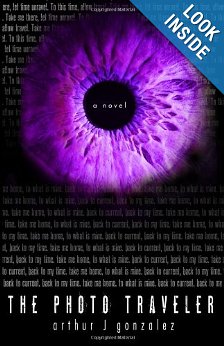
Gavin Hillstone, male lead character in Arthur Gonzalez’ sci fi novel The Photo Traveler, reviewed by Fran Laniado, often gets himself literally lost in space and time. His journey is prompted by a deeper sense of alienation from his abusive stepfather, giving him the impetus to explore his past and find out who he really is.

Each of these characters survives the dislocation, to an extent, by reclaiming and recreating their own identities. The individuality of Bowden’s human-robot hybrid characters give them an edge over the conformist mainstream society. The man in Spy in the Ruins recollects his significant relationships and the formative events in his life to stay sane as he picks through the wreckage. Gonzalez’ protagonist Gavin leaves the only life he knows in search of family, and eventually embarks on a hero’s quest to protect his newfound loved ones and defend their shared belief in limits to human power.

Alison Nancye’s main character Beth, like Lukas Clark-Memler and others who travel to reorient themselves and clear their heads, records the journey in a diary that reflects lessons learned about themselves as well as the daily events. Gavin, fittingly, takes photographs to remember his travels.

Bruce Roberts, when reviewing Paul Meinhardt’s The Afghan Queen, considers his own identity as he reads, and compares it to the main character’s very different life. Unlike the late Lela Meinhardt, an art dealer who often traveled alone to pre-Soviet Afghanistan to bring tribal art to Western markets, his existence has been rather calm, rooted as a classroom teacher in one small working-class California town. Yet, teaching junior high can be its own adventure, and reading The Afghan Queen helps him reflect on his own journey through comparison.

Colin James describes the slow death of a once-passionate romance in his “Love Exit,” as James ponders where he now belongs in his significant other’s universes. This piece, focused on intensely personal longings in the midst of an issue where other work explores the evolution of the universe and inter-cultural and international travel and business ventures, remind us that our ordinary lives are, in fact, a real component of the larger whole. Each individual’s joys and sorrows do matter, do play a part in the broader symphony of life’s existence.

Other poets this month expand our perspective by creating distinct, yet archetypical characters, and then linking these individuals to a broader spiritual and cultural context. Frances Varian reflects on the faith and loneliness of women in poet Christina Rossetti’s age, and finds beauty and spirit in struggling people who would otherwise go unnoticed. By ‘speaking even when no one is listening,’ her characters assert their identity and humanity, and approach a kind of beatification through perseverance and dignity in their circumstances.

In a somewhat similar way, Faracy Grouse explores her poetic protagonist’s relationship to our culture’s current paradigm of clinical diagnosis and treatment for mental illness. Here, perseverance and dignity grants her a long-awaited diagnosis, which finally brings some practical help and a way to make scientific sense of the mysteries in her brain. But it cannot bring the redemption she seeks from guilt over past actions, or fully restore her to communion/community with others.

Christopher Bernard grants beauty and grace to his poetic subjects, who set out in boats crafted from roses, on a violent sea that drowns children and adults beneath its windswept whitecaps. Yet, the strident call in the second half of the piece conveys that these are not pathetic characters, but people brave enough to venture forth and live and love, even though life and relationships will not prove permanent. Performance poet Claire Blotter draws upon historical and mythical perspectives through her fairytale language in pieces about eating disorders, mass murder, addiction, and mental illness. Perhaps, through reaching for other perspectives and paradigms alongside the modern, clinical ways of seeing things, her protagonists can find the healing and reconciliation for which Faracy Grouse’s protagonist longs.

Christopher Bernard also explores folklore’s reflection of personal and social psychology through his review of a recent San Francisco performance of Philip Glass’ opera La Belle et la Bete, patterned after the 1946 Jean Cocteau film. He touches on human issues alluded to through this traditional tale, such as how we define attractiveness, concepts of power and victimization, and social obligations versus personal choice.

Finally, with the remaining two submissions, we return to the dichotomy introduced at the beginning, illustrative of the vast spectrum of the universe, enabling views from a wide variety of perspectives. Returning poet Dave Douglas also examines psychology through his poem “Railway,” shrinking the human mind down to a much smaller scale, and metaphorically viewing the movement of individual thoughts and decisions as boxcars and passengers within a railway system. As with the neuroscience research Leena Prasad mentions, Douglas seeks to understand how the mind selects and processes thoughts, although he looks at it with the tools of poetry and psychology.

Douglas’ small-scale perspective, dramatized with turnstiles, fields of sunflowers, and a derailment, contrasts with researcher and information technology consultant Ramez Naam’s macroscopic view of the promise of innovation to overcome resource shortages throughout human history. Naam presents his thoughts in his book The Infinite Resource: The Power of Ideas on a Finite Planet, reviewed by freelance science journalist Charlotte Capaldo.

Please enjoy this issue, we hope that it inspires and enlivens you.
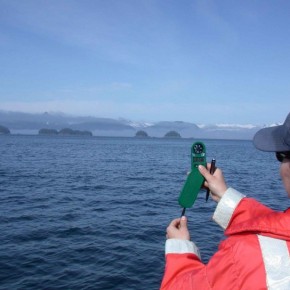
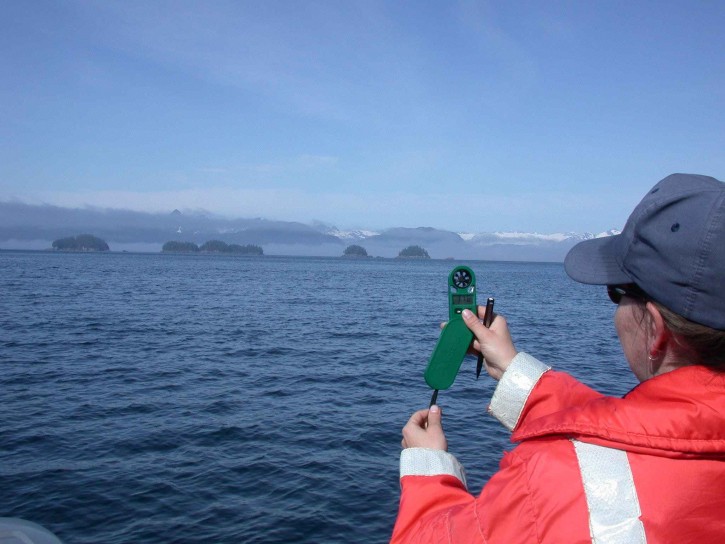
Meteorologist taking air temp and wind readings

Whose Brain Is It?


Presented within the flow of the lives of real people and fictional characters, this is a monthly exploration of how parts of the brain work.

The BRAIN
by Leena Prasad

“Why a map, Mom?”

“Well, how do people normally use a map?”

“To get oriented to a place and to use that to find their way around.” Brian thinks for a minute. “So, it’s to understand where neurons are located inside the brain and how they are connected?” He pauses. “But don’t neuroscientists and neurosurgeons already know the locations and the connections?”

“They do but the brain has more than one billion neurons–” his mom says.

“–and several trillion neural connections or roads, you can say. Wait, are the neurotransmitters like roads or like cars? I guess they are like cars.”

His mom smiles. “That’s a close analogy. How do you think they will use the map?”

Brian scratches his chin.

“There are many diseases like Alzheimer’s or Parkinsons that we don’t fully understand,” his mom says. “ Obama’s BRAIN (Brain Research through Advancing Innovative Neurotechnologies) initiative will help them develop tools that can be used to not only map the brain but to understand how the neurons behave. So, it’s not just about creating a more detailed map but it’s also about getting a dynamic view of the stuff that happens in the brain.”

“But, how, how exactly? How will they capture the messages, the path traversed by the neurotransmitters, the messengers of the brain? I mean, that’s not a static thing…”

“Good point. The current studies use fMRI technologies to measure blood flow in specific parts of the brain. This helps them locate the place where neurotransmitters are active.”

“Yes, I know that!”

“Well, the idea of BRAIN is to provide funding to create more sophisticated tools than the fMRI, to see both high-level view of the neurons and their activities and to get a more close-up view—“

“—yeah, I get it.” He says impatiently. “But how is it different than the research already happening?”

“It’s not necessarily different. It’ll build on the existing work and provide additional resources.”

“Ah, so we can learn about the brain faster.”

“Yup.”

“Mom, maybe I can get involved with the BRAIN initiative.”

“Yes, it’s a new thing. So, there will be all types of opportunities if the funding continues. But, first if you have to get qualified by studying neuroscience.”

“Maybe I can become a brain surgeon!”

“Sure, but that means you will learn and use what is already known about the brain. You won’t be making new discoveries. So you won’t be part of BRAIN.”

“So, a neuroscientist then?”

“Yes, or both,” his mom says.

“I can be like Oliver Sacks and be a brain-surgeon and a neuroscientist and a neuroscience writer.”

“Yes, you can be. But first, start exercising your brain on the math homework that’s due tomorrow.”

“Yes  Mom.”


Leena Prasad has a writing portfolio at http://FishRidingABike.com. Links to earlier stories in her monthly column can be found at http://WhoseBrainIsIt.com.

Josh Buchanan, a UC Berkeley graduate, edits this column with an eye on grammar and scientific approach.

References

  • Flatow,  Ira, host of President Obama Calls for a BRAIN Initiative, NPR>Science>Research News, April 5, 2013, http://www.npr.org/2013/04/05/176339688/president-obama-calls-for-a-brain-initiative
  • Neuroscientists Weigh In on Obama’s BRAIN Initiative, Scientific American, May 2, 2013, http://www.scientificamerican.com/article.cfm?id=neuroscientists-weigh-in-obamas-brain-initiative
  • Fran Laniado on Arthur Gonzalez’ Photo Traveler

    The divide between literature for older children and literature for adults has gotten much smaller than it once was, in the past decade; and the gap between books intended for adults and those intended for teens is smaller still. In the sci-fi/fantasy genre it is perhaps at it’s smallest; with adults devouring the latest Harry Potter,/Twilight/Hunger Games books along with their kids. The Photo Traveler by Arthur J. Gonzalez is a novel that is classified in the YA (young adult) or teen genre. Why? It has a teenage protagonist, certainly (and one who actually acts like a teenager as opposed to many of his counterparts in other books who act 17 going on 45). But if the character were to be written ten years older, the only really notable change would be that he would (hopefully) be a bit more mature and less impulsive. All of the other circumstances could be altered slightly to fit an older hero. What I am getting at here, is that The Photo Traveler is a novel written for teens and about a teen, but it’s one that could just as easily be enjoyed by adults.

    Our protagonist, Gavin Hillstone, initially finds himself in a situation that no child should have to face. His parents were killed in a house fire when he was just out of diapers and he has no real memory of them. He was legally adopted by his foster mother, a kind woman, whose murder he witnessed in a convenience story robbery gone wrong. Living with her drunken, abusive husband, Gavin’s only escape from the ugliness in his life is photography. However, one day, Gavin learns that his paternal grandparents are still alive and across the country in Washington DC. If he had living relatives when his parents died, why was he in the foster system? Why would his grandparents willingly put him up for adoption? In search of answers Gavin runs away to DC, where he meets Bud and Estelle, the family he never knew he had. Bud and Estelle claim that that gave Gavin up so that he would be safe until he was old enough to learn the truth about himself and his family. His family is the descendants of a group of explorers who found something enabling them to travel through time and space via images. If a picture is of a real person or place, Gavin can go there by uttering a simple chant. At first he uses this ability the way a teenage boy would use it: recklessly. But he soon learns that others are after the power that the Photo Travelers possess and more besides. As a holder of that power Gavin has tremendous responsibility to use it wisely.

    YA novels with boys as narrators are rare, and when they are written (often by women) the boy is sort of a fantasy version of a male teenager. The Photo Traveler’s greatest strength is that Gavin feels like a 17-18 year old male. In other words, there are times when he can be intelligent, charming and endearing, and there are times when you want to throttle him! For example, he shows kindness and generosity during the Great Depression, but when he sees a photo of his friend’s beautiful cousin who died years earlier, he naturally decides to steal some pictures of her so that he can go back in time and start a relationship with her. Surely nothing could go wrong with that plan, right?

    Of course things do go wrong, there and elsewhere. Gavin is warned that with time travel he has to be careful of “the butterfly effect”. He can’t influence past events. But he’s not aware of the secrets that exist within his own family. It is these secrets that make his trips to the past more dangerous than he realizes, and make him wonder who, if anyone, he can trust.

    If you’re a fan of any genre, there are times when you know where the book is going more or less. That’s true here as well. But there are times that the author throws you curve that leaves your head spinning. For me that happened about ¾ of the way through the book and again in it’s last few pages. I had been enjoying my journey with Gavin until that point, reading the book at a fairly quick pace. However, then something happened. There was a very definite point at which I stopped being able to put it down until I’d finished. Even finishing the book didn’t leave me satisfied, because as I turned the page following a giant cliffhanger I learned that I could keep an eye out for the sequel. Well, now I’ll have to. I’m hooked! Like Gavin, once the reader gets started on a journey he/she will need to see it through to the end.

    Fran Laniado hails from New York, NY and may be reached at fl827@hotmail.com. 

    Arthur Gonzalez’ Photo Traveler may be purchased here: http://www.amazon.com/The-Photo-Traveler-Series-Volume/dp/0988891646