THE PINE BOX — A New Stop in Seattle

[Article by Bruce Roberts]

Take three friends, with varied skills and background, but one unified dream.   Add in a beautiful building, iconic in the history of Seattle, Washington.  Mix with a thriving Seattle population that loves beer even better than Starbucks, and create a surefire recipe for success. Opening in Seattle at the end of March, 2012, a terrific new pub and restaurant — The Pine Box.

Built in 1923 as Butterworth’s Funeral Home, then resurrected as The Chapel, a bar/restaurant in 2003, this beautiful building has been vacant since 2009. In 1973, it achieved cult status forever as the site of Bruce Lee’s funeral. Hollywood stars Steve McQueen and James Coburn, martial arts students of Lee’s, were pallbearers as action-movie fans the world over mourned.

Now, however, it has been resurrected as The Pine Box, thanks to the incredible hard work of three friends: Mark Eskridge, Dean Hudgins, and Ian Roberts. Mark is the finance expert, a man with a business degree from Cornell University. Dean is the builder, a man with many years of experience as a manager, a sculptor, a builder. Ian, long-time manager of popular Brouwer’s Belgian Pub/Restaurant in the Fremont district, has the practical experience of actually running a pub. Plus, as the co-founder and promoter of Seattle’s successful Beer Week for the last three years, he claims to know every beer drinker in the state, and is sure they will patronize The Pine Box.

With former church pews available for bench seating, and solid tables and the bar built from old fir found in the basement’s casket room, this new pub will combine the elegant accoutrements of a classy mortuary, with the more down-to-earth elements of wooden bench seats and hand-made bar and tables. There is even balcony seating, for those who like to imbibe with a view.

The menu, overseen by experienced chef John Macafee, will focus mainly on gourmet pizza, with such exotic toppings as Arugula, pecorino, andouille, buffalo mozzarella, and roasted jalapeno garlic sauce (not all on the same pizza — unless you want it that way).  The brand-new, state-of-the art Wood Stone ceramic pizza oven will easily crank out enough pizzas to keep up with an active, munch-hungry crowd.  Or, have a salad, made with fresh greens bought daily at Seattle’s famous Pike Place Market.

And the draft beer selection, from local to international, will certainly give patrons cause to munch. The Pine Box will feature local brews, such as Fremont Brewery’s Brother Imperial IPA and Port Townsend’s Nitro Scotch Ale. San Francisco’s Sierra Nevada contributes Hoptimum, while Lil Sumpin’ Wild from Petaluma, California’s Lagunitas Brewery stretch the Pine Box’s beer sources, which run internationally too. Belgium’s St. Bernardus’ Abt 12 and Guinness’ Irish Stout are just two of several European brews on the menu, which provides a broad beer selection for every taste.

Anyone who knows Seattle knows that it is a chain of neighborhoods and districts, each containing outstanding  restaurants,  coffee shops (and not ALL Starbucks), book stores, cupcake shops, dogs, pubs, and the best clam chowder everywhere:  all the requirements for a mellow life. With the opening of the Pine Box officially on March 26, the Capitol Hill neighborhood will once again have a complete array of small businesses to complete life’s essentials for its residents.

Stop in some time.  Say hi to Mark, Dean, and Ian. Have a beer. Have two! Prost!

—————————————————————————————————–

You may contact Bruce Roberts, at brobe60491@sbcglobal.net.

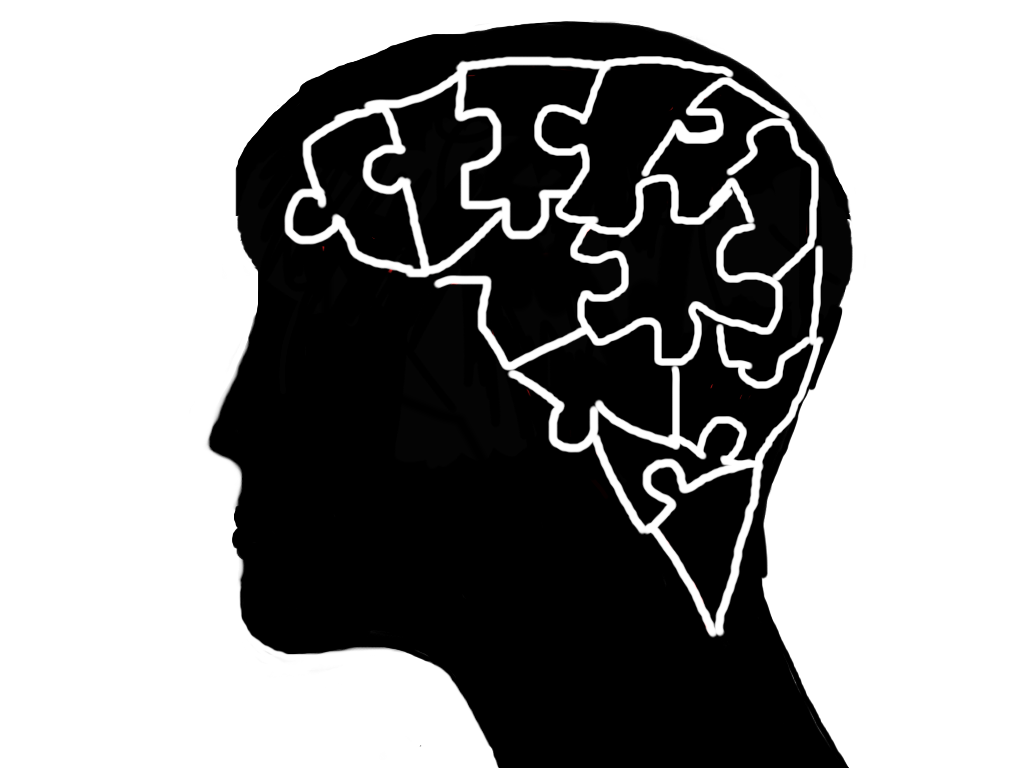
Whose Brain Is It? [April 2012 – Leena Prasad]

Whose brain is it?

by Leena Prasad

Presented within the flow of the lives of fictional characters, this is a monthly column with a journalist’s perspective on brain research.


I catch a glimpse of rice and mackerel. She is holding a small piece in-between her thumb and index finger. That’s the authentic way of eating sushi, instead of using chopsticks, I think.

But something else happens in my mind also. My friend and I have just been seated at the Japanese restaurant and have not even looked at the menu. Yet I can almost taste the saba (rice and mackerel) and memories of the sour salty taste make my mouth water. I recall a class lecture from my neuroscience class about mirror neurons.

I am not in the medical profession but studied artificial intelligence as part of my computer science curriculum and later worked in the field. This led to an interest in neuroscience. I use my graduate school training as a journalist to research and explore the brain using what I learned in the introductory neuroscience class as a basic foundation for my journey.

But, this is not a story about me or about sushi.  It’s about specific neurons in my brain and in yours – nerve cells that help us connect to each other’s experiences. These neurons are helping to answer questions ranging from feeling hungry while watching someone else eat to feeling the pain of another person to the excitement felt by sport audiences, to learning by watching someone do something.

When I see the saba, the occipital lobe in the back of the brain, processes the visual information. The hippocampus and other parts of the brain retrieve the memory of my own experiences with saba. When I eat the sushi, neurons in the premotor cortex, in the frontal lobe of the brain, enable me to use my fingers to pick up the sushi, bring it to my mouth, and to eat it. Every single action, from the details of the movement of my arms and fingers to the complexities of biting and chewing are handled by the premotor nerve cells.

But if I am not eating the rice and mackerel myself, how is it that my mouth waters as if I can taste the sushi?

As human beings, most of us (excluding people with autism and other brain related diseases) understand empathy. Now, neuroscientists are exploring the coding of empathy within our brain. They have discovered nerve cells which mirror the actions of other people as if we are experiencing what we see. These neurons reside in the premotor cortex along with the premotor neurons which cause motor reflexes. Mirror neurons are a special subset of the premotor neurons and they fire whether we perform an action ourselves or watch others perform the action.

Mirror neurons were discovered by researchers in Parma, Italy in 1992. The scientists had placed electrodes in the brain of a monkey to record and study nerve cell activity by amplifying the sounds made inside the brain when a neuron fires. By chance, they heard the same set of premotor neurons fire off both when the monkey was picking up a peanut and also when the monkey was just watching someone else pick up a peanut. Similar experiments were repeated in monkeys and humans by several follow-up studies conducted by the scientists at Parma and by other scientists around the world.

“I predict that mirror neurons will do for psychology what DNA did for biology,” says Dr. Vilayanur Subramanian Ramachandran, a Professor in the Department of Psychology and the Neurosciences Graduate Program at the University of California, San Diego. In a recent TED lecture entitled “The neurons that shaped civilization” Dr. Ramachandran theorizes that a lot of human learning, and thus evolution, probably speeded up due to mirror neurons.

There are two types of mirror neurons, according to Dr. Christian Keysers, a Professor at Netherlands’ largest medical faculty, the University Medical Center in Groningen. The two types are: strictly congruent and broadly congruent. The strictly congruent neurons are activated for very specific familiar actions. So, when I watch someone eat saba or eat it myself, I’m using strictly congruent neurons. The broadly congruent neurons are activated for actions that might be unfamiliar to me. For example, if I start taking classes in auto repair, I would be using broadly congruent neurons since I do not know much about this topic.

This is an exciting discovery. I found many articles and books and videos on the topic.  A lot of the current research is speculation and excitement with a smattering of data to backup the assertions.  There are ongoing discussions and experiments to locate mirror neurons in other parts of the brain, in addition to those in the premotor cortex. This trendy subject has been used to explain a range of behavioral phenomena such as language learning, empathy, and lack of emotional intelligence in autism. I look forward to learning more about these neurons as scientists gather more data and develop theories on how the knowledge can be used to understand and fine-tune human behavior. For now, at least I understand why I can taste the sushi by just looking at someone else put it in her mouth.

 —————————————————————————————————————–

Please send feedback and suggestions for future columns to leena@fishridingabike.com. Go to WhoseBrainIsIt.com for links to past columns and to FishRidingABike.com for Leena’s writing portfolio. Leena has a journalism degree from Stanford University.

Dr. Nicola Wolfe is a neuroscience consultant for this column. She earned her Ph.D. in Clinical Psychopharmacology from Harvard University and has taught neuroscience courses for over 20 years at various universities.

References:

Ramachandran. Vilayanur Subramanian. Ph.D. The neurons that shaped civilization: VS Ramachandran. TED Talk, January 4, 2010

Keysers, Christian, Ph.D. The Empathic Brain. Social Brain Press, 2011


NCSWA Spring lecture/dinner on Wednesday March 21, 2012, at The Basque Cultural Center in San Francisco, CA

The Topic of Aging

By Suzanne Birrell


“And so, from hour to hour, we ripe and ripe,

And then, from hour to hour, we rot and rot.”

Shakespeare’s “As You Like It”; Act II Scene 7


Does anyone really know what time is? Or does?

Does the passing of time have to result in a body getting old?

Why is it that a body, which apparently miraculously rapidly grows from a single stem cell to a complex, fully grown, functioning, thinking and reasoning (two different things), self repairing entity with a frequent cellular turnover, can’t seem to keep itself going indefinitely?

But since the fact that the body doesn’t simply replace cells indefinitely, then the big question we really want to know (we who are feeling the aches and pains of age in our bones and muscles) is:

Can we reset the Aging Clock?

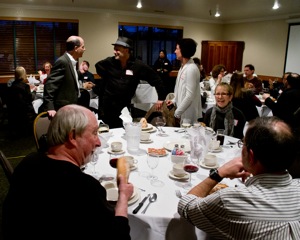
These questions and more were the topic of the latest NCSWA Spring lecture/dinner on Wednesday March 21, 2012 at The Basque Cultural Center in San Francisco.  Featured as the quest lecturer for the Northern California Science Writers Associations quarterly dinner was:

Tom Rando, MD, PhD, Director of the Glenn Laboratories at Stanford, (One of four such centers funded by the Paul. F. Glenn Foundation)

Professor Tom Rando - Photograph by Chuck Jones

Professor Rando enthusiastically spoke about his cutting-edge research.  Apparently research is very exciting when you find out things you didn’t expect to find out, and we were told frequently that Professor Rando and his team did not expect results they have so far observed.

Rando’s team started with the goal of defining bio-markers which indicate the age of a cell: or in other words: is it possible to measure aging on the cellular level?  They started by studying aging and longevity, which are two different issues.

The average lifespan 15,000 years ago in Europe was 25 years.  Then in Rome 11,000 years ago it was up to 35 years.  The average life span in the USA in 1900 was 50, but by 1970 it was up to 70 years old, and in 2010 the average was up to 80 years.  Up to the turn of the century, keeping babies alive has been the primary factor in the dramatic increase of the “average life-span.”  However the number of centenarians is increasing all over the world with many who are in the 110-120 year age bracket.

Though the good news is, as photographs show, we are reaching older age while looking better, the question is why?  Rando’s team asked the questions “What happens as we get old?” and “Can aging be slowed?”

Research has demonstrated that 55% fewer calories can contribute to almost a 50% greater lifespan!  And, results can be enjoined at a later age (meaning that you can start your mean and lean diet after you are older and may enjoy the benefits of the 50% increase in life span!)

However, before you start on your starvation diet, you should know that is not only fewer calories BUT fewer calories with adequate nutrition.   A problem with this modicum of knowledge is, as Professor Rando pointed out, we really don’t know what adequate nutrition is, and nutritional deficiencies can result in early death.

Since the results of caloric adjustments have demonstrated that aging can be slowed, Rando’s team moved on to attempt to identify what exactly happens to a single cell as the body ages.  The moot point to boot was that a single stem cell grows to a beautiful smooth skinned child.  The skin cells replace themselves with new skin cells every few days, but a sure sign of age is the appearance of skin.  What causes this epigenetic (resulting from external rather than genetic influences) change?   Committed skin stem cells give rise to new skin cells.  The stem cells are all there, but the tissues do not regenerate as well which means that the older body is slower to heal from an injury.

Dolly the sheep was cloned from a single stem cell of a mature animal.  In that case the age of the cell was started again at zero and then differentiated.  Professor Rando was curious as to why new skin shows epigenetic changes as a body ages when a whole new body can be cloned from a single stem cell of the same aged body.

Rando’s team found that as body gets older, the skin cells show a reduction in the amount of a protein within the cell.  When they parabioticly conjoined a young mouse to its genetically identical older twin, the scientist were astonished to observe that the amount of protein in the older mouse’s skin cells increased while the younger mouse’s protein count decreased.  In effect they were able to reset the aging clock of the older mouse.  When they separated the mice, however, the protein levels returned to their initial state.  The team also simply gave the blood of a younger mouse to that of the older mouse and saw minute changes which did not last long at all.

Though Rando’s investigations suggest we mortals might someday be able to rejuvenate our aging bodies with the proteins abundant in young blood, Rando and his team are hoping this knowledge leads to the ability to help older people heal faster.

It was a fascinating lecture.  The Q & A afterwards was particularly engaging.

I simply listened, but I do, upon retrospect, have a few questions:

1.  Are vampires really all about keeping those youthful protein levels high?

2.  If we gave our blood in abundance when we were young, could we get it back when we are old thereby keeping our regenerating proteins at a high level?

3. Do I really want to live to be as old as Adam (930 years)?  That’s an awful lot of taxes.

Professor Tom Rando (standing left) - Photograph by Chuck Jones

I do invite you again to check out the NCSWA website: http://www.ncswa.org/index.htmlthe

Their next lecture should be in June and I promise it will be interesting with great food and scintillating conversation.  The NSCSWA also has field trips and workshops.

———————————————————————————————-

You can reach Suzanne Birrell at Suzanne@thisoldhippy.com.

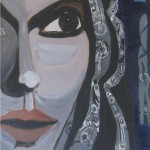
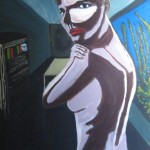
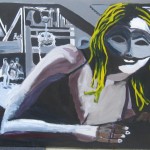
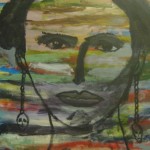
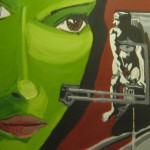
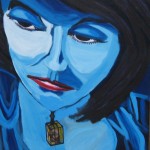
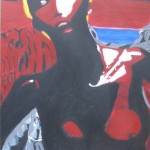
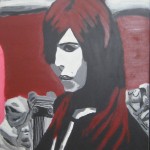
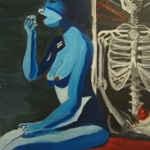
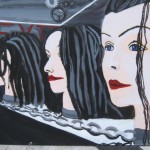
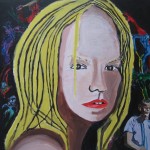
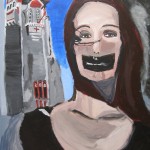
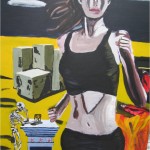
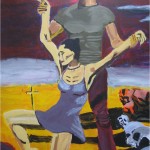
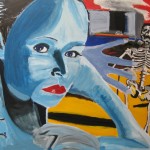
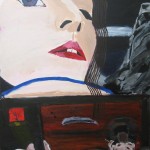
Paintings by James Pollard

“The Enigmatic Moment: Episode Two”

About “The Enigmatic Moment: Episode Two” (from the artist):

This body of work is an extension of my B.F.A. exhibition in 2010, which reveals the intimate relationship between the artist and the subject matter.  The figures represent the muse. Despite their beauty, do not engage the viewer with a windfall of emotion.  They represent ordinary people that are in extraordinary circumstances beyond their control.  These paintings are a secret view of the art world of which I am a mere receiver of images and ideas.  The ideas come in a flash while the execution on a formalistic level requires many coats of primer and layers of acrylic paints, diluted with medium.  I also sand out the lumps with rough grit sandpaper.

Although the viewer may feel somewhat left in limbo, but can at least eavesdrop on an important conversation between the creator and the creation.  I also rely on Dadaism, and Surrealism, quite heavily to evoke the mood of the viewer with the dank interior scenes.  The viewer is left to determine the hidden narrative, and many will see varying interpretations of the mysterious intent.

– James H. Pollard

James H. Pollard received a B.F.A in Pictorial Arts from San Jose State School of Art and Design, fall 2010. His work has been exhibited throughout San Jose, California.

Email jamespollard03@yahoo.com for more info.

Synchronized Chaos Magazine – March 2012: Awaken

Consequences and second chances come to mind when a near-death experience truly awakens the spirit of a man in the third and final installment of Lost Souls, by J’Rie Elliot.

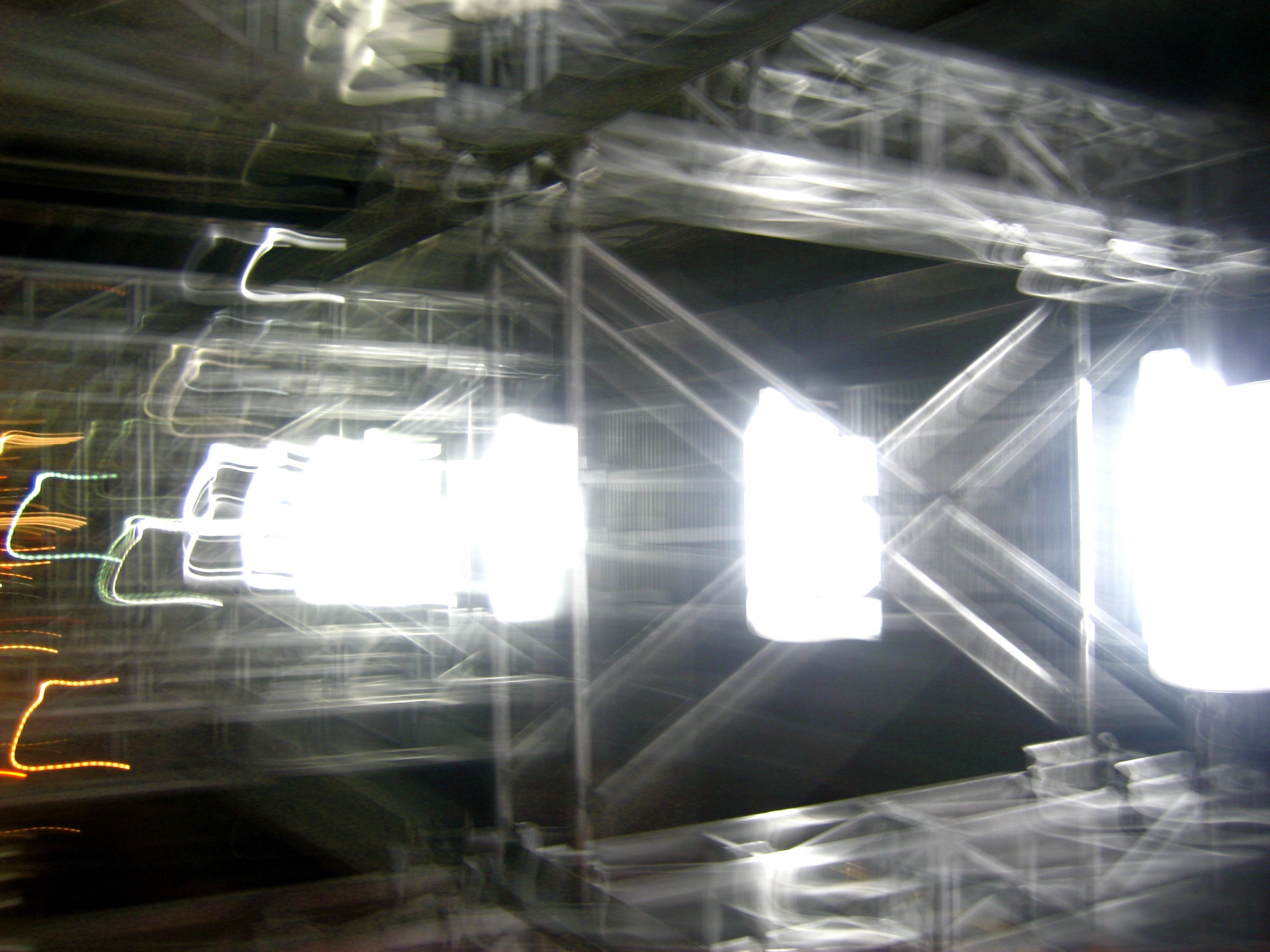
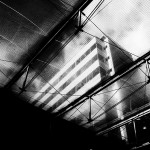
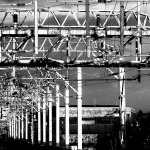
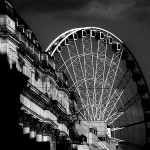
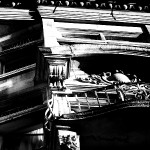
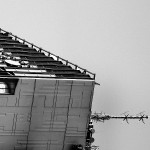
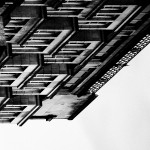
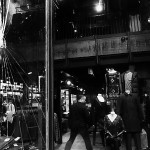
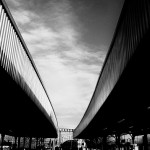
The work of British Photographer Eleanor Leonne Bennett is radiant. The consistent sheen and bold contrasts in her work are sure to activate your senses.

On the contrary, lack of stimuli and wasted time is expressed in Sam Burks’ poem, At the Park.

Additional poetry this month comes from returning-contributors Tatjana Debeljacki and Felino A. Soriano.

Check the out the pleasing misfortune of “Boy Wonder” in the humorous and perverse writing of John Clay Bradley.

In reviews…

Books:

Film and Performance:

  • Bruce Roberts on I Want To Get Married, written and directed by William Clift
  • Christopher Bernard on The Past is a Grotesque Animal, at Yerba Buena Center for the Arts in San Francisco, CA
  • Martin Rushmere on A Case of Libel, presented by Novato Theatre Company in Novato, CA

Click here for Leena Prasad’s monthly column: Whose Brain Is It? Presented within the flow of the lives of fictional characters, this is a monthly column with a journalist’s perspective on brain research.

Also, check out Holly Sisson’s article on Starhawk’s permaculture design course, “Earth Activist Training.”

Lastly, please make note of the NEW EMAIL ADDRESS for submissions, donations, or general inquires to the magazine: synchchaos@gmail.com.

Thank you and we hope you enjoy this month’s issue!

“Like” us on Facebook and use our page as an opportunity to share your ideas, exhibits, book-signing events, and more!

“Lost Souls” Pt. 3, by J’Rie Elliott

Lost Souls

Pt. 3 (Final)

by J’Rie Elliott


The creature stepped back away from him and leaned against the wall. The room around them changed shape; it was no longer his house. Hannah walked out of the bath room with a towel in her hand drying her hair and a towel around her body hiding her form; she was still shiny from the water on her skin– Joseph could smell her cherry perfume. She looked away down the hallway and towards the door; though no sound was heard Joseph could tell she heard the doorbell ring. She walked to the door clad in just her towel; she checked the peep hole and pulled open the door; there stood a man whom Joseph had never seen before.

“That’s my wife!” Joseph yelled. Only to notice there was no wedding ring on her left hand, no tan line either. The year on the calendar showed that it was five years after he had left. The man walked in closing the door and turning the lock with one hand while pulling her close with the other. Their lips found each other lighting her face with desire. Desire that she had once reserved for Joseph alone, but now she had for this other man—all while Joseph had to watch. “I can’t watch this!”  He turned his back from them only to have the room shift and bring them back into view; he was going to have to watch he had no choice. The stranger slipped the towel off of her body and twirled her in her nakedness around like a ballerina in front of him; admiring every curve, every inch even the small cherry shaped birth mark on her bottom; the one Joseph use to pat ‘for luck’. The stranger scooped her up and carried her to the bed room. “I will not watch another man make love to my wife!” He screamed into the air, “I will not follow them!”  He had no option; he did not have to follow them because the room around him changed, he now stood in the bed room where the stranger was touching Hannah in a way Joseph had once touched her, a way that no other man had touched her before Joseph. “This isn’t right!” Tears were rolling down his cheeks.  He did not notice that the creature had vanished from the room.

Joseph fell to the floor cupping his face with his hands sobbing—he began to pray, “Dear God I am so sorry for what I’ve put her through.  I never knew I was hurting her so badly; I never paid attention to anyone else.  Dear God forgive me.”  His words fell on a silent room only the ragged sounds of his breath between words to punctuate his prayer.  He could feel time passing, and yet time was standing still; how could he have let this happen?  Why had he been so stupid not to see what he had in front of him?  Why had he squandered every opportunity to correct his mistakes?

Then a voice came from behind him, “Those are some good questions.” Joseph spun around as though he had been bitten.

“Who?  How?” The words eluded him. Standing in the room with him was a very short lady who appeared to be in her late sixties–she reminded him of his great Aunt Martha who passed away when he was nine.

“It is not our place to question–your prayer did not fall upon deaf ears; neither the one you said nor the one your heat spoke.”  This new visitor was comforting and radiated warmth from her body. “I’ve been informed that you have shown some redeeming qualities; qualities that were hidden within you this whole time. Perhaps when we are faced with the hard truth it is easier to see reality.”

“I don’t understand?” Joseph meekly uttered.

“Joseph, some people come here and they never waffle, they never ask for forgiveness even though they are damned. Many come and are as cold as they were everyday in their existence. What was seen within you was a spark; a spark of humanity—with that spark is the possibility to learn from your mistakes; to right the wrongs in your life; this chance will cost you dearly, but you will understand that later. However, Joseph if this time you follow the path that brought you here—there will not be a third chance.” Her voice was as stern as the grave when those words passed her lips. “Do you understand now?”

“I think I do.  What is going to happen to me now?”

“Now, my dear nephew, you wake up.”

“Clear!” the doctor yelled the defibrillator struck his chest; Joseph’s body jumped with electricity–beep, beep, beep. “He’s back” Joseph’s eye lids begin to flutter, he could perceive light but nothing else. “Welcome back son,” the doctor said “We lost you for a minute there; you had us all worried.” Joseph tried to speak, “Don’t try to speak we had to put a tube in your throat to help you breath, the nurse just removed it—you will be sore for a bit.  You are at Cedar Seine Hospital; you were in a car accident.  Do you remember?”  Joseph remembered everything, but nothing about a car accident. “You just lay back, we’ll get you fixed up and then you can see your wife.”

“Wife!” He spoke louder than he intended and he could feel razor blades cutting his throat.

“Yes, she is here, she got here about 30 minutes after the ambulance brought you in. We’re going to give you something to sleep; we still have some work to do; just relax you’re going to be fine.  Nurse, please…” The doctor motioned to the nurses to his left and she injected something into his IV—the world went dark.

When he awoke two days later, Hannah was sitting by the side of his bed; her eyes red from crying. She looked so scared, but so young as though time had stopped in her face, “Hi babe.” She smiled at him and tried to hug him as best she could without bothering all of the tubes and wires. “I am so sorry babe; for everything.” Joseph said.

“SSSHHH, don’t try to talk; we’ll talk when you are stronger. I am just so glad you’re still alive.” Joseph took her hand in his and squeezed it as tightly as he could.

“Babe, I think for the first time I am alive.” Hannah stood to get a tissue to wipe the tears from her eyes and he saw she was pregnant; she grabbed her side.

“Oh, feels like she is going to be born playing soccer.” Hannah smiled looking at her husband.  Joseph turned and caught a glimpse of himself in the steel door, he was young again, and Hannah was still pregnant with Janet. He could not understand how this happened—then her heard Aunt Martha’s voice in his mind “…with that spark came the possibility to learn from your mistakes; to right the wrongs in your life…” He was being let to start over, to do it right from the beginning. “Where is Will?” he asked Hannah.

“He’s here; a nurse took him to the cafeteria to get some Jell-O.” Joseph tried to move in the bed, but he could not move his feet, again he heard Aunt Martha’s voice “…this chance will cost you dearly, but you will understand that later…”  Hannah looked at the floor and tears rolled down her cheeks, “Tell me babe, what’s wrong?”

Hannah took a deep breath, “When the car hit the bridge you got pinned beneath the debris… Joe it crushed your back—there was nothing they could do, your spinal cord was destroyed from your hips down.  You can move your arms and when the swelling goes down you will be able to turn at your waist—but sweetheart you will never walk again.” She was holding back a flood of tears as she tried to stay calm.

“I’ll never walk again. That’s the price I pay.” Hannah looked at him strangely—how calm he was, “Did I hurt anyone else?”

“No, it was only your car…you were drunk. Do you remember?”

“No, but I’m not drunk anymore. My legs are a small price to pay to get my family back.” This time Hannah could not hold the tears; she laid her head on his stomach sobbing.

“Daddy!” William came running in the room holding two cups of green Jell-O, “The nurse let me get two! You okay Daddy?”

“Yeah boy, for the first time in a long time, I’m really okay.”

The End

————————————————————————————————————-

Click here to read Part 1 of Lost Souls.

Click here to read Part 2 of Lost Souls.

J’Rie Elliott is a poetess and ongoing contributor to Synchronized Chaos. To contact her, send an email to dixiepoet@gmail.com.


Photography by Eleanor Leonne Bennett

 www.eleanorleonnebennett.zenfolio.com

Eleanor Leonne Bennett is a 15 year old award-winning photographer and artist who has won first places with National Geographic, The World Photography Organisation, Nature’s Best Photography, Papworth Trust, Mencap, The Woodland Trust and Postal Heritage. Her art is globally exhibited.

For more information, email eleanor.ellieonline@gmail.com.