“The Good, the Mad, and the Marvelous”: Christopher Bernard on the San Francisco Fringe Festival


The Kingdom of Not


THE GOOD, THE MAD AND THE MARVELOUS

A review by Christopher Bernard

Occupy Fringe Theatre 2012

San Francisco Fringe Festival at EXIT Theatre

September 5 – 16


In what must be the most varied, if not richest, theatrical feast this year in the Bay

Area, the 21st San Francisco Fringe Festival, under the tireless direction of Christine Augello,

presented 46 shows from some of the most adventurous, small, hungry and fearless theatrical

companies from geographies local, material, and crazily virtual, when not virtually crazy.

What theater fanatic could resist a list of performance titles that included “The Apeman

Cometh,” “Cheesecake and Demerol,” “Crazytown: My First Psychopath,” “The Revolution

Will Not Be Circumcised,” “You Killed Hamlet, or Guilty Creatures Sitting at a Play,” or “The

Wounded Stag and Other Cloven Tales of Enchantment”?

Alas, out of nearly four dozen shows, I could catch only a handful over the festival’s two

weekends, but those never failed to stimulate, entertain, provoke, irritate, inspire, elevate, enrage,

engage, in part or in whole, at once or alternating, in one degree or another, like a slap in the

face, a caress at a party or a cocktail of gin, gasoline and ecstasy, as unexpected as a hand

grenade in a urinal and winning as a romantic dance in the dark – and they always hooked me for

more. And what better can one sincerely ask for?

“Legacy of the Tiger Mother” is a sturdy, highly polished musical by Angela Chan and

Michael Manly (Chan did the music, Chan and Manly the book and lyrics) about the demands

an immigrant Chinese mother makes on her daughter to win a piano competition, the resulting

resentments and incomprehension between the two women, and the eventual, somewhat too tidy

results – including the curious case of repetition syndrome, when the daughter grows up to inflict

the same demands, with similar though not always clearly stated goals, and with similar results,

on her own daughter.

For anyone who secretly applauds tiger mothers everywhere (what today’s kids need is

more discipline and less iPhone, iPod, iPad – less “I,” period), this is both a cautionary tale and

an object lesson: discipline yes, but it needs to have a clear reason and a desirable aim, otherwise

it merely prepares for a rebellion that will be as gratuitous, irrational and destructive as the

insensate, compulsive whip. Though the musical ends before telling us what the granddaughter

will grow up to be, I suspect she’ll belong to the generation to finally throw off the piano scales,

the legacy and the past, and learn the some of the darker lessons of freedom. And why discipline

actually might be a good idea after all.

The story, clichéd as it is, is sometimes cloying, a pitfall in any portrayal of mother-

daughter conflicts and reconciliations – and one wonders what happened to the fathers, uncles,

sons, brothers – the male of the species, who is too conveniently dispatched for plausibility.

The musical is nevertheless saved by a clever book, witty lyrics and charming music, to say

nothing of the performances. Satomi Hoffman and Lynn Craig create the sense of a far larger

cast, a thronging and fascinating presence. Composer/author Angela Chan was the wonderful

accompanist.

“Weird Romance,” which I caught on the same afternoon, presented two interesting one-

acts written by Nick and Lisa Gentile. The first, “Russian Roulette for Lovers,” tells the tale of a

series of bets made by a couple who are about to be married, that lead, through a contrived plot,

to a financial choke-hold between them that is likely to either poison or guarantee their marriage

to a degree that mere love couldn’t hope to match. The cleverness of the writing can’t quite

hide the implausibility of the story, but it was gamely performed by Cassie Powell and William

Leschber.

The second one-act was “Metamorphosize, Mon Amour,” an absurd if not quite

absurdist meeting in a Starbucks for lepidoptera where three maggots in transition between their

larval and butterfly stages gather to discuss the philosophy of biological determinism and free

will in a Darwinian universe. This is another game attempt at being clever and intellectual that

does not quite come off, partly because the philosophy is sometimes annoyingly wrong: the

discussion of Nietzsche’s idea of the Übermensch was inaccurate – there is no relationship

between it and Darwinian’s theory of natural selection, and Nietzsche was at pains to say so; and

yes, he did have an explicit description of what constitutes the Übermensch, though Chuck, the

sophomoric half-literate maggot, claims he did not: according to Nietzsche, the Übermensch is

able to accept the concept of the Eternal Recurrence of all of life, indeed of all of existence

(including all of human, and animal, suffering from the beginning to the end of history) and

affirm it with a smile on his face and joy in his heart – a difficult thing to do, unless one is either

a sociopath or a moral monster, in our post-Auschwitz world. Nietzsche believed that no human

being could make such an affirmation honestly – we are too “compassionate,” we are

too “sensitive” to the suffering of others and therefore, according to Nietzsche, human beings

end up denigrating the value of life: we can never really accept the world as it is, with all its

enormous, endless and pointless suffering and cruelty and our inevitable mortality. Only a

superhuman might. One may disagree with these ideas, and vigorously so, but one should at least

get them right before submitting them to debate.

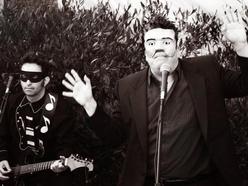
I next caught the wonderfully titled but partly disappointing “The Wounded Stag and

Other Cloven Tales of Enchantment,” presented by the Kingdom of Not, which comprises Buddd

[sic] Underwood and The Slow Poisoner. This was a combination live music acts and video

projections with dancing, a kind of nightclub butoh spazzed with satirical relish and a craziness

that dares you to look away – which, given the smallness of the space, I couldn’t easily do.

About midway through the show, there is an extraordinarily powerful sequence in which Buddd

dons a seemingly innocuous mask that, through simple but ingenious lighting, combined with

a darkly demented text and a maze of slow, wild contortions, becomes the very face of evil, a

voodoo of death dancing with obsessive, joyless glee across the world. It was unforgettable and a

sign of a formidable talent. Unfortunately, the numbers flanking the central, grimly entertaining

dance of death felt like fillers and were more abrasive than inspired.

The best is almost always saved for last: the final show I was able to catch before the

crocodile deadline caught me in its jaws was the awkwardly titled “The Good, the Bad and

the Stupid” by the physical comedy troupe Pi. Unfettered by either intellectual or political

pretensions, these highly talented comic acrobats put on a show that was a little mad marvel from

beginning to end. Based loosely on the spaghetti westerns of the 60s (as the title warned), the

troupe found its mojo in one bit of happy lunacy after another. I won’t try to describe what they

did (half the rewards are in their surprises), but you must drop whatever you’re doing when you

hear they’re performing near you, and go. Happiness is more than just a right, after all; it’s a gift

– and they could make you happy for an afternoon, if not Eternally. Really.


Christopher Bernard is a novelist (A Spy in the Ruins) and the founder and coeditor of the

webzine Caveat Lector. Examples of his poetry can be found on the internet at “The Bog of St.

Philinte.”
Poetry from Sam Burks


“Last Meal”

If lies were murder

then I would probably have

no more than

an hour left

until I was standing

on the gallows

waiting

for all those things I had

given away

to be given

back to me


“The Silent Light”

The light that speaks

Was silent

And when I wanted

Truth the most

The light flickered out


“Death”

This year’s rains were generous;
the river is wider
than ever
before
the flowers are all
singing with such brilliant color
not even the sun
can expose them all
and the birds are faster
and higher
than ever
before

But
my mouth
is dry
my eyes
are empty
my stomach cries
for fresh bread

I am not
the earth
I am not
the seasons
I am not
the coma
in the dirt
holding seeds
for next year’s rain

I am the asphalt,
deceivingly trafficking life
through obvious death;
I am the structures
of ignorance, toying with
fabricated truth and counting
debts that don’t exist;
I am what was once a tree,
now hidden in a chemical suit,
faking immortality;
I am a person,
as are we all,
separate from myself,
hiding
from the rain

And today’s sun is warm;
the smiles reflecting
off it’s surface
are brighter
than ever before,
the eyes are shimmering
with borrowed light
and sending warmth
through the empty space

But
my face
is blank,
my eyes
are empty,
and I am
the one you might call
Death

Sam Burks is from the San Francisco Bay Area, in California, and can be reached at srburks@gmail.com

“Meeting the Dead…”: A poem by J’Rie Elliott

Meeting the dead…
by J’Rie Elliott


The night is dark, and the moon is bright—

The veil is going to lift tonight.

Where angels fly and demons dwell—

The beauty of heaven, the depths of hell—

The scary will for tonight be fun,

As children dress up and play and run.

They’ll ask for candy and say “trick or treat”

As they scamper down the street.

But those who know the reason why

We dress in costume and try to hide—

Will tell you to be wary and watch out and see,

You may meet the dead on All Hallows Eve.
______
J’Rie Elliott is a mother, wife, daughter, and accomplished horseback rider from Alabama, USA. She can be reached at dixiepoet@gmail.com

“Landscapes”: A poem by Josie Weidner

Landscapes

by Josie Weidner

The fields look like tiles.

Or the kitchen floors

The tiles of the kitchen floors

Each it’s own hue of brown

Coffee,

Dead grass,

Beige,

Tan,

Chocolate

They fit like two lovers,

snug and cozy.

Some are circular,

Rectangular,

Square,

Vertically-stripped,

Horizontally-striped,

Some have no shape, amoeba style.

They look coarse,

Like if I gently stepped,

On the floor

It would feel like the bristles of a

Doormat

Tickling,

Renewing,

Cleansing,

Cleaning,

Welcoming.

Poetry from Linda Allen

“Hello Autumn”

Red, gold, green, purple, orange, yellow and brown

Your colors are perfectly beautiful

Hello Autumn, nice to see you again


Landscapes are bright and colorful

Trees look alive

Hello Autumn, nice to see you again


The air is so fragrant and clean

The wind sings with the colors of the trees

Hello Autumn, so glad you are here


Leaves on trees brighten the mood

While holidays start to approach far too soon

Hello Autumn, so glad you are here again


Pumpkin pies, jack-o-lanterns, pecans, and evergreens

Your colors are on display for all to see, smell, and taste

Hello Autumn


The time we spend together is bittersweet

The time we spend together is far too short

Hello Autumn, wish you would never leave


Red, gold, green, purple, orange, yellow and brown

As we part and your beauty Falls, even the trees look sad

O goodbye Autumn, ‘til we meet again


“All Hallows Eve”

Long dark streets

Houses decorated to scare

All Hallows Eve approaches


Jack-o-lanterns being born

Skeletons on display

All Hallows Eve approaches


Kids will be in costumes, masks, and capes

To be who they always dreamed to be for just one night

All Hallows Eve approaches


Ghosts, goblins, ghouls, zombies, witches, vampires, bats, and other dark things

Appear in the night ready for frightening good fun

All Hallows Eve approaches


Get ready for the night

Be ready for a fright

Dress for the occasion

Stomachs at the ready

All Hallows Eve approaches


Best not be scared of things that go bump in the night

For they only last from dusk till dawn

And in the morning you better pray your skin is not white,

For the morning light may be the last

OOOOWWWW HAHAHAHAHAHA!!

Happy Halloween!

Linda Allen is an American from Oklahoma who may be reached at lindaallen4119@att.net and welcomes comments and thoughts on her writing.

Synchronized Chaos, September 2012: Inspiration

“Where do you get your inspiration?”

Most artists have to field this question with relative frequency, yet very few are able to articulate a comprehensive answer. Indeed, inspiration is a complex concept to wrestle with—it can come from almost any source and, depending on the situation, can lead to a fascinating variety of results. Therefore, we’ve decided to make the September 2012 issue of Synchronized Chaos a study in inspiration. We think you’ll be quite interested to see the many places from which our contributors draw their ideas—and the diverse ways in which they exercise their creativity…

We begin the issue with a very unique form of artwork: digital poetry. Wrapping words, sounds, and images together in a video format, poet Mary Ann Sullivan crafts a distinctive and memorable set of works which take their inspiration from many different sources. Joan of Arc, surely one of history’s most inspirational figures, is the subject of one notable piece; the other spurs for these poems’ creation include such diverse items as religious texts, found objects, and even the notion of language itself.

It’s a real-life event which provides the inspiration for this installment of Leena Prasad’s monthly column Whose Brain Is It?: the hatching of eggs born to a duo of pigeons which had nested on the fire escape of her building. From this springboard, Leena goes on to discuss the phenomenon of nurturing newborns and the biological chemicals which are associated with parental behavior. Both humans and animals come in for discussion, as well as the respective roles of male and female parents.

Lack of inspiration can be quite a dreadful thing, as our columnist Chris Cooper can testify. He was in attendance at a Republican Party fundraiser in Pleasanton, California, and he came back dismayed by the level of enthusiasm (close to nil) at the event. As Chris describes in his article “Snoozefest: The Decline and Fall of the California Republican Party,” the event’s dullness and lack of focus on actual issues mirrors the party’s out-of-touch and distinctly uninspired response to modern problems.

Sometimes it’s the readers of a piece who need a little inspiration in order to reach their goals. In her essay “Create It,” Bramani Spiteri expresses frustration with the cultural trend of sacrificing happiness and satisfaction in favor of staid and unfulfilling lives. She argues that, instead of settling for a dull job and a life of “just getting by,” people should follow their dreams and inject a little more creativity and joy into the modern world—and we predict that many of those who read her thoughts on the matter will feel inspired to do just that!

Sam Burks, one of Synchronized Chaos’ most talented poetic contributors, appears in this issue with “Gravity, An Illusion.” The piece portrays a troubled romantic relationship which has taken more than a few twists and turns and lost much of its former inspiration. It also features a particularly inspired use of poetic language, as traditional metaphors for romance and relationships appear in new and different contexts.

Cristina Deptula, longtime editor and contributor to our magazine, contributes an article on a real-life medical mystery: the outbreak in recent decades of “nodding syndrome,” a debilitating condition which has affected thousands of children in the eastern regions of Africa over the past several decades. Cristina reports on the current efforts to combat the problem: the medical researchers on the scene have a challenging task ahead of them, but they draw considerable inspiration from the resilience of the affected communities.

Readers of our previous issue will recall the first chapter of Peter Lynch’s memorable novel Newman-X. This month, we have the second installment of the story, in which we continue to follow its troubled young narrator on his odyssey through the pitfalls of the modern world. In this segment, he inspires himself to perform a little self-observation, as well as some research into the neuropsychological concepts which are so relevant to his life, but nevertheless his self-destructive behavior continues unabated…

We hope you enjoy this month’s issue of Synchronized Chaos! As always, feel free to leave comments for the contributors; if you’re interested in submitting some of your work to the magazine, please send it over to synchchaos@gmail.com.

Create It: An article by Bramani Spiteri

Create It

By Bramani Spiteri

We have all had big dreams.   When we were kids, we wanted to fly or have x-ray vision, we wanted to be superheroes.  As we got older our dreams got more realistic, but they were still big.  We wanted to buy a big house, multiple cars, go to college, have a happy family.  We got out of school looking to change the world, make an impact; then our dreams got smaller.  We lost sight of the big picture.

Now, we go to work and just want to make it through the day.  It is a story that we are so familiar with that it is nearly an expected path; but why?  Why are we content to just get by?  Why are we not striving to get what we need and what we want?  Does there have to be a point where our dreams become small, our jobs become just a necessity, and our ambitions to create change become irrelevant?  The answer is no!

It is unfortunate that it has become culturally acceptable to go to work, dislike your job, feel unfulfilled, and be generally unhappy in your professional life.  Yes, making ends meet is important, but there is no point along your path where it should be OK to just settle.  Not only do you as a person need to consider the ramifications of such an existence but we must understand the impact an unhappy work force can have on the economy at large.

At a time when markets continue to decline, unemployment rates are high, foreclosure rates are skyrocketing, and inflation and interest rates are growing exponentially faster than wages, it is important for this country to look for answers that are not readily apparent.  The mistakes that were made in the real estate, banking, and manufacturing industries are obvious and, although the changes may not be as effective as needed, changes are being made.  But there are other issues, issues that are so engrained into our society that most people do not know they even exist.  Some of these issues include a false sense of entitlement, lack of work ethic, an overwhelming presence of denial, and an inability to cope.

A generally dissatisfied work force only enhances many of these other detrimental attitudes, but here’s the kicker: it is no one’s fault but your own!  Take responsibility for your choices.  Regardless of your circumstances it was your choice to abandon your dreams and settle.  Now I know most of us do not like to hear that, but it is the truth.  Which brings me to the message of this article; this is a rally cry.

To everyone that feels dissatisfied or unfulfilled, choose to change.  Define your dream, own your dream, and then make your dream reality.  It surely will not be easy, but it will be worth it.  If you truly desire the change you will sacrifice for it.

Now your dream may not fit very nicely into the life you have built while you were settling for mediocrity.  That means you have to be creative.  You know that at fifty years old you are not going to become a prima ballerina, but that does not mean you cannot dance every day of your life.  Use the resources that you have to make it happen.  Take classes, join a performance group that fits your needs, spend time watching ballet.  Maybe being creative means opening your own dance studio and supporting the next generation of dreamers.   It is this creativity that can help us turn this economy around.

Ingenuity has driven the American economy to new heights time and time again.  In this purposed grass-roots movement, the creativity begins with each individual.  You have the license to create your perfect situation, to make something new, improve something old, or just do something different.  Pay close attention as you make this journey; see how your creativity and passion become contagious.

As creativity and passion grow within communities we will begin to reap benefits as a whole.  Not only will creative thinking produce jobs, resources, and networks, but it would be nice if everyone woke up in a better mood because they enjoy their work.  Seek out your passion, nurture it, become it, and watch it become bigger than you ever imagined.

Create the job of your dreams; create the life of your dreams.

Bramani Spiteri is the coordinator of the performance arts network Soul Expressions (www.BramaniSoulExpressions.com). She can be reached by email at Bramani@BramaniSoulExpressions.com and by phone at 304-282-6826.