West Side Story at the Orpheum Theatre in San Francisco, CA – Reviewed by Bruce Roberts

Thoughts on West Side Story—and Life!

Shoppers in a mall have the eerie sensation of walking between two groups of guys staring at each other. A driver thinks he recognizes a rival gang member in another car, opens fire, and kills a father and two sons returning from a ball game. A ten year old girl answers a knock on the door and is downed in a hail of bullets: wrong house! Gangs today are a sad fact of life in metropolitan areas, and whether someone is a gang member or an innocent victim, gang violence tears lives and families apart.

Unless, of course, viewing West Side Story at the Orpheum Theater in San Francisco, an unlikely place for a play about down and out kids of different backgrounds fighting it out for domination. Built in 1926, and modeled after a Spanish palace, it is fancy.  It is lavish.  It is ornate.   It is beautiful. With a BART station right at its front door, it is a grand and most accessible place to see great theater in San Francisco.

And the play—a loose tribute to Shakespeare’s Romeo and Juliet (Capulets and Montegues?  Sharks and Jets?), while following the gangs and violence theme, seems far removed from jarring headlines. The dancing and singing are excellent, powerful, and elevate the gang motif above the brutal grind of the daily news. At first, West Side Story is to gang reality as ballet is to walking.

However, the whole play is like a downward spiral, bringing us closer and closer to real life.  Beginning with the big picture where we meet the gangs, the neighborhood, the background of conflict,  the play gradually narrows down to a few characters, and then two, then ultimately one—Maria—left to mourn the tragic turn of events that killed both her brother and her beloved.

And therein lies the relevance of West Side story to modern America. We can delight in the muscular, active dance routines; we can ooooh and ahhhh at the great music, the fine lyrics. But by the end, we are involved in circumstances every bit as gritty and tragic and sad as the daily news. This forced transition from fantasy to reality is what makes this a truly great play.

Bruce Roberts may be reached at brobe60491@sbcglobal.net.

See what’s happening at the Orpheum Theatre: http://www.shnsf.com/

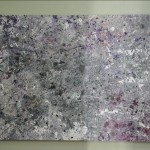
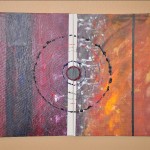
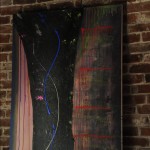
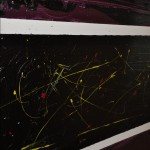
Art by Malin Gabriella Nordin

What others are saying:
“Dreams, a dissociative state, our minds persistent struggle against the shackles of reason. For Malin Gabriella Nordin, dreams, delusions and hallucinations seems to represent the incorrupt image of reality. Reconstructing fragments of them from memory, bringing them back to the stage set of the rational world; they appear like unaccounted extraterrestrial from a distant solar system, much more vivid than ours…”

-Samuel Nyholm, Artist
Stockholm, Sweden

Contact: malin@malingabriella.com

Website:www.malingabriella.com

Indie Feature Film: Determinism (Reviewed by Christopher Williams)

I spend my Tuesdays at three in the morning the way most people my age do: watching movies in a cramped room with more people than available seating.  The last movie we watched together was the long-anticipated arrival of Sanjit and Ranju Majumdars’ Determinism. I was not sure what to think of the movie prior to viewing except for hope from the alluring trailer and rather cryptic title.  The movie itself was wonderfully dark and refreshingly insightful.  The director’s imaginative film style, creative music scores and powerful storyline make Determinism a movie you have to see to believe.

The film style was defined as “grunge” and certain rough shots and harsh camera movements were used to reinforce a darker ambiance for the viewer.  With that in mind I will admit that the exposure was off periodically and Majumdar was guilty of breaking the axis at times.  It had the downside of making dialogue difficult to follow, yet the methodical nature of introducing the characters reinforced the grunge style that the director was hoping for.  The special effects were quite impressive for the movie and the sweeping city shots were amazing (although arguably superfluous transitions).  Characters would be reintroduced in the movie with their name cleverly inserted somewhere on screen, which helped me to follow them since the beginning of the movie.  It had a unique character introduction, with Facebook profile-style introductions. The storyline also had a nice level of sophistication with a seemingly linear plotline that was actually threaded in layers of foreshadowing and backstories.

What I am truly concerned about, though, is the relationship between the director’s intent and the movie itself.  The very title provokes some deep insight into an existential dilemma.  We see the main character, Alec’s, struggle of being an authentic individual in a “racially charged” world that one is becoming increasingly disenchanted with which forces the viewer to question how much control he really has over his environment.  However, Alec became so engulfed in his own shortcomings as a first-generation Indian that he seemed to follow a path of despair and crime instead of working towards his own betterment.  Fortunately, it is the very apathy expressed by him that makes the movie particularly spectacular.  The characters are revealed slowly and their rather obscure history demands attention to every detail, every dialogue, and every little piece of information in order to understand the motives of all the characters.

You may contact the reviewer at cwilli10@ashland.edu.

Continue reading

Picture Perfect by Cynthia Lamanna

Time to go whizzing through December’s green and white landscape, in roller skates, whirling around to face smiling people everywhere without malice or bah-hum buggers! With deft fingers, you finished wrapping presents in July, perfectly, with bows that stick like magic, with youthful exuberance to spare- (and unlimited funds in your account)! Today window shopping for that perfect gift, looking at your size 10 in the windows at Macys you blow a kiss to that strawberry auburn bottled wonder- with the cute bob your stylist designed just for you; gee but its great to be that healthy, glowing, svelte middle aged gal, who will look just like this in 30 years, blessed with superior genes.

Than you come home to a hot dinner that Betty Crocker herself might have whipped up, with the savory scents of gravy and home cooked rolls warm and inviting with a big dollop of real butter gliding down the crease in the center-it never goes to your hips and by the way, who needs a fortune cookie with this life? You comb through the mail luxuriously, and note that once again you won the Readers Digest sweepstakes two years in a row, and of course half will go to the orphanage and you will be on the cover of Time magazine just in time for your pedicure and a visit with Opra. The lush pine from the Hallmark card Christmas tree is intoxicating, and the silver ware is polished to perfection.

You may reach Cynthia Lamanna at cynthialamanna@yahoo.com.

Continue reading

Paintings by Joshua Braff

About the Artist:

Joshua Braff is a painter and writer living in Oakland, California. He uses color and specific shapes to “evoke slashes of chunky movement or chaos amongst blips of order.”

Braff is an author of two novels, The Unthinkable Thoughts of Jacob Green (Algonquin 2004) and Peep Show (Algonquin 2010).

View his Website at www.joshuabraff.com.

Synchronized Chaos announces the audio version of Daveland: a novel by Marty Castleberg!

We are pleased to announce that Daveland is now available as an audio-book! Check out the Website for more information!

Marty Castleberg’s memoir was first featured in Synchronized Chaos back in 2009. The reviewer described it as “…unique because of its readability and narrative style, and because it brings these literary qualities to the often dry, clinical world of learning differences. “

Click here to see the review.

Gloria Balderas
Creative Facilitator/Editor-In-Chief

The December Issue of Synchronized Chaos: Internalization

Happy holidays and welcome to the December issue of Synchronized Chaos! This issue touches upon self-identification, exploration, and human nature, reminding us of how art can be a powerful channel into the internal state of mind.

Alex Luke re-examines the connection between self and character through the exaggeration of human nature.

Warmth, history, and inward strength are expressed in the works of Valerie Brown-Troutt, James Gayles, Cynthia Tom, and Mary Bartnikowski.

In Patsy Ledbetter’s writing, she reaffirms a personal relationship with God and translates her faith to others.

Junko Van Norman’s and Jennifer Wildermuth’s work evoke dream-like states of wonder and contemplation.

The energetic artwork by Matthew Kowalski flows effortlessly together, causing us to explore deeper, beyond the layers.

Henry Avignon’s visually exciting artwork centers in the mind, expressing a myriad of immersed emotions.

Alexander Voitsekhovsky finds the parallels of animal and human behavior, while Alisha Fisher intersects nature with human character.

Nick Friedland gets a cultural reality check in Riding the Bus in Argentina.

Ron Weil experiments with interlocking ideas and images and Jamie Treacy seeks to explore the deep-down wonders of life in his featured work for Life: Expressions of Living.

Gordon Pagnello’s “Estate Sale” series plays with space in interesting ways and the objects in each piece tell us a story about the personality of the individuals they belong to.

We at Synchronized Chaos hope you enjoy this month’s issue, and please don’t hesitate to leave any comments!